West
San Francisco faces skepticism over new law-and-order measures: 'This is an election year'

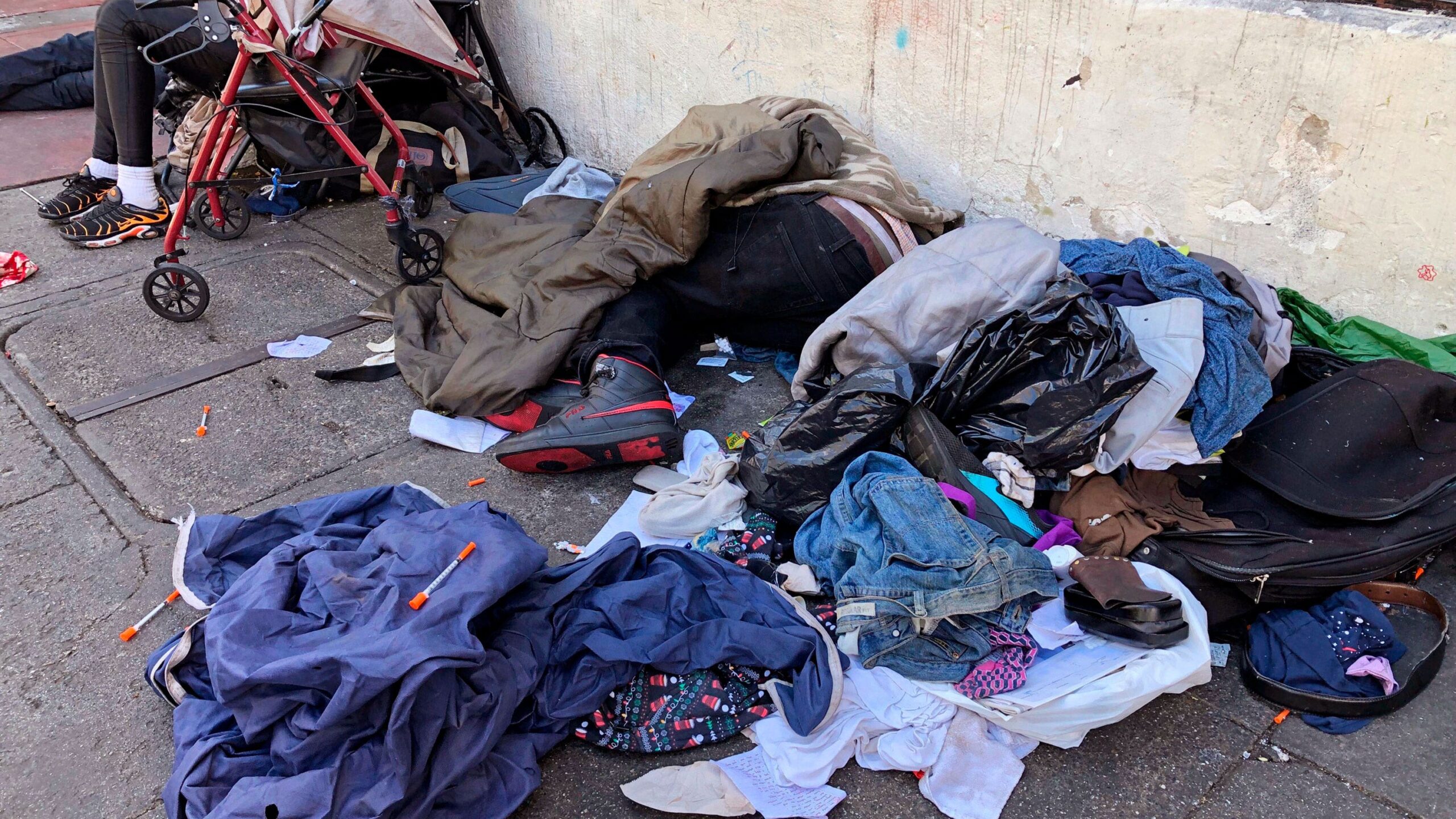
A former San Francisco police officer applauded the approval of a pair of law-and-order measures, saying the “pendulum is finally swinging” in favor of public safety as residents have become “fed up” with the crime crisis.
Joel Aylworth reacted on “Fox & Friends” Thursday, also expressing his skepticism over how much change is going to come to the liberal city. One of the measures bolsters policing and empowers law enforcement, while the other allows officials to drug test welfare recipients.
“It feels like the pendulum is finally swinging,” Aylworth told Lawrence Jones on Thursday. “But as you know, they’ve got a large… way to go… I was just in San Francisco a couple months ago, and we were at Golden Gate Park, and within 15 minutes my sister-in-law’s car got broken into, so the problems are still there. We know that.
“I do like some of these propositions, but if you read between the lines… there’s a lot of fluff in there,” he continued. “And so I worry that this is one of those feel-good propositions, but at the end of the day, nothing’s really going to happen.”
SAN FRANCISCO ANNOUNCES SCHOOL SHUTDOWNS AMID BUDGET, ENROLLMENT WOES: ‘WE MUST HAVE FEWER SCHOOLS’
San Francisco voters made their voices heard loud and clear on Tuesday with the passage of both measures, which some say will allow San Francisco to pivot away from crime, homelessness and drug use plaguing city streets.
The first of the two ballot measures, Proposition F, requires drug screening for people receiving public benefits and would force drug addicts to go into treatment if they want to continue receiving those benefits. The second, Proposition E, would give law enforcement better surveillance tools and rein in oversight over the force, allowing looser restrictions on car chases, for example.
It marks yet another rebuke of progressive policies in the famously liberal city, following the recall of far-left District Attorney Chesa Boudin in 2022.
SAN FRANCISCO’S OLDEST TOY STORE CLOSING DUE TO INFLATION, ‘PERILS AND VIOLENCE’ OF CRIME DOWNTOWN
Despite the results, Aylworth argued San Francisco will “always” be left-leaning in nature, but remains hopeful for change, since residents are completely “fed up.”
“San Francisco is literally the city of Saint Francis, so they will always be a progressive city because of the leaders and the politicians that are running it, unfortunately,” Aylworth said. “So that will never change. I think just right now, we’re in a moment of time where things are swinging in the right direction because people are fed up.”
Democratic Mayor London Breed, who’s up for re-election this year and had the measures placed on the ballot for voter consideration, celebrated on Tuesday night.
Mayor London Breed proclaims “The Flaming Lips Day” at Stern Grove festival on August 20, 2023 in San Francisco, California. ((Photo by Miikka Skaffari/Getty Images))
“It is clear that people want to see changes around public safety. What’s exciting about this for me is I get the kind of tools I need to continue the work we’re doing,” Breed told reporters, according to local station KQED.
She added on X, “Thank you to the voters for passing Prop F to bring more treatment and accountability to San Francisco. This is how we get more people the help they need and change what’s happening in our City.” She also wrote Prop E gives “our officers more tools to do their jobs.”
CLICK TO GET THE FOX NEWS APP
A famous social media food critic had to cut his culinary tour of San Francisco, citing the city’s poor conditions. (Jon Michael Raasch/Fox News Digital)
Former San Francisco mayoral candidate Richie Greenberg said residents are “ready” for change and “angry” about the crime-ridden state of the city. He said the shift in favor of law and order had been a “long time coming” on Thursday.
“We were really, really hoping and praying for this to come. It’s a long time coming,” Greenberg said during “Fox & Friends First,” stressing that city leaders must now follow through and deliver for residents.
“We are not only ready, we’re also angry,” he continued.
“I saw this coming for a while… I supported it very, very much… the thing is, though, that our mayor, London Breed, is taking credit for those two specific ballot measures that you mentioned. This is trying just to save face because … it’s an election year, and she’s running for re-election… so there’s politics involved.”
Fox News’ Gabriel Hays, Jeffrey Clark, David Rutz and the Associated Press contributed to this report.
Read the full article from Here

San Francisco, CA
Where to watch Athletics vs San Francisco Giants: TV channel, start time, streaming for June 23


What to know about MLB’s ABS robot umpire strike zone system
MLB launches ABS challenge system as players test robot umpire calls in a groundbreaking season.
The 2026 MLB season has surpassed the quarter mark, and after each team’s first 40 games, there’s plenty of reasons to tune in all summer long.
Chicago White Sox slugger Munetaka Murakami has already proven doubters wrong by launching 17 home runs, Pittsburgh’s Paul Skenes consistently looks like the best version of himself on the mound and Milwaukee ace Jacob Misiorowski is throwing harder than any starter in the majors.
The MLB action continues on Tuesday as the Athletics visit the San Francisco Giants.
Here’s everything you need to know to tune in for the first pitch.
See USA TODAY’s sortable MLB schedule to filter by team or division.
What time is Athletics vs San Francisco Giants?
First pitch between the San Francisco Giants and Athletics is scheduled for 9:45 p.m. (ET) on Tuesday, June 23.
How to watch Athletics vs San Francisco Giants on Tuesday
All times Eastern and accurate as of Tuesday, June 23, 2026, at 6:33 a.m.
Watch MLB all season long with Fubo
MLB regional blackout restrictions apply
MLB scores, results
MLB scores for June 23 games are available on usatoday.com . Here’s how to access today’s results:
See scores, results for all of today’s games.

Home prices are falling in Denver and other areas around the nation.
Scott Olson/Getty Images
hide caption
toggle caption
Scott Olson/Getty Images
A few weeks ago, we asked our readers for ideas and questions for future Planet Money newsletters and podcasts. We got a bunch of great submissions, including an intriguing one from Karl Baumgartner.
Baumgartner is a 29-year-old internal medicine resident in Denver, where home prices and rents have been falling. Depending on which data you look at, the Denver metro area is experiencing one of the steepest — if not the steepest — housing price declines in the nation. Home prices have fallen more than 2% year over year, according to the S&P Cotality Case-Shiller Home Price Index, and even more if you adjust for inflation. Rents have fallen even more dramatically.
“As a renter myself, I am ecstatic about the falling prices,” Baumgartner writes. In fact, he just moved “to a bigger apartment with nicer amenities that I previously couldn’t afford, but now can because rent has fallen.” One of his friends, meanwhile, recently renegotiated her lease for about $500 less per month by showing her landlord that comparable apartments in her area were now going for much less.
“With almost all of my friends being in a similar position at the beginning of our careers with plenty of debt, we are all very excited about the decrease,” Baumgartner says.
So, yeah, falling rents are obviously a win for Denver renters. But Baumgartner is wondering about the broader economic picture.
“We know that negative inflation is bad for the economy in general, and we try to shoot for 2% annual inflation in general. What about negative inflation in the housing market specifically? Are there any downsides to falling prices, or is this just a sign of the market working as it should, with supply finally catching up to demand?”
It’s a great question because economics doesn’t seem to provide a simple answer on whether falling housing prices are good or bad for the economy.
Obviously, falling home prices and rents have downsides for homeowners and landlords. But what about the broader economy?
Sometimes falling housing costs could be a sign that the economy is healthy and the free market is working as economists might hope. Higher prices encourage builders to construct more housing. More supply comes online. Supply comes closer to or may even surpass demand, and housing prices go down. It’s the basic logic behind the YIMBY movement — a pro-housing development effort whose name stands for “Yes In My Backyard” — which argues that housing restrictions have prevented this healthy market process from delivering plentiful and more affordable housing.
Other times falling prices are a symptom of — and sometimes a big contributor to — a community’s economic distress.
So how can we tell the difference?
When falling home prices are bad
Let’s start with a clear bad scenario of falling home prices: Detroit. After years of deindustrialization and socioeconomic problems, Detroit saw a massive drop in population. Between 1990 and 2010 alone, Detroit lost nearly a third of its residents.
Home prices fell by more than 80% during the housing bust of the 2000s.
This wasn’t affordability created by abundance. It was affordability created by economic collapse.
Detroit neighborhoods emptied out and fell into disrepair. At one point, in 2007, houses in Detroit were cheaper than cars. For over a decade, the city has had an official program to demolish abandoned homes and buildings. For many Detroit families, generational wealth evaporated.

TO GO WITH AFP STORY by Joe Szczesny, US-city-Detroit-auto-debt
Curtains flap outside the broken window of an abandoned home December 31, 2014 in Detroit, Michigan. After the largest municipal bankruptcy in US history, Detroit hopes outsiders will see the city’s potential not the history of racial conflict, financial crises and citizen flight that has cut its population in half since 1960. AFP PHOTO/JOSHUA LOTT (Photo credit should read Joshua LOTT/AFP via Getty Images)
JOSHUA LOTT/AFP via Getty Images
hide caption
toggle caption
JOSHUA LOTT/AFP via Getty Images
Falling home prices can make homeowners feel poorer and cause them to spend less, a phenomenon economists call the wealth effect, says Daryl Fairweather, chief economist of Redfin.
Eric Zwick, an economist at the University of Chicago Booth School of Business, says the bigger danger from falling home prices comes from debt, as many of us painfully remember from the 2008 financial crisis. If home prices fall enough, many owners can end up “underwater” — owing more on their mortgages than their houses are actually worth.
It was a big contributor to the Great Recession. One reason the economic damage was so severe, Zwick says, was lax lending standards that preceded the crash. Many homeowners took on too much debt assuming prices would keep rising and when they didn’t, they were overstretched.
“ That created a kind of cascade of forced sales, further price declines, more people defaulting potentially, and then spillovers into the financial system, which then affected everybody,” Zwick says.
Wall Street amplified the problem by bundling risky mortgages into securities that spread losses throughout the financial system.
Because of the role that debt plays in the housing market, a big decline in home prices can hurt not just homeowners, but also “businesses that borrow and everybody else,” Zwick says.
Falling home prices can also hurt important economic sectors, like the construction industry. And they can be bad for a city’s tax revenue.
So, yes, falling home prices can have serious downsides, to answer our reader’s question.
When falling home prices are good
But falling housing prices may not always be bad. Just ask Denver renters!
The housing affordability problem has loomed especially large in cities with roaring economies and not much new development to accommodate growing demand to live there.
Economists have long worried that the lack of housing construction in these places has created a kind of economic traffic jam: when workers can’t afford to live where the best jobs are, they don’t move there, businesses struggle to hire, and the economy doesn’t grow as fast as it could.
The economists Chang-Tai Hsieh and Enrico Moretti published research in 2019, which estimated that “stringent housing restrictions” to build new housing in places like the San Francisco Bay Area prevented workers from moving to where they could be more productive. By their estimate, constraints on building new housing lowered U.S. economic growth by a staggering 36% between 1964 and 2009.
Zwick says subsequent research has found that Hsieh and Moretti overestimated the size of that effect on economic growth. Nonetheless, he says, the broader idea is persuasive: housing scarcity in productive areas slows economic growth.
Denver may be a good example. It’s been seeing solid economic growth and job creation, but as local housing advocate Kevin Matthews of Denver YIMBY sees it, the lack of affordable places to live in the city has been holding Denver’s economy back.
Matthews recalls a large Denver employer expressing concern about the lack of affordable housing. “Their business is growing really fast, and they are trying to attract workers,” Matthews says. “I think it has a big effect. If those workers can’t afford to live here, they’re gonna go elsewhere.”
And similar to how higher home values may encourage homeowners to spend and invest more, cheaper rents may encourage renters to spend and invest more.
“If I’m trying to steel man the case for why falling values can be good, it would be that you are freeing up people’s incomes to spend on other sources of investment in the economy,” says Misha Fisher, the chief economist of Zillow. “If people are spending 80% of their income on housing, that’s not leaving a lot left over to spend on other things.”
Cheaper housing could also nudge more people to make decisions that ultimately serve their community and the economy. For example, Zwick suggests cheaper housing might help encourage family formation. When people are less worried about the cost of an extra bedroom or finding enough space for a family, they may be willing to have more kids. Over the long run, that could mean more workers and more taxpayers, which can ultimately benefit the economy.
Researchers have also linked homeownership to higher rates of civic engagement, neighborhood investment, and other behaviors that can improve communities.
How can you tell when falling prices are good or bad?
So how can we tell when a decline in housing prices is good or bad? We talked to a bunch of economists, and we couldn’t find a simple rule, but we did cobble together some important things to consider.
First, why are prices falling? One potentially important distinction is whether the decline in prices is driven by an increase in supply or a decrease in demand. Put more simply: are prices falling primarily because fewer people want to live somewhere, or because more housing is being built?
Fisher, from Zillow, says demand-driven price declines are often a bad sign. “ That’s usually an indicator that something else has gone wrong,” he says. For example, that the economy is cratering, as was the case in Detroit, or that demand to live somewhere is falling for other reasons, like a rise in crime or natural catastrophes.
By contrast, if price declines are in response to an increase in housing supply, that’s “typically a healthier way to keep home prices in check,” Fisher says.
Fairweather, from Redfin, says land values can provide another important clue. “When a city’s economy is struggling and people are leaving, land typically becomes less valuable,” Fairweather says. “ So when Detroit was going through its recession, its downturn, the land value was dropping because Detroit overall as a city was becoming a less attractive place to live in, to do business in,” Fairweather says.
But imagine a different scenario. A city remains economically vibrant, demand to live there stays strong, but developers are allowed to build a ton of housing — including lots of big apartment buildings — to accommodate the growing demand to live there. In that case, land values might rise even as housing prices decline. Why? Because developers are squeezing more housing units onto each parcel of land.
“ You’re making better use of the land,” Fairweather says. “You’re getting the most economic value out of the land. That’s overall a good thing.”
Matthews, the representative from Denver YIMBY, suggested another metric to consider: the “price to income” ratio. This compares the typical cost of housing to the typical income that can be earned in an area. If the cost of housing is falling, but so are incomes in an area, that’s likely a bad sign. But if prices are falling while incomes are rising, that’s a good sign. It means the economy is doing well while housing is becoming more affordable.
Finally, the size and speed of the price decline matters. Most homeowners can handle small or gradual drops. But a sharp, sudden decline can trigger widespread economic distress, foreclosures, and unleash a cycle that can lead to a recession.
Several YIMBYs we’ve spoken to over the years have suggested the least economically disruptive path to housing affordability is for housing prices to fall in real terms, but not necessarily in nominal terms. That means that home values rise more slowly than wages and inflation, allowing housing to become more affordable without requiring a sharp drop in the sticker price of homes that can cause financial distress to homeowners.
We were curious what our sources thought about Denver’s falling housing prices. Many suggested that it’s been driven primarily by an increase in supply. The city has built a ton of new housing units, especially new apartments, in recent years. That is probably a good sign. Although some did mention the in-migration into Denver has slowed while out-migration has picked up steam, suggesting demand to live in Denver has also cooled.

The downtown Denver skyline is seen from the air.
Kevork Djansezian/Getty Images
hide caption
toggle caption
Kevork Djansezian/Getty Images
But none of our sources suggested what was happening in Denver is any cause for alarm. Most Denver homeowners have seen considerable growth in their home values in recent years, and all our sources agreed that the price fall isn’t dramatic enough to push many of them underwater. This is not a Detroit-style housing crash.
Plus, the fall in prices is providing financial relief to Denver renters, like our reader. Denver may represent something close to the version of falling housing costs that economists hope for: housing becoming more affordable without a broader economic downturn.
Congrats, Karl, on that nice, new apartment.
And for the rest of our readers: Have other questions you want us to answer? Send us an email: planetmoney@npr.org

SEATTLE — Paige Bueckers scored 27 points, Azzi Fudd added a career-high 26, including the go-ahead basket with 13.2 seconds left in overtime, and the Dallas Wings beat the Seattle Storm 112-110 on Monday night.
Bueckers, who scored 17 of the Wings’ final 24, netted her 1,000th career point in overtime to cap her night and put Dallas ahead 109-108. She tied Elena Delle Donne for the fourth-fastest in WNBA history to reach the milestone at 52 games.
Fudd followed with a go-ahead layup that put Dallas up 111-110 before Jessica Shepard stole the ball, and Aziaha James capped the scoring with a free throw to end it.
Dallas finished with a WNBA record 48 made field goals.
James scored 18 points off the bench for Dallas (11-6), and Shepard had 14 points, nine rebounds and eight assists. Li Yueru scored 10.
Dominique Malonga scored a career-high 37 to go with 12 rebounds for Seattle (3-15). She became the youngest player in league history to reach 200 career field goals at 20 years and 219 days old. Natisha Hiedeman had 21 and 11 assists, and Awa Fam had 18 points.
Dallas trailed 94-88 with 1:24 remaining in regulation before Bueckers rattled off the Wings’ final eight points of regulation, including back-to-back 3-pointers, to help force overtime.
Seattle has lost 11 straight games.
Up next
Wings: Visit the Las Vegas Aces on Thursday.
BE THE FIRST TO COMMENT
Storm: Host the New York Liberty on Thursday.
-

 Detroit, MI4 minutes ago
Police investigation at Monica and Clarita streets in Detroit
-

 San Francisco, CA16 minutes ago
Where to watch Athletics vs San Francisco Giants: TV channel, start time, streaming for June 23
-

 Dallas, TX19 minutes ago
Dallas Man Convicted of Distributing Fentanyl
-

 Miami, FL24 minutes ago
Fiery, fatal crash shuts down southbound lanes of Don Shula Expressway in southwest Miami-Dade
-

 Boston, MA31 minutes ago
Editorial: With Boston’s World Cup win, could we host Olympics?
-
Denver, CO39 minutes ago
When falling housing prices are good news — and when they’re not
-

 Seattle, WA46 minutes ago
Storm edged by Dallas Wings 112-110 in overtime heartbreaker
-

 San Diego, CA49 minutes ago
Who’s playing in the World Cup today? TV schedule for June 23

