Lifestyle
Can the Reinvented Delano Hotel Resuscitate South Beach?


In 1995, when Madonna held herself a lavish 37th birthday party, she chose a suitably trendy location: the Delano, the Art Deco Miami Beach hotel that the impresario Ian Schrager had transformed into a magnet for the glamorati and guests that aspired to be like them.
With its tastemaker clientele and discreet yet indulgent atmosphere, the hotel felt like a mix of a St. Tropez resort crossed with a fashion week after party.
“There were the cool rock star people, there were the Hollywood billionaire types, the downtown fashion New York people, people swimming naked in the pool at 1 a.m.,” said David Barton, the popular trainer whose gym had a branch in the hotel for several years. “You were just in this other world.”
A couple of decades before celebrities’ every move was documented on social media, the Delano was a safe space for revelry without consequences, perhaps with some selfie-free relaxation thrown in. The ambience stretched throughout the property, which included poolside bungalows and Blue Door restaurant, of which Madonna was an owner.
“It was really the Miami equivalent of Studio 54,” said Paul Wilmot, a former fashion publicist and Delano regular in its mid-90s heyday.
Next month, after closing in 2020, cycling through several ownership changes and undergoing a redesign that cost about $100 million, the hotel, in its latest incarnation, Delano Miami Beach, is scheduled to reopen. The reconstituted version is decidedly different than Schrager’s, focusing on pranayama breathing instead of partying and matcha lattes over martinis, with a bit of the atmosphere you might expect at a Soho House thrown in.
The aim, said Ben Pundole, the chief brand officer for Delano Hotels, is “to capture the current zeitgeist of wellness and experience and community.”
These days, getting the in crowd to South Beach may be a challenge. In the past decade or so, other neighborhoods — the Miami Design District, Downtown Miami, Little River, Coconut Grove and Wynwood — have stolen its alluring thunder.
“It’s been a nonfactor for so many years,” Ingrid Casares, a Miami native and an owner of Liquid, the defunct nightclub that opened in South Beach the same week as Schrager’s iteration of the Delano, said of the neighborhood.
“Back in the 1990s, it was like a small village, like Ibiza almost,” she said. “It was a very quaint town where we all knew each other.”
Pundole added that, with the new Delano, “we really have a responsibility to bring some of that back.”
Today’s Delano includes 171 guest rooms, with rates starting at $395. The décor is still imbued with some of the grandeur that guests of a certain age will remember, like extra-high ceilings and grand columns on the ground floor. The new design is sleeker and less imposing, without most of the quirky details — a giant outdoor chess set, diaphanous curtains wafting inside the lobby — dreamed up by the architect and interior designer Philippe Starck.
Where a giant Starck-designed white chair once sat, there’s now a cafe to grab a decaf oat cappuccino; at the renovated Rose Bar, the menu includes mocktails built on ginger ale or soda water alongside Negronis and old-fashioneds. In the basement spa, guests can order CBD shots or mushroom “coffee” and sit in a 22-seat communal sauna designed for what Pundole called “social wellness.”
Miami Beach itself is aiming to rebrand itself around wellness, too. In February, the city introduced its spring break campaign, this year called “Break a Sweat.” On its website, an image of a yoga class on the beach with participants in the downward dog position is captioned “Bottoms Up.” Under a photo of a muscle-clad man inverted over a workout bar, the caption reads, “This is our kind of hang over.”
“That’s an evolution also of what’s happening in our society,” said Steven Meiner, the mayor of Miami Beach. “Drinking is down, especially in the younger generation, and that is being felt and impacted in Miami Beach, as well.”
Miami Beach — a different city than Miami, strictly speaking — is seemingly trying to shift away from its image as a hotbed of partying, especially during spring break. Beyond late-night cacophony, the revelry on South Beach streets like Ocean Drive had a reputation for being potentially dangerous. Sometimes, it lived up to that image: In March 2023, shootings caused two deaths.
“We saw a level of chaos and, unfortunately, violence in the past that we’ve cleaned up the last couple years,” Meiner said. Through measures like increased police visibility, Miami Beach reduced its crime rate by about 20 percent last year compared with 2024.
“South Beach is maturing,” said Lara Koslow, a Miami-based managing director and senior partner at Boston Consulting Group, a global management firm. “It’s moving from a party-first identity toward a more curated, luxury-lifestyle positioning.”
As for its history of debauchery, she said, “that’s both an opportunity and a challenge.”
Perhaps with that in mind, some hotels close to the Delano that were once its chic competitors — the Raleigh, the Sagamore and the Shore Club — are also being reconceived. Nearby, the Fasano Group and Aman Resorts have properties in the works, too.
The opening of hotels like a Miami Beach Aman “could be just enough to have another resurgence down there,” Schrager said.
As for the new Delano, he said: “I don’t really know much about the reopening. I only really know about what we did and the pivotal impact it had on Miami Beach.”
The Delano’s footprint is poised to go well beyond South Beach. It is now a chain with Delano-branded hotels planned in a handful of cities, including New York, over the next few years. There are already Delanos in Paris and Dubai. A Delano-ifed apartment building intends to break ground in Downtown Miami next year.
With the reinvented Delano now set to open in South Beach next month, the question is: Can it survive as a wellness destination?
“Maybe that time has come and gone,” Barton said. “I don’t know that you can recreate what happened at the Delano.”



Lifestyle
Spain could make World Cup history: The first to win men’s and women’s trophies back-to-back

Pedro Porro #12 of Spain celebrates after the 2-0 victory during the FIFA World Cup 2026 Semi Final match between France and Spain at Dallas Stadium on July 14, 2026 in Arlington, Texas.
Florencia Tan Jun/Getty Images
hide caption
toggle caption
Florencia Tan Jun/Getty Images
If the Spanish Men’s National Team pulls off a World Cup victory on Sunday, the Spanish football federation would make history as the first to bring home successive World Cup championships on the men’s and women’s side in the history of the tournament.
The women’s team won the 2023 World Cup and will enter next year’s tournament in Brazil as defending champions. While the men’s team has been a perennial contender, appearing in 17 out of 23 World Cup tournaments, they last won the Trophy back in 2010.
The FIFA Women’s World Cup has had a much shorter history than its male counterpart; having started in 1991 compared to 1930 for the men. During that time, it has only had five different champions: the United States, Germany, Norway, Japan and Spain.
Only two of those teams, Germany and Spain, have also won the men’s World Cup.
The Spanish System
Spain has a robust men’s soccer league system, led by the Campeonato Nacional de Liga de Primera División, more commonly known as La Liga. Its teams are consistently among the top-ranked in Europe.
Real Madrid, based in the capitol, is one of the world’s most successful soccer clubs. FC Barcelona is the third-most valuable soccer club in the world, and Argentina’s Lionel Messi broke Brazilian legend Pelé’s record for most goals scored for a single club for the Catalonian team. Trips to Barcelona’s stadium, Camp Nou, have reached near-pilgrimage status for diehard soccer fans.

Spain’s players and officials celebrate with the trophy after winning the Australia and New Zealand 2023 Women’s World Cup final football match between Spain and England at Stadium Australia in Sydney on August 20, 2023.
Franck Fife/AFP via Getty Images
hide caption
toggle caption
Franck Fife/AFP via Getty Images
Spanish women’s soccer has lagged far behind, with both a league and a national team system plagued by poor coaching, underinvestment and abuse.
In 2015, the entire Women’s World Cup squad successfully called for the removal of coach Ignacio Quereda, whose leadership of the team since 1988 led many female players to accuse the Royal Spanish Football Federation of indifference to the women’s team. Even before the 2015 tournament, some longtime national team players said they refused to return to international duty as long as Quereda kept coaching.
In a 2021 documentary, “Romper el silencio,” players alleged Quereda sexually harassed and verbally abused them.
In the run-up to Spain’s 2023 Women’s World Cup victory, players again called for improvements to the women’s national team training and resources, with 15 players asking not to receive a national team call-up until the federation made changes.
Then, after Spain won, federation president Luis Rubiales forcibly kissed forward Jenni Hermoso, alongside other alleged indecent behavior. The entire Women’s World Cup squad stood behind Hermoso, calling for the removal of Rubiales and national team coach Jorge Vilda, who supported Rubiales. The players turned the international spotlight and goodwill of their 2023 victory into an international rallying cry that highlighted the poor treatment of female players.
Rubiales was suspended for three years, then tried and found guilty of sexual assault.
Members of the current Spanish men’s World Cup squad supported Hermoso and the other Spanish players in the wake of the Rubiales incident. Borja Iglesias, a striker, refused to play for the Spanish federation after Hermoso’s assault until Rubiales was removed.
In a viral moment on Tuesday, he found Hermoso on the sidelines after Spain defeated France in the World Cup semifinal and they hugged.
Spain will face Argentina at 3pm ET Sunday in New Jersey.

Madeline Fox is News Director at KCUR. For more World Cup coverage from KCUR, check out Soccer City 2026.

Universal Studios Hollywood has long been slated to have the biggest theme park opening of 2026 with its new high-speed coaster, Fast & Furious: Hollywood Drift. But with no officially announced opening date, questions have started to intensify and rumors have begun to swirl as to what may be causing the park to go radio silent on what is expected to be its centerpiece attraction.
According to Universal, there is no need for concern.
Yet speculation has zeroed in on the potential noise of the coaster as being a problem for residents of the nearby of Toluca Lake. Rumors were fueled Friday by Fox 11 Los Angeles reporting, via a since-deleted post on social media network X that Hollywood Drift’s opening had been delayed at least until the end of year due to neighborhood complaints. Videos of audible screams of riders on the coaster have gone viral in recent weeks.
A spokesperson for Universal said reports that the coaster’s opening is postponed until the end of 2026 are “not accurate” and disputed the notion that the coaster has been delayed. Fast & Furious: Hollywood Drift, the spokesperson said, is still on target to open before the end of summer.
“We expect to announce an opening date soon,” read an official statement from the company. “The information online is incorrect.”
The summer season lasts through the end of September. The park begins its popular fall Halloween Horror Nights on Sept. 3. Tickets for the latter are currently on sale, and Universal is promising access to Hollywood Drift for those who purchase its line-skipping express pass, which starts at $259.
Sources familiar with the coaster’s operations have also disputed the notion that noise is a cause for the coaster having not yet opened, instead pointing to more routine mechanical issues that have arisen during its test and adjustment phase. One theme park insider, however, stressed that when Hollywood Drift does open, it will likely be considered a “top-5, or top-10 coaster, in the world.”
The view of Fast & Furious: Hollywood Drift from Universal Studios Hollywood’s Wizarding World of Harry Potter.
(Todd Martens / Los Angeles Times)
Fast & Furious: Hollywood Drift is unique in that it is a 72 mph ride with vehicles created to rotate 360 degrees through multiple inversions. Designed to mimic the feel of stunt cars, its four-seated vehicles will twist and turn through banks in the track in an effort to create a drifting sensation.
Universal’s own website earlier this summer posted June 26 as an opening date, and while that was once the targeted launch, the date was quickly removed from the site. Universal began hosting media for walkthroughs of the coaster in May.
Fast & Furious: Hollywood Drift has been in the works for than a decade. Built essentially on a cliff between the park’s upper and lower lots, the ride’s existence is a feat of engineering, and Universal has described it as among the most intense attractions in its global park portfolio.
Before land was moved, Universal began a series of tests to track how noise would travel through the surrounding neighborhood. Universal placed speakers on the old special effects and stunt buildings to see how ride screams traveled down the hill.
Ultimately, the tracks would be complemented with multiple sound walls and shields, the latter clear structures designed to block coaster rumbles and audience screams. And because the cars can rotate 360 degrees, Universal can in theory direct rider yells away from the studio below and the neighborhood nearby. The actual track has been filled with pea gravel, designed to minimize noise from any reverberations.
“It’s incredibly quiet,” said Jon Corfino, the lead creative at Universal Studios Hollywood. “We were able to do that by putting materials inside portions of the track to deaden the sound. I’m not sure we would have needed it, but it was important to do the right thing. It’s pea gravel and rocks. It’s quieter than I ever thought it was going to be.”
Fast & Furious: Hollywood Drift isn’t the only notable coaster slated to open in Southern California this year. Buena Park’s Knott’s Berry Farm initially intended to launch its reimagined Montezooma’s Revenge, now known as Montezooma: The Forbidden Fortress, on Monday. Late last night, the park indefinitely delayed its public unveiling, with a spokesperson citing additional fine-tuning that surfaced during its final days of testing.
The delay is not expected to be a prolonged one.
“We appreciate everyone’s understanding and look forward to welcoming media and guests in the coming days when we can showcase the attraction exactly as intended,” read a statement from the park. Montezooma: The Forbidden Fortress has been in development for the past four years.
Farrar, Straus and Giroux
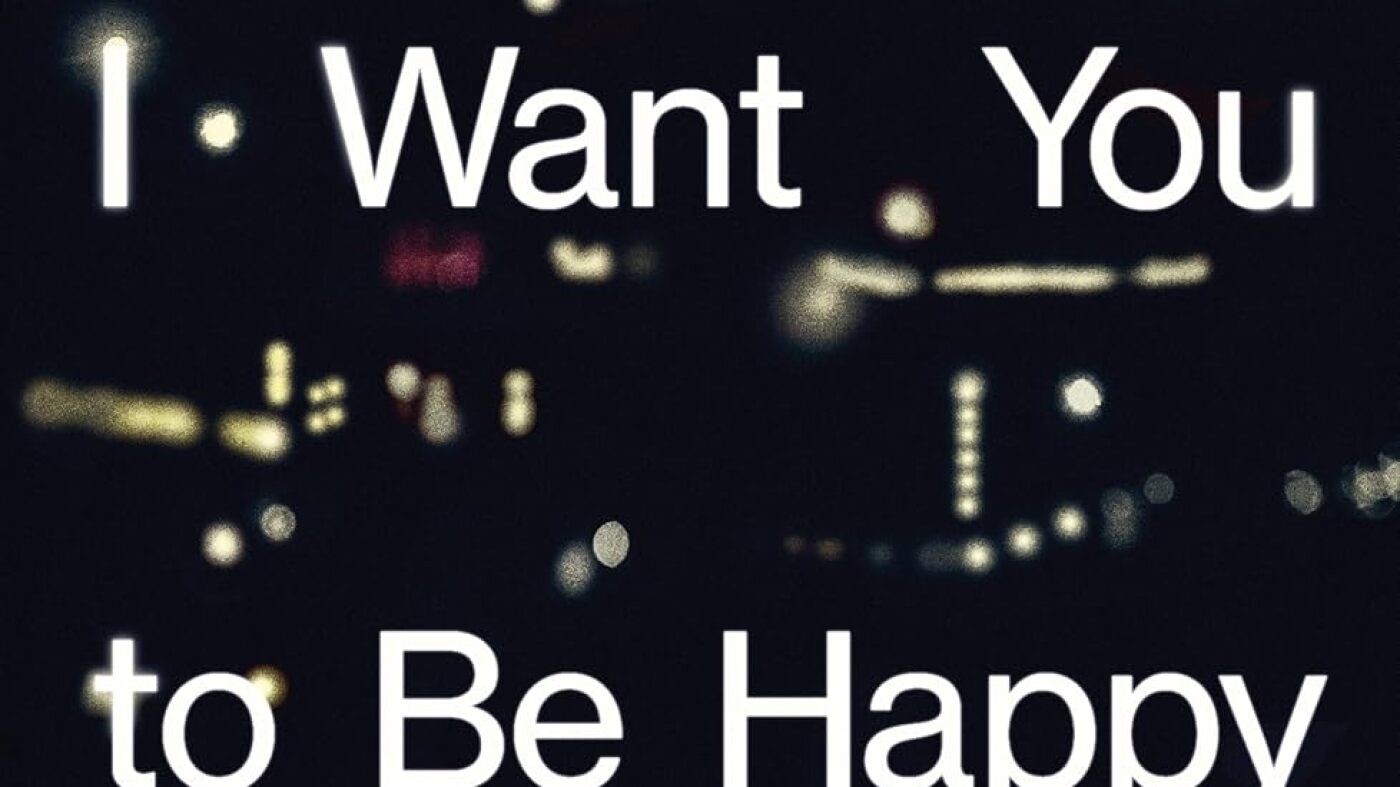
English writer Jem Calder’s debut novel, I Want You To Be Happy, reports from the frontlines of modern-day dating. His book is good – but the news is not.
A man in his mid-30s who recently broke off his engagement with his longtime girlfriend meets a young woman at a crowded London bar. He’s a copywriter, she’s a 23-year-old barista. Despite his intention not to talk about his breakup, he finds himself “shouting specific details directly in her ear.” “Pretty intense,” she yells back. He apologizes. “No-no, I like it,” she yells. “It’s like boarding a plane. You go baggage first.”
Neither can think what to say next. After an “interpersonal silence containing all the bar-noise,” they share a few drinks, their first names (Chuck and Joey), some quips about their 12 year age gap and her lack of what he calls “a real job.” They end up at his luxury apartment, which is far nicer than her crowded shared flat.
In other words, Calder’s characters have boarded a plane, baggage first — with no idea where it will land. Will it lead to an actual relationship, nevermind happiness?

Calder made a splash with his first book, Reward System, a collection of six interconnected short stories about young adults linked by social media yet adrift and alienated in today’s fragmented digital world. The title of one story, “Distraction from Sadness is Not the Same Thing as Happiness,” could also work for this closely observed, sad-but-sympathetic novel about the cagey, jittery dance that characterizes the modern-day mating game.
Chuck and Joey are guarded and uncertain. We get to know them better than they get to know each other — their insecurities and disappointments with themselves as well as others. Their fundamental imbalances — age, financial, commitment levels — lead to a wobbly connection. The discovery that they share literary aspirations (poetry for her, prose for him) and write around their day jobs opens up the potential for some sort of bond. Their nascent relationship stirs “a dormant feeling of possibility” in both of them. But a talent gap opens up an abyss. (I won’t say who has more.)
Joey is hopeful, always on stand-by for texts: “A new person finding you interesting makes you feel new,” she ruminates in this tight, third person narrative that alternates between the male and female perspective. Interestingly, although the author is male, the female character comes across as far more sympathetic.
Joey understands that she needs to wait before replying to texts, because responding too quickly betrays “an underlying neediness and desperation.” Chuck is generally avoidant in all aspects of his life — with alcohol as his chosen support system. It’s important to both of them to convey nonchalance. Neither wants to come across as a “tryhard.”
There’s nothing new about this, of course: Self doubts, waiting by the phone, playing hard to get, “acting noncommittal in the hopes of gaming his desire.” It’s a tale as old as time, with updated electronic devices.
Both characters are addicted to instant gratification: brand name status items, cyclist-delivered meals, push notifications, Instagram scrolling, podcasts, alcohol, smoking, vaping, sex, screens. They are constantly plugged in and online, compulsively checking their media feeds. One night, trying to distract herself from “recursive worries” about her finances and future, Joey spends “twenty of her non-refundable life minutes researching the relationship timeline of an actor she liked and a musician she didn’t like as much.”
Calder writes with precision, channeling his generation’s activities with a mix of interiority and verbs fabricated to convey the mechanical rote of their daily activities. These are people who routinely “gaze-unlocked” their phones, “V-60-ed” some coffee, and “escalatored” up to open plan spaces at work, where, lacking assigned cubicles, they “hot-desked” and then “sense-checked the work.” And at the end of the day, they “cheersed” drinks.
I Want You to Be Happy would have packed more punch at novella-length. Yet readers of all generations should be able to relate to these characters’ waves of disconsolate loneliness, if not how they deal with it. Older readers might recall their own anxieties about the future — but mostly feel relief that they’re no longer out there.
-

 Tennessee2 minutes ago
Tennessee woman arrested after allegedly trying to drown one of her children in backyard pool
-

 Texas8 minutes ago
How a man once ordered to pay libel damages helped launch an investigation into Islamic private schools
-

 Utah14 minutes ago
Utah Jazz vs Portland Trail Blazers Summer League recap and final score
-
Vermont20 minutes ago
VT Lottery Mega Millions, Gimme 5 results for July 17, 2026
-

 Virginia26 minutes ago
Maryland, Virginia elections officials push back on Trump assertion that system is ‘broken’ – WTOP News
-

 Wisconsin38 minutes ago
Wisconsin Lottery Mega Millions, Pick 3 results for July 17, 2026
-

 West Virginia44 minutes ago
West Virginia Wesleyan College to keep Governor’s School for the Arts through 2030
-

 Wyoming50 minutes ago
Racines runs unopposed for Wyoming State Auditor

