Lifestyle
L.A. Affairs: We felt new and thrilling together. So why did he keep ghosting me?

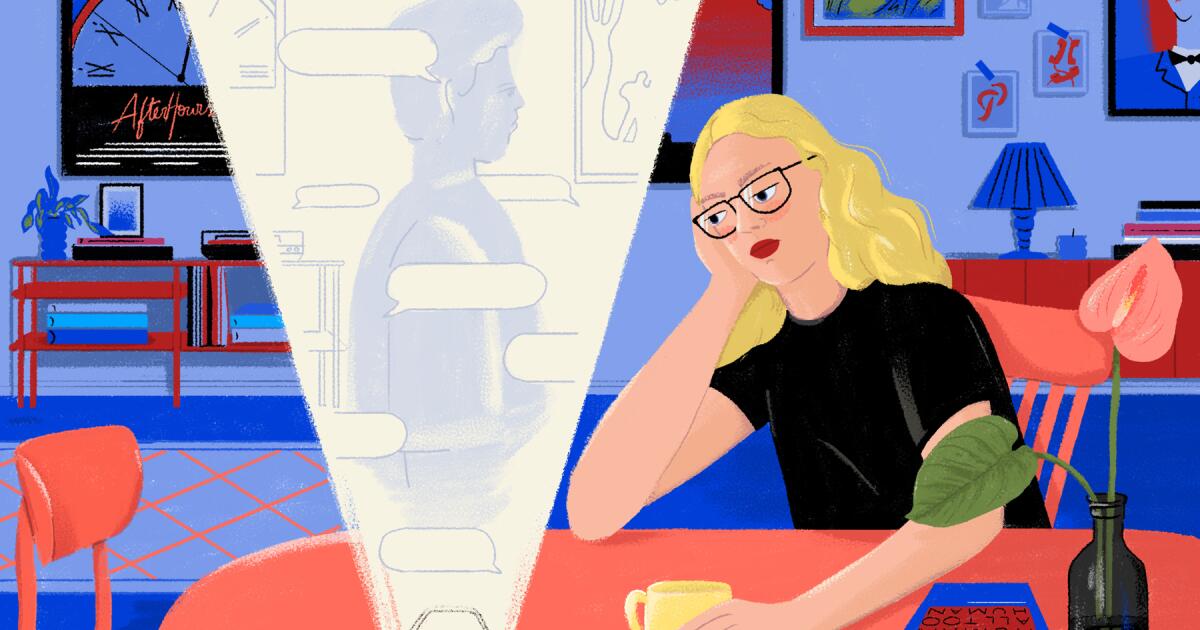
At 5:11 p.m. on a Friday, my phone buzzed with a message from Matt. I was deep in work for my graduate program, and his text left me momentarily stunned. The same Matt who had ghosted me despite promising to call was now reaching out again. “Hey! Are you in OC still? I’m visiting Noah for the weekend and if you are, I was curious if you’d be game to meet up and have a long-awaited chit chat!!”
The day he ghosted me, Matt had told me, “I’m free to call you on Thursday. I’ll check my schedule and confirm tomorrow.”
He never did although his profile picture — Modigliani’s portrait of Jean Cocteau — consistently lingered under my Instagram Stories views. This ghosting, though familiar, felt particularly jarring.
We had met on Instagram. We were both alumni of the same college. He had swiped up on one of my Instagram Stories: a snippet from an Andy Warhol interview with Joan Didion. “This is perfect, what is this from?” he asked. We texted back and forth about Didion, Southern California and the drought that had marked our teenage years. We bonded over the irony of leaving our hometowns only to return.
Despite our deep chats and daily texts about Scorsese movies, iconography and William T. Vollmann, our relationship remained undefined. I was still nursing the wounds of a spring breakup, and though Matt never asked me out, our rambling conversations were intoxicating. This was new and thrilling, especially compared to my most recent relationship, which had been stifling and lacked chemistry.
In the whirlwind of Southern California, where relationships in your 20s can feel as fleeting and unpredictable as traffic on the 405, Matt seemed like a refreshing anomaly. He had played college baseball, but insisted that his real passions were more aligned with Terrence Malick, Nietzsche and obscure indie bands.
However, it wasn’t long before Matt started ghosting me — often mid-conversation. After I hadn’t heard from him in three months, despite his consistent viewing of all my Stories, my friends urged me to cut ties. “I’ll buy you a chai if you finally remove his ass,” my friend Allie said jokingly. I did, and we laughed over drinks, celebrating the end of this particular chapter.
Matt requested to follow me again on Instagram many months later. One morning, while I was driving down to Long Beach, his name popped up on my locked screen. I accepted his request and followed him back, assuming that he would address his absence. He did not. I shot him a brief iMessage asking what was new. Our resulting exchange was friendly but shallow, and he vanished again, resurfacing a month later to swipe up on a Story about a band we both liked.
We started texting back and forth every day again, him professing that he had been directing his time and energy toward “love and becoming” and noting that he felt unable to dialogue deeply with others until “the energy paradigm has been met, ideally down to the quantum level.” Eventually, I asked him to call, and he agreed enthusiastically, stating that he admired me and chuckling that this had been “a long time coming.”
And in a story as old as time, he promised me that he would confirm and then he promptly proceeded to ghost me again. It was that weekend when I discovered he’d been dating someone. I felt uncomfortable, as I never would have been able to tell he was in a relationship. He had said nothing about a partner. I sent him a couple of voice messages expressing my discomfort.
He didn’t open my messages, and then, of course, reached out again on another platform, eager to plan dinner with me while he was back in town. I was in a Huntington Beach coffee shop on a Saturday morning, sipping a lavender latte, when he called to finalize plans. We arranged to walk after Mass, but he never responded to my message about timing (“it’s Novus Ordo, so what about 5:30?”).
The following morning, I ended our connection, telling him that he lacked follow-through and that it was astounding that he could wax poetic about so many things and yet treat me more like an abstract concept than a person with feelings — someone who wouldn’t be hurt because she was on the other side of the screen and couldn’t be touched. He didn’t reply. He just stopped following me on Instagram.
If that wasn’t enough, a girlfriend from college informed me that one of her close friends had a similar experience with him several years back.
Unfortunately, the line between “indie f—boy” and “man who shares my passions and interests” has proved to be incredibly thin.
As a graduate student in theology and library science, it can be challenging to find a guy who can sustain a meaningful conversation. But it was through Matt that I realized it can sometimes be worse when the guy is actually able to. Despite his insistence on portraying himself as a “creative” and “artist,” he was more invested in curating a persona than in maintaining a stable connection.
Sure, he called himself a co-founder of a filmmaking studio, but the artsy black-and-white photos of him smoking tobacco and staring off into the distance at the Getty made it clear that he was most interested in playing the role of the brooding and misunderstood artist — someone who enjoyed possessing me when it was comfortable for him, but had no real desire to reciprocate. I wasn’t his friend; I was the scene partner in his A24 movie.
As I told him in my final iMessage, effectively ending our on-and-off connection that had never culminated in a meetup, “I’m a person behind the screen, not a philosophy book, not an intellectual fantasy.” A man acting like the protagonist in a Cigarettes After Sex song, I told myself while deleting his contact information, isn’t going to be the great love of your life.
The author is a writer and graduate student living in the Greater Los Angeles area. She’s on Instagram: @julialouisemorrow
L.A. Affairs chronicles the search for romantic love in all its glorious expressions in the L.A. area, and we want to hear your true story. We pay $400 for a published essay. Email LAAffairs@latimes.com. You can find submission guidelines here. You can find past columns here.


How to enter your Sporty Spice era.
Getty Images/quantic69/Olga Kurbatova/Anastasiia Zvonary/Photo Illustration by NPR
hide caption
toggle caption
Getty Images/quantic69/Olga Kurbatova/Anastasiia Zvonary/Photo Illustration by NPR
Reality dating and professional sports are not as different as you’d think.
Brittany is in her Sporty Spice era – she watched the NBA playoffs, she’s following World Cup games, and she’s watching the New York Liberty play their WNBA season. These games are daily – and so is the reality dating show Love Island. And she noticed that the two formats are not very different at all. Defector.com staff writer and co-owner Kelsey McKinney came to the same conclusion – so the two of them discuss why these games of athleticism and love can bring us together… and why they get valued differently in our culture.
For more episodes on sports and reality TV, check out:
Get rich or die trying: how sports betting is changing our love of the game
Is this the end of reality TV?
The ugly truth of America’s expensive homes
Support Public Media. Join NPR Plus.
Follow Brittany on Instagram: @bmluse
This episode was produced by Liam McBain. It was edited by Neena Pathak. Our Supervising Producer is Cher Vincent. Our Executive Producer is Barton Girdwood. Our VP of Programming is Yolanda Sangweni.


As the nation marks the 250th anniversary of its founding, NPR asked students all around the country to reflect on the moment and to make podcasts about the American experience and what “life liberty and the pursuit of happiness” means to them.


We received more than 700 entries, including many conversations with immigrant parents, grandparents, aunts and uncles about why their family decided to move to the United States. Others scored high-profile interviews with veterans, government officials and even Gloria Steinem.
We listened to reenactments and retellings of histories like the Battle of Monmouth, the Stonewall riots, the Underground Railroad and a special presentation on President Theodore Roosevelt’s pets. Other podcasts take place in the present, including one in which students report on civics education in their school.
Our team chose a handful of winning entries and honorable mentions from fourth graders, middle and high schoolers. Here they are, in alphabetical order:
Winners
Abridged
Students: Grace Kepka and Angelika Garrett, Montgomery Blair High School in Silver Spring, Md.
Teacher/Sponsor: Kyle Wannen
High schooler Grace lives in Takoma Park, Md., one of the handful of cities in the United States that allow 16 year olds to vote in all local elections. In her podcast with her friend Angelika, they discuss the power of the youth vote, and how voting rights encourage residents to learn about their government and be more politically active in their communities.
Civics in Our Schools
Students: Izabella Anthony, Benjamin Baigel, Bridget Castellon, Rile DeLeon, Maxwell Gibbs, Daniel Hernandez, Malcolm Johnson, Sylpa Kafle, Mason King, Kyle Li, Maximus Lin, Emmerson Quinn, Ariella Schoenfeld, Owenize Udevbulu and Dara Widzowski, Hewlett Elementary School in Hewlett, N.Y.
Teacher/Sponsor: Jaime Harrington
“Here’s the surprising truth. Many Americans, even grownups, don’t know the basics of how our country was founded or how our government works.” In Civics in Our Schools, a group of fifth graders voice their concerns about the lack of good civics education and discuss what they can do to be better citizens.
Leaving Greece
Student: Livie Courser, Wickliffe Progressive Elementary School in Upper Arlington, Ohio
Teacher/Sponsor: Shelly Hughes
Livie interviews her grandfather about his move from Greece to the United States. “How did it feel to immigrate to the U.S.?” she asks. “Very hard. Very very hard,” he responds. He shares with his granddaughter why he took the risk, and how his move to the U.S. allowed him to work hard at a factory, dream big and eventually open up his own restaurants.
Researching the Underground Railroad
Students: Travis Bozeman and Oliver Heering, South Douglas Elementary School in Douglasville, Ga.
Teacher/Sponsor: Thomas Bruno
“Did you know around 100,000 slaves escaped using the Underground Railroad?” In a deep dive into a slice of history they learned from school, fourth graders Travis and Oliver report on the Underground Railroad. They present their research in the podcast, and weave in the expert interview they scored.
The American Dream
Student: Makayla Cheung, Mercer Island High School in Mercer Island, Wash.
Teacher/Sponsor: Lauren Schechter
In her podcast about her father, Makayla explores how different everyone’s American Dream is. Case in point, her dad moved from Hong Kong to the United States because of his talent in running. He tells Makayla he had a hard time adjusting at first and understanding his coach. But cross country, he says, didn’t require too much communication, and the sport gave him confidence and a way for him to find community and connect with other people.
The Journal
Student: Violet Maxinoski, Carmel High School in Carmel, Calif.
Teacher/Sponsor: Shelley Grahl
In an interview with her daughter Violet, Sandi Maxinoski revisits stories from her journal from the years she served in Iraq. She describes being in “cities fractured by bombings, checkpoints, smoke and uncertainty,” then returning to the United States where she felt an “intense amount of security” being able to walk down the street without the fear of something blowing up. Through these conversations, Violet discusses how the “life, liberty and happiness” she’s gotten used to shouldn’t be taken for granted.
Welcome Home, Grandpa
Student: Ursula Koestner, Roslyn High School in Roslyn Heights, N.Y.
Teacher/Sponsor: Matthew Vogt
“The Vietnam War destroyed more than it saved, even decades after its end,” high schooler Ursula says in her podcast. “My grandfather remains one of its victims despite returning home alive.” In her moving podcast, Ursula shares her family’s story and explores the generational trauma and lasting impact the Vietnam War has on veterans.
Honorable Mentions
America the Beautiful
Students: Pareena Gupta and Vidushee Bala, Amador Valley High School in Pleasanton, Calif.
Teacher/Sponsor: Stacey Sklar
America: The Ups and the Downs
Student: Alana Burwell, The Waldorf School of Philadelphia, Philadelphia, Pa.
Teacher/Sponsor: Anyta Thomas
America’s New Favorite Sport-Girls’ Flag Football
Students: Josephine Barry-Kao and Malcolm Barry-Kao, Lowell High School in San Francisco, Calif.
Teacher/Sponsor: Jacqueline Moses
An Intro to Differing Perspectives
Student: Waylon Heikinen, Ingomar Middle School in Franklin Park, Pa.
Teacher/Sponsor: Heath Gamache
Becoming American
Students: Karolina Zientek, James Gearhart, Andrea Vezmar, Troy Murray and August Hutchison, Greenwich High School in Greenwich, Conn.
Teacher/Sponsor: Lukasz Zientek
Before You Drop A Track: America’s 250th Anniversary
Student: Lukas Boulom, Public Academy For Performing Arts in Albuquerque, N.M.
Teacher/Sponsor: Su Hudson
Dawg Talk | Are we equal now?
Students: Makenna Aniszewski, Trinlee Leitner, Nagamoshitha Manivannan, Nethra Prabhu, Vaishnavi Tiwari and Sophia Van Dorn, Otwell Middle School in Cumming, Ga.
Teacher/Sponsor: David Miller
Democracy for Everyone or No One
Student: Jeju Daisy Ahn-Miles, Punahou School in Honolulu, Hawaii
Teacher/Sponsor: Christine Ahn
Everything Given Forward
Student: Lara Leon, Mountain View High School in Mountain View, Calif.
Teacher/Sponsor: Tom Chang
Fifty Stars, One Banner
Student: Naina Dhillon, Khan Lab School in Palo Alto, Calif.
Teacher/Sponsor: Emily Lindsey
Freedom’s Shore
Student: Dipa Chéry, The Kinkaid School in Houston, Texas
Teacher/Sponsor: Olen Rambow
From One Immigrant To Another
Student: Afomia Lemma, St. Mary’s Lynn in Lynn, Mass.
Teacher/Sponsor: Tiringo Endalamaw
Hope and Resistance
Student: Zinnia Bender, North Fork High School in Hotchkiss, Colo.
Teacher/Sponsor: Clara Pena
How Is My Life Like In US
Student: Yicheng Sun, Rectory School in Pomfret, Conn.
Teacher/Sponsor: Andrew Barker
Life of a Soldier
Students: Della Axelband, Peyton Johnson, Lily Epstein and Lilly Murillo, Jupiter Middle School in Jupiter, Fla.
Teacher/Sponsor: Sireesha Rutter
More Than A Photograph
Student: Josie Sloan-Westmoreland, The Learning Community School in Swannanoa, N.C.
Teacher/Sponsor: David Bird
Moving From Country to Country
Students: Ida Buerckert, Daniella Cubas, Ayano Enishi and Anastaiia Koshyk, Irving A. Robbins Middle School in Farmington, Conn.
Teacher/Sponsor: Alysson Olsen
Picketts Charge
Student: Zoe Snyder, Susquenita High School in Duncannon, Pa.
Teacher/Sponsor: Terrance Shepler
“So What??”
Student: Caroline Harris, Marin Academy in San Rafael, Calif.
Teacher/Sponsor: Kelly Kurtzig
Somewhere Over the Rainbow
Student: Lark (Miles) Jackman, Public Academy For Performing Arts in Albuquerque, N.M.
Teacher/Sponsor: Su Hudson
Teddy Roosevelt and His Pets
Student: Abbott Mearns and Keaton Rainwater, College Place Middle School in Lynnwood, Wash.
Teacher/Sponsor: Colindra Connolly
The Battle of Monmouth: A Twist on History
Students: Leonardo, Zinna and Kaiden, Marlboro Middle School in Marlboro, N.J.
Teacher/Sponsor: Tara Meara
The Freedom to Fail
Students: Abraham Coher and William Pan, Polytechnic School in Pasadena, Calif.
Teacher/Sponsor: Aliya Coher
The Government Exodus: Why Federal Workers Resign
Student: Anna Su, Montgomery Blair High School in Silver Spring, Md.
Teacher/Sponsor: Kyle Wannen
The Name I Chose Polly Bemis (September 11, 1853 – November 6, 1933)
Student: Jubilee Sung, Imaginate Ink in Irvine, Calif.
Teacher/Sponsor: Clarissa Ngo
The Pig and Potato Podcast
Student: Petra Rouhana, Maryvale Preparatory School in Lutherville, Md.
Teacher/Sponsor: Deirdre McAllister
The Small Pond of Peace
Students: Noam Dekel, Ronnie Dekel, Ian Rodriguez, Leonardo Leon-Espinoza, Singary Fofana, Ashly Arboleda-Osorio, Olumide Martin and Salma Elshaarawi, P.S. 333 Manhattan School for Children in New York, N.Y.
Teacher/Sponsor: Karin Patterson
to be united as citizens
Student: Josh Langlois, Cloverleaf Home Education in Highlands Ranch, Colo.
Teacher/Sponsor: Tony Winger
Two Worlds, One Dream
Student: Allayar Maratov, Rectory School in Pomfret, Conn.
Teacher/Sponsor: Andrew Barker
What is Home?
Student: Siobhan Allen, The Hewitt School in New York, N.Y.
Teacher/Sponsor: Jonathan Sabol
-

 New York4 minutes ago
How a Museum Security Guard and Artist Lives on $51,000 in Parkchester
-

 Los Angeles, Ca6 minutes ago
Heat advisory issued as Southern California temps near triple digits this week
-

 Detroit, MI27 minutes ago
Detroit Battery Safety Provider Reaches to the Skies with Med Hawk
-

 San Francisco, CA36 minutes ago
A Locals-Approved Modern Guide to Fisherman’s Wharf: Seafood, Beer Gardens + Iconic Bay Views
-

 Dallas, TX42 minutes ago
New glitzy Houston steakhouse Juliet opens next to Delilah this summer
-

 Miami, FL49 minutes ago
Allapattah man faces charges over armed robbery after crash in Miami’s Liberty City
-

 Boston, MA51 minutes ago
Somehow, This is a Fitting, Confusing End to Jaylen Brown’s Boston Celtics Career
-

 Denver, CO57 minutes ago
Denver Broncos 2026 schedule

