Finance
A former stockbroker explains how real estate became his 10-year path to financial freedom after falling behind on retirement savings

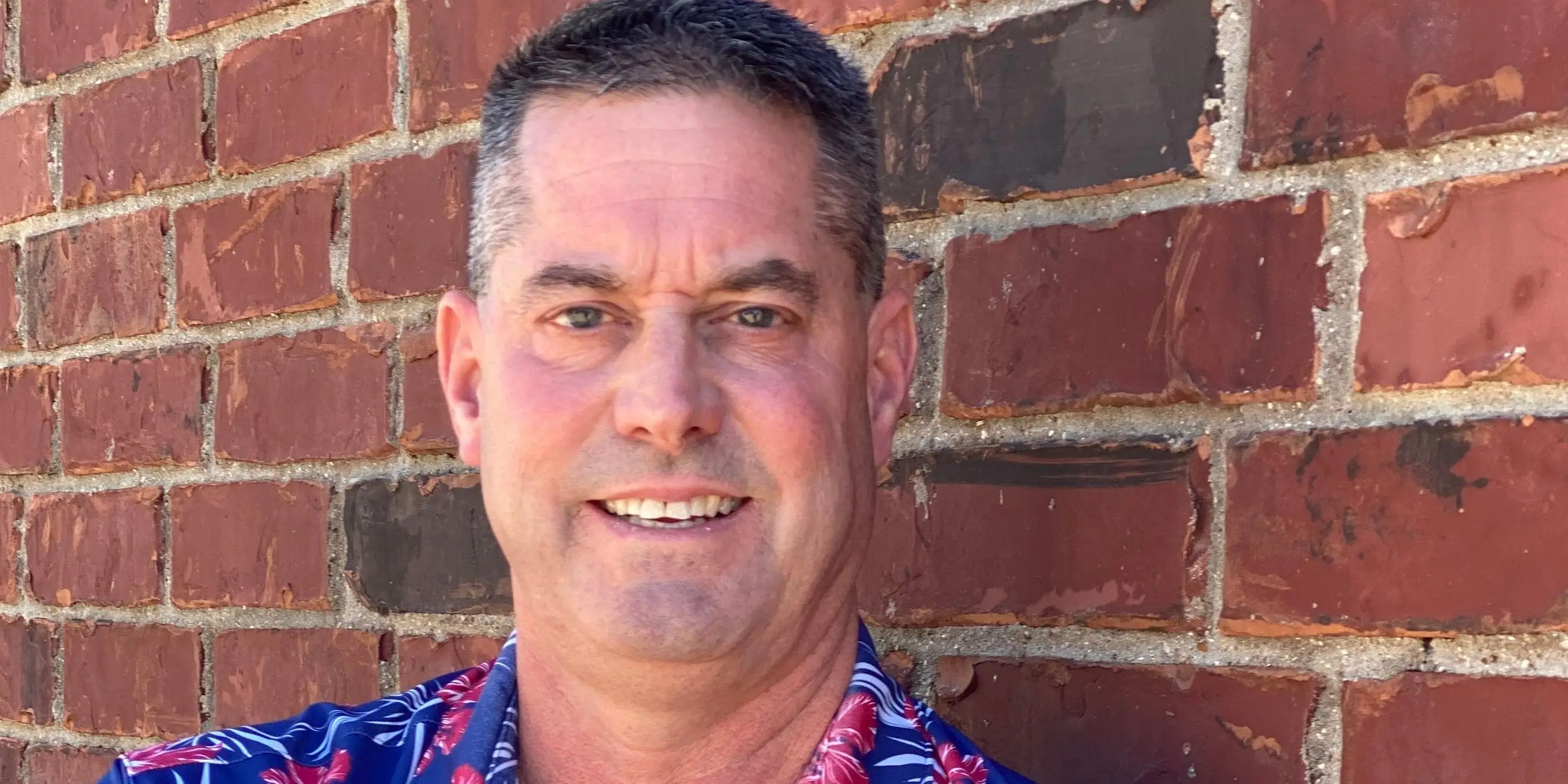
- Brannon Potts shifted to real estate investing to achieve financial freedom in his 50s.
- He does ‘build-to-rent’ projects in Fort Worth, Texas, and has scaled up to 10 doors.
- Once he gets to 20 doors, he expects to have enough cash flow to retire early.
After years of working in banking and finance, Brannon Potts found himself behind on long-term savings.
“I was in my 40s and I hadn’t really gotten, in earnest, to saving for retirement,” he told Business Insider. “And I knew that the power of time was now a liability for me.”
Potts, 53, began his career as a stockbroker before transitioning to commercial lending. In 2006, his dad asked him to join the family business and take on the role of CFO, which he did until the business sold in 2010.
At that point, “the market was rough and I was trying to decide what I was going to do,” said Potts. It occurred to him that a pivot to real estate could be a smart career move — and help him hit a lofty financial goal: achieving financial freedom in his 50s.
When he was working on loan products for a bank earlier in his career, “I got to sit down with some people that were multimillionaires,” he said. “I would ask them, ‘How did you make your money?’ And what I found was most of them either made their money in real estate or kept their money in a lot of real estate.”
Rather than jumping straight into the investment side of real estate, he decided to learn as much about the industry by first working in sales and, eventually, starting a property management company.
“I knew I wanted to eventually own properties,” said Potts. “Why not stay in the same industry and have a company that manages my properties for me and manages properties for others?”
By 2020, with about a decade of industry experience under his belt, Potts felt prepared to invest in his first property.
The investment strategy that’s catapulting him to financial freedom: Build-to-rent
Rather than search his market, Fort Worth, Texas, for deals, Potts decided to build his own rental properties. He grew up in a home built by his parents and followed in their footsteps, constructing each of the homes that he and his wife Mindy have resided in.
“I noticed a pattern when I was building my houses: Every time we built, it had equity over and above the cost of the build,” he said. “I’m like, well, then why don’t I do it with rentals?”
Courtesy of Brannon Potts

He started two “build-to-rent” projects simultaneously in 2020: a beach house in Port Aransas that he and Mindy converted into a short-term rental and a fourplex that they filled with long-term tenants. Both projects wrapped in 2021.
Over the next couple of years, the couple expanded to 10 doors. As of March 2025, they have two more under construction and expect to have a total of 12 completed doors by mid-2025. They’re all long-term rentals except the beach house. BI viewed owner statements to verify his property ownership.
The short-term rental is “just about break even,” he said. “So, in a sense, the cash flow is paying the mortgage down. And, it’s appreciated. It’s doubled in value.”
Cash flow wasn’t the primary objective of this project, he added: “It came down to, we wanted to have a beach house, and really the only way we could do it was if we made it a rental and stayed in it a couple of weeks a year.”
The long-term rentals have each produced positive cash flow from the get-go — “I wouldn’t do them unless they did,” he said — and, as of 2025, are profiting, on average, $330 a month per door. That’s about $40,000 a year of relatively passive income, as his properties are new builds and don’t require much maintenance or attention.
He doesn’t think he’d get close to those numbers if he bought pre-existing properties: “The resale market is a little bit harder to pencil out and work financially.” Plus, he’ll be able to pass on newer properties to his family. “If I’m building brand new and I’m leaving that legacy for the family, by the time I’m gone, these properties are only 25 to 30 years old. They’re still in great condition, versus 70- or 80-year-old properties, so that’s another factor. This is a long-term plan for my heirs.”
Investing in real estate vs. the stock market
For Potts, who set a lofty goal and was working with a relatively tight timeline, investing in real estate rather than the stock market made more sense.
“I had a goal to get to financial freedom in my 50s, and I knew I couldn’t do it any other way but through real estate,” he said. “If you do this well, it’ll take about 10 years. You can get to financial freedom much quicker versus using a 401(k), which is 30-plus years.”
Courtest of Brannon Potts
He’s also seeing much higher returns than he would if his money was in a fund tracking the S&P 500, for example.
“I was wanting at least 10% cash-on-cash return,” he said. Once he finishes doors 11 and 12, “my average cash-on-cash return is 27%.”
He expects to hit financial independence and have the option to retire — he still runs his property management company — once he gets to 20 doors, which he plans to do in the next five years.
“It’s a much quicker path,” he said. “Plus, the asset produces cash flow to pay the bills so you don’t have to sell the thing that you own as equity to pay the bills — it’s producing the cash flow, versus, with stocks and bonds and a 401(k), you’re going to have to sell the stock to create the cash. And, the cash flow is usually tax-free. The IRS tax code is written for owning rental properties.”
Once he retires, Potts envisions himself spending more time at the beach and with his kids while growing his YouTube channel, Build2Rent Investing and Financial Talk, and helping others use real estate investing as a wealth-building tool. Part of the reason he fell behind on retirement savings in the first place was a lack of financial literacy, he said: “I just got it together probably in my 40s, and I feel like I really got it together well, but we didn’t do well because we weren’t taught.”
He’s learned the importance of holding his money “accountable,” he said. “That’s what people that reach financial freedom do. If you treat your money well, it’ll come back with friends. If you treat your money poorly, it’ll leave and go to somebody else who treats it better. So, I want to treat my money well. I want to hold it accountable to making good returns.”

Finance
Board Advances Motion to Address LAHSA’s Failure to Pay Service Providers – Supervisor Lindsey P. Horvath

Board Advances Motion to Address LAHSA’s Failure to Pay Service Providers
Board Advances Motion to Address LAHSA’s Failure to Pay Service Providers
https://lindseyhorvath.lacounty.gov/wp-content/uploads/2023/03/image003-1024×888.jpg
1024
888
Supervisor Lindsey P. Horvath
//lindseyhorvath.lacounty.gov/wp-content/uploads/2023/03/horvath.light_.pink_.v3.png

Around three years ago, Charles Giancarlo, CEO of data platform Pure Storage, came back from Davos and asked his sustainability team to look into an idea he’d encountered at the meeting: Impact accounting, a method for integrating emissions and other externalities into company balance sheets.
The idea had been slowly picking up adherents in Europe for around a decade, but Pure Storage, which rebranded this month to Everpure, would go on to become the first U.S. company to join the Value Balancing Alliance (VBA), a group of 30 or so companies developing the approach. Trellis checked in last week with Everpure and the VBA for an update.
How does impact accounting work?
At the heart of the approach are a set of “valuation factors,” developed by third-party experts, that are used to convert activity data for emissions, water use, air pollution and other externalities into dollar figures that can be integrated into balance sheets. In the case of emissions, for example, the VBA uses $220 per ton of carbon dioxide equivalent, a figure based on the estimated social impact of rising greenhouse gases levels.
At Everpure, one long-term goal is to have cost centers be aware of the dollar impact of relevant externalities. After an initial focus on identifying and collecting the most material data, the team is now rolling out a dashboard containing several years of impact accounting numbers.
“It’s catered to different personas,” explained Adrienne Uphoff, Everpure’s ESG regulations and impact accounting manager. Finance was an initial use case, with product managers also on the roadmap. “You can compare it to financial numbers to really understand the impact intensity.”
What value does the approach bring?
“The essence of impact accounting is that you’re translating all these different metrics in the sustainability space into the language the decision makers understand,” said Christian Heller, the VBA’s CEO. “Everyone understands what you’re talking about, and you get a sense of the magnitude of your impact and the risks and opportunities.”
This has allowed Everpure to calculate what Uphoff called the “environmental costs of goods sold” and to estimate the impact of circular strategies, such as refurbishing hardware. The analysis reveals “impact savings across the full value chain across five different environmental topics all in a single dollar unit,” she said.
Analyses like that can then be shared with customers and used to distinguish Everpure from competitors. “The long-term winners in this space are going to be those that can perform against sustainability goals,” said Kathy Mulvany, Everpure’s global head of sustainability. “Impact accounting gives us a way to bring comparability, so companies can understand how they’re truly stacking up.”
What does it take to implement impact accounting?
A great deal of technical work goes into creating valuation factors, but the system is designed so that outside experts create the numbers and hand them to sustainability professionals for use. Still, not every company will have the in-house environmental data that is also needed. Many companies have been collecting emissions data for five years or more, for example, but detailed datasets for water use are less common.
Internal teams also need to be familiar with the concepts. “One of the key learnings from our impact accounting implementation is that the socialization curve is longer than you expect,” said Uphoff. “Attaching monetary values on externalities introduces new metrics and mental models, and that can naturally make people a little nervous at first. It takes time and dialogue for teams to build confidence in how to interpret this new lens on performance.”
What’s next?
In the early days of impact accounting, companies and consultancies worked independently on different methodologies. Now that work is coalescing, said Heller. The International Standards Organization will start work on a standard this summer, he added, and the VBA is having conversations with the IFRS Foundation, which creates international financial reporting standards.
The approach may also be integrated into mandatory disclosure standards. Heller noted that the European Union’s Corporate Sustainability Reporting Directive mentions the potential benefits of companies putting a dollar figure on some environmental impacts. “It’s the next evolutionary step of any kind of sustainability disclosure regulations,” he said.
.

Chicago Public Schools is shutting down two Aspira charter high schools by the middle of the year, following financial issues over the past year.
School leaders are calling the move “unprecedented.”
Students at the Aspira Business and Finance High School at 2989 N. Milwaukee Ave. in Avondale held a walkout right outside of Aspira after the CEO said they only have enough money to stay open for the next four to five weeks.
Students wanted their questions answered as to why they’re being transferred to other schools.
Angelina Mota is a senior at the high school and said she is concerned about her future.
“It’s very difficult, especially for us, hearing that credits might not go all the way with us. That our graduation might just be taken back. It’s very disappointing,” she said.
This is the first time a CPS school will close before the end of the school year. Both Aspira and CPS said the charter network won’t have the funds to stay open past April.
“The burden on our seniors has got to be… they don’t give a damn about the kids. The seniors,” Aspira of Illinois CEO Edgar Lopez said while fighting back his emotions.
The school is facing a $2.9 million deficit, impacting 540 students and dozens of staff.
CPS said they have already given more than $2.5 million to the charter school to help sustain operations. They said under Illinois law, it reached the legal limit of funding it can provide.
This has been a year-long effort in compliance with state charter school law.
In a statement, CPS said, “Aspira has not submitted required documentation, including evidence of funding to support operations through this school year.”
The documents CPS said are overdue include the school’s fiscal year 25 financial audit, general ledger, and payroll.
“We’re not hiding nothing. The financial documents that they were asking for, Jose told them, we’ll have them to you by Friday. Then they send a letter by Thursday. They didn’t even give us a chance,” Lopez said.
CPS said they’re initiating this due to the lack of financial transparency and solvency.
“We know we don’t want to go anywhere else because we’re used to the routine we have here,” said student Arichely Molina.
“Please let us (stay) open. at least until we graduate,” Mota said.
CPS said their main goal is to ensure the kids have a safety net as they transition to another school.
The second school is located at 3986 W. Barry Ave., also in the Avondale neighborhood.

Mojtaba Khamenei, son of former supreme leader, tipped to become Iran’s next head of state

Las Vegas first responders conduct seven-hour rescue of injured climber stranded 600 feet up rock face

Breaking: Arkansas Announces Significant Partnership With Tyson Foods, Including New Uniform Patch Logos

Ted Cruz endorses Texas state Rep Steve Toth in GOP primary challenge to Dan Crenshaw

New York AG orders Manhattan hospital to resume gender-transition treatment for transgender youth

Florida High School Football Rankings: Top 25 teams – Oct. 21

Cleary's 21 help Le Moyne down Central Connecticut State 69-64 in OT

How old is Bo Nix? What to know about Oregon quarterback ahead of 2024 NFL Draft

99th annual Pony Swim held in Virginia

Indiana Members Credit Union announced as new anchor tenant at Bottleworks District
Mojtaba Khamenei, son of former supreme leader, tipped to become Iran’s next head of state

Video: Senators Question Kristi Noem on ICE Immigration Tactics

Combustible Republican Senate primary in Texas heading into overtime

Hungarian veto proves EU needs less unanimity, says new Dutch PM

Pregnant migrant girls are being sent to a Texas shelter flagged as medically risky
-

 World6 days ago
Exclusive: DeepSeek withholds latest AI model from US chipmakers including Nvidia, sources say
-

 Massachusetts7 days ago
Mother and daughter injured in Taunton house explosion
-

 Denver, CO7 days ago
10 acres charred, 5 injured in Thornton grass fire, evacuation orders lifted
-

 Louisiana1 week ago
Wildfire near Gum Swamp Road in Livingston Parish now under control; more than 200 acres burned
-

 Oregon5 days ago
2026 OSAA Oregon Wrestling State Championship Results And Brackets – FloWrestling
-

 Florida3 days ago
Florida man rescued after being stuck in shoulder-deep mud for days
-

 Maryland3 days ago
AM showers Sunday in Maryland
-

 Culture1 week ago
Try This Quiz on Thrilling Books That Became Popular Movies