South
Suspect in custody after hours-long barricade, 3 Washington, DC police officers shot

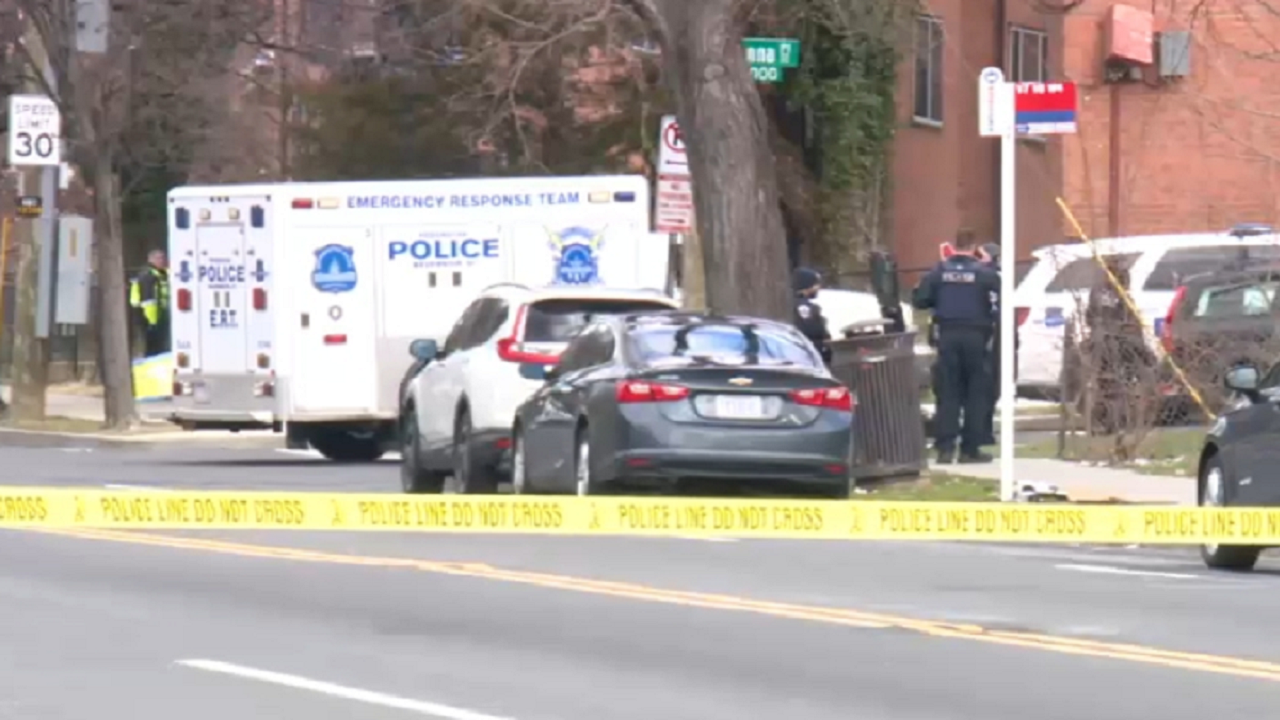
A suspect is in custody after a 13-hour barricade situation following a shootout with Washington, D.C. police that injured three officers.
Metropolitan Police Department identified the suspect as 46-year-old Julius James, of Southeast, D.C. Police said James surrendered after several hours of negotiation. He is charged with assault with intent to kill while armed, assault on a police officer while armed and possession of a firearm during a crime of violence, police said Thursday.
He is also charged with cruelty to animals, a misdemeanor.
Police Chief Pamela Smith said officers who arrived at a residence in the 5000 block of Hanna Place around 7:30 a.m. to serve an arrest warrant for cruelty to animals were met with gunfire through the door when they attempted to gain entry.
WILD VIDEO SHOWS DRIVER HOP CURB IN STOLEN CAR, NARROWLY MISS RUNNING DOWN WOMAN AND HER DOG: POLICE
The suspect remained barricaded inside the home throughout the day.
Smith said officers made contact with the suspect, who had moments of “agitation” and moments of positive interaction with emergency personnel.
Smith said the suspect was firing shots “here and there” throughout the day.
Police in Washington, D.C., respond to the scene of a shooting on Wednesday, Feb. 14, in which three officers were shot. (WTTG)
The shooting left three officers with gunshot wound injuries that were not life-threatening, police said. All three have been transported to an area hospital for treatment.
A fourth officer was also transported to an area hospital for minor injuries. This officer did not sustain gunshot wound injuries.
All four injured officers are in stable condition and expected to recover. It is not clear when they will be released.
1 DEAD, MULTIPLE PEOPLE INJURED IN SHOOTING NEAR CHIEFS’ SUPER BOWL VICTORY RALLY IN KANSAS CITY
Multiple roads were closed off around the shooting scene as law enforcement responded to the incident. Three nearby elementary schools were also operating on an alert status. Residents in nearby homes were relocated.
A heavy police presence has descended on the area where the shooting happened in Washington, D.C. (WTTG)
Smith said there was an early dismissal from Kipp DC’s Leap Academy. Parents were told to arrive at 46th St SE and Benning Rd SE to pick up their children.
CLICK HERE TO GET THE FOX NEWS APP

South-Carolina
Tennessee Football 2026 SEC Opponent Summer QnA Preview: South Carolina | Rocky Top Insider


Tennessee football is returning to a house of horrors next season. The Vols will play at South Carolina, where their magical 2022 season essentially came to an end, and Hendon Hooker tore his ACL to finish his college career.
With fall camp around the corner, I spoke with Lulu Kesin of The Greenville News to get the inside scoop on where the Gamecocks are at this summer ahead of this year’s matchup.
Here’s what she said.
More From RTI: Tennessee Quarterback Reportedly Joining Manning Passing Academy Instructors
Heading into year six, what’s the feeling around where the program is at under Shane Beamer?
I think there’s still lingering disappointment in how big of a step back 2025 was, but a lot of fans’ blame really went on former offensive coordinator Mike Shula. With the Kendal Briles hire and just with time, there’s been some optimism starting to flood in, but overall I think most feel like this is a make-or-break year for Shane Beamer. His transfer portal success combined with the fact that high school recruiting didn’t take a huge hit despite the 4-8 season helps a lot, but South Carolina can’t miss a bowl game again.
South Carolina was able to return LaNorris Sellers at quarterback. What are the expectations for him this season?
It’s rare to see a quarterback stay in one place for three seasons which is an advantage that should LaNorris Sellers has to capitalize on. He’s had three different OCs which isn’t great. Without a spring game, it’s hard to tell how things are going in Briles’ system, but there are high expectations regardless. LaNorris is a football junkie and often described as a perfectionist so last season was likely a harsh wake-up call in some ways. He’s had bad protection so far but also his own issues to improve upon. I think the expectation now is that Briles is the OC who can get him to where he needs to be, which is closer to his 2024 self.
What have the Gamecocks built around Sellers on offense?
WR Nyck Harbor is the biggest piece downfield, and their chemistry took a big step forward last year. Nitro Tuggle, a transfer WR from Purdue, is another player to keep an eye on. South Carolina does not necessarily have a clear RB1 now, but Beamer brought in three portal RBs, which will hopefully give the offense some life on the ground. On both sides of the ball South Carolina lacked maturity and experience last year so Beamer intentionally brought in some players who had in-game experience, even if it was limited.
A major factor was a lack of protection so South Carolina completely revamped its offensive line. That’s a huge element to Sellers success. He was sacked 42 times last year, the third most in DI.
What projects to be the strengths, weaknesses of the defense?
South Carolina’s secondary will have to operate without DQ Smith, Brandon Cisse and Jalon Kilgore and those are some big shoes to fill. Dylan Stewart was never fully healthy towards the latter half of last season, so if he’s back to 100% then there’s still a lot of strength there, especially with freshman edge rusher Julian Walker coming in.
Do you have an early prediction for the game, or is it too far out to tell still?
I lean more towards it’s too far out to tell but under Beamer, South Carolina is 1-3 in games played during that Oct. 22-26 range. It’s also after a bye week which can either hurt or help the Gamecocks but being at home is certainly an advantage.

NASHVILLE, Tenn. (WZTV) — If Middle Tennessee’s summer heat has you questioning every life decision made after noon, these local ice cream shops offer the sweetest escape.
As dangerous heat grips Middle Tennessee, here’s a roundup of the region’s best spots for handcrafted scoops, towering sundaes and frozen treats made to beat the summer sizzle.
Mike’s is a late-night go-to for sweet cravings, known for its homemade waffle cones — the smell alone draws people in — and dozens of rotating flavors like espresso shake, banana pudding and strawberry cheesecake.
A Middle Tennessee institution, Hattie Jane’s churns small-batch ice cream made with Tennessee dairy. Southern-inspired flavors such as nana puddin’, brown butter pecan and strawberry jam have made it a regional favorite.
With more than 70 flavors — including a rotating “Sweet 16” lineup — Sweethaven has quickly earned its place on Franklin’s Main Street. Popular picks include fresh strawberry, chocolate raspberry truffle and spicy mango. Its charming location makes it an easy stop after shopping or dinner.
A Nashville landmark since 1951, Bobbie’s Dairy Dip keeps it classic with chocolate-dipped soft serve, old-school milkshakes and an ice cream-and-burger combo locals swear by. Pup cups are available for four-legged regulars.
Sarabhas is the spot for adventurous palates. Indian-inspired flavors, chai pairings and kulfi-inspired creations set this shop apart. Popular flavors include mango, Indian coffee and chai spice.
Conecept is Instagram-worthy without sacrificing substance. Creative seasonal flavors, thick milkshakes and loaded specialty cones keep locals coming back. Popular flavors include blueberry and vanilla.
This neighborhood favorite serves everything from ice cream to floats in a family-friendly setting. Standout flavors include bunny tracks, mango ice cream with chamoy and chocolate peanut butter.
Gelato lovers, this one’s for you. GelatoPazzo serves authentic Italian-style gelato with rich pistachio, stracciatella and seasonal fruit flavors. Locals consistently praise the shop’s warm, welcoming atmosphere.
Assorted ice cream flavors. (Photo by Joe Raedle/Getty Images)
Can’t choose between savory and sweet? Fryce Cream solves that. The shop pairs fries with soft-serve ice cream, loaded sundaes and sweet-and-salty combinations. The fries-and-gelato dip combo is a must-try, according to regulars.
Equal parts coffee shop and creamery, Cream & Bean features homemade coffee and ice cream flavors in a relaxed neighborhood setting.
A fast favorite in Franklin’s Cool Springs area, Handel’s makes its ice cream fresh daily with a lineup of more than 40 flavors. Fan favorites include Chocoholic Chunk, Monkey Business and Graham Central Station.
Visitors can watch staff hand-craft Mackinac Island-style fudge right in the shop. Freshly made waffle cones, rich ice cream flavors and an old-fashioned candy shop atmosphere have made Kilwins a longtime draw for locals and tourists alike.
RELATED COVERAGE | 6 Nashville-area coffee trucks worth taking a sip at this summer

A Texas man has been charged with manslaughter after driving a Tesla operating with its automated driving assistance system into a suburban Houston home, killing a 76-year-old grandmother, court papers show.
Michael David Butler, 44, told police he was operating his Model 3 in Full Self-Driving mode on June 19 when he plowed into Martha Avila’s home in Katy, Texas, and told paramedics “the car was on ‘Autopilot,’” according to court papers. Avila died later at a nearby hospital.
According to an arrest affidavit, Butler said he was making a DoorDash delivery run when he changed the music on the Tesla’s touch screen, and eventually “passed out.”
His speed reached 73 miles per hour, more than double the legal limit, and the brake pedal wasn’t used in the minute before the crash, the affidavit said. Butler denied having felt ill, and no alcohol or common street drugs were in his system, the affidavit said.
A lawyer for Butler did not immediately respond to a request for comment. Harris County prosecutors did not immediately respond to a similar request.
Tesla has disputed Butler’s recollections, with Chief Executive Elon Musk saying a vehicle in Full Self-Driving mode “drives slowly through neighborhood streets” and a software vice president saying Butler manually overrode that mode by flooring the accelerator.
According to KHOU television, Butler appeared in probable cause court on Thursday where bail was set at $150,000, with requirements that he wear an ankle monitor and not drive.
The National Highway Traffic Safety Administration has been investigating the crash, and has since 2016 opened nearly 50 special investigations of Tesla crashes believed to involve advanced driver assistance systems. About two dozen deaths were reported.
Tesla has said its Autopilot system enables vehicles to steer, accelerate and brake within their lanes, while Full Self-Driving lets vehicles obey traffic signals and change lanes. Both require “fully attentive” drivers, it has said.
Avila’s family sued Tesla last week, saying her wrongful death reflected the electric vehicle maker’s gross negligence and failure to warn that its self-driving systems were defective.
-

 Rhode Island6 minutes ago
Water worries mount, outdoor water use banned in some parts of RI
-

 South-Carolina9 minutes ago
Tennessee Football 2026 SEC Opponent Summer QnA Preview: South Carolina | Rocky Top Insider
-

 South Dakota14 minutes ago
Trump at Mount Rushmore: Speech time, how to watch live
-

 Tennessee21 minutes ago
Too hot to handle? Cool off at these Middle Tennessee ice cream shops
-

 Texas24 minutes ago
Tesla driver charged with manslaughter over crash into Texas home
-

 Utah29 minutes ago
3 Trade Scenarios for the Utah Jazz to Find a New Center
-

 Vermont36 minutes ago
4 Burlington beaches closed due to algae blooms
-

 Washington39 minutes ago
Indie Films Opening July 3: ‘Young Washington’ Marches Into Theaters

