
Pennsylvania
Pennsylvania ends attempt at CO2 regulation, leaving questions on how to address climate change
The six-year battle over Pennsylvania’s attempt to curb climate pollution has ended with a few lines of legislation in the latest state budget.
Gov. Josh Shapiro and Democrats agreed to repeal the regulation that allows Pennsylvania to participate in the Regional Greenhouse Gas Initiative in order to pass the overdue state budget.
Republican lawmakers have long been opposed to RGGI. They repeatedly voted on bills to overturn the program and took the issue to court.
Nothing will practically change in Pennsylvania as a result of the repeal, but RGGI supporters and observers said the state is giving up the potential for significant climate action.
“The state has just lost the most immediate lever it could pull, and which would’ve done so in a significant, unprecedented way in Pennsylvania history to cut climate pollution, create jobs, and lower people’s electricity bills,” said Robert Routh, Pennsylvania policy lead for the Natural Resources Defense Council.
The budget deal also leaves several questions about how and whether the state will address climate change and the legal avenues that are available.
Lost opportunity
RGGI is a collaborative effort between ten Northeastern and Mid-Atlantic states to reduce carbon dioxide emissions from the electricity sector. It requires power plants to pay for each ton of carbon dioxide they emit.
With an added cost to pollute under RGGI, burning fossil fuels becomes more expensive and sources with no emissions, such as wind and solar, are more competitive.
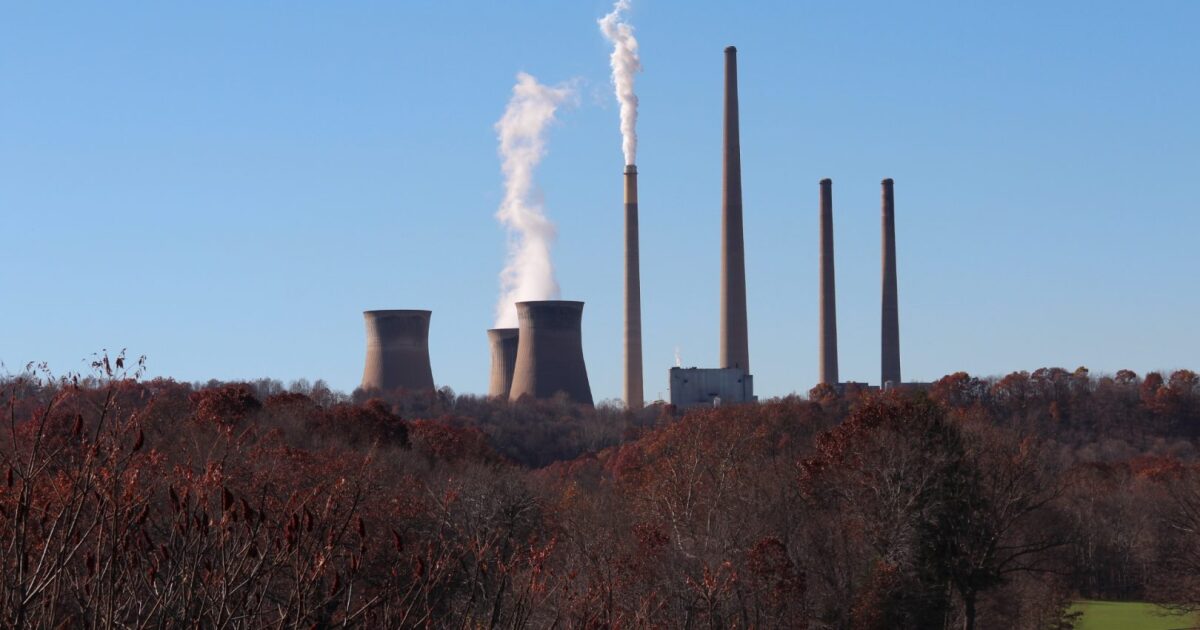
Pennsylvania is a major energy state. It’s the second-largest gas-producing state, the top electricity exporter, and emits the fourth-largest amount of carbon dioxide in the country. Pennsylvania’s RGGI rule marked the first time a large fossil fuel producer put a price on carbon.
Carbon dioxide traps heat in the atmosphere. Climate scientists agree emissions must be cut dramatically and quickly to avoid the worst effects of climate change, which include heat waves, increased precipitation, and flooding.
Many opponents to joining RGGI argued that the program would prematurely kill coal-fired power plants, cost the state jobs, stifle its energy economy, and raise electricity bills.
But plant closures and higher bills have come without RGGI participation, and the state hasn’t raised any additional money that could be used to ease those problems.
“ Pennsylvania coal plants are going to shut down regardless of whether we enter RGGI or not,” said Akshaya Jha, an assistant professor of economics and public policy at Carnegie Mellon University.
Now, as projected power demands are growing because of a rise in data centers and other uses, Jha said the economics suggest more gas plants and renewable energy projects will be built.
Penn State professor Seth Blumsack, who has studied the impact of RGGI in Pennsylvania, said joining the program mattered a lot to people who care about climate emissions and local air quality.
“If you’re not going to join RGGI, what are you going to do?” he said.
Blumsack co-authored a paper that found RGGI would benefit Pennsylvania’s energy economy overall and lead to improved health outcomes. The report also found electricity prices would rise, but the amount of money raised through the auctions would be more than enough to offset those costs.
Now that RGGI is off the table, Blumsack said the state still needs to answer questions of how to deal with pollution from the electricity sector, as well as growing power demands and electricity bills.
Jha said regional efforts, such as RGGI, can have more of an impact on emissions than local efforts, which is important for tackling the global problem of climate change.
“We’ve got a loss of opportunity for regional collaboration on an important issue and it’s not clear that this would’ve had substantial costs on Pennsylvania, on Pennsylvanian residents, or even Pennsylvania industry,” Jha said.
Path forward
Environmentalists said there’s no one piece of legislation that can replace what RGGI could have done for the state.
During the budget bill signing, Gov. Shapiro said Senate Republicans have been using RGGI “as an excuse to stall substantive conversations about energy.”
“It’s time to look forward, and I’m going to be aggressive about pushing for policies that create more jobs in the energy sector, bring more clean energy onto the grid, and reduce the cost of energy for Pennsylvanians,” Shapiro said.
It remains to be seen if Republicans will engage with Shapiro on his energy plans.
Shapiro distanced himself from RGGI during his campaign for governor. He proposed his own version of a cap and trade program for the power sector called the Pennsylvania Climate Emissions Reduction Program (PACER), that would be specific to Pennsylvania.
Bills to create PACER were introduced in the state House and Senate earlier this year, but have not been called up for a vote.
Routh, with NRDC, said the text of the PACER proposal relies heavily on the language of the RGGI regulation, which Republicans have spent years criticizing.
“It is unclear whether the bill as written now could possibly function even if we are in the political fantasy scenario where that could get action in either the House or the Senate,” Routh said.
There are several other proposals in the legislature that could benefit the environment that should now get priority, said Tom Gilbert, president of the Pennsylvania Environmental Council. Those bills include supporting new energy storage and energy efficiency projects, electric transmission upgrades, and building cleaner manufacturing.
“Many of these would have been directly supported by RGGI with guidance from all stakeholders, but our challenge now is to craft an interwoven set of policies that move our state forward,” Gilbert said.
As important as RGGI was to some, the program was always framed by advocates as a big first step. More will need to be done, they said, to lower emissions and encourage cleaner sources of energy.
What is RGGI, anyway?
Gov. Tom Wolf directed the state Department of Environmental Protection in 2019 to write a regulation that would allow Pennsylvania to join RGGI.
The cap and trade program sets a limit on the total amount of emissions allowed within the region and power plants must buy “allowances” or credits through an auction to cover their emissions. The cap decreases over time. Money raised from the sale of allowances can be used to boost clean energy efforts and with bill assistance for residents.
Fossil fuel industry groups and Republican lawmakers claimed that the money raised through RGGI would amount to an illegal tax. In Pennsylvania, only the legislative branch can enact taxes.
Wolf and the DEP said the allowance cost is a fee for doing business. DEP said it has the authority to collect the fee under Pennsylvania’s Air Pollution Control Act.
The regulation was finished in 2022, but Pennsylvania has never participated in the RGGI auctions. The rule was quickly put on hold by a Commonwealth Court judge until legal challenges could be heard.
In 2023, Commonwealth Court ruled the regulation was unconstitutional. The case was appealed to the state Supreme Court, which heard arguments in May.
On Thursday, the DEP filed an application to discontinue its appeal.
If the case is declared moot, environmental advocates said the legal questions around the program will remain unresolved.
“Regardless of which way the Supreme Court would have decided the case, it is highly valuable to have to have gotten clarity on the legal claims at issue here…to articulate further what the Supreme Court justices, how they view the Environmental Rights Amendment in the context of this regulation,” Routh said.
Pennsylvania
Dog, cats die in South Shenango house fire
SOUTH SHENANGO TWP., Pa. (WKBN) – Jamestown Fire Department responded to a house fire in South Shenango Township at 4:15 p.m. Saturday afternoon.
Crews were on scene for two hours, according to a Jamestown Volunteer Fire Department Facebook post.
Nobody was home at the time, but a dog and two cats perished as a result of the fire.
A cause of the fire was not mentioned in the Facebook post.
Pennsylvania
Between Harrisburg And Baltimore Is Pennsylvania’s Lovely State Park Escape For Hiking Trails And Scenic Views – Islands
In Pennsylvania, 300,000 acres of land are dedicated to 125 state parks. It’s an understatement to say that the state’s residents are proud of their outdoors. Among PA’s most-visited state parks is Presque Isle State Park, a seashore destination with sandy beaches. Not to be left out, Susquehanna Riverlands State Park is a unique riverside spot whose primary trail delights its guests with breathtaking views.
Riverbanks along this section of the Susquehanna River are dotted with parks, and Susquehanna Riverlands is right off Interstate-83. Located in York County, it’s 40 minutes south of Harrisburg and 1 hour north of Baltimore. You can hike Susquehanna Riverlands’ easy 1.3-mile out-and-back Overlook trail, rated 4.6 on AllTrails, for views from Schull’s Rock.
Susquehanna Riverlands State Park is a convenient dip into nature that you can enjoy during a lunch hour. One Google review described it as “beautiful,” with trails that are “well marked” and “easy to follow.” Open every day of the year from sunrise to sunset, Susquehanna Riverlands is free to access, as are all Pennsylvania state parks. At the time of publication, there are no permanent restroom facilities, only port-a-potties.
Enjoy extended hiking along the Mason Dixon Trail
For hikers with a little more time to invest and something more than flip-flops or sandals on their feet, the Mason-Dixon Trail crosses the southern border of the Susquehanna Riverlands State Park, where it joins the Robert A. Kinsley Nature Preserve. At 2.75 miles, the going is slightly challenging, with steep grades and narrow paths, but guests are rewarded with another overlook of the Susquehanna at Buzzard’s Roost.
AllTrails rates this section of the Mason-Dixon as moderate, unusual for such a short jaunt, and worthy of note. You’ll want to follow the trail counterclockwise from the first Y for the best advantage on the terrain. A 500-foot elevation change, largely in the middle of the trail, is no joke for the inexperienced. AllTrails reviews note the steep incline and muddy spots in wet seasons. Plan on taking up to two hours to finish the entire loop to the Roost and back, and don’t forget to wear sturdy shoes.
To reach the Mason-Dixon trailhead, park in the first lot at the top of River Farm Road, just inside the park, and follow signs to the blue-blazed trail. Please note, there are no amenities along the Mason-Dixon, and hikers are advised to take plenty of water and bug spray if hiking in the summer, when the humid PA climate can get steamy without a breeze.
Dip down to Wrightsville for more views of the Susquehanna River
Despite Susquehanna Riverlands State Park’s abundant river scenery, don’t expect to find a boat launch. There’s a natural “soft put-in” where the Codorus Creek converges with the Susquehanna, but it is undeveloped and parking is limited. Experienced paddlers use it to exit the bottom of the creek, before hitting the river.
Fortunately, there’s more than one way to enjoy the Susquehanna. Before or after your time at the state park, grab a beer and a bite to eat 11 minutes away in nearby Wrightsville. John Wright Restaurant has an outdoor pizza patio on the riverfront that’s open in the summer and nets views of the historic Columbia-Wrightsville Bridge, officially dubbed the Veterans Bridge, above. Housed in a former silk mill, John Wright guests enjoy steak and fresh local fish for dinner. If you’re an Old Bay fan, give the Chesapeake Nachos a try. You’ll want reservations before you go.
If you get too sweaty on the trail, the Burning Bridge Tavern is nearly next door to John Wright’s and serves upriver views in a considerably more casual environment, alongside craft burgers and a rotation of 12 beers on tap. If you want to avoid weekend traffic on Front Street, top off your day with a sandwich and soda at Riverside Subs or pizza from Marcello’s. If you want to check out York while you’re there, it has a vibrant art scene and affordable attractions.
Pennsylvania
Sandra “Sandy” J. Kulka, Transfer, PA
TRANSFER, Pa. (MyValleyTributes) – Sandra “Sandy” J. Kulka, age 68, of Transfer, Pennsylvania, passed away on Friday, April 24th, 2026, peacefully.
She was born June 24th, 1956, in Mercer, Pennsylvania, to Gerald Stainbrook and Violet (Patton) Stainbrook.
Sandy was a graduate of Hickory High School.
She was a homemaker and later in life worked as a custodian at Hermitage School District until her retirement. She enjoyed spending time with her five grandchildren and beloved pets, Teddy and Bella.
Sandy is survived by her three children, April Redfoot and her husband Daniel, Becky Kulka and Samuel Kulka, all of Greenville, Pennsylvania; a brother, Dennis Stainbrook and his wife, Margaret Kern of Transfer, Pennsylvania; and her five grandchildren.
She was preceded in death by her husband, Patrick Kulka; her sister, Gail Hall; and her parents, Gerald and Violet Stainbrook.
In following Sandy’s wishes there will be no services.
Memorial contributions can be made in her name to Strayhaven Animal Shelter, 94 Donation Road, Greenville, PA 16125
John Flynn Funeral Home and Crematory, Inc. is serving the family with arrangements.
To send flowers to the family or plant a tree in memory of Sandra J Kulka, please visit our floral store.
-
Montana2 minutes agoSwitzerland angers Italy by claiming costs of treating Crans-Montana fire victims
-
Nebraska8 minutes agoSoutheast Nebraska neighbors: Obituaries for April 26
-
Nevada14 minutes agoRotten Tomatoes gives Cornish director’s new film unbelievable rating
-
New Hampshire20 minutes ago6 from Massachusetts, New Hampshire, California charged in alleged Cali to Mass drug trafficking conspiracy after 12 kilos of cocaine, 1 kilo of fentanyl seized
-
New Jersey26 minutes agoIs Team USA playing in NJ? What to know about World Cup schedule
-
New Mexico32 minutes ago
New Mexico Lottery Powerball, Pick 3 Day results for April 25, 2026
-
North Carolina38 minutes agoHenri Veesaar Says Goodbye to North Carolina
-
North Dakota43 minutes agoNorth Dakota lawmaker killed in Minnesota plane crash
