New Jersey
Northern Lights in New York, New Jersey, Connecticut Visible Now—Here's When and How


The tri-state area is getting its chance to see the beauty of the Northern Lights right at home, with New York, New Jersey, and Connecticut seeing a cosmic phenomenon brewing now.
It would first appear later in the night this Friday and reports claim that it is possible to see this cosmic display of lights this weekend, which typically takes place in far northern areas.
Aurora Borealis is a rare light show in North America, offering a glistening, iridescent, and majestic display.
Northern Lights in New York, New Jersey, Connecticut
NOAA’s Space Weather Prediction Center reported in its Planetary K-Index that the magnitude of geomagnetic storms coming this Friday, May 10, will reach 7.5 to 9kp.
This means that Aurora Borealis would appear in the skies of the tri-state area of New York, New Jersey, and Connecticut, starting from around 3:00 PM and peaking at around 9 PM until the wee hours of the night.
Typically, the northern lights only need a magnitude of 7kp to appear over a certain location in the world.
According to CBS News, New York will experience an 8kp geomagnetic storm magnitude, a new record high since 2005.
Read Also: Northern Lights-Like ‘Airglow’ Can Now be Artificially Recreated with Science
How and When to Watch Tristate’s Northern Lights
The Northern Lights in the US’ tristate area would peak at 2:00 AM on Saturday, May 11, and this is when the 9kp geomagnetic storm would occur.
It was also reported that it is possible to appear through the weekend to view it, but it remains unknown when to expect it.
CBS reported that users need not be directly under the Aurora Borealis to see it, as it is visible up to 600 miles away. However, it is recommended that they travel out of the city to avoid light pollution that could hinder its visibility.
Aurora Borealis: The Glamorous Sky Show
One of the most coveted and frequently occurring lights show from space is the Aurora Borealis, and its breathtaking display and otherworldy colors are some of its most coveted experiences for many.
There are many places to see the Aurora, whether in the European region, with Iceland being one of the most famous, or in North America, in various US states and Canada.
The Northern Lights are known as a natural occurrence from space. The phenomenon has been the subject of many studies, including why it brings out its unique colors and glows above the Earth.
When the magnetosphere, a three-dimensional space, receives solar winds from the Sun traveling at 250 to 500 miles per second, charged particles from the planet’s magnetic field interact with it, raising electrons to higher states. The excess energy portrays radiant light.
Many bucket lists include seeing the Aurora Borealis and planning trips to certain cities or regions where it is widely visible and can be enjoyed.
However, this recent cosmic event is coming to the US, particularly in the tri-state area, and can be easily spotted without equipment.
Related Article: Beautiful Northern Lights Could Happen Around the Globe, Scientists Warns What Comes After
ⓒ 2024 TECHTIMES.com All rights reserved. Do not reproduce without permission.



TRENTON – Today, Governor Mikie Sherrill signed three bills aimed at strengthening public safety, privacy, and trust across New Jersey’s diverse communities. The bills outline clear standards to increase transparency and accountability for law enforcement during operations, protect personal privacy, and ensure that all residents can access vital public and health care services without fear of deportation.
The “Law Enforcement Officer Protection Act,” or S-3114, sponsored by Senators Benjie E. Wimberly, Troy Singleton, and Nick Scutari, requires law enforcement officers, including federal agents, to reveal their facial identities when conducting official duties. The bill also requires officers to provide sufficient identification prior to arresting or detaining an individual, such as department-issued photo identification, a uniform bearing agency insignia, or a badge. The bill allows exceptions for officers to wear facial coverings, including during undercover assignments, use as protection against chemical agents, medical exemptions, or shielding during severe weather.
“The trust local police have worked hard to build in our towns and cities is being undermined by unidentifiable ICE agents who seek to intimidate our neighborhoods while avoiding accountability,” said Senator Wimberly (D-Passaic/Bergen). “Banning the use of masks, with limited exceptions, will help us protect the civil rights of all residents and will send a clear message that anonymous and unchecked immigration enforcement will not be tolerated in New Jersey.”
“When law enforcement hides behind masks and operates without visible identification, it erodes trust, sows fear, and encourages dangerous and irresponsible behavior from civil servants who should be held to the highest standard,” said Senator Singleton (D-Burlington). “Requiring all law enforcement to provide facial and material identification during their operations is a reasonable measure that is in the best interest of public safety and accountability for our communities and all levels of law enforcement.”
“In New Jersey, we respect the professionalism of our law enforcement agencies and the standards of accountability they follow. Federal immigration officers should adhere to the same standards. This is vital in maintaining the public’s trust in the rule of law and their confidence that our laws are being enforced fairly and humanely. Protecting the rights of all of our residents will serve the best interests of law enforcement and help to keep our communities safe for everyone,” said Senate President Scutari (D-Union/Somerset).
The “Privacy Protection Act,” or S-3522, sponsored by Senators M. Teresa Ruiz, Andrew Zwicker, and John McKeon, limits the collection and sharing of data by government and health care entities to ensure all New Jersey residents are not discouraged from seeking necessary services. The act prohibits government entities and health care facilities from requesting or collecting certain personal identifying information related to a person’s immigration status, place of birth, social security number, and individual taxpayer identification number unless it is strictly necessary to assess eligibility for, or to administer, a requested public service, benefit, or program. When collected, this information would remain confidential and not subject to public disclosure, with some exceptions.
“Across the country, the hostile climate this administration has created for immigrants and their families is making individuals hesitant to access essential services, regardless of their legal status,” said Senate Majority Leader Ruiz (D-Essex/Hudson). “No one should be afraid to seek health care or public services because of the personal information they are asked to provide. The ‘Privacy Protection Act’ limits the collection of private information when it is unnecessary to receive services and ensures confidentiality so all New Jerseyans can access the support they need without fear.”
“Protecting people’s personal information is fundamental to maintaining trust in government and ensuring access to necessary services,” said Senator Zwicker (D-Middlesex/Mercer/Somerset/Hunterdon). “As federal authorities use government records for their aggressive and mean-spirited immigration enforcement, New Jersey must strengthen our privacy protections to prevent harm.”
“This legislation will modernize our privacy protections to safeguard personal data collected by government agencies and health care providers,” said Senator McKeon (D-Essex/Passaic). “With the Trump Administration trying to access these records in order to identify and deport our law-abiding, undocumented neighbors, we must stand up to defend their right to privacy and protect them from undue harassment by federal agents.”
The third bill, S-3521, sponsored by Senators Britnee Timberlake, Gordon Johnson, and Raj Mukherji, would codify the Attorney General’s Directive, “Strengthening Trust Between Law Enforcement and Immigrant Communities,” also known as the “Immigrant Trust Directive.” The landmark Directive, first issued in 2018, has been upheld in State and federal court.
The Directive draws a clear distinction between state, county, and local law enforcement officers, who are responsible for enforcing state criminal law, and federal immigration authorities, including ICE, who enforce federal civil immigration law. It limits the voluntary assistance New Jersey law enforcement may provide to federal authorities, ensuring state resources remain fully dedicated to protecting the public, enforcing state law, and fostering trust within our communities.
Under the bill, law enforcement is prohibited from engaging in racially biased policing and may not stop, question, arrest, search, or detain anyone solely based on actual or suspected citizenship or immigration status.
“We must assert our constitutional authority under the anti‑commandeering doctrine, which prevents the federal government from forcing states to administer federal programs. These laws make New Jersey communities safer, safeguarding people— documented and undocumented—while protecting local police from being drawn into federal actions that could expose them to serious legal and moral consequences. Lessons of the Nuremberg trials remind us ‘just following orders’ is not an excuse to violate fundamental constitutional and human rights. Advancing this legislation shields individuals from unfair treatment, upholds constitutional protections, and reflects the inclusive values of a nation built by immigrants. When my future grandchildren read about this moment in history, they will know we used the law to protect people,” said Senator Timberlake (D-Essex).
“Our state and local law enforcement must focus on building trust among residents and keeping our communities safe—not carrying out a cruel, anti-immigrant agenda that instills fear among hardworking, everyday people,” said Senator Johnson (D-Bergen). “Codifying the Immigrant Trust Directive will help reaffirm New Jersey’s commitment to our immigrant neighbors, who are our friends and vital contributors to our state, and stand against escalating threats from Washington.”
“These bills advance public safety at a time when the federal government is acting lawlessly, sowing division, and inciting chaos,” said Senator Mukherji (D-Hudson). “When victims and witnesses are afraid to come forward, violent offenders remain on the streets. This legislation strengthens and maintains trust between our diverse communities and state and local law enforcement, and it allows police to do their jobs — focusing on real public safety threats, preventing violence, and solving crime — while ensuring taxpayer resources are not misused to enforce federal civil immigration violations at a time when ICE has repeatedly disregarded due process and civil rights across the country.”

Saturday is a Gridlock Alert Day in New York City as France faces Sweden in the FIFA Men’s World Cup in New Jersey.
The game starts at 5 p.m., but major impacts will begin as early as 11 a.m.
Traffic is expected to be impacted in Midtown Manhattan as the city initiates shuttle bus corridors and closes streets around Penn Station for fans going to MetLife Stadium, which FIFA calls New York New Jersey Stadium.
NJ Transit service at Penn Station is reserved for ticketholders for several hours before and after the match to accommodate the crowd. Non-ticketholders will need to take an alternate route.
Here’s what to expect and when the changes are slated to take effect:
Penn Station
NJ Transit service
NJ Transit service at Penn Station New York is limited to ticketholders going to the France-Sweden match from 12:29 p.m. to 4:18 p.m. During that window, riders who are not going to the match should take PATH from 33rd Street to Hoboken or Newark Penn Station for trains to other destinations.
Penn Station New York access will be limited again after the match to accommodate trains bringing fans back from the stadium. NJ Transit says other eastbound trains heading to Manhattan will instead terminate at Newark Penn Station or Newark Broad Street from 7:10 p.m. until about 10:14 p.m.
PATH and NJ Transit bus service will remain available for all other riders.
Street closures
Street closures around Penn Station to accommodate fans lining up for trains to Monday’s match will begin no later than 11 a.m.
Here are the street closures:
- 33rd Street between Sixth Avenue and Eighth Avenue
- 32nd Street between Sixth Avenue and Seventh Avenue
Most streets will reopen soon after each match begins, with 33rd Street between Seventh and Eighth Avenues reopening three hours after the match concludes, according to the mayor’s office.
Shuttle bus corridor
France-Sweden ticketholders will also be taking shuttle buses to the stadium from three pick-up locations in Midtown.
NYC established special shuttle bus corridors to accommodate the buses, meaning additional streets and lanes will be closed to regular traffic from 11 a.m. to up to three hours after the match ends:
- 42nd Street from First Avenue to 12th Avenue.
- Two lanes along Sixth Avenue from 42nd Street to 59th Street.
- Two lanes along Fifth Avenue from 42nd Street to 59th Street.
- West 40th Street between Eighth Avenue and 11th Avenue.
- West 41st Street between Eighth Avenue and 10th Avenue.
Truck deliveries
There will be restrictions on truck deliveries in Midtown from 11 a.m. to 10 p.m. between 30th Street and 60th Street.
Smaller delivery vehicles, including cars, vans and bikes, are exempt, the mayor’s office said.
“Emergency vehicles, service vehicles and essential delivery providers operating within the zone are also exempt,” the announcement said.
Click here to see the full Midtown Transportation Plan.

The anticipated pain of a massive property tax increase in Jersey City has been alleviated somewhat.
Mayor James Solomon announced on Monday a proposed 20% increase has been reduced to a 15% after the city secured $120 million in state aid earlier in the day.
“Solving a deficit this size was never going to be easy”
The tax increase is necessary because the city is facing a $255 million budget deficit, Solomon said.
“Fifteen percent is better than 20, but I cannot tell you this solves our problem without consequences,” Solomon said in a statement. “We know how difficult these increases are, and in combination with the historic amount of state aid we secured in Trenton, my team went back and cut even more city spending. Solving a deficit this size was never going to be easy, and the Administration and City Council must make hard decisions in the coming weeks and months to make the budgets for 2026 and 2027 work without further large tax increases.”
Solomon, who was elected last fall, has blamed the budget deficit on his predecessor, Steven Fulop. The former mayor, who decided not to run again after serving more than 12 years, has vehemently pushed back against the assertion that he left the finances in disarray.
The proposed 15% increase will be submitted to the City Council on July 15 for its approval.
Residents left in constant state of dread over expected tax increase
Prior to receiving the state aid, Jersey City attempted to take some of the onus off of its residents by enacting some cuts, including daily maintenance at seven parks and eliminating its composting program, saving about $1 million per year.
Obviously, that’s not nearly enough to eliminate the need for a property tax hike, so Solomon had been preparing city residents for more than a week about the likelihood that they were going to have to ante up significantly more. He held a meeting on Sunday that was attended by about 150 residents, who expressed fear and dismay over the city’s dire financial situation.
“It means maybe losing my home,” one resident said. “I’m tired of this. This is happening everywhere and it’s not fair that there’s so many boots on our necks and that people just can’t get ahead right now.”
And even with the aid from Trenton and a 15% property tax hike, the city is going to have to figure out how to generate another $20 million, Solomon said, so more cuts are coming.
-

 Sports24 seconds ago
2026 World Cup Quarterfinal Odds: Which Squads Will Make Final 8?
-

 Technology6 minutes ago
Warehouse robots move packages without human handoff
-
 Business13 minutes ago
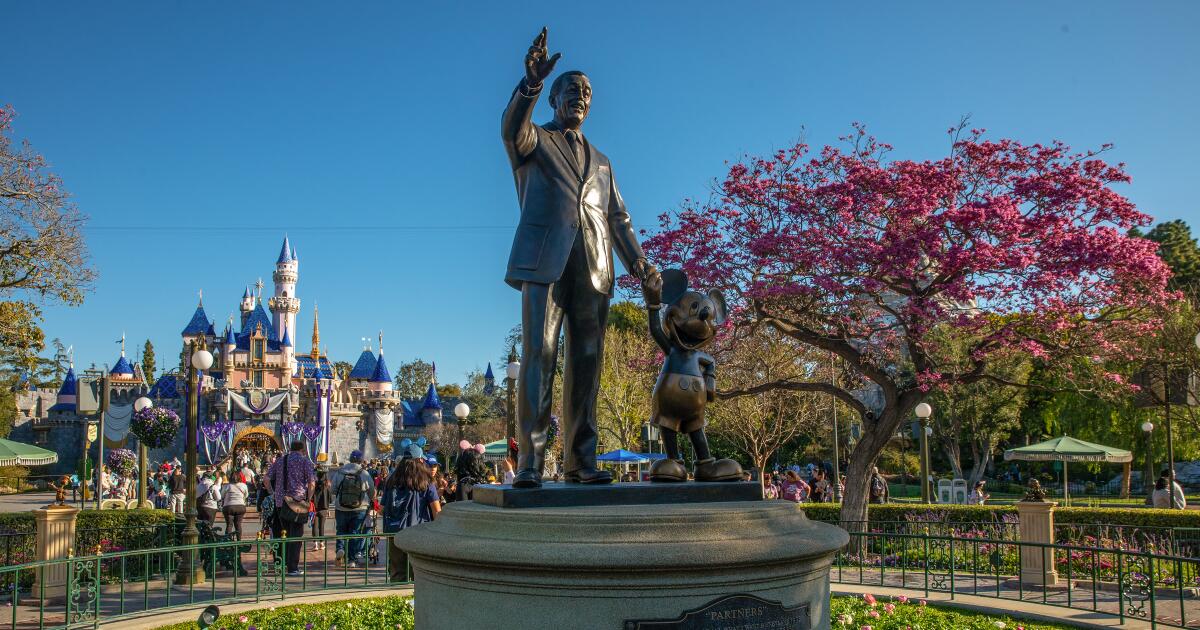
Disneyland to offer $59 evening tickets next month
-
 Entertainment15 minutes ago
After Amazon drops OpenAI movie ‘Artificial,’ film finds new home at Neon
-

 Lifestyle21 minutes ago
ICICLE: Capturing Interest in Chinese Brands
-
 Politics28 minutes ago
Newsom signs off on 100% California tax for money from Trump’s $1.8-billion ‘slush fund’
-
 Science30 minutes ago
After bold pledge, EPA shelves microplastics testing in U.S. drinking water
-
 Sports36 minutes ago
Walter Alston, Dave Roberts and everyone in between: The 10 managers in L.A. Dodgers history

