


For more than a decade, one question has loomed over the race to build autonomous vehicles: Are cameras alone enough to safely replace human drivers, or do truly driverless cars need additional, overlapping sensors like lidar and radar to navigate the world reliably? Tesla has bet billions of dollars that artificial intelligence and cameras are sufficient. Nearly every other major autonomous vehicle developer has gone the opposite direction.
Technology
Humanless big rig completes first US freight run


NEWYou can now listen to Fox News articles!
A big rig left Houston, Texas, in the middle of the night with nobody inside. By morning, it had completed a 230-mile delivery near Dallas right on schedule. There was no driver, no backup operator and no one stepping in remotely.
According to Bot Auto, this marks the first fully humanless, over-the-road commercial truckload in the U.S.
More importantly, the run followed a real customer timeline and moved through the same freight network that companies rely on every day, rather than a controlled test or staged demonstration.
Here’s a breakdown of exactly what happened and why it matters.
BIG RIGS DELIVER CARGO WITH NO HUMANS AT THE WHEEL
A Bot Auto autonomous big rig completed a 230-mile commercial freight run from Houston to near Dallas with no driver, observer or remote operator. (Bot Auto)
Sign up for my FREE CyberGuy Report
- Get my best tech tips, urgent security alerts and exclusive deals delivered straight to your inbox.
- For simple, real-world ways to spot scams early and stay protected, visit CyberGuy.com – trusted by millions who watch CyberGuy on TV daily.
- Plus, you’ll get instant access to my Ultimate Scam Survival Guide free when you join.
How the Houston-to-Dallas autonomous big rig run happened
CEO and founder of Bot Auto, Xiaodi Hou, explained exactly how it played out. “Our autonomous truck departed Riggy’s Truck Parking in northeast Houston, headed to Hutchins, Texas, just south of Dallas. Departure was late at night as the shipper requested overnight service for this route. The truck ran 230 miles northbound on I-45,one of the busiest freight corridors in the country, navigated stop lights, side streets and frontage roads. There was no safety driver or observer, nor a remote operator. It was booked through our customer Ryan Transportation, true to our operating model, which is compatible with how freight actually moves in America today.”
That’s the part that stands out. This ran like a normal overnight load, just without a driver.
The load moved through Ryan Transportation, not a special test system. Hou makes that very clear, “Real freight, real customer, real timeline, delivered safe and on time. We are not disclosing the shipper or commodity, but this was not a load we manufactured to check a box. It moved through Ryan Transportation, a top-20 freight brokerage. Booked, priced, and executed the same way as any truckload moves in America. We made money on it. This is a commercial business, not a research project.” In other words, nothing about this run was staged behind the scenes.
What ‘fully humanless’ means in autonomous trucking
Many companies still rely on hidden human support. Bot Auto takes a different approach.
“The industry often blurs the line between driverless and human-supervised,” Hou explained. “For Bot Auto, fully humanless means no safety driver, no back-seat monitor, and no low-latency remote human fallback. More specifically, our safety design does not require any human to notice, decide, or react within one minute to keep the truck safe. We may have operational visibility, just like an airport tower can monitor the plane, but it does not fly the plane. That is our standard: humans can support the mission, but the truck must own the driving safety case.”
That’s a big difference from systems that still lean on human backup.
What happens if the truck encounters a problem
One of the biggest concerns, and understandably so, is how the autonomous driving system reacts under pressure. Hou said the truck is designed to handle that on its own.
“The truck would not wait for a human to save it,” he said. “If it reached a condition outside its approved operating boundary, it would enter a mitigated risk condition: slow down, create space, and bring itself to a controlled safe state. The principle is simple: when the truck encounters extreme or unexpected situations, it does not gamble. It acts conservatively. Sometimes that means stopping; sometimes it means continuing briefly to reach a safer place to stop. Human support can help after the vehicle is already safe, but the vehicle has to own the first minute.”
So the system is designed to play it safe first, then deal with the situation after it is under control.
The safety testing behind removing the driver
Bot Auto says removing the driver came after extensive validation and careful testing.
“We operated on our own internal validation framework, rigorous and data-driven,” the company said. “Millions of miles of simulation, extensive real-world testing with safety drivers, scenario-specific disengagement analysis, and a documented operational design domain defining precisely the conditions under which the system is authorized to run. We did not remove the driver until the system demonstrated, across a comprehensive set of tests, that it performs at or above the level of a professional human driver on this route. Safety isn’t one number; it is a system-level property.”
That is the level of testing the company says it absolutely needed before taking the driver out completely.
THIS EV HAS A FACE, AND IT TALKS BACK WITH AI
Bot Auto says the truck is designed to slow down, create space and reach a safe state if it encounters a problem on the road. (Bot Auto)
Why the cost per mile could change the trucking industry
Technology alone does not transform an industry. Economics do. Hou says the numbers already work.
“With that complete accounting, the economics still work decisively in our favor,” he said. “This run came in below $2 per mile.”
That puts the cost of this trip below what a human-driven truck would typically run.
Hou also pushed back on simplified comparisons. “I want to be precise here, because the industry has a habit of cherry-picking the easy savings and hiding the real costs… autonomous trucking’s cost impact isn’t a simple trade-off between driver wages and vehicle cost, it runs deep into operations.” The point here is that the savings go beyond just removing the driver.
And those economics could improve as the network grows. “It improves at scale. The fixed costs of building and validating the system are largely sunk. As we add trucks and lanes, the per-mile cost of the technology keeps declining.” That means the more trucks and routes they add, the lower the cost per mile can go.
What regulations allowed this run in Texas
Texas has been one of the most active states in enabling autonomous vehicle deployment.
“Texas passed Senate Bill 2807 in 2025, creating a formal authorization program for commercial autonomous vehicle operations, administered by the Texas Department of Motor Vehicles,” Hou said. “Bot Auto applied and was approved under that program… We met every requirement.”
That includes safety compliance, system reliability and the ability to safely stop if something fails.
Is this a one-time milestone or something repeatable
The bigger question now is whether this type of run can happen consistently across real freight lanes.
“The Houston-to-Dallas lane is repeatable now, and it isn’t a one-time event,” the company said. “We selected it deliberately: high freight volume, strong hub infrastructure at both ends, a supportive regulatory environment. Expansion is already underway.”
The company is focusing first on high-volume freight lanes in the Texas triangle, which includes Houston, Dallas and San Antonio.
What skeptics are saying and how Bot Auto responds
Skepticism has followed autonomous trucking for years. Hou addressed that directly, “A truck left Houston with no one in it, ran 230 miles on public roads, and delivered freight to a customer on time. That happened. The skeptics had a reasonable argument for a decade because this industry has been long on promises and short on execution. I understand and respect that. The question is no longer whether it can be done. It is who can do it at scale, safely, and economically. That is the competition we intend to win.”
WAABI + VOLVO UNVEIL NEXT-GEN SELF-DRIVING TRUCK
Bot Auto says its driverless truck navigated I-45, side streets, frontage roads and stoplights during the Houston-to-Dallas run. (Bot Auto)
What this means to you
This shift could change more than the trucking industry. If autonomous freight scales, deliveries could become more predictable. Overnight shipping windows may tighten. Costs could come down over time.
There are also workforce implications. Long-haul trucking is a major employer, and any transition will raise real concerns about jobs. However, supporters point to reduced fatigue and fewer human errors.
Critics want to see long-term real-world data before drawing conclusions. For consumers, the biggest impact may be subtle at first. Some analysts point out that it could even reduce inflationary pressures, since rising transportation costs are often directly passed on to consumers.
Take my quiz: How safe is your online security?
Think your devices and data are truly protected? Take this quick quiz to see where your digital habits stand. From passwords to Wi-Fi settings, you’ll get a personalized breakdown of what you’re doing right and what needs improvement. Take my Quiz here: CyberGuy.com.
Kurt’s key takeaways
This Texas run does not mean highways will suddenly fill with empty big rigs. It does show that autonomous freight has moved beyond the prototype stage. Now the focus turns to what happens next. Can companies repeat this across more routes, in different conditions, over time and still keep things safe? The empty cab is what grabs your attention. The bigger question is whether this holds up across everyday freight operations.
CLICK HERE TO DOWNLOAD THE FOX NEWS APP
As humanless semi trucks become common on our major highways, are you comfortable sharing the road with them? Let us know by writing to us at CyberGuy.com.
Sign up for my FREE CyberGuy Report
- Get my best tech tips, urgent security alerts and exclusive deals delivered straight to your inbox.
- For simple, real-world ways to spot scams early and stay protected, visit CyberGuy.com – trusted by millions who watch CyberGuy on TV daily.
- Plus, you’ll get instant access to my Ultimate Scam Survival Guide free when you join.
Copyright 2026 CyberGuy.com. All rights reserved.


Until now, that argument has largely been left to executives and engineers. New Jersey lawmakers are trying to settle it in state law.
A bill expected to come up for a vote later this year would require companies seeking to operate fully autonomous vehicles in New Jersey to use cameras plus two other sensing technologies, most commonly lidar and radar. If enacted, New Jersey would be the first state to codify such a hardware mandate into law, moving ahead of a nearly identical proposal currently pending action in neighboring New York. The measure would also effectively prevent Tesla’s camera-only Robotaxi system from operating in New Jersey unless the company changed its hardware.
”This is not anti-Tesla,” Democratic state Sen. Andrew Zwicker, the bill’s primary sponsor, told The Verge. “I’m pro-New Jersey safety.”
Zwicker, a physicist who works at the Princeton Plasma Physics Laboratory (New Jersey doesn’t restrict legislators from outside jobs), said after riding in a Waymo robotaxi in Phoenix he became convinced autonomous vehicles could transform transportation.
”I was amazed how quickly you get used to it,” he said.

The technology, he argues, could dramatically expand mobility, reduce traffic deaths, and make transportation more accessible. But he believes the technology should roll out cautiously in the nation’s most densely populated state.
”At this point, I don’t think the evidence is sufficient that a single sensor with software can handle situations that humans can,” Zwicker said. “Can we get there? Maybe. But we’re not there yet.”
The proposal would establish a three-year pilot program governing the testing and deployment of fully autonomous vehicles in New Jersey. Companies would have to use multiple sensing technologies, report certain crashes, and receive state authorization before operating fully driverless commercial services. They would also have to complete at least 50,000 miles of supervised testing in New Jersey without a major incident before removing the human safety driver.
While state battles over autonomous vehicles have largely centered on safety performance, oversight, and potential job losses, New Jersey is attempting something different: legislating how the vehicles themselves should be built.
“At this point, I don’t think the evidence is sufficient that a single sensor with software can handle situations that humans can.”
— New Jersey state Sen. Andrew Zwicker
The sensor requirement is by far the bill’s most consequential provision and it would have repercussions beyond Tesla. Elon Musk has long argued that cameras paired with increasingly capable artificial intelligence are the best and most cost effective way to operate autonomous vehicles. Humans navigate the world using vision alone, Musk has said, so sufficiently advanced AI should eventually be able to do the same. Eliminating lidar and radar also dramatically lowers hardware costs, making it easier to build robotaxis cheaply enough to deploy at massive scale.
Musk has even argued that adding more sensors can reduce safety by forcing software to reconcile conflicting information.
”Lidar and radar reduce safety due to sensor contention. If lidars/radars disagree with cameras, which one wins?” he wrote on X last year. “We turned off the radars in Teslas to increase safety. Cameras ftw.”
Most of the rest of the autonomous vehicle industry disagrees. Companies including Waymo and Zoox combine cameras with lidar and radar, arguing that each sensing technology has different strengths and weaknesses. Cameras capture rich visual detail, allowing vehicles to recognize colors, traffic signs, lane markings, and pedestrians, but they can struggle in poor weather, darkness, or glare. Radar performs better in rain and fog and excels at measuring the distance and relative speed of nearby objects. Lidar uses lasers to create detailed three-dimensional maps of a vehicle’s surroundings, making it particularly effective at determining the shape and distance of nearby objects.
Rather than relying on a single sensor, those companies combine the strengths of all three, arguing that redundancy makes autonomous driving safer. Philip Koopman, a Carnegie Mellon electrical and computer engineering professor and autonomous vehicle safety expert, said camera-only systems may eventually become capable enough for fully autonomous driving. But he doesn’t believe they are today.
As Koopman put it, “eyeballs are better than cameras for many reasons” and “human brains are fundamentally more powerful than AI because we understand.” While there are situations where Koopman said camera-only works just fine — clear weather, favorable lighting, and less complex roads — he believes it’s not ready for broad consumer use.
“To run 24/7 across the majority of public roads in New Jersey today, it needs lidar,” he said. “It’s pretty clear that today camera-only technology is not up to the challenge.”
Koopman supports the New Jersey proposal but said he would prefer even stronger safeguards, such as requiring conventional driving controls like steering wheels and pedals so first responders could move disabled vehicles (so no Cybercabs, which don’t have either), and limits on how many AVs can be on the road during the pilot (a potential provision Zwicker said he’s considering).
“It’s pretty clear that today camera-only technology is not up to the challenge.”
— AV expert Philip Koopman
“The difference between 100 cars and 10,000 cars is night and day,” Koopman said. When the scale is small, “There’s just not enough cars for that much weird stuff to happen to them.” He pointed to Waymo, which now operates more than 3,500 commercial robotaxis across 11 US metro areas.
”They never used to have problems with floodwaters and school buses — not because they could do floodwaters and school buses,” Koopman said. “But with 100 cars it just doesn’t happen that often.”
Despite a lot of fanfare, Tesla currently only has a handful of unsupervised Robotaxis on the road, mostly in Texas, according to data from Robotaxi Tracker, suggesting it hasn’t been as easy to scale the camera-only approach as Musk had previously promised. Last year he predicted that Tesla would have hundreds of thousands of fully self-driving Teslas operating by the end of 2026. (Tesla did not respond to requests for comment for this article.)
Many of the bill’s provisions mirror recommendations from SAVE-US, a nonprofit that advocates for stricter autonomous vehicle regulation. Physicist and SAVE-US national campaign director Shua Sanchez said the group formed because Congress has failed to establish national rules while autonomous vehicle companies have expanded into states with dramatically different levels of oversight.
“California has the best safety regulations in the country,” he said. “Texas, Arizona, and Georgia have almost no state oversight.”
Among the organization’s priorities is requiring redundant sensing systems.
“We don’t have a problem with Tesla as a company,” Sanchez said. “We have a problem with camera-only autonomous vehicles.”
Nearly every major stakeholder has sought changes to the bill. Waymo successfully pushed to remove a requirement that safety drivers remain in vehicles throughout the pilot, and Uber argued the state should continue requiring human drivers for most rides, according to Zwicker.
Tesla has been lobbying against the legislation in New Jersey, according to Zwicker, who said company representatives met with lawmakers to argue that advances in artificial intelligence make additional sensor types unnecessary. Zwicker said that while the tech has gotten better, “I’m not convinced yet that they’re ready to go.”
The debate has spilled beyond the state House.
“As written, the legislation imposes restrictions so severely that Tesla’s autonomous vehicle technology couldn’t legally operate in New Jersey,” read a Tesla missive to New Jersey Tesla owners encouraging them to contact lawmakers. “Rather than prioritizing real safety outcomes and performance, the bill specifically bans Tesla from the New Jersey market.”
Zwicker said his office received roughly 4,000 emails within a day. “The messaging wasn’t about the details of the bill,” he said. “It was that Zwicker is trying to take away your Autopilot.”
“Rather than prioritizing real safety outcomes and performance, the bill specifically bans Tesla from the New Jersey market.”
— A Tesla message to NJ owners
Zwicker rejects that characterization. The legislation applies only to fully autonomous vehicles operating under the proposed state pilot program — not driver-assistance systems that require a licensed human driver to remain behind the wheel.
The fight in New Jersey reflects a broader vacuum in autonomous vehicle regulation. Congress has debated national autonomous vehicle legislation for years without passing a comprehensive framework, leaving states to develop their own rules as commercial robotaxi services expand. Robotaxi services already operate in states including California, Texas, Arizona, and Georgia under dramatically different regulatory systems. While California requires extensive testing permits and public reporting, it doesn’t specify which tech the AVs need to get there. Texas has adopted a far lighter-touch approach, which lets automakers self-certify that their autonomous vehicles are ready for the road.
New Jersey’s bill raises the possibility that AV tech there could differ from that of other states. Zwicker says that isn’t his concern.
“The technology doesn’t exist in the Northeast at all,” he said. “The goal is to start now, do it safely, and build public trust.”
Sanchez sees the sensor requirement as a common-sense safeguard rather than a restriction on innovation.
“There are absolutely brilliant people working at Tesla trying to make camera-only autonomy work,” he said. “But they’re trying to do it with one arm tied behind their back.”
Follow topics and authors from this story to see more like this in your personalized homepage feed and to receive email updates.

How to use airline miles and points
The Miles Guy explains how to stop wasting points, spot bad redemptions and get more value from travel rewards, in an interview with Kurt “CyberGuy” Knutsson.
NEWYou can now listen to Fox News articles!
Airline miles used to feel like a secret travel weapon. You saved them, watched the award chart and then pounced when the right seat opened up.
Now? You may search for a flight and see a price so ridiculous that it makes you want to close the laptop.
That is exactly why I sat down with David Fleming, a travel rewards consultant known online as The Miles Guy. His job is helping travelers squeeze more value out of airline miles, hotel points and credit card rewards without getting fooled into bad redemptions.
FAKE BOOKING.COM TRAVEL CREDIT SCAM TARGETS TRAVELERS
Dynamic pricing can make the same airline seat cost a reasonable number of miles one day and a shocking amount the next. (Al Drago/Bloomberg via Getty Images)
And here is the big takeaway: airline miles can still be valuable, but the old tricks no longer work the same way.
Sign up for my FREE CyberGuy Report
- Get my best tech tips, urgent security alerts and exclusive deals delivered straight to your inbox.
- For simple, real-world ways to spot scams early and stay protected, visit CyberGuy.com – trusted by millions who watch CyberGuy on TV daily.
- Plus, you’ll get instant access to my Ultimate Scam Survival Guide free when you join.
Why airline miles feel harder to use now
Years ago, many airlines used fixed award charts. That made it easier to know what a flight should cost in points. Now, that predictability is mostly gone. “The airlines and their frequent flier programs went to something called dynamic pricing, which basically ties the cost of the ticket to the number of points you use,” Fleming told me during our conversation on the CyberGuy Report podcast.
He gave one eye-popping example. Air France Flying Blue business class from Los Angeles to Paris used to show up for around 67,500 points one way. Now, on some days, that same type of redemption can balloon to an outrageous level. “Some days you’re now seeing them for 700,000 points one way,” Fleming said. “Which is bananas.”
That is the kind of number that should make you pause before clicking “book.” If you want a broader refresher on how travel rewards work, CyberGuy’s guide on how to rack up points and miles for travel is a helpful read at CyberGuy.com.
Flexibility is still your best travel hack
If you have any wiggle room in your schedule, use it before you spend your miles. “The key really is to book your trip around your flights,” Fleming said. “Find the dates that have the best mileage redemptions available, and book those and let that be your guide.”
That may sound annoying if you already picked your vacation dates. However, shifting by a day or two, or flying from a different airport, can save you a huge number of points.
This approach works best when you are traveling alone or with one other person. It gets harder with kids, school schedules, work calendars and family obligations. Still, even a little flexibility can help. The goal is to stop treating every mileage price as a good deal just because it uses points instead of cash.
Book a refundable ticket as a backup
One of my best strategies is to book a refundable cash ticket as insurance while watching for mileage seats. Here is how it works. You book a refundable fare, so you know you can get where you need to go. Then you keep checking for award seats. If a better mileage redemption becomes available, you can cancel the refundable ticket and book with points.
Fleming said that strategy still has value, even though it worked better before dynamic pricing became so common. “If you book a refundable ticket, you know if something does open up, you always can cancel that refundable ticket, get your money back, and book the mileage ticket,” Fleming said.
There is another version of the same idea. If a good mileage ticket doesn’t appear, you can look for a cheaper, nonrefundable cash fare closer to the trip. Then you cancel the refundable ticket and buy the cheaper fare instead. It takes effort, but it gives you options.
Ask about paid upgrades before you board
Paid upgrades can be hit-or-miss. Still, Fleming says asking at the counter or gate can sometimes pay off. “You might have to be a little proactive and ask the gate agent or the person at the ticket counter, ‘Hey, do you have any upgrades available? And if yes, how much are they?’” Fleming said.
He shared the story of a friend who was flying economy on a transatlantic flight. At the counter, the airline offered him a business class upgrade for $140. If he had bought that upgrade online earlier, it would have cost more than $1,200. That will not happen every time. Airlines may have no seats, no deal or no interest in discounting the upgrade. Even so, the question costs nothing. Ask politely at check-in, at the ticket counter or at the gate: “Are there any paid upgrades available, and what would the cost be?” You can always say no.
Know when points are a bad deal
This may be the hardest part for many travelers. Sometimes the smartest move is to keep your miles. Fleming uses a rough benchmark of about 2 cents per point. So, if 100,000 points would cover a ticket that costs about $2,000, that can be a fair deal.
“On average, you might say that a point is worth $0.02,” Fleming said. “I just kind of set the goal at $0.02 a point.” However, if an airline wants 100,000 points for a $500 ticket, you may want to pay cash and keep the points for something better. That is where people get burned. They see “free flight” and forget that points have value. Those points took spending, flying or credit card bonuses to earn. Burning them on a weak redemption can cost you later.
Tracking your loyalty accounts, point balances and expiration dates can help you stop rewards from slipping through the cracks. (iStock)
Compare points before you book
Airline miles and hotel points can both be easy to waste. Before you redeem either one, compare the points or miles price with the cash rate. That helps you see whether you are getting strong value.
One tool CyberGuy has covered before is Awayz. It can help you compare cash prices with award pricing so you can decide when to use points, miles or cash. Its hotel search can be especially helpful if you have rewards spread across programs like Hilton, Hyatt, Marriott, IHG, Accor, Choice or Wyndham. Awayz can also help you look for award availability and spot better dates. That can save time when you are planning a trip with flexible travel dates.
Still, treat any travel search tool as a starting point. Prices and award availability can change fast. Before you transfer points or book, confirm the final price, taxes, fees, cancellation rules and availability directly with the airline, hotel or loyalty program.
BOOKING A SUMMER TRIP? HERE’S WHAT YOU’RE GIVING SCAMMERS
Track every loyalty account in one place
You cannot use your rewards well if you do not know what you have. Fleming says that starts with keeping your travel accounts organized.
“I created a spreadsheet which basically lists my program, American Airlines, my account number, my password, when the points expire and how many points I have,” Fleming said. “Then you know what you have to work with.”
I use a phone contact called “Travel Profile.” In that contact card, I store airline, hotel and rental car loyalty numbers in alphabetical order. So, when I am checking into a hotel or renting a car, I can quickly find the right number.
Here is how to set one up:
- iPhone: Open the Contacts app > tap the + button > enter Travel Profile as the name > scroll to Notes > type your airline, hotel and rental car loyalty numbers in alphabetical order > tap Done.
- Samsung Galaxy : Open the Contacts app > tap the + button > choose where to save the contact, such as Phone or Google > enter Travel Profile as the name > tap View more if needed > add your loyalty numbers in Notes > tap Save.
One important warning: do not store passwords in this contact card. Use it for loyalty numbers only. Keep account passwords in a secure password manager instead.
The trade-off is that a phone contact will not show your current point balances or expiration dates. That is where a spreadsheet or password manager can help, especially if you have dozens of travel accounts.
Watch expiration dates before points disappear
Some airline miles no longer expire. Fleming noted that United MileagePlus miles and Delta SkyMiles do not expire. However, other programs still have expiration rules. Flying Blue, the loyalty program for Air France and KLM, now uses a single 24-month validity period for miles, with qualifying activity able to extend that date. That means you should check each program before assuming your miles are safe forever.
Also, do not ignore small balances. A few thousand points may not buy a long-haul ticket, but they may help with a hotel night, upgrade or short flight later.
Airline status may not go as far as it used to
I asked Fleming whether airline status still means anything. His answer was blunt. “Unless you have the top tier status, I don’t think so,” Fleming said.
I get it. There was a time when top-level status could feel special, especially when flights were delayed or canceled. You could call a dedicated number, find the right person at the airport and sometimes get real help getting where you needed to go.
That still happens, but it feels less dependable than it used to. Planes are packed, upgrades are harder to clear and airlines often sell premium seats instead of handing them to loyal flyers.
Status can still help with free bags, preferred seats and priority support. However, I would not chase it blindly unless the perks still match how often you fly and what you are spending to get them.
Use travel tech to get ahead of delays
One of my favorite travel apps right now is Flighty. It tracks your aircraft before it becomes your flight, which can give you an early warning when trouble is starting to build.
For example, your plane may still be in another city with several flights to complete before it ever gets to you. If one of those earlier flights gets delayed, Flighty can often show the ripple effect before the airline sends an official alert. Flighty can send real-time alerts for delays, gate changes and cancellations.
You can also track a flight right inside the Messages app on your iPhone. Send yourself, or someone else, the airline name and flight number , such as Delta 1234 or American 456. You can also try the airline code and number, such as DL1234 or AA456. Once the flight number appears underlined, tap it and select Preview Flight. You should see details such as flight status, departure time, arrival time, terminal, gate and baggage claim when available.
One low-tech trick I still swear by is carrying a UK plug adapter. Some airplane outlets get loose from heavy use, especially with standard U.S. plugs. A UK adapter may fit more securely in certain universal airplane outlets, but it will not work on every aircraft or every seat. Also, treat it as an adapter, not a voltage converter, and use it only with chargers that support the power range printed on the charger.
Protect your miles like money
Airline miles and hotel points have real value. That makes them attractive to hackers. A thief who breaks into a loyalty account can drain your miles, book travel or sell access before you notice. Since many people rarely check old airline and hotel accounts, fraud can sit there longer than it should.
CyberGuy has covered how hackers can hijack travel rewards programs and drain miles. To protect yourself, use strong, unique passwords for every travel account and store them in a secure password manager. Turn on two-factor authentication (2FA) when available and review your balances often.
You should also keep strong antivirus software on your devices to help block malicious links, phishing pages and other threats that can lead to account theft. Get my picks for the best 2026 antivirus protection winners for your Windows, Mac, Android and iOS devices at CyberGuy.com.
Also, consider using a data removal service to reduce how much personal information is floating around online, since scammers can use exposed details to make travel-related phishing messages look more believable. Check out my top picks for data removal services and get a free scan to find out if your personal information is already out on the web by visiting CyberGuy.com.
Finally, be careful with any email claiming your miles are expiring or offering a too-good-to-be-true travel deal. Go directly to the airline or hotel site instead of clicking links in surprise messages.
Asking about paid upgrades at the airport may not always work, but sometimes one polite question can unlock a much better seat for less. (iStock)
Pick travel credit cards carefully
Travel credit cards can still unlock value, but only if the perks match how you actually travel. If you fly one airline often, a co-branded card may help with bags, boarding or award discounts. If you want flexibility, a transferable points card may give you more options across different airlines and hotel partners.
Before you chase a welcome bonus, read the annual fee, spending requirement and redemption rules. A giant bonus can lose its appeal if you have to overspend to earn it. CyberGuy’s best airline credit cards guide at cyberguy.com/ can help you compare travel cards, perks and earning structures before you apply.
Watch the CyberGuy Live replay: Lock Down Your Phone in 30 Minutes
Your phone holds your email, passwords, photos, banking apps and personal data. In this free CyberGuy Live replay, Kurt the CyberGuy walks you step by step through simple phone security fixes you can do at your own pace. You’ll learn how to improve your privacy settings, spot the latest phone scams, use trusted security tools and walk away with a simple checklist to stay protected. Watch the replay and get our checklist here: CyberGuyLive.com
Kurt’s key takeaways
Airline miles are still worth collecting, but you have to be more careful than ever about how you spend them. Dynamic pricing means the same seat can cost a reasonable number of points one day and an outrageous number another day. That is why flexibility, research and patience can make such a big difference. Before you redeem, compare the cash price against the point price. If the value looks weak, save your miles and buy the ticket instead. Also, organize your loyalty accounts now, not when you are standing at a rental car counter or rushing through an airport. A spreadsheet, secure password manager or travel profile in your phone can keep your rewards from becoming a pile of forgotten numbers. And next time you fly, ask about paid upgrades. You may get nothing. Or you may hear a price that makes the whole trip feel like you beat the system. For more of my conversation with David “The Miles Guy” Fleming, you can watch the full podcast episode at CyberGuy.com.
Do you still think airline miles are worth chasing, or have airlines made the rewards game too confusing to trust? Let us know by writing to us at CyberGuy.com.
CLICK HERE TO DOWNLOAD THE FOX NEWS APP
Sign up for my FREE CyberGuy Report
- Get my best tech tips, urgent security alerts and exclusive deals delivered straight to your inbox.
- For simple, real-world ways to spot scams early and stay protected, visit CyberGuy.com – trusted by millions who watch CyberGuy on TV daily.
- Plus, you’ll get instant access to my Ultimate Scam Survival Guide free when you join.
Copyright 2026 CyberGuy.com. All rights reserved.

Amid public backlash over its smart glasses, Meta announced that it will be updating its glasses with a new feature that will disable the camera when it detects that someone has tampered with or destroyed the glasses’ privacy LED light. The update is meant to address modders who have taken actions such as physically drilling into the LED light.
Meta has previously tried to discourage tampering with the LED light. For example, starting with its second generation glasses, blocking the light with tape or other objects will trigger a prompt asking users to uncover the recording light. However, many modders have found various workarounds for that particular measure.
Meta’s VP of wearables Alex Himel told The Verge that the privacy-focused update was on the way a few weeks ago after launching cheaper Meta Glasses without Ray-Ban branding. At the time, Himel acknowledged that the company was aware of increasing misuse alongside wider adoption of the devices.
-

 Arizona3 minutes ago
Arizona man pleads guilty after illegally living in forest for years among ‘1,000lbs of trash’
-

 Arkansas8 minutes ago
Army names intelligence facility for Arkansas Tech graduate
-

 California15 minutes ago
How California Effectively Legalized an Open-Air Sex Market
-

 Colorado18 minutes ago
Julian Lewis Says Deion Sanders’ Colorado ‘Wasn’t Really Looking at Defenses Much’ Last Season
-
 Idaho23 minutes ago
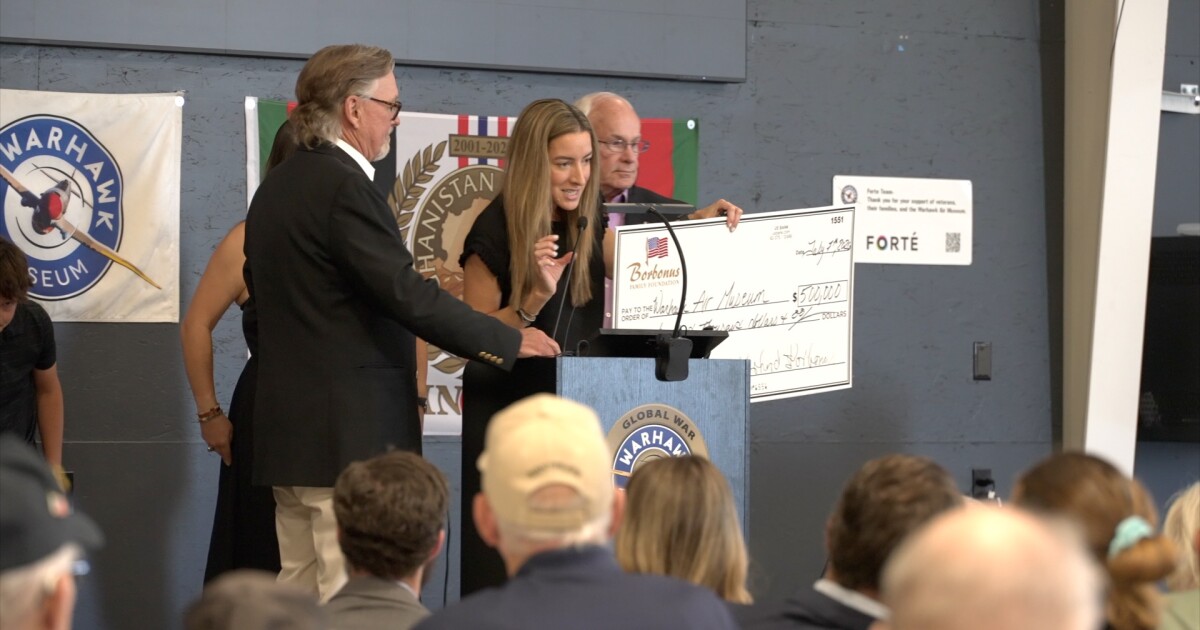
Warhawk Air Museum receives $500K grant honoring fallen Idaho soldier
-

 Connecticut23 minutes ago
Several beaches closed to swimming due to potential bacteria in the water
-

 Delaware30 minutes ago
Delaware Libraries Introduce Digital Literacy Specialists Program – State of Delaware News
-

 Florida33 minutes ago
Video shows man attack Florida deputies in snake-and-gator-infested canal, sheriff says

