
Connect with us

Pennsylvania

Pennsylvania ends attempt at CO2 regulation, leaving questions on how to address climate change

Published

on

Pennsylvania ends attempt at CO2 regulation, leaving questions on how to address climate change


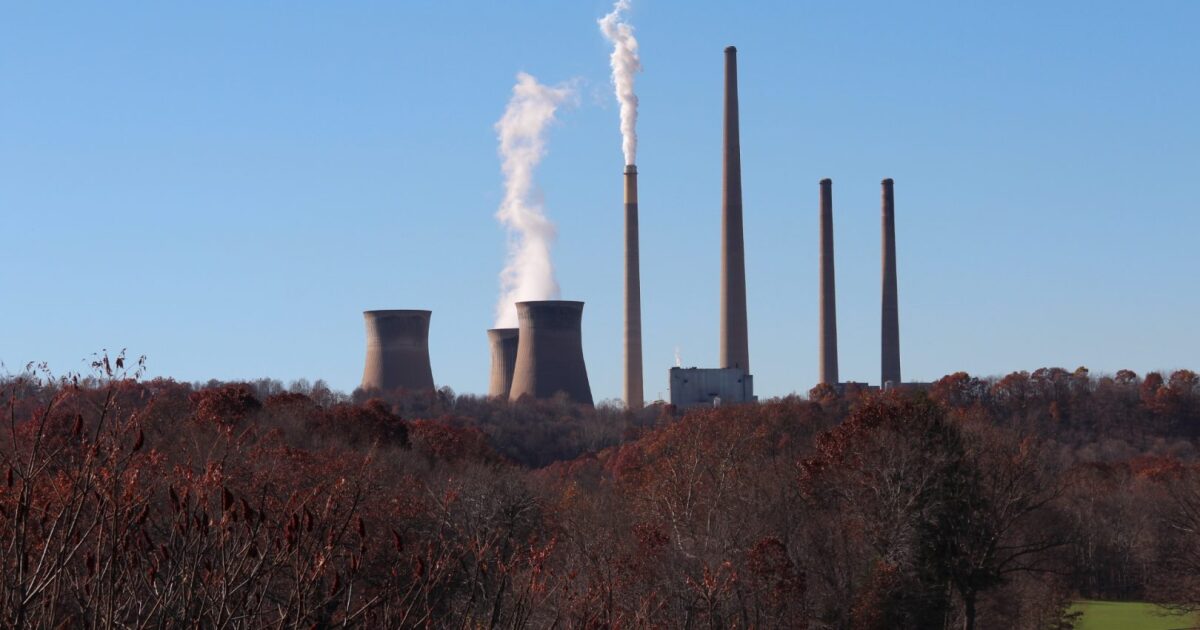
The six-year battle over Pennsylvania’s attempt to curb climate pollution has ended with a few lines of legislation in the latest state budget.

Gov. Josh Shapiro and Democrats agreed to repeal the regulation that allows Pennsylvania to participate in the Regional Greenhouse Gas Initiative in order to pass the overdue state budget.

Republican lawmakers have long been opposed to RGGI. They repeatedly voted on bills to overturn the program and took the issue to court.

Nothing will practically change in Pennsylvania as a result of the repeal, but RGGI supporters and observers said the state is giving up the potential for significant climate action.

Advertisement

“The state has just lost the most immediate lever it could pull, and which would’ve done so in a significant, unprecedented way in Pennsylvania history to cut climate pollution, create jobs, and lower people’s electricity bills,” said Robert Routh, Pennsylvania policy lead for the Natural Resources Defense Council.

The budget deal also leaves several questions about how and whether the state will address climate change and the legal avenues that are available.

Lost opportunity

RGGI is a collaborative effort between ten Northeastern and Mid-Atlantic states to reduce carbon dioxide emissions from the electricity sector. It requires power plants to pay for each ton of carbon dioxide they emit.

With an added cost to pollute under RGGI, burning fossil fuels becomes more expensive and sources with no emissions, such as wind and solar, are more competitive.

Pennsylvania is a major energy state. It’s the second-largest gas-producing state, the top electricity exporter, and emits the fourth-largest amount of carbon dioxide in the country. Pennsylvania’s RGGI rule marked the first time a large fossil fuel producer put a price on carbon.

Advertisement

Carbon dioxide traps heat in the atmosphere. Climate scientists agree emissions must be cut dramatically and quickly to avoid the worst effects of climate change, which include heat waves, increased precipitation, and flooding.

Many opponents to joining RGGI argued that the program would prematurely kill coal-fired power plants, cost the state jobs, stifle its energy economy, and raise electricity bills.

But plant closures and higher bills have come without RGGI participation, and the state hasn’t raised any additional money that could be used to ease those problems.

“ Pennsylvania coal plants are going to shut down regardless of whether we enter RGGI or not,” said Akshaya Jha, an assistant professor of economics and public policy at Carnegie Mellon University.

Now, as projected power demands are growing because of a rise in data centers and other uses, Jha said the economics suggest more gas plants and renewable energy projects will be built.

Advertisement

Penn State professor Seth Blumsack, who has studied the impact of RGGI in Pennsylvania, said joining the program mattered a lot to people who care about climate emissions and local air quality.

“If you’re not going to join RGGI, what are you going to do?” he said.

Blumsack co-authored a paper that found RGGI would benefit Pennsylvania’s energy economy overall and lead to improved health outcomes. The report also found electricity prices would rise, but the amount of money raised through the auctions would be more than enough to offset those costs.

Now that RGGI is off the table, Blumsack said the state still needs to answer questions of how to deal with pollution from the electricity sector, as well as growing power demands and electricity bills.

Jha said regional efforts, such as RGGI, can have more of an impact on emissions than local efforts, which is important for tackling the global problem of climate change.

Advertisement

“We’ve got a loss of opportunity for regional collaboration on an important issue and it’s not clear that this would’ve had substantial costs on Pennsylvania, on Pennsylvanian residents, or even Pennsylvania industry,” Jha said.

Path forward

Environmentalists said there’s no one piece of legislation that can replace what RGGI could have done for the state.

During the budget bill signing, Gov. Shapiro said Senate Republicans have been using RGGI “as an excuse to stall substantive conversations about energy.”

“It’s time to look forward, and I’m going to be aggressive about pushing for policies that create more jobs in the energy sector, bring more clean energy onto the grid, and reduce the cost of energy for Pennsylvanians,” Shapiro said.

It remains to be seen if Republicans will engage with Shapiro on his energy plans.

Advertisement

Shapiro distanced himself from RGGI during his campaign for governor. He proposed his own version of a cap and trade program for the power sector called the Pennsylvania Climate Emissions Reduction Program (PACER), that would be specific to Pennsylvania.

Bills to create PACER were introduced in the state House and Senate earlier this year, but have not been called up for a vote.

Routh, with NRDC, said the text of the PACER proposal relies heavily on the language of the RGGI regulation, which Republicans have spent years criticizing.

“It is unclear whether the bill as written now could possibly function even if we are in the political fantasy scenario where that could get action in either the House or the Senate,” Routh said.

There are several other proposals in the legislature that could benefit the environment that should now get priority, said Tom Gilbert, president of the Pennsylvania Environmental Council. Those bills include supporting new energy storage and energy efficiency projects, electric transmission upgrades, and building cleaner manufacturing.

Advertisement

“Many of these would have been directly supported by RGGI with guidance from all stakeholders, but our challenge now is to craft an interwoven set of policies that move our state forward,” Gilbert said.

As important as RGGI was to some, the program was always framed by advocates as a big first step. More will need to be done, they said, to lower emissions and encourage cleaner sources of energy.

What is RGGI, anyway? 

Gov. Tom Wolf directed the state Department of Environmental Protection in 2019 to write a regulation that would allow Pennsylvania to join RGGI.

The cap and trade program sets a limit on the total amount of emissions allowed within the region and power plants must buy “allowances” or credits through an auction to cover their emissions. The cap decreases over time. Money raised from the sale of allowances can be used to boost clean energy efforts and with bill assistance for residents.

Fossil fuel industry groups and Republican lawmakers claimed that the money raised through RGGI would amount to an illegal tax. In Pennsylvania, only the legislative branch can enact taxes.

Advertisement

Wolf and the DEP said the allowance cost is a fee for doing business. DEP said it has the authority to collect the fee under Pennsylvania’s Air Pollution Control Act.

The regulation was finished in 2022, but Pennsylvania has never participated in the RGGI auctions. The rule was quickly put on hold by a Commonwealth Court judge until legal challenges could be heard.

In 2023, Commonwealth Court ruled the regulation was unconstitutional. The case was appealed to the state Supreme Court, which heard arguments in May.

On Thursday, the DEP filed an application to discontinue its appeal.

If the case is declared moot, environmental advocates said the legal questions around the program will remain unresolved.

Advertisement

“Regardless of which way the Supreme Court would have decided the case, it is highly valuable to have to have gotten clarity on the legal claims at issue here…to articulate further what the Supreme Court justices, how they view the Environmental Rights Amendment in the context of this regulation,” Routh said.


Source link

Pennsylvania

House Republicans stall activity, Pennsylvania Rep. Meuser calls tactics ‘foolish’ | Fox Business Video

Published

on

House Republicans stall activity, Pennsylvania Rep. Meuser calls tactics ‘foolish’ | Fox Business Video


House Speaker Mike Johnson sent representatives home early as hardline Republicans stalled floor activities, demanding action on the SAVE America Act. President Donald Trump posted on Truth Social, urging House Republicans to unify and avoid giving power to Democrats. Rep. Dan Meuser (R-PA) labels the stalling tactics ‘foolish,’ emphasizing the need for legislative progress and appropriations.


Source link

Continue Reading

Pennsylvania

Measles detected in two more counties in Pennsylvania as health department recommends early vaccination

Published

on

Measles detected in two more counties in Pennsylvania as health department recommends early vaccination


Pennsylvania health officials have now detected measles cases in York and Northumberland Counties as cases in Lancaster County, the center of an ongoing outbreak, continued to rise.

And the state health department is now recommending early measles vaccinations for infants beginning at 6 months in affected areas in an effort to protect them against the spread of the highly contagious disease, which is particularly risky for young children. The same precautions should be taken by families with infants traveling to these areas.

Six Pennsylvania counties have now seen measles cases since an outbreak was first confirmed in Lebanon County in April. In all, the state has reported 81 measles cases across eight counties in 2026, more than five times the cases reported in 2025.

State health officials said it was too early to tell how the latest cases in York and Northumberland Counties are connected to others in the region, but that contact tracing investigations are continuing. All cases were among people who had not received at least two doses of the measles, mumps, and rubella (MMR) or whose vaccination status was unclear.

Advertisement

As of Wednesday, six cases had been confirmed in Northumberland County, to the north of Dauphin County, and one case had been detected in York County, along Lancaster’s western border.

Lebanon County has reported 20 cases and Dauphin and Berks Counties have reported two cases each.

Lancaster County has seen 38 cases of measles since late April, with health officials confirming seven cases in the last two weeks. The area was at the center of a prior measles outbreak in January, when state health officials confirmed eight cases in Lancaster County and an additional four between Chester and Montgomery Counties.

Vaccination rates among kindergarteners have decreased across Pennsylvania in recent years, and some counties affected in the current outbreak have particularly low rates, including Lancaster, where about 88.5% of kindergarten students are vaccinated. Health experts say that 95% of a community must be vaccinated to prevent the spread of the disease.

Health officials have been conducting contact tracing to detect as many cases as possible. In the current outbreak, they have twice warned Lancaster residents that they could have been exposed to measles.

Advertisement

Shoppers and employees at a local Kohl’s were potentially exposed to the virus over four days after a staffer tested positive in late May, LancasterOnline reported. And a person with measles visited the Lancaster County Courthouse on June 3.

But doctors in Lancaster County say they fear some measles cases are going unreported, either because patients don’t understand the importance of tracking measles cases or because they fear repercussions.

No cases have been confirmed in the Philadelphia region during this outbreak. But Delaware County health officials said last week that they had detected measles in two wastewater samples, indicating that someone with measles had used a bathroom connected to the county’s public water supply. It was unclear if that person lived in the county or was passing through.

Early vaccination recommended

On Wednesday, a statewide health alert urged physicians to accelerate vaccination schedules to protect children against measles. Officials had said they were considering the measure earlier this month as cases continued to rise.

Advertisement

Measles can infect nine in 10 unvaccinated people who are exposed to it, and can linger in the air for up to two hours and incubate in patients for three weeks. The disease typically presents with a fever and a rash but can cause brain inflammation and pneumonia in serious cases.

Typically, children receive the first of two MMR vaccines at 1 year old, then a second between 4 and 6 years old.

But children as young as 6 months can receive an additional “dose zero” to protect them from the disease amid an outbreak. In its alert, the state health department said parents should vaccinate infants between 6 and 11 months with the “dose zero” if they live in affected areas or if they’re planning to travel there.

Those children should then receive additional MMR doses at 12 to 15 months and 4 to 6 years.

This “dose zero” is less effective than doses given at 1 year old, officials cautioned. But it’s 58% effective against measles when given at 6 to 8 months, and 83% effective when administered at 9 to 11 months.

Advertisement

“Early MMR vaccination is safe and provides modest protection when measles is spreading,” officials wrote in the alert.

Children older than 12 months who haven’t been vaccinated should get an MMR dose immediately, and a second 28 days later, health officials said. Unvaccinated adults, or those without evidence of immunity, should also get two MMR doses.

And anyone who has received one dose of the MMR vaccine in the past should get a second at least 28 days after their first, officials said.

Usually, children who received a first dose at around 12 months wait to get their second dose until they’re 4 to 6 years old. But in an outbreak situation, those children should get their second doses early — at least 28 days after their first shot.

Adults born before 1957 are typically considered immune, but healthcare workers in that age group who don’t have lab evidence of immunity or prior infection should consider getting vaccinated, state officials said.

Advertisement

Adults who received an inactivated measles vaccine between 1963 and 1967 are considered unvaccinated during an outbreak, and should also get two doses of the current MMR vaccine.

Pregnant people, people with severely weakened immune systems, and people who have a history of experiencing severe allergic reactions, like anaphylaxis, to a vaccine ingredient or to a previous dose of MMR cannot receive the vaccine.


Source link

Continue Reading

Pennsylvania

The Dish: Caesar salad with a twist from Rivertown Taps in Phoenixville, Pa.

Published

on

The Dish: Caesar salad with a twist from Rivertown Taps in Phoenixville, Pa.


PHOENIXVILLE, Pa. (WPVI) — We are heading to Rivertown Taps in historic Phoenixville, Pennsylvania, to make a classic fan favorite, Caesar salad.

And when they say “taps,” they mean it.

There are dozens of drinks, beer and beyond, on tap at Phoenixville’s first self-serve drink tap wall.

“Phoenixville has always been a very beer-centric town, and we’re beer-centric people, so we wanted to have a really curated selection,” says Chef Owner Lewis Leiterman. “We have 36 drinks on tap.”

Advertisement

Just grab a charge card, choose your glassware and choose your own adventure.

“You pay for whatever you pour by the ounce,” says Leiterman. “You can pour as much or as little as you like.”

The building dates back to the 1800s, and Leiterman made sure to preserve pieces of that history, while bringing something super fresh to the strip.

“We make pastas from scratch,” he says. “We extrude all of our own pastas in house. We do all of our fresh-filled pastas all by hand. We make all our own breads. Everything that’s in here is from scratch.”

The mission includes a commitment to locally sourced food.

Advertisement

Today, we’re making a house favorite: the Caesar salad – with a twist.

“I hate chasing croutons around a salad, like, the fork never kind of sticks into it,” says Leiterman. “We still wanted that crunch factor, like the classic crouton, but different. What we did was we took some of our old bread and we kind of toasted it up and made a coarse panko texture.”

It’s becomes a universal crouton that makes its way throughout the salad.

“We like to feature seasonal vegetables in our Caesar salad, just for a little bit more flavor and nutrition,” says Leiterman.

He grills up some nice asparagus, and then adds some protein.

Advertisement

“I love a soft boiled egg on a salad to add more sustenance to a salad and a little bit of heartiness to it,” he says.

The build starts with a mix of greens, like red romaine and red watercress.

The dressing gets a gourmet kick.

“We do a black garlic and truffle Caesar,” he says. “We don’t like to overdress it. My pet peeve is those thick Caesar dressings.”

Add the asparagus to gently warm the salad, shave on some Parmigiano Reggiano cheese, add the soft boiled egg and finally, the breadcrumbs.

Advertisement

Copyright © 2026 WPVI-TV. All Rights Reserved.


Source link

Continue Reading
Advertisement

Trending
