Pennsylvania
Pennsylvania ends attempt at CO2 regulation, leaving questions on how to address climate change

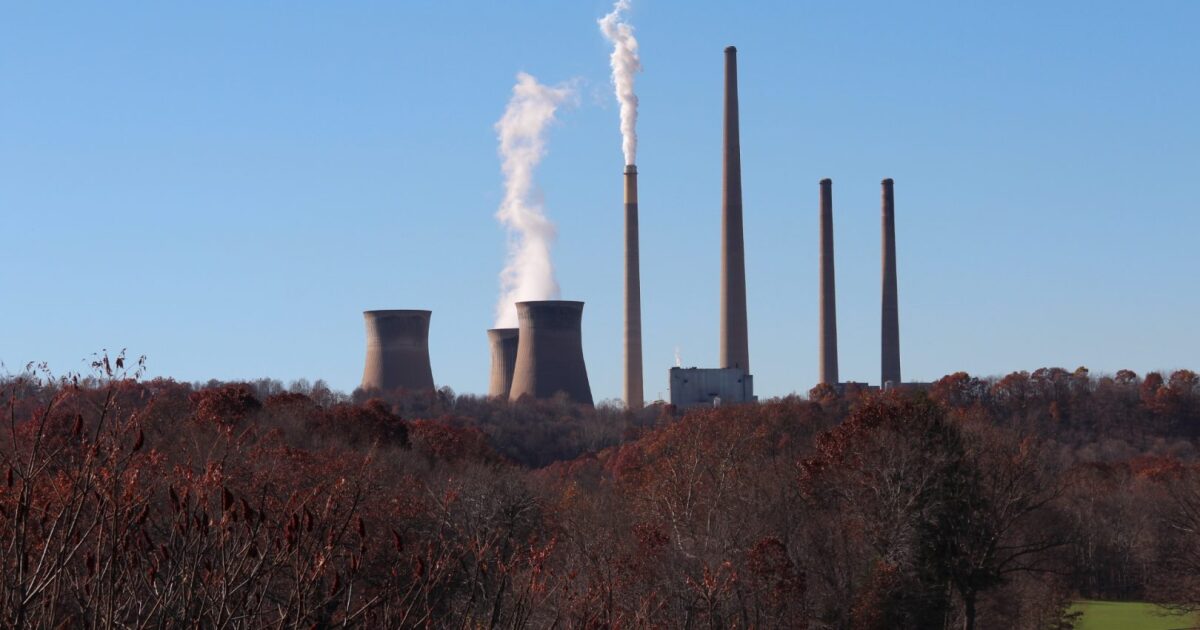
The six-year battle over Pennsylvania’s attempt to curb climate pollution has ended with a few lines of legislation in the latest state budget.
Gov. Josh Shapiro and Democrats agreed to repeal the regulation that allows Pennsylvania to participate in the Regional Greenhouse Gas Initiative in order to pass the overdue state budget.
Republican lawmakers have long been opposed to RGGI. They repeatedly voted on bills to overturn the program and took the issue to court.
Nothing will practically change in Pennsylvania as a result of the repeal, but RGGI supporters and observers said the state is giving up the potential for significant climate action.
“The state has just lost the most immediate lever it could pull, and which would’ve done so in a significant, unprecedented way in Pennsylvania history to cut climate pollution, create jobs, and lower people’s electricity bills,” said Robert Routh, Pennsylvania policy lead for the Natural Resources Defense Council.
The budget deal also leaves several questions about how and whether the state will address climate change and the legal avenues that are available.
Lost opportunity
RGGI is a collaborative effort between ten Northeastern and Mid-Atlantic states to reduce carbon dioxide emissions from the electricity sector. It requires power plants to pay for each ton of carbon dioxide they emit.
With an added cost to pollute under RGGI, burning fossil fuels becomes more expensive and sources with no emissions, such as wind and solar, are more competitive.
Pennsylvania is a major energy state. It’s the second-largest gas-producing state, the top electricity exporter, and emits the fourth-largest amount of carbon dioxide in the country. Pennsylvania’s RGGI rule marked the first time a large fossil fuel producer put a price on carbon.
Carbon dioxide traps heat in the atmosphere. Climate scientists agree emissions must be cut dramatically and quickly to avoid the worst effects of climate change, which include heat waves, increased precipitation, and flooding.
Many opponents to joining RGGI argued that the program would prematurely kill coal-fired power plants, cost the state jobs, stifle its energy economy, and raise electricity bills.
But plant closures and higher bills have come without RGGI participation, and the state hasn’t raised any additional money that could be used to ease those problems.
“ Pennsylvania coal plants are going to shut down regardless of whether we enter RGGI or not,” said Akshaya Jha, an assistant professor of economics and public policy at Carnegie Mellon University.
Now, as projected power demands are growing because of a rise in data centers and other uses, Jha said the economics suggest more gas plants and renewable energy projects will be built.
Penn State professor Seth Blumsack, who has studied the impact of RGGI in Pennsylvania, said joining the program mattered a lot to people who care about climate emissions and local air quality.
“If you’re not going to join RGGI, what are you going to do?” he said.
Blumsack co-authored a paper that found RGGI would benefit Pennsylvania’s energy economy overall and lead to improved health outcomes. The report also found electricity prices would rise, but the amount of money raised through the auctions would be more than enough to offset those costs.
Now that RGGI is off the table, Blumsack said the state still needs to answer questions of how to deal with pollution from the electricity sector, as well as growing power demands and electricity bills.
Jha said regional efforts, such as RGGI, can have more of an impact on emissions than local efforts, which is important for tackling the global problem of climate change.
“We’ve got a loss of opportunity for regional collaboration on an important issue and it’s not clear that this would’ve had substantial costs on Pennsylvania, on Pennsylvanian residents, or even Pennsylvania industry,” Jha said.
Path forward
Environmentalists said there’s no one piece of legislation that can replace what RGGI could have done for the state.
During the budget bill signing, Gov. Shapiro said Senate Republicans have been using RGGI “as an excuse to stall substantive conversations about energy.”
“It’s time to look forward, and I’m going to be aggressive about pushing for policies that create more jobs in the energy sector, bring more clean energy onto the grid, and reduce the cost of energy for Pennsylvanians,” Shapiro said.
It remains to be seen if Republicans will engage with Shapiro on his energy plans.
Shapiro distanced himself from RGGI during his campaign for governor. He proposed his own version of a cap and trade program for the power sector called the Pennsylvania Climate Emissions Reduction Program (PACER), that would be specific to Pennsylvania.
Bills to create PACER were introduced in the state House and Senate earlier this year, but have not been called up for a vote.
Routh, with NRDC, said the text of the PACER proposal relies heavily on the language of the RGGI regulation, which Republicans have spent years criticizing.
“It is unclear whether the bill as written now could possibly function even if we are in the political fantasy scenario where that could get action in either the House or the Senate,” Routh said.
There are several other proposals in the legislature that could benefit the environment that should now get priority, said Tom Gilbert, president of the Pennsylvania Environmental Council. Those bills include supporting new energy storage and energy efficiency projects, electric transmission upgrades, and building cleaner manufacturing.
“Many of these would have been directly supported by RGGI with guidance from all stakeholders, but our challenge now is to craft an interwoven set of policies that move our state forward,” Gilbert said.
As important as RGGI was to some, the program was always framed by advocates as a big first step. More will need to be done, they said, to lower emissions and encourage cleaner sources of energy.
What is RGGI, anyway?
Gov. Tom Wolf directed the state Department of Environmental Protection in 2019 to write a regulation that would allow Pennsylvania to join RGGI.
The cap and trade program sets a limit on the total amount of emissions allowed within the region and power plants must buy “allowances” or credits through an auction to cover their emissions. The cap decreases over time. Money raised from the sale of allowances can be used to boost clean energy efforts and with bill assistance for residents.
Fossil fuel industry groups and Republican lawmakers claimed that the money raised through RGGI would amount to an illegal tax. In Pennsylvania, only the legislative branch can enact taxes.
Wolf and the DEP said the allowance cost is a fee for doing business. DEP said it has the authority to collect the fee under Pennsylvania’s Air Pollution Control Act.
The regulation was finished in 2022, but Pennsylvania has never participated in the RGGI auctions. The rule was quickly put on hold by a Commonwealth Court judge until legal challenges could be heard.
In 2023, Commonwealth Court ruled the regulation was unconstitutional. The case was appealed to the state Supreme Court, which heard arguments in May.
On Thursday, the DEP filed an application to discontinue its appeal.
If the case is declared moot, environmental advocates said the legal questions around the program will remain unresolved.
“Regardless of which way the Supreme Court would have decided the case, it is highly valuable to have to have gotten clarity on the legal claims at issue here…to articulate further what the Supreme Court justices, how they view the Environmental Rights Amendment in the context of this regulation,” Routh said.



Pittsburgh sees unhealthy air quality from Canada, MN wildfire smoke
Wildfire smoke caused Pittsburgh’s air quality to deteriorate, prompting a code red air quality alert.
Pittsburgh was under a code red air quality alert on Thursday, July 16 as wildfire smoke from Canada and Minnesota settled across the city.
The city’s air quality was expected to deteriorate as smoke concentration at ground level increased throughout the day, with the day’s overall air quality forecast as unhealthy due to fine particles carried in smoke, according to Pennsylvania Department of Environmental Protection.
Here’s what to know about Pittsburgh’s air quality.
What’s the air quality in Pittsburgh today?
The morning of July 16, the air quality was moderate, with an Air Quality Index reading of 55, according to AirNow. But it was expected to hit unhealthy levels later in the day, with the overall daily air quality anticipated to reach dangerous levels with an AQI of 175, prompting Pennsylvania Department of Environmental Protection to issue a Code Red air quality alert. The alert is based on the day’s expected overall air quality and not individual hour-to-hour readings.
Smoke was likely to continue to impact Pittsburgh into the weekend, with a forecast overall daily AQI of 140 on July 17, with the state department of environmental protection issuing a Code Orange air quality alert. This indicates that the air quality may be unhealthy for sensitive groups.
July 18 was likely to see improved conditions, with moderate air quality.
What does a Code Red air quality alert mean?
A Code Red air quality alert indicates that the overall air quality within a day is likely to be unhealthy, with an AQI reading of 151 to 200.
Because the alert is based on the overall air quality for the day, there may be periods of time with better air quality. It’s a good idea to check the current air quality before going outside.
If you have to go outside while the AQI is at unhealthy levels, AirNow recommends avoiding strenuous activities or limiting your time outdoors. It may be a good idea to move outdoor activities indoors.
Pennsylvania Department of Environmental Protection also encouraged residents to avoid using gas-powered lawn and garden equipment, reducing the use of fireplaces or wood stoves and avoiding the open burning of leaves, trash or other materials in an effort to reduce fine particulate matter air polution.
What does a Code Orange air quality alert mean?
A Code Orange air quality alert means that the overall air quality within a day is likely to be unhealthy for sensitive groups, with an AQI reading between 101 to 150.
Those with lung disease, older adults, children and teens should reduce their exposure by engaging in less strenuous activities or limiting their time outdoors when the current air quality is at its worst, according to AirNow.
Wildfire smoke impacting Pittsburgh’s air quality
There were more than 830 wildfires burning in Canada as of July 15, with over 100 considered out of control. Many of the fires impacting the Northeast’s air quality were in Ontario and Minnesota.
Smoke from the wildfires hit Pennsylvania on the evening of July 15, causing hazy skies in Pittsburgh. Conditions were expected to worsen on July 16 as more smoke entered the area, with smoke likely to linger through July 17.
Is Pittsburgh under a heat advisory?
While Pittsburgh was under a heat advisory on July 15, the advisory was no longer in effect on July 16. The high on July 16 was forecast at 93, though temperatures could possibly fall several degrees because of smoke cover, according to the National Weather Service.
Brandi D. Addison and Karina Zaiets contributed to this report.
Finch Walker is the Pittsburgh Connect Reporter for the USA TODAY Network. Contact Walker at FWalker@usatodayco.com. Instagram: @finchwalker_. X: @_finchwalker.
Pennsylvania
Fifth Time’s The Harm: Pennsylvania Gov. Shapiro Again Signed A Budget With No Money For Transit — Streetsblog USA

Another year, another blow to Pennsylvania transit riders.
Keystone State Gov. Josh Shapiro signed the annual budget into law last Sunday, and for the fifth year in a row, public transportation has been left to financially starve. The approved budget contains no funding for transit operations, continuing a streak that forces every agency to scrounge for its own money, to varying degrees of success.
“We’ve been left out for far too long,” remarked Connor Descheemaker, Statewide Campaign Manager for Transit for All, PA! The organization rallied transit riders to send more than 50,000 letters to state representatives and the White House-eying governor calling for transit funding, reaching every legislative district in Pennsylvania.
Those calls went largely unanswered. Riders in Lehigh Valley are now bracing for route eliminations and trip cancellations, despite already paying increased fares. Lancaster County paratransit riders will pay more as well, beginning next month.
Low-income, disabled, and rural Pennsylvanians will lose access to jobs, healthcare, and loved ones. That reality hasn’t stopped their governor from declaring victory.
In a speech at last week’s budget signing ceremony, Shapiro uttered a total of three words about the state-sponsored mobility crisis: “There’s more I want to do – like raising the minimum wage, funding mass transit, and expanding access to affordable housing,” he said.
Shapiro seems to understand the need for well-funded transit. Last year, he sent $220 million to Philadelphia to boost SEPTA’s barren maintenance fund following a series of onboard fires.
One-time relief won’t keep buses running, though.

Shapiro has failed, and failed, and failed again to pass his landmark transit policy. His initial proposal would increase the share of sales tax revenue going to public transit by 2 percent. The blame isn’t all his: Even after he watered down his proposal to a 1.75-percent increase, statehouse Republicans failed to support it.
Even if it had succeeded, it’s too little, too late: The sales tax change would still be $92 million short of the $384 million that Transit for All, PA! estimates is needed to prevent further service cuts in public transportation across the state.
Transit for All, PA! has previously lobbied for its legislative package, which would have increased taxes on car rentals and leases, and raised a new tax on ride shares.
Like Shapiro’s plan, that failed, too.
“The General Assembly has deferred action to invest fully in public transit,” state Sen. Nikil Saval (D-Philadelphia), who had authored the ride share component of the legislative package. “Despite the continued activation and involvement of tens of thousands of Pennsylvanians … we will once again face this issue in 2027.”
Pennsylvania’s last semblance of adequate transit funding ended in 2021 with the expiration of Act 89. The 10-year allocation covered statewide transportation expenses, including roadway maintenance and transit operations.
As soon as Act 89 money dried up, agencies turned to Covid relief grants to stay afloat. Those grants, provided through the American Rescue Plan, ended in 2024. Several agencies have gone so far as to pillage their own fixed-route budgets to continue federally mandated paratransit services.
Call it luck, a Band-Aid, or a bad omen; riders on Philadelphia’s SEPTA and Pittsburgh’s PRT are momentarily safe from service cuts and fare hikes. Following last year’s budget disaster, Shapiro permitted the two agencies to raid their own maintenance funds to temporarily pay for operations.
Now, both are pausing upgrades, deferring basic maintenance, and reckoning with the realities of operating – but not fixing – a large-scale transit system.
State highways, on the other hand, received $775 million in new funding from Shapiro’s budget deal.
Transit advocates in Pennsylvania are shifting strategies to preserve essential transit services. A June decision by the Pennsylvania Supreme Court, allowed slot machines to be taxed at a higher rate.
Both Democrat and Republican lawmakers have shown interest in using revenue from the so-called “skill games tax” to fund transit. The legislature must agree on a tax rate and structure, but declined to do so before finalizing the budget.
“Anytime that there is a discussion of new revenue in Pennsylvania, it needs to include public transportation,” Descheemaker said. “We are losing public transportation actively, right now in Pennsylvania. Public transportation needs to be at the center of those conversations.”
Pennsylvania
Lawmakers break without addressing unconstitutional murder sentences, leave 1K Pa. lifers in limbo

Pennsylvania lawmakers recessed Sunday without fixing the commonwealth’s unconstitutional sentencing scheme for second-degree murder, making it increasingly likely they will miss a deadline set by the state Supreme Court and leave the issue in limbo.
A killing is considered second-degree murder if it occurs during the course of a violent felony, including robbery, rape, or arson. Someone can be found guilty of the crime if they participated in the underlying felony, even if their actions didn’t lead directly to another person’s death.
Because of this, a person in Pennsylvania who served as a getaway driver during a botched robbery, or caused an injury that later led to death, currently receives the same sentence as someone who knowingly plotted and carried out a killing.
However, in March the Pennsylvania Supreme Court ruled in Commonwealth v. Lee that mandatory life without parole for second-degree murder is unnecessarily cruel under the state constitution.
The court gave lawmakers until July 24 to rewrite the sentencing laws.
“While we have a clear obligation to ensure that constitutional bounds are not crossed, we may not act as legislators, who are best positioned to effectuate penal reform,” wrote Chief Justice Debra Todd for the majority.
They also declined to make the ruling retroactive, leaving it up to the legislature to decide whether people already serving life sentences for second-degree murder convictions should be up for parole.
But months of talks among advocates for criminal justice reform, district attorneys, and members of the split legislature have not produced a compromise.
The state Senate twice tried to move a version of a proposal that would create 35-year mandatory minimum sentences for adults convicted of second-degree murder, with few exceptions, as well as a pathway to release for those already serving. However, state Rep. Tim Briggs (D., Montgomery), a key House lawmaker on criminal justice issues, told Spotlight PA the proposal is too punitive.
If the legislature misses the deadline, the state Supreme Court decision will take effect, leaving individual Common Pleas judges across the state to dole out fair sentences without legislative guidance.
And the fate of more than 1,100 people already in prison on second-degree murder convictions will likely be decided by the state’s highest court, as civil rights lawyers stand ready to petition the body for further clarity.
Should the justices apply their ruling to people who are already convicted, courts across the state will almost certainly be flooded with hundreds of petitions from those serving life in second-degree cases, some decades old.
Some advocates are ready to file those petitions, telling Spotlight PA the courts might produce better outcomes for clients than the state Senate’s proposed path forward.
“We’re not afraid of going to mass resentencings,” said Sean Damon, director of strategic partnerships for Straight Ahead. His organization is the policy arm of the Abolitionist Law Center, the firm that brought the suit in Lee.
Others cautioned against that outcome.
“Inaction is not an option, in fact it is dangerous,” Attorney General Dave Sunday said in a statement sent after the legislature convened.
“Failing to act would leave our communities and victims without needed protections, and it is important that we move forward collaboratively to ensure a responsible solution.”
Lawmakers telegraphed Sunday night that they are willing to keep working on a compromise ahead of the deadline, but did not confirm whether they’d solve the issue in time.
Gov. Josh Shapiro, in a news conference, said he agrees with the Pennsylvania Supreme Court’s ruling, and wants to see the legislature reach consensus.
“We’re going to continue to work on this issue, and I’m confident, given some of the maneuvering that the majority leader in the House did today,” the Democrat said. “There’s a vehicle ready to go when we have a compromise in place.”
Asked whether lawmakers will pass a bill by the July 24 deadline, state House Majority Leader Matt Bradford (D., Montgomery) twice told reporters: “We’re hoping to get something accomplished.”
Conversations, but no compromise
For decades, Pennsylvania’s justice system has applied second-degree murder to a wide variety of defendants and criminal behavior: a man who killed a 77-year-old woman during the course of a violent rape; an accomplice in the torture and eventual death of an intellectually disabled woman; a man who robbed a tourist who minutes later committed suicide; a 14-year-old with a history of abuse and mental illness, who started an accidental house fire that killed the two boys she was trying to visit.
And for decades, those convicted have all received the same, unmovable sentence: life without parole.
The state Supreme Court in March found this sentencing scheme unnecessarily cruel, and argued that without an individual assessment of culpability, it violates the Pennsylvania Constitution.
“We determine that a mandatory life without parole sentence for all felony murder convictions, absent an assessment of culpability, is inconsistent with the protections bestowed upon our citizens under the ‘cruel punishments’ clause of our Commonwealth’s organic charter,” wrote Justice Todd for the majority.
In the spring, the legislature seemed poised to act.
Lawmakers from both chambers had already proposed legislation, including a bipartisan effort by state Sens. Sharif Street (D., Philadelphia) and Camera Bartolotta (R., Beaver) and another by Rep. Tim Briggs (D., Montgomery).
But at an April meeting of the state House Judiciary Committee, with advocates in attendance eager to celebrate the vote, Briggs tabled his bill. Stakeholders had reached out, he explained, with feedback and a desire to have their positions better reflected in whatever solution the legislature pursued.
“I think we can have a collaborative process to get to a better bill that balances the need to comply with the Lee decision, but also is fair and compassionate, respects victims’ rights, and above all, maintains community safety,” Briggs said during the April meeting.
Then, speaking about people already serving life sentences, he said: “These people – this is emotional – these people have been serving long, unconstitutional sentences, and I will not put them in a worse position than what I believe the Supreme Court would order for them after the (120 day) run.”
In an interview with Spotlight PA months later, Briggs said he had hoped the pause would lead to meaningful cross-party conversations.
“That never happened,” Briggs said.
In spring conversations between Straight Ahead and the Pennsylvania District Attorneys Association, the groups tried to reach a framework that would satisfy their respective coalitions. Lawmakers were not directly involved in those conversations, sources confirmed to Spotlight PA.
State prosecutors were most worried about the group of more than 1,100 people serving life sentences, said Kelly Callihan, the executive director of the district attorneys association.
“We like uniformity,” she said. “Victims deserve that, and honestly, perpetrators who have been convicted deserve that, so that it’s not like the Wild West, where every county was just going to be on an island doing what they thought with resentencing.”
Public defenders feel similarly, said Sara Jacobson, the executive director of the Public Defender Association of Pennsylvania. Without a legislative fix, she said, the state would be left with “justice by geography.”
“Without guidance, the results will vary widely in terms of sentences they get handed down,’ Jacobson added. “It will depend much more on the politics of a given county and an individual judge’s perspective.”
A legislative framework would be better for everyone, Jacobson said, because prosecutors, defense attorneys, and crime victims will know what to expect.
But feelings diverge from there.
The district attorneys association feels comfortable with a minimum sentence, after which the convicted person would be eligible for parole, Callihan said.
But Straight Ahead and other advocates found a high mandatory minimum for those sentenced to second-degree murder to be unpalatable.
“We have been advocating for a maximum sentence similar to third-degree,” which carries a 40 year maximum, Damon said.
In June, a compromise had not been reached when, over the course of four days, the Republican-controlled state Senate introduced, voted out of committee, and passed new legislation with bipartisan support.
That bill, SB 1400, would establish a 35-year mandatory minimum for adult offenders and preserve life without parole as an option for offenders who meet certain criteria. It allows for sentences as low as 10 years if a defendant meets a narrow set of mitigating circumstances.
For people already serving life, the bill would permit parole consideration after 35 years for most and 20 years for those over the age of 70.
The court gave the General Assembly a 120-day window “because opening the prison doors and letting out violent individuals back on the streets is unacceptable policy,” said state Sen. Lisa Baker (R., Luzerne), the bill’s lead sponsor, during a news conference after passage. Attorney General Sunday, also appearing at the news conference, supported it.
The state Senate passed a largely similar version of this legislation Sunday afternoon, attached to a House bill aimed at allowing incarcerated individuals to earn credits toward potential earlier parole by participating in educational and vocational programs.
But the bill found no purchase among House Democrats.
When he spoke with Spotlight PA in June, Briggs said the language was “too heavy-handed.”
“These are serious matters,” he said, “but I think there needs to be some compassion on the facts, and high mandatory minimums across the board isn’t the direction I want to go in.”
Elizabeth Rementer, a spokesperson for House Democrats, said Sunday that the lawmakers remain committed to continuing negotiations.
But speaking of the bill passed Sunday, she said, “Unfortunately, this isn’t it.”
Mass resentencings possible
Stakeholders are similarly split.
Berks County District Attorney John Adams, in an interview with Spotlight PA, said he largely supported the state Senate legislation and its attempt to establish both a framework for future sentencing and a path for reconsidering past convictions. As a prosecutor and former defense attorney, “I have been on both sides of this issue, so I know it by heart, and I know it through experience,” Adams said.
“This bill covers pretty much everything that I was looking for,” he said. “It offers, in the appropriate instances, the possibility that someone could be sentenced to life in prison, and it also offers otherwise some alternatives.”
But Philadelphia District Attorney Larry Krasner, a progressive Democrat known for diverging from his fellow prosecutors, derided the state Senate bill as unscientific and beholden to an old-school, tough-on-crime approach to justice.
In an interview with Spotlight PA, Krasner was blunt in his assessment of the courts as a better path than the proposed legislation..
“Nothing is better than stupid,” Krasner said.
The path to this type of mass resentencing is uncertain — for now.
Without a legislative fix, the issue will need to return to the state Supreme Court to become retroactive.
The Abolitionist Law Center is ready to pursue this path if the legislature fails to act, said Legal Director Bret Grote, whether through traditional appeal or a King’s Bench petition, which would ask the court to take the matter more quickly.
“The issue will be presented to the court promptly, and the court alone will decide when they hear such a case,” Grote said, “but with more than — and we’re confident it’s more than 1,100 people — serving this unconstitutional sentence, this is a constitutional crisis.”
Straight Ahead, ALC, and other advocates actively involved in conversations around the Lee decision are ready to do the most good for the most people, Damon said. “So, I’m not being glib when I say we’re ready to go a mass resentencing.”
More than 500 of the people serving life sentences for felony murder were convicted in Philadelphia, where the courts do not “tend to throw the book at people,” Damon said, and where there is a reform-minded district attorney in Krasner.
“We’re going to have lower sentences in Philly,” Damon said.
___
This story was originally published by Spotlight PA and distributed through a partnership with The Associated Press.
-

 San Francisco, CA7 minutes ago
Operator of boat that capsized near Alcatraz mourns brother as search continues
-

 Dallas, TX13 minutes ago
Mavericks vs Thunder Game Preview and Injury Update
-

 Miami, FL19 minutes ago
Miami Dolphins Fans Vs. The Media
-

 Boston, MA25 minutes ago
Man who allegedly shot at Boston Police officers arrested after foot chase in Dorchester
-

 Denver, CO31 minutes ago
Swan, dragon and duck boats are back pedaling around City Park
-

 Seattle, WA37 minutes ago
Ticket Alert: Thundercat, Michelle Branch, and More Seattle Events Going On Sale This Week – The Stranger
-

 San Diego, CA43 minutes ago
EXCLUSIVE: Ignition Press Welcomes eBay Live & Revenge Of to San Diego Comic-Con Ignition Pavilion
-
 Milwaukee, WI49 minutes ago
Milwaukee comedy club The Laughing Tap hosting stand-up challenge

