West
Trump admin squashes controversial Biden rule forcing foster homes to affirm children’s LGBTQ+ status

NEWYou can now listen to Fox News articles!
A rule implemented during the Biden administration, requiring prospective foster homes to prove they will support a child’s gender transition, or lesbian, gay or bisexual status, in order to retain federal funding, has been formally rescinded by the Trump administration Friday.
A Notice of Proposed Rulemaking (NPR) was published in the federal register Friday morning to formally rescind the 2022 rule titled, “Designated Placement Requirements Under Titles IV-E and IV-B for LGBTQI+ Children,” which a court in Texas already vacated in June.
The move follows a warning letter sent to all 50 states, telling them that as long as they receive federal child welfare funding, they are obligated to ensure the removal of any kid from their home must be grounded in “objective evidence of harm or imminent risk,” citing reports of states removing children from their parent’s homes because the parents disagreed with their children’s gender transition.
Assistant Secretary for the Administration for Children and Families Alex Adams told Fox News Digital that there has been a record year-over-year decrease in the number of foster families nationally. He said that the Biden-era rule is a main issue for religious-oriented families, boxing them out of the foster care system.
NEW YORK AG ORDERS MANHATTAN HOSPITAL TO RESUME GENDER-TRANSITION TREATMENT FOR TRANSGENDER YOUTH
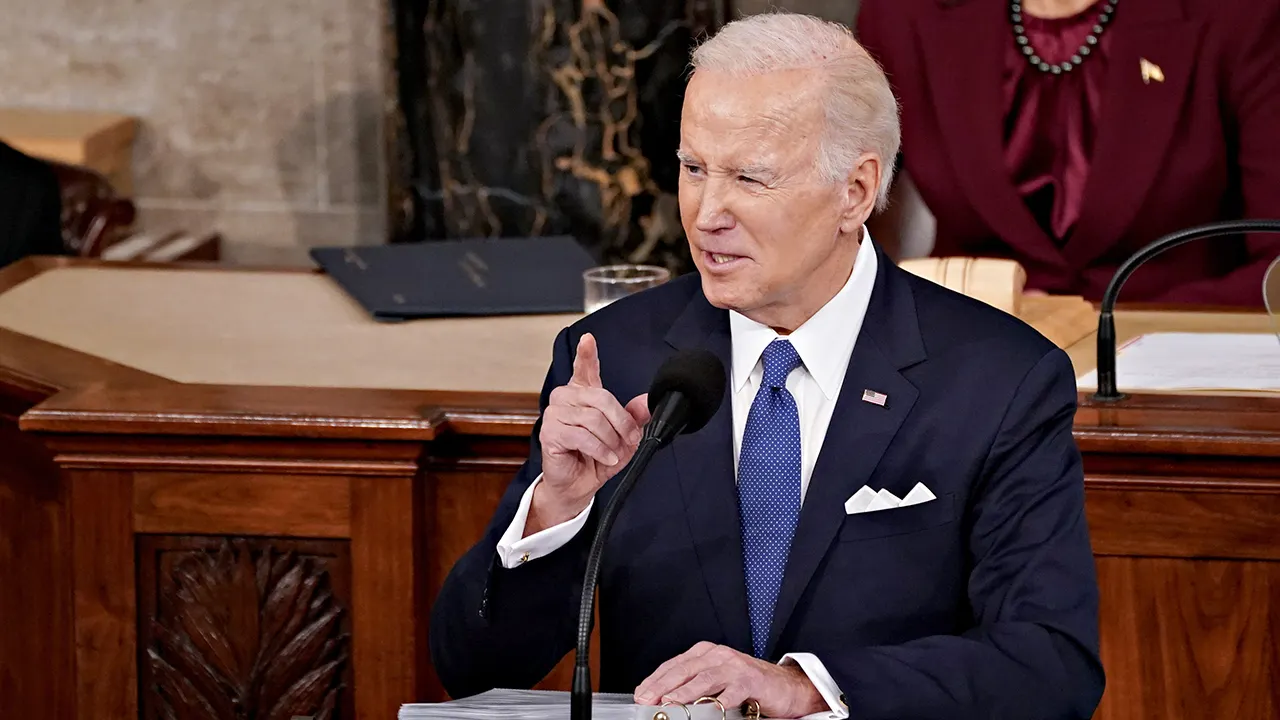
President Donald Trump’s administration took a pair of actions this week to ensure parents and kids are not being impacted by LGBTQ activism by the foster care industry. (Getty Images)
“There’s 57 homes for every 100 kids that come into the system. We can do better, and we must do better, and we must do more to send a welcoming message that the red carpet will be rolled out to every family willing to step forward and welcome a child into their home and open their heart and open their home to these kids,” Adams said. “Your most likely families to raise their hand and volunteer as a foster family are those who have sincerely held religious convictions. So the message that you send is so important. The message we’re trying to send is we’re going to roll out the red carpet for everybody. We need more foster homes.”
By rescinding the move in the federal register, that “officially” takes it off the books, “so that nobody tries to breathe life into it,” according to Adams.
The final move to squash the 2022 rule, follows pressure the Trump administration had already been placing on states. At the end of last year, ACF sent a letter to 13 states, expressing concern about families being turned away from fostering because they refuse to give up their sincerely held religious beliefs. At least one of those states, Massachusetts, amended their policy amid the scrutiny.
It also follows a November 2025 executive order telling the Health and Human Services Department to “modernize” the foster care system within 180 days, maximize partnerships with Americans of faith, and a litany of other measures. Trump also issued early executive orders during his presidency challenging left-wing gender ideology and pushing a return to “biological truth.”
President Trump took on transgender activism early in his second term, including through Executive Order 14187, which prohibits sex-change surgeries for anyone under the age of 19. (Getty Images)
SUPREME COURT RULING ON SECRETIVE CALIFORNIA GENDER POLICY COULD RESHAPE PARENT RIGHTS FIGHTS NATIONWIDE
Public reports, including one as recently as this year, illustrate examples of kids being taken from their homes in states like California and Ohio, because their parents have been accused of abuse, or of denying appropriate medical care to their kids. These claims have also been brought up in divorce and family custody hearings as well, sometimes resulting in the parents losing custody.
Meanwhile, Trump highlighted the issue during his State of the Union address last month, when he told the story of the parents to Sage Blair, who a judge ripped from their custody over alleged abuse after the family did not immediately recognize their daughter as a boy.
Sage Blair and her mother, Michelle Blair, stand in the gallery during President Donald Trump’s State of the Union address after he highlighted her case involving alleged school gender transition policies. (Pool)
Earlier in the week, Adams and ACF told states that while they have a duty to protect children from abuse and neglect, they are cracking down on any states conflating that with a parent’s choice about how they parent their child who expresses a desire to transition genders, or a desire to be romantically involved with the same sex. While related to Fridays NPR, it is a separate action.
CLICK HERE TO DOWNLOAD THE FOX NEWS APP
“We’re basically putting states on notice that if they violate our interpretation of abuse or neglect, we would take appropriate action, which could include pulling back CAPTA funds,” Adams told Fox News Digital.
Read the full article from Here



Montana
The Record is Clear: The Wilderness Society, Greater Yellowstone Coalition, and Montana Wilderness Association have Consistently Undermined the Roadless Rule

Beartooth Range, Montana. Photo: Jeffrey St. Clair.
The Wilderness Society, the Greater Yellowstone Coalition, and the Montana Wilderness Association, now rebranded “Wild Montana,” all claim they support the Roadless Rule and have been asking people for donations to oppose efforts to repeal it. But a review of the record shows that these “conservation” groups have supported opening 1,585,000 acres or Roadless and Wilderness Study Areas to logging and road building since the roadless rule went into effect in 2001.
Tracy Stone-Manning, now the President of The Wilderness Society, has been widely quoted as supporting the Roadless Rule. But while working as a top environmental advisor for former Montana Senator Jon Tester, she strongly supported his 2009 Forest Jobs and Recreation Act. The Montana Wilderness Association, now doing business as Wild Montana, was also one of the main cheerleaders for Tester’s bill
Although the bill never passed, it would have opened one million acres of roadless lands in the Beaverhead-Deerlodge National Forest in southwest Montana and mandated logging 10,000 acres per year for 10 years in the Beaverhead and Kootenai National Forests. The Kootenai contains the smallest, most threatened grizzly population in the world in the Cabinet-Yaak. Since most grizzly bears are killed within 1/3 of a mile of a road, more logging means more logging roads would be bulldozed into grizzly habitat, resulting in more dead grizzly bears. The measure was so extreme even the Forest Service opposed it.
The groups also strongly supported former Montana Senator Max Baucus’ Rocky Mountain Front Heritage Act, passed as a rider on the 2014 defense spending bill. The measure opened 208,000 acres of roadless lands to logging and road-building and guaranteed grazing in perpetuity with no environmental analysis or public review. The pitiful 67,000 acres of wilderness tack-ons also required the sacrifice of four Wilderness Study Areas in Eastern Montana, opening 29,000 acres to oil and gas exploration and development.
Then came Tester’s 2017 Blackfoot Clearwater Stewardship Act that carved up 50,000 acres of an Inventoried Roadless Areas contiguous to the Scapegoat and Bob Marshall Wilderness Areas. The measure also allowed loggers to decide where to build roads and designated 5,000 acres as a play area for snowmobiles and mountain bikes.
The bill didn’t even make it out of committee, but now these same groups have renamed it “A River Runs Through It Act” — although there is no sponsor and no “act.” In addition to the roadless lands Tester’s bill would have destroyed, it turns over management of 70,000 acres in grizzly, lynx and wolverine habitat in the Ogden Mountain Roadless Area northwest of Lincoln Montana to the timber industry. It also converts 130,000 acres of Inventoried Roadless Areas into play areas for motorized recreation and mountain bikers.
The clearcutting, bulldozing new logging roads, and motorized recreation in roadless areas will send tons of sediment into the Blackfoot River which has been designated critical habitat for bull trout, a threatened species. It should be called “A Clearcut Runs Through It Act.”
Finally, all three groups support the Greater Yellowstone Conservation And Recreation proposal. There is no sponsor and no bill, but the proposal opens much of the Lee Metcalf Wilderness Study Area and other Inventoried Roadless Areas to motorized recreation, logging and road building. While adding only 102,000 acres as wilderness — less than half of the 250,000 acres that qualify for wilderness designation — it also significantly reduces the 155,000 acre Hyalite-Porcupine-Buffalo Horn Wilderness Study Area by 53,000 acres.
Don’t fall for the con. The record is clear: these groups have supported reducing, not protecting Inventoried Roadless Areas in the past and are doing so now.
Please consider helping us get the only bill before Congress that would designate all 23 million acres of roadless in the Northern Rockies designated as wilderness, the Northern Rockies Ecosystem Protection Act. Please also consider donating to Counterpunch to help them continue exposing hypocrites.

LAS VEGAS (KSNV) — Nevada Youth Sports is working to keep thousands of young athletes on the field after a fire believed to have been sparked by illegal fireworks caused nearly a quarter of a million dollars in damage to its facility.
The fire broke out late on the night of July 4. Jane Ramos, chief administrative officer for Nevada Youth Sports, said she received a call from the organization’s landlord telling her there had been a fire at the building.
“We got a call from our landlord saying I needed to come out here right away because there had been a fire,” Ramos said. “We didn’t really understand the scope of what had happened until we could hardly open the door because of the fumes, the smoke, and the smell.”
According to Ramos, firefighters responded shortly before midnight after flames were reported on the roof of the building. In the days since, the organization says it has learned the fire is believed to have started when embers from illegal fireworks landed on the roof.
“It’s something that was preventable if it truly was illegal fireworks,” Ramos said.
Early damage assessments estimate nearly $250,000 in structural, electrical and water damage. Ramos said the organization is still working to understand the full financial impact.
“We’re trying to assess where we are financially in all of this,” she said. “It’s really a question mark.”
The damage has forced Nevada Youth Sports to temporarily close its facility, affecting the thousands of athletes and families who rely on the organization for leagues, clinics and training programs.
Nevada Youth Sports serves more than 14,000 athletes and families across the Las Vegas Valley each year. Ramos said the organization’s immediate priority is finding alternate locations so programs can continue with as little disruption as possible.
“We’re definitely allocating our resources toward those efforts,” Ramos said. “Whatever the cost is to continue programming outside of this building, that’s where we’re focusing our efforts right now.”
While investigators continue looking into the cause of the fire, Ramos said the organization hopes whoever is responsible will be held accountable. She said neighboring businesses have provided surveillance video that could help determine exactly what happened.
“I’m hopeful that we can point some accountability somewhere,” Ramos said. “Our commercial neighbors have been very kind to offer their camera footage, so we’re still collecting all of that information before we pursue anything further.”
Despite the damage, Ramos said the organization’s commitment to local families remains unchanged.
“We’ll continue to be steadfast and patient,” she said. “Our mission is being a partner to our athletes and families. We’re here for a bigger purpose than just this building, and we’ll see it through.”
Nevada Youth Sports expects to have a better understanding of the repair timeline by the end of the week. In the meantime, leaders say they’re grateful for the community support they’ve already received as they work to restore operations.

Grant’s Monday Night Forecast
Monsoon storms will return to parts of New Mexico every day this week, while hotter temperatures move in later in the week.
Thunderstorms developed across the mountains of New Mexico Monday afternoon. These storms slowly drifted south into the evening. Almost all of these showers and storms have ended now tonight. Another round of afternoon thunderstorms is expected Tuesday, developing first over the mountains before spreading into nearby valleys and lower elevations again. However, some storms around the Four Corners will be on the drier side, increasing the threat for lightning caused wildfires with little rainfall.
The monsoon high that has been bringing thunderstorms early this week will shift well west of New Mexico on Wednesday. This will bring hotter and slightly drier weather across the state. Even so, afternoon thunderstorms will still develop, especially over the mountains and across northeast New Mexico. Drier air will limit storm coverage Thursday and Friday across central, northern, and western New Mexico, while southern and eastern parts of the state continue to see the best chance for afternoon storms. Hotter weather will also return later this week, with triple-digit heat expanding to more locations, including the Albuquerque metro area Thursday and Friday.
The heat will continue into the weekend as the monsoon high strengthens and shifts back toward Utah and Colorado. That pattern will also bring higher monsoon moisture into New Mexico, bringing increasing chances for afternoon and evening thunderstorms statewide Saturday and Sunday.
-

 Indiana1 minute ago
What made the early days of Indiana high school basketball standout?
-

 Iowa8 minutes ago
Julien Dubuque Bridge fully closed until August, free shuttle offered
-

 Kansas11 minutes ago
Police searching for missing Kansas teen in Dauphin County
-

 Kentucky16 minutes ago
Secretary of State launches statewide Kentucky Time Capsule Project commemorating America's 250th
-
Louisiana23 minutes ago
Louisiana Lottery Powerball, Pick 3 results for July 6, 2026
-

 Maine26 minutes ago
PACs should ease up on the political propaganda in Maine | Letter
-

 Maryland31 minutes ago
Maryland Lottery Powerball, Pick 3 results for July 6, 2026
-

 Michigan38 minutes ago
Michigan primary puts Democrats’ socialist strategy to the test | Opinion

