West
The predictable outcome of California’s green energy policies has arrived and it's a disaster

NEWYou can now listen to Fox News articles!
Back when I served in the California State Assembly from 2004 to 2010, California ranked seventh or eighth in the nation for electricity costs. At the time, the Democratic majority in Sacramento was pushing bill after bill mandating greater reliance on renewable energy, assuring everyone that these policies would make us look like “geniuses” when the price of fossil fuels inevitably soared.
I warned that these laws, regulations and subsidies would instead drive up electricity costs for Californians, making the grid less reliable and California’s economy less competitive.
Now, two decades later, the results are in. In 2024, the U.S. Energy Information Administration (EIA) reported that California had the second-highest electricity prices in the nation for the second year running, behind only Hawaii. The Golden State’s misguided energy policies have steadily increased the price of electricity as green energy mandates, grid instability and regulatory burdens have taken their toll. Meanwhile, states with more balanced energy policies — natural gas, coal and nuclear power — have fared far better.
TRUCKING EXEC ‘HOPEFUL’ AS TRUMP EPA TARGETS BLUE-STATE EMISSIONS REGS: ‘LIGHT AT THE END OF THE TUNNEL’
What’s worse, California’s natural advantage in AI will be lost to Texas and other low-cost energy states. California’s industrial electricity prices averaged 21.98 cents per kilowatt-hour in 2023 vs. 6.26 in Texas, a whopping 251% price premium that no electricity-hungry AI installation or server farm operator is going to pay.
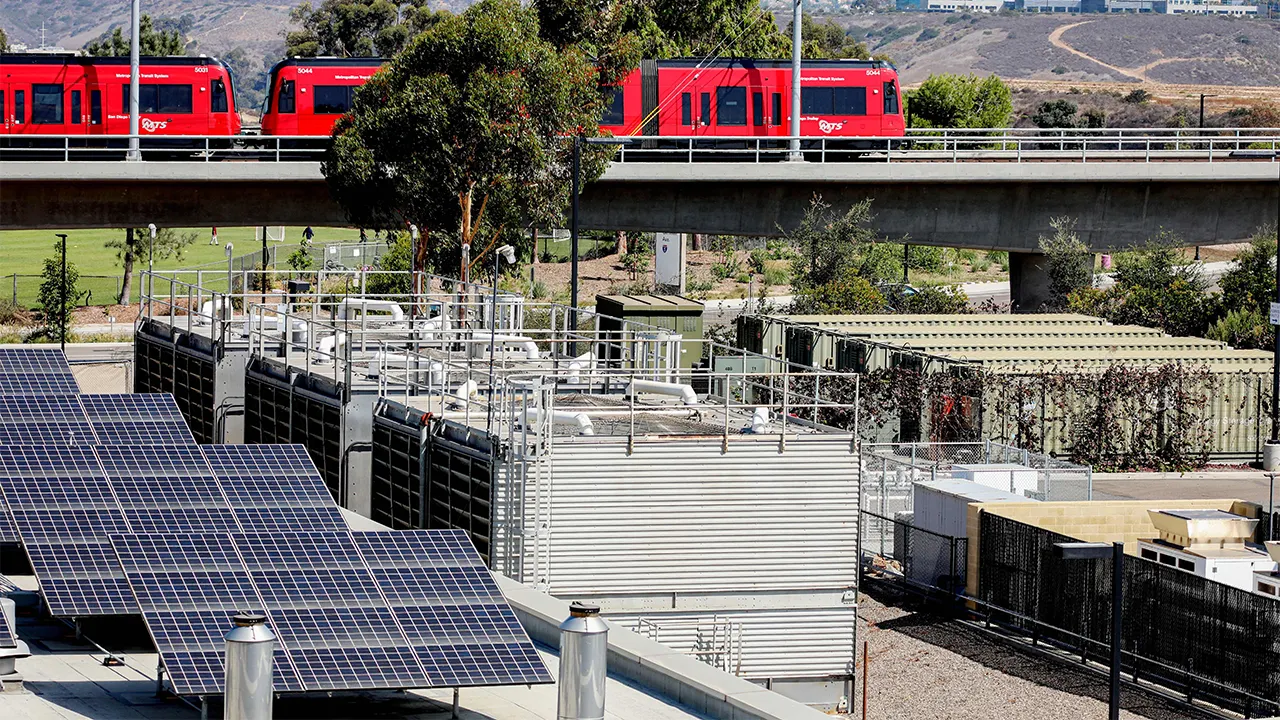
California’s aggressive pursuit of green energy goals spiked the cost of electricity. (Sandy Huffaker/AFP via Getty Images)
What Went Wrong?
The core issue is simple: California’s policymakers prioritized renewable energy mandates over affordability and reliability. Over the years, they have forced utilities to integrate ever-growing amounts of wind and solar power while discouraging natural gas, nuclear and large-scale hydroelectric projects. These decisions ignored the reality that intermittent renewables require extensive grid upgrades, costly backup power sources and expensive storage solutions — all of which drive up costs for consumers and industry.
California’s high electricity prices are not an accident; they are a direct consequence of these policies. The state’s cap-and-trade system, restrictive permitting laws and mandates like the Renewable Portfolio Standard (which requires utilities to generate 60% of their electricity from renewables by 2030) have all contributed to rising rates.
At the same time, bureaucratic obstacles have made it nearly impossible to build new natural gas plants or modernize existing infrastructure. From 2014 to 2024, California approved or built only five natural gas plants, four of which replaced older facilities for a total output of up to 4 gigawatts. By comparison, in the prior 10 years, California commissioned dozens of plants totaling more than 20 gigawatts of nameplate capacity.
Meanwhile, in New England…
California is not alone in suffering from self-inflicted energy woes. New England, home to the third- and fourth-highest electricity costs in the country (Connecticut and Massachusetts), faces a similar problem. These states have aggressively shut down coal, resisted natural gas expansion and failed to invest in nuclear power — leaving them vulnerable to energy shortages and price spikes.
One of the most baffling examples of New England’s energy mismanagement is its reliance on imported liquefied natural gas (LNG). Despite sitting just a few hundred miles from the abundant natural gas reserves of Pennsylvania’s Marcellus Shale, New England has struggled to access this cheap, domestic energy source. Why? Because environmental activists and politicians in New York have blocked the construction of new pipelines that would transport affordable natural gas to the region. Instead, New England has been forced to import LNG from overseas, including from the Caribbean and, at times, even Russia.
CLICK HERE FOR MORE FOX NEWS OPINION
Yes, you read that correctly — while the U.S. became the world’s top producer of natural gas, states in the Northeast have had to rely on foreign sources because of self-imposed pipeline constraints. This dependence on imported LNG has contributed to some of the highest electricity prices in the country and left the region exposed to global energy market fluctuations.
The Lessons Are Clear
California and New England serve as cautionary tales. When politicians prioritize ideological energy policies over common sense, the result is higher costs, reduced reliability and greater dependence on foreign energy sources.
California is not alone in suffering from self-inflicted energy woes. New England, home to the third- and fourth-highest electricity costs in the country (Connecticut and Massachusetts), faces a similar problem.
The states with the lowest electricity prices — places like Louisiana, Oklahoma and Texas — have embraced domestic energy production, built modern infrastructure and resisted heavy-handed government mandates. Meanwhile, California and the Northeast have imposed regulatory burdens that make energy more expensive and less reliable.
The evidence is clear: Green energy policies imposed on energy markets have made life harder for working families and businesses in states that have embraced the Green New Deal. If policymakers in California and the Northeast truly cared about affordability and reliability, they would rethink their hostility to natural gas, allow new pipeline construction, and reconsider their blind push for intermittent renewables and the costly backups they require.
Instead, they continue doubling down on the same failed policies. And as electricity bills rise and blackouts loom, the people paying the price aren’t the politicians in Sacramento or Boston — they’re the hardworking families who just want to keep their lights on without breaking the bank.
CLICK HERE TO READ MORE FROM CHUCK DEVORE
Read the full article from Here


It’s series finale time, and it’s rubber match time, as the San Francisco Giants host the Atlanta Braves.
It’s a battle of Cy Young southpaws. For the Giants, it’s Robbie Ray, who won the award in 2021 in the American League. Ray, a 34-year old two-time All-Star, is making his 17th appearance of the year, and is 6-6 with a 3.70 ERA, a 4.80 FIP, and 80 strikeouts to 42 walks in 87.2 innings. After a rough patch, he’s been exceptional in his last two games, including allowing just an unearned run in eight innings against the Athletics his last time out.
For the Braves, it’s Chris Sale, who won the prestigious pitching award in 2024. Sale, a 37-year old nine-time All-Star, has made 14 starts, and is 8-5 with a 2.14 ERA, a 2.71 FIP, and 99 strikeouts to 21 walks in 84 innings. He allowed two unearned runs in 5.2 innings against the Milwaukee Brewers in his last start.
Enjoy the game, everyone.
Who: San Francisco Giants (34-48) vs. Atlanta Braves (49-32)
Where: Oracle Park, San Francisco, California
Regional broadcast: NBC Sports Bay Area
Radio: KNBR 680 AM/104.5 FM, KSFN 1510 AM

Firefighters say a car crash was the cause of a large fire that broke out north of the Denver International Airport on Saturday afternoon.
The Brighton Fire Rescue District says a vehicle was traveling through the area of E. 120th Avenue and N. Watkins Road around 2 p.m. when it crashed. Fortunately, the people inside the vehicle did not suffer serious injuries, but the fire department says the vehicle’s catalytic converter caught the nearby grass on fire.

The 120 Fire quickly grew, and firefighters responded with engines, brush trucks and water tenders to attack it from multiple sides. Multiple agencies responded to assist as the winds continued to push the fire across the grassland.

It covered around 237 acres by the time firefighters brought it under control around 3:30 p.m. BFRD says firefighters continued to put out hotspots and monitor a large cottonwood tree that was smoldering nearly 30 feet up the trunk.
With Independence Day approaching, the fire rescue district shared a reminder that a single spark can ignite a fast-moving grass fire. They added that aerial fireworks are illegal in Brighton and pose a serious fire risk in the current conditions.

Despite some overcast skies, thousands of Seattleites showed up in rainbow colors and bright smiles to celebrate the Seattle Pride Parade on Sunday.The march kicked off at 11 a.m. along Fourth Avenue in downtown, and wrapped up around 3:00 p.m. near Seattle Center.Seattle Pride traces its roots to 1974 and has grown into one of the nation’s largest LGBTQ+ celebrations, drawing hundreds of thousands of people each year. (KOMO)
-

 Los Angeles, Ca33 minutes ago
Climbers rescued from Tahquitz Rock in San Bernardino National Forest
-

 Detroit, MI51 minutes ago
Report: Pistons Targeting 7-Time All-Star Wing to Pair With Cade Cunningham
-

 San Francisco, CA1 hour ago
6/28 Gamethread: Giants vs. Braves
-

 Dallas, TX1 hour ago
Dallas community gathers donations for Venezuela
-

 Miami, FL1 hour ago
Miami Heat Could Reunite With Playoff Hero This Offseason
-

 Boston, MA1 hour ago
Red Sox lefty makes latest rehab start, close to forcing tough decision
-

 Denver, CO1 hour ago
Firefighters say car crash caused large fire north of Denver International Airport
-

 Seattle, WA1 hour ago
PHOTOS: Thousands gather in downtown Seattle for city’s iconic Pride Parade

