Connect with us

West

RFK Jr. Interview: Trump and Biden 'both ravaged American democracy and the republic'

Published

on

RFK Jr. Interview: Trump and Biden 'both ravaged American democracy and the republic'
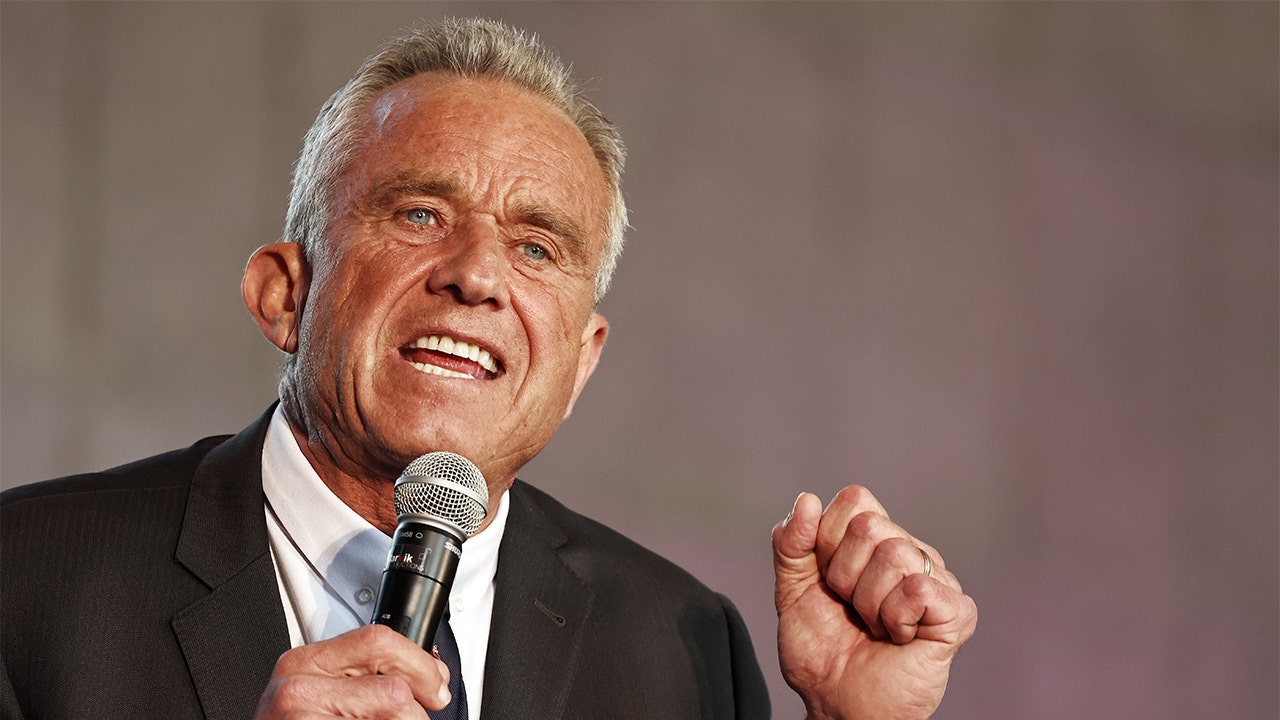
Fox News Digital recently sat down with independent presidential candidate RFK Jr. at FreedomFest in Las Vegas, for a wide-ranging interview in which he discussed his campaign viability, the COVID pandemic, immigration policy, and castigated both the Trump and Biden administrations on civil liberties and weaponization of the Justice Department.

While polls show Kennedy lagging far behind Trump and Biden, he believes that momentum is with his campaign.

RFK JR. TO GET SECRET SERVICE PROTECTION AFTER FAILED TRUMP ASSASSINATION, MAYORKAS SAYS

“Well, this week we had two national polls come out, the HarrisX poll that had me at 19%, and the Pew poll that had me at 15%, and so we’re watching my numbers grow all the time. I’m now beating President Biden and President Trump among independents, I’m beating them among all Americans under 35. I have better approval ratings and favorability ratings than both of them. I’m doing well with black voters and Hispanic voters, and the one group that I don’t do well with is Baby Boomers, because they’re watching the mainstream networks CNN, ABC, NBC, MSNBC and they’re reading the New York Times and the Washington Post.”

Independent presidential candidate Robert F. Kennedy Jr. speaks at a Cesar Chavez Day event at Union Station on March 30, 2024 in Los Angeles, California. (Mario Tama/Getty Images)

Advertisement

Kennedy came to the forefront as a staunch critic of both the Trump and Biden administrations’ approach to the pandemic, and believes the Republican and Democratic establishments are both responsible for an assault on civil liberties.

“The Constitution is a piece of paper, and the only thing that makes it work is if people believe in it, and one of the things that we need to do is to start teaching civics lessons again in American schools. We abandoned that, and I think that’s one of the reasons that our civil rights were taken away from us so easily.”

“Both of them ravaged American democracy and the republic. You know, we saw it during COVID, they shut down, it was an assault on the Constitution by both men, and, you know, we saw all of our property rights suspended, the Fifth Amendment, 3.3 million businesses shut down. We saw free speech censored, and violations of the First Amendment, all the churches closed in this country with no scientific citation, no due process, violation of the First Amendment, the rights of assembly and petition obliterated by social distancing rules…it was both the Biden and the Trump administrations, so I don’t I don’t think either of those presidents could be trusted to safeguard our Constitution.”

CNN FINALIZES RULES FOR FIRST BIDEN VS. TRUMP DEBATE, RFK JR. COULD STILL QUALIFY

Kennedy believes strongly in securing the southern border, and supports a return to some Trump-era policies, arguing that the Biden policies have been ineffective.

Advertisement

“I’m absolutely going to secure the border. I’ve spent a lot of time on the border talking with law enforcement, with Border Patrol, and one of the optimistic things for me is everybody says this can be stopped…we need to complete the 27 missing gaps in the wall…we need to do personnel changes and we need to bring in asylum court judges, and more Border Patrol and we need to do some regulatory changes… including changing the catch and release policy to catch and return policy, which it was during the Trump administration.”

RFK Jr. rips Trump conviction, warns it will ‘backfire on the Democrats’: ‘Bad for our democracy’ (Fox News)

While a strong supporter of legal migration, he believes that current policies have abandoned border policy to dangerous criminal elements:

“I want wide gates for people who come in legally so that there’s a fast track to citizenship, so that we can get the workers we need in this country right now, but I also will make sure nobody’s coming in illegally. Right now the Sinaloan drug cartel is running US immigration policy and nobody thinks that’s a good idea.”

Kennedy pledges to bring Russia and Ukraine to the negotiating table for a speedy resolution to the conflict:

Advertisement

“I’ll end the Ukraine War immediately, and I will negotiate a peace with Putin. Putin has tried repeatedly to negotiate peace agreements with us. He negotiated a very, very favorable agreement in April of 2022; he signed it, the Zelenskyy government signed it, and the Biden administration made Zelenskyy tear it up.”

He would not elaborate on what territory he might require Ukraine to cede, but argues that the Biden administration has prolonged the conflict:

LIVE UPDATES: REPUBLICAN NATIONAL CONVENTION

“I’m not going to tell you what my end point of negotiation…because that’s not what you do, but I will say that we’re in a much worse negotiating position than we were in April of 2022 when the Biden administration destroyed the peace process.”

According to a 2022 study by the Commonwealth Fund, while the United States spends far more than its peers on healthcare, it generally experiences worse outcomes. Kennedy pledges to take on the healthcare bureaucracies and the pharmaceutical industry.

Advertisement

“My solution is to end the chronic disease epidemic and that’s what’s driving our healthcare crisis. We spend $4.3 trillion on healthcare, almost all of that that goes now to chronic disease, and we have the worst health outcomes of any country in the top 79 countries in the world…I know how to do this, I know how to change the mission of NIH so that it’s no longer an incubator for new pharmaceutical products in league with the pharmaceutical industry.”

Media figures trashed Presidential candidate Robert F. Kennedy, Jr. for saying that President Biden is “much worse” for democracy than former President Donald Trump.  (Fox News)

Kennedy faults both administrations for politically-motived lawfare via the judicial system.

“The weaponization of the Justice Department is the fault of both Democrats and Republicans. You remember in 2016, 2020, President Trump promising that he was going to create a special prosecutor and lock Hillary Clinton up. That sort of gave permission, both sides of the political process began weaponizing government…We are going to make sure the American people know that justice is blind, that justice is neutral, and that mandate has been abandoned by both these administrations.”

Advertisement

Kennedy has long been actively involved in Latin America, spending considerable time in South America. He credits his father and uncle’s policies for appealing to the poor of the region, and believes interventionism is an ineffective strategy to promote American values and deter Communism.

“The people of Latin America have the right to choose their own leaders, and I think a lot of the anti-American attitude in Latin America comes from a history of us interfering in the region. I think we need to be partners with the region the way that my uncle and father did…when they started the Alliance for Progress, they started the USAID to put America on the side of the poor in those countries, to remove the temptation to embrace Communist values…and all of the interventions that we’ve done in Latin America have turned against us…We need to be partners with those governments and those societies rather than bullies.”

Read the full article from Here

Advertisement
Continue Reading
Click to comment

Leave a Reply

Your email address will not be published. Required fields are marked *

This site uses Akismet to reduce spam. Learn how your comment data is processed.

Denver, CO

Denver’s historic neon signs are in danger. And these are the people trying to save them.

Published

on

Denver’s historic neon signs are in danger. And these are the people trying to save them.


As far as Todd Matuszewicz sees it, looking at the neon sign outside of the Riviera Motel on East Colfax Avenue is about as close to heaven as a person can get.
Todd Matuszewicz at the Riviera Motel in Aurora on Thursday, Dec. 11, 2025. (Photo by Hyoung Chang/The Denver Post)

When Matuszewicz looks at the historic sign in Aurora, he sees a soft blue glow that spells out “Riviera” in a flowing script with the word “Motel” in blue block letters below. An orange triangle resembling an airplane wing juts upward, punctuating “Riviera” and offering space-age vibes to those who drive by. The sign, he said, is unique because of the man who designed it, its construction from larger glass tubes that create a bigger glow, and the history it — and the Riviera — represent in metro Denver.

It’s hard for Matuszewicz, an old neon tube bender with a newly minted master’s degree in historic preservation, to pick a favorite. But the Riviera just might be it.

When the preservationist describes his love of neon signs, he speaks of the cosmos. Neon, he said, provides warmth to the people who observe it.

Advertisement

“When we hold a neon tube in our hands or see a neon sign, we are seeing our cosmic selves illuminated,” Matuszewicz said. “Nothing in the world does that except for neon signs. And that’s why we need to save them.”

Neon signs are in critical danger in Denver and other parts of Colorado because of low-cost alternatives in LED lights, restrictive building codes and a lack of awareness of their history in the Centennial State. But Matuszewicz and a handful of other neon enthusiasts are on a mission to save as many old signs as they can. And they are preaching the gospel of neon to all who will listen.

Colfax Avenue is the best example of the disappearance of funky neon signs that once advertised motels and restaurants with glowing cacti, blinking Native Americans and other illuminated Western iconography. But the avenue lost its neon luster as times changed. And a piece of history went missing when neon burned out and was abandoned, said Chris Geddes, a lecturer in the University of Colorado Denver’s historic preservation graduate program and a historic preservation specialist in Aurora.

“When you would drive down Colfax in the 1950s and 1960s, it was a neon alley,” Geddes said. “There’s so little of it left. The architecture of that time was fun and funky. It speaks to a different time.”

The Riviera Motel, including its neon sign, was designed by Richard Crowther, who worked as a neon light designer before moving to Denver to start his architecture career. Crowther is best known locally for designing the neon-lit ticket booths and signs for the Cyclone, Wild Chipmunk and other rides at Lakeside Amusement Park.

Advertisement

But there’s so much more to Denver’s neon history than the motels and restaurants that used to line Colfax, once dubbed the country’s “wickedest street.”

And Matuszewicz is leading the charge with the help of a small but dedicated group of neon enthusiasts.

AURORA , CO - DECEMBER 30: The Riviera Motel on East Colfax in Aurora, Colorado on Tuesday, December 30, 2025. (Photo by AAron Ontiveroz/The Denver Post)
The Riviera Motel on East Colfax Avenue in Aurora, Colorado, on Tuesday, Dec. 30, 2025. (Photo by AAron Ontiveroz/The Denver Post)

Old and new neon

British chemists discovered neon gas in 1898 and, by 1910, a French engineer began producing and selling neon tubes for advertising signs. The first neon signs were introduced in the United States in the 1920s, and they quickly became a popular way to get the public’s attention. But the shine faded in the 1960s as cheaper alternatives emerged.

Over the years, neon’s popularity has ebbed and flowed with changes in taste and pop culture.

In Denver, a few old signs remain visible, including Jonas Bros Furs on Broadway, Davie’s Chuck Wagon Diner on West Colfax, Bonnie Brae Ice Cream on University Boulevard and the Branding Iron Motel on East Colfax.

But new signs are being created.

Advertisement

At Morry’s Neon Signs, Glen and Tina Weseloh create new neon signs every week for locations in Denver and surrounding areas. On Dec. 17, the Morry’s crew installed a 7-foot-tall skeleton drinking margaritas in a restaurant on downtown’s 16th Street.

Their sign shop opened in 1985 when Glen Weseloh’s father, Morry Weseloh, aged out of his tube-bending job with the International Brotherhood of Electrical Workers and started his own company. Morry Weseloh taught his son how to create neon signs, and the work continued after he died in 2003 at the age of 85.

“I had no idea I would continue after he was gone, but it got into our blood,” Glen Weseloh said.

Glen and Tina Weseloh, owners of Morry's Neon Signs, at their shop in Denver on Dec. 23, 2025. (Photo by RJ Sangosti/The Denver Post)
Glen and Tina Weseloh, owners of Morry’s Neon Signs, at their shop in Denver on Dec. 23, 2025. (Photo by RJ Sangosti/The Denver Post)

Inside their shop in Denver’s Athmar Park neighborhood, Glen and the other craftsmen work with graphic artists to sketch out designs. Once a design is agreed upon, they heat glass tubes to bend them into the shapes that will make the sign. The colors are made with neon gas, which glows when electricity runs through it. Tube benders also use stained glass, phosphorus and mercury to create other colors.

The Morry’s crew is often called to restore old, fading signs, including the marquees of the Oriental and Federal theaters, the Olinger sign in the Highland neighborhood, the Ironworks sign on Larimer Street and the glowing covered wagon sign outside the Frontier Drive-Inn in Center, Colorado.

The Weseloh family can also claim credit for Matuszewicz’s preservation work.

Advertisement
Gary Russ works on making a neon sign at Morry's Neon Signs in Denver on Dec. 23, 2025. (Photo by RJ Sangosti/The Denver Post)
Gary Russ works on making a neon sign at Morry’s Neon Signs in Denver on Dec. 23, 2025. (Photo by RJ Sangosti/The Denver Post)

On again, off again

In 1987, Matuszewicz decided to go to neon school in Minneapolis after his wife, Emily Matuszewicz, mentioned that she had met a woman whose son was doing it. On a whim, he decided that was what he wanted to do, too.

“I didn’t have a favorite neon sign when I was a kid,” he said. “I knew nothing about it.”

So the Matuszewiczes left Denver so he could attend the Minneapolis School of Neon.

After working jobs in Minneapolis and Albuquerque, Matuszewicz made it back to Denver, and, in 1993, went to work at Morry’s Neon Signs. He stayed until 2020, when he decided the manual labor had taken its toll.

“No matter how long you do it, you get burned. You get cut,” he said. “It’s just hard to do it for a long time.”

So Matuszewicz traded a neon warehouse for a classroom and spent the next 15 years teaching first through eighth grades at the Denver Waldorf School.

Advertisement

Matuszewicz went back to college and earned bachelor’s degrees in chemistry and history at Metropolitan State University of Denver in 2017 — he had started in 1983 and refers to his college career as the “35-year plan.” He studied fermented beverage residues in archaeological pottery shards as an undergraduate project. So he thought the kombucha industry would be an interesting next-career step.

He got interviews. But he wasn’t hired.

“Maybe I’m making it up, but it seemed to me that as soon as I showed up, it was shocking that a 56-year-old man showed up,” Matuszewicz said. “You could see it in their face, ‘Like what?’ I don’t know it as a fact to be ageism, but it sure felt like it.”

Frustrated over a lack of opportunity, Matuszewicz was at a loss over his third act.

Signs hang from the ceiling at Morry's Neon Signs in Denver on Dec. 23, 2025. (Photo by RJ Sangosti/The Denver Post)
Signs hang from the ceiling at Morry’s Neon Signs in Denver on Dec. 23, 2025. (Photo by RJ Sangosti/The Denver Post)

But his old friends in neon came calling. The Weselohs invited him to come back to the shop to help restore older neon signs.

His first project was the Independent Order of Odd Fellows sign on South Broadway.

Advertisement

“It’s a lovely, lovely sign,” he said. “We just started doing more and more and more of them.”

Along the way, Matuszewicz met Corky Scholl, a 9News photojournalist who documented neon signs in his spare time, and J.J. Bebout, who owns coffee businesses in Denver and Westminster, and who makes neon signs as a side gig.

Together, the three set about trying to save more neon.

“What’s up needs to stay up and what’s up and not functioning needs to be revived,” Bebout said.

Scholl was a walking catalogue who brought his journalistic objectiveness to preservation, Matuszewicz said. Scholl created and maintained the Save the Signs Facebook page, posting pictures and writing short histories of neon signs in Colorado.

Advertisement

“He let the history speak for itself,” Bebout said.

Scholl died unexpectedly in August, and it has been a blow to neon preservation in Denver, both men said.

“He was an encyclopedia of signs,” Matuszewicz said.

Bebout got into neon after looking for an art medium that also incorporated his knack for building things. He learned the craft in Cincinnati and then returned to Colorado.

Neon opportunities in Denver are rare, he said. Morry’s, along with Yesco, are the only two companies making neon in town.

Advertisement

“It’s a really small community here,” Bebout said. “The pool of folks who can teach is pretty small, and they just don’t because they’re all really old, and I say ‘old’ relative to the end of the lifespan of one’s career. They’re all at the end of it.”

Matuszewicz has been instrumental in helping Bebout perfect his skills, which he uses in his Westminster shop.

When Matuszewicz rekindled his interest in neon, he and his neon buddies started knocking on doors around the Front Range, asking property owners with dilapidated signs if they could help restore them.

One project was the Rossonian Hotel in the Five Points neighborhood. Matuszewicz brainstormed the idea to invite neon artists from across the country for a one-day “bendapalooza” to restore the hotel’s sign.

“It’s just sitting there rotting and we can’t just let it rot,” Matuszewicz said. “I went on this whole crusade to save it.”

Advertisement

But his pitch fell through.

“It was super discouraging to me. People wouldn’t listen to me,” he said. “I’m just a guy in a neon shop.”

Meanwhile, Matuszewicz had enrolled in CU Denver’s Change Makers program, in which participants explore new career options later in life. At first, he said he tossed out the idea of becoming a world-renowned busker of murder ballads. His classmates scoffed.

Then, once again, his background in neon shone. Everyone loved the idea of a historic preservationist who specialized in neon.

“The stars aligned,” he said.

Advertisement

Now that Matuszewicz has his master’s degree in historic preservation from CU Denver, his crusade is getting more attention. He’s become an in-demand speaker at historic preservation conferences around the United States.

“I’m like, ‘Oh my God, 300 people get to hear about neon,’” he said. “I’m so excited.”

Still, Matuszewicz’s focus is on Denver.

Glen Weseloh, owner Morry's Neon Signs, works on repairing a sign at his shop in Denver on Dec. 23, 2025. (Photo by RJ Sangosti/The Denver Post)
Glen Weseloh, owner Morry’s Neon Signs, works on repairing a sign at his shop in Denver on Dec. 23, 2025. (Photo by RJ Sangosti/The Denver Post)

Neon versus LED

The Weselohs and their neon business are in a constant battle with LED.

The newer technology is pitched as more cost-efficient because it needs less electricity and, therefore, is less detrimental to the environment.

Two years ago, the iconic Benjamin Moore Paints sign at 2500 Walnut St. in Denver was replaced with LED by the building’s owners. At the time, Denver’s Landmark Preservation office told the Denver Gazette that the old neon was too deteriorated to restore.

Advertisement

The neon enthusiasts despise the new sign, especially since the old neon letters were destroyed and recycled.

Bebout describes the new Benjamin Moore sign as “flat and lifeless.”

“Benjamin Moore is a clean-looking sign but it lacks the character of neon,” Bebout said.

LED, which stands for light-emitting diode, became more common in the early 2010s as people looked for more efficient light bulbs. LED bulbs’ reputation as being cheaper to burn started pushing neon out of favor just as it was experiencing a sort of revival.

Signs hang on the wall at Morry's Neon Signs in Denver on Dec. 23, 2025. (Photo by RJ Sangosti/The Denver Post)
Signs hang on the wall at Morry’s Neon Signs in Denver on Dec. 23, 2025. (Photo by RJ Sangosti/The Denver Post)

But neon fans argue that those who believe LED is less expensive are misinformed.

Neon, they say, lasts longer. An old neon sign can go for 100 years or longer with the right maintenance. And all the materials used to make it can be recycled, Matuszewicz said. Its elements are more readily available on the planet.

Advertisement

“It’s not a bunch of plastic and precious earth metals,” Bebout said. But he admitted one disadvantage for neon, “Now one thing is for sure, they do take more power. That’s one thing that can be argued.”

Neon also can’t be manufactured by a machine and requires skilled craftsmen to be created, Tina Weseloh said. LED, on the other hand, fades over time, and the plastic signs become more junk in a landfill because they cannot be repaired, they said.

City code departments also create barriers for neon signs, the Weselohs said.

Some towns outlawed flashing signs years ago in an attempt to modernize their codes and their cities’ appearances. Neon signaled “degenerate neighborhood,” Bebout said.

Centennial and Westminster are among the cities in Colorado that don’t allow blinking neon lights outside of businesses, Glen Weseloh said.

Advertisement

“That’s crazy! Why?” he said. “I don’t get it.”

In Aurora, Bebout restored the old Branding Iron Motel’s neon sign on East Colfax. That project almost didn’t happen because the city made the hotel owner pay a large egress fee because the sign stretched over the sidewalk, he said.

“You want to talk about discouraging preservation,” he said. “Most people are going to tear it up and put up a flat, lifeless LED sign.”

So the neon preservation crowd has its work cut out.

Todd Matuszewicz at the Riviera Motel in Aurora on Thursday, Dec. 11, 2025. (Photo by Hyoung Chang/The Denver Post)

‘We need more Todds’

Matuszewicz’s next big neon preservation project is to get an art piece at 1350 Lawrence St. listed on the Colorado State Register of Historic Properties. It will be considered by the state’s Historic Preservation Review Board in January.

The Incomplete Square by neon artist Stephen Antonakas was installed on the side of the 11-story apartment building in 1982 and showcases 8-foot lengths of red neon mounted on the building’s exterior.

Advertisement

If approved, the piece will become the first time in Colorado that neon attached to a building will be designated historic when the building itself is not, Matuszewicz said.


Source link

Advertisement
Continue Reading

Seattle, WA

Seahawks Will Host Rams Or 49ers In Divisional Round

Published

on

Seahawks Will Host Rams Or 49ers In Divisional Round


The Seahawks will host an NFC West opponent in the divisional round of the playoffs.

Whether that opponent is the Rams or the 49ers will be determined on Sunday when the 49ers play the Eagles in Philadelphia. Also still to be determined is the date and time of the game.

The Rams, who are the No. 5 seed, beat the Panthers on Saturday to advance, and since Seattle, as the No. 1 seed, hosts the lowest-seeded team that advances out of the wild card round, the sixth-seeded 49ers would come to Lumen Field if they win on Sunday. If the Eagles win, however, the Rams would come to Seattle, while the Eagles would head to Chicago to face the Bears, who beat the Packers on Saturday night.

The Seahawks split the season series with both teams, losing to the 49ers in Week 1 and the Rams in Week 11 before beating the Rams in Week 16 and the 49ers in Week 18 as part of a seven-game winning streak that helped them win the NFC West and earn the No. 1 seed.

Advertisement

Next weekend’s game at Lumen Field will be the Seahawks’ first home playoff game with fans in the stadium—they hosted a wild card game in an empty stadium following the 2020 regular season—since they beat the Lions in the wild card round during the 2016 season. Prior to that empty-stadium loss to the Rams five years ago, the Seahawks won 10 consecutive home playoff games dating back to the start of their Super Bowl run in 2005. The Seahawks have reached the Super Bowl in each of the three previous seasons that they earned the No. 1 seed.


Source link

Continue Reading

San Diego, CA

Santana High shooter ruling follows evolving approach to juvenile offenders

Published

on

Santana High shooter ruling follows evolving approach to juvenile offenders


For many, it was a surprise when a San Diego judge issued a ruling last week that could see the region’s most notorious school shooter freed from prison at age 39.

But a series of laws and court rulings favoring rehabilitation for youth offenders for more than a decade have paved the way for the possible release of Santana High School shooter Charles “Andy” Williams, who killed two classmates and wounded 11 more students and two adults in March 2001.

No longer can anyone under age 16 be charged as an adult in California courts. Parole is now available to youth offenders after serving 25 years of their sentence. And lawmakers have created a path for youths previously sentenced to life without the possibility parole to seek relief.

Then there are those like Williams, who, at 15 years old, was sentenced to 50 years to life in prison. Recently, courts have been grappling with the question: When does such a lengthy sentence become a de facto sentence of life without parole?

Advertisement

Last week, San Diego Superior Court Judge Lisa Rodriguez found that such a lengthy sentence is essentially life without parole. She recalled — or essentially, erased — Williams’ sentence and set him to be resentenced in Juvenile Court. There, he will get the benefits of today’s laws governing juvenile offenders, and that likely translates into a release from custody. The District Attorney’s Office is appealing.

The main entrance to the Juvenile Court in San Diego, where Charles “Andy” Williams’ case is likely headed next for resentencing. (Nelvin C. Cepeda / The San Diego Union-Tribune)

On Tuesday, as survivors of the Santana High rampage listened in, the judge explained her decision, saying she was following the guidance set by the San Diego-based 4th District Court of Appeal, Division 1, which she said “has made its position on this issue clear.”

It is the same appellate court — although not necessarily the same panel of judges — that will review the district attorney’s appeal of the Williams decision.

Victims of and witnesses to the rampage expressed disappointment and concern following the ruling, with at least one questioning whether the decision was moral or just. Many pointed to the deaths of students Bryan Zuckor, 14, and Randy Gordon, 17.

In a statement issued last week, District Attorney Summer Stephan said Williams had “carried out a calculated, cold-blooded attack” and that his “cruel actions in this case continue to warrant the 50-years-to-life sentence that was imposed.”

Advertisement

“At some point our laws must balance the rights of defendants, the rights of victims, and the rights of the community to be safe,” Stephan said.

Community members along with students from Santana High come to the entrance of the school to place flowers and pray for those injured and fatally shot. (Nelvin C. Cepeda / U-T file)

Had the Santana attack happened today, a 15-year-old shooter — even if convicted of multiple murders — would be tried as a juvenile and generally could not be held in custody longer than age 25, with maybe an additional two years in transitional housing.

State Assemblymember Carl DeMaio, whose district includes Santee, said last week he is developing legislation that would exclude those who commit school shootings and similar mass-casualty crimes from resentencing laws offering relief to juvenile offenders.

“School shootings are not impulsive mistakes — they are acts of terror,” DeMaio said in a statement. “California’s laws should draw a bright line: if you commit mass violence in a school, you should never be eligible for resentencing designed for lesser offenses.”

People who work with juvenile offenders note that the courts and lawmakers have come to understand that teens are different from adults and should be given the chance at rehabilitation and release. They point to scientific research on the lack of adolescent brain development and the ability for juvenile offenders to be rehabilitated.

“I think that the question we ought to be answering is, ‘Do we want to throw away people who do something terrible at age 15?’” said law professor Christopher Hawthorne, director of the Juvenile Innocence and Fair Sentencing Clinic at Loyola Marymount University, which takes on post-conviction cases for juvenile defenders.

Advertisement

Hawthorne said lawmakers “woke up” in 2012 and began giving juvenile offenders a path for release.

San Diego defense attorney Danni Iredale, who represents clients in federal and state court, including juveniles, said that while she understands some may believe that juvenile offenders should be given harsher sentences — especially in “outlier” cases such as the Santana shooting — she believes strongly in the research on brain development and rehabilitation.

“There’s always going to be an outlier case that pushes us to the bounds of what we can tolerate, but … juveniles are different, and I think the Supreme Court has recognized that time and time and time again,” she said.

An evolving approach

Juvenile sentencing laws have evolved since Williams was initially sentenced in 2002. While not all of the changes directly impacted Williams, they had a cascading effect that ultimately led to this past week’s ruling.

The first big decision came in 2005 when the U.S. Supreme Court banned the death penalty for juvenile offenders, ruling that it violated the Eighth Amendment restriction against cruel and unusual punishment. The Supreme Court also issued rulings in 2010 and 2012 that limited the ability of states to sentence juveniles to life in prison without parole.

Advertisement
The main visitors entrance to the East Mesa Juvenile Detention Facility in San Diego. (Nelvin C. Cepeda / The San Diego Union-Tribune)
The main visitors entrance to the East Mesa Juvenile Detention Facility in San Diego. The facility does not house anyone over 25. (Nelvin C. Cepeda / The San Diego Union-Tribune)

Those laws laid out a more nuanced viewpoint of the distinctions between adults and juveniles who commit the worst crimes and the unconstitutionality of punishing them equally.

As a California appeals court wrote in 2022: “These decisions arose in large part from advances in research on adolescent brain development, and the related, growing recognition that juveniles ‘have diminished culpability and greater prospects for reform’ and are therefore ‘constitutionally different from adults for purposes of sentencing.’”

The Supreme Court rulings prompted legislative changes in some states, including California. Those changes, plus subsequent court rulings, did eventually have a direct impact on Williams.

California Senate Bill 9, which took effect in 2013, allowed juvenile offenders serving life without parole to petition to have their sentences recalled and to be resentenced. Since Williams was not sentenced to life without parole, the law did not initially affect him. But that changed in 2022 in a decision arising from another case involving a juvenile offender from San Diego.

In 2005, when Frank Heard was 15 years old, he and other members of his San Diego street gang wounded two people in a drive-by shooting targeting rival gang members. Six months later, shortly after Heard turned 16, he fatally shot a person on a street corner who he believed was selling drugs in his gang’s territory.

Heard was charged as an adult and convicted of attempted murder and manslaughter charges. A judge sentenced him to what essentially amounted to 103 years to life in prison.

Advertisement

Heard filed an appeal in 2021, citing the 2013 law, arguing that he should be eligible for resentencing “because his sentence was a de facto life without parole sentence.” A San Diego Superior Court judge denied the appeal, ruling the law only applied to juvenile offenders explicitly sentenced to life without parole. Heard appealed that ruling, arguing that his sentence was the “functional equivalent” of life without parole.

In 2022, California’s Fourth Appellate District agreed with the San Diego judge that the 2013 statute only applied to juvenile offenders explicitly sentenced to life without parole. But Heard had also argued that if the law did not apply to him and others with sentences functionally equivalent to life without parole, it would violate his rights to equal protection of the laws under the 14th Amendment and the California Constitution.

“On this, we agree,” the appellate court wrote.

The ruling allowed similarly situated juvenile offenders such as Williams to petition for a resentencing — if, like Heard, they could successfully argue that their lengthy prison terms were the functional equivalent of life without parole.

A flood of petitions for resentencing followed. Williams’ attorney said last week that her client initially declined to petition because he wanted to have a parole hearing first, in order to give his victims a chance to confront him. And even that parole hearing was possible under reforms that now offer parole hearings for youth offenders who have served 25 years of their sentence.

Advertisement

At that parole hearing in September 2024, Williams was found unsuitable for release. One commissioner told Williams it was “unclear if you understand why you committed this horrendous act of violence.”

Williams then filed a petition to have his sentence recalled. But then, in the last year, differing appeals courts in California handed down opinions contrary to the Heard finding.

Charles
Charles “Andy” Williams, shown on a video monitor, weeps during a court hearing at the San Diego Central Courthouse downtown on Tuesday. (Sandy Huffaker / For The San Diego Union-Tribune)

What exactly constitutes the functional equivalent of life without parole is still up for debate. With now competing decisions in trial and appellate courts, the California Supreme Court agreed last year to take up the question, but that action is still in its infancy. It is not clear if the prosecutors in Stephan’s office will ask the Juvenile Court to pause Williams’ case until the high court rules.

As for case law, Rodriguez, the judge in Williams’ matter, said one case that stood out was a 2018 California Supreme Court ruling that 50 to life was equal to life without parole. That ruling arose from a San Diego case in which two 16-year-olds came across two teen girls in a Rancho Peñasquitos park in 2011, kidnapped and raped them. In that case, the state’s high court said it agreed with the San Diego appellate court finding that the lengthy sentences tended to reflect a judgment that the two defendants were “irretrievably incorrigible” and fell short of a realistic chance for release. 

Fewer teens can be tried as adults

The venue for Williams’ resentencing is also the result of state laws that have changed in recent years.

In 2016, California voters approved Proposition 57, a measure that required prosecutors to seek a hearing if they wished to charge 14- and 15-year-old offenders as adults. A few years later, in 2018, state legislators passed a law that banned offenders 15 years old and younger from being charged as adults in any circumstances.

Advertisement

There was another big change geared toward placement of youth offenders in 2021, when the Legislature agreed to do away with the Department of Juvenile Justice, which ran prisons for juvenile offenders. Since mid-2023, housing those youth offenders now falls to the individual counties, which keeps them closer to their families. In San Diego, that meant creating a wing in the East Mesa Juvenile Facility to house that population.

Williams, 39, would not be sent to such a facility, which doesn’t house people older than age 25. His attorney has said he hopes to move to Northern California.


Source link

Advertisement
Continue Reading

Trending
