Northeast
Trump’s attempted assassin was a ‘loner,’ FBI says, as experts share telltale signs in others across America

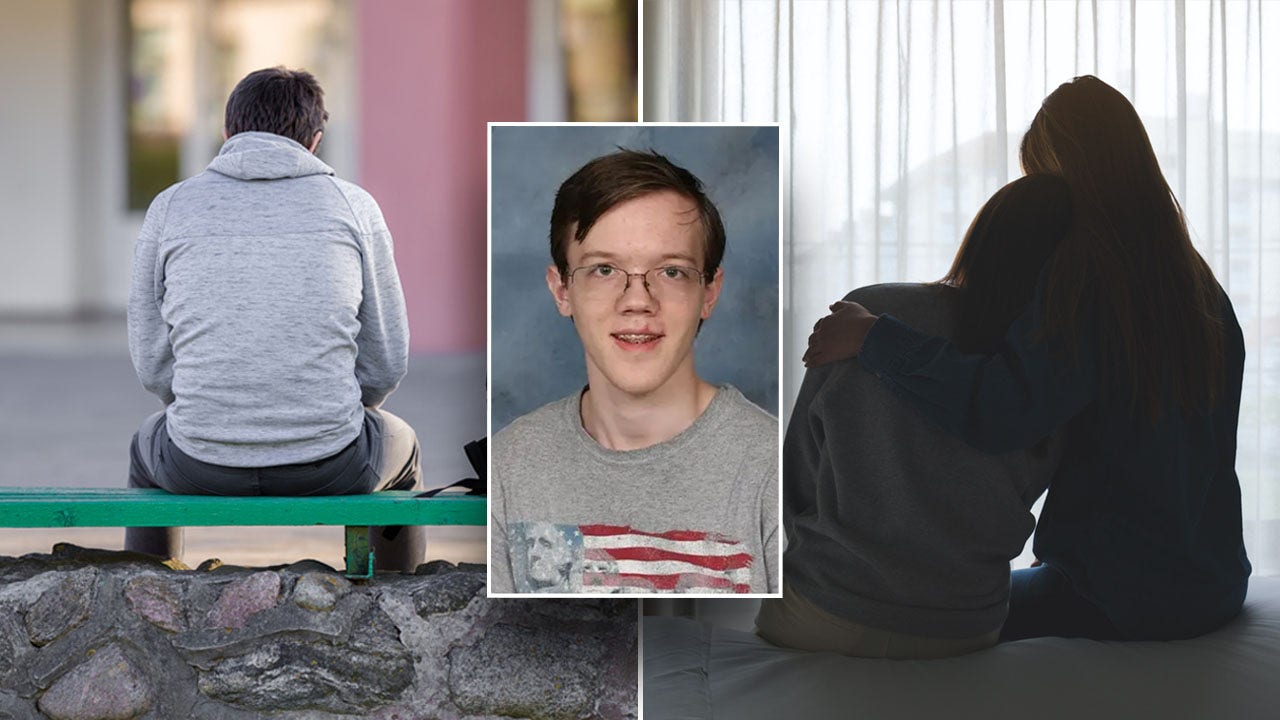
Ever since Thomas Matthew Crooks attempted to assassinate former President Donald Trump on July 13, a picture has emerged of his social behaviors and possible mental state.
Some residents of Bethel Park, Pennsylvania — the small Pittsburgh suburb where Crooks lived with his parents — have described the shooter, 20, as a “loner” when speaking to local news outlets.
An evaluation of Crooks’ phone revealed that he had previously searched for symptoms of depressive disorder, according to reports.
TRUMP ASSASSINATION ATTEMPT COULD HAVE WIDESPREAD MENTAL HEALTH IMPACT, EXPERTS SAY: ‘VICARIOUS TRAUMA’
During a press conference call with reporters on Monday, Kevin Rojak, special agent in charge at the FBI’s Pittsburgh field office, described Crooks as a “loner, as far as his association or any other activities related to his mental state.”
“His primary social circle appears to be limited to his immediate family, as we believe he had few friends and acquaintances throughout his life,” Rojak said.
Thomas Matthew Crooks is pictured in front of the Butler Fairgrounds in the aftermath of the attempted assassination of former President Donald Trump on July 14, 2024, in Butler, Pennsylvania. (Bethel Park School District; Getty Images)
Jason Kohler, who attended the same high school as Crooks, described the shooter to Fox News as an “outcast” who was always alone and was “bullied every day.”
Kohler told reporters that Crooks sat alone at lunchtime and was mocked for his clothing, which often included “hunting outfits.”
TRUMP’S SURVIVAL WAS ‘MIRACULOUS’ GIVEN BULLET’S PROXIMITY TO HIS BRAIN, DOCTOR SAYS
Looking back, some classmates said, there were warning signs that Crooks could have had the capacity to plan the type of violent attack that left one man dead, wounded two people critically and injured a former president of the United States.
Republican presidential candidate and former President Donald Trump is rushed offstage during a rally on July 13, 2024, in Butler, Pennsylvania. (Anna Moneymaker/Getty Images)
“The signs were there, and somebody definitely had to have known,” said Vincent Taormina, another former classmate of Crooks, in a previous interview with Fox News Digital.
When is a loner dangerous?
Jonathan Alpert, a Manhattan-based psychotherapist and author, pointed out that many loners are “absolutely harmless.”
“Being a loner in itself is not at all a dangerous trait,” he told Fox News Digital via email on Monday. “Withdrawing from society and extreme isolation can be indicative of depression, and that’s it.”
In some cases, however, people who are known to be loners can be “quite disturbed,” Alpert noted.
“Being a loner in itself is not at all a dangerous trait,” a psychologist said. “Withdrawing from society and extreme isolation can be indicative of depression.” (iStock)
“Any extreme behavior or erratic shifts in mood suggest emotional instability and should not be taken lightly, especially if the person has a history of hostility directed at others or society,” the expert said.
“Enter into the mix obsessions with violence, weapons or death — and you have an individual with potential to inflict harm on others.”
“Any extreme behavior or erratic shifts in mood suggest emotional instability and should not be taken lightly.”
Paranoid or delusional thinking can heighten the risk, Alpert warned, from these individuals — “especially if they think they have a special mission to carry out or if they think others are out to get them.”
“Everyone needs to feel like they belong to something bigger than themselves, and that they have people who care about them,” a mental health professional said. (iStock)
Dr. Judy Ho, associate professor and IRB chair at Pepperdine University in California, agreed that preferring to be alone is often just a personality trait, and not always a sign of potential danger.
“Sometimes people like to have some alone time to recharge, because being with people all the time is exhausting to them,” she said.
TRUMP SHOOTING: ‘GOD’S HAND OF PROTECTION WAS ON HIM,’ SAYS REV. FRANKLIN GRAHAM, OTHERS
“This is the traditional ‘introvert’ style, where they do like being with people in small doses and tend to feel more relaxed when they have ample alone time.”
Some people also tend to isolate due to depression, she noted, which often comes with signs of a down mood, loss of interest in activities they usually enjoy, irritability, low self-esteem or feelings of worthlessness, sleep and appetite changes, complaints of fatigue, and/or even suicidal ideation or self-harm attempts.
Thomas Matthew Crooks, the would-be assassin of former President Donald J. Trump, graduated from Bethel Park High School in 2022. (Obtained by Fox News Digital)
“A more dangerous ‘loner’ mentality would involve some specific elements, such as acting like they are harboring a big secret, expressing that they feel disenfranchised or lost, or having strong feelings of people ‘wronging’ them and expressing wishes that people should pay for these types of bad deeds,” Ho said.
DEPRESSION AND ANXIETY MAY IMPACT YOUNG ADULTS TWICE AS MUCH AS TEENS, HARVARD SURVEY FINDS
Other telltale signs might include lacking a specific purpose or drive, desiring power but feeling like they lack it, and spending hours studying conspiracy theories or getting into hobbies that have some sense of danger or riskiness to them, according to Ho.
Judy Gaman, CEO of Executive Medicine of Texas and a healthy living expert, reiterated the distinction.
“Everyone gets the blues from time to time, and depression can be linked to many things such as trauma or hormone fluctuations,” she told Fox News Digital.
“The loner type personality is anti-social, often angry at the world or a specific group of people, and may have a history of being bullied or abused as a child,” an expert said. (iStock)
“Transient mood changes are far different than the personality disorders that are seen in what we often term ‘loners,’” she went on.
“The loner type personality is anti-social, often angry at the world or a specific group of people, and may have a history of being bullied or abused as a child.”
5 tips for handling ‘loner’ behavior in others
If you suspect that someone you know is a loner and exhibits the warning signs shared above, there are steps you can take to help avoid escalation.
1. Carefully assess the situation
“Take note of the specific behaviors and patterns that lead you to believe he or she poses a threat,” Alpert suggested.
As part of this assessment, it’s important to avoid acting on assumptions, he added.
“The stigma against mental illness is still really prevalent, so sometimes knowing they are not judged for sharing their vulnerabilities will mean everything to them,” an expert said. (Bethel Park School District; iStock)
“All too often, people are quick to conclude, erroneously, that someone is prone to certain behaviors simply based on how they look — for example, not everyone dressed in black is potentially a school shooter,” Alpert said.
2. Have a sit-down without judgment
The best way to begin, according to Ho, is to share observations of some concerning behaviors without interpreting what those behaviors might mean.
“Express that you are concerned about the person and ask what’s going on, and allow silence so they can fill the space and share their thoughts,” she advised.
3. Offer help
“Once they’ve shared, ask what you can do to help, rather than assuming what you should do, or what you might want, because it can be different than what they really want,” Ho recommended.
Consider volunteering to go with the person to talk to a mental health professional or other trusted individuals if they are open to that, the doctor suggested.
CLICK HERE TO SIGN UP FOR OUR HEALTH NEWSLETTER
“The stigma against mental illness is still really prevalent, so sometimes knowing they are not judged for sharing their vulnerabilities will mean everything to them,” Ho added.
4. Know when to contact authorities
If you truly suspect that someone poses a danger to others, it’s best to avoid direct confrontation with the person, Alpert said.
If you suspect that someone you know is a loner and exhibits the warning signs shared above, there are steps you can take to help avoid escalation, experts say. (iStock)
“You don’t want to set them off,” the expert warned. “Instead, contact the authorities with your concerns.”
Teachers, parents and health care providers should all be paying extra attention to mental health warning signs, added Gaman.
5. See something, say something
“We often don’t want to intrude or violate someone’s privacy, but by saying something when you see something concerning — whether to the person directly and/or to law enforcement — you can possibly save their lives as well as those of others,” Ho said.
“Don’t underestimate what you can do to help someone who is suffering. Just lending a helping ear is often enough for them to step back and see the big picture, and find a reason for hope and to continue on.”
“By saying something when you see something concerning … you can possibly save their lives as well as those of others.”
If Crooks’ isolation was a factor in his decision to commit the attempted assassination on July 13, that highlights the importance of social support for mental health, experts agree.
“Community is important to all people,” Ho told Fox News Digital.
For more Health articles, visit www.foxnews/health
“Everyone needs to feel like they belong to something bigger than themselves, and that they have people who care about them,” she went on.
“Even if it is just a very small group of friends, it’s important for every human being to feel like they have a few trusted individuals they can rely on.”
Audrey Conklin and Christina Coulter, both of Fox News Digital, contributed reporting.
Read the full article from Here


A man was sentenced to 115 years in prison on Monday for the fatal shooting of a New York City police officer who had ordered him to step out of a car in Queens in 2024.
More than 200 people, mostly police officers, packed a courtroom in State Supreme Court in Queens to hear Justice Michael Aloise sentence Guy Rivera in the killing of Jonathan Diller, 31, who was promoted to the rank of detective after his death.
“It took me five minutes to calculate these numbers,” Justice Aloise said. “It’s going to take you a lifetime to calculate the damage you did and the grief that you caused.”
He said that Mr. Rivera had determined his own fate “the second you pulled that trigger.”
Detective Diller’s wife, Stephanie, who sat among the officers in the courtroom, read a statement in court just before the sentencing, speaking of the pain and loss that she and her son, Ryan, now 3, have suffered. Ms. Diller, who testified during the trial, spoke directly to Mr. Rivera as he sat at the defense table.
“This is the last moment I will allow you to take from me,” she said as tears rolled down her cheeks. “You took my husband, Jonathan. You took the future we planned together. The life we were building, the years we were supposed to share together.”
“What you did to Jonathan” she said, “gave me and our son a life sentence without him.”
A jury found Mr. Rivera, 36, guilty earlier this month on four charges, including aggravated manslaughter, in Detective Diller’s death, but acquitted him of the most serious charge, first-degree murder. The decision, after a three-week trial in Queens, stunned the dozens of police officers present when it was announced in the courtroom on April 1.
To find him guilty of murder, the jury had to decide whether they believed Mr. Rivera had intended to kill Detective Diller when he pointed his gun at him in the Far Rockaway section of Queens on March 25, 2024. They ultimately determined that Mr. Rivera had intentionally pulled the trigger, but did not intend to kill him.
Mr. Rivera did not speak at his sentencing at the advice of one of his lawyers, Jamal Johnson, who told Justice Aloise they would appeal the conviction.
Mr. Johnson, a lawyer with the Legal Aid Society, said after the hearing that Justice Aloise’s statement at sentencing showed the court “had already made up its mind about sentencing well before the trial was conducted.”
During the trial, prosecutors said that before the fatal shooting, Detective Diller’s partner, Sgt. Sasha Rosen, saw Mr. Rivera and another man, Lindy Jones, come out of a store and get into a car. Mr. Rivera had an L-shaped object in the pocket of his sweatshirt that resembled a firearm, prosecutors said.
Detective Diller approached the vehicle and asked Mr. Rivera repeatedly to comply with orders. When he did not, Sergeant Rosen reached in to pull him out of the car.
Then Mr. Rivera fired, the jury found. The defense argued that Mr. Rivera’s gun went off accidentally when Sergeant Rosen pulled him out, striking Detective Diller. Prosecutors said Mr. Rivera then turned his gun on Sergeant Rosen, but the weapon jammed.
Justice Aloise did not allow the jury to see video that, the defense contended, showed Mr. Rivera’s arm was broken during his confrontation with the police.
That evidence would have directly undermined the prosecution’s contention that Mr. Rivera was physically able to pull the trigger when he tried to shoot Sergeant Rosen, they said.
In all, Mr. Rivera was sentenced to 25 years to life for the aggravated manslaughter conviction; 40 years to life for the attempted murder of Sergeant Rosen; and 25 years to life for each of the gun possession counts. He was ordered to serve those sentences consecutively.
.
On Monday, after the sentencing, dozens of police officers smiled and embraced one another as they left the courtroom. The prosecutors who tried the case and Melinda Katz, the Queens district attorney, hugged several of Detective Diller’s family members.
Jessica Tisch, the police commissioner, called the sentence “obviously the right result, for him and for anyone who kills a New York City police officer.”
Outside the courthouse, members of the Police Benevolent Association, the police officers’ union, said they were pleased with the sentence.
“The verdict in this case did not send the right message to the Diller family and every police officer who wears the uniform,” said Patrick Hendry, the union president, who spoke at the foot of the courthouse stairwell, backed by nearly 100 police officers.
“But this sentence,” he said, “it sent the right message.”

Say bonjour to the return of “Beauty and the Beast.” The national tour has been in Boston before, but this is the first time in 25 years that Disney is behind the production.
Kyra Belle Johnson stars as Belle, the bookworm who doesn’t quite fit into her quiet village.
“I think part of treating her like a real person is finding the humor and finding the faults and breathing and being present on stage every night,” Johnson said.
As Mrs. Potts, Kathy Voytko embodies the beloved teapot.
“When I was talking to my daughters about, ‘How do you feel about mom being gone for the better part of a year?’ They said, ‘Well, geez, mom, we’re gonna miss you, but it’s Mrs. Potts,’” Voytko explained.
The actors told WBZ-TV that Disney’s involvement in this tour makes a noticeable impact, with Voytko saying, “There is nothing like a Disney-produced Disney production because the magic in the show, the attention to detail, the loving recreation of the movie that we all know and love, plus some elements of surprise.”
Johnson added, “They care about this piece of art so much… And they’re really precious with it, but at the same time, they’re open with it.”
Book writer Linda Woolverton worked with the cast in the rehearsal room to make sure the piece felt modern.
“She literally changed some scenes and lines specifically for us and our versions of these characters to make it seem grounded and real,” Johnson explained.
And Johnson gained extra insight into Belle’s life by visiting the Alsace region of France, which inspired the original Disney animators.
“Walking in the town and having like a storefront and then the leaning building that was this like blue and the wooden windows and somebody leaning out of it talking to somebody on the street. These are real places, it’s not just like a made-up place in your head.”
The wonder she felt is echoed in the audience’s response.
“This is a gate for a lot of new theater lovers. We get a lot of people who this is their first show,” said Johnson.
“It’s for everybody,” added Voytko. “It’s for adults, it’s for married couples, it is for a date night, it for a pack of pals who just want to see something nostalgic from their youth and it makes it a thrill for us every single day.”
You can see Disney’s “Beauty and the Beast” at the Citizens Opera House in Boston through Sunday.

A historic number of people flooded into Pittsburgh for the NFL Draft on Thursday.
Around 320,000 fans attended the opening round of the draft on Thursday night just outside of Acrisure Stadium in Pittsburgh, which marked an attendance record for round one of the draft, ESPN announced on Monday afternoon. In total, about 805,000 people attended the three-day event.
Advertisement
ESPN also said that about 13,2 million people tuned in to watch the first round of the NFL Draft on Thursday night, which made it the third-most watched opening round under the current format, which started back in 2010. Only the 2025 and 2020 editions of the draft drew a bigger audience on the first night.
The league said that a record amount of merchandise was sold throughout the NFL Draft weekend, too, though it did not provide a figure or metric there. The previous record on that front was set last season in Green Bay.
The Las Vegas Raiders used the No. 1 overall pick on Indiana quarterback and reigning Heisman Trophy winner Fernando Mendoza on Thursday night. Mendoza, who led the Hoosiers to the national championship earlier this year, was not in attendance in Pittsburgh. Instead, he celebrated with his family from home in Miami.
Advertisement
The NFL Draft will be held next spring in Washington D.C. for the first time in modern history. It’s expected to be held on the National Mall. Washington D.C. held the draft one other time back in December 1940.
-
 Politics6 minutes ago
Torrance man charged with attempt to assassinate Trump; records detail alleged ‘manifesto’
-
 Sports18 minutes ago
Alijah Arenas to withdraw from NBA draft and return to USC
-

 World30 minutes ago
Five killed in train crash near Indonesia’s Jakarta; rescue efforts ongoing
-
 News1 hour ago
Supreme Court heard case on how to label risks of popular weed killer
-

 New York2 hours ago
Man Sentenced to 115 Years for Killing N.Y.P.D. Officer in Queens
-

 Detroit, MI3 hours ago
Detroit City FC prepares for phase 1 of new AlumniFi Field construction project
-

 San Francisco, CA3 hours ago
San Francisco Celebrates One Year of Sunset Dunes – Streetsblog San Francisco
-

 Dallas, TX3 hours ago
Dallas Cowboys Sign Another WR, Add Linebacker In Free Agency