Politics
Becerra’s surge in California governor race draws fresh attention to candidacy, long government record


After winning his first race for Congress in 1992, 34-year-old Xavier Becerra credited a wave of community supporters in Los Angeles, many Latino, for backing his upstart campaign, saying he hoped his win was proof that grassroots politics was more valuable than “heavy dollars.”
More than 30 years later, Becerra, 68, is again an upstart candidate — this time for California governor. Again he is facing monied competition — including from chief Democratic rival Tom Steyer, a self-funded billionaire — and relying on Latino and other grassroots support.
California gubernatorial candidate Xavier Becerra speaks during a campaign event in Los Angeles on April 18.
(Jae C. Hong / Associated Press)
“You are the people power that it takes,” he told a crowd of supporters at a recent “Fighting for the California Dream” town hall in Los Angeles. “California wasn’t built by billionaires. It was built by your families. It was built by our families.”
That Becerra is still fighting in the race — and drawing new people to his events — reflects a remarkable and hard-to-explain turnaround for a campaign that appeared all but dead less than a month ago, then bounded back into contention after Rep. Eric Swalwell dropped from the race and resigned from Congress amid sexual assault allegations.
Before Swalwell’s collapse, Becerra’s biggest splash in the race came in March, when USC excluded him and other low-performing candidates from a planned debate. The criteria left every candidate of color out, and after Becerra and others complained, the forum was canceled.
A California Democratic Party tracking poll, released in early April before the Swalwell scandal broke, showed Becerra near the bottom of the field with 4% support among likely voters. In a party poll taken after it broke, Becerra’s support jumped to 13% — the biggest increase of any candidate.
Certainly some of Swalwell’s supporters shifted to Becerra, but political observers are still pondering why so many did — and not to Steyer, former Orange County Rep. Katie Porter or other Democrats with single-digit support, such as former L.A. Mayor Antonio Villaraigosa or San José Mayor Matt Mahan.
Whatever the answer, Becerra’s surge has sparked fresh interest in his candidacy. It also has raised questions about his time as California attorney general, when he sued the first Trump administration more than 120 times, and U.S. Health and Human Services secretary, when he backed the Biden administration’s strict COVID-19 rules and oversaw the agency’s response to a massive influx of unaccompanied minors at the southern border.
It has also put a growing target on Becerra’s back — including at Wednesday night’s gubernatorial debate, when rivals criticized him as a “D.C. insider” with poorly detailed plans for the state — and sparked hope among many Latinos that California will elect one of them as governor for the first time in state history, sending a strong message of resistance to the intensely anti-immigrant Trump administration.
Of course, Becerra faces hurdles. Steyer, a hedge fund founder who has donated more than $130 million to his own campaign, has been ahead of him in polling, as have two Republicans: Silicon Valley entrepreneur and former Fox News host Steve Hilton, who has President Trump’s endorsement, and Riverside County Sheriff Chad Bianco. Only the top two candidates in the June 2 primary advance to the November election.
Still, Becerra now has a path to victory, one that did not exist even a month ago, and new funding. Many Democratic voters remain undecided, and many — shocked by the Swalwell scandal — are looking for another Democratic front-runner to back.
In an interview with The Times, Becerra said he’s the man for the job, because “California needs a work horse, not a show horse.”

Xavier Becerra, left, gathers with other candidates for Los Angeles mayor in 2000.
(Gary Friedman / Los Angeles Times)
Rising wave of Latino political power
A Sacramento native and the son of a Mexican immigrant mother and a Mexican American father, Becerra graduated from Stanford Law School and served as a deputy to California Atty. Gen. John K. Van de Kamp before being elected in 1990 to the California Assembly.
In 1993, Becerra entered Congress on a rising wave of Latino political power and the heels of a fractious presidential election in which former White House aide Pat Buchanan challenged President George H.W. Bush in the Republican primary on a stridently anti-immigrant, “America First” message — one Trump repurposed in both 2016 and 2024.
It was a defining political moment for Latinos across the country, and for Becerra personally, said Fernando Guerra, founding director of the Center for the Study of Los Angeles at Loyola Marymount University.
“He certainly has been and is part of the incorporation of Latinos into California history and California politics, and it really begins in the early ’90s,” Guerra said. “His rise and political career is really a reflection of the rise and political incorporation of Latinos.”
In 1994, Becerra helped oppose Proposition 187, a state initiative to deny undocumented immigrants access to public education and healthcare. In 1996, he sharply criticized the passage of the Personal Responsibility and Work Opportunity Reconciliation Act, which cut federal benefits for many legal immigrants. By 1997, Becerra — just 39 — was chair of the Congressional Hispanic Caucus and the first Latino member to serve on the powerful House Ways and Means Committee.
By 2016, Becerra, 58, was the highest-ranking Latino in Congress when then-Gov. Jerry Brown tapped him to replace a Senate-bound Kamala Harris as California attorney general. There, Becerra played a key role in defending the Affordable Care Act, known as Obamacare, against Republican attacks.
In early 2021, Becerra was confirmed to serve as President Biden’s health secretary, another first for a Latino and a critical post given the COVID-19 crisis, and remained in that role until Trump’s second inauguration.

Then-U.S. Health and Human Services Secretary Xavier Becerra arrives for a hearing to discuss reopening schools during the COVID-19 pandemic in 2021.
(Greg Nash / Associated Press)
Criticism and praise
In a rush of endorsements in recent days, Becerra’s supporters have lauded his executive experience, calling him a “proven leader” who, amid constant threats from the Trump administration, is “ready to fight back on day one.”
Becerra’s critics also have pointed to his leadership record, but to highlight what they contend are glaring failures.
Steyer spokesman Kevin Liao alleged Becerra was “absent, ineffective, or too late” in responding to COVID-19 and other public health crises as health secretary, and that California “cannot afford incompetence, or someone who disappears when things get hard.”
The remarks echoed others made during the pandemic, including by Eric Topol, who is executive vice president of Scripps Research in La Jolla, a professor of translational medicine and a cardiologist. During the pandemic, Topol accused Becerra of being “invisible” in the fight to control it. In a recent interview, he said he still believes that.
Topol said the Biden administration’s COVID response was defined by poor data collection and “infighting” among agencies such as the National Institutes of Health, the Centers for Disease Control and Prevention and the Food and Drug Administration, including on vital issues such as when Americans should receive booster shots and how long they should isolate after infection.
Becerra “basically took a very absent, low profile — didn’t show up, didn’t harmonize the remarkable infighting,” Topol said. “The buck stops with him.”
Dr. David A. Kessler, the Biden administration’s top science official on COVID-19 and now a professor of pediatrics and epidemiology at UC San Francisco, fiercely defended Becerra, crediting him with rolling out some 676 million vaccines and steering the nation out of a wildly unfamiliar health crisis with substantial success — what Kessler called a “historical achievement” that proved government “can do big things.”
Kessler said Becerra rightly assessed that the country needed to hear from medical experts, not politicians, and so deferred at times to the doctors, epidemiologists and vaccinologists he smartly surrounded himself with and trusted — but he was never absent. “He enabled us. He was there. Anything I needed, he helped deliver,” Kessler said.
Becerra said there were a lot of people involved with the COVID-19 fight, including a White House team launched before his confirmation as health secretary. Still, it was his agency that ultimately led the response, and helped bring the pandemic to an end, he said.
“At the end of four years, when we had put some 700 million COVID shots into the arms of Americans and pulled the country and our economy out of the COVID crisis, it was HHS — and I was the secretary of HHS,” he said.
Becerra’s rivals in the governor’s race also have attacked him for how he responded to an influx of unaccompanied immigrant minors during the pandemic. They allege Becerra rushed their release to relatives and other sponsors while ignoring concerns from career health staff that some of those placements weren’t safe — resulting in thousands of kids being lost to the system, forced into child labor or trafficked.
The criticism stems in part from a sweeping New York Times investigation that found the health department couldn’t find some 85,000 children it had released, that Becerra had relaxed screening processes for sponsors and that placement concerns from career health staff went ignored or were silenced.
The investigation by reporter Hannah Dreier found that thousands of the 250,000 or so migrant children who arrived in the U.S. between early 2021 and early 2023 had “ended up in punishing jobs across the country — working overnight in slaughterhouses, replacing roofs, operating machinery in factories — all in violation of child labor laws.”

Atty. Gen. Xavier Becerra holds a news conference in Border Field State Park in San Diego in 2017.
(Francine Orr/ Los Angeles Times)
It found there were many signs of “the explosive growth of this labor force,” and that staff had repeatedly flagged concerns about it in reports that reached Becerra’s desk. It also reported that, during a staff meeting in the summer of 2022, Becerra had pressed staff to move children even more quickly through the process, comparing them to factory parts.
“If Henry Ford had seen this in his plants, he would have never become famous and rich. This is not the way you do an assembly line,” Becerra said, according to a recording of the meeting obtained by the newspaper.
Danni Wang, another Steyer spokesperson, said children “were handed to gang members, traffickers, and abusers because [Becerra] stripped the background checks that had protected them for years.”
Becerra said the controversy is one he has addressed publicly for years, including in multiple congressional hearings. He said his team worked diligently to properly vet sponsors and do right by the thousands of children in their care, despite Congress failing to provide the budget needed to restore a system of licensed care facilities that the first Trump administration had dismantled.
“It was a wreck. They had closed facilities, they had fired the licensed caregivers. And remember, this was during COVID, [when] you didn’t want anyone to be near each other,” he said. “How do you take care of thousands of kids in a center that could house maybe 50 kids?”
He said he led an aggressive push to stand up temporary facilities — including in places like the San Diego Convention Center — while rebuilding the licensed care facilities Trump had dismantled and working to place kids into the community as quickly and safely as possible.
Ron Klain, who served as Biden’s chief of staff for the first two years of the administration, said Becerra helped lead the administration out of the crisis by being “an outspoken advocate” for the children in its care.
“Xavier was very, very insistent in meetings and very outspoken on the risk that some of these people [the kids] were being placed with were not the proper people to place them with, and pushed hard for more rigor in the process,” Klain said.
Becerra also has faced criticism and questions related to the federal indictment of his former chief of staff Sean McCluskie, who pleaded guilty to conspiracy to commit fraud after authorities accused him of stealing some $225,000 from Becerra’s dormant state political campaign account.
Becerra was not implicated in the scandal — which he’s previously described as a “gut punch” — and said he did everything he could to ensure McCluskie and others were held accountable once it came to light, including by providing “testimony and documents” to the FBI and federal prosecutors.
Hilton has said the scandal, which also implicated a former aide to Gov. Gavin Newsom, showed that “corruption has become totally ingrained and systemic” under Democratic rule in California.
Looking ahead
Experts said Becerra’s long resume will help him stand out in a race with less experienced competitors and no household names — and that Californians electing a Latino for the first time, as the Trump administration conducts one of the largest ever deportation campaigns, dismantles immigrant rights and targets people on the street based largely on their looking and sounding Latino, would be a major political moment.
Becerra said his extensive experience should matter to voters, because such experience will be necessary in the pivotal and no doubt chaotic Trump years ahead, when “pizzazz and dazzle” will matter less than steady competence from “someone who’s actually been in the midst of that hurricane” before.
“It helps to have gone through these things. I’ve been there, I’ve done that, and I’ve done it successfully,” he said. “I’ve proven that, whether it was taking on Donald Trump toe to toe as the [attorney general], whether it was getting us out of COVID working closely with the White House to deploy the resources and get that done, we made it happen.”

Politics
Double endorsement drama: Trump backs second candidate in red state’s GOP gubernatorial runoff

NEWYou can now listen to Fox News articles!
President Donald Trump is making an 11th-hour endorsement in the final stretch ahead of Tuesday’s high-profile Republican gubernatorial runoff in solidly red South Carolina, saying he “can’t hurt one of them by only Endorsing the other.”
Trump on Friday took to Truth Social to say that he was supporting longtime South Carolina Attorney General Alan Wilson and Lt. Gov. Pamela Evette in the battle for the GOP nomination in the race to succeed term-limited Republican Gov. Henry McMaster.
“I can’t hurt one of them by only Endorsing the other, so, therefore, I am going to Endorse, for Governor of South Carolina, both Pam Evette and Alan Wilson!” Trump wrote, adding: “With either one you can’t go wrong.”
The endorsement of Wilson appears to be a move by Trump to hedge his bets, because Trump is already backing Evette, who is also supported by McMaster, a longtime top ally of the president.
The South Carolina runoff had been viewed as the latest test of Trump’s immense grip over the GOP and the power of his endorsements in Republican nominating contests.
DEMOCRACY ’26: STAY UP TO DATE WITH THE FOX NEWS ELECTION HUB
South Carolina Attorney General Alan Wilson announced his candidacy for governor on Monday, June 23, 2025, accompanied by his family. (Tracy Glantz/The State/Tribune News Service via Getty Images)
And his decision to back both Evette and Wilson isn’t the first time he’s made dual endorsements in the same Republican race. He was backing both Gina Swoboda and Jay Feely in next month’s Republican primary in Arizona’s 1st Congressional District before Swoboda dropped out of the congressional race to run for secretary of state.
Most famously, Trump endorsed “ERIC” in the 2022 GOP Senate primary in Missouri, where the two major candidates were Eric Schmitt and Eric Greitens. Both candidates claimed the endorsement, with Schmitt ultimately winning the nomination.
In South Carolina, Trump endorsed Evette late last month, a week and a half before the gubernatorial primary.
Evette finished on top of a crowded field of contenders in the primary election, with Wilson second. The field also included Reps. Nancy Mace and Ralph Norman, and multimillionaire businessman Rom Reddy. Since no candidate won a majority of the vote, as the top two finishers, Evette and Wilson advanced to the June 23 runoff.
Mace and Norman endorsed Wilson after failing to advance to the runoff. And Wilson was also backed a week ago by Sen. Ted Cruz, the conservative firebrand from Texas.
The runoff between Evette and Wilson has become combustible, and in Tuesday’s final debate both candidates launched personal attacks and accused each other of lying and misrepresenting their records.
Wilson has worked to contrast his tenure as attorney general with what he’s argued is Evette’s largely ceremonial role as lieutenant governor. And he has spotlighted his experience as a combat veteran, prosecutor, and the state’s top law enforcement official.
Evette has showcased herself as an outsider and a Trump-endorsed businesswoman, while casting Wilson as a career politician.
Sen. Tim Scott of South Carolina, who is supporting Wilson and has helped with fundraising, made calls on behalf of Wilson and encouraged the president’s endorsement of the state attorney general, a source familiar told Fox News Digital.
It’s been 28 years since a Democrat won a gubernatorial election in South Carolina, and the winner of the GOP runoff will be considered the clear favorite in the general election against Democratic nominee Jermaine Johnson, a state representative.
South Carolina Lt. Gov. Pamela Evette announces her bid for the Republican nomination for governor at The Smokestack at Judson Mill in South Carolina on July 14, 2025. (Joshua Boucher/The State/Tribune News Service/Getty Images)
The brute force of the president’s endorsement power has been on display in GOP primaries over the past two months, with his candidates ousting incumbents he targeted in showdowns in Indiana, Louisiana, Kentucky and Texas that grabbed plenty of national attention.
But Trump’s endorsement streak in statewide and congressional Republican primaries was snapped three weeks ago when his last minute endorsement of Republican Rep. Randy Feenstra of Iowa in the race to succeed retiring GOP Gov. Kim Reynolds wasn’t enough to propel the three-term congressman to victory.
Feenstra was narrowly edged by Zach Lahn, a businessman, farmer and former political strategist who was backed by the political wings of MAHA — the acronym for the Make America Healthy Again movement aligned with Trump Health Secretary Robert F. Kennedy Jr. — and Turning Point USA, the powerful conservative organization co-founded by the late Charlie Kirk.
Zach Lahn raises his fist in celebration after defeating his primary opponent in Iowa’s GOP gubernatorial race on Tuesday, June 2, 2026. (Zach Lahn for Governor via Facebook)
Trump rebounded a week later, as Evette finished first in the GOP gubernatorial primary and longtime Trump ally Sen. Lindsey Graham of South Carolina won a majority of the vote in the Republican Senate primary, and avoided a runoff.
Graham, who was endorsed by Trump, was facing primary challenges from five candidates, including conservative businessman Mark Lynch, who took aim at the senator over his support for the war in Iran. Lynch was backed by some MAGA leaders who have been critical of the president.
And a couple of days ago, Trump-backed candidates won two of the three top races in Georgia and Alabama, with the one setback coming against a billionaire businessman who shelled out over $100 million of his own money to boost his campaign.
Rep. Barry Moore, a House Freedom Caucus member and longtime Trump supporter who was endorsed by the president, comfortably defeated rival Jared Hudson, a former Navy SEAL sniper who was supported by some top names on the right, in solidly red Alabama’s GOP Senate runoff.
In battleground Georgia’s Republican Senate runoff, an 11th hour endorsement by Trump this past weekend helped boost Rep. Mike Collins, a MAGA champion, to victory over former college football coach Derek Dooley, who was backed by popular conservative Gov. Brian Kemp.
Collins will face Democratic Sen. Jon Ossoff in the general election in a race that’s among a handful that will likely decide if the GOP holds its slim majority in the chamber in the midterms.
Republican gubernatorial candidate Rick Jackson speaks to supporters at a campaign stop in Alpharetta, Ga., on June 14, 2026. (Paul Steinhauser/Fox News)
Jones regularly showcased his Trump endorsement, but Jackson, who launched his bid in February long after the president had endorsed Jones, repeatedly said that Trump had inspired him to run.
But in Georgia’s GOP gubernatorial runoff, the candidate Trump backed, Lt. Gov. Burt Jones, who was also endorsed by Kemp this past weekend, was defeated by Rick Jackson, who ran as an outsider.
CLICK HERE TO DOWNLOAD THE FOX NEWS APP
A Trump political operative, pointing to Tuesday’s loss by Trump-backed Jones, noted that “Rick Jackson set a record for spending in a statewide Republican primary. He spent Tom Steyer level money in a state a fraction of the size of California. That’s going to have an impact.”
And the operative, who asked to remain anonymous to speak more freely, also emphasized that “Rick bearhugged Trump. All of his ads and material was about how he’s going to be Trump’s favorite governor. So the race was not really a referendum on Trump.”
Fox News’ Luke Trevisan contributed to this report
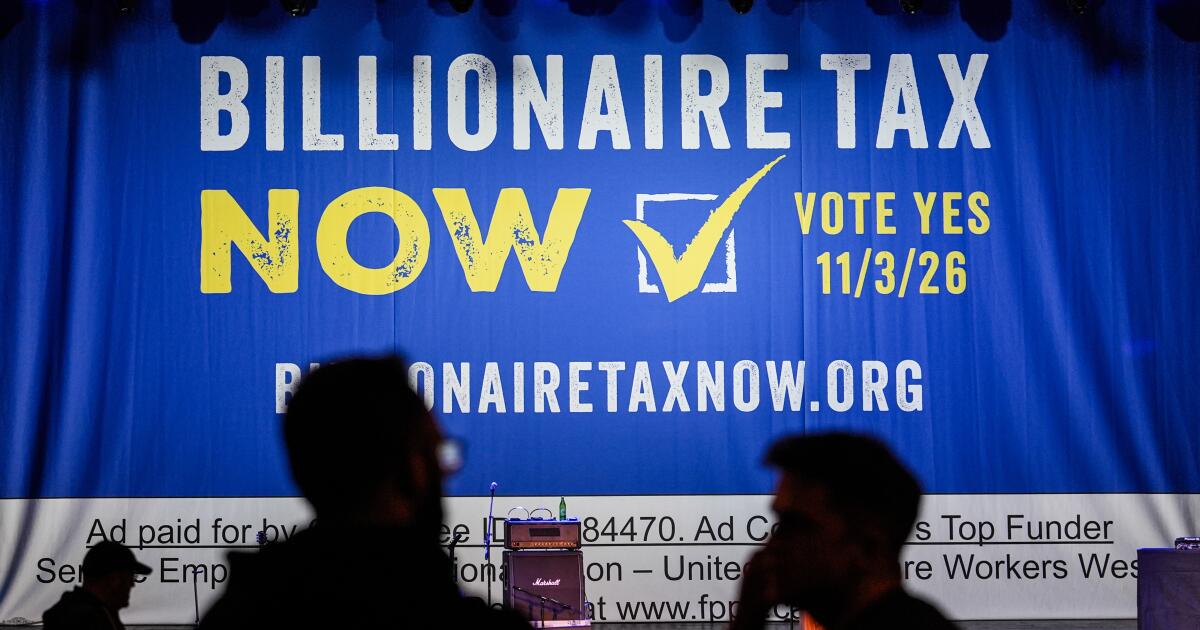
A contentious proposal to tax California billionaires to alleviate federal healthcare cuts moved closer to landing on the November ballot this week, but efforts to defeat the measure before it reaches voters have already escalated.
The California secretary of state’s office said Wednesday that the proposal had enough valid signatures to be eligible for the Nov. 3 ballot. But discussions that have included the governor’s administration and lawmakers are underway about a potential deal that could prevent the initiative from being put in front of voters, according to people familiar with the negotiations.
Supporters have until June 25 to withdraw the initiative or go forward with placing it on the ballot. The negotiations highlight the escalating debate surrounding the billionaire tax, an idea that has divided the Democratic Party and drawn fresh opposition from healthcare and education groups. The negotiations are in flux, and the outcome remains uncertain.
The initiative would impose a one-time tax of up to 5% on taxpayers and trusts with assets valued at more than $1 billion, with some exceptions, such as property. The levy could be paid over five years. Ninety percent of the revenue would fund healthcare programs, and the remaining funds would be spent on food assistance and education programs. The proposal would cost the state’s richest residents about $100 billion if a majority of voters support it.
Backers of the proposed tax say it’s crucial to compensate for federal healthcare funding cuts, approved by President Trump and the Republican-controlled Congress, that will harm millions of the state’s most vulnerable residents. In April, supporters of the billionaire tax submitted nearly 1.6 million signatures, roughly double the number needed to qualify.
A poll released in March showed 52% of registered voters supported the billionaire tax, while 33% said they opposed it. Fifteen percent were undecided. The survey was conducted by UC Berkeley’s Institute of Governmental Studies and co-sponsored by The Times.
Opponents of the measure say the proposal is an ineffective attempt to address the long-term effects of the healthcare cuts and would harm California’s economy and budget.
The state budget in California is already largely dependent on income taxes paid by its highest earners. Because of that, revenues are prone to volatility, hinging on capital gains from investments, bonuses to executives and windfalls from new stock offerings, and are notoriously difficult for the state to predict.
The proposal already triggered a fierce debate, accentuating the divide between the rich and poor in a state that’s expensive to live in.
The Service Employees International Union-United Healthcare Workers West and other supporters of the billionaire tax say that it would raise $100 billion, offsetting federal funding cuts to healthcare as well as funding education and state food assistance. The SEIU-UHWW has spent more than $31 million qualifying the proposal for the ballot.
“David won the second round against Goliath, but healthcare workers and our allies won’t quit until we protect patients from the looming California healthcare collapse manufactured by Trump and Congress,” said Debru Carthan, a spokeswoman for the Billionaire Tax Now Coalition in a statement. The SEIU-UHWW funds the group.
But supporters face strong opposition from billionaires and influential groups with deep pockets. Tech executives and other business leaders oppose the idea and some have moved to other states. Opponents say taxing billionaires would harm California’s economy while not addressing underlying financial issues.
Campaign efforts against the proposal intensified this week with the launch of a new bipartisan coalition that’s fighting the wealth tax proposal. The group, called the Californians to Protect Funding for Schools, Healthcare and Public Safety, posted a long list of opponents that include healthcare groups, labor unions, business organizations, politicians and more.
An ad released by the group calls the wealth tax “a dangerous experiment” that could cost Californians tax revenue, send jobs out of state and cut funding. Planned Parenthood, the California School Boards Assn. and labor unions are cited in the ad as opponents.
“California can’t afford the reckless wealth tax experiment,” the ad says. The California Primary Care Assn. and California Medical Assn. are funding the coalition.
Jodi Hicks, chief executive and president of Planned Parenthood Affiliates of California, said that while the group believes that the wealthy should pay their fair share of taxes, the proposal fails to get at the root of the problem.
“We believe that this particular measure is shortsighted, doesn’t have specificity and accountability. It’s volatile,” she said.
The group wants to focus on holding Congress accountable and restoring critical funding rather than finding a “temporary solution that may do more harm,” Hicks said.
The proposal also has divided progressive politicians, including influential members of the Democratic Party. California Gov. Gavin Newsom spoke out against the billionaire tax, expressing fears that those wealthy residents would move out of the state. But U.S. lawmakers such as Rep. Ro Khanna (D-Fremont) and Sen. Bernie Sanders (I-Vt.) have backed a billionaire tax, saying the rich should pay their fair share to fund essential services.
Newsom tried to stop the proposal’s supporters from placing it on the ballot because he feared it would affect the state’s finances regardless of whether voters approved it, according to a person connected to the governor who was involved in the negotiations. After these efforts failed, the governor’s advisors sought to create a broad coalition opposing the proposal in order to weaken the union’s bargaining powers.
The union proposing the billionaire tax urged Newsom on Thursday to support a bill enacting a 2% tax on the state’s billionaires and said that if he got it approved by the state Legislature, it would withdraw its proposed ballot measure by the June 25 deadline.
Saying that Newsom has vocalized how devastating the federal healthcare funding cuts will be to California’s most vulnerable residents, a coalition funded by the union argued in an open letter that their proposed stopgap measure could prevent needless patient deaths.
“Governor Newsom, you have taken bold action when California needed it in the past,” the letter read. “This is one of those moments. The ask is clear. The timeline is tight but achievable. And the payoff — preventing widespread hospital and community clinic closures and saving patient lives — is real and immediate.”
A Newsom representative bluntly opposed the proposal.
“The Governor has been clear that he is strongly opposed to a California-only wealth tax,” said spokesperson Tara Gallegos in a written statement. “The Governor supports making the wealthiest Americans pay their fair share, but this poorly designed state-only measure will defund teachers, schools, clinics, and public safety. Changing the tax rate doesn’t change this measure’s fundamental flaws that harm working Californians.”
Business executives have already poured millions of dollars into groups that oppose the billionaire tax or are promoting alternative solutions to wealth inequality.
Tech executives, venture capitalists and business leaders have donated roughly $118 million to a nonprofit called Building a Better California, according to data on the secretary of state’s website. Most of the funding comes from Google co-founder Sergey Brin, who has given more than $82 million to the group. Executives from DoorDash, Ripple, Stripe and other companies also have contributed.
The group says it supports policies such as expanding access to affordable housing, protecting innovation, requiring government transparency and securing more stable education funding.
PayPal and Palantir co-founder Peter Thiel has contributed $3 million to the California Business Roundtable, which opposes the tax. Former Google Chief Executive Eric Schmidt donated $1 million to that group as well.
California would probably collect tens of billions of dollars from the wealth tax if it passed, but it could also lose other tax revenue, a December letter from the state legislative analyst’s office said. The office also mentioned that it’s tough to predict the exact amount the state would collect due to factors that can affect a billionaire’s wealth, such as fluctuating stock prices.
California billionaires who were residents of the state as of Jan. 1 would be affected by the ballot measure if it passes. Some wealthy residents announced plans to move out of state. On Dec. 31, venture capitalist David Sacks announced he was opening an office in Austin, Texas, the same day Thiel publicized his firm had opened a new office in Miami.
Measures that could nullify the billionaire tax are another hurdle facing the initiative’s supporters. One initiative known as the Improving Transparency, Effectiveness & Efficiency in California Government Act could cancel out the billionaire tax.
It appears likely that the transparency act will also qualify for the ballot, as its supporters have said they’ve gathered enough signatures. If voters approve conflicting ballot measures, the one with more “yes” votes would take effect.

By John Ismay, Gilad Thaler, Nikolay Nikolov, Rafaela Balster, Stephanie Swart and Whitney Shefte
June 19, 2026
-
South Dakota2 minutes ago
SD Lottery Mega Millions, Millionaire for Life winning numbers for June 19, 2026
-

 Tennessee9 minutes ago
Tennessee baseball adds pitcher Ricky Ojeda, UC Irvine transfer
-

 Texas12 minutes ago
Fans erupt as U.S. wins in World Cup and North Texas builds buzz
-

 Utah17 minutes ago
United States is flying at men’s World Cup, and Utah soccer fans are taking note
-

 Vermont24 minutes ago
Vt. communities work to clean up after EF-1 tornadoes strike
-

 Washington27 minutes ago
IMPD adds third public safety camera along Washington St in three months
-

 Virginia27 minutes ago
Virginia Lottery Mega Millions, Pick 3 Night results for June 19, 2026
-

 Wisconsin39 minutes ago
Wisconsin Lottery Mega Millions, Pick 3 results for June 19, 2026

