Connect with us

Northeast

Trump shooter practiced at gun range weeks before rally: 'I was sitting next to evil,' witness says

Published

on

Trump shooter practiced at gun range weeks before rally: 'I was sitting next to evil,' witness says

Thomas Matthew Crooks tested his shooting prowess at a western Pennsylvania gun range just weeks before last Saturday’s attempted assassination of former President Trump, according to a report.

Bill Jenkins said he practiced his firearms skills immediately next to Crooks at the Keystone Shooting Center in Cranberry on June 22 – mere weeks before the July 13 attack, The Sun reported.

“I was sitting next to evil,” Jenkins told the outlet. “I haven’t been able to sleep thinking about it.”

Jenkins, who said he has been interviewed by the FBI, recalled the class instructor extolling Trump during the session – a glorification that may have contributed to Crooks’ determination to carry out the plot.

TRUMP SHOOTER’S SHOCKED TEACHER REVEALS DETAILS OF HIS COLLEGE LIFE

Advertisement

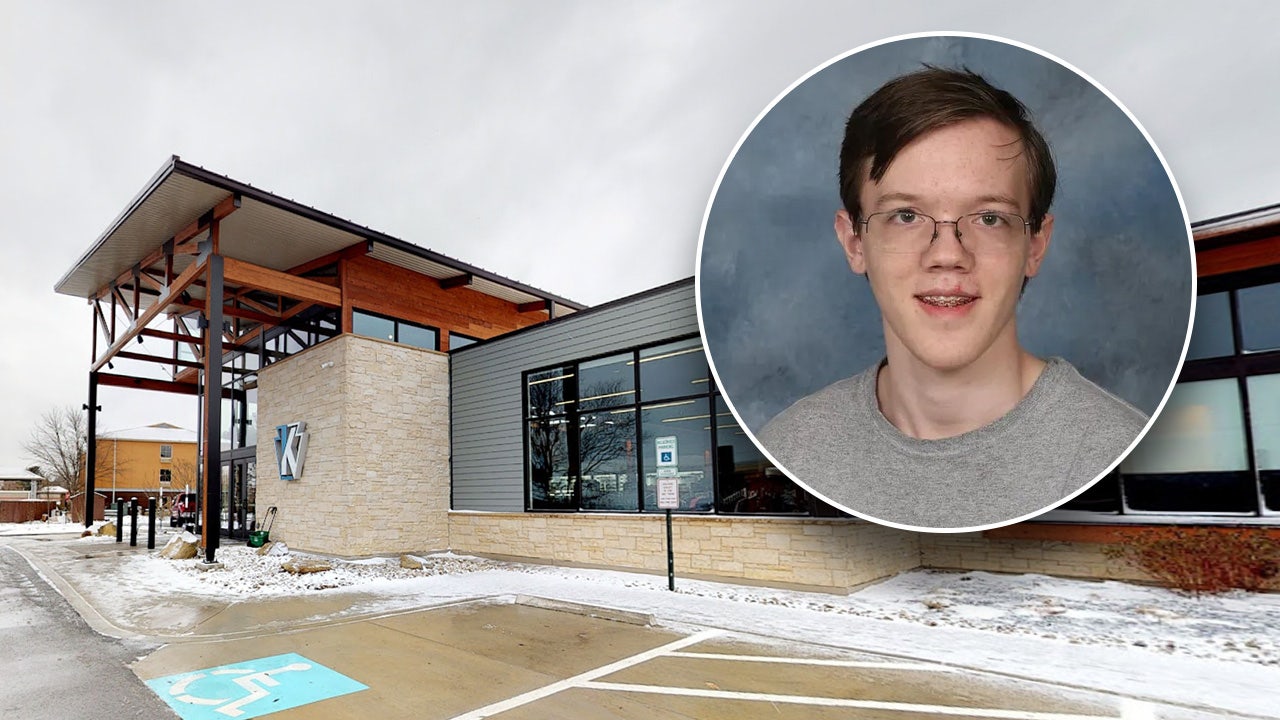
Thomas Matthew Crooks, 20, reportedly practiced at this shooting range before he opened fire at a Pennsylvania rally, injuring Donald Trump and killing a bystander. (AFP handout | Google maps)

“It turns out the instructor and I are Trump supporters,” he said. “We talked about how our country was good under Trump. Our borders were secure, the economy was strong, we were energy independent, and he got things done. I noticed at the time that the kid wasn’t saying anything one way or another, but I could see him smirking.”

In hindsight, Jenkins believes Crooks was muting his animus toward Trump – and that the conversation may well have helped to motivate his assault.

“It’s crossed my mind – did that conversation help push him over the edge?” he said. “It freaks me out a little because a person has died.”

The 20-year-old, who had planned to pursue engineering in college, showed advanced skills on the shooting range, blowing holes in targets from significant distances, Jenkins told the newspaper.

Advertisement

SEN. BLACKBURN BLASTS SECRET SERVICE DIRECTOR FOR PRIORITIZING PARTY OVER ATTEMPTED-ASSASSINATION PROBE

Donald Trump arrives at Trump Tower, May 30, 2024 after being found guilty on 34 counts of falsifying business records in the first degree. (Felipe Ramales for Fox News Digital)

Crooks’ shocking volley at the Trump rally grazed Trump in the ear, fatally struck rally goer Corey Comperatore, and injured two others.

Snipers cut him down soon after he launched his attack.

Jenkins, 62, an Air Force veteran, said he was stunned to learn that his training partner had nearly felled a former president.

Advertisement

“This guy killed a man with a wife and kids and almost plunged the country into chaos by killing Donald Trump,” he said.

The pair’s class lasted for several hours, with Crooks showing a clear familiarity and facility for firearms throughout, Jenkins noted.

“When we went to the range, he started shooting straight away,” he said. “It seemed like he had experience with weapons.”

HOUSE GOP LEADERS DEMAND ACCOUNTABILITY ON TRUMP ASSASSINATION ATTEMPT: ‘SO MANY QUESTIONS’ 

Thomas Matthews Crooks opened fire on former President Trump at a rally in Pennsylvania on July 13, 2024. (Google maps | Handout | Wires)

Advertisement

Crooks brought his own 9mm handgun to class and dressed in a T-shirt and jeans, the outlet reported.

The long-haired gunman said little but was polite throughout, Jenkins recalled.

After yet another accurate target strike, Jenkins lauded his younger counterpart.

“I congratulated him on how good he’d done, and he just laughed,” Jenkins said.

Advertisement

Investigators have yet to reveal a motive for the assassination attempt and are continuing to comb through Crooks’ background.

Read the full article from Here

Advertisement
Continue Reading
Click to comment

Leave a Reply

Your email address will not be published. Required fields are marked *

This site uses Akismet to reduce spam. Learn how your comment data is processed.

New York

How a Housing Organizer and Her Son Live on $89,000 Near Central Park

Published

on

How a Housing Organizer and Her Son Live on ,000 Near Central Park

How can people possibly afford to live in one of the most expensive cities on the planet? It’s a question New Yorkers hear a lot, often delivered with a mix of awe, pity and confusion.

We surveyed hundreds of New Yorkers about how they spend, splurge and save. We found that many people — rich, poor or somewhere in between — live life as a series of small calculations that add up to one big question: What makes living in New York worth it?

Advertisement

By the time their son was diagnosed as being on the autism spectrum when he was 18 months old, Angela Donadelle and her child’s father, Michael Jones, were no longer together.

In the late 1980s and early 1990s, at the height of the crack epidemic, the pair had fallen into drug addiction. They both went into recovery after they discovered Ms. Donadelle was pregnant.

Advertisement

“He saved my life,” Ms. Donadelle, 66, said of her son. “My life wasn’t in order, and then God sent me him and changed everything.”

Together, Ms. Donadelle and Mr. Jones forged what would become a three decade commitment to carefully and jointly parenting their son, Christopher Jones, now 32, so that he could be independent when they were gone. Ms. Donadelle, who grew up in Harlem, considered moving to find more affordable housing, but believed that Christopher, who is highly functioning, would have access to better therapeutic and educational services in New York City.

Randi Levine, the policy director for Advocates for Children of New York, said New York has high quality programs for autistic children. Medicaid also pays for more services for children and families here than in other states, said Brigit Hurley, the chief program officer for The Children’s Agenda. Both agree that access to services can sometimes be limited.

Advertisement

“I could have taken my degree and moved down south and made more money,” said Ms. Donadelle, who graduated from Boston College with a degree in marketing and business management. She now works as a housing organizer at Good Old Lower East Side, a housing preservation organization in Lower Manhattan. “I had friends that moved to other places, but would I be able to accommodate the needs of Christopher?”

Staying in New York City meant that she had to come up with a plan. Even though they were no longer romantically involved, Mr. Jones sometimes lived with Ms. Donadelle and their son at the Lakeview Apartments, a four-building, 446-unit complex in a prime location at East 107th Street and Fifth Avenue in East Harlem.

Advertisement

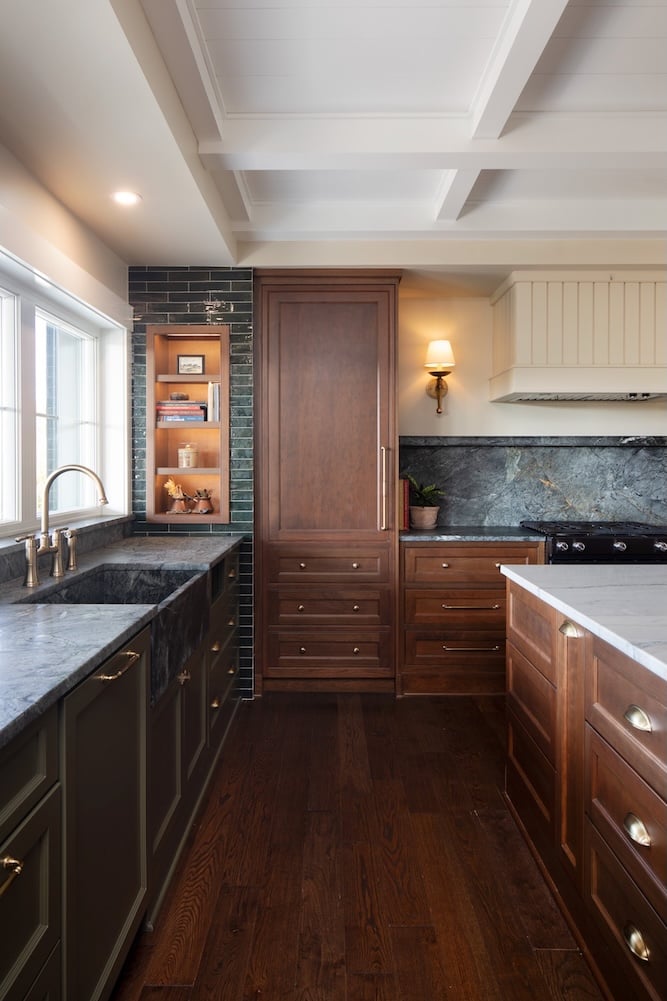
From her terrace on one of the building’s highest floors, Ms. Donadelle has a view of the Empire State Building and Central Park, including the Conservatory Garden and reservoir. She pays $1,950 per month for her 750-square-foot two-bedroom apartment.

“I knew that if I was short on the rent, I could ask him for money, and he would give it to me,” Ms. Donadelle said of Mr. Jones, adding that they split the $250 per month they spent on food and the $350 per month for cable, internet and phone service.

“We were real good friends,” she said. “He had girlfriends and I had boyfriends. They just never came to our house.”

Advertisement

The End of a Partnership

That help ended in January 2024 when Mr. Jones, a security guard at a building for older adults, died of a heart attack. Pictures of Mr. Jones, who was known for his love of fashion, adorn the apartment.

Advertisement

Ms. Donadelle tears up when talking about Mr. Jones and their joint effort to raise their son. We were a team,” she said. “If I was at work, he took care of Chris, got him to the therapies. And that’s why it got harder when he died.”

But their plan paid off. Years ago, specialists told Ms. Donadelle that Christopher would not be capable of graduating high school. He went on to graduate high school with honors and then earned an associate degree from Kingsborough Community College in Brooklyn with honors before completing his bachelor’s degree at Hunter College in Manhattan.

Advertisement

Christopher works part-time as a package handler for FedEx where he earns $24,000 per year. Ms. Donadelle earns $60,000 per year from her job as a housing organizer and about $5,000 per year from teaching a course about the social determinants of health at the Icahn School of Medicine at Mount Sinai.

A few years ago, the Lakeview Apartments converted from the 1970s era Mitchell-Llama affordability program to Project-Based Rental Assistance, meaning that residents would still be allowed to continue paying 30 percent of their income for rent. Ms. Donadelle and her son qualify for a small discount because of his diagnosis and her age, but her rent increased by $400 after the conversion when the market rate value of her apartment and her income went up.

At the time, there was a fear that the complex would become market rate housing because of its desirable location. Ms. Donadelle, who first moved to the building with her family when she was 17, helped in the fight to keep the building affordable. She has pictures with local politicians who joined in the effort.

Advertisement

“Some people don’t think we deserve this view,” she said. “But we have a community here. Everybody knows us, everybody knows Chris.”

Bulk Buys for Home Cooking

Advertisement

Money, Ms. Donadelle said, can sometimes be tight, but she considers herself to be both resourceful and frugal. She cooks at home to save money. Some of her specialties are jerk chicken, lasagna, oxtails and peas and rice. The $40 she spends at the butcher on a batch of oxtails, once considered a cheap cut of meat that has now become expensive, is a treat for them.

Ms. Donadelle buys in bulk and shrink wraps cuts of meat to store in her freezer. Bins in the corner of the terrace hold toilet paper and other supplies bought in bulk to save money.

Advertisement

She also comparison shops, sometimes driving with friends to stores where the cost of fresh fruits and vegetables is cheaper than in her neighborhood. A food pantry that she helped connect with her building also provides about $50 per month worth of food.

Ms. Donadelle and Christopher share a family cellphone plan with a relative and pay about $150 per month. She recently gave up smoking for Lent, which was costing at least $120 per month, and plans not to return to smoking. Christopher saves $200 per month for an emergency fund. Transportation costs them about $60 per month and they budget about $80 per month for lunch at work.

The Rewards of City Life

Advertisement

For fun, they enjoy walks in Central Park with their dog, Milo, who originally belonged to Mr. Jones. They spend about $800 a year on shots, grooming and supplies. They spend about $125 per month eating out and going to the movies. Ms. Donadelle’s Spotify subscription costs $20 per month.

As she looks back on her decision to fight for her home, Ms. Donadelle has no regrets. Her son’s success, she believes, is linked to her decision to find a way to stay in the city.

Advertisement

Christopher is an artist whose sketchbooks dot the apartment. Every Friday, Christopher attends his social group at YAI, which provides services for people with developmental disabilities. He has even begun doing some speaking engagements about normalizing people with disabilities.

“I was literally raised here,” Christopher said while admiring the view from his terrace. “This building, like this city, is my home. It’s been good to me.”

We are talking to New Yorkers about how they spend, splurge and save.

Advertisement

Continue Reading

Boston, MA

Simone: Boston turned Philadelphia into a home game in Game 4

Published

on

Simone: Boston turned Philadelphia into a home game in Game 4


PHILADELPHIA — Thursday night, less than 24 hours before the Boston Celtics tipped off Game 3 against the Philadelphia 76ers, a waiter recognized SB Nation’s Noa Dalzell. He was a Scuituate, Mass., native who now makes it his mission to represent Celtics faithful in the trenches of 76ers country.

At the tail end of Game 4 — a Boston blowout — two Celtics fans came careening down the loge-area steps.

“John! John Karalis! Locked On Celtics! We listen every day!”

Karalis — the a Boston Sports Journal Hall of Famer — got out of his seat to greet the two fans, decked head to toe in green, as the final buzzer sounded.

Advertisement

Celtics fans are everywhere.

And as Payton Pritchard, Jayson Tatum, and Jaylen Brown slowly dismantled the Joel Embiid-led Sixers on Sunday night, that was painstakingly obvious.

“It never gets old,” Jordan Walsh told BostonSportsJournal.com.

“It’s great,” he said. “It’s a testament to, kind of, the culture that we have, but also, the fan culture that we have here. It’s pretty cool to see.”

© Eric Hartline

Advertisement

Sam Hauser, Jaylen Brown, and Jayson Tatum

Words don’t do Sunday night’s scene justice. But maybe songs do.

Justin Bieber and Vanessa Carlton took center stage late in the fourth quarter. The Sixers’ in-arena entertainment decided to run a karaoke promotion, panning to fans singing Bieber’s “Baby” and Carlton’s “A Thousand Miles.”

The Celtics were up by nearly 30 points by then.

Earlier in the game, “Let’s go Celtics” chants broke out. So, the arena crew turned up the volume on Bruno Mars and Rosé’s “APT.,” blasting the song over the loudspeakers.

Advertisement

Even that couldn’t drown out the Celtics fans.

A sea of green flooded Xfinity Mobile Arena on Sunday. Behind Boston’s bench, that’s all there was. As if the blue and red had been flushed out.

Philadelphia is as prideful a sports city as can be. Murals line the streets. Allen Iverson. Julius Irving. Saquon Barkley. Dick Allen. In Game 3, as the Sixers battled late, the roar of Sixers fans could have shaken the Jumbotron.

By the end of Game 4, Celtics fans had fully taken over the building.

“It’s fun. Obviously, when I played in Orlando, when we played Boston, [we’d] get a lot of Boston fans,” Nikola Vucevic told BostonSportsJournal.com. “I think Chicago is pretty similar [to the Celtics]. When I played there, we would get a lot of fans in other cities. We weren’t as good, so we didn’t win as much to always have that feel. But yeah, obviously with Boston, it was expected, I think. 

Advertisement

“It’s just, obviously, a very historic franchise that’s won a lot, so we have fans everywhere, and it’s great to hear. I mean, especially coming here, a city that is very passionate about their sports, that really gets behind them, for us to hear that at the end was pretty great.”

It was just 11 days ago that the Sixers took down the Orlando Magic in the play-in tournament. A rowdy Philadelphia crowd cheered on Tyrese Maxey as their squad earned its spot in the postseason.

We Want Boston! We Want Boston!

Fast forward to Sunday night, and those exact chants were turned against them.

The first time Celtics fans began the chant, Philadelphia’s crowd tried to tune them out. But by the third and fourth iteration, there weren’t enough Sixers fans left in the building to do so.

Advertisement

“I like how our fans are petty, too. Giving them the chants right back,” Walsh said. “I love that. So, yeah, I mean, we knew we had the greatest fans, but now this just [was a] representation of it.”

Walsh was even tempted to join in, but he’ll have to wait for that chance.

“I was [tempted], for sure, but I can’t do that until we win one more,” he said with a smile.

Celtics jerseys waved goodbye to Sixers fans as they slowly walked toward the exits early in the fourth quarter. By the final buzzer, there was more green in the crowd than blue or red.

“It’s just another luxury,” said Tatum. “Being a part of the most winningest franchise in NBA history, the amount of fans that we have, and how well they travel [is] just something I’ve been fortunate enough to experience my entire career. You understand it’s not like that everywhere else. So, it’s great to be a part of.”

Advertisement

The roar of what felt like a Boston home crowd lifted the Celtics through the evening. Momentum was nearly impossible for Philadelphia to capture, as the crowd was almost completely in favor of its opposition.

“It’s great for us,” Brown said. “I think momentum and energy all add up to be able to sway things into your favor or not. So, just being able to have a Celtics fan base that’s great, that travels well, that gives us [that] energy, even when we’re on the road, I think is very helpful.”

Celtics fans are more than a fanbase. They’re the behind-the-bench crowd in Philadelphia during the playoffs. They’re the nuisance that even Bruno Mars and Rosé can’t drown out.

They’re the waiter at a random bar in the heart of Philadelphia on a Thursday night. They’re the two people yelling out to Karalis on media row as the Celtics take a 3-1 series lead.

The Celtics — much like the New England Patriots, Boston Bruins, and Boston Red Sox (gulp) — for many, are a way of life.

Advertisement
Payton Pritchard

© Eric Hartline

Payton Pritchard

Pritchard kick-started the pandemonium on Sunday.

It all began with a hustle play. Pritchard crashed the offensive glass, jumping up to snag Vucevic’s missed corner three and laying it up without ever touching the ground.

Advertisement

From there, all hell broke loose.

A stepback three over the outstretched hand of Andre Drummond. A 30-foot jumper in transition on the Xfinity Mobile Arena logo. A driving, pump-fake pull-up over Dominick Barlow in isolation.

Pritchard couldn’t be stopped.

“It’s great. I mean, obviously, playing against him, he’s done it, and I’ve watched him do it a lot of time,” Vucevic said. “And he’s a hell of a player. His talent to create his own shot, and his shot-making is at an elite level. And especially for a guy [who’s] a bit undersized, to be able to create that much space and be so efficient — and when he gets in that zone, it’s really impressive to see.”

Then, the pièce de résistance.

Advertisement

As the seconds ticked off the first-quarter game clock, the 76ers knew what was about to happen. Vucevic set a screen for Pritchard at half-court, and Embiid immediately switched with Justin Edwards so as not to give him any space to shoot.

But Pritchard was too quick.

He dribbled around Embiid, and with 0.8 seconds left on the clock, threw up a one-legged, pull-up three from 29 feet out.

“That one to end the first quarter, that one-leg shot was crazy,” Vucevic said. “So yeah, he’s done it a couple of times [since] I’ve been here, and it’s always fun to be a part of and watch it. And I think also what it does, he really gives so much energy to the team. So, it’s great.”

Advertisement

Pritchard’s dominance continued throughout the night. Thirteen points by the end of the first quarter. Eighteen by halftime. Thirty-two by the end of the third quarter. And that was all. 

A scoreless fourth wasn’t enough to hide the wreckage Pritchard left in his wake.

“It’s amazing,” Brown said. “Just, the work ethic speaks for itself. When you see someone put in the work behind the scenes, moments like this, they’re all the better. So, big game from Payton, and I look forward to [him] having more big games throughout the playoffs.”

As Pritchard walked off the floor after his on-court, postgame interview, Lou Williams — who rang the Sixers’ pregame bell — called out to him. He stopped, the two shared a moment, and Pritchard smiled.

The conversation wasn’t audible, but with that many buckets shared between two guys, it was undoubtedly one of great respect.

Advertisement

And the buckets aren’t enough for Pritchard.

When he’s on the court, it’s as if the whole world is against Pritchard. In his heart, that’s how he feels. Every dribble, drive, and defensive possession is driven by the unrelenting desire to prove the world wrong.

And when the shots fall, he yells. Sometimes, to the Celtics fans sitting in the loge section. Sometimes, to opposing fans. Sometimes, into the ether.

He’ll stare up into the distant crowd, shouting (likely) obscenities only audible to those next to him. And sometimes, not even them.

“I’m not sure,” Brown said with a smile when asked what Pritchard screams on the court. “But whatever it is, tell him to keep doing it. It’s working.”

Advertisement

But Pritchard also yells at Boston’s bench. Everyone does.

Baylor Scheierman

© Eric Hartline

Baylor Scheierman

It’s not just Pritchard.

When he makes a shot, he’ll sometimes glance at the Celtics’ sideline. His teammates will be on their feet, whether it’s a first-quarter buzzer-beater or a tough bucket in isolation. He’s not the only one.

Advertisement

Baylor Scheierman threes lead to a quick thumbs-up, followed by whatever trash talk leaves his lips. Luka Garza‘s scores often yield similar results, minus the thumbs-up.

Even when there isn’t time for a staring contest with Ron Harper Jr., Hugo Gonzalez, and the rest of Boston’s bench brigade, they fill the void.

After Walsh and Scheierman corralled three straight offensive rebounds in the first quarter, the whole bench was on its feet. Sam Hauser got hyped, inching toward actually stepping onto the court. Neemias Queta yelled out toward the action. Assistant coach Ross McMains clapped as fellow assistant Craig Luschenat stood up next to him in the second row.

Just like how Celtics fans are willing to travel to — and take over — enemy territory, the team itself has built up a fortress. An unshakeable collective of humans that never wavers.

Advertisement

“I think it’s huge. We say it all the time, it’s different here. And I really do believe that,” Walsh said. “Obviously, I haven’t been nowhere else, but I really do believe it’s different here, just hearing thoughts from other guys who have come and gone. But I think that’s huge. I think that’s a big part of our team camaraderie.”

Joe Mazzulla roams the sideline, screaming when necessary and clapping until his hands go red. DJ MacLeay catapults up from his seat, bellowing out when Boston makes a big play. Sam Cassell is always active. As is Tony Dobbins, in his unique, quiet demeanor.

Yet the frenzy that often takes over Boston’s bench in the middle of games is the polar opposite of the team’s everyday mentality. The chaotic celebrations are complemented by a strategic, forget-the-past approach.

“I think you just see a team that has experience in the playoffs, that’s been there before, that knows what it takes. You see the seriousness, the approach,” Vucevic said of his initial impression of Celtics culture. “And I think, to me, the most important thing [is that], no matter what’s going on, there’s no huge swing of emotions. We won Game 1. Played great. It was [onto the] next game. We lost Game 2, didn’t play as well. OK, what can we do different? Game 3, won. Great. Game 4, we win now, I know it’s still [just] move on to the next one. 

“So, I think just, obviously, the experience they have, just stay in the middle ground, and understanding that there’s always next game. It’s never over. But I think that, even throughout games, when they’d have runs, when things wouldn’t go our way, we just stay calm and don’t overreact, and that’s very important.”

Advertisement

The Celtics want the Celtics to thrive. Every Celtic.

If Walsh is on the bench, he’s living and dying with every Scheierman thumbs-up. If Scheierman is on the bench, he’s doing the same for every Walsh stop on Maxey.

Queta stands up for every Garza offensive rebound. Every Vucevic triple. And they do the same for him.

Boston fans travel far and wide, infecting enemy arenas, and these Celtics have provided a product that speaks for itself. Even in a year when some didn’t see that reality coming.

And perhaps that’s the exact reason Boston has become the unit it is today.

Advertisement

“Everybody wants to see everybody succeed. Everybody wants to see everybody win,” Walsh said. “I think that that’s what’s kind of boosting us to get us to the next steps, especially when everybody thought it was gonna be a gap year. You know what I’m saying? I feel like that was a big component that got us through that.”

Because this season is anything but a gap year.

“Hell no,” Walsh said. “You tell me, you see where we’re at.”


Source link

Advertisement
Continue Reading

Pittsburg, PA

Overreactions to the Pittsburgh Steelers’ 2026 NFL Draft Class: Will Howard’s future, Omar Khan without Mike Tomlin, and more

Published

on

Overreactions to the Pittsburgh Steelers’ 2026 NFL Draft Class: Will Howard’s future, Omar Khan without Mike Tomlin, and more


The Pittsburgh Steelers had a 2026 NFL Draft that was, well, perplexing to put it nicely. There are a lot of ways to skin a cat when it comes to the draft process, and in three to four years, there’s a chance we look back on the class and the prevailing notion was dead wrong. 

So today, we are going to name the three biggest overreactions to what the Steelers just did over the course of the weekend. Let’s jump in.

Overreaction No. 1: Max Iheanachor is another Broderick Jones

Look, if we want to reprimand what happened in the first round and the phone-gate debacle, that’s fine. But as Omar Khan said after the draft, the Steelers stuck true to their board and went with their highest rated player once Makai Lemon was poached by the Eagles.

Advertisement

Advertisement

And yes, Iheanachor is raw. Yes, he didn’t start playing football until very recently and was mostly a soccer player. But the truth is, there might not be a tackle with higher potential and a greater ceiling than Iheanachor.

The feet, the length, the traits, it’s all there. Sure, the Steelers will need to be patient, but this isn’t a player who is fundamentally flawed the way that Jones was. This is a player who you don’t have to fix; you have to build up. So it’s far too soon to write off Iheanachor.


Source link

Advertisement
Continue Reading
Advertisement

Trending