Northeast
Details about how Trump shooter scaled Butler rally roof emerge in FBI Director Christopher Wray testimony

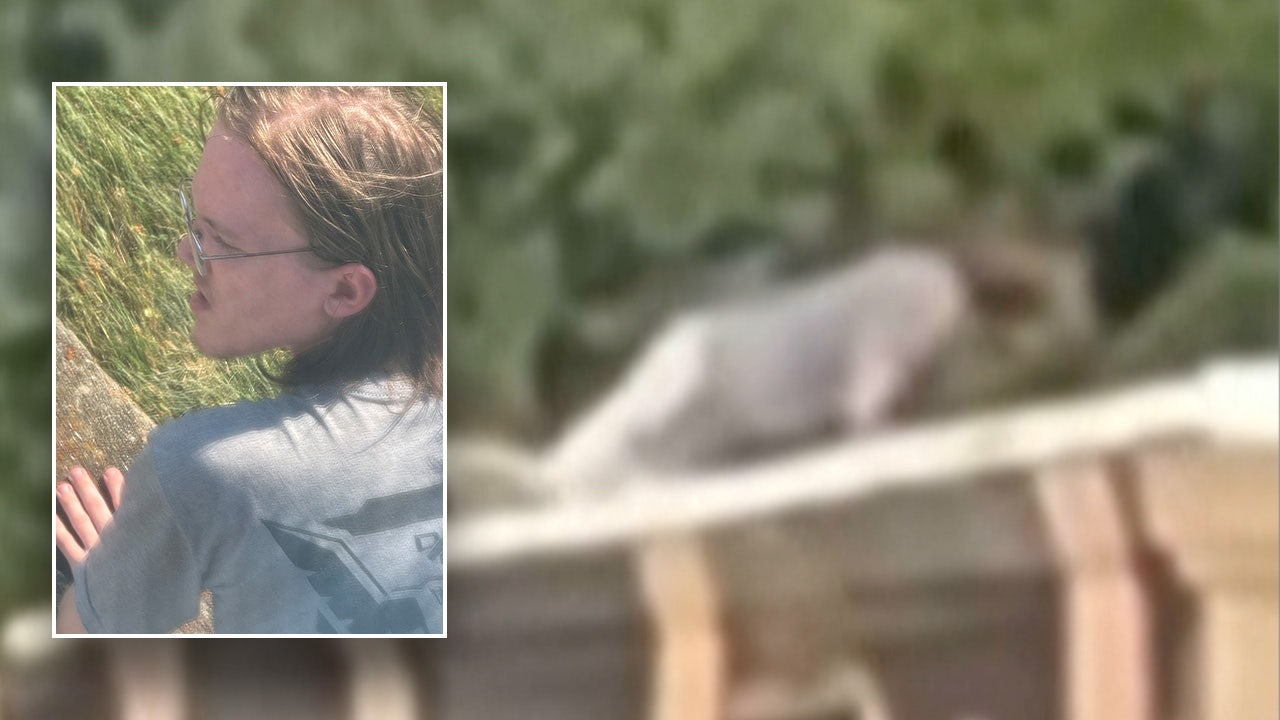
BETHEL PARK, Pa. – FBI Director Christopher Wray said that his agency is still not certain how Thomas Matthew Crooks accessed the roof of the building where he took aim at former President Donald Trump – but they don’t believe he used a ladder.
Despite the fact that a “bloodied receipt” found on Crooks’ dead body included a 5-foot ladder purchase, Wray told the House Judiciary Committee on Wednesday, his agency believes that “the subject climbed onto the roof using some mechanical equipment, on the ground and vertical piping on the side of the AGR building” on July 13.
“In other words, we do not believe he used a ladder to get up there,” he said in Washington, D.C.
TIMELINE: TRUMP ASSASSINATION ATTEMPT
Thomas Matthew Crooks is pictured in front of the Butler Fairgrounds in the aftermath of the attempted assassination of the former president on July 14, 2024 in Butler, Pennsylvania. (Bethel Park School District/Getty Images)
“We did not find the ladder at the scene,” Wray told Rep. Steve Cohen. “He did buy a ladder. But the ladder was not found at the scene.”
“The ladder didn’t have any feet on it – it didn’t walk off,” Cohen joked in response.
FBI DIRECTOR CHRISTOPHER WRAY TESTIFIES ABOUT TRUMP RALLY ASSASSINATION ATTEMPT
Buildings that are adjacent to The Butler Farm Show, site of a campaign rally for Republican presidential candidate former President Donald Trump, are seen Monday, July 15, 2024, in Butler, Pa. Thomas Crooks fired from the roof of the building complex and wounded Trump on July 13 during an assassination attempt. (AP Photo/Gene J. Puskar)
Pictured is the building that Thomas Crooks clambered up to shoot at former President Donald Trump – former NYPD inspector Paul Mauro suspects that Crooks used the hallway adjoining the two buildings to get onto the roof and stashed his AR-15 in the air conditioning unit pictured. (Fox News)
The Home Depot where Crooks purchased the ladder is a brief drive from his family’s home on Milford Drive in Bethel Park. Home Depot has not responded to Fox News Digital’s requests for comment.
Wray said outdoor events, like concerts and political rallies, are “often… particularly challenging to secure adequately, because the range of threats that can face them are higher.”
TRUMP SHOOTER MADE CHILLING GOOGLE SEARCH ON DAY HE REGISTERED FOR BUTLER RALLY
FBI Director Christopher Wray testifies during a Senate Appropriations Subcommittee hearing on the FBI’s proposed budget for the 2025 fiscal year on June 4, 2024 in Washington, D.C. (Samuel Corum/Getty Images)
“In addition to that… just threats to public officials, including politicians, is an increasingly pervasive part of today’s landscape. And so that adds to the challenge,” Wray continued.
Using drone footage from the scene of the shooting at the Butler Farm Show grounds, Fox News contributor Paul Mauro pointed out possible access points to Crooks’ vantage point earlier this week.
A hallway adjoining the building to another beside it provided an access point where Crooks could have clambered onto the roof, Mauro said. An air conditioning unit seen from above may be where he stashed his AR-15 ahead of the rally, sources told Mauro.
TRUMP SHOOTER MADE HOME DEPOT VISIT PRIOR TO ASSASSINATION ATTEMPT
Exterior view of a Home Depot store at 4000 Oxford Drive, Bethel Park, Pennsylvania, Tuesday, July 16, 2024. The store is reportedly the location where Thomas Crooks bought a ladder before he attempted to assassinate former President Donald Trump in Butler, Pennsylvania on Saturday. (Sarah Rumpf / Fox News Digital)
Wray’s testimony on Wednesday revealed other new details: on the day he registered to attend the rally, Crooks conducted a Google search for “how far away was Oswald from Kennedy.”
Wray also elaborated on Crooks’ stash of weapons, including two explosive devices found in his vehicle near the Butler rally and one more in his home.
Two FBI investigators scan the roof of AGR International Inc, the building adjacent to the Butler Fairgrounds, from which shooter Matthew Thomas Crooks fired at former President Trump on July 13. (Jeff Swensen/Getty Images)
Based on his online activity, Wray said, 20-year-old Crooks “became very focused on former President Trump and his rally” around July 6.
“That’s a search that obviously is significant in terms of his state of mind,” Wray added.
Read the full article from Here


Connecticut sat out most of the suburban-era tear-down that reshaped New England, and the smaller towns kept hold of specific, improbable things that anywhere else would have been paved over by 1975. A 1769 ferry still crossing the river on schedule. A 1784 law school, the country’s first, still standing as a museum. A pink Gothic cottage with the original 1846 boxwood parterre in the yard. A stone castle built by the actor who made the curved Sherlock Holmes pipe famous on stage. A 1752 house where George Washington and Rochambeau actually sat down and mapped out Yorktown. These six towns are where that kind of specificity survives, and where walking a block still puts you next to the real thing.
Litchfield
Litchfield’s claim to national history is that Judge Tapping Reeve started teaching law out of his home here in 1784, making this the site of the country’s first formal law school. Reeve taught Aaron Burr, two future Vice Presidents, a hundred and one members of Congress, and enough Supreme Court justices that the graduate roster reads like a founding-era directory. The Tapping Reeve House and the adjoining Law School, now a museum, are exactly where they were.
The rest of the town played to that register. Litchfield was a Revolutionary War supply hub and later an abolitionist center. The Litchfield History Museum fills in the wider picture, with rotating exhibits on local industry, abolition, and 18th-century domestic life. For an afternoon outside, the White Memorial Conservation Center sits on the edge of town with more than 4,000 acres of woods, meadow, and trail, and Bantam Lake, the largest natural lake in the state, is minutes south. The Litchfield Hills Farm-Fresh Market draws a Saturday crowd at the Litchfield Firehouse, just outside the Historic District and its 18th-century buildings.
Old Saybrook

Katharine Hepburn grew up summering in Old Saybrook and kept a house on Fenwick Point until her death in 2003. The Katharine Hepburn Cultural Arts Center, known locally as “The Kate,” now occupies the 1911 former town hall and runs a full theater calendar built around her memory. That is only the most famous thread in a town that has been here since 1635, when Old Saybrook was chartered at the mouth of the Connecticut River as an independent colony before folding into the Connecticut Colony in 1644.
Fort Saybrook Monument Park covers the original fortification site. Saybrook Point opens up wide water views across the river mouth, and Harvey’s Beach shallows out gently enough for families to wade in. Come late June, the Celebrate Saybrook Street Party shuts down Main Street for live music and food vendors.
Wethersfield
The room where Yorktown got planned is on the second floor of the Joseph Webb House, at the north end of Main Street. In May 1781, George Washington rode into town with a small staff, met French General Rochambeau at the Webb House, and the two of them sat there for five days working out the campaign that would end the Revolutionary War five months later. The house has been here since 1752 and still looks essentially as it did that week.
Wethersfield claims the title of Connecticut’s “most ancient town” and dates its founding to 1634. The Old Wethersfield Historic District holds more than 300 historic houses, around 50 of them built before the Revolution, which is a lot by American standards. The Webb-Deane-Stevens Museum tours three of them on adjacent lots: the 1752 Webb House, the 1769 Silas Deane House, and the 1789 Isaac Stevens House, each staged to a different period. The Keeney Memorial Cultural Center fills a red-brick Victorian building with local artifacts. September brings CornFest at Cove Park, where Wethersfield Cove also handles the kayak and waterfront walk traffic the rest of the year.
Chester
The Chester-Hadlyme Ferry has been pushing across the Connecticut River since 1769, and it still runs a seasonal schedule of short crossings between the two banks. When you board, you are stepping onto Connecticut’s second-oldest continuously operating ferry, behind only the Rocky Hill-Glastonbury Ferry, which has been running since 1655. The ride is short, five to ten minutes depending on the current, and the river views frame Gillette Castle on the ridgeline across the water.
The rest of Chester grew up around industry: the town was incorporated in 1836 and turned out ivory combs, bits, and augers during the Industrial Revolution. The small downtown is a lived-in two-block stretch, best in summer and early fall when the Chester Sunday Market sets up with produce, baked goods, and live music. Cedar Lake, just outside the village, handles the swim-and-paddleboard side of the weekend.
Woodstock
The house that anchors Woodstock is Pepto-Bismol pink. Built in 1846 for New York publisher Henry Chandler Bowen, Roseland Cottage was an early and very loud piece of Gothic Revival architecture, complete with gabled rooflines, stained glass, and an original boxwood parterre garden laid out in the same year. Presidents from Grant to McKinley showed up for Fourth of July parties here. The cottage is now a National Historic Landmark open for tours, and the pink still looks right.
Settled in 1686, Woodstock occupies Connecticut’s northeastern “Quiet Corner” and butts up against Massachusetts. Woodstock Academy, founded in 1801, is among the oldest secondary schools in the state and still holds classes in several of its 19th-century buildings. Woodstock Orchards and Bakery Barn keep the pick-your-own and cider-donut traditions running. The Labor Day weekend Woodstock Fair, running since 1860, is one of the largest in the state, and the Air Line State Park Trail, built on an old rail bed, handles the hiking and biking.
East Haddam
William Gillette was the actor who did more than anyone to define Sherlock Holmes on stage, and his version of the detective lent the curved calabash pipe to a century of pop culture imagery. (The deerstalker came earlier, from Sidney Paget’s Strand Magazine illustrations.) What Gillette did with the royalties is Gillette Castle, a 24-room fieldstone medieval-style mansion he designed himself and built between 1914 and 1919 on a bluff over the Connecticut River. The house is full of personal eccentricities: 47 hand-carved doors, each with a unique wooden latch; a sliding table on rails; a system of mirrors he used to see who was at the front door without leaving the parlor. Gillette Castle State Park opens the house and grounds to the public.
East Haddam was founded in 1734 along the river. The Goodspeed Opera House, completed in 1877, still puts on musical theater. The venue has sent 21 productions to Broadway, including the world premieres of Annie, Man of La Mancha, and Shenandoah. The Nathan Hale Schoolhouse is the one-room building where the Revolutionary War hero taught before enlisting. Chapman Falls drops about 60 feet through Devil’s Hopyard State Park, a short drive north. The East Haddam Swing Bridge, built in 1913 and recently reopened after a major repair, is the kind of thing you photograph before crossing.
The Final Word
A pattern holds across these six: the thing that matters is still exactly where it always was. Washington and Rochambeau’s table is still upstairs at the Webb House. The 1769 ferry is still hauling cars across the river. Tapping Reeve’s law office is still standing next to the house. Gillette is still rigging his 47 doors for a century-old audience. Connecticut’s smaller towns never let the specific get replaced with the generic, and that is the whole reason to go.

Maine marijuana growers are increasingly using radiation and other methods to remove contaminants from their products, a process consumers are likely in the dark about.
Despite a state policy requiring remediated products to be labeled as such, Maine’s Office of Cannabis Policy is not enforcing that rule.
In response to a complaint by a dispensary owner in late February, deputy director of operations Vern Malloch acknowledged, “we are not requiring labeling of remediated or treated product,” according to records obtained through a media request.
“We plan to issue guidance on this in the near future,” Malloch wrote.
Office of Cannabis Policy Director John Hudak also told lawmakers last year that the agency hasn’t enforced remediation labeling requirements since at least November 2024.
“The Office began receiving pushback from cannabis cultivators who did not want to label their cannabis if they ‘treated’ their cannabis with radiation or ozone prior to submitting the cannabis for mandatory testing,” Hudak wrote in testimony last year.
A spokesperson for the agency declined to answer specific questions Monday, but confirmed the agency stopped enforcing the rule after some growers raised concerns over the “misleading impact” that labeling treated cannabis has on consumers.
“Requiring label disclosure of the use of irradiation or ozone treatment implies a consumer risk that is not scientifically supported and is potentially misleading in its implication about potential harm from exposure,” Alexis Soucy, OCP’s director of media relations, wrote in an email.
Over the last couple years, several marijuana products have been subjected to recall because of high levels of mold, yeast and other contaminants. Unsafe levels of mold in cannabis can cause flu-like symptoms, including respiratory issues, sinus infections, headaches and dizziness.
But rather than tossing their product, growers can turn to a process called irradiation, often involving gamma rays or X-rays, to remove contaminants.
Supporters say it’s a safe way to reduce waste and prolong shelf lives. Mold and yeast grow naturally just about everywhere and many species are benign. Standard cannabis mold testing does not differentiate between harmful and harmless microbes.
Opponents, however, argue there isn’t enough research about remediating cannabis to say whether it’s safe or not. There is not much data on whether the various types of remediation are effective at killing microbes or are safe for consumers, most of whom don’t know about the practice.
“It’s a complex topic without many answers,” said Yasha Kahn, who co-founded MCR Labs, one of four licensed cannabis testing facilities in Maine. “Hopefully, the rescheduling can lead to more research.”
The federal government moved last week to reclassify cannabis from a Schedule I to Schedule III drug. Decades-long restrictions on cannabis research will be lifted, which acting Attorney General Todd Blanche said will allow for studies into “marijuana’s safety and efficacy.”
Kahn, who operates several testing labs throughout New England, said irradiating cannabis has become increasingly prevalent in legal markets across the country and the world. It’s still debated whether irradiation works as well as it’s supposed to, he said.
‘THIS IS A FAIRLY NEW PROCESS’
There are numerous kinds of cannabis remediation, each with its own pros and cons. Growers most commonly use X-rays, gamma radiation or ozone gas to remove mold and microbes.
Radiation does not kill all the mold, yeast and other microbes present in cannabis outright, Kahn said. Certain species of mold, like harmful mycotoxins, can often survive remediation. Others can remain dormant for months following the procedure.
“Irradiation gets rid of mold’s ability to procreate, and not necessarily permanently,” he said. “You can take that same product and test it again, months from then, and there’s going to be mold growth.”
Some in the industry, like organic marijuana farmer Lizzy Hayes in Mercer, fear that having the option to remediate cannabis removes the incentive to grow clean cannabis. If you can simply use radiation to eliminate mold from harvested crops, she said, why would you put effort into growing mold-free products?
Part of the blame, according to Hayes, lies at the feet of Maine’s recreational cannabis testing regime. Unlike the state’s medical marijuana market, batches of recreational cannabis products must be tested for contaminants like mold, yeast and heavy metals before they can be put on a dispensary shelf.
But since the mold test only detects the presence of mold, not whether it’s harmful, Hayes said many growers save themselves the trouble and irradiate their cannabis by default rather than risking a failed test.
“When you have a regulatory system that incentivizes irradiation, it’s also making it so that customers don’t have access to as high quality of a product,” she said.
Some in the industry disagree. A bill was proposed last year to codify requirements around labeling treated cannabis and inspecting remediation equipment. It was ultimately defeated after many Maine cannabis growers testified in opposition to the bill.
“Radiation and ozone treatment methods are well-established, scientifically validated technologies commonly used in industries far beyond cannabis,” wrote Jacob Racioppi, owner of Goose River Cannabis in Unity. “In fact, they are standard in the food industry.”
Joel Pepin, co-founder of JAR Cannabis Company, owns and operates one of about a dozen X-ray machines in Maine’s cannabis industry. He estimated that about half of Maine’s recreational cannabis has been treated by similar methods. It would be overkill, he said, to require all of that product to be labeled over scientifically unfounded concerns.
“If we apply this same logic to other industries in Maine, then why doesn’t this bill also require dental patients to wear a shirt that says, ‘treated by X-ray’ after leaving the dental office?” Pepin testified.
Neither Racioppi nor Pepin responded to requests for an interview.
Lorri Maling, laboratory director at cannabis testing facility Nelson Analytical, seconded Pepin that remediating cannabis is “more in use now than it was a few years ago.”
While some opponents of irradiation claim the process reduces THC content and eliminates terpenes — the chemicals that give different cannabis strains unique scents and effects — Maling said there’s no data to back that up. Nor is there much data to back up many other conclusions about the effects of irradiating cannabis.
Most of the studies on the effects of irradiation have been on fruits and vegetables, she said, which have not shown any negative effects — though there’s no guarantee that any remediation method will kill all bacteria.
“This is a fairly new process for cannabis,” Maling wrote in an email. “I really cannot say that it is safe or unsafe for cannabis as there really is not enough data on this.”

BENNINGTON, Vt. (WRGB) — A Massachusetts woman accused of killing her two children appeared in court virtually in Vermont on Monday.
Janette MacAusland joined the court hearing from Marble Valley Correctional Facility in Rutland and waived her extradition rights, signing a waiver to be transported back to Massachusetts.
The case began Friday night, when Bennington police were reportedly called for a welfare check on MacAusland. Police say she arrived at a family home distraught and with a neck injury.
PREVIOUS: Massachusetts mother arrested as fugitive in Bennington, charged in murder of two children
While speaking with police, officers reportedly became increasingly concerned for her children in Wellesley, Massachusetts — a boy and a girl, ages 7 and 6.
Authorities there conducted a welfare check and found the children dead.
MacAusland was arrested and charged with murder.
The Boston Globe reports MacAusland was going through a contentious divorce and seeking custody of both children.
A check-in will be required in two weeks to ensure she is picked up. In the meantime, she remains in jail without bail.
MORE: “Deeply disturbing”: Elderly woman attacked, son indicted
BE THE FIRST TO COMMENT
CBS6 will have updates on-air and online.
-

 Washington, D.C4 minutes ago
D.C. man sentenced to life for 2024 deadly shooting outside Harbor East restaurant
-

 Cleveland, OH10 minutes ago
April 27, 2026 Road Trip: Lessons In History
-

 Austin, TX16 minutes ago
Suspect arrested after East Austin shooting leaves six injured
-

 Alabama22 minutes ago
Ex-Alabama tackle pleads guilty in $20M NFL player impersonation case
-

 Alaska28 minutes ago
Biologists forecast a reduced Alaska commercial salmon harvest
-

 Arizona34 minutes ago
Arizona softball: Postseason inclusion, seeding up for grabs in final week of Big 12 play
-
Arkansas40 minutes ago
Herron and Johnson Selected to AUSL Reserve Pool
-
 California46 minutes ago
Here’s where and when it’s expected to rain in Southern California this week

