Arizona
Arizona softball: Postseason inclusion, seeding up for grabs in final week of Big 12 play


The decision to cut the Big 12 Softball Tournament field down to eight this season means there’s a lot to play for in the final week of conference games. While Houston completed its season due to a conference bye the final week, nine of the 10 teams that will play next week can still improve or damage their postseason situations in the last series of the regular season.
Texas Tech’s sweep of Arizona State over the penultimate weekend secured the top seed in the conference tournament. While several other teams are secure in the knowledge that they will be included in the league tourney, none of the other nine teams have a seed wrapped up.
The four teams behind the Red Raiders could all technically end up with the No. 2 seed in Oklahoma City two weeks from now. Arizona’s sweep of Houston gave the Wildcats a 15-6 record and (most importantly) a .714 winning percentage to retain the second position in the league rankings. Winning percentage is especially important because one of the teams hunting Arizona has a tie and has a very remote chance of surpassing Arizona based on that tie.
The club with the best shot to overtake the Wildcats is the Oklahoma State Cowgirls. OSU is on a five-game winning streak, including a sweep of Baylor in Waco, Tex. over the weekend. That gives the Cowgirls a 14-7 Big 12 record and .667 winning percentage.
The advantage for the Cowgirls is that they’ve already taken two of three games from Arizona this year. They only need to tie the Wildcats’ winning percentage to get the second seed.
OSU hosts No. 4 Kansas (13-8/.619) to wind up the regular season. Arizona goes to No. 7 Utah (8-12-1/.405). OSU needs to win one more game than the Wildcats the final weekend to take over that second spot. The Cowgirls do not control their own destiny. If Arizona sweeps Utah on the road, the Wildcats will stay in second no matter what anyone else does.
Both the Wildcats and the Cowgirls are trying to hold off the Jayhawks and the UCF Knights, who sit at No. 3 and No. 4 heading into the final weekend. KU has a better chance to get to No. 2 than UCF does, but both have an outside chance. Kansas also controls its own destiny as far as getting to No. 3 in the standings.
If the Jayhawks go 2-1 or better in Stillwater, they will leapfrog Oklahoma State for third. A 2-1 weekend would tie the two teams on record and winning percentage, but KU would have the tiebreaker based on head-to-head results.
To get to second, Kansas must win at least two games at Oklahoma State and finish with a better winning percentage than Arizona. If Kansas and Arizona end up tied, the current Big 12 tiebreaker for conference seeding falls heavily on winning percentage and runs allowed if two teams don’t meet head-to-head:
- Head-to-head
- Winning percentage versus common conference opponents
- Runs allowed divided by innings pitched of teams ties
- Runs allowed divided by innings pitched in all conference games against common conference opponents
- Runs allowed divided by innings pitched versus common conference opponents occupying the highest position in the final regular standings
- NCAA RPI
- Coin toss
A tiebreaker between UA and KU would fall to the second tiebreaker with common opponents being Oklahoma State, Baylor, Utah, ASU, BYU, and Houston. Prior to the trip to Utah, Arizona has a record of 14-4 against the common opponents (including the Cowgirls), giving it a winning percentage of .778. Prior to taking on OSU, Kansas has a record of 12-6 against common opponents (including Utah) for a winning percentage of .667.
The Wildcats could end up with a winning percentage as high as .810 against common opponents with a sweep. At 2-1 in Salt Lake City, that drops to .762. At 1-2, they would have a winning percentage of .714. If the Utes sweep, it would drop to .667.
The Jayhawks could end with a winning percentage of .714 against common opponents with a sweep in Stillwater. A 2-1 series would drop that to .667. Anything less, and they cannot even tie Arizona based on the second tiebreaker.
What it comes down to is that the Jayhawks need to win at least two games against the Cowgirls and have Arizona lose at least two to Utah to have a chance to get to the third tiebreaker or overcome the Wildcats. If they can get to the third tiebreaker, though, they have a very good chance of leaping Arizona based on superior pitching numbers.
The third tiebreaker comes down to runs allowed divided by innings pitched. Arizona currently sits at 0.91 runs/IP against Big 12 competition. Kansas has allowed 0.68 runs/IP in league play.
The problem for the Jayhawks is that it’s tough to know how good they actually are. They are in the same position Iowa State was in last year. The Cyclones finished third in the regular season, but they did not face Texas Tech or Arizona, which finished first and second. KU will face neither of those teams this season, so they are also missing the top two teams in the standings. All of its wins come against the bottom seven teams in the league and all of its series wins come against the bottom six. They were one of only two Big 12 teams to drop any games to Houston this year.
UCF is in a similar position as KU if it wants to help its cause, but it has an easier opponent. Its final series is against Iowa State, which is one of the teams in danger of not making the eight-team conference tournament at all.
The Knights need to sweep ISU and have Arizona get swept by Utah to overtake the Wildcats. While the two teams would both end with 15 wins in that scenario, UCF would have a higher conference winning percentage because one of its games ended in a tie. It would end with a 15-8-1 record for a .646 conference winning percentage. Arizona would end 15-9 with a .625 winning percentage in this situation.
This is the only way UCF can move past Arizona. The tied game against Utah earlier in the season means the Knights cannot end up knotted with any other team in the standings.
As for who Arizona would face in the opening round of the conference tournament, that doesn’t just depend on where it ends up. The final two teams in the field are still up for grabs with No. 6 Baylor (9-12/.429), No. 7 Utah (8-12-1/.405), No. 8 ASU (8-13/.381), No. 9 Iowa State (8-13/.381), and No. 10 BYU (7-14/.333) still battling to get in and secure seeds. If the Wildcats finish second, they will play the 7 seed.
The convoluted scenarios have each of the five teams teams facing at least outside chances of climbing to sixth or missing the tournament. Many of those scenarios require falling back on the third tiebreaker, and in some cases, the team that seems like it would come out on top in the third tiebreaker currently does not. For example, the third tiebreaker between Baylor and ASU goes to the Bears, which have allowed 0.71 runs/IP in conference play compared to 0.94 for the Sun Devils.
While it may seem anticlimactic to have the conference regular season champion decided before the final weekend, the competition throughout the rest of the standings means there’s a lot to follow the last week of the regular season.



We will preview every player on the Cardinals roster leading up to training camp. This is about LB Mack Wilson.
The Arizona Cardinals report to training camp on July 22 and begin the process of preparing for the regular season, forming the roster and determining starting jobs and roles on the team.
Leading up to the start of camp, we will take a look at every player on the offseason roster, their background, their contract, their play in 2025, questions they face and their roster outlook.
Here is linebacker Mack Wilson.
Mack Wilson background, 2025 season
Wilson enters his eighth NFL season and third with the Cardinals. He entered the league in 2019 as a fifth-round draft pick by the Cleveland Browns out of Alabama. He played three seasons for the Browns and two for the New England Patriots before signing a three-year contract in free agency in 2024.
Last season, he replaced Kyzir White as the starting “Mike” linebacker and played in eight games before a rib injury at the end of the Cardinals’ Week 8 win over the Dallas Cowboys caused him to miss the final nine games of the season.
In eight games, he had 60 total tackles, three tackles for loss, a quarterback hit, an interception, six pass breakups and a forced fumble.
Mack Wilson contract details, salary cap hit
Wilson enters the final year of his three-year, $12.75 million contract. He will make nearly $3.4 million in salary in 2026 and count more than $4.7 million against the salary cap.
Roster outlook, questions he faces
Wilson is a lock to make the team and is going to be the team’s starting “Mike” linebacker. He is a leader in the locker room and trusted by defensive coordinator Nick Rallis.
Will he be able to lead a better defense? Will he get a contract extension before he becomes a free agent next year?
Get more Cardinals and NFL coverage from Cards Wire’s Jess Root and others by listening to the latest on the Rise Up, See Red podcast. Subscribe on Spotify, YouTube or Apple Podcasts.


Arizona biologists relocate beavers to help restore wetlands
Arizona Game and Fish biologists are moving beavers from locations where they can be a nuisance to areas where they can contribute to conservation.
Laura Roche understands the imperative of curbing carbon emissions to prevent climate change from supercharging wildfires to “megafire” status. But she’s also aware that such steps won’t solve the problem right away, even if the entire world got their act together on addressing climate change this instant.
“People get tired” just talking about reducing emissions, she said. Even as smoke lingers in the air from the Pocket Megafire that was burning less than 10 miles away, she knows it won’t be a helpful conversation. “But there are other things that can definitely improve the situation,” she added.
Roche, a Cottonwood resident who works in Sedona, has one suggestion in mind: reintroducing beavers.
Beavers are North America’s largest rodents, with a flair for dam building. Their structures create strings of ponds and vital belts of lush vegetation, which can help prevent and mitigate fires in the region, simply because beavers help wetlands stay wet.
Community interest in beavers is stirring among Sedona residents and workers, who have watched warily in recent weeks as the Pocket Fire raged. They’re circulating YouTube videos about the power of these humble animals to terraform landscapes and reduce fire risk in a fire-prone region.
As of July 15, the Pocket Fire has burned 27,400 acres and is 83% contained.
Roche herself has been sharing the science of beavers with government officials in forest planning meetings, customers, customers and friends across the political spectrum.
“I’ve had nothing but positive support for the idea,” she said.
The science seems to check out. Emily Fairfax is a beaver scientist at the University of Minnesota, and also a beaver evangelist.
“You cannot restore streams that were originally made by beavers and shaped by beavers —without also bringing back the beavers,” she said.
How beavers help mitigate wildfires
Beavers are slow creatures that sorely lack in the physical department — but make up for it with their brilliant minds. They build dams to create deep pools, and there they build island dens to deter land predators. They also construct a network of canals along rivers to facilitate forage without leaving the safety of the water. A single beaver family can service a mile-long strip of wetland.
“It’s incredible how large scale their engineering is,” Fairfax said. There’s a joke among her peers about these crafty animals: “If you have a problem, there’s a beaver for that.”
With a dam in the way, surface water, such as storm runoff, has time to seep into the ground, recharging groundwater in the process. The retained moisture encourages plant growth, especially crucial in times of drought. Studies have shown that beaver-managed streams have more abundant vegetation than a landscape without.
Beavers can thrive in all kinds of riparian ecosystems, including drylands. There, the rodents seek out groundwater springs and excavate their ponds to expand storage capacity.
Beaver families have been observed to frolic in the concrete hearts of California’s San Jose, Portland, Denver and even in metro Phoenix. As long as reeds and trees are present as a food source, beavers can make it work, using rocks, trash and whatever they can find as construction material.
Fairfax has found that beaver wetlands are more fire- and drought-resilient than any other kind of riparian zone bereft of beavers. That’s because beavers work incessantly to maintain their dams and ponds.
“It’s life or death for the beaver to have that wetland,” she said. “So every moment of the beaver’s day, it’s like, how do I make sure this place stays wet?”
During a wildfire, the footprint of beavers makes a difference. It’s harder for lightning struck fires to spread on beaver-managed wetlands, as green vegetation is much less fire-prone. The network of rivers and beaver-made canals can act as a fire break to slow the progression of wildfire.
The wet pockets of beaver habitat also provide refuge for animals fleeing from fires. In 2021, the Beckwourth megafire scorched more than 105,000 acres north of California’s Lake Tahoe but spared a web of lush riparian corridors on the floodplain — sites where beavers had dammed and dug and developed before the blaze hit.
Will beaver reintroduction work?
Beavers ruled North America for 7.5 million years, in numbers up to 200 million strong. Up to a billion beaver dams peppered the landscape. Pretty much every river on the continent had resident beavers, except for predator-plied places such as the Everglades, where there are alligators.
Fur trapping in the 1820s nearly caused beavers to go extinct. Today, only 10% of their historic population are found in waterways.
In Arizona, beavers are still widely distributed across the state, but in scant numbers. Reintroduction programs have helped sustain their populations, though their abundance is still far from their heyday.
Along the San Pedro River, also historically called Beaver River, reside an estimated 38 beavers. Arizona Game and Fish Department experts have been relocating beavers here since 1999. But the San Pedro’s beaver count is still declining, likely due to drought that has strained water levels, drying up their moated homes and suppressing cottonwood regeneration.
In the age of drought and megafires, Fairfax thinks beavers should be part of government agencies’ tools for managing fires. One rainy season is all it takes for reintroduced beavers to bring fire suppression and mitigation effects into their new home.
Can beavers make a dent on Arizona’s fire-prone landscape? Potentially, said Northern Arizona University community ecologist Stefan Sommer, especially along the riparian corridors where they den. But these strips make up just 0.5% of Arizona’s diverse landscapes. Moreover, 90% of the state’s surface waters have been wrangled into pipes and concrete canals, which are far from the ideal habitat of beavers.
But Sommer says beavers have the greatest promise for reducing flood risk in burn scars. Beaver dams and the riparian vegetation around them can act as sponges to hold back runoff after heavy rains.
Post-fire or no, other flood-frequent areas have already benefited from beavers. The Greenford Tube station in West London used to flood after every storm. But since beavers built a dam upstream three years ago, flooding no longer occurs.
Beavers’ dam-building bent isn’t broadly beloved. The industrious architects often plug up culverts, which can flood human infrastructure nearby.
As nature’s engineers, beavers bend rivers to their will, not unlike humans. For this reason, beavers are still considered nuisance animals. Beaver presence can interfere with the well-laid plans and long-term goals of human engineers who too want to work rivers to their own vision.
For all the benefits of bringing back beavers, reintroduction isn’t straightforward either. Beavers need to be moved with their entire family, as estranged individuals can die from depression.
The antics of beavers have garnered them fans — they’re known to be playful and prone to getting the zoomies. But their personalities need to be managed to prevent human habituation, Fairfax said. Beavers easily form bonds with humans, which complicates reintroduction success.
Ideally, work must be done in advance to make sure reintroduced beavers have all the resources they need to thrive. The process of planting willow and cottonwoods, the favorite snacks of beavers, can take years before denuded rivers become conducive enough for beavers to move in. Constructing analog dams helps beavers settle in, too, as it tricks them into thinking that other beavers have been there before.
Arizona’s translocation programs are geared toward removal from areas of human-animal conflict. According to the Arizona Game and Fish Department, none of these projects and any future ones are specifically intended for fire mitigation, which the agency considers a secondary benefit.
“We do not utilize beavers … as our federal and state foresters have more effective tools in their toolbelt for management of the forested woodlands of Arizona,” wrote Shawn Lowery, the agency’s supervisor of habitat restoration and mitigation, in an email.
With the double whammy of wildfires and drought around the West, the movement to reinstate the beaver onto rivers is growing. In the southern Sierras in California, the Tule River Tribe has been leading the efforts of returning beavers to their reservation to help retain water. In Nevada and Utah, restored beavers have fashioned lush oases in the middle of the desert.
Beavers aren’t a silver bullet to the West’s fire and water woes, and it’s possible their vast impact of the landscape might not be enough to turn the tide against climate-change-fueled disasters, Sommer said.
Nevertheless, beaver reintroduction is pretty low-risk compared to the destructive scale of natural hazards that humans contend with.
“Let (beavers) do their thing, and if it works, great,” Fairfax said. “If it doesn’t, oh well, now you have biodiversity, carbon sequestration and all the other benefits.”
Back in Sedona, Rowe has been a long-time advocate for repopulating beavers in the watershed, though it still hasn’t translated into concrete action from government officials. Rowe hopes that the recent Pocket Fire will finally persuade land managers to reconsider, before the next wildfire arrives.
Shi En Kim covers environmental issues for The Arizona Republic and azcentral. Send tips or questions to shien.kim@arizonarepublic.com.
Environmental coverage on azcentral.com and in The Arizona Republic is supported by a grant from the Nina Mason Pulliam Charitable Trust.
Follow The Republic environmental reporting team at environment.azcentral.com and @azcenvironment on Facebook and Instagram.

-

 Cleveland, OH2 minutes ago
Cause of death released for 2 young girls found dead in suitcases in Cleveland
-

 Austin, TX8 minutes ago
Local animal shelter rescues 17 pets from Texas flooding
-

 Alabama14 minutes ago
This Is The Alabama’s Biggest Question Entering 2026
-

 Alaska20 minutes ago
Deciphering the habits of lynx living near the Haul Road
-

 Arizona26 minutes ago
Arizona Cardinals training camp roster preview: LB Mack Wilson
-

 Arkansas32 minutes ago
FYI Calendar: The Arkansas Air and Military Museum screens ‘Top Gun’ sequel in the hangar | Northwest Arkansas Democrat-Gazette
-
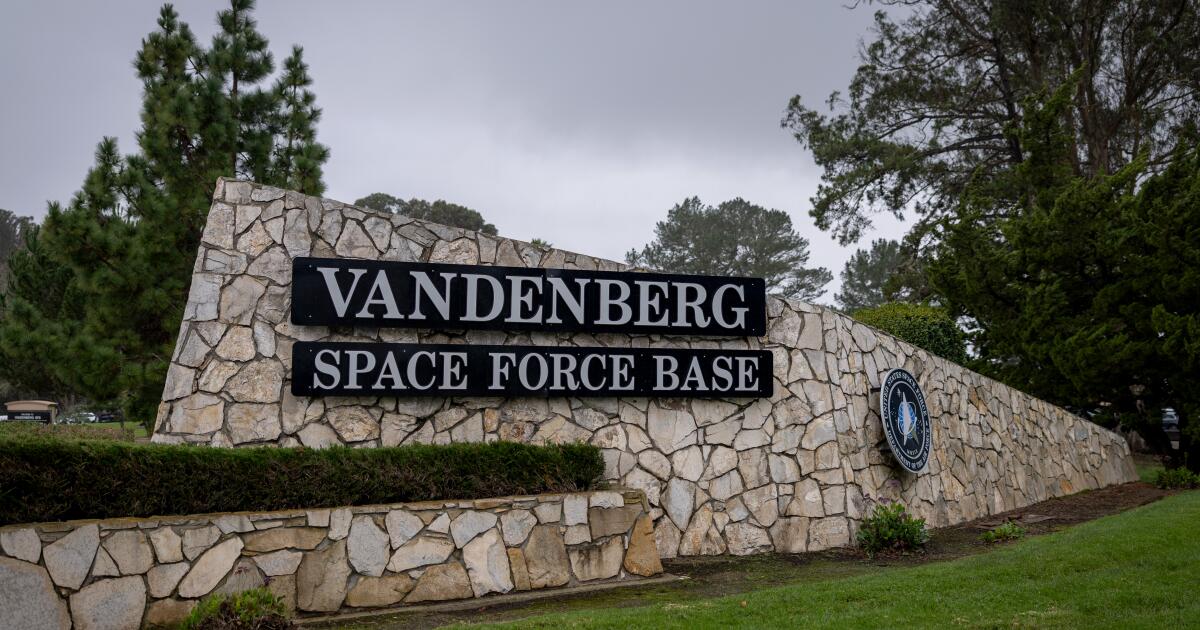 California38 minutes ago
Airman at Vandenberg Space Force Base dies in heavy machinery incident, officials say
-

 Colorado44 minutes ago
Urban Grocer opens in downtown Colorado Springs

