Fitness
People Are Doing 'Two-A-Day' Workouts for Better Results: 'Let's Get Right for Summer'


Exercise enthusiasts, listen up! If you’re working toward a fitness goal, you’re likely game to introduce something new into your routine to shake things up and speed up your progress. Well, there’s a fitness trend people on TikTok swear by to get better results at the gym: “two-a-day” workouts. This training method calls for you to split a longer workout into two shorter sessions in one day, where you can potentially focus on different muscle groups and enjoy a solid rest in between.
Now, you may be thinking, “I have a hard enough time keeping up with working out once a day, and you’re suggesting twice a day?” Hear us out. We spoke with a fitness pro and learned the many advantages of working out two times a day. As with any new tweak in your workouts, this particular method may not be for everyone. Check it out, consider chatting with a personal trainer, and decide for yourself.
How to plan a “two-a-day” workout:
Doing two workouts in one day can be incredibly beneficial compared to a single session. “The primary advantage is being able to hit multiple types of workouts in a single day,” explains Tyler Read, BSc, CPT, the founder of PTPioneer.com and a personal trainer who has been involved in the health and fitness world for the past 15 years.
An example would be splitting it up into two separate workouts instead of performing a “marathon workout” of 90 to 120 minutes. Consider working on two different body parts, or perform cardio for one session and lift weights for session number two.
“Similarly, skill-based athletes can perform a skill-based workout (i.e., soccer training) in one session and then strength training in a different section, allowing more focus and recovery for each workout,” Read points out.
TikTok user and online fitness coach George (@georgegatsby3) shared his two-a-day workout routine in a video, explaining, “because I wanted to get really right for summer.” He noted he also wanted to “test himself” because he hadn’t performed two-a-days in a while. His morning routine consists of a protein shake, creatine, and 6 a.m. cardio and ab training. The afternoon routine is all about weight training to build muscle.
How two-a-day workouts can help you achieve better results:
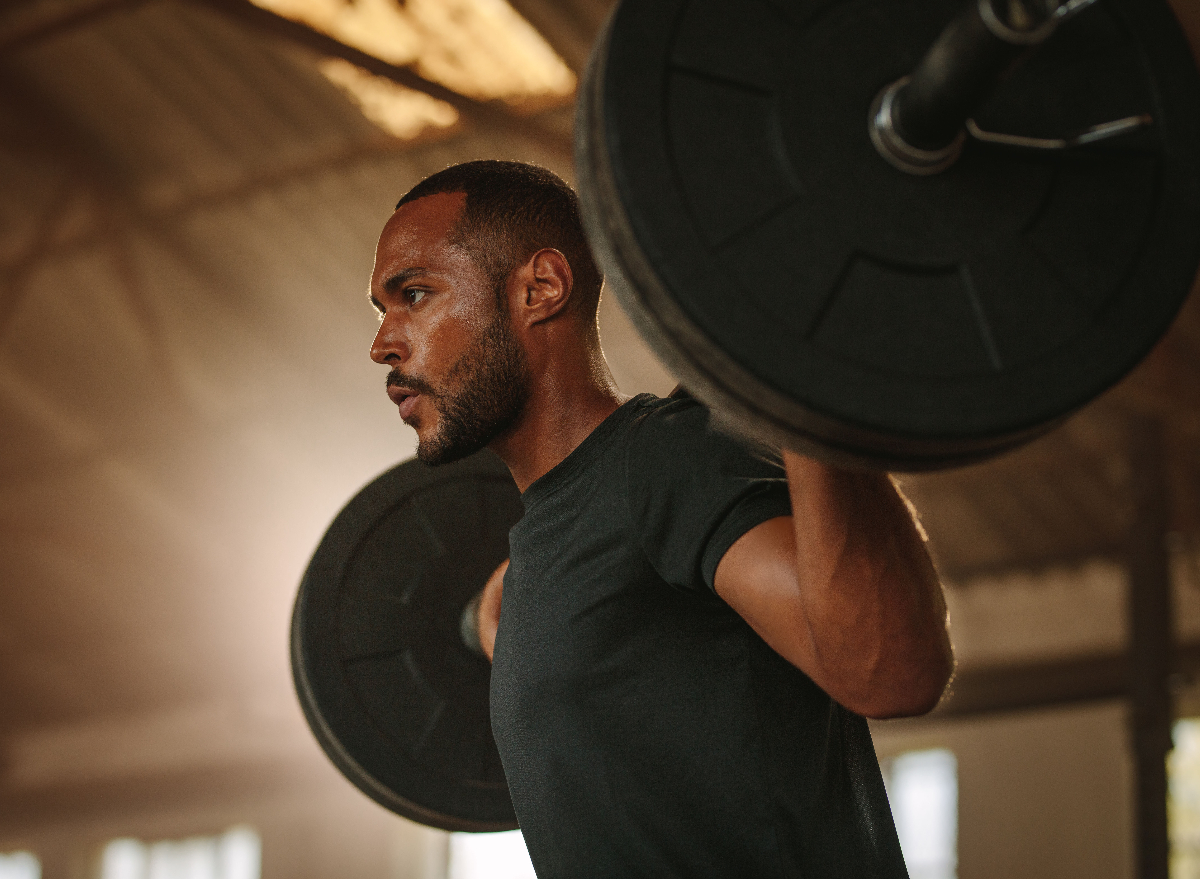
Depending on what you’re looking to achieve, doing two-a-day workouts can be very beneficial. Read explains, “[Two-a-days can help you hit] smaller muscle groups you don’t have time or energy for during your current lifting sessions. As mentioned, if you are an athlete splitting up strength and conditioning from your technique/skill-focused training, this is also a wise move.”
That being said, in some cases, two-a-day workouts that highlight different fitness goals could clash. Read provides an example: If you’re trying to maximize your muscle build, then a cardio workout may not be the best pairing with weight training on the same day. “Cardio itself, in this instance, will potentially reduce your muscle gains, depending on all the factors,” Read explains.
Cardio for health reasons, of course, is always a good addition to any workout regimen.
Are two-a-day workouts safe?
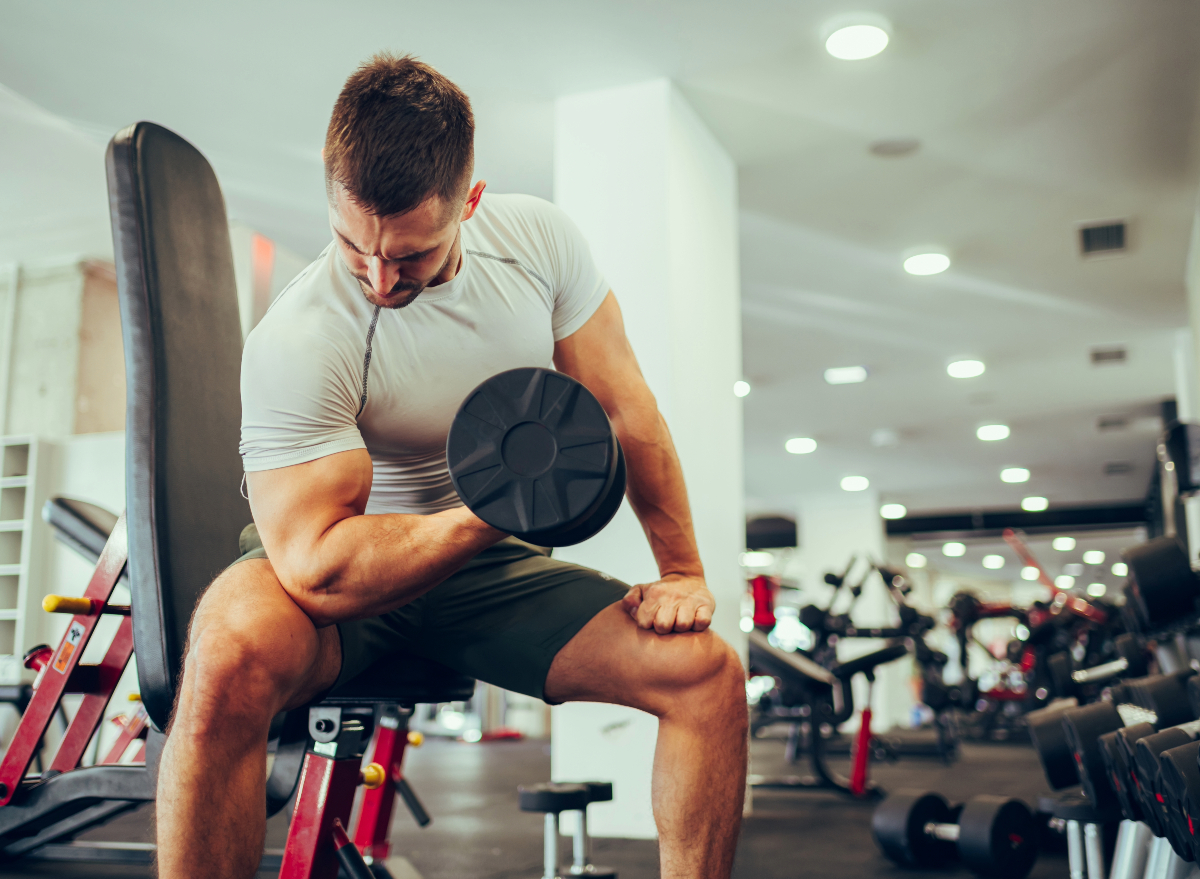
If you’re a fitness newbie, Read stresses that two-a-day workouts may not be the ideal training method for you. “You are better off aiming for three to four consistent days per week doing a single workout,” he says.
Two-a-day sessions are really meant for athletes who are more experienced and have sufficient time to dedicate to the recovery process and the workouts themselves, Read explains. These athletes tend to have a professional coach monitoring their workout strategy and fatigue, or they’re very well-seasoned in gauging their own overall training program.
“Additionally, the true means of getting transformational results is the long-term (i.e., years) of consistency in the gym,” Read adds. “Two workouts per day for multiple days per week is not realistic for most people over extended periods of time. It’s important to consider that those who claim to do two per-day workouts may or may not do this long term, have other life obligations, or have other supplementation or inputs that allow them to train at this level and adequately recover.”
If you’re not at an advanced fitness level and your goal is to build muscle, Read recommends training three to four days each week, once per day, for a minimum of six months, before starting a two-a-day workout regimen.

Sign up for our newsletter!
Alexa Mellardo



Immediate benefits
Some benefits of physical activity for brain health happen right after a session of moderate-to-vigorous physical activity. Benefits include improved thinking or cognition for children 6 to 13 and reduced short-term feelings of anxiety for adults. Regular physical activity can help keep your thinking, learning, and judgment skills sharp as you age. It can also reduce your risk of depression and anxiety and help you sleep better.
Manage your weight
Both eating patterns and physical activity routines play critical roles in weight management. You can gain weight when you consume more calories than the amount of calories you burn.
To maintain your weight
If you are not physically active, work your way up to 150 minutes a week of moderate-intensity physical activity. This could be dancing or doing yard work. You could meet the goal of 150 minutes a week with 30 minutes a day for 5 days a week, 22 minutes daily, or what works for you.
People vary greatly in how much physical activity they need for weight management. You may need to be more active than others to reach or maintain a healthy weight.
To lose weight and keep it off
You will need a high amount of physical activity unless you also adjust your eating patterns and reduce the amount of calories you’re eating and drinking. Healthy eating combined with regular physical activity help you get to—and stay at—a healthy weight.
More information
Reduce your health risks
Cardiovascular disease
Heart disease and stroke are two leading causes of death in the United States. Getting at least 150 minutes a week of moderate physical activity can put you at a lower risk for these diseases. You can reduce your risk even further with more physical activity. Regular physical activity can also lower blood pressure and improve your cholesterol levels.
Type 2 diabetes and metabolic syndrome
Regular physical activity can reduce your risk of developing type 2 diabetes and metabolic syndrome. Metabolic syndrome is some combination of too much fat around the waist, high blood pressure, low high-density lipoproteins (HDL) cholesterol, high triglycerides, or high blood sugar. With a regular schedule of moderate-intensity physical activity, people start to benefit from even less than 150 minutes a week of moderate-intensity physical activity. Additional amounts of physical activity could lower risk even more.
Infectious diseases
Physical activity may help reduce the risk of serious outcomes from infectious diseases, including COVID-19, the flu, and pneumonia. For example:
- People who do little or no physical activity are more likely to get very sick from COVID-19 than those who are physically active. In a CDC review, physical activity was associated with a decrease in COVID-19 hospitalizations and deaths, while inactivity increases that risk.
- More active people may be less likely to die from flu or pneumonia. In one study, adults who met the aerobic and muscle-strengthening physical activity guidelines were about half as likely to die from flu and pneumonia than adults who met neither guideline.
Some cancers
Being physically active lowers your risk for developing several common cancers. If you are a cancer survivor, getting regular physical activity helps give you a better quality of life and improves your physical fitness.
Strengthen your bones and muscles
As you age, it’s important to protect your bones, joints, and muscles. This can help ensure you’re able to do daily activities and be physically active.
Lifting weights is an example of a muscle-strengthening activity. Muscle strengthening is important for older adults who experience reduced muscle mass and muscle strength with aging. Slowly increasing the amount of weight and number of repetitions as part of muscle-strengthening activities will give you even more benefits, no matter your age.
Perform daily activities and prevent falls
Everyday activities include climbing stairs, grocery shopping, or cleaning the house. Being unable to perform everyday activities is called functional limitation. Physically active middle-aged or older adults have a lower risk of functional limitations than people who are inactive.
For older adults, doing a variety of physical activities improves physical function and decreases the risk of falls or injury from a fall. Older adults need to include aerobic, muscle strengthening, and balance activities in their physical activity routines. This multicomponent physical activity can be done at home or in a community setting as part of a structured program.
Hip fracture is a serious health condition that can result from a fall. Breaking a hip can have life-changing negative effects, especially if you’re an older adult. Physically active people have a lower risk of hip fracture than inactive people.
Increase your chances of living longer
An estimated 110,000 deaths per year could be prevented if U.S. adults ages 40 and older increased their moderate-to-vigorous physical activity. Even 10 minutes more a day would make a difference.
Taking more steps a day also helps lower the risk of premature death from all causes. In one study, for adults younger than 60, the risk of premature death leveled off at about 8,000 to 10,000 steps per day. For adults 60 and older, the risk of premature death leveled off at about 6,000 to 8,000 steps per day.
Manage chronic health conditions & disabilities
Regular physical activity can help people manage existing chronic conditions and disabilities. For example, regular physical activity can:
Also see:
How much physical activity do I need?
See physical activity recommendations for:
Fitness
‘Exercise has been my therapy since I was six’: Joe Wicks on how he became the nation’s PE teacher

Health and fitness expert Joe Wicks has said it was growing up in a “challenging home” which first sparked his passion for exercise.
Best known as the “nation’s PE teacher” after hosting daily YouTube workouts during the pandemic, raising more than £1million for charity and earning an MBE, Wicks has been building an online fitness following since 2014 and now has more than 4.7 million followers on Instagram alone.
However, speaking to the Irish News, the Epsom-born fitness coach said physical activity has served as a form of therapy since he was six years old.
“As a young child I lived in quite a challenging home,” he said.

“My parents both had mental health issues. My dad was a heroin addict and my mum suffered from anxiety, eating disorders and extreme OCD so I had these two very difficult people to live with.
“It was quite chaotic but I realised when I exercised, played sport, ran or did any kind of movement I could soothe and calm myself and take away some of that stress.
“And that’s really where my love for physical exercise and movement comes from. It’s been my therapy really since I was about six or seven years old.”

In addition to his fitness programmes, Wicks has also authored numerous best-selling cookbooks, although he said his relationship with food was also affected by his upbringing.
“In terms of the food side of it, I was exposed to a very unhealthy diet. We were on benefits and any money that came through the house was really funding my dad’s addiction.
“So there wasn’t lots of fruit, veg or homemade meals – it was things like crispy pancakes, potato waffles, chicken nuggets, frozen chicken pies, and lots of sweets, chocolate and fizzy drinks.
“I had a very unhealthy diet and even now I sometimes struggle to eat junk food in moderation.”
A turning point came at the age of 13 when he was invited to visit St Mary’s University in Twickenham.
“It was an outreach between the school and the university.
“Lots of the children who went along were on the border of going down the wrong path or came from a difficult home life.
“I knew they were trying to inspire me and get me thinking more positively – that I could actually go to university one day.
“So I did a tour and spent a day there.
Read more: ‘It was an insane hormone disaster’: Newry fitness influencer on how health struggles inspired a thriving wellness platform

“When I got home, I said to my mum that I was going to do a degree in sports science and become a PE teacher.
“And I did actually end up going to that university.”
Although Wicks always had ambitions of becoming a PE teacher, he said he never expected the scale his career would reach.
“I’ve had an amazing career, but it’s been very unintentional.
“I’m not someone who had a big plan or strategy – everything has happened quite organically.
“It’s always been a natural progression and I couldn’t have imagined it going the way it has.
“I’m very grateful for all of it and I don’t ever take it for granted.”

One of his most recent and unexpected highlights has been training children’s TV character Daddy Pig ahead of this year’s London Marathon.
“The PR for Hasbro, who own Peppa Pig, reached out and I actually really love Peppa Pig – we’ve always watched it with the kids.
“They said, ‘we’ve got this campaign with Daddy Pig’s son George, who’s now moderately deaf, so Daddy Pig is running the marathon for his son and for the National Deaf Children’s Society’.
“So I said I’d do it but I really wanted to run on the day with him. So they got me a spot and I’m running with him.
“And it’s obviously Daddy Pig in full character and I’m there coaching and motivating him. It’s been really fun and the kids have obviously seen the videos and think it’s hilarious.”
Read more: Joe Wicks: ‘Don’t convince yourself you haven’t got time to cook and that you can’t, because you can’

Wicks added that he is looking forward to bringing that same energy to Belfast where he will headline the inaugural Wellfest on September 12 and 13.
“There are talks, a nutrition and wellness area and discussions around mental health, as well as workouts from trainers across the board.
“It’s going to be really good fun.”
He will be joined by his wife, Rosie, for the session.
“Because I’ve done the workout so many times, they wanted something a little bit different.
“And it wasn’t like Rosie jumped at it – she’s quite shy. But I said it would be fun and we could make a weekend of it.
“We’re going to go on stage, do a 30-minute workout and it’s going to be great.
“It’s basically a high-energy session where we’ll be chatting and laughing and hopefully people will get involved and feel energised at the end.”

It will be the first time the couple have worked out together on stage.
“I don’t know what to expect,” he laughed.
“We’ve never worked out on a stage together before. I’ve done my workouts and videos and the kids have joined in but they don’t really talk.
“So having Rosie there, mic’d up, we can have a bit of banter and I think it will be more engaging than just me on my own.
“I want it to feel relaxed. People aren’t there to be judged – they’re there to enjoy it. So I think it’s going to be good.”
He said a key part of Wellfest’s appeal is its accessibility, with an emphasis on inclusivity rather than elite fitness.
“The good thing about Wellfest is that you’ll have people of all ages and all different body types.
“You can have kids in the crowd and grandparents as well.
Read more: Joe Wicks to run London marathon alongside Daddy Pig for deaf charity

“It’s essentially a PE with Joe-style workout with music and if you miss something or need to stop, that’s fine.
“You’re not there to compete, just to take part and enjoy it.”
First established in 2015 in Herbert Park in Dublin, the event is designed to appeal to all levels, particularly those at the beginning of their fitness journey.
“Wellfest is an experience – you’re going there to learn something new and you’ll come away feeling energised and positive,” Wicks added.
“It might be a talk on nutrition, stress or mental health or a workout where you realise you can do something you didn’t think you could.
“It’s about taking part, enjoying it and then maybe continuing some of those habits at home.”
Tickets for WellFest NI, which will take place at Belfast’s Ormeau Park on September 12-13, are on sale now via WellFestNI.com.
Fitness
How Sheridan Smith is transforming her body composition – the 6-move workout she does weekly

Sheridan Smith does not mess about when it comes to overhauling her body for acting roles. Back in 2019, she revealed she had lost two stone while performing in West End production of Joseph and the Technicolor Dreamcoat and now, the 44-year-old is training for her part in ITV mystery thriller, Two Birds.
To help her achieve her goals, she recruited personal trainer and founder of 1st Class Bootcamp Tom Brown earlier this year. ‘The focus is on building her a strong, fit, healthy body that can perform under pressure,’ Tom tells Women’s Health UK. ‘It’s about improving strength, body composition (so, helping her burn fat and build muscle) and overall wellbeing – physically and mentally, rather than chasing extremes.’
The pair strength train together four-five times a week, and there’s one key element to Sheridan’s programme: progressive overload. ‘Sheridan had trained before,’ Tom tells us. ‘But this approach to strength training is far more structured as we practice a clear, repeatable system which involves increasing the intensity week on week (a.k.a. progressive overload), usually by upping the weight she lifts in each exercise.
‘We also implement one strict rest day a week, as recovery is where your muscles have the time to grow back stronger and adapt, meaning she can lift heavier next time. It’s about doing the right exercises well – and doing them repeatedly. There are no quick fixes.’
While Sheridan’s programme involves a mix of strength training, cardio and mobility, strength is the priority. ‘This is how Sheridan can build muscle as the stress that weight training places on your muscles forces them to adapt and grow back stronger,’ Tom explains.
Below, Tom shares the exact 45-minute lower-body strength workout Sheridan does every Monday.
A quick caveat: transforming your body composition isn’t driven by exercise or nutrition alone. To build muscle and burn fat, Tom says Sheridan also follows a high-protein diet, drinks 2-3L water daily, prioritises sleep and recovery, and limits toxins through alcohol, sugar and highly processed food.
Sheridan Smith’s 45-minute lower-body workout
Warm-up and activation (8–10 minutes)
This is designed to activate the glutes and posterior chain (the muscles on the back of your body) before adding weight.
Do: 2-3 rounds with minimal rest between exercises and rounds
- Glute bridges: 15 x reps
- Single-leg glute bridges: 10 reps x each side
- Dorsal raises: 12–15 x reps
- Clamshells: 12–15 reps x each side
Main strength workout (40 minutes)
- Barbell back squat: take 3 seconds to lower, pause for 1 second, then extend to stand in 1 second. Do: 3-4 sets of 10-12 reps, resting for 90 seconds between sets. Home workout alternative: dumbbell front-rack squats
- Dumbbell Bulgarian split squat. Do: 3 sets of 12-14 reps per leg, resting for 75-90 seconds between sets
- Dumbbell straight-leg deadlifts. Do: 3-4 sets of 10-12 reps per leg, resting for 90 seconds between sets
- Hamstring curl machine. Do: 3 sets of 12-15 reps, resting for 45-75 seconds between sets. Home workout alternative: Stability ball hamstring curl/dumbbell glute bridge
- Seated leg curl (single leg). Do: 3 sets of 12-15 reps, resting for 60 seconds between sets. Home workout alternative: Dumbbell glute bridge (heels close to glutes)
- Dumbbell weighted step-ups. Do: 2-3 sets of 15-20 reps, resting for 60-90 seconds between sets. Home workout tip: Use a sturdy chair or stairs if no access to a bench
Cool down:
- Forward fold into half lift: 4-5 breaths
- Low lunge hip flexor stretch: 30 secs x each side
- Transition to hamstring stretch: 30 secs x each side
- Downward dog: 4-5 breaths, gently pedalling the heels
- Pigeon pose: 30-45 secs x each side

Sheridan Smith’s weekly workout routine
- Monday: 45-60 mins strength training (lower-body focus)
- Tuesday: 30-45 mins low-impact cardio + core work + mobility
- Wednesday: 45-60 mins strength training (upper-body push/pull focus)
- Thursday: Active recovery (walking, mobility, light movement)
- Friday: 45-60 mins full-body strength + conditioning
- Saturday: Outdoor movement (long walk, hike or steady cardio)
- Sunday: Full rest and recovery
As Women’s Health UK’s fitness director and a qualified Pilates and yoga instructor, Bridie Wilkins has been passionately reporting on exercise, health and nutrition since the start of her decade-long career in journalism.
After earning a first-class degree in journalism and NCTJ accreditation, she secured her first role at Look Magazine, where she launched the magazine’s health and fitness column, Look Fit, before going on to become Health and Fitness writer at HELLO!
Since, she has written for Stylist, Glamour, Cosmopolitan, Marie Claire, Elle, The Metro, Runner’s World and Red. Today, she oversees all fitness content across Women’s Health online and in print, spearheading leading cross-platform franchises, such as ‘Fit At Any Age’, which showcases the women proving that age is no barrier to exercise.
She has also represented the brand on BBC Radio London, plus various podcasts and Substacks – all with the aim to encourage more women to exercise and show them how. Outside of work, find her trying the latest Pilates studio, testing her VO2 max for fun (TY, Oura), or posting workouts on Instagram.

Tornadoes touch down in Rochester area

13 Actors You Should Never Miss on the New York Stage

Detroit Tigers call up prospect Hao-Yu Lee, place Zach McKinstry on IL

Maria Isabel Is a Masterclass in Mariscos and Moles

The Dallas Stars’ Secret Weapon Is a Canadian Hockey Genius

Florida High School Football Rankings: Top 25 teams – Oct. 21

How old is Bo Nix? What to know about Oregon quarterback ahead of 2024 NFL Draft

Cleary's 21 help Le Moyne down Central Connecticut State 69-64 in OT

99th annual Pony Swim held in Virginia

Indiana Members Credit Union announced as new anchor tenant at Bottleworks District
Tornadoes touch down in Rochester area

Minnesota Republicans reveal which far-left candidate they want to challenge in open Senate race

Swedish rights groups slam ‘honest living’ criteria for migrants

Orbán’s defeat is a win for democracy and a warning to Trump, some say

Firefighters Likely Had Limited View of Approaching Plane in LaGuardia Crash
-

 Ohio3 days ago
‘Little Rascals’ star Bug Hall arrested in Ohio
-

 Arkansas1 week ago
Arkansas TV meteorologist Melinda Mayo retires after nearly four decades on air
-

 Austin, TX1 week ago
ABC Kite Fest Returns to Austin for Annual Celebration – Austin Today
-

 Politics3 days ago
Dem fundraising giant in the hot seat as GOP lawmakers demand answers over dodged subpoena
-

 Politics6 days ago
Trump blasts Spanberger ahead of Virginia meetings, says state faces tax base exodus like New York, California
-
 Science3 days ago
‘Dr. Pimple Popper’ Sandra Lee had a stroke last fall. Here’s how the TV doc is bouncing back
-

 Health1 week ago
Woman discovers missing nose ring traveled to her lungs, causing month-long cough
-

 San Francisco, CA5 days ago
President Trump terminates Presidio Trust