Business
How TikTok Evaded a Ban Again and Again, Until Now


In mid-2023, TikTok had just eluded an effort in Congress to ban the video app, the latest Houdini-like escape for the young tech company. For several years, during both Republican and Democratic administrations, lawmakers and officials had trained their sights on the app, saying its Chinese ownership posed a national security risk.
Inside TikTok, a small group of employees started formulating a plan to ensure that the regulatory threat would never reappear, three people with knowledge of the project said. The employees pitched a campaign of TV commercials, messages to users and other public advocacy to turn Washington’s attention elsewhere. They called it Project Achilles.
But TikTok’s leaders lost interest by the end of the year. Several, including Shou Chew, its chief executive, seemed to think the threat of a ban was no longer imminent, the people said. Project Achilles never became reality.
The misreading of the political winds could not have been greater.
Just a few months later, Congress overwhelmingly passed and President Biden signed a law that would ban TikTok unless the app’s owner, ByteDance, sold it to a non-Chinese company. On Friday, the Supreme Court upheld the law. TikTok is set to be removed from app stores on Sunday, when the law goes into effect.
The ban will end a remarkable eight-year roller-coaster ride for TikTok in the United States. The company wriggled its way out of political danger time and again. The threats to its very existence came so often, from so many directions, dealing with them became almost second nature for executives — perhaps to the point of complacency.
All the while, TikTok reached new heights of popularity and public influence. It boasts 170 million monthly U.S. users, giving the company confidence that those masses could help beat back whatever regulators aimed its way. Behind the scenes, TikTok conducted secretive negotiations with government officials and advertising blitzes aimed at rescuing it.
But in the end, the company ran into a well-organized and focused effort among Washington officials that it could not stop. Its biggest gamble yet was that it could overturn the law and avoid a sale altogether — a bet that failed.
Many social media companies have skyrocketed in popularity only to fade away nearly as fast, and others, like Facebook and X, have faced tough scrutiny in Washington. But none have been effectively forced to erase their presence in the country. Only TikTok will have that distinction.
“The vast majority of people I’ve talked to have said TikTok will figure something out, without a very clear answer to what that something will be, because they always have,” said Joe Marchese, a venture capitalist and former TV network executive. People “can’t picture it not working out.”
TikTok is already appealing directly to President-elect Donald J. Trump, who has vowed to save the app, somehow. Mr. Chew posted a direct appeal to Mr. Trump on TikTok after the Supreme Court decision, thanking him “for his commitment to work with us to find a solution that keeps TikTok available in the United States.” TikTok declined to comment on Project Achilles.
Late Friday, the company said that unless the Biden administration made it clear to service providers that they could continue providing services to the app after the law took effect, “unfortunately TikTok will be forced to go dark on Jan. 19.” But on Saturday, the White House press secretary called TikTok’s statement “a stunt.” And Mr. Trump indicated in an interview with NBC News on Saturday that he would “most likely” give TikTok a 90-day extension once he takes office on Monday.
TikTok users are grieving, often couching their dismay in dark humor. Few seem to believe the app will be blocked on Sunday.
“In 2020 I did an interview about the TikTok ban, and I was saying the same thing: ‘I don’t think it’s going to get banned,’” said Yumna Jawad, a recipe developer and content creator who goes by Feel Good Foodie. “Five years later, I’m still doing the same interview.”
It ‘Can Change Somebody’s Life’
Before it was TikTok, it was Musical.ly, a Chinese lip-syncing app popular with teenagers and tweens.
Musical.ly’s two founders had nearly run out of venture funding for an education app when they decided to pivot to D.I.Y. music videos in 2014. The app let users film over 15-second clips of popular songs, often accompanied by a distinct brand of hand choreography.
As Musical.ly grew, ByteDance took notice. It paid around $1 billion for Musical.ly in 2017 and ultimately folded its technology and users into an app that ByteDance had launched internationally only a few months earlier: TikTok. By 2018, TikTok was roaring into the rankings of the most downloaded apps in the United States.
During the Covid-19 pandemic, TikTok became a mainstay in Americans’ lives. The app, with its endless stream of short-form entertainment, was perfectly positioned for a period when many people had more free time than ever. Or, as the musician Curtis Roach put it in the video that would make him one of the pandemic’s earliest breakout stars, a time when many people were “bored in the house.”
“I joined just to post my little funny videos, and TikTok turned into something that can change somebody’s life,” Mr. Roach said in a recent interview.
TikTok seemingly left no corner of culture untouched.
Emma Straub, an author and owner of the independent Books Are Magic bookstores, recalled seeing backlist titles like Madeline Miller’s “The Song of Achilles” suddenly in high demand after BookTok made them popular again. In the culinary world, TikTok sent feta cheese and, later, cucumbers flying off the shelves as home cooks clamored to recreate viral recipes. Jane Wickline leveraged parody videos into a role on “Saturday Night Live.” TikTok was the most downloaded app in the United States and world in 2020, 2021 and 2022.
Almost overnight, teenagers became household names. By November 2020, Charli D’Amelio had amassed 100 million followers, making her, at that time, the most-followed person on TikTok in the world. She became, at age 16, famous for recording dance videos in her bedroom. By 2021, her family would have a reality show on Hulu.
“It was a vehicle for my kids and us to follow their dreams,” said Marc D’Amelio, Ms. D’Amelio’s father.
Regulatory Reality
As TikTok’s popularity surged, so did scrutiny from the U.S. government. But TikTok managed to evade almost everything officials threw at it.
The first serious effort to ban the app in the United States came in the summer of 2020 from Mr. Trump, during his first term as president. TikTok was already on edge after a ban in India. Then Mr. Trump raised concerns that ByteDance could hand over sensitive TikTok user data to the Chinese government.
“As far as TikTok is concerned, we’re banning them from the United States,” he said in July 2020.
Mr. Trump later hedged, saying he did not mind if Microsoft or another “very, very American” company bought TikTok instead. In August, he issued an executive order that effectively barred app stores from hosting TikTok. It gave companies a 45-day deadline to comply.
TikTok sued to block the executive order. As the deadline approached, the company tried to find a path that would assuage Mr. Trump’s fears by having two American companies take a stake in a new U.S.-based company, TikTok Global, which would go public within a year. But at the 11th hour, the deal appeared to be imperiled by the Chinese government and conflicts over ByteDance’s involvement.
Suddenly the ban seemed imminent — and yet TikTok emerged unscathed.
That fall, two federal courts agreed with TikTok that the executive order was unlawful and stopped the ban from going into effect. Shortly afterward, Mr. Trump lost his bid for re-election, complicating policymakers’ approach to addressing the concerns they had about TikTok and shelving the contentious deal.
TikTok wasn’t out of the woods. The Biden administration had many of the same national security concerns about the app. And some states began acting on their own against it.
By early 2023, more than a dozen states had blocked the app from government-owned devices and networks, joining previous bans by the Army and the Air Force. That April, Montana passed a law to block the app outright in the state to protect its citizens’ data from China. TikTok sued, saying the law was overreaching and violated the First Amendment.
Congress had also started discussing a ban in earnest — conversations that multiplied after lawmakers grilled Mr. Chew, TikTok’s chief executive, in a five-hour hearing in March 2023. TikTok had also been working for years on a proposal to show it could operate independently from China, but that same month, the Biden administration started to seem increasingly skeptical of it in public.
That fall, Republican lawmakers began accusing TikTok of amplifying pro-Palestinian and anti-Israel videos and a decades-old letter by Osama bin Laden through its algorithmic feed.
Yet by the end of 2023, TikTok had escaped defeat again. A huge lobbying campaign that included flying TikTok stars to Washington helped fend off the proposal that Congress had been discussing.
The company’s legal case against the Montana law prevailed, too. That November, a federal court ruled that TikTok wouldn’t have to go dark in that state after all.
By December 2023, more than 150 million people were using TikTok in the United States.
‘Lower the Temperature’
With both the congressional effort and Montana’s ban behind them, some of TikTok’s top leaders seemed to believe the worst of the threats had passed.
Mr. Chew agreed to a rare profile in Vogue Singapore. Michael Beckerman, TikTok’s head of policy for the Americas, and Zenia Mucha, who oversees TikTok’s marketing and communications, were among executives who flew to Singapore, where Mr. Chew was based, and downplayed the near-term risk of a ban to company leaders, two people familiar with the trip said. After all, President Biden had just joined the app around the 2024 Super Bowl.
Ms. Mucha reflected that the company needed to “lower the temperature” and keep TikTok out of the news, according to four employees who heard her use the phrase when dismissing efforts, like Project Achilles, to prepare for a ban.
What ByteDance and TikTok didn’t realize — despite their well-paid policy staff and millions in lobbying expenditures — was that a small bipartisan group of lawmakers was secretly working on drafting a new law designed to withstand every legal challenge that TikTok had raised in the past. It was formally introduced last March.
TikTok was blindsided. It scrambled to respond, flying creators to Washington and sending pop-up messages to users, urging them to call their representatives to oppose the legislation.
But this time, its campaign failed. Congress passed the bill rapidly, with rare bipartisan support, and Mr. Biden signed it into law in April, less than eight weeks after its introduction — leading some aides to nickname it “Thunder Run.” Unlike Mr. Trump’s executive action, the law was upheld in the courts.
A Last Hope
Despite TikTok’s looming ban, it was largely business as usual inside the company.
Two weeks after Mr. Biden signed the TikTok law, Mr. Chew and his wife joined dozens of celebrity guests at the 2024 Met Gala in Manhattan, which TikTok sponsored. The company told advertisers like L’Oreal and Victoria’s Secret that it wasn’t backing down from its U.S. business over drinks in New York and on the French Riviera at the ad industry’s annual confab in Cannes. It said it would sponsor the Washington Capitals hockey team in September.
TikTok executives have, at times, made light of the possible ban, suggesting in one staff meeting over the summer that it would one day be the subject of a Hollywood film.
In October, Mr. Beckerman held a gathering for his team in Lima, Peru, flying dozens of employees there, three people with knowledge of the outing said. The team outings were typically a mix of business and fun — but the jaunt struck some as surprising given the company’s situation. (TikTok said a hurricane had forced it to switch from an original destination of Miami.)
Now, TikTok is pinning its last hope on Mr. Trump.
Mr. Trump, who now has 14.8 million followers on his TikTok account, publicly changed his stance on the app last March. He has vowed to save it, though his options, even as president, are limited. He cannot overturn the law on his own, and it is not clear how he might stop its enforcement. He could try to exercise a one-time 90-day extension for TikTok if he determines sale talks are underway that would meet the terms of the law.
TikTok does not seem to be giving up. The company is spending thousands to be the headline sponsor of an event on Sunday, the day the law is scheduled to go into effect, celebrating the conservative influencers who helped shape the 2024 election. On Monday, Mr. Chew will attend the inauguration, alongside former presidents, family members and other important guests.
TikTok’s stars do not seem to believe this is the final blow, either. Bethenny Frankel, the Bravo star and entrepreneur, said she had a hard time believing that TikTok could be gone on Sunday. TikTok’s users will figure out a way forward, she said.
“They’re club kids, and they’re going to figure out where the after-party is,” Ms. Frankel said. “They’re not letting the club get shut down.”



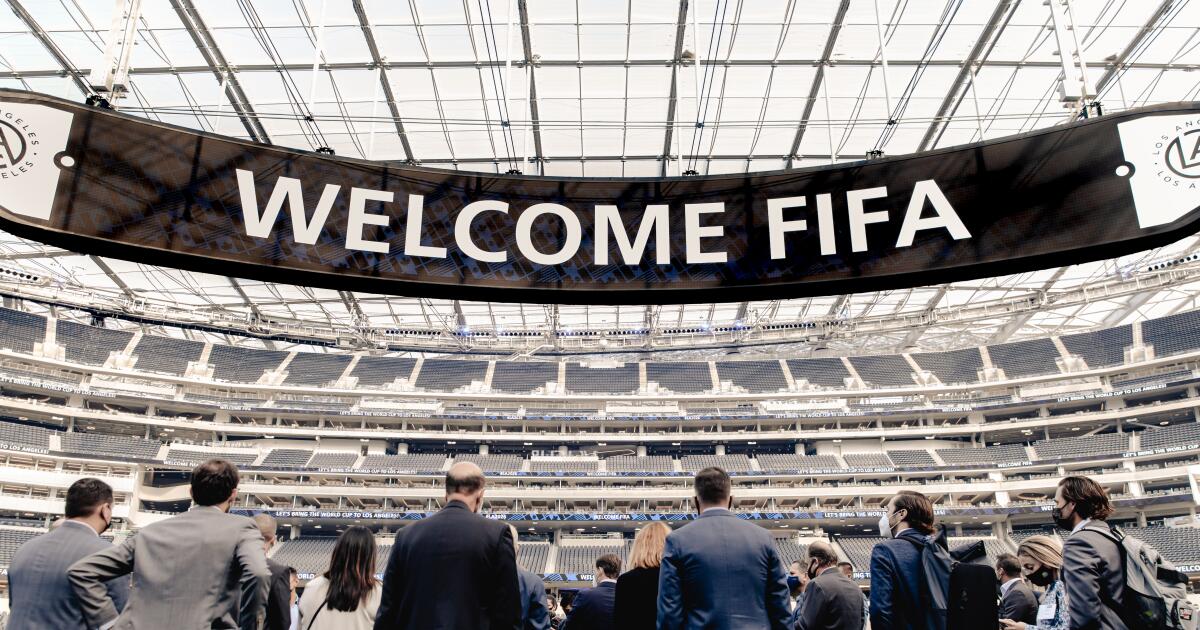
StubHub is getting a red card from some World Cup fans
Two World Cup customers are suing the New York-based ticket-selling company, alleging “false and misleading” advertising that left them without tickets or a refund for the World Cup games they paid to attend.
In federal court in New York last week, two Californians — Julia Reeker Moghal and Reuben Renteria — sued StubHub seeking monetary damages and a ban on the company selling World Cup tickets. The lawsuit aims to become a class action and comes after weeks of fierce criticism and complaints from customers regarding the company’s practices.
Throughout the World Cup, videos have emerged on Instagram and TikTok of StubHub customers describing their nightmare experiences with the ticket-selling platform.
Some said they had purchased tickets to World Cup games as early as November of last year, booked flights and hotels and arranged travel plans, then StubHub notified them days to weeks before the match of a refund for their tickets, which they never requested.
There were similar complaints about last-minute cancellations from people who bought Coachella tickets on StubHub.
In the lawsuit, Moghal said she had purchased three tickets for nearly $2,000 for the June 18 match between Switzerland and Bosnia-Herzegovina at SoFi Stadium in Inglewood, which were then canceled by StubHub. Moghal said she was contacted by StubHub and told her tickets would remain canceled, then was later told the tickets would be available one hour before the game.
When the match began, Moghal said she was at SoFi Stadium, but the tickets never came.
Renteria said he paid around $2,300 for the June 18 Mexico versus South Korea match in Guadalajara, Mexico, but they were canceled
“Devoted soccer fans have traveled from around the world to attend World Cup matches — and they reasonably relied on StubHub to provide the tickets they paid for as well as on StubHub’s warranty,” Blake Hunter Yagman, the attorney representing the two, said in a statement. “Instead of rewarding their business, StubHub sold them World Cup tickets that they either could not provide or on speculation, only to be stranded, in many cases, at the stadium gates without any recourse.”
According to StubHub’s website, its Fan Protect Guarantee states the platform will deliver valid tickets or refund in the event of a ticket issue, and that it will “go out of our way to find replacement tickets” of a comparable value. The lawsuit alleges the replacement tickets many fans were given by StubHub were worse than their original tickets.
FIFA, the World Cup organizer, states in its terms and conditions that the FIFA Marketplace, its own ticket-selling platform, is the only authorized platform for World Cup tickets, and that only tickets purchased through it are guaranteed by FIFA to be valid.
Despite the risk of purchasing through a third-party platform such as StubHub, many fans opted to do so to avoid the 30% FIFA resale tax, believing that the Fan Protect Guarantee would safeguard their order.
Since World Cup tickets began selling on FIFA Marketplace last September, fans have expressed disappointment in the expensive price tag. FIFA utilized a dynamic pricing system for the sale, and as sales phases progressed leading up to the games, the cost of tickets increased tremendously. In March, the extreme cost of tickets prompted 69 members of Congress to write a letter to FIFA urging them to lower their prices.
Tickets for the upcoming Friday match between Spain and Belgium in Los Angeles are selling on StubHub for over $1,300.
StubHub said in various statements to the news and in legal proceedings that ticket cancellations were a result of transfer problems and issues with FIFA’s ticketing infrastructure.
StubHub did not respond to requests for comment.
A FIFA spokesperson responded to this accusation in a statement, saying, “FIFA has no visibility over, or control of, secondary market ticket transactions carried out on third-party platforms. The transactions facilitated on these platforms occur entirely independently of FIFA’s official ticketing platform. With reference to the reliability of the services available to fans on FIFA’s official ticket platform, FIFA rejects any suggestion that the functional issues being experienced by users of third-party platforms with respect to FIFA World Cup 2026 tickets are the result of FIFA’s ticketing infrastructure.”
Business
Commentary: Trump wants to let companies make fewer disclosures, thus keeping investors in the dark

Trump’s SEC is considering eliminating the mandate for quarterly corporate financial reports, but even some big investors call it a lousy idea.
This being the “information age,” it would be understandable if investors sometimes feel inundated with too much information to wade through about the stocks in their mutual fund portfolios.
The Securities and Exchange Commission, bowing like a puppy to the urgings of President Trump, is considering exactly the wrong solution to this supposed burden. It’s proposing to allow public companies to give their investors less information, as though that’s a good thing.
On May 8, the SEC proposed rescinding its mandate that public companies report financial results on a quarterly schedule. Instead, it suggests, semiannual and annual reports should suffice.
This takes an already-unlevel playing field where Main Street investors are already disadvantaged, and makes it more unlevel.
— Dennis Kelleher, Better Markets
The SEC left its proposal open for public comment for 60 days, meaning the window closed Monday. By then, the agency had received more than 68,000 comments, according to a tracker posted online by accounting professor Tzachi Zach of Ohio State.
Almost 99.9% of the comments were negative. Several organizations of institutional investors and auditing professionals, as well as a tsunami of individual investors, expressed opposition.
A similar initiative the SEC aired in 2018, during Trump’s first term, received an overwhelmingly negative response and was eventually dropped.
The tide of opposition coming from individual investors shouldn’t be surprising. “Taking away basic quarterly information means investors are blind for six months at a time,” says Dennis Kelleher, co-founder and chief executive of the investor advocacy nonprofit Better Markets.
That’s especially true for small investors, though perhaps not so much for major institutions, insiders or deep-pocketed individuals. “If you’re a big dog, you’ll get the information anyway,” Kelleher told me. “And insiders, who are trading in their own stock all the time, will have the information. This takes an already-unlevel playing field where Main Street investors are already disadvantaged, and makes it more unlevel.”
Trump set off the latest initiative with a social media post on Sept. 15, advocating the move to a six-month reporting schedule. It read, in part, “This will save money, and allow managers to focus on properly running their companies. Did you ever hear the statement that, ‘China has a 50 to 100 year view on management of a company, whereas we run our companies on a quarterly basis???’ Not good!!!”
As was usual with Trump, his argument was a string of uninformed and irrelevant non sequiturs.
It’s doubtful that eliminating quarterly reports will save much, if any, money. Most 10-Qs are cookie cutter documents disclosing financial figures already embedded in corporate records.
The idea that managers would become empowered to “focus on properly running their companies” if only they were relieved of the burden of preparing a report every three months is just malarkey: Any CEOs who feel the impulse to drop everything and involve themselves in what is essentially an automated process can’t be very good at their jobs.
As for China’s “50 to 100 year view on management of a company,” what would that even mean, even if it were true? China doesn’t operate on a 50 to 100 year corporate horizon, but rather on a string of five-year plans. The most recent of these was adopted by the government in March, covers the period up to 2030, and is its 15th in a row.
Despite the flaws in Trump’s arguments, Trump’s SEC Chairman Paul Atkins, a former corporate lawyer and securities industry consultant, fell into line. Within a few days of Trump’s post, he showed up on CNBC to minimize the potential effect of the change. Private companies rely on semiannual reports, after all, he noted, although the idea of taking private companies as models for publicly traded corporations might not strike experienced investors as the wisest thing.
Atkins cited an enduring chestnut, for which there’s no evidence, that quarterly reporting is responsible for “short-term thinking” in corporate suites (though he admitted that his evidence was “anecdotal”). And he suggested that small investors have ample access to corporate information even without quarterly reports — why, he said, they can just tune in to CNBC!
“To propose change in what our rules are now would be a good way forward,” he said. “So I welcome the president’s putting this up for discussion.”
Something more insidious undergirds the SEC’s proposal than its immediate effect on corporate behavior. The agency rationalizes its proposal as seeking “a tradeoff between reducing regulatory burdens … and promoting efficient financial markets through timely disclosure.”
The problem here, Kelleher points out, is that “reducing regulatory burdens” isn’t part of the SEC’s mission in any way, shape or form. It’s a regulatory agency, and its mission since its founding in 1934 has been to protect investors, not to make things fluffier for stock issuers.
The history of financial disclosure in the U.S. shows a long-term trend favoring more disclosure, not less. In the 1880s, quarterly reporting by railroads and other transportation companies were common.
Early on, pressure for more frequent disclosure came not from government regulators, who barely existed before 1934, but from investors. The reporting of quarterly earnings, notes corporate finance expert Owen Lamont of Acadian Asset Management, was “a bottom-up historical phenomenon reflecting voluntary arrangements between firms and investors, not a top-down phenomenon imposed by law.”
By 1931, according to financial historians, 63% of New York Stock Exchange-listed firms were publishing their quarterly earnings. The Big Board mandated that frequency for most listed companies in 1939. The SEC mandated semiannual reports in 1955 and quarterly reports, as Atkins said, in 1970.
The evidence in favor of dropping the quarterly reports is uniformly thin. Some advocates cite a 2018 op-ed in the Wall Street Journal by JPMorgan Chase CEO Jamie Dimon and Warren Buffett that was headlined “Short-Termism Is Harming the Economy.”
Couple of points about this: First, the target of Dimon and Buffett wasn’t quarterly financial reporting, but quarterly earnings guidance — that is, the practice of some top executives who project their earnings into the future. (This guidance usually comes at the same time they issue their SEC disclosures.)
It’s guidance, they wrote, that is “a major driver” of short-termism in corporate behavior. That’s because management is giving itself a target it feels obligated to meet, even if factors outside its control interfere with the quest.
Furthermore, Dimon and Buffett wrote, “Our views on quarterly earnings forecasts should not be misconstrued as opposition to quarterly and annual reporting.” They called transparency about financial and operating results “an essential aspect of U.S. public markets … so that the public, including shareholders and other stakeholders, can reliably assess real progress.”
Individual investors may be unmoved by the SEC’s proposal because — let’s be candid — how many of them read quarterly earnings reports, anyway? But that’s unimportant, Kelleher says, because other market participants are reading them. “So that information is in the marketplace, and that’s what actually enables price discovery, so stock prices roughly reflect what’s going on at a company, most of the time.”
More to the point, the quarterly reports reflect the highest-quality, detailed information, the information the SEC requires executives to disclose on pain of facing a civil lawsuit from the agency or even criminal liability for faking data. “Main Street investors, whether they read quarterly reports or not, are the real beneficiaries,” Kelleher says.
That’s so. The bottom line is that quarterly financial reporting helps investors. It doesn’t promote short-term behavior and its costs, modest as they are, don’t outweigh its benefits.
Over the decades, scandal-ridden corporations have hidden fraudulent behavior in the interstices between mandated disclosures—think Enron, WorldCom and Tyco, among others. Why give any corporation, even an honest one, the opportunity to disclose less?

The luxury shopping center in Pacific Palisades will reopen next month after more than $100 million in renovations forced by the January 2025 wildfire that devastated the Los Angeles neighborhood.
Palisades Village will reopen Aug. 15, owner Rick Caruso announced Wednesday. The outdoor center survived the blaze that destroyed homes and other businesses but needed refurbishment to eliminate contaminants that the fire could have spread.
Crews are putting finishing touches on mall buildings after tearing them down to the studs, treating the wood and rebuilding the walls, Caruso said.
“Everybody’s working, and stores are moving their products in,” he said. “It’s a really cool feeling that people have really locked arms and are working together.”
An electrician installs lighting for a restaurant at Rick Caruso’s Palisades Village on Thursday. The shopping center is scheduled to reopen mid-August.
(Myung J. Chun / Los Angeles Times)
Pacific Palisades resident Allison Polhill, who is rebuilding the home of 30 years that her family lost in the blaze, said she is “thrilled” at the prospect of returning to the mall she used to frequent. Its comeback is a boost for the community, she said.
“Every single step that we make to reopen our commercial corridors is going to bring more people back into the Palisades,” said Polhill, who expects to move back into her home at the end of August.
A total of 6,822 structures were destroyed in the Palisades fire, including more than 5,500 residences and 100 commercial businesses, according to the California Department of Forestry and Fire Protection.
Caruso previously attributed the mall’s survival to the hard work of private firefighters and the fire-resistant materials used in the mall’s construction.
The $200-million shopping and dining center opened in 2018 with a movie theater and a roster of upmarket tenants, including Erewhon, which may be the only grocer in the heart of the fire-ravaged neighborhood when it opens.
Caruso’s company was able to fill the mall with tenants despite the long shutdown.
Palisades Village is 99% leased, with the majority of tenants returning, said Jackie Levy, chief financial and revenue officer. Nearly one-third of the shops and restaurants are new to the property.

A firefighter carries a hose back to his rig while walking through a destroyed home from the Palisades fire in Pacific Palisades on Jan. 7, 2025.
(Genaro Molina / Los Angeles Times)
Last year, Pacific Palisades-based fashion designer Elyse Walker said she would reopen her eponymous store in Palisades Village after losing her 25-year flagship location on Antioch Street to the inferno.
Other neighborhood shops destroyed in the fire that are reopening at the mall include K Bakery and Loomey’s Toys, which caters to children up to age 12 and used to be across the street from Palisades Elementary Charter School.
“It’s been a journey and I’m excited because I wasn’t sure that there was going to be a place to come back to,” said toy store owner Amanda Rastegar. “Hopefully we can bring some of that magic back.”
Rastegar’s home in the Palisades survived but was damaged by the fire. The family returned about eight weeks ago. Her last memory of the fire was a burning supermarket.
“I just couldn’t wrap my brain around what was happening,” she said. “By the time I left, Gelson’s was on fire.”
Among the returning tenants is Angelini Ristorante & Bar. Well-known Los Angeles chef Gino Angelini said he will be in the kitchen next month for a return of the Italian restaurant.
“We won’t do a big celebrity open,” he said. “We want to have a very soft opening and see our customers come back.”

Construction takes place at Rick Caruso’s Palisades Village on Thursday. The shopping center is scheduled to reopen mid-August.
(Myung J. Chun / Los Angeles Times)
An elaborate celebration would not feel “correct for me,” Angelini said, because the devastation has been “very sad” for so many.
Other new tenants include local chef Nancy Silverton, who has agreed to move in with a new Italian steakhouse called Spacca Tutto. Women’s activewear retailer LESET will open its first West Coast location.
Caruso said he is optimistic that customers will return to the center, even though many Pacific Palisades residents are still dispersed. One tracking system estimated that about 30% of the Village’s customer base was impacted by the fire, he said.
“That means 70% did not get impacted, so there’s a lot of customers still left out there,” Caruso said. Historically, the center drew customers from as far away as Beverly Hills and Calabasas, as well as Malibu, Brentwood and Santa Monica.
He also hopes many will be inspired to visit the revived mall.
“I believe in the goodness of people and I believe that people are going to want to support the Palisades,” he said. “They’re going to want to be there and support the businesses that have had the courage and the heart to reopen.”
-
Culture36 minutes ago
Which Version of the ‘Odyssey’ Should You Read?
-
 Lifestyle39 minutes ago
Terry Tempest Williams on why women with big ideas get labeled ‘crazy’ : Wild Card with Rachel Martin
-

 Technology51 minutes ago
Google’s Nest Thermostat has hit its best price of the year
-

 World54 minutes ago
Argentinian flight instructor jumps to death from plane, 22-year-old student forced to land alone
-

 Politics59 minutes ago
Omar’s disclosures erased millions, leaving her with potential negative net worth. She won’t explain why.
-

 Health1 hour ago
Dr Oz links obesity to chronic disease surge, says GLP-1s can ‘jumpstart’ better health
-

 Sports1 hour ago
Pirates star pitcher makes unfortunate history after being taken out in middle of perfect game bid
-

 Technology1 hour ago
Medical identity theft follows you into the doctor’s office

