Lifestyle
Toast, the Low-Key Brand, Expands Its U.S. Presence


At the end of last year, the lifestyle brand Toast quietly opened its second store in the United States on Elizabeth Street in New York’s NoLIta neighborhood.
Suzie de Rohan Willner, its chief executive and an unassuming and warm presence, had flown in from London opening week.
Standing by the newly installed store shelves, with glasses and close-cropped hair, she could easily be mistaken for a Toast customer. She also likes to wear Toast’s clothes, which are utilitarian and no-nonsense.
On the nearby racks hung smock dresses in earthy colors called basalt and scarab, barrel-leg ecru denim trousers and seaweed green hooded wax-cotton parkas.
“I always think that when you’re sitting in a concept store, you should be able to identify a brand from a distance, just by the colors and the silhouettes,” Ms. de Rohan Willner said. “With Toast, I think you can do that by our colors that are inspired by nature, as well as the pops of color that bring it all to life, as well as the craft pieces.”
Evidence of her vision was in practically every element of the space, including its hand-thrown stoneware mugs and its repair station, where customers can bring old Toast pieces to be mended free of charge.
Ms. de Rohan Willner — who previously was the chief executive of FitFlop, and has worked for brands such as Levi Strauss, Timberland, Dockers and Puma — joined Toast in 2015. She slowly put into motion a plan to revitalize the fashion brand, which, at the time, one fashion writer for The Times of London described as “a bit hippy” and “too expensive.”
“With clothes that are loosefitting and comfortable, there’s always a danger,” said Rosie McKissock, the brand director of Toast.
“We went back to basics,” Ms. de Rohan Willner said. “It’s always a joy to be able to do that, right? Just to say, ‘Let’s pare it all back.’”
Toast’s founding ethos was strong. It was started in 1997 by two archaeologists, Jessica and Jamie Seaton, as a mail-order business out of their farmhouse in West Wales. They initially offered just nightwear and loungewear.
“A piece of toast is a very humble thing,” Ms. Seaton once explained in an interview with The Modern House.
But their romantic, hippie aesthetic — what today might be labeled cottage-core, with a touch of bohemian chic — caught on quickly. Catalogs from the brand’s heyday in the early 2000s feature wholesome-looking models in “sari apron trousers,” “kurta dresses” and Uggs.
Kate Berry, a creative consultant and editor at large for Domino, hosted a breakfast for the opening of Toast’s Brooklyn store on Atlantic Avenue last year. She remembered well the power the brand had early on and how it held weight in certain circles for its rustic style.
“When I worked at Martha Stewart in 2007, every art director had Toast catalog images on their mood boards,” she recalled.
Ms. de Rohan Willner knew she needed to remind customers of Toast’s original philosophy while making the brand feel more contemporary.
The Seatons, who sold their final stake in Toast in 2018, “had a beautiful appreciation of navigating the world in a slower way,” Ms. de Rohan Willner said. To her, the name conjured an image of a lazy breakfast at home on a Sunday, with a hot cup of tea.
First, Ms. de Rohan Willner hired a new head of design, Laura Shippey, who had worked for eight years at the British brand Margaret Howell, followed by a stint at J. Crew. For inspiration, Ms. Shippey looked to Japanese and European workwear, menswear-inspired silhouettes and vintage textiles worldwide.
Ms. de Rohan Willner then began “dialing up the craft,” she said.
Collections heavily feature hand embroidery, shibori, tie-dye, indigo and hand-printed fabrics, such as ikats and block printing. Toast also began to spotlight local artisans. The brand now resells creatively repaired pieces and vintage and newly returned secondhand items, donating a portion of the sales revenue.
It also hosts clothing swaps and mending events at its stores, where consumers can bring in items they want repaired using various techniques, including sashiko, the Japanese practice of decorative reinforcement, and darning, patching and appliqué.
In addition to its two American stores, Toast has a robust presence in Britain with 20 stores..
The brand had thrown a quiet dinner at the Elizabeth Street shop a few weeks before the opening. The walls were bare. Boxes of clothes still needed to be unpacked.
Even the event — during which humble dishes like white bean soup and braised kojinut squash cooked with local ingredients were served — kept a low profile and did not have a photographer shooting publicity and marketing images.
The actress Beanie Feldstein had stopped by during cocktail hour. Ms. Feldstein first discovered Toast when she auditioned for the film “How to Build a Girl” in London.
“The casting director in the audition was shaped like me and she was wearing these amazing overalls,” Ms. Feldstein recalled. “I told myself that if I got the role, I would buy the overalls. And I did. And it’s actually how I met my wife, from that movie. Then the director and the writer, all of us bought the overalls.”
How many items of Toast clothing does Ms. Feldstein now own?
“Between me and my wife?” she asked, and paused. “A lot.”



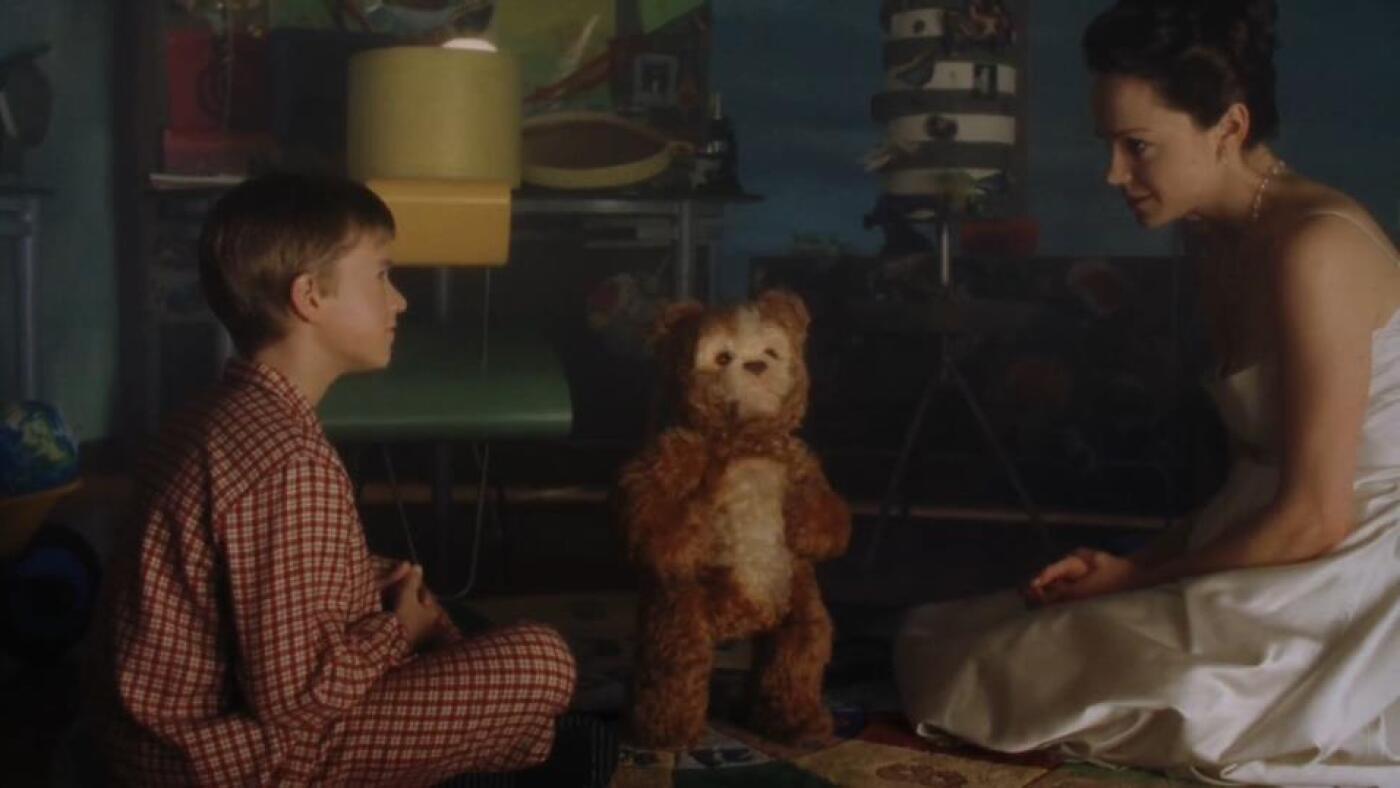
In A.I. Artificial Intelligence, Monica introduces Teddy to David. The seemingly ordinary teddy bear quickly reveals himself to be an intelligent companion capable of conversation and emotional support.
Warner Bros. Pictures
hide caption
toggle caption
Warner Bros. Pictures
Back in 2001, Steven Spielberg released an underrated scifi movie named A.I. Artificial Intelligence (yes, the title is a bit redundant). The movie, which loosely borrows from Pinocchio, tells the story of a family who adopts a robotic boy programmed for love, and that robot’s heartbreaking quest to become a real boy.
Much of the technology in A.I. remains elusive. We’re probably not anywhere close to building androids that can convincingly pass as Haley Joel Osment — or Jude Law, for that matter. But some of the AI products imagined in the movie are starting to look surprisingly plausible. Take Teddy, an animatronic teddy bear. Teddy can walk, talk, make decisions, and respond to the needs and emotions of people around him. He’s more than just a toy. He’s an intelligent companion and protector for children.
Today, a slew of technology companies are developing AI companions that sort of resemble Teddy. The most intelligent AI chatbots still live on digital screens, but a wave of startups is giving them bodies — creating dolls, action figures, and robots that can serve as companions for kids.
What happens when kids grow up with AI?
AI is already a part of childhood. Recommendation algorithms curate what many kids watch and listen to. Chatbots stand ready to answer questions like, “Are monsters real?” or “Why is the sky blue?” They can help with homework, tell bedtime stories, or even feel like a friend. And companies are racing to embed AI into toys, nurseries, classrooms, and eventually robots that live alongside families.
In a new book, Human Raised: Nurturing Connection, Curiosity & Lifelong Learning in the Age of AI, author Dana Suskind grapples with what the rising tide of artificial intelligence means for raising kids. On the one hand, she acknowledges that the technology offers promise as, for example, a productivity enhancer and time saver for parents, a monitoring and research tool that can give parents and scientists valuable data on child development, and an interactive tutor that might help some kids learn.
But Suskind worries about what happens if AI begins replacing the kinds of human interactions that young brains evolved to learn from.
In fact, Suskind says, her original, working title for the book was, “The Trojan Teddy Bear,” a warning that AI companions may seem cute and cuddly — but they carry hidden risks for child development. She ultimately went with Human Raised because she wanted to emphasize the positive — and irreplaceable — role that parents, teachers, and caregivers play in molding young ones.
“If we want children to be able to continue to connect with each other and with other human beings, to be able to think critically, to be able to navigate the human world, we’re gonna need to make sure that kids have a distinctly human-raised early childhood,” Suskind says.
Suskind is a professor of surgery and pediatrics at the University of Chicago Medical Center, where she directs a program aimed at giving kids hearing with cochlear implants. After she began doing this incredible work — literally helping children hear — she noticed that some kids who had the procedure went on to understand spoken language and talk with relative ease, while others had a much harder time. Hearing alone wasn’t enough. And that led her to dive into neuroscience and social science to understand why.
The brain development of young kids, Suskind learned, is heavily influenced by the back-and-forth interactions they have with their parents and caregivers during the first several years of their life. And she grew concerned that there is a big population of kids who aren’t getting the enriching communication their brains need. And so she founded the TMW Initiative, a research center that helps parents create the kinds of brain-enriching environments that children need to reach their full potential. (You can read more about Suskind’s biography and previous work in a Planet Money newsletter from 2022).
Why Dana Suskind is sounding the alarm
With the explosion of AI, Suskind has grown alarmed by a rush to introduce an unprecedented technology into kids’ lives without careful reflection and rigorous scientific study about its effects on young minds. She is especially concerned about AI companions and other systems that interact socially with children, which she fears many people will use to substitute for the human interactions that children need most.
Since the dawn of civilization, humans have used technology to make raising children a little easier. In Human Raised, Suskind traces that history back to prehistoric times, when mothers used woven slings to carry infants while they worked. Over the centuries, new technologies — like television and tablets — have eased the burdens of caregiving or helped keep children occupied. Many of these technologies have also been greeted with fears that they would rot kids’ brains.
But Suskind argues AI may mark a fundamental shift. Interacting with a chatbot or intelligent teddy bear is more than just a kid glued to a television or an iPad watching Sesame Street or Paw Patrol. AI systems carry on conversations that can feel strikingly human. They respond to kids’ questions, emotions, and fears. They create a kind of synthetic social relationship — one that, Suskind argues, may shape developing minds in ways that, until recently, only humans could.
Suskind cites the research of renowned University of Washington developmental psychologist Patricia K. Kuhl. Kuhl proposed what’s known as the “social gate” hypothesis — the idea that children’s brains are biologically primed to learn through social interaction. Studies have shown, for example, that babies learn language much better from a live person than from a screen. Neuroscientists and psychologists suggest that’s because social interactions engage the brain in ways passive media does not. The sing-song way adults naturally speak to babies, smiles and other facial expressions, gentle touch, eye contact, and back-and-forth exchanges all appear to help open that social gate and facilitate learning and healthy brain development.
While artificial intelligence is no match for human educators and caregivers, Suskind argues, it is capable of opening the social gate in young children in ways that previous technologies could not. That makes AI a potentially extraordinary educational tool — but also a potentially dangerous one.

Companies design AI systems with their own goals, which could include maximizing your kids’ engagement, keeping their attention, collecting data, and making money. They don’t have the same priorities as parents. And while those systems may imitate human interaction, Suskind argues they cannot recreate everything that makes human relationships developmentally valuable.
“Eye contact, shared laughter, patient answers to ‘why’ questions activate ancient neural circuits designed for connection,” Suskind writes. “These exchanges provide a form of nourishment no algorithm, however sophisticated, can match.”
Human relationships are also messy and filled with emotions. Parents misunderstand their children. Kids get frustrated. Families argue, reconnect, and then smooth things over. Suskind argues that those imperfect interactions — and “the productive struggle” they create — are how children learn resilience, emotional regulation, flexibility, and how to navigate real relationships.
Unlike most humans, AI systems can be endlessly engaging, infinitely patient, and relentlessly affirming. Interactions with them often feel frictionless. Suskind worries giving young kids considerable exposure to them may make them less prepared for the messy, unpredictable nature of real human relationships.
AI as junk food for the young mind
Suskind compares AI relationships to ultra-processed food. “ If all you eat is fruit snacks, which is a synthetic version of fruit, when you actually eat the real fruit, you’re gonna be like, “Hmm, it’s not quite as sweet,” she says.
AI could eventually be programmed to try and mimic real parents and caregivers even more closely. But Suskind argues that the problem isn’t simply that today’s AI falls short of human relationships. It’s that AI represents a fundamentally new kind of social experience for children — one that already raises concerns based on what we know about child development and whose long-term effects remain deeply uncertain.
Suskind uses an analogy from the 19th century, when a German chemist named Justus von Liebig created one of the first infant formulas, hoping to replicate the nourishment of human milk. But when a French physician tested the formula on four newborns, all of them died within days, and the episode sparked a fierce controversy.
The lesson, Suskind suggests, is that we should be cautious about engineering substitutes for something as biologically, emotionally, and socially complex as human caregiving before we understand how those substitutes shape children’s development.
Given so much uncertainty about this rapidly evolving technology and its potential effects on kids, Suskind spends a lot of the book offering parents a practical guide for safely navigating child-rearing in the age of AI. She emphasizes that it’s especially important to shield kids from AI during their first years of life.
“Older children and adults encounter AI with already-built neural scaffolding, but young children are still wiring the very circuits that shape future learning and relationships,” she writes. “Introducing AI during this sensitive period presents a fundamentally different challenge with greater potential for harm.”
Suskind is open to the idea of using AI to enhance education for some kids — but only as a tool that enhances, rather than replaces, humans. She argues that human caregivers are the best way to cultivate what she calls “the Human Edge,” a set of social, emotional, and cognitive skills like “critical thinking, interpersonal connection, genuine creativity, empathy, and resilience.”
But, like time-crunched parents who rely on screens to buy themselves some time today, there may be growing temptations to outsource parts of child-rearing to AI, especially considering the fact that childcare is incredibly expensive. Suskind worries that, over time, a fully human-raised childhood could become a kind of luxury good — much the way fresh, healthy food often is today. Families with the time and resources would provide rich human interaction to their kids. Everyone else might increasingly rely on cheaper, more convenient AI substitutes.
And children raised largely by AI might not only lag socially, emotionally, and cognitively, but, ironically, they could also be less prepared for an AI-driven economy.
Suskind points to a recent essay by the University of Chicago economist Alex Imas. Imas argues that as AI automates more cognitive work, human jobs may be increasingly concentrated in what he calls “the relational sector” — occupations where humans are valued for qualities that make them distinctly human, from education to health care to hospitality, the arts, and therapy.
If that’s true, then the traits children develop through a human-raised childhood won’t just matter for their social lives. They may also become an economic advantage. In a world increasingly shaped by artificial intelligence, the most valuable skills may be the ones that are the most deeply human.

One of the most magical and underrated natural wonders of the American West is about to unfold across California beaches.
In four-day periods every year from March to August, legions of small, silver fish called grunion ride the waves ashore for mating rituals, beginning on the nights of the full and new moons.
But this isn’t just any fish spawning.
First, the females bury themselves halfway in the sand with only their heads sticking out and lay their eggs. Then, the males wriggle up and twist and wrap around them. It’s a rare and mysterious orgy unfolding in the dead of night. And it’s all out in the open for public viewing.
For some SoCal families, watching the grunion run is an annual summer tradition. There have been several runs already this year, with sightings reported from La Jolla to Ventura. Another is expected to start Tuesday night.
When the grunions will be running
Grunion mate on Cabrillo Beach in San Pedro on June 5, 2023.
(Luis Sinco / Los Angeles Times)
This week’s run is predicted go from Tuesday to Friday.
The fish come up on the sand for about two hours at night, as the high tide starts to ebb, usually between 10 p.m. and 2 a.m. The second hour is when the spawning picks up.
The second and third night of the four-night runs tend to be best to see grunion, according to the California Department of Fish and Wildlife. The first night, Tuesday night, is the least predictable.
The agency publishes a schedule of what days and times to expect the ritual, based on moon cycles and the timing at San Pedro’s Cabrillo Beach, a known grunion hotspot.
But it all varies.
“The further south that you go, the grunion tend to show up a little bit earlier, and if you go further to the north, they tend to show up a little bit later,” said CDFW environmental scientist Malcolm Tunnell. “We don’t fully understand this. They are a cryptic species.”
Where to see them
Grunion are a native species and only live off the coast of southern California and northern Mexico. Their usual range is from Santa Barbara to Baja California, although it has been shifting north as climate change heats the oceans.
While you can expect to see grunion in SoCal, the exact beaches where they decide to spawn is something of a mystery, depending on the tides, the sands and the conditions encountered by the scout fish grunion send out before they decide where to mate.
“We usually say, if it’s a beach where there’s surfing, they like the same surfing waves that people like,” said Karen Martin, a professor of biology at Pepperdine University and leading grunion expert. “But really, any beach that has a nice, wide area where they can come ashore is a potential beach.”
Martin runs a group where citizen scientists can report observations. She said this year the runs have not been as abundant as in the past, but “there have been some nice ones, even earlier this month.”
The CDFW recommends checking social media and calling local lifeguards to ask if grunions have been spotted. Bait and tackle shops may also be able to point you in the right direction.
What are the rules for catching grunion
Grunion face threats from development on the coast, sea level rise, changes in storm dynamics and hunting, said Martin.
Since the 1920s, populations have shown signs of decline on-and-off. To protect grunion during their peak spawning period, CDFW prohibits fishing from April through June.
The season is open now with a limit of 30 per person; they can only be caught by hand, and anyone over 16 needs to have a fishing license.
Flashlights should be used sparingly, so as not to disrupt them.
“The ideal thing would be to just watch, but if you feel compelled to catch, maybe consider catch and release,” said Martin.
A fish that lives in such a limited geography, she said, needs our care.
“It’s a really remarkable fish.”

Here’s something American concertgoers might not know: before a musician from another country can take the stage in the U.S., someone has to file paperwork with the federal government on their behalf. And not just any paperwork — a petition, hundreds of pages long, stacked with press clippings, award documentation, testimonial letters from other artists, venue contracts, a detailed tour itinerary, and evidence that the artist is legitimately accomplished at what they do.
And that’s just to start the clock in a process that may take over a year to complete.

This is the reality for international artists — from musicians to painters, dancers to comedians — who want to come to the U.S. to share their work. It’s a complicated, expensive process that arts advocates say has long made the country a difficult place for foreign artists to access. But now, they say it’s gotten much worse.
The time it takes to process a visa has dramatically increased. The number of available interview slots at U.S. embassies is backlogged. Application costs have surged. And there’s an added layer of uncertainty: paperwork can be perfect, fees can be paid, and yet artists still can be turned away at the border.
For U.S. audiences, all of this means a quiet loss of global cultural exchange.
What does the artist visa process look like?
To illustrate the nonimmigrant visa process for artists, let’s take Kongero, a small, Swedish folk a cappella group that completed its second U.S. tour last fall.
First step: File a petition.
The group’s booking agent planned the tour and gathered all the necessary documentation to file a petition with U.S. Citizenship and Immigration Services (USCIS) to demonstrate that the group qualified for a P-3 visa, the category for culturally unique artists.
Once USCIS approved the petition, each individual artist still needed to wait for a separate visa interview at a U.S. consulate in their country of residence.
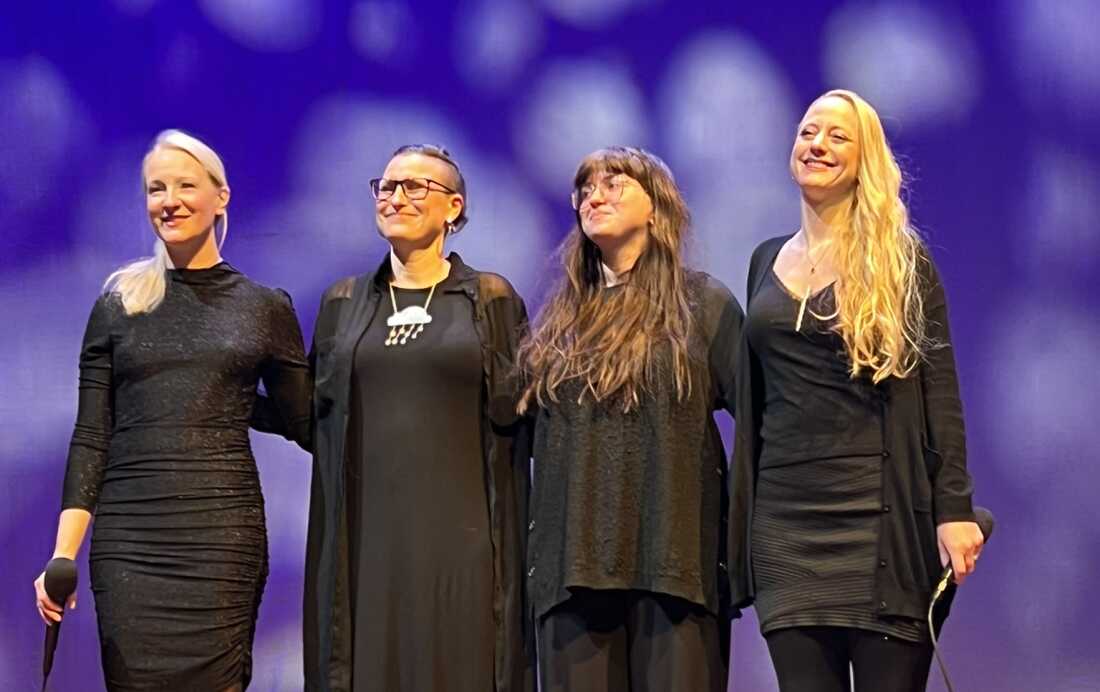
Swedish Folk’appella group Kongoro, Anna Wikenius, left, Lotta Andersson, Sophia Hultqvist Kott and Emma Björling perform in Greensboro, Vt., in December 2023.
Danielle Devlin
hide caption
toggle caption
Danielle Devlin
According to several artists and attorneys, nonimmigrant visa processing had historically taken around two to four months, though processing time started to increase after a backlog built up during the pandemic, and then increased further after the Trump Administration’s crackdown on immigration.
Visas can be withheld and reviewed again any time the federal government announces an immigration policy change, like a travel ban update, or revisions to the petition review policy, said Zelo Safi, a senior attorney with the Artistic Freedom Initiative. There have been several similar changes during the Trump Administration.
Right now, the average time to review a P visa petition like Kongero’s is 11 1/2 months. Processing for an O-1 visa petition — for individual artists of “extraordinary ability” — has grown to a little over a year. The problem is that the government won’t even accept petitions more than a year in advance for all O visas, which are temporary work visas for those with extraordinary ability or achievement.

According to one manager of a dance troupe from Spain, the process is “completely out of sync with how the arts industry works.” Like many artists and managers NPR reached out to, this dance troupe manager requested that NPR not use their name out of fear that there would be reprisals against their future visa applications. Others declined to be interviewed for the same reason.
A statement to NPR from the U.S. Citizenship and Immigration Services said that the new procedures are due to “increasing threats to public safety and national security.” It continued, “Verifying identities and personal histories from various countries requires a rigorous process — one that prioritizes the safety of the American people over everything else.”
Step two: take out your wallets
If you can’t wait a year — and most artists can’t — you pay. Specifically, you pay $2,965 per petition for premium processing, another travel fee that has increased in recent months. According to immigration attorneys, paying that fee is essentially a mandatory step for artists if they want to make their scheduled tour dates.

Kongero paid it, and they still ran into trouble. The group was granted only two months of entry instead of the year they’d applied for, forcing them to cancel their planned 2026 summer, fall and winter appearances.
Matthew Covey, executive director of Tamizdat, a legal nonprofit that helps performing artists navigate U.S. visa processing, has watched his client numbers drop since premium processing effectively became mandatory. He says that they’re choosing not to come to the U.S., because for many, the cost of total travel expenses has become too great.
“The current situation is [that] a tour that would have been marginal and maybe break-even, even five years ago, is a losing-money project now,” he said.
Step three: the interview
Once USCIS approves a petition, each individual artist still needs to wait for and complete a separate visa interview at a U.S. consulate in their country of residence. It is the Department of State that issues visas if everything checks out. With current backlogs, an interview can take months to schedule, and they cannot be missed.
Group member Emma Björling missed the first week of a two-month U.S. tour after the Trump administration instituted a new, mandatory in-person interview requirement last September.
When the new requirement was announced, she was on tour with a different musical group in Canada. Now, because of the new policy, she first needed to fly all the way back to Sweden to do the interview, before returning to North America to do the U.S. tour.
The U.S. tour ended up running $8,000 in the red. Kongero won’t return to the U.S. in 2026.
“With all the additional fees and costs and troubles and stress … it’s not worth it, not financially, and not stress-wise and workload-wise,” Björling said.
In a statement, the Department of State said, “Under President Trump, the United States is unapologetic in implementing America First visa policies. We welcome the many foreign artists who follow the required procedures and meet all of the visa requirements under U.S. law.”
But if your paperwork is approved and your interview is completed, and your fees are paid, congratulations! You have a visa!
But does that mean you get to enter the country?
Maybe not.
Step four: get past the border
Once artists have their travel arrangements set, their petition approved and their passport stamped, one final hurdle awaits once they arrive in the U.S.
U.S. Customs and Border Protection (CBP) agents have final authority at ports of entry — and arts organizations say the current climate has introduced a new level of unpredictability in how that authority gets used.
Comedian and theater-maker Alaa Shehada had come to the U.S. twice before to perform his one-man show, The Horse of Jenin, about growing up in the West Bank. He had a valid O-1B visa when he landed at John F. Kennedy Airport last November for another scheduled performance. But this time around, he says officers pulled him aside for additional questioning as soon as they saw his Palestinian Authority passport.

Alaa Shehada in The Horse of Jenin.
Dario & Misja Photography
hide caption
toggle caption
Dario & Misja Photography
After hours of questioning, Shehada said he was handcuffed and transferred to an immigration detention facility in New Jersey, where he described spending the night with other detainees in a cramped room on a concrete floor, shocked and confused.
He was placed on a return flight to his residence in Amsterdam the following morning — one day before his scheduled performance in Massachusetts. Neither he nor his producer received a clear explanation for why his visa was rejected. In a statement to NPR, CBP said Shehada was refused entry for “not being forthcoming with facts” during his interview with CBP officers.
“When an immigrant attempts to enter the U.S. without possessing an immigrant visa or is not forthcoming with facts during an interview, travelers may be subject to detention and refusal as statutes or visa terms may be violated,” the statement read. “A visa is a privilege, not a right, and only those who respect our laws and follow the proper procedures wil

l be welcomed.”
About a month later, the Trump administration issued an expansive travel ban that suspended visa issuance to individuals applying using any travel documents issued or endorsed by the Palestinian Authority.
“Of course, it is scary to sit with people with power who can just kill your dreams as simple as that,” Shehada said, who had planned to tour additional U.S. and Canadian cities. “You feel how unfair and humiliating that is.”
Covey says there’s heightened scrutiny at U.S. ports of entry, but less consistency with how that scrutiny is applied. In a statement, CBP said, “Admissibility determinations are made on a case-by-case basis using law enforcement, national security, and immigration information available at the time of inspection. CBP officers have the authority to question travelers, conduct inspections, and determine admissibility consistent with U.S. law.”
Jennifer Roe, executive director of Folk Alliance International, which connects artists with presenters globally, says that this means there’s no room for even the smallest of mistakes.
“I know a lot of artists are fearful of coming into the U.S.,” she said. “They’re hearing stories of being asked random questions at the border and being sent home because they didn’t answer something correctly.”
Ripple effects
When an international artist cancels their tour, the effects ripple outward.
The presenters who were stops on Shehada’s upcoming visit had already begun marketing the show and selling tickets. The New York Theatre Workshop had built an entire festival around the show. Boom Arts, a small presenter in Portland, had rented a theater for Shehada’s live performance. While several of the presenters were able to switch to showing a filmed version of the show, Shehada’s tour producer Jenny Tibbels said the losses totaled tens of thousands of dollars.
Shehada’s performance at the University of Massachusetts Amherst Fine Arts Center had been planned for nearly a year before it was canceled at the last minute. Executive Director Jamilla Deria said the organization had been eager to share a story from a Palestinian artist with the community.
“In Western Massachusetts, where our communities are more rural, access to storytelling and the perspective of folks who are coming from parts of the world that you don’t have direct engagement with is not only lost for that night, but maybe lost for good,” she said.
Tracy Francis, a presenter with Boom Arts, said that recent travel bans and changes in immigration policy are forcing her to make difficult decisions about which international artists she can safely invite to share their art in person. She’s already shaped her next season around which countries’ artists are realistically likely to be allowed in.
“I was bringing more European artists for the first time next season, just because their visas are more likely to get approved,” she said. “I also was more careful about making sure that artists I am bringing are on a larger tour, so there’s more shared costs.”
Shehada said his experience traumatized him.
“This experience was so hard and deeply hurtful, so the idea of coming back becomes so hard,” he said. “I would love to go and meet the international audiences, the Americans. I have lots of people and friends in the U.S,, and of course, this is my mission as an artist. This is my approach to reach audiences, but with that experience, right now, I don’t feel like going back at all.”
Jennifer Vanasco edited this story for broadcast and digital. Chloee Weiner mixed the audio. Danielle Scruggs edited the visuals.
-

 Movie Reviews11 minutes ago
Saari Review: Memory, Betrayal and Identity Converge at River Valley Film Festival – Hollywood Times
-
Science47 minutes ago
New Winged Robot Can Fly and Swim Like a Puffin
-
Lifestyle1 hour ago
‘The Trojan Teddy Bear’: The promise and peril of childhood in the age of AI
-

 Technology1 hour ago
Google and Epic give up fighting — third-party Android app stores are coming next week
-

 World1 hour ago
FBI snares an American heir indicted for allegedly bankrolling anti-cop, pro-Hamas communist revolution
-

 Politics2 hours ago
Biden special counsel’s ‘runaway train’ scooped up sensitive lawmaker info: ‘Abuse of power’
-

 Health2 hours ago
‘Miracle on the Hudson’ hero Captain ‘Sully’ Sullenberger reveals Alzheimer’s diagnosis
-

 Sports2 hours ago
American League stars outshine National League in 96th MLB All-Star game

