As men age, maintaining strong and healthy legs becomes increasingly important for overall mobility, balance, and quality of life. Leg workouts can help prevent muscle loss, improve joint health, and support cardiovascular fitness. So, I’ve rounded up six of the best leg workouts I recommend for men over 50. I’ve curated each of these workouts to ensure a comprehensive approach to lower-body strength and endurance.
Tailor the below exercises to your fitness level and consult with a healthcare professional before starting any new workout regimen. Stay active, stay strong, and enjoy the benefits of a healthy lifestyle.
Now, let’s dive into the best leg workouts for men after 50.
Workout #1: Classic Strength Training
Strength training is crucial for building and maintaining muscle mass, especially as you age. This workout focuses on fundamental exercises that enhance strength and stability.
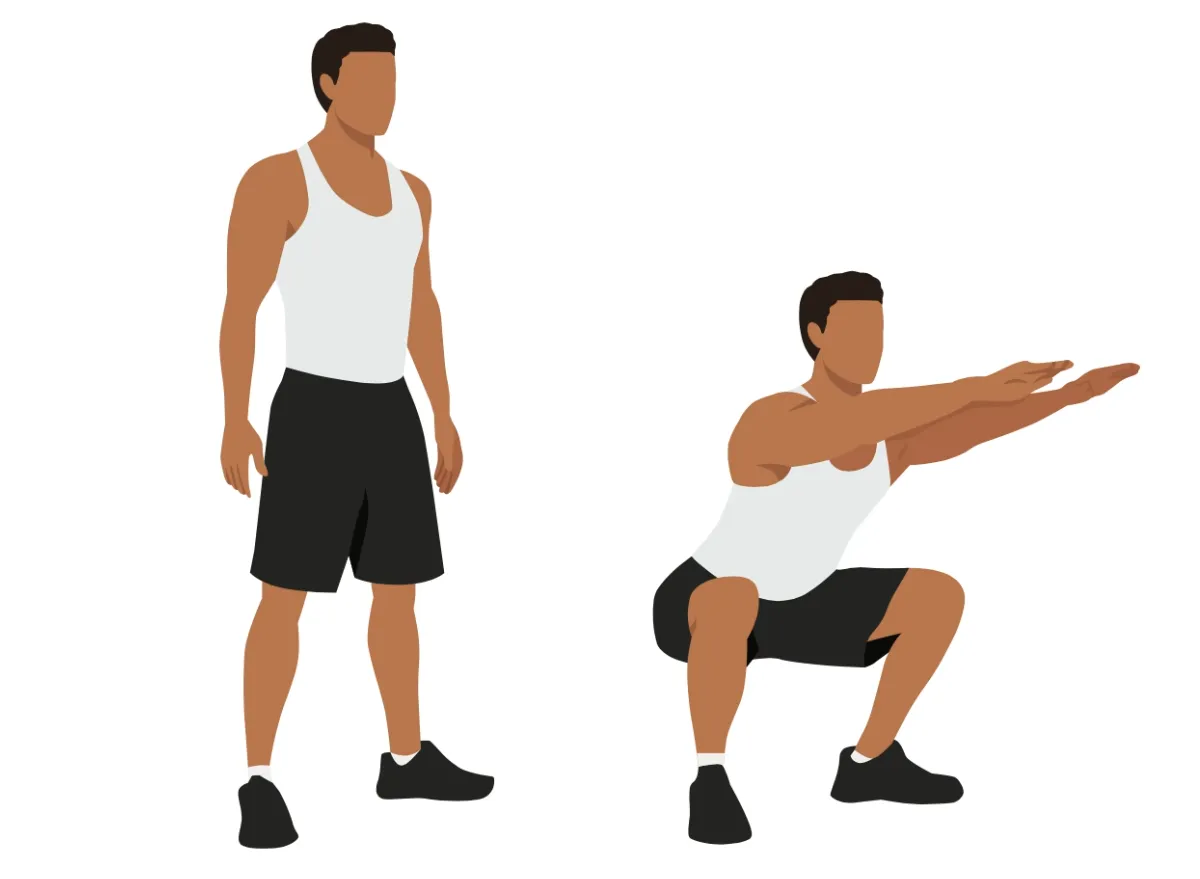
1. Squats
Shutterstock
Stand with your feet shoulder-width apart and your arms extended in front of you or placed on your hips. Lower your body by bending your knees and hips, keeping your chest and back straight. Lower until your thighs are parallel to the floor. Push through your heels to return to the starting position. Perform three sets of 10 to 12 reps.
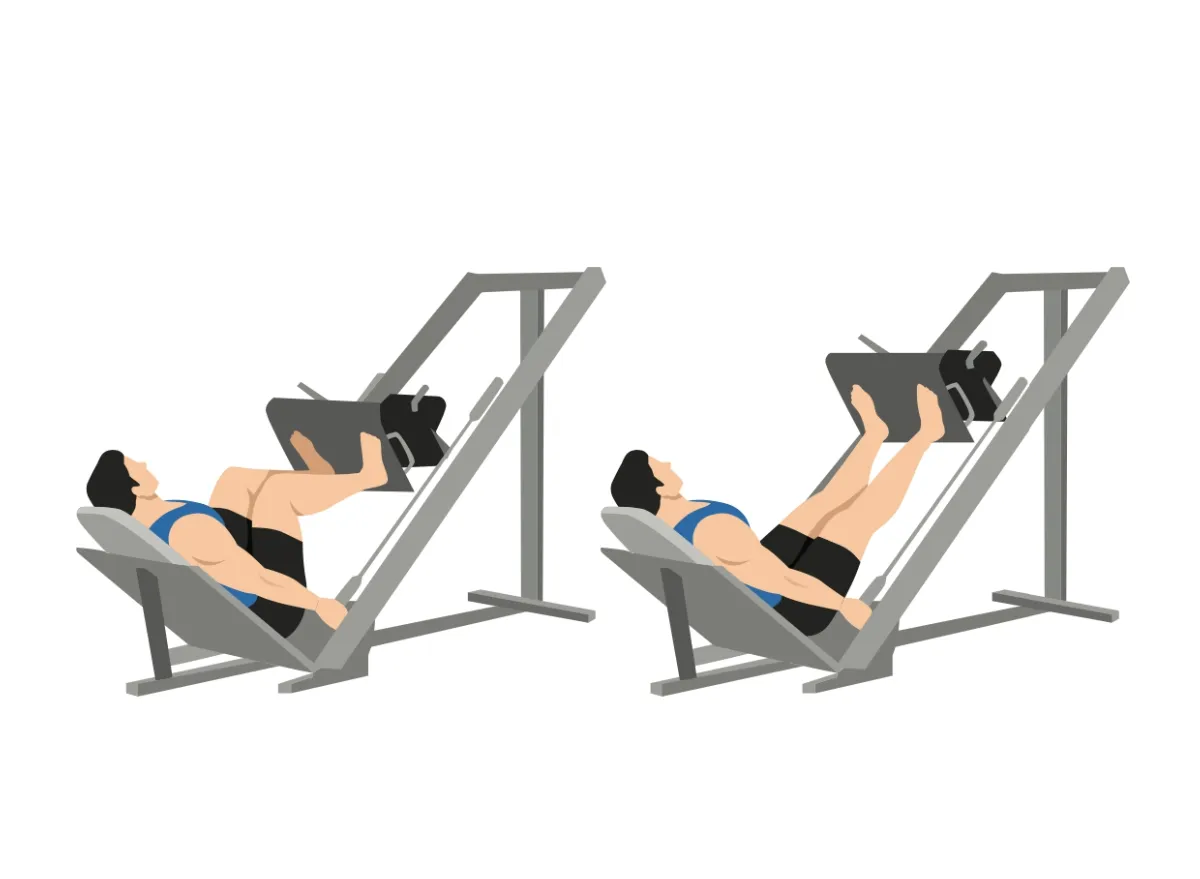
2. Leg Press
Shutterstock
Sit on the leg press machine with your feet shoulder-width apart on the platform. Push the platform away by extending your legs, keeping a slight bend in your knees at the top. Slowly lower the platform back by bending your knees, ensuring your lower back remains against the seat. Repeat the movement. Perform three sets of 10 to 12 reps.
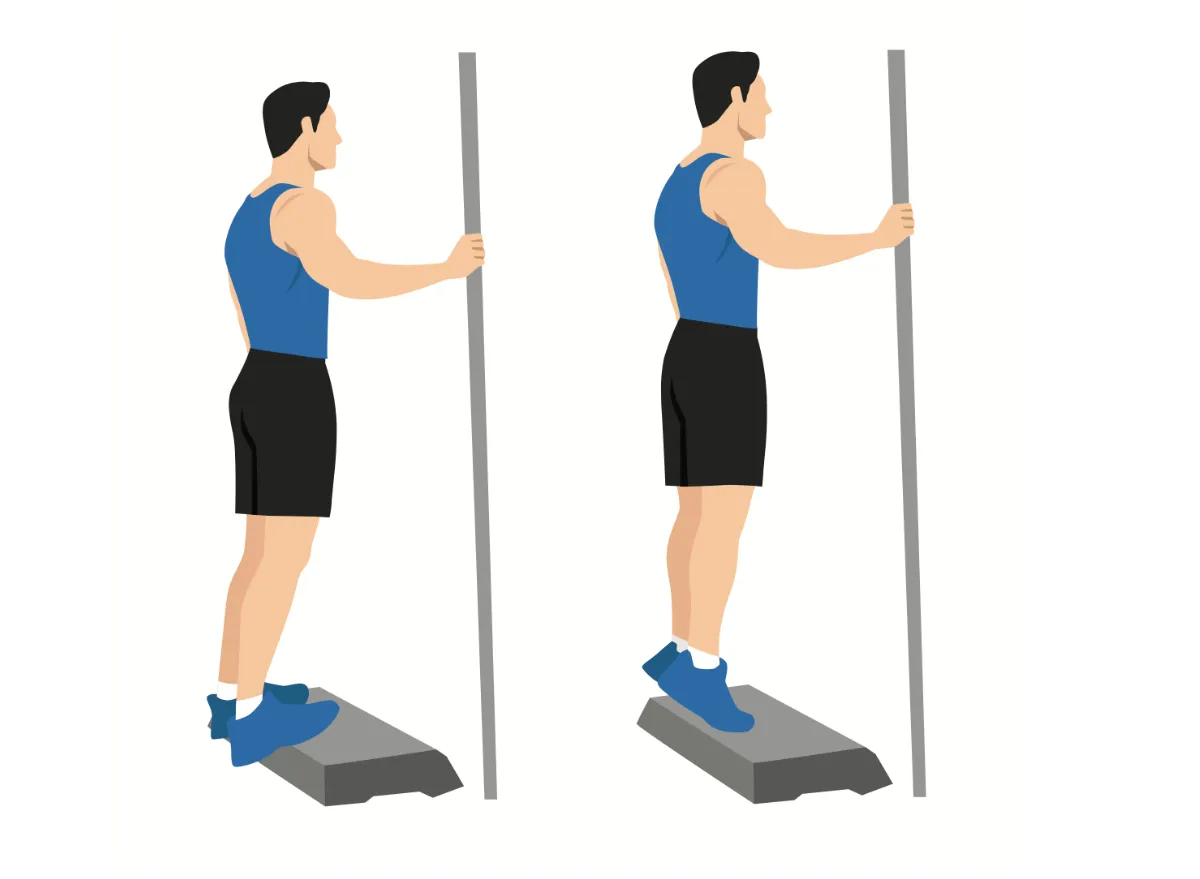
3. Calf Raises
Shutterstock
Stand with your feet hip-width apart and your hands resting on a support for balance. Lift your heels off the ground, rising onto the balls of your feet. Hold the position for a moment, then slowly lower your heels back to the ground. Repeat the movement. Perform three sets of 15 reps.
The 30-Day Workout for Men to Supercharge Their Strength
Advertisement
Workout #2: Balance and Stability
Improving balance and stability is essential for preventing falls and maintaining independence as you age. This workout focuses on exercises that enhance these critical skills.
1. Single-leg Stance
Stand on one leg with your other foot lifted slightly off the ground. Hold the position for 20 to 30 seconds, maintaining balance. Switch legs and repeat. Perform three sets on each leg.
2. Side Leg Raises
Stand with your feet hip-width apart and your hands on your hips or holding onto a support. Lift your right leg to the side, keeping it straight. Lower it back to the starting position. Repeat the movement for the specified reps, then switch legs. Perform three sets of 12 to 15 reps on each leg.
3. Heel-to-Toe Walk
Walk forward in a straight line, placing the heel of one foot directly in front of the toes of the other foot. Take slow and controlled steps, focusing on balance. Continue for 20 steps. Perform three sets.
5 Workouts Men Should Do Every Week To Stay Fit
Advertisement
Workout #3: Flexibility and Mobility
Maintaining flexibility and mobility helps reduce stiffness and improve joint range of motion. This workout includes stretches and movements to keep your legs limber.
1. Hamstring Stretch
Stand with your feet hip-width apart. Step your right foot forward and bend at the hips, keeping your back straight. Reach down toward your toes, feeling a stretch in your hamstrings. Hold for 20 to 30 seconds, then switch legs. Perform three sets on each leg.
2. Quad Stretch
Stand on one leg and pull your opposite foot toward your buttocks, holding your ankle with your hand. Keep your knees close together and your back straight. Hold for 20 to 30 seconds, then switch legs. Perform three sets on each leg.
3. Ankle Circles
Stand or sit with one leg extended. Rotate your ankle in a circular motion, first clockwise for 15 seconds, then counterclockwise for 15 seconds. Switch legs and repeat. Perform three sets on each leg.
Workout #4: Cardiovascular Endurance
Cardiovascular exercises improve heart health and stamina. This workout includes leg-focused cardio exercises to boost your endurance.
Advertisement
1. Walking Lunges
Stand with your feet together. Step forward with your right leg and lower into a lunge, keeping your back straight. Push through your right heel to bring your left foot forward into the next lunge. Continue alternating legs as you move forward. Perform three sets of 10 to 12 reps per leg.
2. Step-ups
Stand in front of a sturdy bench or step. Step up with your right foot, then bring your left foot up to meet it. Step down with your right foot, followed by your left foot. Repeat the movement, alternating the lead foot. Perform three sets of 12 reps per leg.6254a4d1642c605c54bf1cab17d50f1e
3. High Knees
Stand with your feet hip-width apart. Lift your right knee toward your chest, then quickly switch to lift your left knee. Continue alternating knees as quickly as possible. Perform continuously for 30 seconds. Perform three sets with a 15-second rest between sets.
5 Quick Muscle-Building Workouts for Men That Trainers Swear By
Workout #5: Functional Strength
Functional strength exercises improve your ability to perform daily activities. This workout includes movements that mimic real-life actions.
Advertisement
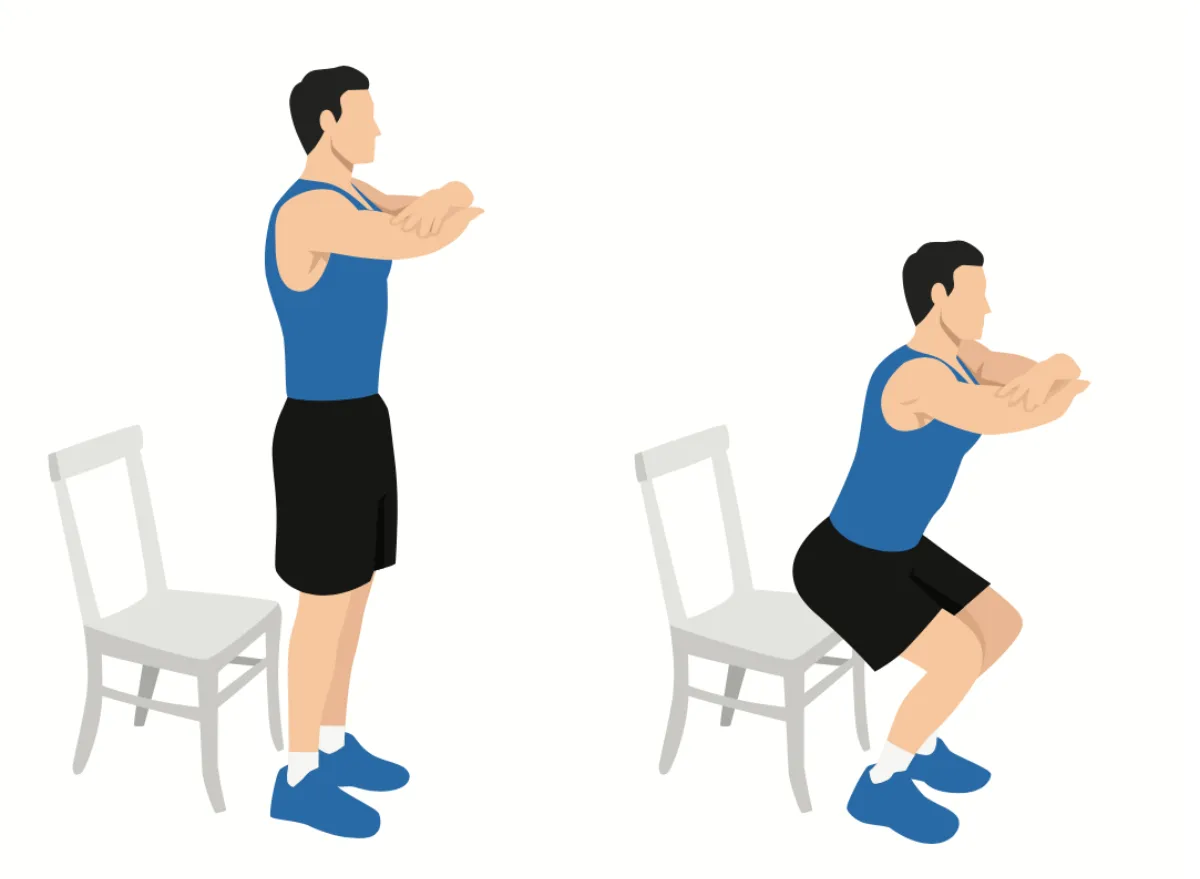
1. Chair Squats
Shutterstock
Stand in front of a chair with your feet shoulder-width apart. Lower your body to sit on the chair, then stand back up without using your hands. Repeat the movement. Perform three sets of 12 reps.
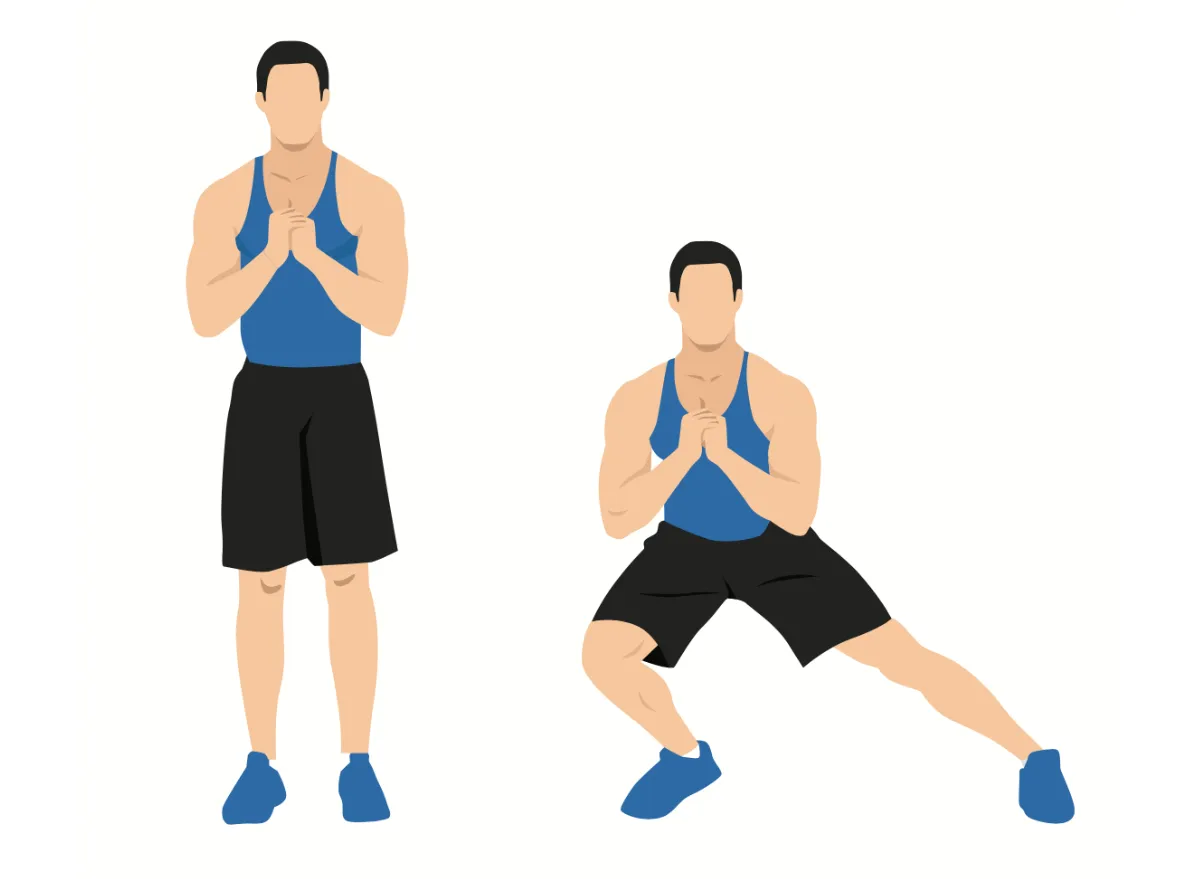
2. Side Lunges
Shutterstock
Stand with your feet hip-width apart. Step out to the right side, lowering your body into a lunge while keeping your left leg straight. Push through your right heel to return to the starting position. Repeat on the other side. Perform three sets of 10 to 12 reps per leg.
3. Standing Hip Abductions
Stand with your feet hip-width apart and your hands on your hips or holding onto a support. Lift your right leg to the side, keeping it straight and your toes pointed forward. Lower it back to the starting position. Repeat the movement for the specified reps, then switch legs. Perform three sets of 15 reps on each leg.
The #1 No-Equipment Workout for Men To Gain Muscle & Strength
Workout #6: Low-impact Aerobics
Low-impact aerobic exercises are gentle on the joints while still providing a good cardiovascular workout. This workout is perfect for maintaining heart health and leg strength.
1. Marching in Place
Stand with your feet hip-width apart. Lift your right knee to hip level, then lower it. Lift your left knee to hip level, then lower it. Continue alternating knees in a marching motion. Perform continuously for one minute. Perform three sets with a 30-second rest between sets.
2. Side Steps
Stand with your feet together. Step your right foot to the side, then bring your left foot to meet it. Step your left foot to the side, then bring your right foot to meet it. Continue stepping from side to side. Perform continuously for one minute. Perform three sets with a 30-second rest between sets.
Advertisement
3. Heel Raises
Stand with your feet hip-width apart and your hands resting on a support for balance. Lift your heels off the ground, rising onto the balls of your feet. Hold the position for a moment, then slowly lower your heels back to the ground. Repeat the movement. Perform three sets of 15 reps.
“Forget living longer, exercise can make life easier right now”—a 72-year-old fitness influencer and marathon runner shares two accessible ways to start moving
Retirement is often a time when people slow down, but in Christine Hobson’s case, she’s speeding up. When her daughter persuaded her to join a running club so she wouldn’t get bored, she had no idea she’d get the fitness bug and run 125 marathons in total, visiting all seven continents.
And the 72-year-old former teacher has plans to run the North Pole marathon in 2027.
Hobson, who believes that exercise is the best anti-aging hack, tells Fit&Well: “I think what makes you old is not doing anything and just being sedentary, sitting around watching TV all the time. I really believe the less you move, the less you’re able to move, so when I retired at almost 61, I decided that my new job was to get fit.
Latest Videos From
“Aging isn’t just about age—if you make life easier now, the future will look after itself,” she says.
Hobson, who strength trains too, has since become a fitness influencer, amassing over 132,000 followers on Instagram, where she shares workouts and her thoughts on exercise.
“I get loads of messages from people who are scared to exercise because they don’t want to fall over and get injured,” she says. “But getting stronger builds your confidence and means that you can do the things you want without needing help. It’s not about living forever. And it’s never too late to start. You’ve got to start from where you are.”
Here shares her two best tips for getting started with fitness, whatever your age.
Start your week with achievable workout ideas, health tips and wellbeing advice in your inbox.
1. Perform the sit-to-stand exercise
Hobson says an essential exercise to incorporate into your day is the sit-to-stand—a move that involves sitting and standing up from a chair without using your hands.
To build your strength, Hobson suggests doing the sit-to-stand 10 times each time you walk past a chair in your house. Once you’ve got the technique, she recommends trying it from a lower chair or couch to make it more challenging.
Advertisement
“The sit-to-stand is critical,” says Hobson. “If you can do that, that’s the thing that’s going to keep you independent in your own home. Because if you live alone and you can’t get up, then how are you going to look after yourself independently? The next thing will be that you can’t get out of your bed, and then you’re in trouble.”
Hobson began with the sit-to-stand exercise, and has progressed to squat with a 35kg barbell and deadlift 75kg.
Many people think motivation will just appear, says Hobson, but she says: “There’s no such thing as motivation really. It’s discipline. It’s building a habit. You’ve got to book your workouts in like a meeting at work, which is what I did when I retired. I prioritized fitness like a job.
“I also have my workout clothes ready to make sure I exercise—even if I’m planning to do it later in the day. I get dressed so I can’t talk myself out of it.”
Advertisement
2. Walk a mile a day
If you’re totally new to exercise, or returning after a long break, Hobson says walking is an excellent place to start.
“We are a species that is supposed to move, and even a short 20-minute walk will support your heart, your ability to control your blood sugar levels, and help you mentally and physically,” she says.
Her trick is to listen to audiobooks while she walks to encourage her to go further.
“This is how I started before I ran my first marathon,” she says. “I walked a mile a day and I really forced myself to do it come rain or shine. After about five or six weeks I found that I wanted to go more.
“And one of the things that helped was listening to audiobooks. If I got home and I had got to an exciting bit in the book I would have to go back out again to hear the next chapter so it would make me walk a bit further.”
Advertisement
Hobson describes herself as a run-walker, saying she has completed all her marathons that way. “I started exercising for something to do when I retired. Now I do it because it makes life easier.”
CrossFit means a lot of things to a lot of people – because it’s made up of a lot of things.
Since the rise of the fitness giant, countless brands, events and training methods have sprung up around it – not claiming to be CrossFit, but looking suspiciously CrossFit-esque.
There are, however, a handful of things that are uniquely CrossFit: the ‘Girls’ benchmark workouts. The Hero WODs and, of course, its signature rep schemes.
Chief among them is ’21-15-9′.
The 21-15-9 rep scheme may just be the single most CrossFit thing in existence. But what exactly is it? Where did it come from? And why might it actually be better at building muscle in a hurry than its conditioning roots would have you believe?
Advertisement
Let’s have a look.
What Is 21-15-9?
If you’ve never encountered it before, the format couldn’t be simpler. Choose two exercises (occasionally more) and perform 21 reps of each, then 15 reps of each, then nine reps of each, completing the entire workout as quickly as possible – with good form.
Probably the best-known example is ‘Fran’: 21 thrusters and pull-ups, followed by 15 of each, then nine. On paper it doesn’t look especially intimidating. In practice, it’s one of the most feared benchmark workouts in fitness.
Where Did it Come From?
Unlike many modern training methods, 21-15-9 didn’t come out of a study. It came from the gym floor.
CrossFit founder Greg Glassman has explained that the format emerged through years of coaching and experimentation in the 1990s. Rather than chasing a perfect sets-and-reps prescription, he was looking for a workout that allowed athletes to maintain a high power output from start to finish.
Advertisement
The thinking is surprisingly elegant. You begin with 21 reps while fresh. By the time you reach the set of 15, your ability to produce force has already fallen. By the final nine, you’re significantly more fatigued – but the workload has dropped by almost the same amount.
Instead of grinding through increasingly miserable sets of the same length, the workout ‘meets you where you are’, reducing the work required as your capacity declines. The result is a workout that encourages you to keep moving instead of standing around trying to recover.
The numbers themselves are also remarkably practical. Forty-five total reps per movement provides plenty of training volume without turning the session into an endurance slog, while every set divides neatly into thirds if you need to break it up.
(Although I’ve got to be honest, I’m a 20-15-10-5 man myself, just for the sake of round numbers.)
Why Does it Work So Well?
Although there isn’t research showing that 21-15-9 is somehow the magic formula, there are obvious reasons why it consistently produces brutally effective workouts.
Advertisement
Descending reps help maintain intensity. As fatigue accumulates, reducing the target allows movement quality, bar speed and overall work rate to stay higher than they would if you simply repeated the same number of reps over and over.
It also tends to land in a physiological sweet spot. Most 21-15-9 workouts take between three and eight minutes, depending on the movements and the athlete. That’s long enough to create a serious cardiovascular challenge while still requiring meaningful force production throughout. You’re taxing your anaerobic systems hard while relying on your aerobic system to help you recover just enough to keep going.
Finally, there’s the psychological trick. The hardest-looking part comes first. Once you’ve survived the opening 21, every remaining round appears more manageable. ‘Only 15 left.’ Then, ‘Just nine.’ In reality, you’re becoming more fatigued with every rep, but the shrinking target keeps you attacking the workout instead of pacing too conservatively.
Why it Might be Surprisingly Good for Building Muscle
Perhaps the biggest misconception about 21-15-9 is that it’s ‘just cardio with weights’.
Choose the right load and something interesting happens. Very few athletes complete every round unbroken. Instead, the workout naturally evolves into a series of short, broken sets separated by only a few seconds of rest.
Advertisement
Your 21 might become 11-5-5. Your 15 becomes 8-4-3. Your final nine might stay unbroken – or become 5-4.
In effect, you’ve accidentally turned the workout into a form of rest-pause training.
Those brief pauses allow just enough recovery to squeeze out more high-quality repetitions before fatigue catches up again. By the latter stages of each mini-set, you’re repeatedly working very close to failure, recruiting the high-threshold motor units with the greatest potential for muscle growth.
It’s a similar principle to rest-pause training, myo-reps and cluster sets: all methods used to accumulate hypertrophy-friendly volume while keeping the load relatively heavy and the rest periods brutally short.
You’re basically speed-running a large number of hard, growth-stimulating reps in a very small window of time. Could this help explain why elite CrossFit athletes often carry an impressive amount of muscle despite spending relatively little time performing traditional bodybuilding splits?
Advertisement
It’s certainly plausible, although the ‘elite’ part often selects for athletes with the greatest muscle-building potential.
Much of their training isn’t simply conditioning. It’s high-density resistance training performed under accumulating fatigue, with only fleeting recovery between efforts. In other words, they’re often doing something bodybuilders have deliberately programmed for decades: packing a lot of hard work into a very short period of time.
That’s not to say 21-15-9 is superior to a well-designed hypertrophy programme. If your sole goal is building muscle, there are more efficient ways to do it.
But if you’re looking for a workout that develops fitness, tests your mettle and still provides a meaningful stimulus for strength and size, it’s easy to see why this deceptively simple rep scheme has remained one of CrossFit’s defining fingerprints for more than 20 years.
Best Bodyweight 21-15-9 Workout: ‘JT’
If you’re looking for an interesting twist on the 21-15-9 format, look no further than Hero WOD ‘JT’, which concentrates the muscle-building potential of the format into a brutal upper-body workout.
Advertisement
Created in honour of Petty Officer 1st Class Jeff Taylor, who was killed in Afghanistan in 2006, the workout strips away barbells altogether and relies solely on three bodyweight movements:
21-15-9 reps of:
Don’t let the lack of equipment fool you. The volume – 45 reps of each movement, 135 reps in total – combined with the descending rep scheme makes this a brutal upper-body test, hammering the shoulders, chest and triceps while demanding serious muscular endurance.
Better still, it perfectly demonstrates one of the biggest strengths of 21-15-9. As fatigue mounts and the sets naturally fragment, the workout begins to resemble one giant rest-pause set, allowing you to accumulate a huge number of hard, near-failure reps in less than 10 minutes.
If your goal is building an impressive upper body while developing serious work capacity, there are few bodyweight workouts that deliver quite so much bang for your buck, making ‘JT’ one of my personal favourites.
Advertisement
If there’s one thing Kori Sampson knows, it’s how to optimise your body composition for performance. To tap into his knowledge as an elite athlete and coach, we asked him to create a 4-week plan to help you move faster, recover quicker and keep pushing when the fatigue sets in – all while improving your muscle-to-fat ratio.
Ready to build muscle, burn fat and come out the other side looking, feeling and performing better? Click here to get 14 days of free access to the plan via the Men’s Health app.
The concept of ‘exercise snacking’ has never been more popular. Not only is it convenient and accessible, but there is solid scientific evidence that short bursts of physical activity can yield real benefits for our health. But can a swimming workout be an effective ‘exercise snack’?
A study published in the European Heart Journal found that just 15 to 20 minutes of vigorous physical activity a week (almost as low as two minutes a day) was enough to significantly lower the risk of heart disease, cancer and early death. The study defined vigorous activity as any exercise that leaves you out of breath and raises your heart rate, including swimming.
But does ‘exercise snacking’ really work in the pool? Unlike a short run, walk, or online workout at home, going for a swim requires a bit of effort beyond the swim itself, so we often want to spend longer in the pool to make the most of it. However, head of swim for David Lloyd Clubs, Nuala Muir-Cochrane, believes short swims are worth it: “If you only have 10 minutes, consistency matters more than volume. Even two or three short swims per week can improve swim fitness noticeably,” she says.
With that in mind, I added some 10-minute swims to my routine of strength training and yoga workouts for two weeks to see if it made any difference to my health and fitness. Here’s what I discovered, plus what experts told me about optimising a short swim to either energise, recover or relax.
Benefits of 10-minute swimming workouts
1. Aids muscle recovery
To make the most of my short pool sessions, I often paired them with a gym visit, realising that I’ll need a post-workout shower anyway, so I may as well take a dip first. According to Francesca Bagshaw, performance physiologist at Nuffield Health’s Manchester Institute of Health and Performance, a short swim is perfect for recovering after the gym, a run or exercise class because it combines low-impact movement with increased circulation.
Advertisement
“After a hard session, muscles can feel stiff and fatigued due to microscopic muscle damage, inflammation and metabolite build-up,” she explains. “Gentle swimming helps stimulate blood flow without placing additional mechanical stress on joints and muscles,” Francesca recommends keeping the intensity low to moderate if recovery is your goal, to promote mobility, relaxation and circulation, without additional fatigue.
Samantha Russo, master swim coach for Virgin Active, adds, “In the pool, the water holds most of your bodyweight, so your joints get a break, but your muscles are still working gently through a big range of motion. Because water gives soft resistance in every direction, an easy swim is like active stretching with a built-in massage for the muscles, so you loosen up rather than lock up.”
Sign up to our free daily email for the latest royal and entertainment news, interesting opinion, expert advice on styling and beauty trends, and no-nonsense guides to the health and wellness questions you want answered.
2. Supports muscle building
Water is around 800 times denser than air, making swimming (or any movement in water) an effective resistance workout. Your muscles need to work harder to propel the body through the water, and multiple muscle groups will be involved, including those in your arms, legs, back and core.
Advertisement
My fortnight of short swims probably didn’t help me gain muscle – the resistance of the water never changes, so practising progressive overload (gradually increasing the weight, as I can in the gym) isn’t possible. I would have to either increase my speed, distance or duration to do this. But I felt that my short swims did support gains from strength training in the gym. Maintaining muscle has been useful for staying strong, not just for my gym workouts, but also for my yoga classes and occasional run.
10 minutes might not seem like a long time, but if you’re headed for the shower anyway, why not throw in a quick workout?
(Image credit: Kerry Law / Future)
3. Boosts energy levels
While it isn’t my preferred timeslot, I would sometimes schedule a short, pacier swim in the morning to boost my mental and physical energy before work. If you prefer morning workouts, you might find that adding a short, fast swim after the gym or an exercise class will energise you for the day ahead.
Advertisement
Samantha is a fan of morning swims: “In the morning, your circulation and nervous system are still in ‘low power mode’, and a short swim acts like a full-body wake-up call,” she says. “The cold water stimulates your skin and nerves, your breathing and heart rate increase, and more oxygen-rich blood is pushed to your brain and muscles. That mix of oxygen, movement and endorphins clears brain fog and lifts your mood far better than a cup of coffee.”
Francesca adds, “For best results, morning swims should be kept relatively short and refreshing rather than exhaustive, particularly before work or further training later in the day.”
4. Lowers stress levels
Much has been discovered about the effects of immersion in water, and how it can induce an ultra-calming ‘blue mind’state. This is partly why I favour an evening swim, not just to avoid the busiest times at the pool, but to lower my cortisol levels and put a full stop to the day. This can have a calming effect on the nervous system, explains Francesca.
“Steady, rhythmic swimming encourages controlled breathing patterns and can help shift the body toward a more parasympathetic, ‘rest and digest’, state. This reduces physiological arousal and can lower stress levels after a busy day,” she says.
Advertisement
“Warm or temperate water can reduce muscle tension and promote peripheral vasodilation [widening of the blood vessels], helping the body feel physically calmer. The repetitive nature of swimming has a meditative effect for many people, supporting mental decompression and reduced cognitive stress.”
Samantha adds that some may find evening swims contribute to a better night’s sleep: “Your core body temperature rises slightly in the water, then drops as you shower and dry off, and that drop is a natural signal to your brain that it’s time for bed.”
5. Burns calories
The number of calories you burn during a swim will depend on various factors, including the duration, distance, intensity and your bodyweight. For example, according to Harvard Medical School data, someone who weighs 155lb could expect to burn approximately 200 calories over a 30-minute low-intensity swim, rising to 360 calories for a high-intensity 30-minute swim.
Just 10 minutes of swimming will amount to a third of that calorie burn, but the ‘afterburn’ – or excess post-exercise oxygen consumption (EPOC) – may help burn a few more. The ‘afterburn’ concept suggests that we consume more oxygen to help our bodies restore and repair following intense exercise, essentially burning calories at a greater rate. However, research suggests this amounts to just a handful of extra calories burnt.
However, I can be confident that spending an extra 10 minutes swimming in the evening burns more calories than my alternative (usually sitting on the sofa watching TV). It’s the same for a 10-minute walking workout.
Advertisement
10-minute swimming workouts to try
Multi-stroke sprint swimming workout
Nuala recommends this swim workout for beginner-intermediate level swimmers. “It improves cardiovascular fitness without the need for a long session, while using different muscle groups through the stroke changes. The easy swim at the end helps recovery and reduces stiffness,” she says.
How to do it:
For the first five minutes, alternate between front crawl, breaststroke and backstroke for one length each.
On every fourth length, sprint at your near maximum effort. Maintain controlled technique even when swimming faster.
For the final five minutes, cool down with gentle continuous swimming with whichever stroke feels most relaxed. Focus on long strokes with steady breathing and low effort.
Maintaining form is crucial, says Nuala: “For front crawl, keep your head still and look slightly downward rather than forwards; in breaststroke, glide briefly after each kick rather than rushing the strokes; and for backstroke, keep your hips high and do small continuous kicks.”
Varied swimming workout
Cheryl Pottinger, swim teacher for Better, suggests this 10 minute routine which goes up and down the speed scale over 300m (in a standard 25m pool).
How to do it:
Warm up with one length of front crawl, followed by one length of breaststroke at normal pace.
For your main set, swim front crawl with a 10 second rest after each practice, starting with one length at your maximum speed.
Follow it with two lengths at 80% of your maximum speed.
Shift down a gear for the next three lengths at normal pace.
Swim the next two lengths at 80% of your maximum speed.
Finish this section with one length at maximum speed.
Cool down with one length in a stroke of your choice at normal pace.
Recovery swim
As a gentle short swim to aid relaxation after a gym session, Cheryl recommends this sequence. It incorporates the lesser known side stroke, which is relaxed, energy efficient and builds core stability as it forces your midsection to engage as you balance on one side.
How to do it:
Advertisement
Warm up with one length of front crawl and one length of breaststroke at a relaxed pace.
Swim the next two lengths in side stroke, one length on the right side and one on the left. This stroke requires balancing on one side of the body, reaching forward with one arm while the other pulls back, and scissor kicking the legs. “Focus on the power in the muscles during the pull and kick, and the stretching of the muscles during the glide,” says Cheryl. Watch a demo here.
Finish with one length of steady-paced breaststroke, and a final length of head-first sculling (lie on your back using your arms to propel you backwards).
Tips for making the most of a 10-minute swimming workout
Make it your post-gym habit: All the effort involved in travelling to and from the pool, let alone changing in and out of clothes, may not feel worth it for just 10 minutes in the pool. So, I often tacked it onto the end of my regular gym session. If your gym has a pool, make the most of it and view it as part of your workout ‘cool down’ and recovery before showering and heading home.
Tailor your swim to the time of day: There are still benefits to be had if you take a relaxing swim in the morning, or a higher intensity swim in the evening, but you might be working against your energy levels. As Francesca recommends, a pacier swim early in the day can boost alertness, while a lighter intensity swim in the evening can aid post-workout recovery and sleep.
Choose quieter pool times: This goes for however long you wish to spend swimming, but having a lane all to yourself allows you to follow a plan without compromise. I find evenings are best for me but check your local pool timetable to avoid sharing space with unexpected aqua aerobic classes or school swimming lessons.
Bring a poolside kit bag: With just 10 minutes in the pool, you don’t have time to keep nipping back to your locker to fetch forgotten kit. Have a small kit bag pre-packed with anything you might need (think spare hairclips and hairbands, anti-fog goggle spray, kickboard and pull buoy if you’re using them), and keep it at the end of your lane (make sure it isn’t a trip hazard).