World
Italy recalls Swiss ambassador over bar fire suspect release


By Euronews with AFP
Published on
Italian Prime Minister Giorgia Meloni on Saturday voiced outrage after the release of Jacques Moretti, co-owner of a Swiss bar where 40 people lost their lives and 116 others were injured during New Year’s celebrations.
In a statement, Meloni and her Foreign Minister Antonio Tajani said they asked Rome’s ambassador to Switzerland to contact regional public prosecutor Beatrice Pilloud and convey their “strong indignation” over the decision to free Jacques Moretti on bail.
Italy has also recalled its ambassador to Switzerland to “determine what further measures to take”, the statement said.
Ignazio Cassis, Vice President of the Swiss Federal Council, responded on social media platform X that “we understand the pain, because it’s our pain too,” adding that he had spoken to Tajani, with the two of them reaffirming “Switzerland and Italy’s willingness to support each other in this shared tragedy.”
The bar “Le Constellation”, located in the ski resort of Crans-Montana and owned by French couple Jacques and Jessica Moretti’s bar, caught fire early on 1 January as partygoers celebrated. Six young Italians were killed, and more than a dozen were among the 116 seriously injured.
The Morettis are under criminal investigation, facing charges of manslaughter by negligence, bodily harm by negligence and arson by negligence.
Jacques Moretti had been held in custody since 9 January, while Jessica remained free under certain restrictions. He was released on Friday after a close friend of his paid his bail of 200,000 Swiss francs (€215,628).
According to the court’s grounds, the decision was made following a new assessment of the risk of flight and after examining the origin of the funds and the nature of the relationship between the defendant and the bailer. Although the Valais Public Prosecutor’s Office had requested the imposition of an electronic bracelet, the judges did not consider it necessary, applying the so-called classical measures instead.
Moretti will be obliged to report daily to a police station, will not be allowed to leave Swiss territory, and had to deposit all identity and residence documents with the Public Ministry.
News of Moretti’s release brings strong reaction from Meloni
The news caused a significant reaction from Rome, with Prime Minister Giorgia Meloni calling the development an outrage to the memory of the victims and an insult to their families. The Prime Minister also announced that the Italian government will officially ask the Swiss authorities for an account of the decision.
Meloni’s statement pointed to the “extreme gravity of the crime” Moretti is suspected of, “the heavy responsibilities weighing on him, the ongoing risk of flight, and the clear risk of further tampering with evidence”.
“This decision is a grave affront and a fresh wound inflicted on the families of the victims of the Crans-Montana tragedy and on those who are still hospitalised,” it said.
“All of Italy is crying out for truth and justice and demands that, after this catastrophe, respectful measures be taken that fully take into account the suffering and expectations of the families.”



NEWYou can now listen to Fox News articles!
U.S. Ambassador to the United Nations Mike Waltz scolded Iran during this week’s U.N. Security Council meeting, saying Tehran “will not silence” the body following claims by the Islamic Republic’s representative that council members were spreading falsehoods about its recent attack targeting neighboring Gulf states.
“Let me remind you where you are,” Waltz told Iranian diplomat Amir Saeid Iravani. “This is the United States of America. This is the United Nations Security Council. You will not silence this body.”
Waltz’s remarks came during an emergency meeting of the council in response to drone and missile attacks targeting Bahrain and Kuwait Sunday after new U.S. airstrikes against Iran.
GULF COUNTRIES STRONGLY CONDEMN IRAN’S DRONE ATTACK ON BAHRAIN AS RISING TENSIONS THREATEN MOU
U.S. Ambassador to the United Nations Mike Waltz holds up images he said show the aftermath of Iranian drone and missile attacks on Bahrain and Kuwait. (U.N. Security Council)
During his remarks, Iravani argued the council should not have met, while accusing the U.S., Bahrain and other members of lying.
“Once again, the representative of the United States has resorted to lies and disinformation against Iran in a desperate attempt to justify the US’s unlawful acts of aggression,” Iravani said.
He also rejected the “unfounded accusations made by certain Western members of the Council and the representative of Bahrain.”
IRAN HARDLINER BEHIND US DEAL WARNS TEHRAN WON’T HONOR AGREEMENT IF TRUMP FAILS TO DELIVER
Ambassador Amir-Saeid Iravani of Iran speaks during a Security Council meeting after members voted on draft resolution on reopening of Strait of Hormuz at U.N. Headquarters. (Pacific Press/LightRocket via Getty Images)
“Instead of addressing the root cause of the current crisis, they have ignored the unlawful aggression committed against Iran and sought to shift blame onto the victim,” he added. “Their double standards and hypocritical behavior have deprived them of any credibility to lecture others.”
In a post on X, Waltz reiterated his position.
“Iran will not silence us on our own soil,” he wrote. “That might work in Tehran, but not in the UN Security Council. We will tell the truth.”
HOW IRAN ATTACKS ARE FORCING THE PENTAGON TO RETHINK ITS DECADES-OLD MIDDLE EAST BASE STRATEGY
Firefighters work to extinguish fire in the aftermath of Iranian drone attacks, according to Bahrain’s Interior Ministry, at a location given as Bahrain, in this handout image released on June 11, 2026. (Ministry of Interior of the Kingdom of Bahrain/Handout via Reuters)
During the exchange, Waltz held up what he said were images of the aftermath of the Iranian attacks, including a family whose home in Bahrain was destroyed by a Shahed drone, a hotel full of tourists that was also hit and a building used by first responders that Waltz said was deliberately targeted.
“Are they lying?” Waltz said of the victims of the attack. “Is this hypocrisy? Is this what this council is here to denounce today? I ask the representative, are these lies? … I’d say not.”
Abdullatif bin Rashid Al Zayani, Bahrain’s minister of foreign affairs, said that, since Feb. 28, the island nation has been subjected to 808 attacks comprising 203 ballistic missiles and 605 armed drones.
“These attacks deliberately targeted civilian facilities, critical infrastructure and residential areas, resulting in the deaths of three innocent civilians and injuries to 465 others,” he said, disputing Tehran’s claim that its aggression is directed solely against military objectives.
Washington and Tehran have repeatedly accused each other of violating a fragile ceasefire agreement. On June 27, President Donald Trump said U.S. forces struck Iranian missile and drone storage locations and coastal radar sites after Iran violated the deal.
U.S. Ambassador to the United Nations Mike Waltz speaks after the United Nations Security Council voted on a resolution calling for the unblocking of the Strait of Hormuz during a U.N. Security Council meeting on Iran and the Middle East at U.N. headquarters in New York April 7, 2026. (AFP via Getty Images)
CLICK HERE TO DOWNLOAD THE FOX NEWS APP
The exchanges of fire began when an Iranian drone struck a merchant vessel off Oman last week and the U.S. military retaliated, officials said.
“It is very possible that they will never learn! There may come a point when we are no longer able to be reasonable, and will be forced to militarily complete the job that we very successfully started,” Trump wrote on Truth Social. “If that happens, the Islamic Republic of Iran will no longer exist!”

In the city of Nabatieh, ambulance teams, civil defense units, scouts, municipal workers, and residents joined forces in a large cleanup campaign to remove rubble and reopen streets following extensive destruction caused by the Israeli war on Lebanon.
Published On 4 Jul 2026
-
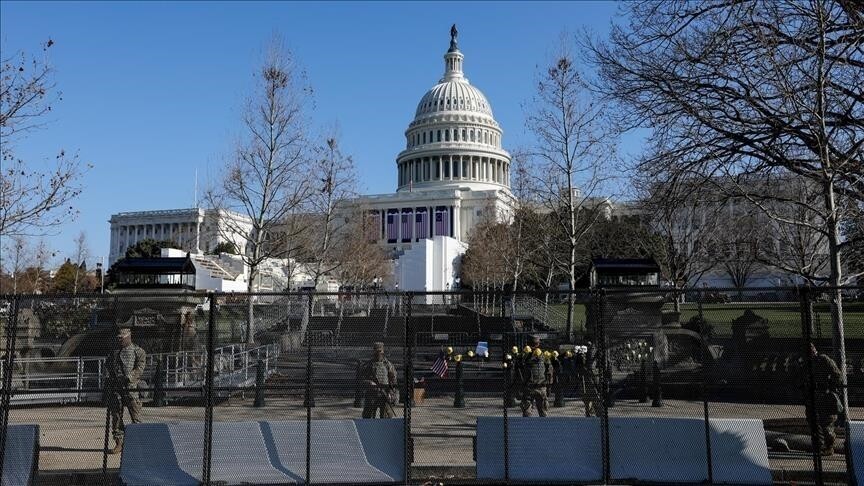 Washington, D.C57 seconds ago
Masked men carrying Confederate flags seen chanting, marching, in Washington DC
-

 Cleveland, OH8 minutes ago
Chicago White Sox vs. Cleveland Guardians prediction, pick for Friday 7/3/26
-

 Austin, TX11 minutes ago
South Texas Health System (@stxhealthsystem)
-
 Alabama16 minutes ago
5-Star OL commits to Texas over Alabama and others
-

 Alaska23 minutes ago
Semi overturns on highway north of Seward, spilling salmon
-

 Arizona26 minutes ago
Arizona gets commitment from 3-star Texas OL Mason Joshua
-

 Arkansas31 minutes ago
Why Unheralded CJ Brown Could Be Arkansas’ Answer at WR1
-

 Colorado41 minutes ago
Most Expensive Colorado Buffaloes Road Tickets This Fall

