Plus special access to select articles and other premium content with your account – free of charge.
By entering your email and pushing continue, you are agreeing to Fox News’ Terms of Use and Privacy Policy, which includes our Notice of Financial Incentive.
Please enter a valid email address.
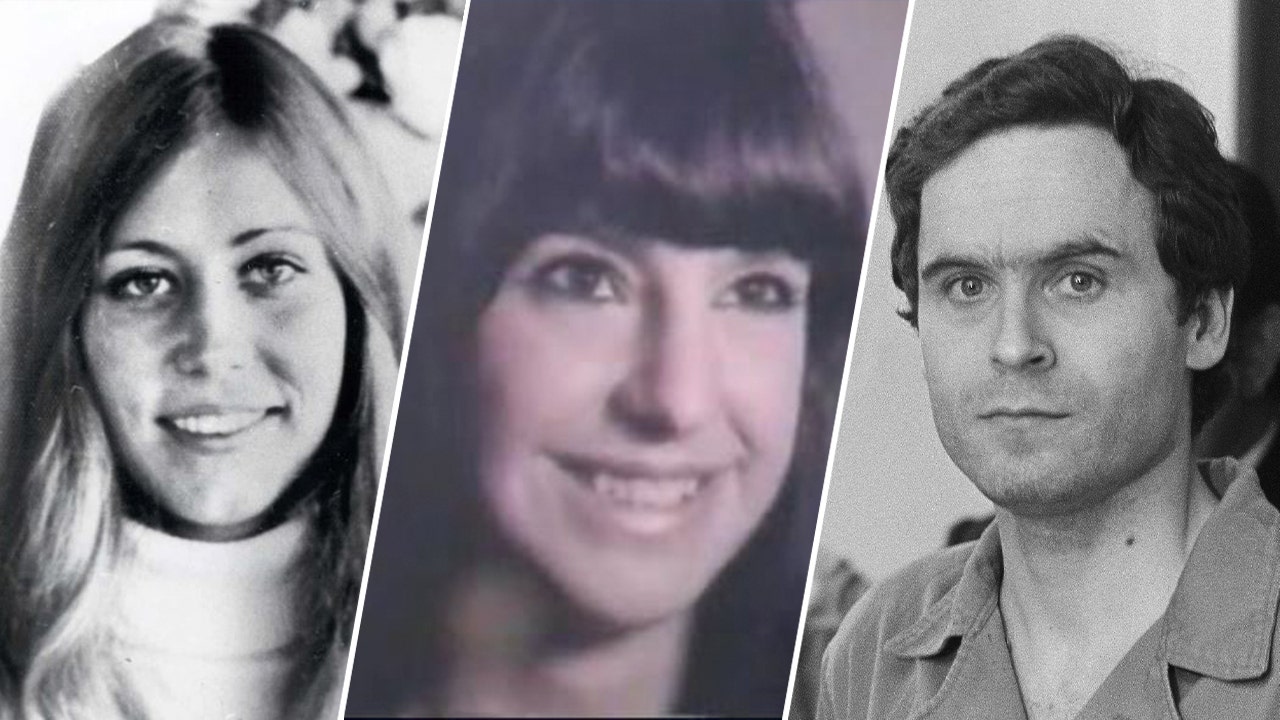
Sunday marks 50 years since Ted Bundy, one of America’s most infamous serial killers, abducted two young women on the same day from the same crowded Washington state beach.
Although it was not the first time Bundy struck twice in one day, snatching the two women in a four-hour timeframe was among the most brazen acts of his years-long cross-country crime spree.
Advertisement
Although Bundy confessed to 28 murders, some estimate that he was responsible for the deaths of hundreds of women between 1974 and 1978.
TED BUNDY SURVIVOR REVEALS WHAT SAVED HER FROM SERIAL KILLER’S SORORITY-HOUSE RAMPAGE
Ted Bundy, pictured during his 1979 murder trial at the Miami-Dade County Metro Justice Building, killed at least 28 women and girls between 1974 and 1978.(Getty Images)
Janice Ann Ott, 23, and Denise Marie Naslund, 19, both disappeared from Lake Sammamish State Park, about 15 miles from Seattle, on July 14, 1974.
Bundy killed both women that day, The Seattle Times reported, but their bodies weren’t discovered for another two months.
Bundy approached various women at the park, asking them to help him unhook his boat from his tan Volkswagen bug. Four female witnesses would later describe an attractive man wearing a white tennis outfit with his left arm in a sling who spoke in a slight, possibly Canadian accent and was overheard introducing himself as “Ted.”
Three of the women refused; a fourth accompanied Bundy to his car, then ran after seeing that there was no sailboat.
TED BUNDY’S EX-GIRLFRIEND RECALLS HORRIFYING ENCOUNTER WITH THE SERIAL KILLER: ‘HE JUST LAUGHED’
Denise Naslund, right, was abducted by Ted Bundy four hours after Janice Ott, left, on July 17, 1974. Skeletal remains of both women were found about two miles away on Sept. 6 of that year.(Kings County Sheriff’s Department)
Advertisement
Ott, a juvenile caseworker at the nearby King County Juvenile Court, was seen by three witnesses leaving the park’s beach with the man. Before she left her home on her yellow bicycle that day, Ott put a note on her door to tell her roommate that she was going sunbathing, drawing a doodle of the sun on her note, according to Friends of Lake Sammamish State Park. Her husband, James, was in California attending medical school.
SIGN UP TO GET TRUE CRIME NEWSLETTER
Naslund, who was studying to become a computer programmer, never returned from the restroom on a picnic with her boyfriend and another couple. Her mother would tell The Seattle Times that Naslund had the sort of helpful nature that could place her in danger.
King County police distributed a composite sketch based on descriptions of the man and his car, which was printed in area newspapers and broadcast on local television stations.
‘PARALLELS OF EVIL’: TED BUNDY SURVIVORS SPEAK OUT, LINKING THEIR GRUESOME ATTACKS TO BRYAN KOHBERGER’S
Advertisement
Ott and Naslund were lured off the crowded beach at Lake Sammamish State Park by Bundy, who wore a sling on his arm and claimed he needed help unhooking his sailboat from the trailer hitch of his vehicle. The park is pictured in 2020.(Chona Kasinger/Bloomberg via Getty Images)
Bundy’s girlfriend Elizabeth Kloepfer, his friend Ann Rule and one of Bundy’s psychology professors from the University of Washington all recognized the composite and contacted police, according to King County Detective Robert Keppel’s book, “The Riverman: Ted Bundy and I Hunt for the Green River Killer.”But at the time, Rule wrote in her own book, detectives thought it was unlikely that the clean-cut law student was their suspect.
GET REAL TIME UPDATES DIRECTLY ON THE TRUE CRIME HUB
Based on the description of the vehicle and the suspect, Keppel pored over thousands of automobile registration documents, The Seattle Times reported. Bundy was on the final list of potential suspects.
On Sept. 6 of that year, grouse hunters found skeletal remains near a service road in Issaquah, about two miles away – dental records showed that most of them belonged to Ott and Naslund, The Bulletin reported at the time.
Advertisement
Bundy was put to death on Jan. 24, 1989, at Florida State Prison.(Bettmann via Getty Images)
Bundy later identified an extra femur and vertebrae found at that scene as those of Georgann Hawkins, an 18-year-old University of Washington student who went missing in the early hours of June 11 of that year while walking from her boyfriend’s dormitory to her own, Keppel wrote.
Bundy later told journalist Stephen Michaud and FBI agent William Hagmaier that Ott was still alive when he kidnapped Naslund, and that he forced one woman to watch while he assaulted, then murdered the other. He later recanted that claim, along with others, in an interview on the night of his execution in 1989.
Before his capture, Bundy struck twice in one day once more on Nov. 8, 1974, first posing as a police officer and luring 18-year-old Carol DaRonch to his tan Volkswagen Beetle from a mall in Bountiful, Utah.
Ted Bundy’s image on a television screen on the lawn of the Florida State Prison.(Getty Images)
Advertisement
Bundy attempted to snap handcuffs onto the teen, but DaRonch was able to escape. A key that fit the lock to those cuffs was found in a high school parking lot where 17-year-old Debra Kent was last seen leaving a high school play to pick up her younger brother.
In 2015, a patella bone found in 1989 at the site where Bundy told investigators he’d left Kent’s body was positively identified as the teen, Wired reported. After 40 years, her family finally got closure and a death certificate.
On Aug. 18, 1975, Highway Patrol Sgt. Bob Hayward stopped Bundy’s tan Volkswagen, which was lingering outside a home in Granger, Utah.
After finding a ski mask, a crowbar, an ice pick and handcuffs in the car, the officer placed Bundy under arrest – but he was soon released.
In October of that year, DaRonch and two other women pointed Bundy out in a police lineup, leading to his arrest on attempted kidnapping charges, according to the Los Angeles Times. He was convicted of aggravated kidnapping in March 1976, The Deseret News reported at the time.
Advertisement
In October of the next year, while Bundy was serving that prison sentence, investigators were able to link Bundy to the January 1975 disappearance of Caryn Eileen Campbell with the discovery of her hair in his Volkswagen, The New York Times reported.
Campbell, a 23-year-old registered nurse, was last seen walking down a well-lit hallway between the elevator and her room at a Colorado hotel in January of that year; her nude body was found a month later next to a dirt road just outside the resort.
After he was charged with first-degree murder in Campbell’s death, Bundy infamously escaped a law library at Aspen’s Pitkin County Courthouse in June 1977, leading police on a six-day manhunt before his capture, ABC reported. He would escape a second time after losing enough weight to slip through a ceiling duct in his Colorado prison cell.
Before he was captured for good, Bundy killed two Florida State University sorority sisters and injured three more in January 1978, then killed 12-year-old Kimberly Leach.
Advertisement
Bundy was apprehended in February 1978, and his nationally televised trial began in June 1979. He was convicted in the deaths of the Florida State students on July 24, 1979, then for Leach’s death in January 1980.
Bundy was put to death on Jan. 24, 1989 at Florida State Prison – the declaration of the killer’s death at 7:16 a.m. drew cheers from the estimated 200 people in attendance, the Times reported.
The owner and operator of the boat that capsized earlier this week near Alcatraz Island said Thursday that his brother was killed and his sister, sister-in-law and a family friend remained missing after what began as a family trip to spread a relative’s ashes.
“It’s been horrible,” John Boisa said in a brief interview.
His comments came as San Francisco police used sonar to search for the 49-foot Volare and recovered a body floating west of Treasure Island. Authorities had not identified the person as of early Thursday evening.
Police were alerted to the body shortly after 1 p.m. by a passing vessel. The agency said it was using “multiple boat-mounted sonar platforms” to search for the Volare, which sank in water roughly 130 feet deep between Alcatraz Island and San Francisco.
Advertisement
The search has been complicated by “strong tidal currents along with wind and weather challenges,” police said in a statement.
Twenty people were aboard the boat when a wave struck it shortly after 3:30 p.m. Tuesday, causing the vessel to list before rolling over and sending everyone into the water.
Clifford Boisa, the operator’s brother, was pulled from the water and later declared dead despite receiving CPR. Sixteen others were rescued by a flotilla of first responders and nearby boaters.
Still missing Thursday were Clifford Boisa’s wife, Jackie Boisa; John Boisa’s sister, Carol Boisa; and a family friend whom he identified only as “Tonda.”
In a text message to this news organization, John Boisa recalled Jackie Boisa as possessing “a rare combination of easy acceptance of others with a kind of elegant sophistication.”
Advertisement
“She was simply a Lady and conducted herself in accordance with the highest meaning of that term,” he wrote.
He remembered his sister as bringing “her own special flavor to family gatherings and the earthy, natural joy she brought was ineffable.”
“I was especially pleased to see her enjoy our boating in recent years, and her smiles in photographs were genuine and without affectation,” he added. “I wanted for her and her children happiness and ease, and now, peace.”
Boisa, a Stockton-based consultant, said he had known Tonda only a short time but recalled her as “a generous, welcoming and gracious person.”
“I wish I knew her better, and I pray for peace and healing for her family,” he wrote.
Advertisement
Boisa described himself as the “vessel operator” and said Tuesday’s outing was “a family gathering” that included spreading the ashes of a relative who had died “a long time ago.”
Two days after the disaster, more details emerged about the boat, its weeklong stay in San Francisco and its final hours on the water.
The Volare, a 1981 Marine Trader Pilot built in Taiwan with a fiberglass hull, was based at Village West Marina & Resort, according to Tamara Barak Aparton of the San Francisco Recreation and Parks Department.
A police boat passes Alcatraz Island as search and rescue operations continue for victims of a Tuesday boat sinking on Wednesday, July 15, 2026, in San Francisco. (AP Photo/Noah Berger)
John Boisa received a guest permit to berth the boat at the city’s Marina Yacht Harbor from July 11 through Thursday, Aparton said. He had previously stayed at the harbor, though details about those visits were not available Thursday.
The vessel left the harbor around 10:15 a.m. Tuesday and traveled beneath the Golden Gate Bridge into the Pacific Ocean, according to the tracking website VesselFinder. It turned around about an hour later off Lands End and the Sutro Baths before returning to the bay at a slower speed.
Advertisement
The boat appeared to stop at Ayala Cove on the northwest side of Angel Island, leaving shortly after 3 p.m. and heading back toward the harbor, tracking data showed.
The Coast Guard’s search for survivors covered 950 square nautical miles before ending Wednesday evening. As police continued the recovery effort Thursday, maritime experts said they expected a lengthy investigation into how a vessel such as the Volare could capsize.
A US Coast Guard vessel navigates the San Francisco Bay while assisting a boat that got stuck on Alcatraz Island’s underwater rocks on Wednesday, July 15, 2026, in San Francisco. (AP Photo/Noah Berger)
The Volare — a monohull recreation craft complete with two walled-off cabin levels and a deck top — was intended to handle waters such as San Francisco Bay, said Eric C. Jones, a retired Coast Guard rear admiral and superintendent of the Cal Poly Maritime Academy in Vallejo. Still, he said it was “unusual” for such a vessel to flip over in the bay.
Investigators are likely to examine whether the boat was properly maintained and operating correctly, and whether it could safely carry 20 people, Jones said. They also are expected to scrutinize the weather and water conditions that day and how the boat was operated in that environment.
The area where the Volare sank can be among the most challenging to navigate in the bay because of its distinctive winds and currents, said John Arndt, who has sailed the bay for more than 40 years and spent the past decade as publisher of the Northern California sailing magazine Latitude 38.
Arndt called the area “the playground of sailing” and compared portions of the bay to a ski hill, with some areas better suited to beginner and intermediate boaters. The area where the Volare sank could be compared to a black diamond ski run, he said: a more “challenging” section but one that is navigable for people experienced with those waters and conditions.
Advertisement
July and August are generally the windiest months on the bay, a result of hot air rising over the Central Valley and pulling cooler air from the Pacific Ocean through the bay’s narrow entrance. While winds can remain manageable in some areas, the central channel between Angel Island and San Francisco can experience strong sustained winds and gusts.
The water can become particularly choppy when westerly winds collide with an outgoing tide. Water flowing from the Sacramento and San Joaquin river valleys toward the Pacific further complicates the currents in that area.
Arndt called a disaster of this magnitude involving this type of boat “exceptionally rare.” He said Tuesday’s conditions were not outside the normal range for summer boating on the bay.
“When people analyze accidents and disasters, it’s not one thing — it’s sort of these things that tend to be a spiral of events,” Arndt said.
A California Highway Patrol helicopter flies along the Sausalito, Calif. shoreline as search and rescue operations continue for victims of a Tuesday boat sinking on Wednesday, July 15, 2026. (AP Photo/Noah Berger)
Jakob Rodgers is a senior breaking news reporter. Call, text or send him an encrypted message via Signal at 510-390-2351, or email him at jrodgers@bayareanewsgroup.com.
Pedal boats are back at City Park in Denver this week and they come in more shapes than just swans.
On Wednesday, the city of Denver opened its newest so-called Adventure Hub where visitors can rent gear to enjoy on Ferril Lake. That includes pedal boats shaped like swans, dragons, ducks and flamingos, as well as kayaks, canoes and stand-up paddleboards. If you’d rather pedal on land instead of the water, the hub also has beach cruiser bikes and surrey bikes, which hold up to six people, available for rent.
Surrey “stretch limousines” that fit up to six rider are now available for rent at City Park and Washington Park in Denver. (Provided by Denver Parks & Recreation)
City Park’s Adventure Hub is the second to open this year, following another at Washington Park in early June. Stephanie Figueroa, spokesperson for Denver Parks and Recreation, said rentals were supposed to start sooner at City Park, but that the electricity powering the point-of-sale system needed to be replaced after a fire at the historic bandshell there.
Water sport rentals cost range from $15 per hour for a SUP or single-person kayak to $35 per hour for swan, dragon and duck pedal boats, which fit up to four people. Bikes are similarly priced at $15 per hour for a single-person beach cruiser up to $45 per hour for a surrey “stretch limousine” for six riders. Figueroa noted that it is a flat fee and not a per-person charge.
Advertisement
“For families, as long as you fit, you can go,” she said, adding that gear is available for rent during the City Park Jazz series this summer.
This year marks the first time in at least two decades that Denver officials have managed gear rentals in City Park. The city ended its longtime contract with vendor Wheel Fun Rentals, which previously supplied things like swan pedal boats, in early 2026 after more than 20 years, Figueroa said.
Denver’s decision to take over operations was both more cost-effective and enabled the city to have more control over the experience, she added. Part of the impetus was a recent initiative called the Outdoor Adventure and Alternative Sports Strategic Plan, which sought to identify how Denver could offer more recreation opportunities to residents.
“That gave us the tools and knowledge to bring this in-house,” Figueroa said. “We have historically been amazing at indoor recreation and now we want to bring more of those opportunities outside.”
The Adventure Hub at City Park is open every day from 10 a.m. to 9 p.m., while the one at Washington Park is open every day from 7 a.m. to 9 p.m. They are both closed on city-observed holidays.
Advertisement
Another Adventure Hub, currently under construction at Ruby Hill, is expected to open late this year or early next, Figueroa said.
Subscribe to our weekly newsletter, The Adventurist, to get outdoors news sent straight to your inbox.
Get ready to rumble with tickets to these newly announced shows. Groovy genre-bending bassist Thundercat will come through Seattle to support his recent release, Distracted. Pop-rock singer-songwriter Michelle Branch has announced a new album and cross-country tour for the fall. Plus, Daily Show correspondent and former pro tennis player Michael Kosta brings his Big Dad Energy stand-up special to Seattle next spring. Read on for details!
ON SALE FRIDAY, JULY 17
MUSIC
The Amity Affliction: House of Cards 2026 Showbox SoDo (Fri Nov 27)
Bravo the Bagchaser & Peysoh The Crocodile (Wed Sept 23)
Advertisement
Candlebox – Can’t Quit You Tour Paramount Theatre (Fri Sept 25)
See more on EverOut!
Related
Advertisement
EverOut is The Stranger’s new website devoted to things to do in Seattle and across the Pacific Northwest. It has all the same things you’re used to seeing from Stranger EverOut Staff, just in a new spot!…
More by EverOut Staff