West
Japanese soufflé pancake gaining popularity in US, yet origin story begins in Hawaii 15 years ago

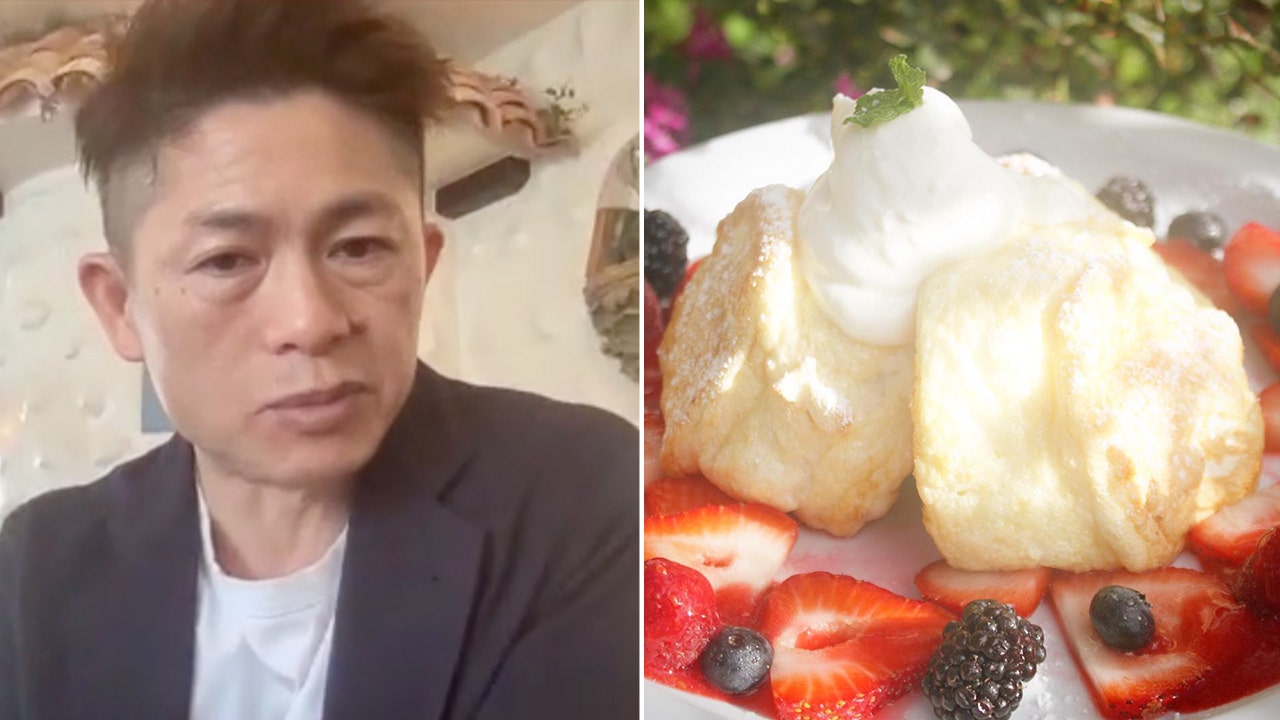
As the Japanese soufflé pancake has grown in popularity amid the recent U.S. expansion of a Canadian-headquartered dessert café, its origin can be traced to a Hawaiian restaurant and its pancake-averse chef.
Nathan Tran is proprietor and general manager of the Cream Pot, a popular breakfast and brunch spot for Japanese tourists and Hawaiian residents in the Waikiki neighborhood on the south shore of Honolulu.
There, Chef Tran routinely prepares his signature dish – the one that brought him internet fame and made the Cream Pot a destination. But it wasn’t always like that, Tran told Fox News Digital in a Zoom interview with his restaurant as a backdrop.
‘SCRAMBLED PANCAKES’ CAUSE VIRAL STIR ON SOCIAL MEDIA: ‘THIS IS A CRIME’
Tran’s intent, when he first opened the Cream Pot in 2008, was to serve up a brunch menu of sweet entrées such as crêpes and “pain perdu” (French-style French toast) and other savory dishes. Absent from the menu, however, were pancakes.
“We never had pancakes on the menu because we didn’t want to make anything that we didn’t like eating ourselves,” Tran said. “I wasn’t too fond of typical pancakes … They were just not for me.”
A Japanese soufflé pancake is pictured. Nathan Tran, who opened the Cream Pot restaurant in Hawaii in 2008, discussed with Fox News Digital how he created the concept of the Japanese soufflé pancake. (iStock)
But within the first six months of business, it became apparent there was an interest in pancakes, especially among Japanese customers, Tran said.
When customers learned it was the only typical breakfast dish missing from the menu, “they would do a 180 [degree] U-turn and go away,” Tran recalled.
“We do it the classic way in terms of the ingredients.”
Unwilling to “sell out” and give in to making pancakes, Tran, who is of Japanese descent, decided to combine his love of soufflés and his interest in sweets into a dish that would appeal to both his sensibilities and the pancake crowd.
DO YOU LIVE IN A PANCAKE STATE OR A WAFFLE STATE?
“I thought a great idea would be to do a freestanding souffle with a twist so it kind of resembles the looks of a pancake,” Tran said.
Cream Pot owner and chef Nathan Tran is shown at his restaurant in Hawaii while speaking to Fox News Digital via Zoom video. (Fox News Digital)
“A pancake is essentially a quick bread, but a classic souffle doesn’t really have any flour in it. So, we do it the classic way in terms of the ingredients.”
And with that, the soufflé pancake was born.
Birth of a breakfast soufflé
Tran shared with Fox News Digital how he makes the soufflé pancake at his restaurant.
“There’s no flour in ours,” Tran said. “It gets its rise from meringue and some custards and creams and cheeses.”
It’s also gluten-free, Tran revealed, “but we don’t advertise it that way.”
Cream Pot owner and chef Nathan Tran says he created the Japanese soufflé pancake because he’s always liked sweets and didn’t particularly care for pancakes, although his customers did. At right, one of his creations. (Fox News Digital/Nathan Tran)
“With ours, we make some custards that we blend in with some cheeses,” Tran said.
“And then with the meringue, we mix it, blend it and we fold it, and then we’ll put it onto a skillet or a flat iron. And we’ll sear it on both sides first to get its shape, and then we’ll bake it. And then we bake it to a certain point where the inside’s just cooked but still soft and custardy like an actual soufflé.”
CHEF ALEX GUARNASCHELLI ANNOUNCES DELICIOUS PANCAKE INITIATIVE WITH NUTELLA TO HELP AMERICA’S FIREHOUSES
Each soufflé pancake is about 70% baked, Tran said.
“We leave it and then right before we serve it, we’ll bake it again to get the maximum rise on it,” he said. “They’ll deflate if you leave them sitting too long.”
The soufflé pancake that he makes, said Tran (not pictured), gets its rise “from meringue and some custards and creams and cheeses.” (iStock)
‘Just advertising on a chalkboard’
In the beginning, Tran said, “we were just advertising on a chalkboard. And slowly people started ordering them.”
As Tran explained it, his creation soon caught the attention of a Japanese magazine profiling breakfast places in Hawaii. From then on, Tran said, the international and national media took notice of this “really interesting-looking item because it was nice and thick and fluffy and soft-looking.”
Eventually, Tran was approached by Japanese companies looking to partner or franchise with him.
“A pancake is essentially a quick bread, but a classic soufflé doesn’t really have any flour in it,” said Tran. “So, we do it the classic way in terms of the ingredients.” (iStock)
“I just wanted to keep it boutique and keep it small,” Tran said. “I didn’t want to be involved with something like that. I knew it’s just going to go out of control in terms of the quality and stuff like that. So, I just stayed away from it.”
THESE ARE THE TOP 5 US CITIES FOR BRUNCH, PLUS SOME HIGHLY RECOMMENDED RESTAURANTS
There was also plenty of interest from others looking to replicate the soufflé pancake, Tran said.
“A lot of people started coming and trying to study the product,” he said. “It was funny.”
Soufflé pancake goes mainstream
Almost a decade after Tran debuted his dish in Hawaii, Benson Lau created his own rendition of the soufflé pancake more than 4,000 miles away in Canada.
Lau founded Fluffy Fluffy – known internationally as Fuwa Fuwa – in 2018, a year after studying pastry in Tokyo.
Lau said he is self-taught in the art of the soufflé pancake.
Benson Lau is founder of Fluffy Fluffy, North America’s largest dessert soufflé café, its website claims. “I didn’t learn from anyone,” Lau said. (Fluffy Fluffy)
“I didn’t learn from anyone,” he told Fox News Digital in a telephone interview.
Two years after the first Fluffy Fluffy opened in Toronto, the business began franchising outside of Canada and eventually expanded into the U.S., becoming North America’s largest dessert soufflé café, according to its website.
The first Fluffy Fluffy in the U.S. opened in Orlando last year and its newest U.S. location in Miami opened last month. Besides Florida, there are also Fluffy Fluffy locations in California, Texas and Georgia.
Fluffy Fluffy’s version of the soufflé pancake is “fun and authentic,” a sort of balance between the East and the West, Lau said.
“I basically tested the recipes over 1,000 times,” Lau said, to find the right “balancing texture between a pancake and a soufflé.”
Lau said Fluffy Fluffy’s soufflé pancakes are “made with egg whites and very low sugar.”
Fluffy Fluffy is a dessert soufflé café that offers the classic soufflé pancake and variations such as the tiramisu soufflé pancake. (Fluffy Fluffy)
He said many Fluffy Fluffy customers come in the middle of the day to “enjoy a bite of happiness.”
There are various menu options, too, including the matcha tiramisù and blueberry cheese soufflé pancakes.
For more Lifestyle articles, visit www.foxnews.com/lifestyle
Back in Hawaii, Tran remains focused on his day-to-day duties at the Cream Pot, aware of the craze surrounding his creation but seemingly unmoved by it all.
Tran said he doesn’t have any regrets about his decision.
“I make enough money,” he said. “I’m not trying to become some tycoon or something like that. It’s not my thing.”
Read the full article from Here


June 23, 2026, 6:00 PM HST
Maui musician Logan Kalawaia will headline the next installment of the Hawaiian Music Series from 6 to 7:30 p.m. Thursday on the lawn of Waiola Church in Lahaina, according to concert series organizer Lahaina Restoration Foundation.
Parking is available onsite for the free concert, with additional spaces provided by the Lahaina Hongwanji Mission next to the Waiola Church lot. Attendees are encouraged to bring blankets, mats or low-back beach chairs for seating on the lawn.
Kalawaia was born and raised on Maui and comes from a family with deep roots in Hawaiian music, drawing inspiration from his father and uncles. He has performed professionally since a young age and is known in Maui’s music community for a contemporary sound grounded in the traditions and storytelling of Hawaiian mele.
Music has long played a role in bringing the Lahaina community together, and the organization, in partnership with Waiola Church, is continuing that tradition by providing a gathering space for residents to reconnect and celebrate Hawaiian music.
Now in its 18th year, the Hawaiian Music Series is supported by the Maui County Office of Economic Development and parking fee revenues. Waiola Church is hosting the series for 2026.
More information is available at lahainarestoration.org.

Pride Month looks different this June along Boise’s Harrison Boulevard, where a long-standing tradition of hanging Pride flags on lamp posts has been put on hold after a new state law restricted which flags can be flown on government property.
For several years, Pride flags lined lamp posts along Harrison Boulevard in Boise’s North End neighborhood. But Idaho House Bill 561, signed by Gov. Brad Little in March, restricts which flags can be flown on government property, including the City of Boise’s Harrison lamp posts.
In response, a group of neighbors formed Pride North End and launched a distribution effort to help residents show support from their own front yards. The group has been making Pride flags and yard signs available to people who want to display them at home.
“I thought that I would…be a personal example of ‘yes, this is what I do.’ This is what I believe in,” said Edna Schochat, a North End resident.
Pride North End has already distributed more than 900-yard signs and 250 flags. The group’s original donation goal was around $2,000 to order 100 flags and 200 yard signs, but it has exceeded that GoFundMe goal, reaching $10,000 worth of donations.
The group plans to continue holding public flag and sign distributions through the end of the month.
“We cannot just say something without doing something that proves that we mean what we say,” Schochat said.
Pride North End said any leftover funds after materials are distributed will go to local LGBTQ+ nonprofits. A link to the group’s GoFundMe can be found here.
The Montana Lottery offers multiple draw games for those aiming to win big.
Here’s a look at June 23, 2026, results for each game:
Winning Mega Millions numbers from June 23 drawing
48-51-60-63-66, Mega Ball: 20
Check Mega Millions payouts and previous drawings here.
Winning Big Sky Bonus numbers from June 23 drawing
06-21-22-31, Bonus: 13
Check Big Sky Bonus payouts and previous drawings here.
Feeling lucky? Explore the latest lottery news & results
When are the Montana Lottery drawings held?
- Powerball: 8:59 p.m. MT on Monday, Wednesday, and Saturday.
- Mega Millions: 9 p.m. MT on Tuesday and Friday.
- Lucky For Life: 8:38 p.m. MT daily.
- Lotto America: 9 p.m. MT on Monday, Wednesday and Saturday.
- Big Sky Bonus: 7:30 p.m. MT daily.
- Powerball Double Play: 8:59 p.m. MT on Monday, Wednesday, and Saturday.
- Montana Cash: 8 p.m. MT on Wednesday and Saturday.
- Millionaire for Life: 9:15 p.m. MT daily.
Missed a draw? Peek at the past week’s winning numbers.
This results page was generated automatically using information from TinBu and a template written and reviewed by a Great Falls Tribune editor. You can send feedback using this form.
-

 Delaware2 minutes ago
Vigil held for 2 teens killed in hit-and-run in New Castle County; driver in custody
-

 Florida7 minutes ago
Meet the Florida Democrats running for governor against David Jolly
-
Georgia14 minutes ago
Georgia Lottery Mega Millions, Cash 3 results for June 23, 2026
-

 Hawaii17 minutes ago
Logan Kalawaia to perform in next Hawaiian Music Series, June 25 | Maui Now
-

 Idaho22 minutes ago
Boise’s North End finds new way to mark Pride after Idaho law halts flag display
-

 Illinois29 minutes ago
Clippers pick Illinois All-American Keaton Wagler at No. 5 overall
-

 Indiana32 minutes ago
What Teams Could Be Good NBA Draft Trade Partners For Indiana Pacers?
-

 Iowa37 minutes ago
Iowa State’s Joshua Jefferson selected 28th in 2026 NBA Draft

