West
California prisoner who spent 13 years on the run after escaping prison camp is recaptured
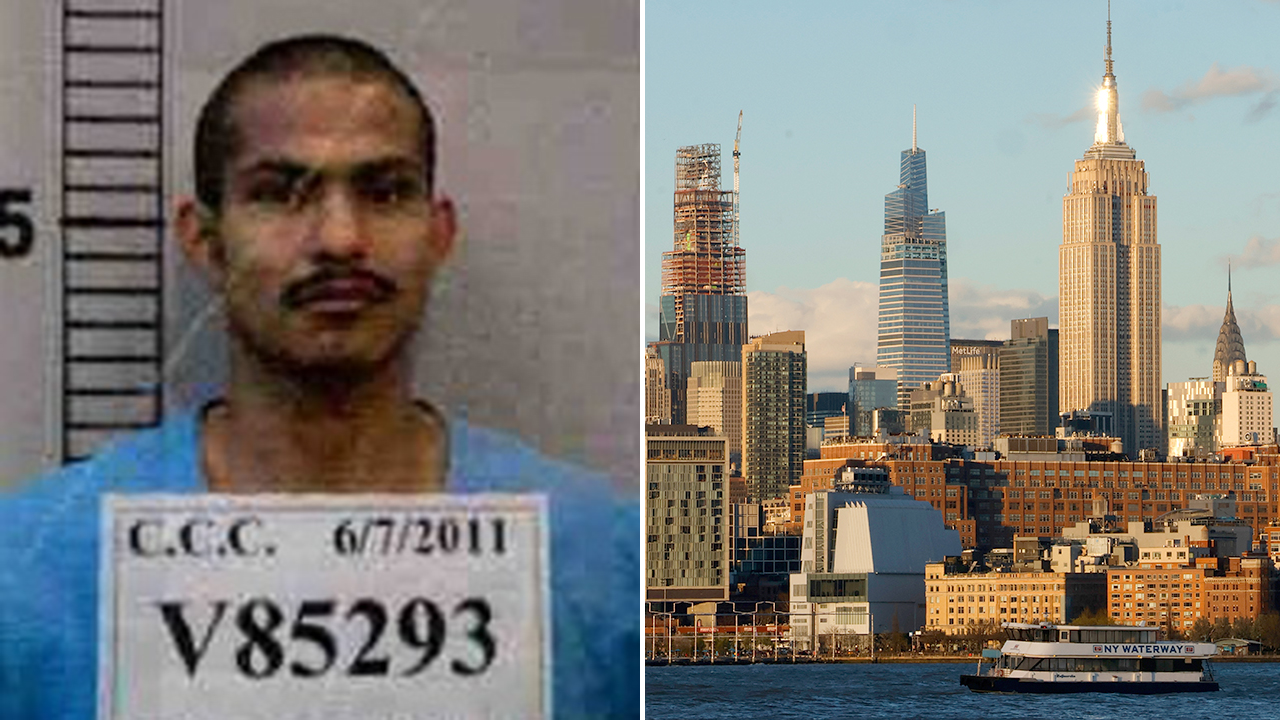
An inmate who vanished nearly 13 years ago from a prison camp in California has been arrested in New York City, corrections officials say.
Eduardo Hernandez, who disappeared from the Delta Conservation Camp in Suisun City in November 2011, was taken into custody without incident on May 20 in New York, according to the California Department of Corrections and Rehabilitation (CDCR).
“Hernandez was sentenced to thirteen years for carjacking with an enhancement for use of a firearm,” it said in a recent statement announcing his arrest, adding that Hernandez will be extradited back to California and could face escape charges.
“Since 1977, 99 percent of all people who have left an adult institution, camp, or community-based program without permission have been apprehended,” the CDCR added.
TEXAS CRIMINAL SERVING 20-YEAR SENTENCE CAPTURED 3 MILES FROM PRISON AFTER ESCAPING
Eduardo Hernandez was arrested without incident on May 20 in New York City, the California Department of Corrections and Rehabilitation says. (CDCR/Gary Hershorn/Getty Images)
During Hernandez’s escape in 2011, he fled with another inmate – Jose Padilla – who remains on the run, according to the Los Angeles Times.
The newspaper reports that both men had last been seen early in the morning of Nov. 15, 2011 and escaped while wearing orange jeans and shirts with the label “C.D.C.R. prisoner” on them.
The CDCR says on its website that the “primary mission” of the Delta Conservation Camp in California’s Bay Area is to “provide incarcerated fire crews for fire suppression in the Sonoma, Lake, Napa Unit and Solano County areas.”
2 ESCAPED LOUISIANA INMATES FOUND HIDING IN DUMPSTER BEHIND DOLLAR GENERAL STORE
California Department of Corrections inmate fire crews from Delta Conservation Camp pull down low-hanging branches while working with Cal Fire to help reduce the risk of a wildfire on May 12, 2014, in Yountville, California. (Justin Sullivan/Getty Images)
Hernandez’s capture comes after another inmate was detained following his escape from the camp in mid-May.
James Xiong, who most recently had been sentenced to “one-year, four months for possessing/owning a firearm by a felon or addict,” fled from the Delta Conservation Camp on May 13, the CDCR says.
James Xiong, another inmate who was recaptured after escaping from the same camp as Eduardo Hernandez.
He was then tracked down in Monterey around two weeks later, where “officers were required to use physical force and a taser to take him into custody,” the CDCR added.
Read the full article from Here

Utah
Spring is in full bloom at Utah’s magical Thanksgiving Point Tulip Festival
LEHI, Utah (Amazing America) — Featuring over one million blooming flowers, including about 400,000 tulips imported from Holland, the Thanksgiving Point Tulip Festival is one of the largest, most popular springtime events in the U.S., held each year at Ashton Gardens in Lehi, Utah.
The festival runs for about six weeks, usually from early April until mid-May. This year’s celebration concludes on May 16, so there’s still time to see the beautiful blooms.
Throughout the course of the festival, new flowers are always blossoming — and not just tulips. Visitors can admire daffodils, poppies, hyacinths and more.
Each year, tens of thousands of people flock to the festival from all over. What really sets Thanksgiving Point apart is that every October, the team redesigns bloom patterns and plants new bulbs, making for a completely fresh experience for visitors each year.
The Thanksgiving Point Tulip Festival is filled to the brim with the sights, scents and sounds of spring. It’s a must-visit for all flower enthusiasts, but there’s really something for everyone to enjoy, including sweet and savory treats, live music on select days, interactive classes and tours, and plenty of unique photo opportunities.
Timed entry tickets are required, and prices range from $17 to $29. Children two and under enter for free. The festival is typically open Monday through Saturday from 9 a.m. to 8 p.m. and closed on Sunday. For more information, click here.
We know there are plenty of other stories of unique landmarks and cultural experiences in all corners of the USA, and we’re making it our mission to find and highlight them. If you know of one, we’d love to hear about it. Send a DM to @amazingamericatv on Instagram!
For more amazing stories, click here to subscribe to Amazing America on YouTube and follow us on Instagram, TikTok, and Facebook.
Washington
Why is the protester still on top the Frederick Douglass Bridge in DC?
Protester scales Washington DC bridge, stays for days
A demonstrator protesting the war in Iran and the use of artificial intelligence climbed Frederick Douglass Bridge, and stayed for days.
Despite saying he would “soon” come down, a protester has remained on top of the Frederick Douglass Memorial Bridge in Washington, DC since May 1, impacting traffic and extending a dayslong standoff with police.
Guido Reichstadter climbed the 168-foot bridge Friday, then draped a black banner and set up a tent while making the bridge his home for the past four days.
Here’s what to know about Reichstadter’s protest and how it is affecting locals in the nation’s capital.
Why is there a man on top of the Frederick Douglass Memorial Bridge?
After Reichstadter climbed the bridge Friday, he identified himself as a protester, writing on X that he was “calling on the people of the United States to bring an immediate end to the Trump regime’s illegal war on Iran and the removal of the regime power through mass nonviolent direct action and non-cooperation.”
He has posted on X throughout his protest, reminding his followers of his cause as he thwarts attempts from the DC police to bring him down.
“The Trump regime occupying the office of the US executive is prosecuting a criminal war of aggression against the nation of Iran, enabled by the refusal of Congress to assert its constitutional power, and by the continued submission of the majority of the US population to this intolerable state of affairs without effective civil resistance,” he wrote on X, saying it’s the public’s responsibility to nonviolently put an end to Trump’s presidency.
Reichstadter said May 4 he hasn’t eaten for days, but previously told NewsNation he went on a 30-day hunger strike while protesting AI outside the Anthropic headquarters.
He has run out of water, however.
“I’ve got the stamina to stay up here a bit longer,” he told WTOP Monday.
What impact is the protest having in Washington, DC?
Reichstadter’s protest has caused lanes to shut down on the Frederick Douglass Memorial Bridge, but lanes had reopened for traffic late Monday morning.
Tuesday morning, all lanes were open for traffic, but the pedestrian walkway was closed, according to the Metropolitan Area Transportation Operations Coordination (MATOC) Program.
If he stays on top of the bridge into Tuesday night, it’s unclear how his protest could impact people traveling nearby to the Washington Nationals game.
“My efforts here have had impacts on the local community and its people, and it is my desire not to harm but to work in communication, to lift up and to contribute what strength I can to the ongoing struggle for rights and freedom which this community has been engaged in for years,” Reichstadter said Sunday.
Police said Monday that their negotiators will remain on the scene.
Mike Stunson is the DC Connect reporter for the USA TODAY Network.
Wyoming
Statewide candidates split on Wyoming GOP’s plans to defy state law and make endorsements
by Maggie Mullen, WyoFile
After the Wyoming GOP voted to defy a state law prohibiting the party from backing one Republican over another before the primary election, statewide candidates are split on whether they would accept such an endorsement.
Some told WyoFile they agree with the party’s decision and will seek out an endorsement, while others said they oppose a political party breaking election law. A few said they were taking a wait-and-see approach.
“Jury’s still out on this one for me,” Wyoming State Auditor Kristi Racines said Wednesday.
For years, the Wyoming Republican Party has argued that because it is a private organization, state laws that govern its organizational structure and prohibit it from endorsing or financially backing candidates in opposed primary election races are unconstitutional.
At its convention in Douglas last weekend, the party took things into its own hands, voting to adopt bylaws establishing a process for vetting, endorsing and spending money to support candidates ahead of the primary.
Supporters of the new bylaws point to a U.S. Supreme Court ruling from 1989, which struck down California’s ban on political party endorsements, ruling that the law violated the First Amendment’s guarantees of free speech and association. Opponents, meanwhile, raised concerns at the convention about the bylaws breaking the law, litigation costs and unintended consequences.
The new bylaws are widely expected to spark lawsuits, while the Wyoming Republican Party has said it plans to file its own legal challenge against the state.
In the meantime, the new bylaws lay out a process for evaluating candidates based on “commitment to the Wyoming Republican Party Platform, demonstrated loyalty to the Party’s principles, legal eligibility to hold office, and for incumbents, their voting record.”
The state party will consider candidates running for Wyoming’s state-elected officials — including governor, secretary of state, superintendent of public instruction, treasurer and auditor — as well as congressional candidates. Otherwise, county parties “may vet all other races on their respective County Ballots,” according to the new bylaws.
The state party, as well as each county party, “shall each create and oversee a Candidate Vetting Committee empowered to review and recommend approval or disapproval of candidates based on established criteria,” the bylaw states. “The Committee shall provide candidates an opportunity to respond to concerns prior to issuing a recommendation.”
Candidates
Brent Bien, who is running for governor, told WyoFile the bylaw changes are “a long time coming,” pointing back to the 1989 ruling.
“I think we just got to make sure we get those folks that truly believe on the Republican side of the equation, who truly believe in the platform and what Wyoming stands for,” Bien said. “And I just don’t think there’s been any enforcement mechanism to do that.”
At the convention, Bien was a clear favorite among many attendees who wore his campaign buttons and t-shirts. Still, Bien said he wouldn’t be surprised if he didn’t get the party’s endorsement.
“I didn’t get Trump’s endorsement,” Bien said. “And some of these legislators around the state, you know, they haven’t endorsed me.”
Bien’s take isn’t shared by all the gubernatorial candidates.
“Contested primaries should be decided by voters,” Gillette Sen. Eric Barlow wrote in a statement. “The role of the state party is to unite Republicans around shared values and help grow the party, not decide elections before voters have had their say.”
“Under current law, the state party should not choose sides in Republican primaries, and I will not ask them to start now,” he wrote. “My job,” running for governor, “is to earn the trust of Wyoming voters directly.”
At the convention, supporters of the bylaws said the party had tried to get the Legislature to change state statute. Barlow directly pushed back on that argument.

“As a legislator for the past 14 years, this issue has never come before us,” Barlow said. “If it had, it would have ensured all Wyomingites could weigh in and decisions would have been made openly and transparently — not in the courts and not a few months before an election.”
Secretary of State Chuck Gray, who is running for U.S. House, told WyoFile he supports the new bylaws.
“I will participate in the Party’s vetting process and will seek their support because I’m the only candidate in this race with a proven record of standing up for conservative principles — even when it wasn’t popular with the media and the insiders,” he wrote in a statement.
As secretary of state, Gray is Wyoming’s chief election officer and oversees statewide election administration. Asked if he wanted to comment in his official capacity on the Wyoming Republican Party’s decision to defy state law, Gray did not respond by publishing time.
U.S. House candidate David Giralt took a more cautious approach when asked for his opinion on the new bylaws.
“I trust Wyoming Republicans to make good decisions for our party, and I’ll let the process play out,” Giralt said. “I’m focused on getting in front of as many Wyoming voters as possible and making the case for why I’m the right person to represent this state in Congress.”
Kevin Christensen, another U.S. House candidate, said he wanted to see how fair, transparent and consistent the process played out before weighing in.
“The Wyoming people are the ones that make the determination in the primary, not the party,” he said. “That being said, if this is about supporting candidates and determining who is really a Republican and who’s just putting an ‘R’ next to their name, that seems like that would be consistent with being the Republican Party.”
Jillian Balow, yet another candidate for U.S. House and former superintendent of public instruction, said she “would be honored to accept an endorsement and money from the state party only if it is in accordance with Wyoming and federal law.”
“The contingency of our party at the convention knew the changes they made defied state law and they curtailed delegate discussion to pass new by-laws anyway,” Balow wrote in a statement. “Some delegates were appalled, some were gleeful, and many were silent, because they were silenced. This is not the way Wyoming does business.”
U.S. House candidate Reid Rasner also pushed back on the new bylaws.
“As a pro-Trump conservative, I always expected the political establishment to try and stop our campaign,” he wrote in a statement. “But, after making over 200 stops across our communities, one thing is clear: people are tired of the political games.”

Sheridan Republican Rep. Tom Kelly, who is running for superintendent, said while he opposes “the idea of parties having the power to disallow anyone from running under their banner,” he thinks “parties should be able to express publicly which people they would like to represent them.”
Though he’s not actively seeking endorsements, Kelly said he would accept support from the state party.
“Financial backing? Absolutely,” Kelly said. “Contrary to a popular false narrative, I have no wealthy D.C. donors bankrolling me.”
And if the party endorsed one of his opponents, Kelly said he would tell them, “Congrats. I should have done a better job presenting myself.”
WyoFile reached out to other statewide Republican candidates, including those running for governor, secretary of state, superintendent, U.S. House and U.S. Senate. They did not respond by publishing time.
This article was originally published by WyoFile and is republished here with permission. WyoFile is an independent nonprofit news organization focused on Wyoming people, places and policy.
Related
-
South Dakota5 minutes ago4 Missouri River projects aim to boost South Dakota water service
-
Tennessee11 minutes agoTennessee Football RB Star Thomas Receives His NFL Fate After Tennessee Titans Camp
-
Texas17 minutes agoTexas man accused of killing pregnant wife allegedly cuts off ankle monitor and flees to Italy
-
Utah23 minutes agoSpring is in full bloom at Utah’s magical Thanksgiving Point Tulip Festival
-
Vermont29 minutes agoVermont schools to get $11.58M in delayed COVID funds – Valley News
-
Virginia35 minutes agoThree Takeaways From Virginia Tech Baseball’s Series Win Vs Cal
-
Washington41 minutes ago
Why is the protester still on top the Frederick Douglass Bridge in DC?
-
Wisconsin47 minutes agoPackers award $100K in grants to help launch girls flag football teams in Wisconsin high schools