Alaska
The last woman in the bar: The 1961 murder of an Anchorage lounge singer


Part of a continuing weekly series on Alaska history by local historian David Reamer. Have a question about Anchorage or Alaska history or an idea for a future article? Go to the form at the bottom of this story.
The small clock on the wall revealed a somber reality of the dark, exhausting hours of the early morning. It was Nov. 20, 1961 and nearly 5 a.m., amid the last ticks of the long day at the Club 210, an Anchorage bar on East Fifth Avenue. There were four people in proper attendance, including bartender and co-owner Robert “Chick” Adams serving lounge singer Rose Dawn. The other two men were armed, eager to relieve the establishment of its cash. Three of those four principal actors survived the ensuing tragedy. Those readers familiar with either recent or distant Alaska history will be unsurprised. It was the woman who died.
Rose Dawn was a stage name, coincidentally also a popular brand of nylons back then. Rosemary Niedzwiecki was born in 1938 in San Diego and grew up there, attending Abraham Lincoln High School. She lived to sing, made it her profession, even at a young age establishing herself as a traveling act in destinations like Las Vegas. Meanwhile, as Anchorage boomed in the 1940s through 1950s, waves of new bars and clubs opened here, each viciously competing with the others for the right to raid local wallets. And one way they attracted business was by importing Lower 48 talent as B-girls, dancers and singers. As of November 1961, Rose Dawn was just 23 years old, a dark-eyed beauty working a standing gig for Leo’s Supper Club at the Forest Park Country Club. Forest Park was a golf course, just west of what is now the Westchester Lagoon, then the Chester Creek mudflats.

Club 210 opened in 1956, the name seemingly a bowling reference, as their address was 224 E. Fifth Ave. Joseph Miljas was an original co-owner. Miljas (1913-1979), also known as Papa Joe, later owned the notorious Spenard Road strip club PJ’s, hence the meaning behind those two letters. “Chick” Adams was born in Kentucky and had been in Anchorage for around a decade as of 1961. The smaller bars and clubs then took much of their personality from their owners, who were frequently the bartenders as well. So, the bar was also called “Chick n’ Joes,” or the place to drink with “Chic.” Consistent spelling was hardly a crucial step in getting drunk.
The fateful morning, Nov. 20, 1961, Dawn was unwinding after another grinding performance, verbally dancing with Adams in that expected pattern of bartender and unloading patron. She may have wondered, aloud or otherwise, about the progression or lack thereof in her career. Anchorage clubs in those days tended to pay well but weren’t the sort of prestige gigs that could advance a singer onwards and upwards. No one outside Alaska cared if you headlined the Buckaroo or Last Chance or even Leo’s Supper Club. Perhaps, just perhaps, that is why Dawn was the last woman in the last bar still open on a crisp, chilly night.

Two young men conspired at a table away from the bar, nursing drunks, both of them edgy and uncertain, eyes drifting about to soak in the details. Gerald Lee Cox and Terrance Wayne Brady were both 22 and residents at the Chinook Hotel. Nearing 5 a.m., the last customer besides themselves and Dawn left, prompting Cox and Brady to huddle around the bar. Cox stood and moved as if toward the restroom, only to turn around suddenly while holding an automatic pistol. “My friend wants to see how well you’ve done tonight,” the robber declared.
Cox guarded Dawn and Adams while Brady ransacked the cash register. It had been a solid night at the bar, producing a $250 score, roughly $2,700 in 2025, not counting the hundreds more in checks left behind. But the robbers wanted more. “You got any dough besides what’s in here?” they asked. Adams retorted, “You think I’d keep all that dough in the register if I had a safe?”
A storage room lay behind the bar, cold and drafty. Cox and Brady escorted Dawn and Adams into the back. They demanded Adams’ keys. “What for,” replied the barkeep. “So, I can lock the joint up when we leave,” replied one of the robbers. “We don’t want anybody to come stumbling in here and find you until we’ve had a chance to get away.” Adams grimaced at a sudden realization. His partner wouldn’t arrive to open the bar until 10, nearly five hours later, which should be enough time to let the criminals slip town. Still, he stared at their faces, willing their features into his memory. If given the chance, he wanted to remember them.
Seeing Dawn shiver, Adams argued, “Give the girl a break and let her have her coat. It gets damn cold back here.” One of the thieves responded ominously: “You’ll never feel it.” Then they struck the bartender over the head with a liquor bottle. He swayed toward the floor, dazed, then lost consciousness.
When Adams woke, he was gnawing on a cord wrapped around his head and pulled through his mouth. One of the bandits was trying to choke him to death. Nonetheless, he could see Dawn sprawled nearby, unmoving. As he struggled, two shots rang out in the small room. One passed through Adams’ neck. The other deflected off his skull and lodged near the junction with the spine. Of course, doctors later figured out all those specific details. As far as the robbers could tell, they’d shot Adams twice in the back of the head to massive crimson effect on the surroundings.
Adams was understandably woozy, in shock from the experience and wounds. Still, he recalled one of them talking, “Let’s get out of here. I got him right in the back of the head that time.” In one moment, they were there, standing over him, and in the next they were gone. Pained and growing cold, Adams scrabbled on the floor, moved himself by will toward a phone. With a heroic effort, he managed a single phone call for help, thereafter sinking back to the floor to await whatever came next. In his shaken daze, he had called the fire department, which dispatched an ambulance and subsequently contacted the police.

For a few minutes, Anchorage was shut down as the police sought to close off avenues of escape. They might not have bothered. Cox and Brady were arrested a few minutes later, just five blocks away from Club 210, albeit without gun or cash. They made for a rather conspicuous pair, two young men walking together around a freezing Anchorage at 5 in the morning right after two young men robbed a bar in the immediate vicinity. The officers on duty accomplished no incredible feat of policing when they put that particular two and two together. Because of fresh snow, it took a few days of searching, but the gun was eventually found tossed down an alley and the cash tucked away on a roof.
Given their age, both men had surprisingly lengthy rap sheets, but Cox in particular was well known to local law enforcement. In March 1960, he was arrested for robbing the Sears Roebuck store in Mountain View. After posting bail, he was arrested again that same day for an unconnected robbery. He faced additional charges after attempting to escape the local federal jail that May. In the summer of 1961, he robbed the Anchorage Transit System bus garage and was out on $10,000 bail at the very time he robbed Club 210.
When the ambulance arrived, Dawn was already dead. She had also been shot twice, once in the leg and again in the back of her head. Adams was alive but in serious condition. Doctors were unsure whether he would survive. A day later, he surprisingly improved and was able to identify Cox and Brady from his hospital bed.
As Adams continued to recover, establishing further clearance between himself and the grave, the outcome for the entire affair was carved deeper into stone. An injured living witness meant certainty, in the courts and for the imprisonment to come. There would be no clever legal maneuvers, no surprises. Cox, at least, understood this reality. At his arraignment, he told the judge, “Could you please appoint me (an attorney) so that I can begin proceedings and get this over with.” The waiting is the hardest part, he surely thought. Time to get on with whatever is next.

Adams indeed appeared at their preliminary hearing, pale but sure as he dramatically pointed out the killers, as if from a movie. After their indictments, Cox and Brady shaved a few visits to the courthouse off their lives and pleaded guilty. Their court-appointed attorneys — Ted Stevens represented Brady — argued for 20-year sentences, but Judge James Fitzgerald ordered life imprisonment without recommendation or parole. Fitzgerald described the murder as a “cruel and brutal killing, done with abandoned heart.”
The entire affair was featured in the April 1962 issue of “Official Detective Stories,” one of many pulpy true crime magazines then popular. “Without the Gun and the Money” appeared alongside other luridly titled articles, such as “Who Would Want to Bomb Congressman Green,” “Maybe Donna Had Too Many Friends,” “Human Bait for the Telephone Wolf,” and “I Want to Watch You Kill Me.”

Detective Earl Hibpshman worked the Club 210 case. An article on his 1974 retirement described the pulpy piece as “overdramatized, the old-timers say, and made Hibpshman and others who worked the case look like Columbo, Mike Hammer, and Sherlock Holmes rolled into one.”
Rose Dawn — Rosemary Niedzwiecki — was buried back in her hometown, at San Diego’s Holy Cross Cemetery. Alaska was her undoing, the end to any further career or fame. Or simply life. Alaska in general and Anchorage specifically are often touted as among the most dangerous places in the country for women, what with the dire rates of violence against women here. There are no trustworthy statistics for Alaska from the time of Rose Dawn’s brief tenure, but there is likewise nothing to suggest that it was a better reality. Again and again, a lesson learned, crime is no recent innovation in Anchorage.
[Trapped: The case of the 1951 Interior Alaska cabin fever murder that was solved and then retried]
[The great snoring assault of 1953 Anchorage and other snoring history]


Alaska already has glaciers, whales, old gold-rush towns, wild seafood, and mountains. But Princess Cruises is taking the year by storm with something bigger than a standard summer schedule. The line is sending eight ships to Alaska, adding new North-to-Alaska programming, and giving travelers more ways to turn their trip into a full land-and-sea adventure.
Princess Is Going Bigger Than Ever
Credit: Wikimedia Commons
The 2026 Alaska season gives Princess its largest presence in the region to date, with eight ships, 180 departures, and visits to 19 destinations. Travelers are not boxed into a narrow route or one small batch of dates. The ship lineup includes Star Princess, Coral Princess, Royal Princess, Ruby Princess, Grand Princess, Emerald Princess, Discovery Princess, and Island Princess. For anyone comparing Alaska cruise options, that much capacity means more itinerary choices.
Star Princess Gives The Season A New Headliner

Credit: Wikimedia Commons
Star Princess is the newest ship in the Princess fleet. This matters because Alaska cruising can easily feel like a trade-off between destination and ship experience. Princess is putting one of its newest vessels into one of its most important regions. Star Princess also hosts the new Après Sea experience inside The Dome, a high-positioned venue designed around big views.
Glacier Days Get The Full Main-Event Treatment
Credit: Getty Images
Glacier viewing has always been one of Alaska cruising’s biggest draws, but Princess is giving it extra structure through “The Glacier Experience: A Signature Princess Day.” On select Glacier Bay sailings, guests get close-up glacier views, live narration, and Park Ranger commentary from the bridge and open decks. There are also theater presentations and Junior and Teen Ranger programming. VIP viewing areas and bowfront access add another layer for guests who want the best possible look at the ice.
The Trip Can Extend Deep Into Alaska By Land
Credit: Wikimedia Commons
Princess has long built part of its reputation around cruisetours that combine time at sea with inland travel. A seven-night sailing can deliver a strong Alaska trip in itself. However, inland travel opens the door to scenic train journeys, Princess Wilderness Lodges, and routes to places such as Denali, Kenai, and the Mt. McKinley lodge area. The 2026 season continues to lean into sea-and-land travel.
North To Alaska Makes The Ship Feel Local
Credit: Wikimedia Commons
Princess first introduced its North to Alaska program in 2015, and in 2026, every Princess ship sailing in Alaska will carry the new programming. The whole idea is to bring local culture, food, personalities, and storytelling on board so guests learn something about Alaska between ports. This includes Native Alaskan speakers, naturalists, enrichment presenters, and destination-focused events that connect the trip to the place outside the ship. Names in the speaker series include Tlingit voices, Alaska Native educators, writers, and photographers.
Alaska Seafood Gets A Bigger Seat At The Table
Credit: Wikimedia Commons
Princess is leaning into Alaska’s food identity with “A Taste of The Great Land.” The 2026 specialty restaurant offerings feature sustainably sourced, wild-caught Alaskan seafood created with regional suppliers. Crown Grill offers dishes such as Wild King Salmon, Alaskan Jumbo Lump Crab Cake, and Jumbo Lump Crab paired with Butter-Broiled Lobster Tail. Sabatini’s Italian Trattoria also brings Alaskan fish into an Italian-style setting.
The Entertainment Has Alaska In Its Bones
Credit: Wikimedia Commons
This season also features “Candlelight Concert Series: Fire & Ice,” with Alaska singer-songwriters performing in a candlelit setting twice per voyage. This gives the onboard entertainment a stronger sense of place than a generic music night. Returning favorites add a livelier side, including Great Alaskan Lumberjack Show elements with axe-throwing recruits, trivia, and timber-sports storytelling tied to Ketchikan. Select sailings also feature Deadliest Catch captains and crew members sharing Bering Sea crab-fishing stories. The lineup draws from Alaska’s labor, music, weather, and folklore.
Families Get More Than A Pretty View
Credit: Tripadvisor
Younger travelers are getting special attention, not a watered-down version of the adult trip. Glacier Bay Junior Rangers let kids complete activity books, attend presentations, and earn a badge and certificate through a partnership with the National Park Service. Gold Rush Adventures pulls families into a shipwide Klondike-style search, while Great Alaskan Expedition offers youth and teens a three-hour team-based experience across land, sea, and air. As puppies in the Piazza also return on ships visiting Skagway, guests get to see Alaskan Huskies and sled-dog culture.
Après Sea Gives Alaska A Stylish Cooldown
Credit: Wikimedia Commons
After a long day outside, Princess is adding a dedicated wind-down ritual through Après Sea. The setup is inspired by après-ski culture. Guests can expect warm drinks, happy hour, and panoramic views after they return from exploring. On Star Princess, the experience is in The Dome, and it provides a strong visual setting at the top of the ship. A relaxed lounge concept gives the evening its own personality, and guests don’t have to jump straight from adventure into dinner.
MedallionClass Keeps The Whole Trip Moving Smoothly
Credit: Wikimedia Commons
Alaska days can get busy fast, with early excursions, glacier viewing, dinner plans, family meetups, and plenty of time spent moving around the ship. The Princess Medallion Class setup helps cut down on small hassles. The wearable Medallion supports contactless boarding, keyless stateroom entry, onboard ordering, contactless payment, ship navigation, and locating travel companions through the app. When the day already includes ports, wildlife, ice, and dinner reservations, fewer friction points onboard can make a real difference.

Rachel Feltman: Happy Monday, listeners! For Scientific American’s Science Quickly, I’m Rachel Feltman. Let’s kick off the week with a quick roundup of some science news you may have missed.
First, you may have seen some headlines last week about an outbreak of hantavirus on a cruise ship. Here to tell us more about what happened is Tanya Lewis, SciAm’s senior desk editor for health and medicine.
Tanya, thanks so much for coming on to walk us through this.
On supporting science journalism
If you’re enjoying this article, consider supporting our award-winning journalism by subscribing. By purchasing a subscription you are helping to ensure the future of impactful stories about the discoveries and ideas shaping our world today.
Tanya Lewis: Yeah, no, thanks so much for having me.
Feltman: Why are we talking about hantavirus and this cruise ship? What happened?
Lewis: Just to catch people up, this outbreak was first noticed about a week ago on a ship called the MV Hondius, which was a cruise ship departing from South America, Argentina. And the people that were sickened and unfortunately passed away, two of those individuals were a married couple who had been traveling—it was a Dutch couple—we think were infected in Argentina and then boarded the ship. And then subsequently, multiple other people have been infected. As of May 7 the number of people on this cruise ship who had been infected with hantavirus was eight people. So that probably could still change.
But you might not have heard of hantavirus before, but it is a virus family that people have been sickened with before, and it’s generally spread by rodents, like rats or mice. And this commonly happens in places where people are exposed to the feces of these animals.
And it causes pretty severe disease. It can cause anything from respiratory distress and fluid in the lungs to some forms of it can be more of, like, a hemorrhagic fever, kind of like Ebola. But the kind that we’re seeing on this cruise ship is more the respiratory kind.
But yeah, this is a virus that, while it is fairly rare to be infected with it, it’s quite lethal. The estimates of its lethality vary, but anywhere from, like, 30 percent to even 50 percent of people infected have died of it.
Feltman: Right, well, and like you said, it, it’s usually spread through rodent feces. But unfortunately, the specific virus we’re talking about, with regard to this cruise ship, is one of the rare instances where it is technically possible to spread from human to human. Can you tell us a little bit more about that?
Lewis: Basically, these individuals on the ship were thought to be infected by human-to-human transmission. At least, that’s the working hypothesis right now. And the reason has to do with the exposure routes.
As I mentioned two of the people were a married couple, so we’re talking about, like, very close contact. This is not something like SARS-CoV-2, the virus that causes COVID, where it’s, like, in the air and wafting around for hours or something. This is something that you would probably need to be, like, breathing very closely, in the same space. And of course, cruise ships are, like, kind of the perfect petri dish for that.
Feltman: Yeah.
So I think there are two things to talk about. There’s, one, why experts are not immediately super concerned about pandemic potential from this specific thing, but also why it is reasonable that I think so many of us, when seeing this news, went, “Uh-oh. We’re—this is a reminder of public-health paradigms I do not wanna be reminded of.”
So let’s start with the good news: Why are experts not freaking out about this?
Lewis: Yeah, so we have to remember that this is a virus that is very different than a lot of the pathogens that have caused respiratory pandemics in the past. In order for a pathogen to be a major pandemic concern, it needs to be very transmissible, and that is something that we have not yet seen with this hantavirus.
I should say, this particular strain is the only strain that has been shown to transmit human to human; it’s called the Andes strain. Most hantaviruses are not thought to spread that way. So the good news is, it’s kind of rare. The bad news, maybe, is that it does appear to have spread, at least, you know, in a limited way, between people.
But yeah, in terms of why experts are not, like, immediately concerned that this will spark a larger epidemic, I think the reason is just that this type of virus and the way it spreads is not conducive, as far as we know, to that type of outbreak. And it’s also happening in a very contained space, so although there have been reports that several of the people on board the ship have disembarked and we are still following that closely, at this point there is no indication of wider community spread, which is what we call it when people are getting infected who have not had direct exposure to the infected individuals.
Feltman: Is there any concern that the time that this virus spent, you know, in such a perfect petri dish may have given it the opportunity to mutate and be better at jumping from person to person?
Lewis: I think what virologists would tell you is, like, the more opportunities a virus has to jump between people, the higher the risk of it developing, like, a concerning mutation that makes it more transmissible.
That said, we’re still talking about a relatively small number of individuals. I mean, eight people sounds like a lot, but, you know, when you’re talking about this being very close quarters on a ship, this is not like, oh, you’re walking into a giant city like New York City and infecting everyone around you or something. So I think that is a little bit reassuring, perhaps, at this point.
But that said, we’ve been humbled before, and I think if there’s one lesson we can take from the COVID pandemic, it’s that we shouldn’t panic, but we should definitely pay attention. And at least scientists wanna know and learn more about this virus and understand it better.
Feltman: I think a lot of people are getting a little freaked out by this news. [Laughs.]
Lewis: Yeah, and I mean, I would be the first to say, like, something like this you hear about, it’s, like, instantly puts you back in that fearful space of 2020. And of course, there was the famous cruise ship, the Diamond Princess, where some of the early COVID cases happened. So that is always concerning.
On the other hand, you know, we have to sort of put it in perspective and remember this is a rare virus and it is something that people have been infected with in the past, so it’s not a completely new virus, unlike SARS-CoV-2, which we had never seen before. So we do have some idea of how this virus works, and while we don’t have any specific treatments for it, we do at least have experts who study it. So that should hopefully give some reassurance that, like, this is not a complete unknown. We are not starting from square one.
Feltman: Thanks for that, Tanya.
Now, listeners, keep in mind we had this conversation on Thursday, May 7. But you can always go to ScientificAmerican.com for more up-to-date science news.
Now for new research on micro- and nanoplastics—but this isn’t the health story you might be expecting. According to a study published last Monday in Nature Climate Change, these tiny bits of broken-down plastic could be contributing to our planet’s warming temperatures.
For starters, just in case you are blissfully unaware: yes, there are, unfortunately, microplastics in the sky. According to a study published in 2021, some of these particles swirl up into the air from the road, where tires and brakes frequently shed small pieces of plastic.
Now, the idea of microplastics permeating the air and even seeding clouds into existence is creepy enough, in my opinion. But this new study suggests they can also have a warming effect on the atmosphere.
Here’s how that would work: if you’ve ever spent time on a patch of blacktop on a sunny summer day, you know that black material absorbs heat. Conversely, white material reflects heat. The same thing happens when you scatter bits of dark and light plastic into the atmosphere, which is what humanity has inadvertently done quite a bit over the past few decades.
Unfortunately, according to this new study, any cooling effects we might get from light microplastics are probably vastly outweighed by the warming effects of dark microplastics. While the estimated effect is a small percentage of the warming fueled by soot from coal power plants, the results are still worrying.
As Jackie Flynn Mogenson reported for SciAm last week, we don’t actually know the concentration of micro- and nanoplastics currently in our atmosphere. But the authors of the new study argue that global climate assessments should do more to factor in these tiny plastic bits. And their findings serve as a great reminder that when we talk about the downsides of plastic, we should recognize that there may be impacts far less concrete and obvious than creating growing piles of trash in landfills.
Now I’ll turn the mic over briefly to SciAm’s chief newsletter editor, Andrea Gawrylewski. She’s gonna tell us about the science behind a tsunami that caught Alaska by surprise.
Andrea Gawrylewski: Thanks, Rachel.
Last summer, in August, a small cruise boat called the David B spent the night in an inlet about 50 miles from Juneau, Alaska. They were supposed to be at anchor nearer to Juneau in this beautiful fjord called Tracy Arm, but bad weather had forced them to pick another place to stay. And it turns out that detour may have saved their lives.
In the morning, from where they were anchored, the boat’s owners noticed seawater rolling over the nearby [sandbar] and shoreline. It was weird because the tide was supposed to be out at that time, and they had no idea why the water was so high.
When scientists heard about the strange sea-level rise, they began examining seismic data, they looked at aerial footage and satellite images, and determined that a massive landslide had occurred at the top of the Tracy Arm fjord.
So what had happened?
The South Sawyer Glacier at the top of Tracy Arm has been steadily shrinking and retreating for the last 25 years. In the spring and summer of last year the ice retreated inland several hundred feet, exposing so much bare rock that it ultimately caused a landslide.
That big slide hit the water and sent a tsunami racing through the fjord—like, so much water that the tsunami surged more than 1,500 feet up the sides of the fjord and sloshed back and forth, like in a bathtub.
That event also produced a seismic signal equivalent to a magnitude 5.4 earthquake. Scientists found smaller seismic events in the data that had occurred at least 24 hours before the big one, and they were increasing exponentially in intensity in the six hours before the landslide.
So now the question is: Could these early seismic signals be used as a warning system? One scientist at the Alaska Earthquake Center has been testing a landslide detection algorithm, and so far it’s detected 35 landslides in near real time. Sending out warnings within three to four minutes of big events could make all the difference to people who live in the area, so scientists are working to improve tools like these.
If you want more updates like this, sign up for my free daily newsletter, Today in Science, at SciAm.com/#newsletter.
Feltman: That’s all for this week’s science news roundup. We’ll be back on Wednesday to talk all about protein. Why is it everywhere all of a sudden? We’ll cut through the hype so you can just enjoy your tofu in peace.
Science Quickly is produced by me, Rachel Feltman, along with Fonda Mwangi, Sushmita Pathak and Jeff DelViscio. This episode was edited by Alex Sugiura. Shayna Posses and Aaron Shattuck fact-check our show. Our theme music was composed by Dominic Smith. Subscribe to Scientific American for more up-to-date and in-depth science news.
For Scientific American, this is Rachel Feltman. Have a great week!

As former mayors of Anchorage, we each had the responsibility of leading Alaska’s largest city through moments of challenge and opportunity. While our administrations differed in time and approach, one priority remained constant: ensuring that Anchorage and Alaska have access to reliable, affordable energy.
Energy keeps our homes warm through long winters, powers our schools and hospitals, and fuels the businesses that employ our neighbors. It literally fuels every aspect of our economy and our quality of life. When energy becomes uncertain or unaffordable, the consequences are felt immediately by families, employers and communities across the state.
Today, Alaska faces a generational energy challenge. Cook Inlet natural gas production has been declining for decades. Like the frog in a pot on the stove, the problem around us has slowly grown but is about to reach a raging boil. Declining supplies of inexpensive Cook Inlet gas, rising demand and a lack of long-term certainty jeopardize the stability we rely on. Without action — right now — we will lose control over energy costs and availability.
We have faced moments like this before. During his tenure as mayor, Dan Sullivan recognized early the urgency created by declining Cook Inlet gas production. He convened an Energy Task Force that brought together industry leaders, policymakers and stakeholders to confront the issue directly. That work helped lay the foundation for the Cook Inlet Recovery Act, which the Legislature passed quickly to spur new investment and extend the life of the basin. It showed what is possible when Alaska acts with focus and urgency. It also showed the legislature can move fast when aligned on policy.
This is not a new conversation. For years, studies commissioned by both the Alaska Legislature and multiple administrations have identified the need to modernize Alaska’s tax structure and energy policies to remain competitive for large-scale investment and infrastructure projects. Again and again, those reviews reached the same conclusion: If Alaska wants to attract and keep transformational projects, the state must provide a stable, competitive framework that reflects the realities of modern energy development.
The Alaska LNG project is the only viable path to meet that need. It would deliver a stable, long-term supply of natural gas to Southcentral Alaska, helping ensure that homes, schools and businesses have dependable energy at predictable prices. It would also create jobs, strengthen the economy and generate revenue that supports essential public services.
For Anchorage and the entire Southcentral region, the stakes could not be higher. As the economic center of the state, Anchorage depends on dependable energy to sustain growth and opportunity. Utilities, employers and families all need certainty to plan ahead.
If the Legislature fails to pass meaningful property tax reform for Alaska LNG, this opportunity will slip away like other projects have done. Alaska’s property tax system was not designed for a megaproject like Alaska LNG. Because of that, tax reform legislation was introduced in March that will lower our energy bills and speed the delivery of natural gas from the North Slope. Our legislators must act quickly on a targeted solution and avoid making changes that raise energy costs or slow this project. Otherwise, Anchorage and all Southcentral Alaska will be forced to rely on imported gas for decades.
That outcome exposes us to higher and more volatile costs, shrinks our economy, prevents job growth and sends billions of dollars out of state.
Every day of delay increases that risk. As our electric and gas bills made clear this winter, costs are already rising. Without fast action, consumers should be prepared for increases of 30% to 40% or more. Our state will become an even harder place to start a family or a business.
A project of this scale requires careful consideration and responsible decision-making. But waiting carries its own consequences. The longer Alaska delays, the fewer options remain and the more expensive those options become.
As former mayors of Anchorage, we each had unique approaches to problem-solving. But now we speak with one voice: State leaders and legislators must act with urgency and purpose to enact tax changes that propel this project and unlock the revenue, economic, energy security and other benefits from our North Slope natural gas. Decisions now will shape the state’s economic future for generations.
George Wuerch (Anchorage mayor from 2000-2003) previously served as governmental affairs manager for the Northwest Alaskan Gasline, was founder/president of Fluor Daniel Alaska Engineering and served as vice president of corporate affairs for Alyeska Pipeline Service Co.
Mark Begich (Anchorage mayor from 2003-2009 and U.S. senator from 2009-2015) is a strategic consulting adviser hired by Gov. Dunleavy’s office to help advance the Alaska LNG project.
Dan Sullivan (Anchorage mayor from 2009-2015) previously served on the Regulatory Commission of Alaska and the Alaska Natural Gas Development Authority board.
Dave Bronson (Anchorage mayor from 2021-2024) is a candidate for governor of Alaska.
• • •
The Anchorage Daily News welcomes a broad range of viewpoints. To submit a piece for consideration, email commentary(at)adn.com. Send submissions shorter than 200 words to letters@adn.com or click here to submit via any web browser. Read our full guidelines for letters and commentaries here.
-
Montana6 minutes ago
Montana Lottery Powerball, Lotto America results for May 11, 2026
-

 Nebraska12 minutes ago
Tuesday’s primaries to set up key fall matchups in Nebraska
-

 Nevada18 minutes ago
Sky Pointe sweeps Mojave, to play Desert Oasis for 4A volleyball title — PHOTOS
-

 New Hampshire24 minutes ago
Not For Granite: New Hampshire Man Isn’t Laughing At Anti-Cyclist Comments From State Elected Official — Streetsblog USA
-
 New Jersey30 minutes ago
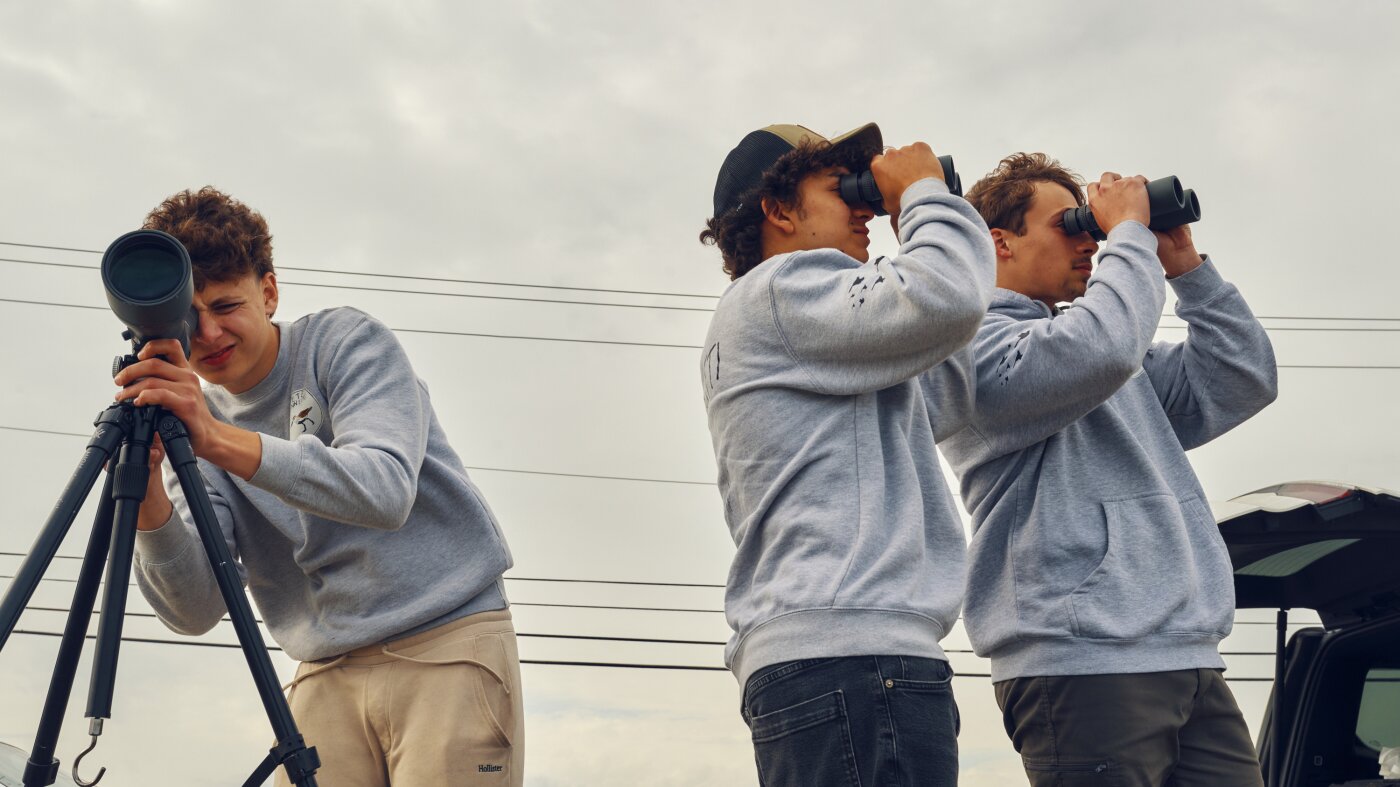
24 hours with 3 teenage birders: Welcome to the World Series of Birding
-

 New Mexico36 minutes ago
Summerlike heat settles into New Mexico this week
-
North Carolina42 minutes ago
Proposed NC property tax cap, affordable housing exemption set for debate
-

 North Dakota48 minutes ago
North Dakota tourism sites get $4M after music fest declines funds

