Business
Kennedy Is Driving a Vast Inquiry Into Vaccines, Despite His Public Silence


Health Secretary Robert F. Kennedy Jr. has said little publicly about vaccines in recent months, at the behest of a White House worried that his unpopular stance will hurt Republicans in November’s midterm elections. But he has not abandoned his quest for evidence that they are unsafe.
Working behind the scenes, Mr. Kennedy is spearheading an intense push, across health agencies under his purview, for government scientists and federal data contractors to examine his long-held theory that vaccines are helping to fuel an epidemic of chronic disease, according to multiple people familiar with the effort.
They said the wide-ranging inquiry is a top priority for Mr. Kennedy, who sees vaccines as a “potential culprit” in various neurological and autoimmune disorders, including asthma and allergies. It resurrects research into a number of ideas Mr. Kennedy has espoused, including whether vaccines are linked to autism and whether thimerosal, a preservative that has largely been removed from vaccines in the United States but remains in some flu shots, is dangerous.
The effort is being led by Martin Kulldorff, a biostatistician and vaccine safety expert who rose in prominence during the pandemic as a critic of Covid restrictions and vaccine mandates, and is now the health department’s chief science and data officer.
Career scientists at the Food and Drug Administration and the Centers for Disease Control and Prevention are conducting the research alongside contractors who provide statistical expertise and access to millions of patient medical records. The initiative was described to The New York Times by six people who are close to it, all of whom insisted on anonymity because it is not public.
The work is raising alarms among some vaccine scholars and critics of Mr. Kennedy, who have long accused the secretary of cherry-picking data and misinterpreting studies to claim that vaccines are unsafe and to limit their use. They fear Mr. Kennedy will use the findings to further erode confidence in vaccines, which the World Health Organization estimates saved 154 million lives over the past half-century.
Mr. Kennedy, who came into office saying he would do nothing to discourage people from getting vaccinated, has already taken steps to scale back the number of vaccines children receive. Public health experts complain that by spending money on issues that have already been thoroughly studied, he is taking funds away from research that might answer the very questions he is asking, including what causes autism.
“It just demonstrates that no matter what the general tone is about vaccines, whether we talk about them or not, the secretary is going to continue to try and look at the data and analyze it in a way that will help support the conclusions that he’s already made,” said Dr. Daniel Jernigan, who oversaw vaccine safety at the C.D.C. until he resigned in August. “And that, to me, is a real problem.”
Andrew Nixon, a spokesman for Mr. Kennedy, said in a statement that the effort reflected President Trump’s dedication to advancing “gold-standard vaccine research” that will enable policymakers to “better understand vaccine safety and efficacy and to assess how vaccine exposure, timing and patterns affect health across the life span.”
Mr. Nixon said the work would “inform vaccine recommendations, address critical gaps identified by scientific and medical organizations, including the Institute of Medicine, and strengthen public trust in public health.”
He said the initiative also involved the National Institutes of Health and universities. It remains unclear what the effort will cost and whether it is supplanting other routine government vaccine surveillance.
A former plaintiff’s lawyer, Mr. Kennedy has long said that he wants to build a body of scientific evidence on the harms of vaccines and environmental exposures, which he believes are behind an epidemic of chronic disease. That evidence, he has said, will lay the groundwork for legal action.
“That’s how you really change policy,” Mr. Kennedy said in a podcast as a presidential candidate in 2024. He added, “I’m going to provide that enough science, sufficient science, on each one of these exposures and each one of these injuries, to show who’s causing what and hold them responsible in court.”
During a daylong meeting on the new vaccine research initiative in late February, officials from the Health Department and the C.D.C. gathered to discuss specific studies and methods, including a look at the overall effect of the childhood vaccine schedule. Representatives from major health systems such as Kaiser Permanente were also at the table, given their role in allowing the C.D.C. access to vast troves of data through its Vaccine Safety Datalink system.
As part of the new effort, Mr. Kennedy has tasked some government scientists with studying the health status of vaccinated children compared with those who were not vaccinated. Mr. Kennedy coauthored a book, “Vax-Unvax: Let the Science Speak,” calling for such studies, which he believes will prove harm from vaccines.
Researchers say that such comparison studies would be riddled with pitfalls. Vaccinated children are more likely to receive medical care than those who are unvaccinated, and are thus more likely to receive additional medical diagnoses that could be wrongly attributed to vaccines.
Mr. Kennedy is also asking for the group to undertake new studies looking at the link between vaccines and autism.
The project is also looking at the question of harm from thimerosal, a mercury-based vaccine preservative, according to people close to the effort. The preservative has been thoroughly studied and found to be unrelated to autism, but Mr. Kennedy has remained concerned about it, and has rescinded federal recommendations for flu vaccines that contain thimerosal.
Through the C.D.C. alone, the cost of the project is estimated at $40 million to $50 million, according to a person familiar with the matter.
The project is being overseen by Mr. Kennedy and Stefanie Spear, his closest adviser. Mr. Kennedy’s new senior counselor for public health, Dr. Sara Brenner, a veteran of the F.D.A. who has voiced skepticism of vaccines, is expected to propel the studies forward in her new role, according to people familiar with the plan.
The new vaccine initiative is not the first time the secretary has waged a behind-the-scenes effort to study vaccine safety. Last year, Mr. Kennedy faced significant pushback within federal agencies and from Congress when he deployed David Geier, whose vaccine research is considered deeply flawed, to dig into vaccine safety data to explore some of the secretary’s longstanding concerns.
Mr. Kennedy’s team put pressure on C.D.C. officials, including Dr. Jernigan, who delayed Mr. Geier. When Mr. Kennedy ousted Susan Monarez, the agency’s director, Dr. Jernigan and other C.D.C. leaders quit.
Within the C.D.C. and F.D.A., scientists have registered some relief that Dr. Kulldorff, a pioneer in methods to examine vaccine safety, is leading the new inquiry. He worked on research that was groundbreaking in 2009 to monitor the safety of the H1N1 flu vaccine as it was being rolled out. The team he worked with found a slightly elevated rate of Guillain-Barré syndrome, an autoimmune condition associated with some vaccines.
“Martin had been known for decades as a top-notch vaccine safety scientist,” said Daniel Salmon, a Johns Hopkins University vaccine researcher who worked with Dr. Kulldorff on a vaccine data system that predated one the F.D.A. now uses.
Some scientists who worked with Dr. Kulldorff in the past, though, wonder if the evenhanded biostatistician they once knew changed during the pandemic. They point to a federal document, coauthored by Dr. Kulldorff, justifying sharp limitations on vaccines recommended to children in the United States, saying it left out reams of studies supporting flu and hepatitis B vaccines for infants and children.
In 2024, Dr. Kulldorff joined Mr. Kennedy in litigation against Merck, the makers of Gardasil, a vaccine for the human papilloma virus, earning $400 per hour as an expert witness, court records show. Merck, the vaccine’s maker, challenged Dr. Kulldorff’s standing as an expert based on his prior research finding that the vaccine was safe.
Dr. Kulldorff did not respond to a request for comment, and the health department did not respond to a request to make him available. Mr. Kennedy and Ms. Spear also did not respond to requests for comment.
The C.D.C. and the F.D.A. already devote considerable effort to investigating vaccine safety, using a number of databases and research methods. But Mr. Kennedy’s fellow vaccine critics, including Retsef Levi, a mathematician at the Massachusetts Institute of Technology who serves on Mr. Kennedy’s handpicked a panel of C.D.C. vaccine advisers, find fault with the current studies.
“Many of them have serious methodological flaws,” Dr. Levi said.
Mr. Kennedy began raising questions about vaccines’ safety about 20 years ago, and became a champion for mothers of children with autism who blamed the condition on vaccines. People familiar with his thinking say he still feels deeply committed to those women, and cannot reconcile their often heartbreaking stories with the vast body of research that discounts a link.
For parents who believe vaccines have harmed their children, Mr. Kennedy is fulfilling a major promise. Katie Wright, whose 24-year-old son has autism and got to know Mr. Kennedy through her advocacy for parents who question the safety of vaccines, said more research is necessary to restore trust in childhood immunization.
“There’s been tremendous pushback; they say, ‘Well, the research has been done.’ ” Ms. Wright said. “Well, you know what? A lot of families are concerned. I don’t understand the fear of delving deeper into safety research.”
As health secretary, Mr. Kennedy has demonstrated an unorthodox view of what makes for reliable findings about vaccines. He dismissed a major vaccine study of 1.2 million Danish children over 24 years as “a deceitful propaganda stunt,” for failing to highlight a subset of about 50 children who were more likely to have gotten Asperger’s syndrome, a diagnosis previously applied to high-functioning people with autism, after getting vaccines.
In the language of vaccine science, such findings are considered a signal to be examined in more depth. Dr. Kathryn Edwards, a Vanderbilt University expert in vaccinology, said she was concerned that selective attention to such signals could be “used to further erode the confidence that people have in vaccines.”
Mr. Kennedy has also made hasty changes to vaccine policy, often with minimal scientific justification for decision making. Among those pivots was an overhaul in January of vaccine recommendations, reducing the number of immunizations for American children to 10 from 17.
Though the plan was held up in court, Dr. Edwards said it portends a scenario where the findings of the current effort get a big splash in the media or drive new policies before scientists can understand the reasoning.
“What they’ve done is also worrisome,” she said, “because there have been so many things that haven’t been open and transparent.”



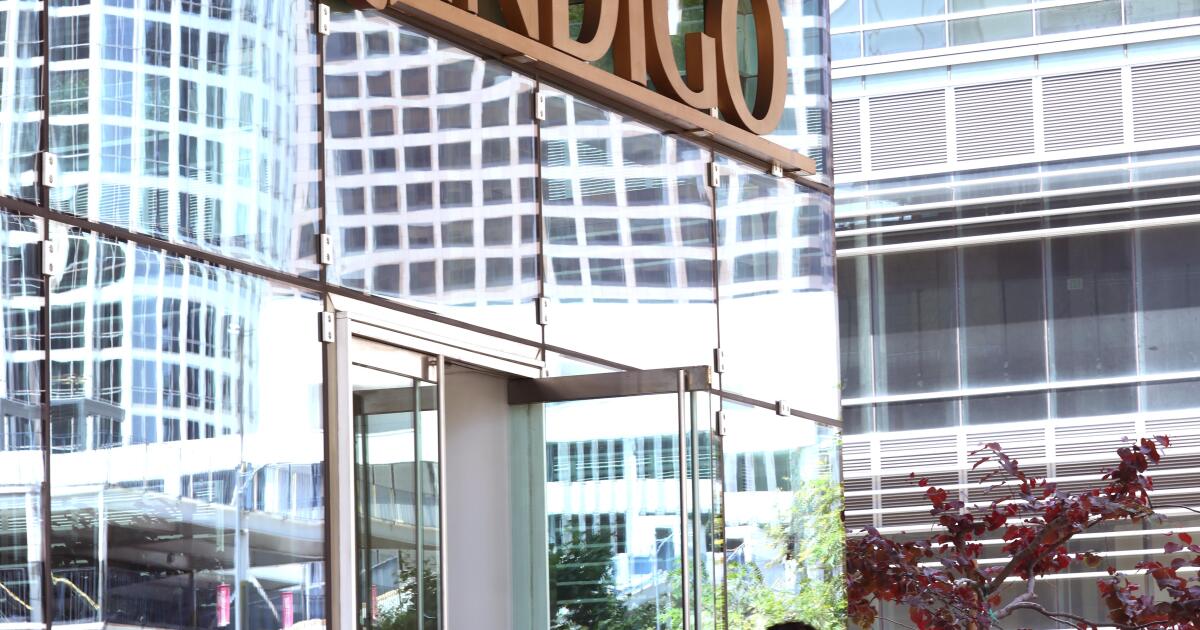
After showing worryingly weak early interest, World Cup fans showed up at the last minute to boost Los Angeles hotel occupancy and room rates.
Ahead of the last tournament game in Los Angeles is on Friday, hotels popular with soccer fans said they were full and charging higher rates.
In early May, the American Hotel and Lodging Assn. reported a lack of hotel bookings just a month shy of the games.
About 80% of respondents said hotel bookings were below initial expectations, and more than 65% of L.A. respondents said bookings were lower than a typical summer. In the report, half of the L.A. hotel respondents said they assumed that visa barriers and distance from venues were contributing to the low early bookings.
The turnout that many were concerned had also been hurt by high ticket prices ended up being better than those first projections.
The Pierside in Santa Monica has been exceptionally busy during the World Cup, with many tourists opting to stay near the beach despite the longer trek to SoFi Stadium where the games are held. The Pierside has no rooms for this weekend.
“We’ll have a day or two gap, but other than that we’ve been full,” said a Pierside manager. “I think beach-side hotels have been busier, because tourists are more interested in going to the beach while here.”
In the so-called Stadium District, the Anthem Hotel saw even greater numbers of tourists than they had initially expected for the tournament, including both domestic and international guests.
Its few remaining rooms were going for more than $500 per night late in the week.
“Many guests are planning longer stays, using match days as the centerpiece of a broader Los Angeles itinerary,” said Ruben Flores, general manager at the hotel. “Being in the heart of the Stadium District puts us in a unique position to welcome fans who want the energy of the tournament to extend beyond the stadium.”
Downtown L.A.‘s Hotel Indigo got a surge in bookings the days leading up to the July 2 knockout game between Spain and Austria. Previously, FIFA had reserved thousands of rooms downtown for staff, media, and other stakeholders, but later canceled the reservation.
The American Hotel and Lodging Assn. attributed the delayed booking boom to young international travelers waiting until right before the game to book hotels in search of last-minute deals.
“Demand has picked up, consistent with a recent trend toward shorter booking windows for events of this caliber,” Rosanna Maietta, the association’s chief executive, said in a statement. “Unlike typical leisure travel, many travelers finalized plans and secured tickets closer to the start of the games.”
Not all hotels have seen the last-minute boom in bookings. Hotel June next to Los Angeles International Airport said its bookings were lower than expected.
“We were expecting more reservations, but I think it’s because the rates have gone up,” said Kira Moreno from Hotel June. “We have still been steady but not been too full or too busy, pretty similar to any other day.”
Airbnb proved to be a popular alternative to traditional hotels, with offers like the World Cup bundle, which included free World Cup tickets with select Airbnb stays at an average price of $365 per night.
In recent years, L.A. has struggled to bring tourists into the city. Last year, the number of international tourists went down by 5.5% from the year before, marking the first time tourism had fallen since the 2020 COVID-19 pandemic.
Immigration raids and wildfires dissuaded tourists from visiting, and even Canadian tourists who typically make up the largest number of foreign visitors to California dropped 21%.
Increased flight costs also discouraged many tourists. With the U.S.-Iran conflict continuing and the Strait of Hormuz closed, jet fuel prices skyrocketed, making international travel unrealistic for many tourists. International air travel to L.A. County had already fallen 30% from August to November 2025.
Business
Billionaire exodus? California drew 10 times more venture capital than any other state this year
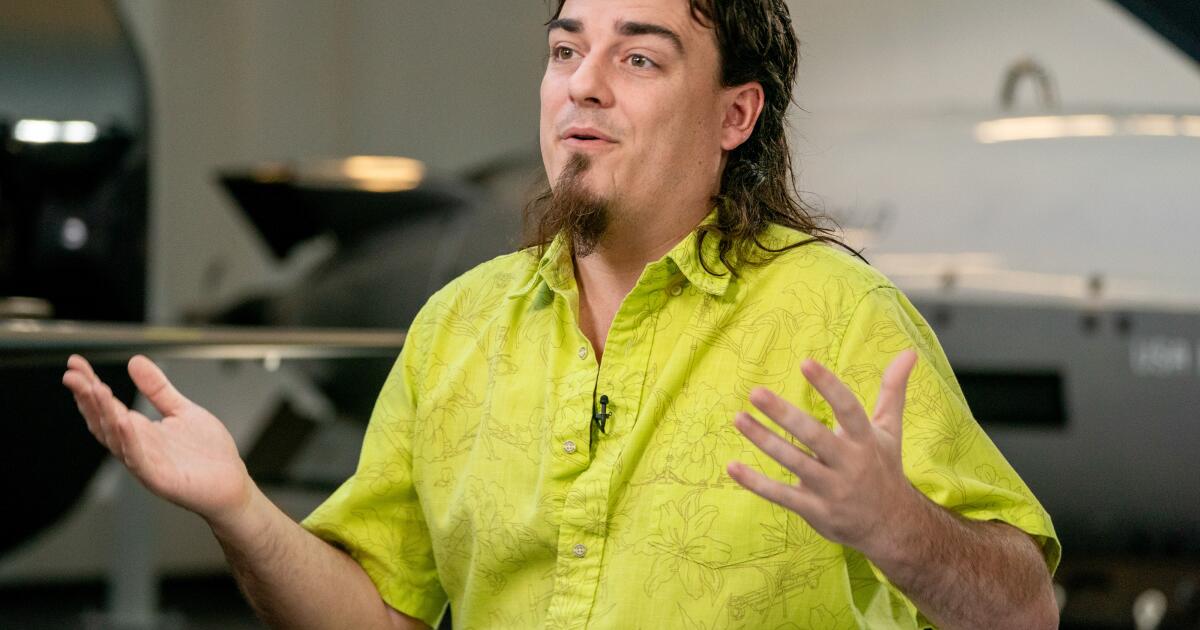
Despite concerns that California’s costs and regulations are bad for business, the state has attracted an unprecedented pile of capital this year, and no other state is even close.
The Golden State’s deep pool of talent, rich investors and other tech infrastructure have made it ground zero for the artificial intelligence explosion. That has helped it attract more than $335 billion in venture capital funding this year, according to PitchBook’s private market funding data released Thursday.
Its next biggest competitor, New York, raised less than a tenth of California’s total. Texas raised 1/40th of the amount.
“California has far and away the most [deals], obviously, a huge amount of that sits in the [San Francisco] Bay Area,” said Kyle Stanford, director of U.S. venture capital research at PitchBook. “Los Angeles, San Diego has a really strong tech market that I think benefits a lot from capital moving easily between San Francisco and L.A.”
Although a campaign for a new tax on billionaires has convinced some ultra-rich residents to shift to other states and businesses often complain that high property and energy costs and an anti-business regulatory regime make it too tough to make money in the state, the inability of the top talent, companies and investors in AI to set up elsewhere shows California’s enduring attraction.
The state’s economy grew 5% last year to a record $4.25 trillion, making it larger than every country other than the U.S., China and Germany. It is home to nearly 400 billion-dollar startups — more than any other state, according to CB Insights.
Southern California has emerged as a go-to address for fast-growing space and defense tech companies.
“California’s workers, entrepreneurs, and innovators continue to prove that investing in California delivers real results,” Gov. Gavin Newsom said in a statement last week in response to strong productivity numbers for the state. “As one of the largest economies in the world, the Golden State demonstrates that a strong workforce, economic growth, innovation, and performance go hand in hand.”
In the three months that ended in June, 1,087 California companies raised $108.8 billion in venture capital. Just three companies — Anthropic, Jeff Bezos’ Project Prometheus and Anduril Industries — absorbed 75% of that total. Anthropic alone raised $65 billion, which valued it at nearly $1 trillion.
Among metropolitan regions, Los Angeles ranked behind only Silicon Valley and New York, which attracted $98 billion and $11.5 billion in venture investment, respectively.
“Capital is flowing back into American innovation with real force,” said Bobby Franklin, president of the National Venture Capital Assn., an industry group that put out the report with PitchBook. “Investment activity is picking up, fundraising is improving, and there are early signs the IPO market is beginning to reopen.”
Investors poured in nearly $8 billion across 207 deals in the Los Angeles, Long Beach, and Santa Ana metro areas, up 28% from a year earlier, according to PitchBook.
The top deals in the region were led by aerospace and defense companies Anduril Industries, which raised $5 billion, and Impulse Space, which attracted $500 million.
Companies in industrial parts, software, consulting and life sciences were the other sectors in the Southland that attracted venture investments. El Segundo-based industrial supplies company Advanced Manufacturing Company of America and Huntington Beach-based aerospace company Mach Industries each raised $300 million.
To be sure, the surge in the size and number of monster deals could be overshadowing other money-raising efforts from smaller companies and investment by smaller funds, industry experts said.
Nearly 90% of invested dollars went to AI firms, up from last year, when around 65% of new funds were allocated to AI.
“If you’re a tech company and you’re not an AI company, you have a very, very difficult opportunity ahead of you to raise capital,” Stanford said.
This concentration of capital in AI leaves smaller, middle-of-the-road venture funds without large AI holdings struggling to return capital to their investors.
Only the largest funds, such as Andreessen Horowitz and Sequoia Capital — which possess the war chest to back OpenAI, Anthropic, and SpaceX — stand to gain from their initial public offerings of stock.
“It’s going to concentrate the fundraising over the next few years as well into these already very large names,” Stanford said.
Beyond the two potential blockbuster listings — Anthropic and OpenAI, each valued around $1 trillion — the IPO pipeline is thin.
“We don’t really have a strong IPO market,” Stanford said. “Obviously, SpaceX’s IPO is great. OpenAI and Anthropic, if they go out this year, will be very large drivers of distribution. But a vast majority of investors do not have exposure to them, and so that money will not make it back to them.”
Whether California’s venture-investing boom can continue at this record-breaking pace now hinges on how the IPOs of Anthropic and OpenAI perform.
“If Anthropic and OpenAI have really strong financials, that’s a big push of support for the rest of the market,” Stanford said.
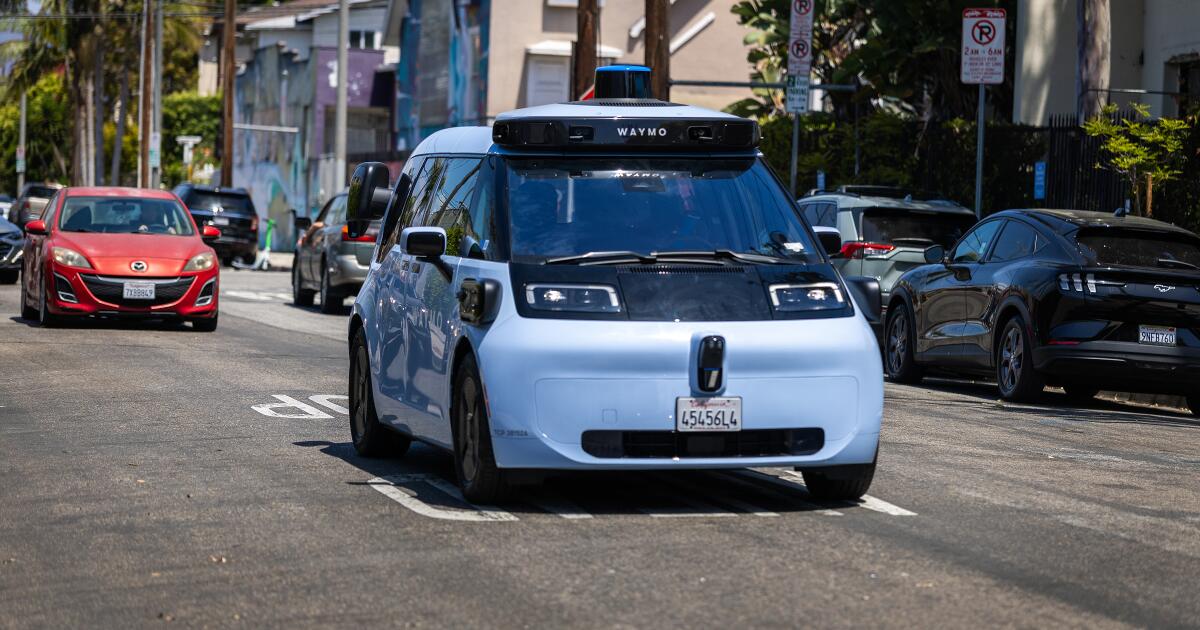
Waymo, the driverless taxi company that operates in more than 10 cities, will soon serve customers in San Diego.
The company has been testing its autonomous vehicles in San Diego with a safety driver behind the wheel since earlier this year. Rides without a human driver became available to employees Thursday and will open to members of the public later this year.
Waymo, which announced the expansion Wednesday, will also bring its taxis to Tampa, Las Vegas and Denver.
“If you’re in one of these four new cities, download the app to be notified when it’s time to ride,” the company said in a blog post.
Waymo has offered fully autonomous rides in San Francisco since 2022 and in Los Angeles since 2024.
It also serves customers in Nashville, Phoenix, Miami and other cities.
In May, Waymo launched a cheaper robotaxi dubbed the Ojai, which is better equipped for difficult driving conditions such as snowy roads.
The Ojai will supplement Waymo’s fleet of Jaguar I-Paces, the company said. In San Diego, services will be provided with the Ojai.
Waymo also announced Wednesday it’s beginning autonomous driving with a safety driver in its newest retrofitted vehicle, the Hyundai IONIQ 5.
“This phase allows us to validate our technology for fully autonomous operations as we work to bring riders even more ways to enjoy Waymo in the future,” the company said.
The company plans to eventually have tens of thousands of driverless taxis made per year, starting with the Ojai, then scaling using the IONIQ 5s.
The move into San Diego and three other cities widens the gap between Waymo and its competitors in the robotaxi race.
Elon Musk’s Tesla robotaxis and Amazon-owned Zoox are shuttling customers autonomously, but are nowhere near the scale at which Waymo operates.
Other companies are working on autonomous trucks and freight trains.
Waymo’s San Diego service area will include Pacific Beach, Normal Heights, La Playa and Southcrest, among other neighborhoods, the company said.
-
 Arizona2 minutes ago
Arizona AG continues to investigate Glendale apartment complex after Friday deadline to fix A/C
-

 Arkansas8 minutes ago
Office of Keep Arkansas Beautiful Now Part of the ARDOT
-

 California11 minutes ago
Amber Alert issued for 3-year-old out of California City in Kern County
-

 Colorado16 minutes ago
Colorado Highway getting bicycle bypass bridge
-

 Connecticut23 minutes ago
Valkyries hit new highs in win over lowly Connecticut Sun
-

 Delaware26 minutes ago
Investigation underway after controversial traffic stop in Delaware
-

 Florida32 minutes ago
Florida Lottery Mega Millions, Jackpot Triple Play results for July 10, 2026
-

 Georgia39 minutes ago
Four Middle Georgia teens charged for murder of Crisp County 20-year-old, GBI says

