Northeast
Tufts University declares support for student detained by ICE, seeks immediate release

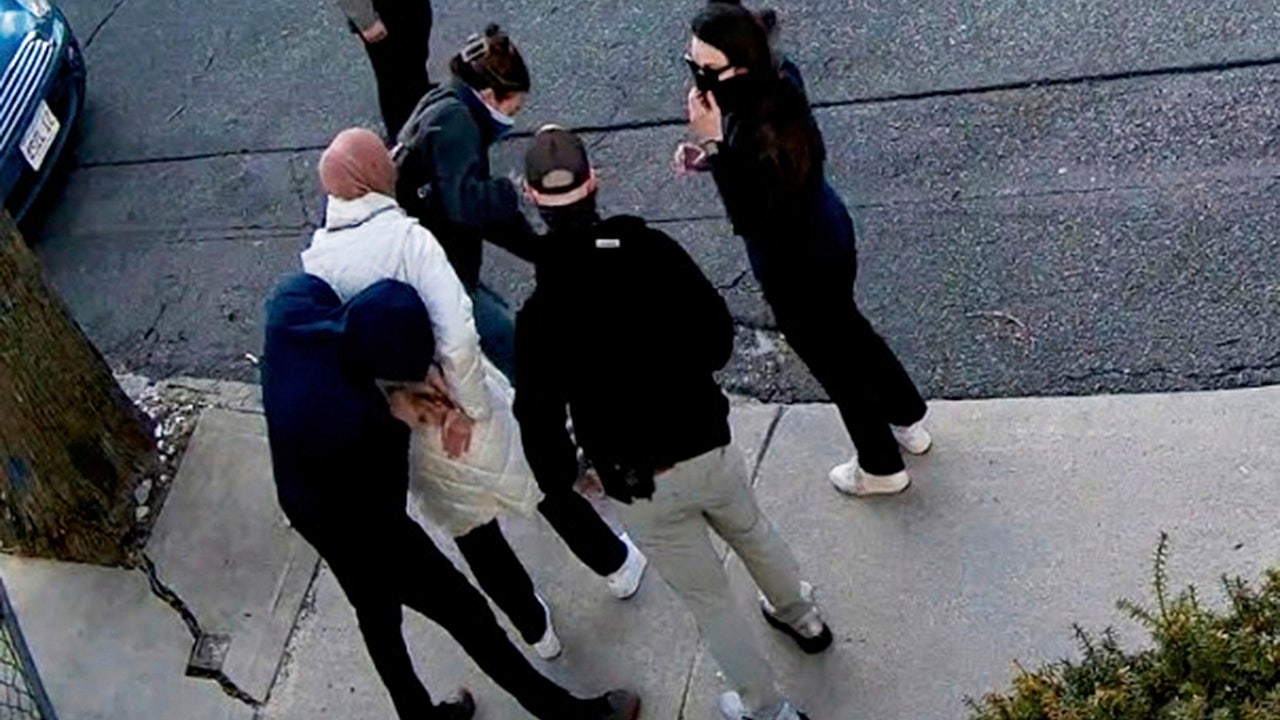
A federal court hearing in Boston on Thursday examined whether it had jurisdiction over the case of a Tufts University doctoral student from Turkey, detained by immigration authorities, as the university voiced support for the pro-Palestinian advocate.
The hearing was held in Boston federal court to determine if the habeas corpus petition on behalf of Rümeysa Öztürk was filed in the correct jurisdiction. Judge Denise Casper said she needed time to “wrestle” with the issue of jurisdiction and come to a decision.
The hearing came as the president of Tufts University filed a declaration in support of a motion filed in federal court by Öztürk, who is accused of supporting Hamas.
Öztürk was taken into custody by Immigration and Customs Enforcement (ICE) on March 26 in Somerville, Mass., after the Department of Homeland Security (DHS) revoked her visa. A DHS spokesperson previously told Fox News Digital that Öztürk was “granted the privilege to be in this country on a visa.”
VIDEO SHOWS ARREST OF TUFTS UNIVERSITY STUDENT FOR ALLEGEDLY SUPPORTING HAMAS
Rümeysa Öztürk, a 30-year-old doctoral student at Tufts University, is detained by Department of Homeland Security agents on a street in Somerville, Mass., on Tuesday, March 25. (AP)
Öztürk’s Massachusetts attorney accused the U.S. government of “forum shopping,” saying that ICE moved the student to Louisiana, where courts might be less favorable towards her case.
The attorney said she was denied access to a lawyer during her move to Louisiana and said that transfer was not standard practice.
The U.S. Attorney’s Office argued that federal authorities moved Öztürk to Louisiana because there was no available room in Massachusetts to hold her until trial. They said that she was first sent to Vermont, but later moved to Louisiana.
Immigration and Customs Enforcement (ICE) officials have arrested a Tufts University graduate student. (Suzanne Kreiter/The Boston Globe)
The DHS spokesperson said that investigations by DHS and ICE “found Öztürk engaged in activities in support of Hamas, a foreign terrorist organization that relishes the killing of Americans.”
“Glorifying and supporting terrorists who kill Americans is grounds for visa issuance to be terminated. This is commonsense security,” the spokesperson added.
ICE DETAINS TUFTS UNIVERSITY STUDENT AMID TRUMP ADMIN’S CRACKDOWN
Tufts University President Sunil Kumar said in the declaration of support that the institution has “no information” that supports the allegations from DHS and ICE.
“The University has no information to support the allegations that she was engaged in activities at Tufts that warrant her arrest and detention. The University has seen an outpouring of support for Ms. Öztürk over the last week from Tufts students, faculty and staff. These individuals have described Ms. Öztürk as a valued member of the community, dedicated to her academic pursuits and committed to her colleagues,” Kumar wrote.
A Department of Homeland Security spokesperson told Fox News on Wednesday that Öztürk had been “granted the privilege to be in this country on a visa” and that “DHS and ICE investigations found Öztürk engaged in activities in support of Hamas, a foreign terrorist organization that relishes the killing of Americans.” (AP)
Kumar added that the university had received a notice on March 25 that Öztürk’s visa was canceled because she was a “non-immigrant status violator” of the Immigration and Naturalization Act. The notice went on to say that Öztürk’s presence in the United States could result in “potentially serious adverse foreign policy consequences for the United States.”
Kumar asked the federal judge to release Öztürk “without delay.”
Öztürk’s legal team previously told Fox News that the student had a valid F-1 visa before her arrest and said that no charges have been filed.
The legal team representing Öztürk told Fox News she had valid F-1 visa status prior to her arrest. (Suzanne Kreiter/The Boston Globe)
U.S. District Court Judge Indira Talwani granted a habeas petition on March 25 requesting that Öztürk not be removed from the District of Mass.; however, the student had already been removed at that point.
In March 2024, Öztürk co-authored an op-ed in the Tufts Daily, calling on the university to divest from Israel.
Read the full article from Here


PORTLAND (WGME) — The third annual Celebration of America 300 is set for Thursday night at Oxford Plains Speedway.
This race was a favorite of NASCAR star Kyle Busch, who tragically passed away back in May. He was just 41.
Now, a Maine-born driver who worked on Busch’s team is ready to take the 8 car into victory lane.
For the past five years, Windham native Derek Kneeland was Busch’s eye in the sky, working as a spotter for the cup star. Kneeland says his relationship with Busch was like a brotherhood.
“I was fortunate enough where I got to have a personal relationship with him,” Kneeland said. “He came up, and he ran several races with me in late models and stuff at Oxford and Lee Speedway, and we got to do a lot of cool things together.”
Kneeland says dealing with the sudden loss has been both painful and difficult.
“It’s still hard,” Kneeland said. “I’m having a hard time with it. The weekdays are the hardest. At the track is where I’m most comfortable.”
Kneeland will be at the track and behind the wheel Thursday night, competing in the Celebration of America 300, driving the number 8 car.
“You know, a few days after everything went down, his dad called me, and his dad is a man of very few words, and I said, ‘You know, I’m thinking about running the 8 or 51 as long as I have your guys’ blessing, I would like to do that.’ And he said, ‘Short track world knows him as 51, but the world knows him as 8,’” Kneeland said.
Kneeland says it will be an emotional race, but he’s confident he’ll have a special co-pilot leading the way.
“Hoping he’s going to be on my shoulder and give me the guiding way and but to win it for Kyle, I think that would put the stamp on it,” Kneeland said.

Approximately eight million gallons of wastewater are currently being discharged into the river per day.
HAVERHILL, Mass. (WWLP) – Those traveling for the Fourth of July weekend are being advised of a wastewater pipe break on the Merrimack River.
The Massachusetts Environmental Police stated that over the weekend, a major wastewater pipe in Haverhill broke, releasing millions of gallons of sewage into the river. The broken pipe was carrying wastewater from the main pumping station to the treatment plant.
Police estimate that approximately eight million gallons of wastewater are currently being discharged into the river per day.
At this time, fishing in the river is not prohibited, and the estuaries and beaches remain open. However, the information is being released to the public to help community members be aware of current conditions and use caution.
To access more information on water quality testing results, you can visit the official DPH website. Updates will be provided as more information becomes available.
Local News Headlines
WWLP-22News, an NBC affiliate, began broadcasting in March 1953 to provide local news, network, syndicated, and local programming to western Massachusetts. Download the 22News Plus app on your TV to watch live-streaming newscasts and video on demand.
New Hampshire
Nashua Man Indicted On 8 Child First-Degree Assault Charges: Hillsborough County Superior Court Indictments

Matthew Mann, 40, of no fixed address in Nashua, on felon in possession and two controlled drug acts; acts prohibited-intent to sell, fentanyl and cocaine charges, all felonies. He was accused of possessing a switchblade knife, more than half an ounce of cocaine, and three baggies of fentanyl. Mann is a felon due to a possession of a controlled substance with intent to distribute conviction in Middlesex County Superior Court in October 2007.
Adam Money, 37, of Cathedral Lane in Hudson, on a felony controlled drug act; acts prohibited-methamphetamine charge on Jan. 5, 2024, in Nashua. Previously, according to the indictment, he was convicted of possession in January 2019 in Rockingham County Superior Court.
Antwaun Roach-Baptiste, 37, of Park Street in West Haven, Connecticut, on a felony theft by unauthorized taking charge. He acted in concert with Tyler Paolini to steal more than $1,500 worth of merchandise from Home Depot in Nashua, according to the indictment.
Marques Stanford, 37, of no fixed address in Nashua, on two felony counts of controlled drug act; acts prohibited-cocaine and fentanyl, and a felony count of controlled drug act; acts prohibited-buprenorphine-with intent to sell on Feb. 9 in Nashua. Previously, according to the indictment, he was convicted on a possession charge in January 2018 in Hills South.
Do you have a news tip? Email it to tony.schinella@patch.com. View videos on Tony Schinella’s YouTube or Rumble channels. Patch in New Hampshire is now in 227 communities and neighborhoods — and expanding every day. Also, follow Patch on Google Discover.
-
Connecticut1 second ago
New Haven asks for retrial after jury awards Connecticut man $38M in wrongful conviction lawsuit
-

 Delaware5 minutes ago
Rutgers Basketball Adds St. Peter’s and Delaware State to 2026-27 Non-Conference Schedule
-

 Florida12 minutes ago
50 tons of South Florida aid headed to Venezuela following earthquakes
-

 Georgia15 minutes ago
MLB's No. 39 Draft prospect Daniel Jackson of Georgia wins 2026 Golden Spikes Award
-

 Hawaii20 minutes ago
Historic Hawaiian Kukui Tree Cut Down After Nearly 30 Years at Disney’s Polynesian Village Resort – WDWNT
-

 Idaho27 minutes ago
Distemper found in raccoon population in Pocatello and Chubbuck – East Idaho News
-

 Illinois30 minutes ago
HSHS St. John’s, RMHC open Ronald McDonald House Family Room
-

 Indiana35 minutes ago
Local hardware store sees surge in sales of cooling items amid Indiana heat wave

