Business
Commentary: Resurrecting a discredited theory on COVID’s origin, DOJ indicts an ex-Fauci aide over old emails


David Morens tried to keep a scientific discussion under wraps. Trump’s anti-science attacks explain why
According to Department of Justice officials including FBI Director Kash Patel, the indictment of David M. Morens for using his personal email account on official business is all about protecting the sanctity of government communications and upholding the federal Freedom of Information Act.
“Circumventing records protocols with the intention of avoiding transparency is something that will not be tolerated by this FBI,” Patel said in the announcement of Morens’ indictment Tuesday.
Many news reports of the indictment, which was unsealed Monday in Maryland federal court, took the DOJ at its word. That’s an error. In reality, the indictment has nothing to do with government email rules.
Scientists rely on open communication and collaboration…. So everybody’s connected, and that’s what’s exploited in these conspiracy stories. It’s made to look nefarious.
— Zoologist Peter Daszak
Rather, it’s a transparent effort to revive the largely discredited hypothesis that COVID-19 originated in a Chinese laboratory through experiments there that were funded by the National Institute of Allergy and Infectious Diseases, headed at the time by Anthony Fauci. (Timothy Belevetz, a lawyer for Morens, declined to comment on the indictment.)
A few points about this.
First, there has never been and still isn’t any evidence that COVID originated in a Chinese lab, much less that Fauci, a revered epidemiologist, was complicit in the pandemic. The overwhelming weight of scientific opinion in the epidemiological and virological communities is that the virus reached humans via naturally infected wildlife, a process known as zoonosis.
Nor is that only a consensus among virologists and epidemiologists: In a declassified 2023 assessment, the Office of the Director of National Intelligence, which oversees all the government’s intelligence services including the FBI, exploded the most common claims made for a lab leak.
As for the Trump White House’s ostensible devotion to “transparency,” New York University’s litigation tracker finds that the roster of pending lawsuits in federal courts coast to coast from nonprofit organizations, state agencies and individuals complaining that the administration has ignored or slow-walked FOIA requests now numbers an astonishing 110.
News about the Morens indictment was drowned out over the last few days by administration attacks on other Trump targets, such as a new indictment of former FBI Director James Comey over a photo of sea shells that the DOJ argues, absurdly, was a subtle call for Trump’s assassination; and an effort by the Federal Communications Commission to terminate ABC’s broadcast licenses, amid late-night show host Jimmy Kimmel’s criticism of Trump.
As I’ve written before, however, the Trumpian attacks on science may have more lasting and profound effects than those cases on public health and the U.S. economy. The anti-science campaign doesn’t merely undermine public confidence in expert judgments; it also poses a generational threat to public health and to America’s economic stature in the world discouraging promising students from entering important research fields.
Those are the long-term consequences; in the short run, Trump’s anti-science campaign has cost U.S. taxpayers a mint. According to the “Bethesda Declaration,” an open letter to National Institutes of Health Director Jay Bhattacharya published in June 2025 and signed by some 500 NIH employees, the agency had terminated 2,100 research grants totaling $9.5 billion since Trump’s inauguration.
The terminations “throw away years of hard work and millions of dollars,” the declaration observed: “Ending a $5 million research study when it is 80% complete does not save $1 million, it wastes $4 million.”
Between the lines, the Morens indictment looks like a proxy salvo in the GOP attack on Fauci, who has been a target of Republicans and the far right since the pandemic.
Charging Fauci directly may be a tough lift, because President Biden, aware of Trump’s inclination to punish his perceived adversaries, preemptively pardoned him for any supposed offenses stemming from his service at NIAID and as a pandemic-era advisor to the Trump White House.
Morens served as a senior advisor to Fauci (who is identified in the indictment as “Senior NIAID Official 1”) from 2006 through Fauci’s retirement in December 2022. Among other counts, he’s charged with conspiracy and “destruction, alteration, or falsification” of government documents. The maximum prison term for the five counts in the indictment comes to 51 years. Morens is 78.
The indictment stems from the earliest days of the pandemic in the first months of 2020, when scientists were trying to get their arms around the novel coronavirus and delve into its features and origins.
Morens corresponded with scientists researching the question. Among them was zoologist Peter Daszak, the president of EcoHealth Alliance, a nonprofit that managed government grants concerned with potential global pandemic threats. He and his organization sounded an early alarm that COVID-19 represented a serious public health threat.
Daszak, 60, is identified in the indictment as “co-conspirator 1” and EcoHealth as “Company #1”; Gerald Keusch, 87, a retired expert in infectious diseases at Boston University who participated in some of the email exchanges and was an outspoken defender of Daszak and EcoHealth, appears in the document as “co-conspirator 2.” Neither he nor Daszak is accused of any crimes in the indictment.
At an early stage, Morens asked his correspondents to communicate through his personal email address so their exchanges wouldn’t be subject to freedom of information requests. This is illegal, but almost never prosecuted.
Still, Morens’ concern was understandable, since FOIA requests had been weaponized by conservatives mining academic correspondences to undermine research into global warming and harass researchers. Morens was pilloried for his email practices during a House Oversight Committee hearing two years ago, and apologized.
“Scientists rely on open communication and collaboration, so you’re constantly emailing everybody,” Daszak told me. “So everybody’s connected, and that’s what’s exploited in these conspiracy stories. It’s made to look nefarious. It’s preying on the openness of science and shutting that down.” I couldn’t reach Keusch for comment.
Some of Morens’ efforts were aimed at restoring a $3.4-million NIAID grant to EcoHealth to fund research into the origins of pathogens in the wild. Trump had ordered the grant canceled in April 2020, a few days after a Fox News reporter told him it had all gone to the Wuhan (China) Institute of Virology, which was a target of lab-leak advocates. (In fact, only about $600,000 had gone to the lab, one of eight foreign and domestic sub-grantees.)
Biden restored the grant after an internal NIH investigation deemed the politically inspired cancellation “improper,” but by then three precious years of research had been lost. It was later canceled again. EcoHealth has shut down completely.
Several emails cited in the indictment referred to government reports that were public and remained so. Some were private exchanges bemoaning the conservative slander that, as Daszak put it, a “powerful cabal of scientists from within NIH helped draft anti lab-leak narrative.” In others, Daszak alerted Morens that batches of EcoHealth emails had been “FOIAed.”
As for the indictment’s assertion that Morens had destroyed government documents, it doesn’t specify any official reports that were concealed or destroyed; the reference may be to Morens’ own emails, which he deleted from his personal account.
Other emails were jocular personal exchanges between colleagues and friends. One exchange concerned a gift of two bottles of inexpensive wine Daszak sent Morens, implying that this was a bribe aimed at persuading Morens to obtain the grant for EcoHealth or to try to get it reinstated. In fact, the grant had been given a high grade by an independent panel charged with selecting grant recipients; neither Morens nor Fauci was personally involved in the process.
The debate over COVID’s origin isn’t an academic exercise. Protecting humanity from the next pandemic, and the ones after that, depends on gaining an accurate understanding of how pathogens originate and reach human communities. Obsessing over a factually unsupported and politically inspired accusation that a Chinese lab foisted COVID-19 on the world will distract from the hard work of addressing the more likely scenario, say by better policing of the illicit trade in infection-prone wildlife species.
Punishing scientists for exploring politically unpalatable research won’t help. “This is the reward for our warning the world that these viruses were coming,” Daszak says of the campaign to discredit EcoHealth. “These were good grants for very important work, and that’s all gone now.”

Business
Many indie festival films struggle to get distribution. Alamo Drafthouse is trying to change that
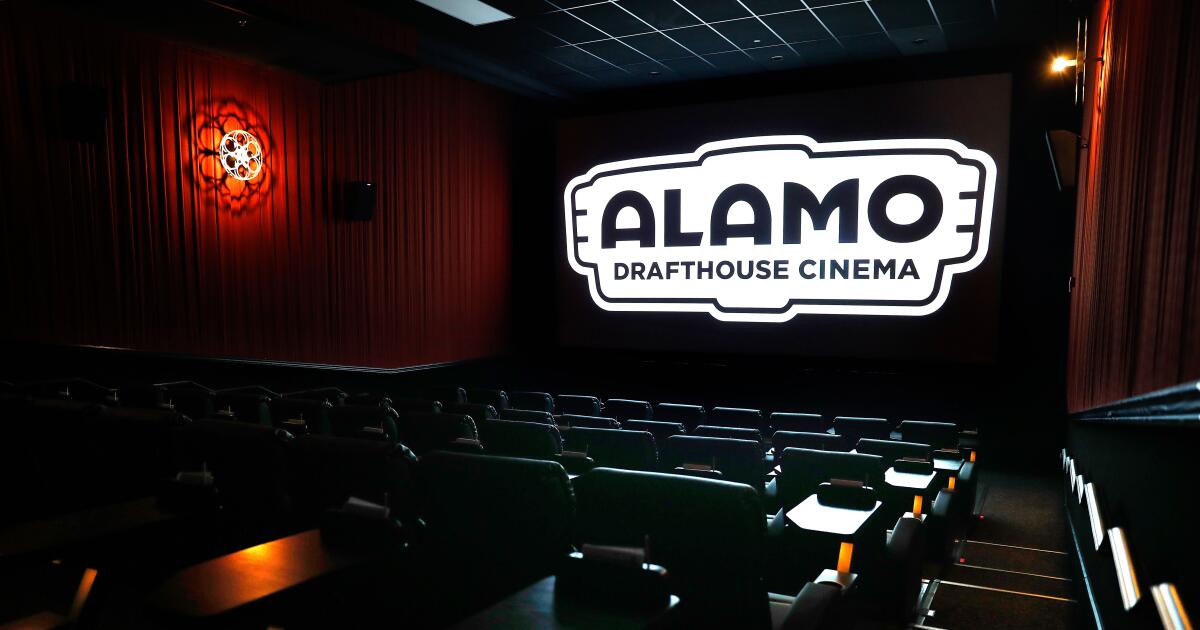
Dine-in movie theater chain Alamo Drafthouse Cinema is launching a new initiative to show unreleased independent films that had successful festival runs, a move that comes as specialty films have struggled to gain distribution.
The Alamo Exclusives program, announced Wednesday, will give limited theatrical runs to films that showed at festivals including Sundance, the Toronto International Film Festival, Tribeca Festival and South by Southwest festival, as well as Alamo’s own Fantastic Fest.
The idea is to help showcase films that received critical acclaim, but did not secure distribution or acquisition deals. The chain will not acquire these films, but instead will enter into agreements with filmmakers to exhibit their films on Alamo Drafthouse screens. By showing these films to audiences on the big screen, these films could get the momentum they need for further opportunities.
The program’s first film will be the documentary “Butthole Surfers: The Hole Truth and Nothing Butt,” which debuted last year at South by Southwest and chronicles the history of the punk rock band.
The film will be shown in Alamo Drafthouse theaters for a limited time later this summer.
The Austin-based chain, which is owned by Sony Pictures, has a long history of curating indie films for its audiences, giving Alamo Drafthouse confidence that its viewers want to see these kinds of movies, company chief executive Michael Kustermann said in a statement.
“Time and again, they’ve shown they’ll come out to support bold, original films when given the opportunity,” he said. The new Alamo Exclusives “gives us another way to champion filmmaker-driven films that deserve to be discovered and connect them with the wider Alamo Drafthouse audience.”
The initiative comes at a difficult time for indie films. Since the pandemic upended the movie business, traditional studios and distributors have had less appetite for risk, including betting on smaller indie films out of festivals.
And as the 2023 dual writers’ and actors’ strikes thinned out theatrical lineups, that aversion to uncertainty became a push for reliable and profitable hits.
“Too many incredible films premiere at festivals and then never receive the theatrical life they deserve,” Lisa Dreyer, director of Fantastic Fest and film innovation at Alamo, said in a statement. “We are actively searching for films across all genres, from horror to comedy, to everything in-between, to champion in this new, exciting way.”
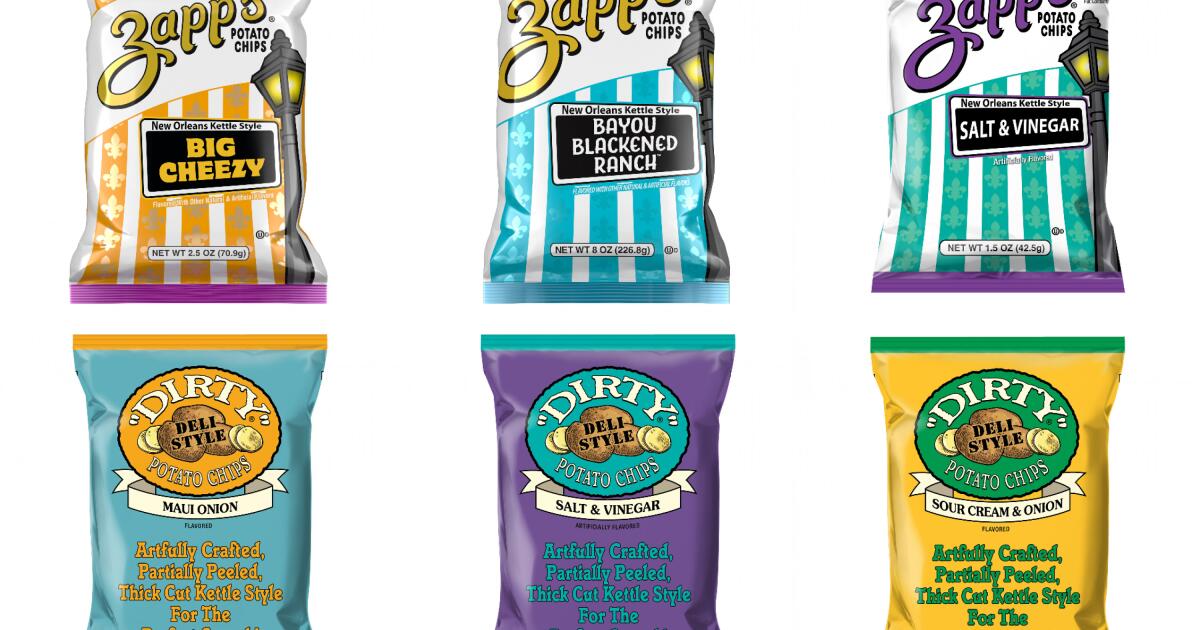
The recall of a popular chip brand over salmonella concerns was recently upgraded to the U.S. Food and Drug Administration’s highest level, just ahead of the Fourth of July holiday and countless backyard barbecues.
On June 24, the FDA designated the recall of several varieties of Zapp’s and Dirty brand potato chips as Class I, meaning it’s “a situation in which there is a reasonable probability that the use of or exposure to a violative product will cause serious adverse health consequences or death.”
FDA has classified the following items as Class I:
Zapp’s
- 1.5-ounce Zapp’s Bayou Blackened Ranch Kettle Chips
- 2.5- and 8-ounce Zapp’s Bayou Blackened Ranch Potato Chips
- 1.5- and 8-ounce Zapp’s Big Cheezy Potato Chips
Dirty
- 1.5- and 2-ounce Dirty Brand Salt and Vinegar Potato Chips
- 2-ounce Dirty Maui Onion Chips
- 2-ounce Dirty Sour Cream and Onion Potato Chips
The chips are produced by Utz Quality Foods, LLC, which on April 28 issued a recall after learning “that a seasoning containing dry milk powder, sourced from California Dairies, Inc. and supplied by a third-party supplier, may contain the presence of Salmonella.”
Salmonella can lead to sometimes deadly infections in elderly people, young children and those with weakened immune systems, according to the FDA.
More than 680,000 bags are included in the recall.
Anyone who has these products should not eat them and should discard them immediately.
What to look for
Salmonella is a foodborne illness that can be fatal to young children, pregnant women, older adults and people with weakened immune systems, according to the National Institutes of Health.
Symptoms may develop 12 to 72 hours after infection, according to the FDA.
The FDA said that people with strong immune systems infected with salmonella may experience fever, diarrhea (which may be bloody), nausea, vomiting and abdominal pain. The illness can last four to seven days.
In rare cases, the infection may produce more severe illnesses such as arterial infections, endocarditis and arthritis, the agency added.
What to do if infected
If you contract salmonella, the Centers for Disease Control and Prevention recommends drinking plenty of fluids to prevent dehydration.
The CDC advises consulting a doctor before taking antidiarrheal medicine or antibiotics. If severe symptoms continue after two days, seek medical help, the agency says.
Because those with diarrhea can spread salmonella to others, it’s also recommended to avoid sharing food or preparing meals for others, sexual contact and swimming in public pools, and to stay home while sick.
Times staff writer Jasmine Mendez contributed to this report.
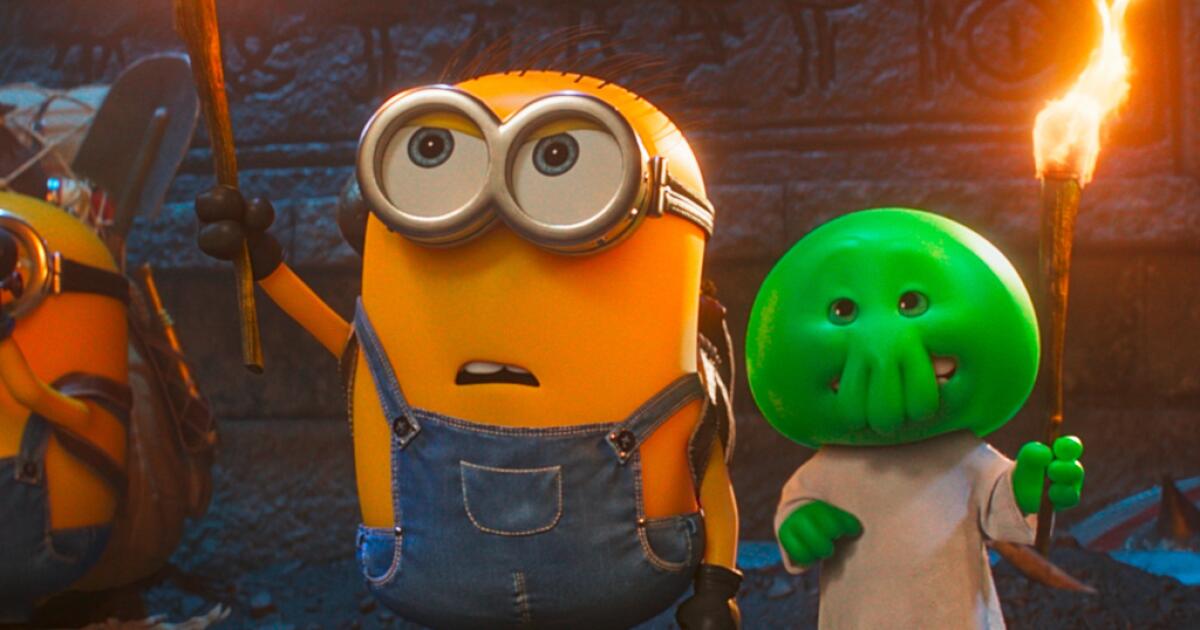
The Minions took over theaters this weekend as Universal Pictures and Illumination’s “Minions & Monsters” won the top spot at the box office, though with a lower-than-expected domestic haul.
The animated movie, which follows the Minions’ takeover of Hollywood, took in $61.4 million in the U.S. and Canada for the five-day Fourth of July holiday weekend, according to studio estimates. That haul was lower than analysts’ expectations for a domestic opening of about $68 million. The movie’s three-day total was $36.4 million.
But the Minions performed well internationally, bringing in about $85 million. In total, “Minions & Monsters” made $159.9 million worldwide on a production budget of about $85 million.
The film is the latest in the powerhouse franchise that began with “Despicable Me” in 2010. Across its previous six installments, the “Despicable Me” and “Minions” franchise has made more than $5.6 billion at the global box office. The last movie, 2022’s “Minions: The Rise of Gru,” made more than $940 million worldwide.
“Minions & Monsters” marks the lowest opening for the franchise. Part of the issue could be timing — the box office can be negatively affected when the Fourth of July lands on a Saturday, said Paul Dergarabedian, head of marketplace trends at Rentrak.
Walt Disney Co. and Pixar’s “Toy Story 5” came in second at the box office this weekend with a domestic three-day gross of $31 million. Angel Studios’ biopic “Young Washington” ($20.8 million), Warner Bros. and DC Studios’ “Supergirl” ($9.6 million) and Universal’s “Disclosure Day” ($6 million) rounded out the top five, according to Rentrak.
The haul for “Minions & Monsters,” coupled with the strong holdover performance of “Toy Story 5,” proved again that family films are making a dent in the summer box office.
“Toy Story 5” has now brought in a total of $764.3 million worldwide, and last month, Universal, Illumination and Nintendo’s “The Super Mario Galaxy Movie” crossed $1 billion at the global box office, becoming the first film of any kind to do so this year.
The rest of the summer theatrical lineup is also expected to bring in audiences and push domestic box office totals closer to pre-pandemic figures. Next week, Disney will release its live-action “Moana,” followed by Christopher Nolan’s “The Odyssey” and Sony Pictures’ “Spider-Man: Brand New Day.”
To date, the summer box office is now about $2.3 billion, a nearly 12% increase compared with the same period a year ago, according to Rentrak data. Compared with pre-pandemic 2019’s numbers, however, it is still down about 7%.
-

 Austin, TX6 minutes ago
How much daylight are we losing in Texas this month?
-

 Alabama9 minutes ago
Sweet Home 250 draws thousands to Montevallo for Alabama’s o…
-

 Alaska14 minutes ago
A frozen ground under Alaska’s tundra looks like ordinary soil from above, but scientists have put a $43 trillion price tag on what happens when it thaws
-
 Arizona21 minutes ago
WATCH: Mesa teen builds free scam detection tool to protect seniors from fraud
-

 Arkansas24 minutes ago
Arkansas restaurants adapt as rising food costs change menus and dining habits
-

 California29 minutes ago
Activists demand Black English be pushed on kids in California preschools
-

 Colorado36 minutes ago
Showers and thunderstorms forecast for Colorado’s high country as wildfires rage across the state
-

 Connecticut39 minutes ago
Eversource crews work to restore power nearly 48 hours after Independence Day storm

