Connect with us

Northeast

Second Karen Read juror faults 'sloppy police investigation' in John O'Keefe murder case

Published

on

Second Karen Read juror faults 'sloppy police investigation' in John O'Keefe murder case

NEWYou can now listen to Fox News articles!

A second Karen Read juror has come forward after arriving at not guilty verdicts on most of the charges she faced in the death of her Boston police officer boyfriend, John O’Keefe.

“It could just be bad police work, but if anyone had done their job correctly, we wouldn’t be in this position,” Paula Prado, who was Juror No. 11, told ABC News. “It would either be proved or disproved right away.”

Another of the 12 jurors explained the panel’s reasoning Thursday, a day after her second trial came to a close. He also explained brief confusion Wednesday afternoon that arose out of a verdict that jurors later retracted before it was read in court. Judge Beverly Cannone sealed that one. Within minutes, jurors had a verdict for real.

“Everything on that initial slip was the same as the slip that was presented,” Juror No. 4, identified only as “Jason,” told TMZ Live. He said they pulled the first slip back over the OUI charge – operating under the influence of liquor, of which jurors found her guilty.

Advertisement

KAREN READ MURDER CASE VERDICT REACHED AFTER DEADLOCKED FIRST TRIAL

WATCH: Juror No. 4’s interview

“In our deliberations, we had decided there was enough evidence and proof that she was driving under the influence,” he said.

Cannone ordered that the jurors’ names remain sealed for 10 days, but she said individual jurors could come forward on their own, if they wanted. 

Jurors found Read not guilty of murder, manslaughter and fleeing a deadly accident in a trial that stretched on for more than 30 days of testimony and four days of deliberations. The lesser included charge of OUI is the Massachusetts term for drunken driving.

Advertisement

“I don’t know what happened to John,” Jason said. “I was only presented a limited scope of what happened at the night, and I can only base my opinion off of the evidence that was shown in the courtroom. So, I don’t really know if there was a cover-up or not.

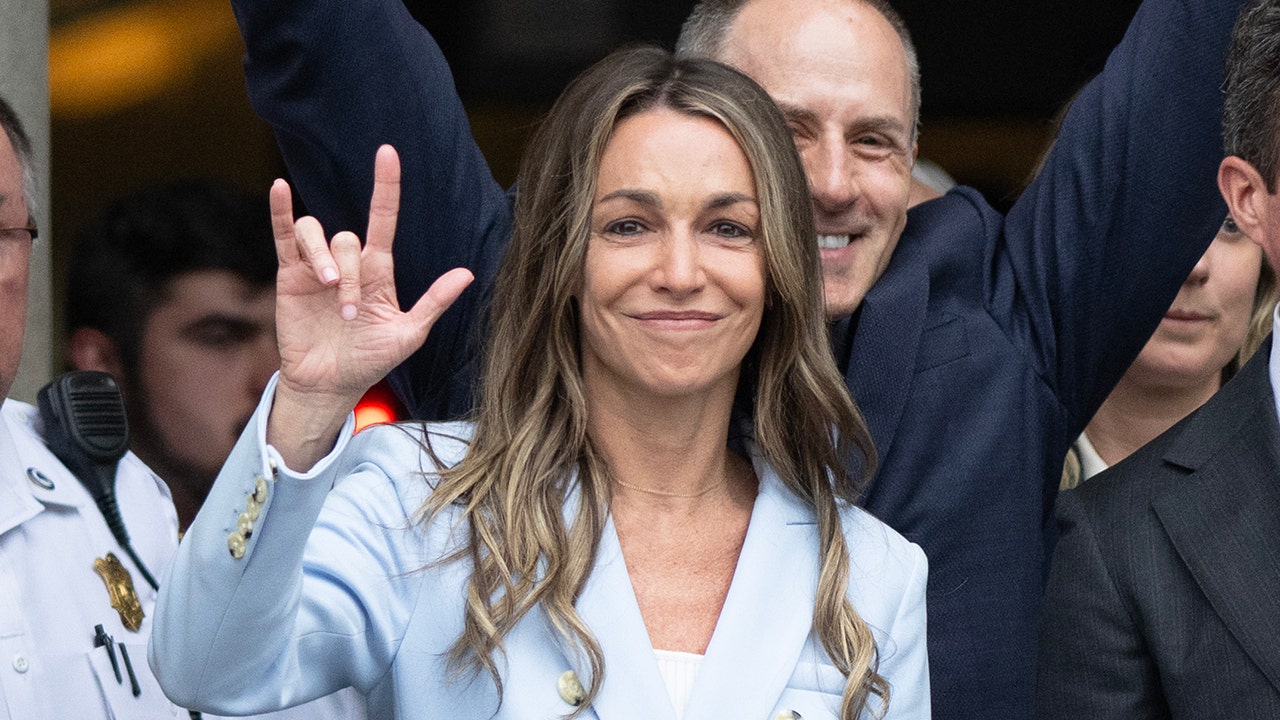
Karen Read exits Norfolk County Superior Court in Dedham, Mass., Wednesday, June 18, 2025. Read was found not guilty in the murder of her boyfriend, John O’Keefe. (Richard Beetham for Fox News Digital)

“I know that’s the big conspiracy around it, but I don’t really know. All I know is there was a lot of holes in the investigation. Whether they were deliberate holes or not deliberate holes, it’s kinda hard for me sitting back to know that — you know, what actually happened.”

He said the defense claim that O’Keefe could have been killed by someone in the house — in an attack that involved a dog — was an “example of reasonable doubt.”

“We were tasked with finding … with deciding this person’s fate based on the proof in the evidence that the commonwealth was able to present, and there was a lot of holes,” he said.

Advertisement

Officer John O’Keefe (Boston Police Department)

He said another important factor for the jury was video that showed Read’s taillight.

“We could see from the car, after the alleged incident happened, when we could see the taillight it was lit up red, where it shouldn’t just have been red,” he said. “I don’t believe that the SUV collided with John O’Keefe.”

Still, he added, there was no way for jurors to know whether claims of a “corrupt” police investigation were true.

“I don’t know that there was any corruption going on,” he said. “But do I know that there wasn’t enough proof or evidence secured by the police to convict Karen Read? Absolutely.”

Advertisement

Also Thursday, Massachusetts State Police brass broke their silence on the years-long case marred by investigative missteps and the firing of a state trooper who played a central role in the case.

Massachusetts State Trooper Michael Proctor faces a tough cross-examination by lawyer Alan Jackson during the Karen Read murder trial in Norfolk Superior Court in Dedham, Mass., June 12, 2024. (Greg Derr/The Patriot Ledger via Imagn)

Read was accused — and acquitted — of killing her boyfriend by slamming an SUV into him and leaving him to die on the ground during a blizzard after a drunken argument. Jurors found her guilty only of drunken driving, for which she received a sentence of one year probation and outpatient treatment.

Col. Geoffrey Noble, the state police commissioner, said the entire department sends its condolences to O’Keefe’s family.

“The events of the last three years have challenged our department to thoroughly review our actions and take concrete steps to deliver advanced investigative training, ensure appropriate oversight and enhance accountability,” Noble said in a statement. “Under my direction as colonel, the state police has, and will continue to, improve in these regards.”

Advertisement

He said the goal is to deliver “excellent” service and maintain public trust.

Karen Read and John O’Keefe pose for an undated photograph. (Karen Read)

GET REAL-TIME UPDATES DIRECTLY ON THE TRUE CRIME HUB

Jurors did not appear to trust the investigation after four days of deliberation, when they rejected the prosecution’s case almost entirely.

MASSACHUSETTS TROOPER MICHAEL PROCTOR ‘TERMINATED’ FROM STATE POLICE

Advertisement

The lead investigator on the case, former State Trooper Michael Proctor, lost his job in March after an internal investigation concluded he shared confidential and sensitive law enforcement information with civilians in a group text, the contents of which were also lewd in nature and mocked Read’s health issues.

Supporters of Karen Read gesture as she departs Norfolk Superior Court during jury deliberations Tuesday, June 17, 2025, in Dedham, Mass. (Charles Krupa/AP Photo)

FOLLOW THE FOX TRUE CRIME TEAM ON X

It was Noble who announced the firing, days before Read’s second trial began. Her first trial ended with a deadlocked jury last year after the texts were read in court and Read’s defense exposed other glaring flaws in the investigation. 

“It is incumbent upon me, as well as every member of this department, to hold one another accountable when any member compromises our mission by failing to uphold our values,” he said at the time.

Advertisement

SIGN UP TO GET THE TRUE CRIME NEWSLETTER

Noble and the department were also sued by true crime reporters and some of Read’s supporters over the enforcement of a “buffer zone” around the Dedham courthouse that their lawyers called unconstitutional.

Separately, local police in Canton, Massachusetts, were subjected to an external audit that recommended increased training and oversight while dispelling claims of a conspiracy to frame Read for O’Keefe’s death.


A federal investigation into the case ended without charges against members of either law enforcement agency.

Advertisement


Read the full article from Here

Continue Reading
Click to comment

Leave a Reply

Your email address will not be published. Required fields are marked *

This site uses Akismet to reduce spam. Learn how your comment data is processed.

Connecticut

CT Lottery Powerball, Cash 5 winning numbers for June 27, 2026

Published

on

CT Lottery Powerball, Cash 5 winning numbers for June 27, 2026


play

The Connecticut Lottery offers several draw games for those willing to make a bet to win big.

Advertisement

Those who want to play in Connecticut can enter the CT Lotto, Millionaire for Life and Cash 5 games as well as play the national Powerball and Mega Millions games. There are also two drawings a day for the Play 3 with Wild Ball and Play 4 with Wild Ball games.

Drawings are held at regular days and times, check the end of this story to see the schedule.

Here’s a look at Saturday, June 27, 2026 results for each game:

Winning Powerball numbers from June 27 drawing

03-16-28-30-59, Powerball: 11, Power Play: 2

Check Powerball payouts and previous drawings here.

Advertisement

Winning Cash 5 numbers from June 27 drawing

06-07-16-19-31

Check Cash 5 payouts and previous drawings here.

Winning Play3 numbers from June 27 drawing

Day: 4-1-6, WB: 2

Night: 0-5-7, WB: 5

Check Play3 payouts and previous drawings here.

Advertisement

Winning Play4 numbers from June 27 drawing

Day: 9-4-8-9, WB: 8

Night: 0-7-0-4, WB: 7

Check Play4 payouts and previous drawings here.

Winning Millionaire for Life numbers from June 27 drawing

26-32-38-51-52, Bonus: 05

Check Millionaire for Life payouts and previous drawings here.

Advertisement

Feeling lucky? Explore the latest lottery news & results

Are you a winner? Here’s how to claim your lottery prize

Connecticut Lottery prizes up to $599 can be easily claimed at any authorized CT Lottery Retailer without additional forms or documentation or by mail. For prizes between $600 and $5,000, winners have the option to claim by mail or in person at any CT Lottery High-Tier Claim Center or CT Lottery Headquarters. For prizes between $5,001 and $49,999, winnings must be claimed in person at the Connecticut Lottery headquarters or by mail. All prizes over $50,000 must be claimed in person at CT Lottery Headquarters. Winners are required to bring a government-issued photo ID and their Social Security card.

CT Lottery Claims Dept.

15 Sterling Drive

Wallingford, CT 06492

Advertisement

For additional details, including locations of High-Tier Claim Centers, visit the Connecticut Lottery’s claim information page.

When are the Connecticut Lottery drawings held?

  • Powerball: 10:59 p.m. on Monday, Wednesday, and Saturday.
  • Mega Millions: 11 p.m. on Tuesday and Friday.
  • Lucky for Life: 10:30 p.m. daily.
  • Lotto: 10:38 p.m. on Tuesday and Friday.
  • Cash 5: 10:29 p.m. daily.
  • Play3 Day: 1:57 p.m. daily.
  • Play3 Night: 10:29 p.m. daily.
  • Play4 Day: 1:57 p.m. daily.
  • Play4 Night: 10:29 p.m. daily.
  • Millionaire for Life: 11:15 p.m. daily.

This results page was generated automatically using information from TinBu and a template written and reviewed by a Connecticut editor. You can send feedback using this form.


Source link

Continue Reading

Maine

What Susan Collins’ appropriations power means for Maine, and what happens if she loses

Published

on

What Susan Collins’ appropriations power means for Maine, and what happens if she loses


U.S. Sen. Susan Collins, R-Maine, joins Sanford firefighters at a ground breaking ceremony at the site of the future city fire and EMS headquarters in March. (Derek Davis/Staff Photographer)

Sen. Susan Collins had just finished taking photos in front of a new fire station in the town of Sweden when a television reporter asked her about Graham Platner. 

Four days earlier, on June 9, the political newcomer secured the Democratic nomination to take on Collins. Instead of addressing his victory, Collins pivoted to talk about her position on the Senate Appropriations Committee, a leadership role that in many ways is the culmination of her three decades in office.

The fire station, she said, was an example of what she has been able to do as chair “of the most powerful committee in the Senate.”

Advertisement

“These communities cannot, on their own, build a new fire station,” Collins said in an interview with the Portland Press Herald/Maine Sunday Telegram after the event. “They just don’t have the tax revenue.”

Maine’s top ranking Republican worked for years to get to the position of influence so she can make more fire stations like this a reality. As appropriator-in-chief, she directs earmark spending to cities, towns, hospitals, organizations and universities; influences selections for competitive grants for things like transportation infrastructure; and inserts programs and rules into congressional bills that specifically benefit Maine and its industries.

She’s running for reelection to her sixth term largely on these hard-won abilities. At every opportunity, she talks about the approximately $1.5 billion in earmarks she has brought to Maine since her last election. One of the major questions facing voters this year will be just how much that matters.

Collins’ federal earmarks since her last election have supported the construction or renovation of 45 firehouses in Maine, a Press Herald review shows, as well as 43 wastewater treatment facilities, at least 31 state road improvements, 17 childcare centers, six YMCAs and hundreds of other beneficiaries from affordable housing to historic preservation.

“The amount of funding she has secured for Maine is astonishing,” said Heideh Shahmoradi, an appropriations expert who worked for the Senate Appropriations Committee and is now a bipartisan consultant in Washington.

Advertisement

While all senators can bring money to their states, there is ample evidence that Collins’ success couldn’t be replicated by a freshman.

It’s attributable to more than her seniority, though. Collins has broken with the Republican Party to support programs that create pots of funding that could benefit Maine; and she’s having to defend Congress’ spending power against a Trump administration that wants to take some of it away.

Voters cast their ballots at the Mechanic Falls town office on June 9. (Libby Kamrowski Kenny/Staff Photographer)

But Platner argues that the money Collins has brought home has failed to address the underlying issues that have made Maine less affordable for many, which is a key motivating issue in this election. 

As a senator, Platner says he would work to massively expand the country’s social safety net.

“For all of the money that Susan Collins brags about earmarking for Maine, the reason we’re still seeing housing become unaffordable, we are still seeing our healthcare system collapse, we’re still seeing our wages collapse while the price of goods and services go up,” he said at a May event in Phippsburg, “is that she never did a thing to change the structures.”

Platner’s ambitious policy talk would be difficult to achieve: Medicare for All would likely need 60 votes in the closely divided Senate to become law. Collins’ earmarks, officially known as Congressionally Directed Spending, and grant awards regularly get approved within a year.

Advertisement

Some voters, including people who supported Collins in the past, said in interviews that they don’t plan to vote for her this year, despite the funding she brings home.

Sen. Susan Collins, R-Maine, chair of the Senate Appropriations Committee, heads to the chamber before June 4 votes on the immigration enforcement funding package, at the Capitol in Washington. (J. Scott Applewhite/Associated Press)

On primary election day, outside a Sanford library that was recently expanded with a $3 million congressional earmark from Collins, Mallory Mulrath said she uses the library three or four days a week as part of her work with children.

“I love this library,” she said. “(But) I do feel like there’s more important things. The old library needed updates, but not to this extent.”

This November, Mulrath said she is voting on economic issues and does not plan to vote for Collins. She’s paying more for gas, groceries and car insurance. 

“No one can afford to pay bills, let alone actually live and have fun,” she said. 

PRIORITY ON APPROPRIATIONS

Earlier in her Senate tenure, Collins chaired the Homeland Security and Aging committees. She felt like she did important work, but said it became increasingly evident that, “You can pass the best legislation imaginable, but if it’s not funded by the Appropriations Committee, you can’t accomplish the goals.”

Advertisement

That’s one reason why she made it her focus to get on the committee. 

She also noted that Maine is what she calls a “low-income state” that needs federal support, and that she could use her position to benefit the state’s defense and biomedical research industries. 

Appropriators are able to go through each federal spending bill and write amendments to help their states. Collins was appointed to the committee in 2009, and in 2015 became chair of the subcommittee on transportation, housing and urban development. She was a leader of the subcommittee on defense, and became chair of the full committee in 2025.

Former staffers say Collins stands out for her attention to detail and passion for following Senate rules and that, as an appropriator, she makes sure she understands each budget request.

Shahmoradi, who was clerk and staff director of the subcommittee Collins chaired, said one of the questions Collins asked about each item in front of her was, “What are the benefits to Maine?”

Advertisement

Of the five senators she worked with, she said Collins was the most strategic about bringing money to her state. 

One way she does that is by putting language directly into spending bills to solve a specific Maine problem or support an industry. Since the Appropriations Committee touches each obscure part of the federal government, the possibilities are vast.

For example, logging industry leader Dana Doran said Collins funded a grant program to support biomass for wood energy in 2018; and she incorporated language in appropriations bills starting in 2016 that classify wood biomass as a carbon-neutral fuel source.

A logging forwarder in Oquossoc village in Rangeley unloads logs destined to become two-by-fours in November 2020. (Andree Kehn/Sun Journal)

Purchase this image

In another instance, starting in 2009, trucking business owner Brian Bouchard said his industry and big companies like Irving, Dead River and Poland Spring told Collins they were frustrated with a federal rule that prohibited them from driving 100,000-pound loads on interstates. It was causing safety issues on local roads, and made trucking less efficient. 

Collins was able to use an appropriations bill to increase the weight limit along Maine’s section of Interstate-95.

“Senator Collins just bulldogged this thing,” said Brian Parke, president of the Maine Motor Carriers Association.

Advertisement

The longtime head of the construction industry group in Maine, Matt Marks, said infrastructure upgrades have been sorely needed in Maine and while he’s grateful for the entire congressional delegation, Collins in particular has become like the third leg of the stool to get any project done. (He counts the industry as one leg, and state and local governments as another.)

There is evidence that appropriators like Collins also help steer money to their states through competitive grants. For example, she was one of three members of her party who voted for the Obama-era stimulus package after the 2008 financial crisis (former Maine Sen. Olympia Snowe was another), which created a pool of money for states to compete to fund transportation projects. 

The federal transportation department chose recipients for the so-called TIGER grants, but in Collins’ first campaign ad released this spring, she made clear that she had input on who got selected. 

The ad shows a flash of light and rows of boats bobbing in the ocean when a breakwater collapsed in Eastport on the northeastern tip of the state in 2014. A local official in the ad thanks Collins for bringing $6 million to help restore the breakwater. According to a news release from Collins’ office sent when the rebuild was complete, the money was secured a year before the breakwater’s collapse through a TIGER grant, when it was already clear the breakwater was in bad shape.

Members of Congress routinely write letters of support for applications from their home states and try to help them get approved. Though Shahmoradi, who had previously worked at the federal transportation department and reviewed TIGER applications in years prior to the Eastport project, said there was not enough money to fund all the worthy applications.

Advertisement

During her time on staff, when the department needed a secondary way to choose among the high-scoring applications, it would look to politics.

“That’s the reality in making these selections,” she said.

Smaller states and projects would not have prevailed without the kind of influence members like Collins had, Shahmoradi believes. The nonprofit news outlet APM Reports came to a similar conclusion when it analyzed  TIGER grantees and found that all of Maine’s 13 applications got funded.

Molly Reynolds, vice president of the centrist Brookings Institution, said that kind of power can extend across the federal government. “If you know that Sen. Collins has a lot of power in the appropriations process, you’re more likely to want to say yes to things she wants to see in other legislation.”

Collins’ office said since she joined the Appropriations Committee, she’s helped Maine win more than $1 billion in competitive transportation grants, including through a rural bridge program she helped create.

Advertisement

If she were voted out, said Daniel Schuman of the American Governance Institute, “You’re not going from all to nothing. You’re going from all to less.”

EARMARKS GALORE

Competitive grants gave appropriators a way to get money for their home states during a decade-long period in which Congress suspended direct earmarks. Since 2022, when Congress restarted them, senators can make an unlimited number of requests for specific projects, although members have to compete to get their requests funded.

“It truly is your seniority on the committee, your seniority in the Senate, that determines how much money you’re going to get,” Shahmoradi said.

Collins’ success in bringing money home increased as she moved her way up the committee’s ranks. In 2024, she had the most in earmarks of any member of Congress: $577 million. The only state that got more per capita was Alaska, according to the independent watchdog Citizens Against Government Waste.

Advertisement

Some of the requests go to tiny places, like the $1.15 million to support the fire station in Sweden, which has a population of about 450. Penobscot, Collins’ home county of Aroostook, and Washington have drawn the most funding from Collins per capita. All three lean significantly more conservative than southern parts of the state.

Maine’s most populous and most liberal county — Cumberland — has drawn 7% of Collins’ earmarks but has 22% of the state’s population. Collins said that’s in part because some places make fewer requests, and because when she’s selecting projects she considers an area’s ability to pay its own way.

At times that’s left communities off of Collins’ funding list even when their projects match the kinds of things she regularly touts. For example, Falmouth asked for funding for a new fire station this year, and South Portland is about to borrow $58 million to upgrade its wastewater infrastructure. 

Both are on the request list submitted by Sen. Angus King, an independent who caucuses with Democrats, but his success rate has been much lower than Collins’: She gets nearly 100% of her requests funded, while King was at about 50% in 2024 and 26% in 2026 (though King asked for nearly twice as much funding).

“I very much value her position and what she brings to the table,” South Portland Economic Development Director Lea Duffy said of Collins. But Duffy is disappointed not to have Collins’ financial support to lessen the rate increases for residents and companies. 

Advertisement

“We have some really important industries that happen to be located in South Portland,” she said, like technology companies she said keep the state relevant in the 21st century. They’ll see big increases in their sewer costs to pay for the upgrades.

In response to any suspicion that her selections are political, Collins pointed to several earmarks she’s directed to places that didn’t vote for her, like drinking water infrastructure in Brunswick and mental illness treatment in Rockland.

“If I made political assessments, Portland would not be getting any money,” she said. Instead, she pulled out a printed book to show where Portland has gotten funds for a food bank, teen shelter, a residential treatment center and more.

Some cities have had repeated success. Auburn has gotten an earmark from Collins each year since 2022, for a public safety center, a youth community center, a riverwalk expansion and utilities for housing. (Auburn is a politically purple city; voters supported both Collins and Democrat Joe Biden in 2020.)

VOTERS WEIGH IN

Collins hopes these community investments are persuasive in an election when the economy will drive decisionmaking, according to University of Massachusetts Lowell pollster John Cluverius. He said it’s the most important issue for the narrow slice of voters whose choices will determine the outcome of the election.

Advertisement

In Auburn in May, voter and retiree Mike Heon was asked about the Senate race. “Why would you want to give up Susan Collins? Are you kidding me?” he said. 

If other voters disagree and replace her with a freshman senator, Mainers can expect its share of federal earmarks to drop. When Vermont Sen. Patrick Leahy left Congress, and his post as Appropriations chair, his successor brought in just 20% of Leahy’s total.

U.S. Senate candidate Graham Platner speaks during a watch party after winning the Democratic nomination on June 9 in Blue Hill. (Robert F. Bukaty/Associated Press)

Platner said in Phippsburg that if he joins the Senate, he’ll have the time to rebuild the power she has, while also advocating for systemic changes.

Mainers could hope Platner follows in the footsteps of Georgia Sen. Jon Ossoff, who was appointed to the Appropriations Committee by party leaders just a few years into his first term.

Platner’s earmarks could differ from Collins’ ideologically, as well. Researchers at the University of Texas and the University of Illinois Chicago found liberal Democrats have used earmarks to accomplish their core policy goals, while moderate Democrats and Republicans spread them out on other issues, when they analyzed House appropriations requests from 2022.

While Maine’s members of Congress have largely used earmarks to support infrastructure, there are also some that reflect ideological priorities. Rep. Chellie Pingree’s lists include a couple of items to support clean energy and environmental sustainability, for example.

Advertisement

But no one, not even Collins, got earmarks in 2025, when Congress couldn’t agree on spending bills and decided to continue its prior year budget instead of passing new ones. That kind of gridlock resulted in three distinct federal shutdowns in just the last year. It makes Collins’ job much harder, and means she may not get to use all the power her position traditionally afforded, experts said.

She has also contended with a Trump administration that has tried to make big cuts to priorities she likes to fund, like the low-income energy program.

Bath resident Margaret Allen said on primary day this month that she’s voted for Collins five times before. “She’s done good things,” Allen said. But she doesn’t plan to vote for Collins again. This time around, she doesn’t care about the money Collins has brought home.

“The national issues are way more important than anything Susan Collins is going to do for fire stations,” she said.

Advertisement

Allen is a retired data researcher and said she worries about Social Security, America’s place in the world, the environment and what will happen when the One Big Beautiful Bill Act’s health insurance cuts take full effect.

Maine is expected to lose billions of dollars, not all of which will be replaced by a rural hospital fund Collins championed — one indication that while she has brought money home to Maine, money has also been taken away on her watch.

“I’m not OK with what the Republicans are getting away with,” Allen said.

In Sanford, voter Kevin Mulherin, who works in IT for an engineering firm, said he voted for Collins in 2020 but doesn’t plan to in November.

He said her ability to bring funding to Maine has favored some businesses and industries.

Advertisement

“That’s great for those people that’ll benefit, but at the end of the day I’m still working with less money,” he said.

Not all moderate voters agree. Also voting in Sanford during the primary, Bill Frederick said the cost of living matters to him quite a bit, and he doesn’t think the Trump administration is doing good things, but he plans to vote for Collins. 

He said she keeps money coming to Bath Iron Works, which builds naval ships, and Pratt & Whitney in North Berwick, which manufactures aircraft engines, as well as the nearby Portsmouth Naval Shipyard. 

That money could go elsewhere, Frederick said, but Collins makes sure it comes to Maine.

Coming soon: How Collins and the Trump administration are jockeying for control of the federal budget, and what it means for Maine.

Advertisement


Source link

Continue Reading

Massachusetts

Battenfeld: AG Andrea Campbell’s errors sting Massachusetts voters

Published

on

Battenfeld: AG Andrea Campbell’s errors sting Massachusetts voters


No single person in Massachusetts bears more responsibility for denying voters the right to cast a ballot than inept Attorney General Andrea Campbell.

No rent control? Blame Campbell.

No state income tax cut? Blame Campbell.

No audit of the state Legislature? Blame Campbell.

Advertisement

Again and again Campbell has screwed up or worse, been complicit, leaving Bay State voters without the ability to exercise their right to decide important issues.

No amount of fawning pieces in the Boston Globe or publicity-seeking lawsuits against President Trump can cover up that fact.

She is a disaster. Unfortunately we have to suffer through another four years of her bonehead decision-making because Republicans in Massachusetts are just as inept at fielding viable candidates.

Massachusetts voters had the best chance in two decades this fall to establish rent control with a referendum question capping rent increases at 5%. Polls showed the ballot question with a solid advantage.

But Campbell, a liberal Democrat, allowed language on the question giving exemptions from the rent limits to religious institutions, which in Massachusetts violates the Constitution. The Supreme Judicial Court voted unanimously to kick the referendum question off the ballot.

Advertisement

This was not a case of political decision-making on Campbell’s part, since Democrats favored the rent control question. It was purely a rookie botch job, and a huge one at that, which will have major ramifications for renters, who will now be denied a much needed break from astronomical increases.

A simple reading of the Constitution should have caused Campbell to flag the question, and get the rent control advocates to strike the religious exemption. She admitted after she “got it wrong” — which is of no help to the renters in this state.

Apparently following the law, as Martin Short’s synchronized swimmer character would say, is not the Attorney General’s strong suit.

A similar error — or possibly an insidious political move — on Campbell’s part also blocked voters from getting a chance at lowering the state income tax from 5% to 4%.

The referendum question clearly had majority support, but was strongly opposed by Democrats like Campbell who argued it would have led to unconscionable cuts in social service programs to make up for the lost tax revenue.

Advertisement

Campbell okayed fatally flawed language in the ballot question which again caused the SJC to punt it off the ballot. This one may not have been just a simple mistake, but a possible deliberate act by Campbell to poison the question.

Politics again played a role in Campbell’s moves around a 72% voter-approved legislative audit by Auditor Diana DiZoglio. By not enforcing the new law, Campbell is flagrantly keeping DiZoglio from auditing the books of the despised, free-spending Legislature.

Campbell — rather than do her job — will not represent DiZoglio in her efforts to secure the audit, but authorized her to seek outside counsel, which will cost millions.

So on one hand saying she’ll enforce the law, she’s done everything she can to block it.

So what does Campbell do exactly? She has sued the Trump administration 50 times already, on a pace to exceed even Gov. Maura Healey’s lawsuits against Trump back when she was AG.

Advertisement

And she rarely ventures outside her Dartmouth, Mass. manse. Far from being the people’s lawyer, she stands against the people’s will.


Source link

Continue Reading
Advertisement

Trending