Entertainment
‘I knew a gun was going to be used’: Man pleads guilty in Jam Master Jay’s 2002 murder

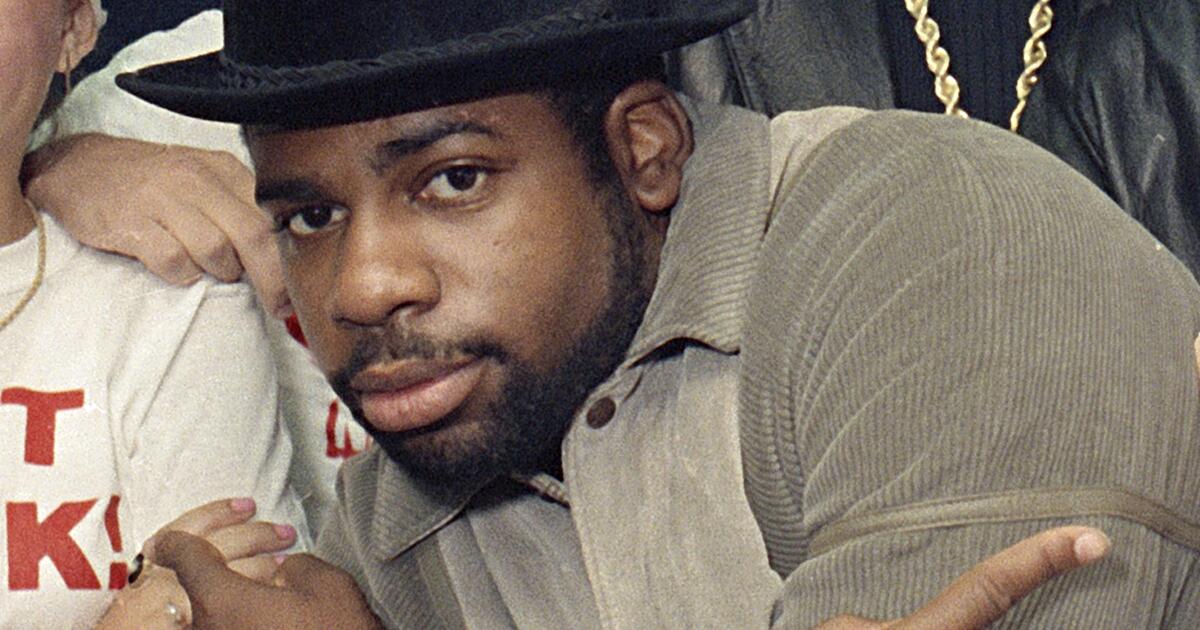
More than 20 years after Jam Master Jay of Run-DMC was shot to death in a New York recording studio, a man admitted to his role in the killing.
Jay Bryant, 52, pleaded guilty to a federal murder charge, telling U.S. Magistrate Judge Peggy Cross-Goldenberg that he helped others gain access to the building where the hip-hop icon, born Jason Mizell, was shot in 2002.
“I knew a gun was going to be used to shoot Jason Mizell,” Bryant told the judge, per the Associated Press. “I knew that what I was doing was wrong and a crime.”
Bryant didn’t name the people he helped, but in 2024, Karl Jordan Jr. and Ronald Washington were convicted of Mizell’s murder in a case that prosecutors had been working for decades.
“Y’all just killed two innocent people,” Washington yelled at the jury at the time of the verdict.
Jordan Jr., Mizell’s godson, won an appeal last year to overturn his conviction, with a judge finding that the prosecutors’ case against him didn’t add up. The judge said the evidence didn’t support the contention that he was motivated by anger after he was cut out of a $200,000 drug deal. Earlier this month, U.S. District Judge LaShann DeArcy approved Jordan Jr.’s $1-million bond package.
Washington has challenged his conviction as well.
According to Courthouse News, prosecutors claimed that Washington and Jordan both confessed to the murder, based on witness testimony that both men discussed being involved in Mizell’s shooting while they were in prison.
As for Bryant’s role in the murder, his uncle Raymond Bryant testified in 2024 that his nephew confessed to killing Mizell, saying he “did it.”
Additionally, a hat with Bryant’s DNA that law enforcement officers found in the recording studio placed Bryant at the scene of the crime.
Bryant told the court Monday that he was in cahoots with people who were wrapped up in a drug deal with the DJ and that he played a part in the killing by helping them gain entry to the recording studio. According to the Associated Press, Bryant flashed a thumbs up to a person in the courtroom before leaving.
Bryant faces 15 to 20 years in prison for his role in the murder, as well as separate narcotics trafficking and firearms charges to which he already pleaded guilty.
“More than two decades after the cold-blooded, execution-style killing of Mr. Mizell, an exhaustive investigation revealed Bryant’s role and today he finally admitted his guilt,” stated U.S. Atty. Joseph Nocella in a news release.
“Justice in the murder of Jam Master Jay has been pursued with determination and resolve for more than two decades. The defendant’s role in facilitating access for the killers was integral to this crime,” added Bryan DiGirolamo, special agent in charge for ATF New York field division.
Although Mizell’s public persona as the “master of the disco scratch” promoted the wholesome side of hip-hop and encouraged a drug-free lifestyle, officials said he turned to dealing after the group’s heyday had come and gone. According to prosecutors, Mizell became involved in arranging the sale of kilogram-size quantities of cocaine.
In August 2002, Mizell was fronted 10 kilos of cocaine from a supplier. Prosecutors alleged that Jordan Jr. and Washington planned to deal the drugs in Maryland, but a dispute led to the men being cut out of the $200,000 deal.
On Oct. 30, 2002, Mizell was playing video games with a friend inside his Queens, N.Y., recording studio, 24/7. According to prosecutors, around 7:30 p.m., Bryant entered the building containing the recording studio and opened a locked fire escape exit door to allow others to slip in without being seen by Mizell.
Two shots were fired and Mizell was hit once in the head, killing him. The second shot struck another individual in the leg.



Mr. Reset and The Society of Turnbuckle and Bone is a gripping sci fi horror/comedy featuring Vinny Pacifico, who is an ex-Ring of Honor Wrestler. What’s it about? What did we think about it? Read on for our spoiler free review!
But first? Take a look at the trailer!
Synopsis
Former Ring of Honor talent Vinny Pacifico stars as a rising indie wrestler lured by the promise of fame and fortune into a dark world of intense trials and sacrifice.
Rob Ryzin (ex-AEW), Bobby Fish (ex-NXT), Nick “Percy Watson” McNeil (ex-NXT), and Nick “Jamie Stanley” Stuible also star alongside writer-director Jedi Koszewski.
From The Press Release
The spectacle of professional wrestling grapples with psychological dread in Mr. Reset and The Society of Turnbuckle & Bone.
Full of gauzy, gorgeous imagery, a kaleidoscope palette, and themes that blend science fiction, body horror, and dark comedy, the surreal horror film explores a secret society that manipulates the wrestling industry from behind the scenes under the enigmatic Mr. Reset’s watchful eye.
Produced by Audacity Complex Studios, the film strips away the glitz of sports entertainment to reveal its psychological toll, while never shying away from the darkly comic moments that lurk in the industry’s shadows.
“This project holds special meaning for me because it brings together two of my greatest passions: horror and professional wrestling,” Pacifico commented. “Through this story, I’ve had the privilege of exploring authentic experiences within a fictional framework and shedding light on growing up in the entertainment industry.”
Here’s a look at the poster art!
My Thoughts
If you like movies that have a horror/conspiracy feel to them with a hint of creepy, this is the movie for you. The cast did a phenomenal job, and the storytelling was spot on. It also had a touch of breaking the 4th wall in there. This is a great film with a lot of drama, horror, and bad decisions. I will give a PSA to anyone who is sensitive to lights as it switches back and forth a lot. I like the news element to the movie and how it goes from 1st person to 4th person.
Final Thoughts
I wouldn’t recommend this movie to anyone under 13 because of the nature of the film and the tricks it can play on your mind. Also, it has body horror which younger viewers might not be able to handle. The gore and the trauma in the movie play on your mind and is not for the faint of heart. Excellent storytelling and the director did a phenomenal job. I highly recommend this B-list movie with a 9/10 for me based on the bizarreness of it and the great storytelling. Sometimes you need a reset.
Mr. Reset and The Society of Turnbuckle and Bone on VOD now!

Paul Avery, a journeyman actor best known for his role on “All My Children,” and his wife, Sheila, have died following a house fire. He was 81 and she was 77.
The couple’s death was confirmed by their daughters Parker Sanchez and Kyle Avery, who said the fire broke out in their home in Blairstown, N.J., early last Tuesday morning. While firefighters were able to reach Paul and Sheila inside the Mohican Road home, the couple succumbed to smoke inhalation.
The cause of the fire is under investigation.
Paul had a recurring role playing Hughie the bartender at Foxy’s on the ABC daytime soap “All My Children” for 12 years. He also acted in the 1978 film “Superman,” “Three’s Company,” “Soap,” and appeared in more than 300 commercials. He also acted in theater productions and produced plays in both New York and Los Angeles.
According to his daughters, the actor joked that his “elastic face” landed him multiple national commercials that ran concurrently. Casting directors looking for a “Paul Avery type” would turn the actor away because he was in too many commercials.
“He had a teeny tiny part — one line in Superman — but boy did he make a meal out of that,” Sanchez joked.
Kyle Avery added that at the Oscars, they played a clip from “Superman” that featured Paul reciting his line.
“His good friend ran into the kitchen and made him an Oscar out of tinfoil and handed it to him,” she said. “But I think the thing that he was proudest of was that he could make a living as an actor.”
Paul Avery was born Oct. 8, 1941; and Sheila Avery was born May 22, 1949. Paul was raised in Indianapolis, served in the Vietnam War in his 20s and moved to Los Angeles and then New York by his late 20s to try to make it as an actor. Sheila was raised in Kansas City, Mo., and moved to New York where she worked as a registered nurse but also had a background in theater.
She studied the craft in college, performed on a USO tour in Vietnam and worked as a costume mistress.
According to the couple’s daughters, the two brought their Midwest charm and sensibilities to the East Coast.
The couple met while living in an apartment building filled with other journeymen actors in the late 1970s.
“They were all part of this theater community, people who would go from regional theater to regional theater with the season,” Kyle Avery said. “They were a whole troupe of people who’d be in New York for part of the year, but then they’d go and be in Lakewood, Ohio, or Kansas City or Chicago, just following the theater.”
Sheila was previously married to John Quincy Bruce Jr., also an actor in the New York theater community and the father of Sanchez. Sheila and Paul got together in 1982 and married in 1984. They celebrated their 42nd wedding anniversary in April.
Paul was a jack-of-all-trades and master of many. He was a small plane pilot who often flew into a tiny airport in Blairstown, N.J., which is how the couple discovered the town they’d call home. There, they opened a bookstore, Cabbages and Kings. Paul also launched a magazine: the Warren County Companion. According to the couple’s daughters, Paul was the first internet service provider in town. He also penned film reviews for the New Jersey Herald and some for the New York Times as well.
Sheila found what her daughters called the “perfect job,” which brought together her work as a registered nurse and background in theater: speaking in schools about domestic violence and sexual assault. She also became a counselor who worked with survivors, and a trainer who worked with volunteers, teaching them how to interact with victims.
“People who took her training 20 years ago have been contacting us and saying, ‘Your mother changed the way I thought about the world, she is the basis for my feminism,’” Sanchez said. “It’s been so fascinating to hear the ripple effects of young women who took that training from her, and who are now middle-aged women who are still thinking about her.”
The daughters said that their parents were community icons who were dedicated to service. “They had a sense of duty to the people around them,” Kyle Avery said.
“They loved to throw parties,” Sanchez said. “They hosted an annual event called Faux Giving and they would have these insane traditions, like we would have a head-measuring contest and measure the circumference of people’s heads, and then a winner gets to eat their pie first, and a badge.
“Whoever had the smallest head, everyone there would shout, ‘Pin head! Pin head!’ at this person, and it was the silliest thing in the world, but everyone who attended that event, even if they came one time, would talk about it forever.”
Kyle Avery added, “They were incredibly memorable.”
“They were community builders, they were people who wanted to nourish you in every way, and they were so good at it.”
They are survived by their children: Kyle Avery; Parker Sanchez and her husband, Pablo; Paul Avery’s son from a previous relationship, Stuart Sutherland; and their grandchildren, Avery, Duncan and Liana.

The Get Out, 2026.
Directed by Derek Borte.
Starring Russell Crowe, Luke Evans, Aaron Paul, Teresa Palmer, Nina Dobrev, Daniel Zovatto, Kartiah Vergara, Josh McConville, Yasmin Kassim, Benedict Hardie, Christian Perez, Cameron Leonard, Cory Beeston, and Ever Love Hope.
SYNOPSIS:
A nightclub owner is on the verge of leaving his dangerous past behind for retirement. After masked gunmen rob him and he finds himself squeezed by ruthless cartels, a mysterious newcomer arrives with an interest in buying the business.

Before even getting into what co-writer/director Derek Borte’s The Get Out is about, it must be said that if Russell Crowe is in a movie, he is putting on a European accent. Simply put, this is what he does now, and how his fascination with playing Albanians and other nationalities would be more interesting than almost anything in this mostly generic, certainly overcrowded Los Angeles crime tale of fighting one’s way out of that dangerous life to live peacefully alongside a loved one.
To be fair, The Get Out is based on a novel called Strip by Thomas Perry (with screenwriters Derek Borte and Daniel Forte adapting), so it’s possible that the character in that book just happened to be Albanian and that this is actually inspired casting; go get the kooky guy who can’t help himself from playing quirky, offbeat, and violent Europeans (this is essentially the Russell Crowe from Kraven the Hunter). The reality is that, whatever the reasoning behind the decision, it mostly amounts to an otherwise legendary actor (at least he knows Gladiator II sucked and isn’t afraid to voice it) delivering another campy performance that unsurprisingly works even less once the film bizarrely shifts from crime comedy to more grounded action with mostly meaningless stakes (since whatever makes this novel a complex and breathtaking piece of crime fiction isn’t to be found here).

Manco Kapak (Russell Crowe) is a nightclub owner (it was once a strip club but changed to reflect politically correct times, which mostly sounds like a change from the novel and an acknowledgment of that) connected to the cartel (Daniel Zavatto) with a rigid system in place to keep operations functional. It turns out that the only threat to that falling apart is his own physical health, as he suffers a cardiac incident while sexually intimate with his much younger girlfriend, Sunny (Teresa Palmer). This is also what prompts him and her to consider selling the nightclub to an interested buyer, Joe Carver (Luke Evans), leaving that life behind, fleeing the country, and living out the rest of their days in solitude, with no one hunting them down.
Not only do Manco and Joe struggle to come to a financial agreement that feels respectful to the former, but a crooked police detective (Josh McConville) discreetly tasks miserable adjunct professor Jeff (Aaron Paul), who already breaks the law in what he believes to be victimless crimes in writing academic papers to help undeserving youngsters receive a free ticket into prestigious colleges. to mug the nightclub owner and steal the cash that he is carrying to bring to the cartel. The gist is that Jeff failed to get the detective’s son into the college of his choosing, and that, for some reason, the answer is to keep stealing the money necessary from Manco.

Since Manco never takes his gun out of his car’s glove compartment (even after his girlfriend and confidants suggest he start holstering it), getting the jump on him is simple time and again (Jeff is forced to do this on more than one occasion). However, a wrinkle is thrown into all of this when Point Break-obsessed bank teller Carrie (Nina Dobrev) astutely catches on that something is up with his deposits, pushing her way into the con. It also turns out that Carrie is a risk-taker, excited and turned on by crime, which mostly causes Jeff to freak out as he just wants his part in all of this to be over, but is, of course, more than happy to pull over to a motel at Carrie’s request when robbing Manco has made her horny.
The adventures of this mismatched, dopey Bonnie and Clyde are the most fun there is to be had here, with the clashing personalities of Aaron Paul and Nina Dobrev playing off each other well. Their journey takes them in a direction that has less and less to do with Manco and more to do with Carrie getting it over her head, which is amusing and makes for a far more engaging movie than everything else here. She even gets her own blooper reel that might have more laughs in it than the previous 90 minutes.

It shouldn’t be a surprise to anyone who has seen a movie before that all of these characters are on a collision course to face a reckoning with one another and the reckless and questionable choices they have made to hopefully enrich their lives. However, there is far too much happening in The Get Out, coupled with poor characterization and a gradual shift in tone from a comedic playfulness that already doesn’t work, to violence that also doesn’t work because there isn’t much to care about. Again, there is a much more interesting movie in the oddball-comedic Bonnie and Clyde duo. Put Aaron Paul and Nina Dobrev in a Point Break remake, and you have a better movie than that actual remake and The Get Out.
Flickering Myth Rating – Film: ★ ★ / Movie: ★ ★ ★
Robert Kojder
https://www.youtube.com/watch?v=embed/playlist
-

 San Francisco, CA7 minutes ago
San Francisco Supervisor Jackie Fielder to return following mental health leave
-
Dallas, TX10 minutes ago
Impact: How Jeffery Simmons’ extension could affect Quinnen Williams
-
Miami, FL15 minutes ago
Jaylen Brown bidding war? Haslem drove this? All the fallout from Antetokounmpo trade to Miami
-

 Boston, MA22 minutes ago
Your next Uber ride in Boston could be a taxi
-

 Denver, CO25 minutes ago
Nuggets 2026 NBA mock draft tracker 2.0: What national experts predict Denver will do
-

 Seattle, WA30 minutes ago
How to watch Bosnia vs. Qatar in next Seattle World Cup match
-
 San Diego, CA37 minutes ago
San Diego Unified leaders propose policy to limit technology in classrooms
-
 Milwaukee, WI40 minutes ago
Racine’s Greek community reflects on Giannis’ celebration of Greek culture

