Northeast
Online data protection bills become law in Maryland

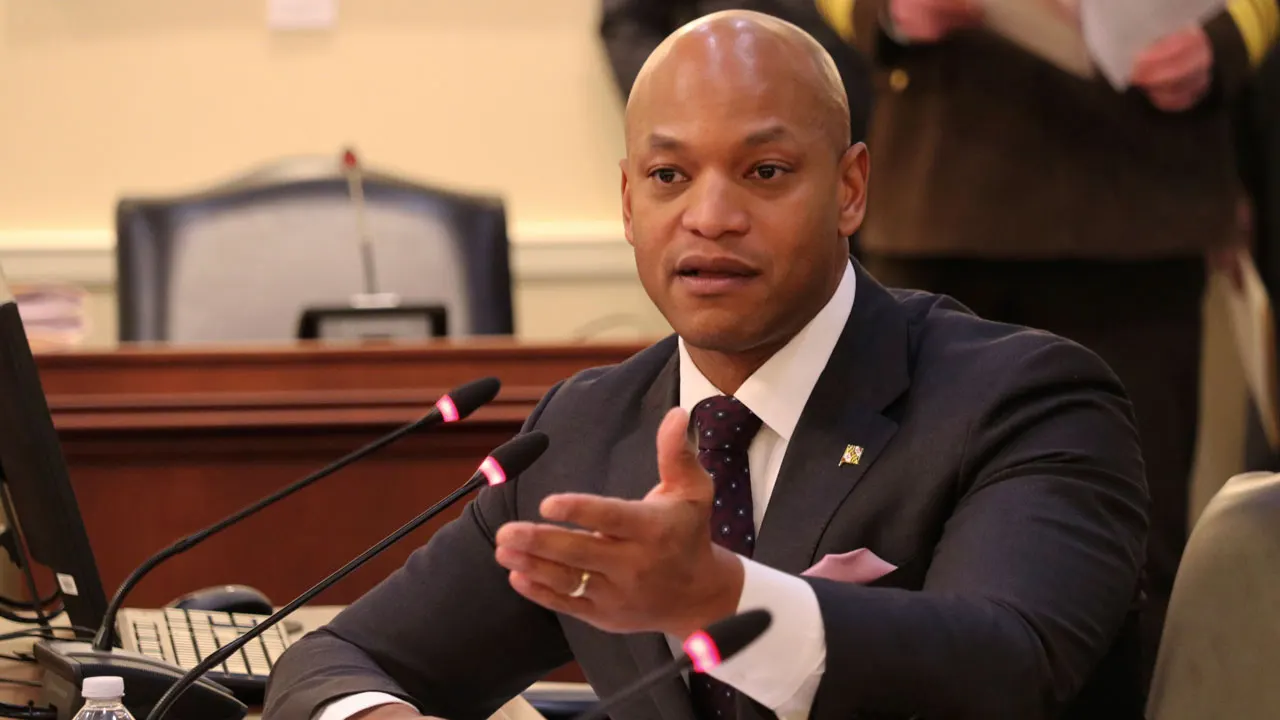
Maryland Gov. Wes Moore signed two measures into law on Thursday that are aimed at better protecting personal data online from Big Tech, including a bill making Maryland the second state to try to create strong limits on information collected on children.
The measure, known as the Maryland Kids Code, seeks to limit data that could be collected from children online and protect them from being flooded with harmful material they were not trying to find.
“Look, the bottom line is Big Tech has been preying on and victimizing our children for way, way too long,” said state Sen. Ben Kramer, a Democrat in the suburbs of the nation’s capital.
SENATE MULLS TIKTOK BAN AS TRUMP-ZUCKERBERG BATTLE BREWS IN BACKGROUND
Big Tech companies sought to assure lawmakers that the industry could take care of problem without interference from the government, Kramer noted. “But the fact of the matter is, leaving the fox to guard the chicken coop has left Big Tech fat and greedy, because they have prioritized cash over our kids,” the senator said.
Supporters say the new law aimed at protecting children was crafted to withstand court challenges like one that halted a California law. For example, the measure incorporates case law and established consumer protection law, supporters said.
Carl Szabo, vice president and general counsel of NetChoice, said the group shares lawmakers’ desire to better protect children online. “But this goal can be achieved in ways that don’t violate the Constitution and leave a litany of serious, unintended consequences in their wake,” he said.
Maryland Gov. Wes Moore testifies in support of legislation aimed at making housing more affordable and protecting renters during a bill hearing on Tuesday, Feb. 20, 2024, in Annapolis, Md. (AP Photo/Brian Witte)
NetChoice is a commercial association whose members include Google, Amazon, Meta and TikTok. It challenged the California law.
“Unfortunately, the law Gov. Moore signed today will fail to accomplish its goal — creating a safer online environment for young Marylanders. An unconstitutional law will not keep anyone safe. By discounting the rights and privacy of their citizens, Maryland lawmakers have unfortunately signed onto a path that will make everyone worse off — especially children,” Szabo said in an email.
Under the law, businesses would not be able to profile a child by default, with some limited exceptions, or process personal data that is not reasonably necessary to provide an online product with which the child is actively and knowingly engaged.
Del. Jared Solomon, a bill sponsor, said lawmakers were careful to make sure the measure is not meant to moderate available content. He said protective language was added to ensure a child could not be prevented from searching for content online.
“If you want to go and you want to look for things that you probably shouldn’t be looking at, we are not scrubbing that from the internet,” Solomon, a Montgomery Democrat, said. “But what we are saying to companies is you should not be essentially be accumulating data on somebody and making assumptions that that is the content that they want to see.”
Design It For Us, a coalition advocating for safer social media and online platforms for children, praised the new law.
“We hope this will bring urgency to other states to pass and adopt much needed Kids Code legislation and end Big Tech’s power over our safety and privacy,” said Zamaan Qureshi, a co-chair of the group.
The governor, a Democrat, also signed the Maryland Online Data Privacy Act of 2024.
The new law will impose certain duties on businesses to protect an individual’s personal information. For example, a business in possession of personal information will be required to implement and maintain security procedures and practices to protect the information from unauthorized access, use, modification or disclosure.
“It puts guardrails up on the amount of data that companies can collect on people online and also what they do with that data, and it gives consumers more control over their own data,” said Del. Sara Love, a Montgomery County Democrat who sponsored the measure.
The new law also will create consumer protections and rights, as well as disclosure obligations, relating to online personal data controlled or processed by certain entities that conduct business in Maryland or provide services or products that are targeted to residents of the state.
A consumer also will have the right to opt out of the processing of personal data for the purposes of targeted advertising, the sale of personal data and certain profiling activities.
Read the full article from Here

Massachusetts
Massachusetts dad on ‘adventure of a lifetime’ left fighting for his life in Fiji after noticing bug bite

A trip of a lifetime quickly turned into an unimaginable nightmare for a Massachusetts father who is fighting for his life halfway across the world after being bitten by a bug.
Scott and Claire Winslow always dreamt of sailing across the South Pacific with their family — and in April, they were finally able to turn their dream into a reality when they embarked on an “adventure of a lifetime” to enjoy their retirement, according to an online fundraiser.
But just weeks into the three-month sailing voyage, Scott noticed what appeared to be a bug bite and his health rapidly deteriorated, WBZ-TV reported.
His condition worsened for nearly two weeks while at sea alongside his nephew, and by the time their ship made it to land in Fiji, he was so weak that he was unable to walk.
The father-of-three was rushed to a local hospital, where doctors discovered the severity of his infection.
“By the time they got to a doctor, he was so sick,” Scott’s daughter Lisa Babbin told the outlet.
Scott was then transferred from a private hospital to the Intensive Care Unit at Lautoka Hospital on Vitu Levu, the main island of Fiji, where his wife Claire was heartbreakingly told to “prepare for the worst.”
The retiree remains critically ill on a ventilator, battling septic shock and organ failure.
The infection has spread to Scott’s lungs and gallbladder and his kidneys are functioning at “a fraction of their normal capacity,” the GoFundMe page says.
It’s still unclear how the infection started — whether by the insect bite, an infected wound or something else, according to the dad’s family.
While doctors are doing everything they can, Scott’s critical condition requires greater care than the local hospital can manage, according to his daughter.
“Every hour counts for my father,” Babbin said.
The family has secured a bed for the critically ill father at the Newton-Wellesley Hospital in Mass., but doesn’t know if they will be able to afford to fly him back to the United States for better care.
“All we need is a medflight, that’s the only thing we need to get him home,” Babbin said. “Medflights are not cheap.”
A special medical flight from Fiji to Boston — which is over 8,000 miles in distance — could set the family back a staggering $250,000, according to the outlet.
In addition to the fundraiser, the Winslow family has applied for a US government loan to help with the astronomical costs of flying Scott home as well as the foreign medical bills that are adding up without medical insurance coverage.
Scott is a “hardworking, loyal, generous” man, “always willing to lend a hand,” relatives wrote on the fundraising page.
“He has spent a lifetime helping others, supporting his family, and being there whenever someone needed him.”
While Scott’s family “remain hopeful and continue to pray” for his recovery, “they are also facing the overwhelming financial burden that comes with a catastrophic medical emergency overseas,” the fundraiser says.
New Hampshire
This NH Short Film Festival Returns in July, and Every Film Clocks in at 15 Minutes or Less

Independent filmmaking isn’t just alive; it’s helping shape the future of storytelling.
As technology continues to level the playing field, passionate creators have more opportunities than ever to tell meaningful stories outside the traditional Hollywood system. That’s exactly why events like the Creative Guts Short Film Festival deserve our support.
“The spirit of this festival is to celebrate the creativity, voice, and collaboration of filmmakers.” Now in its third year, The Creative Guts Short Film Festival gives a platform for filmmakers from all genres and different levels of experience to showcase their 15-minute pieces. The films selected this year were based upon a jury panel and even have a chance at the opportunity to screen at Red River Theatres on a limited run after the festival.
How cool is that!?
Awards in different categories will also be given to chosen filmmakers at the end of the event.
The evolution of cinema:
According to one of the UK’s biggest film festivals (Raindance), “The old model of filmmaking was built around gatekeepers.”
“Studios controlled production. Distributors controlled access. Television networks controlled visibility. Film festivals controlled discovery. Audiences arrived at the end of the pipeline. That structure shaped the kind of stories that could exist.”
Today, that model is rapidly changing. Raindance explains, “That pipeline is collapsing in real time. A filmmaker with a phone, editing software, and a direct audience relationship can now build attention faster than institutions that once controlled the entire ecosystem. That changes everything.”
As someone who has spent years in the filmmaking world, I know firsthand that audiences don’t always see the countless late nights, rewrites, equipment hiccups, and endless problem-solving that happen long before a film ever reaches the screen.
Every finished project represents months (or even years) of hard work, creativity, and determination.
A reason to support:
That’s one of the reasons I love short film festivals. Instead of committing to one feature-length movie, you get to experience a wide range of storytelling styles, genres, and perspectives all in one afternoon.
The best films don’t just entertain you, they linger long after the credits. They spark conversations on the drive home, challenge the way you see the world, or introduce you to a filmmaker whose work you’ll be eager to follow.

If you’re looking to experience something different while supporting New Hampshire’s creative community, this festival is a great place to start. You may discover your next favorite filmmaker before everyone else does!
2026 Creative Guts Short Film Festival
READ MORE: This Small New England Bakery Is Winning Hearts With Biscuit Flights
Date: Thursday, July 30, 2026
Time: 6:00PM
Location: Red River Theatres, Concord, NH
Early bird price: $15 (June 15th to June 30th)
Regular price: $20 (July 1st to July 30th)
These 11 Drive-In Theaters in NH, ME, and MA Are Still Operational
Gallery Credit: Meg
Movies Set in New Hampshire
New Jersey
New Jersey’s $60.7 billion budget signed into law by Gov. Mikie Sherrill • The Jersey Vindicator

Sherrill touts smaller structural deficit, record school funding, and expanded tax credits. Critics question last-minute budget negotiations, Stay NJ changes, and state’s long-term fiscal outlook
Gov. Mikie Sherrill on Tuesday signed New Jersey’s $60.7 billion fiscal year 2027 budget into law, calling it an affordability-focused spending plan that delivers record property tax relief, historic investments in education, a sixth consecutive full pension payment and new investments in children, housing and transportation while avoiding tax increases on individual residents.
The budget, approved by the Legislature just before the constitutional June 30 deadline, includes more than $4.1 billion in property tax relief, expands the state’s Child Tax Credit by 25%, fully funds the state’s pension system with a $7.3 billion payment, and maintains a surplus of just over $6 billion. The administration said it also cuts New Jersey’s structural deficit to $1.35 billion, less than half the more than $3 billion deficit projected when Sherrill took office in January.
In a signing statement accompanying the bill, Sherrill said the budget reflects months of negotiations with legislative leaders.
“After many months of negotiations, we have crafted a fiscally disciplined budget that provides record-breaking levels of property tax relief, protects our children’s futures through record education funding, delivers a full pension payment, improves accountability, and supports significant investments in the economy, workforce development, and public health and safety,” Sherrill wrote.
She also used her line-item veto authority to make what she described as technical changes.
“I am making minor changes to the bill before me to ensure consistency with legislative intent concerning the State’s spending plan for Fiscal Year 2027 and to avoid falling out of compliance with federal laws that prevent the State from increasing the value of the State Directed Medicaid Payment Program,” she wrote.
Sherrill frames budget around affordability
Sherrill said the budget fulfills her campaign promise to make affordability the central focus of state government.
“When I took office, I promised New Jersey families that affordability would be the north star of every decision we made. With the passage of our first budget, we are delivering on that promise,” Sherrill said in a statement. “It is an affordability budget that takes on the rising costs of housing, health care, and property taxes while standing up to Trump’s chaos and cuts.”
“It is the most fiscally responsible budget in years,” she said. “It cuts our structural deficit in half and puts us in a stronger position for the future without raising taxes on individual New Jerseyans. This budget reflects our values, protects our future, and ensures doors to opportunity remain open in New Jersey.”
State Treasurer Aaron Binder said the spending plan maintains fiscal discipline while preserving major state priorities.
“This budget demonstrates a steadfast commitment to fiscal discipline, maintaining a full pension payment, responsible surplus, and support for shared priorities like property tax relief and school funding,” Binder said. He thanked lawmakers, Treasury staff, the Office of Legislative Services, and members of the public “who shared ideas that helped shape the final budget.”
Stay NJ revised
Among the most significant changes is a restructuring of the Stay NJ property tax relief program.
The budget lowers the program’s income cap from $500,000 to $200,000 and creates three benefit tiers. Seniors earning $100,000 or less will remain eligible for the maximum annual benefit of up to $6,500. Those earning between $100,001 and $150,000 can receive up to $5,000, while households earning between $150,001 and $200,000 can receive up to $4,000. Qualifying homeowners will continue receiving property tax relief totaling up to half their property tax bill, subject to those caps.
Overall, the budget includes more than $4.1 billion in property tax relief, including $2.186 billion for ANCHOR, $756 million for Stay NJ, and $345 million for Senior Freeze.
The Child Tax Credit also increases by 25% for tax years 2026 through 2028. Families previously receiving the maximum $1,000 credit will now receive $1,250, while households qualifying for the $800 credit will receive $1,000. The administration estimates that about 217,000 tax filers with children will benefit.
Education, transportation, and housing
The budget provides a record $12.4 billion in K-12 education aid, more than $370 million above last year’s level, along with a record $1.4 billion for preschool education. It also includes $582 million for child care assistance, restores $20 million for Summer Tuition Aid Grants, doubles funding for high-impact tutoring to $15 million, and provides funding for several youth mental health initiatives, including a new Office of Youth Online Mental Health Safety and Awareness and a Social Media Research Center.
The budget provides nearly $1.1 billion in operating support for NJ Transit, including $765.6 million from the Corporate Transit Fee, and about $2.1 billion for transportation capital projects, including highways, bridges, and transit infrastructure.
The budget also increases funding for first-time homebuyer down payment assistance, homelessness programs, veteran housing initiatives, and affordable housing construction, while fully funding NJ FamilyCare with $6.9 billion in state support.
Legislative leaders praise budget
Senate President Nick Scutari said lawmakers “made affordability our top priority by delivering record property tax relief, expanding the Child Tax Credit for working families, and strengthening support for children’s mental health services.”
Assembly Speaker Craig Coughlin said the budget “delivers for New Jersey families” by maintaining a healthy surplus, reducing the structural deficit and preserving Stay NJ “so that homeowners can count on that benefit being there for them.”
Senate Majority Leader M. Teresa Ruiz said the spending plan “lays the foundation for a stronger future rooted in fiscal discipline, expanded opportunity, and the belief that every New Jerseyan can thrive.”
Assembly Budget Chair Eliana Pintor Marin said the budget “reflects what responsible governing looks like,” citing the full pension payment, expanded Child Tax Credit, record education funding and continued investments in nonprofit organizations and children’s mental health.
AARP criticizes Stay NJ changes
AARP New Jersey praised several affordability initiatives but said lawmakers broke a promise by reducing this year’s Stay NJ benefits.
“As older New Jerseyans continue to face rising costs for housing, utilities, health care, property taxes, and other everyday essentials, making our state more affordable remains critically important,” said AARP New Jersey State Director Chris Widelo.
“While the FY27 budget includes several important investments that support older adults, we are disappointed that it falls short of maintaining the full Stay NJ property tax relief benefit that older New Jerseyans were promised for 2026.”
Widelo said the budget imposes “a 25 percent reduction in this year’s Stay NJ benefit across the board, rather than maintaining the maximum benefit for those who need it most.”
“Many older homeowners have already planned their household finances around the expectation of receiving the full benefit,” he said. “Receiving less relief than promised will make it harder for many New Jerseyans living on fixed and moderate incomes to keep up with rising costs.”
The AARP also criticized the budget process itself.
“We are also disappointed by the lack of transparency surrounding the final budget negotiations,” Widelo said. “Initial public reports suggested a different outcome for Stay NJ than what ultimately appeared in the budget language, which was released only shortly before lawmakers voted. Older New Jerseyans deserve a transparent budget process and a clear understanding of changes that directly affect their finances.”
At the same time, Widelo praised lawmakers for preserving ANCHOR and Senior Freeze, maintaining funding for prescription drug assistance through PAAD and Senior Gold, fully funding the pension system, preserving Home and Community-Based Services rather than shifting money to nursing homes, maintaining the $95 minimum SNAP benefit and providing the final year of funding for RetireReady NJ.
“The conversation about Stay NJ is far from over,” Widelo said. “While the budget agreement restores the maximum benefit for eligible homeowners beginning in 2027, older New Jerseyans deserve certainty — not shifting promises that make it difficult to plan their finances.”
Policy group praises reforms but faults process
New Jersey Policy Perspective praised several policy changes while sharply criticizing both the budget process and the state’s long-term fiscal outlook.
“Governor Sherrill’s first budget gets some important things right: reforming Stay NJ, closing corporate loopholes, and expanding the Child Tax Credit,” NJPP President Nicole Rodriguez said. “Each of those required real political will, and that should be acknowledged.”
But Rodriguez said the process behind the budget looks much like the one New Jerseyans have watched for years.
“Agreements reached behind closed doors, spending decisions made with no public input, and a final document lawmakers and residents had little time to review before a vote,” she said. “That falls short of the transparency Governor Sherrill promised.”
Rodriguez also warned that the state has not adequately prepared for potential federal spending reductions.
“Washington is shifting billions of dollars in costs onto states and putting programs families depend on at risk, yet this budget does too little to prepare New Jersey for the fiscal and human toll of those federal cuts,” she said. “That is a missed opportunity to shore up the state’s finances and protect residents before harder budget choices are made.”
Rodriguez also questioned a new health insurance assessment requiring employers to ask workers whether they or family members are enrolled in Medicaid, saying it “raises real privacy concerns and risks enabling discriminatory hiring or employment decisions.”
She noted the budget still leaves “a $1.4 billion structural deficit” and criticized “about $400 million in legislative add-ons” approved “without any public accounting of where that money is going.”
Peter Chen, a senior policy analyst with NJPP, praised lawmakers for restructuring Stay NJ to target benefits toward lower- and moderate-income homeowners.
“These much-needed reforms will prevent the state from sending tax relief to very-high-income households, while focusing the benefit on less wealthy seniors,” Chen said. “By adopting measures that focus aid on low- and moderate-income seniors, the bill creates a more progressive structure, directing more money to those who need it most.”
But Chen said the program continues to overlook renters.
“Senior renters are more likely to be housing insecure due to rent increases and eviction, and are also more likely to be low-income and Black or Hispanic/Latinx,” he said. “Given the state’s rising rents and housing costs, the program’s renter gap is a real problem.”
Chen also questioned the program’s long-term sustainability, noting that even after the reforms, Stay NJ is expected to cost more than $740 million annually, while the state continues to face a structural deficit.
Krystal Knapp is the founder of The Jersey Vindicator and the hyperlocal news website Planet Princeton. Previously she was a reporter at The Trenton Times for a decade.
-

 Michigan5 minutes ago
Whitmer says she will pull Michigan National Guard from D.C. if troops used in Trump’s Safe and Beautiful Mission
-

 Massachusetts8 minutes ago
Massachusetts dad on ‘adventure of a lifetime’ left fighting for his life in Fiji after noticing bug bite
-

 Minnesota13 minutes ago
Invasive ‘bloody red shrimp’ reach Lake Superior
-

 Mississippi20 minutes ago
Mississippi Lottery Mississippi Match 5, Cash 3 results for June 30, 2026
-

 Missouri23 minutes ago
Missouri Sports Betting May 2026: $256.4M Handle, Record $21.3M Revenue
-
Montana28 minutes ago
Montana Lottery Mega Millions, Big Sky Bonus results for June 30, 2026
-

 Nebraska35 minutes ago
Erstad joins Nebraska golf program
-

 Nevada38 minutes ago
‘Arrive Alive’ initiative with Nevada Department of Public Safety, FOX5

