Northeast
NY Democrats blink as controversial state election bill affecting Rep. Stefanik seat declared dead: reports

Editor’s note: This story has been updated to reflect reporting that New York Democrats have decided not to move ahead with the legislation.
A controversial New York state election bill will no longer come to fruition, as multiple reports said the bill was put on hold at the behest of Gov. Kathy Hochul.
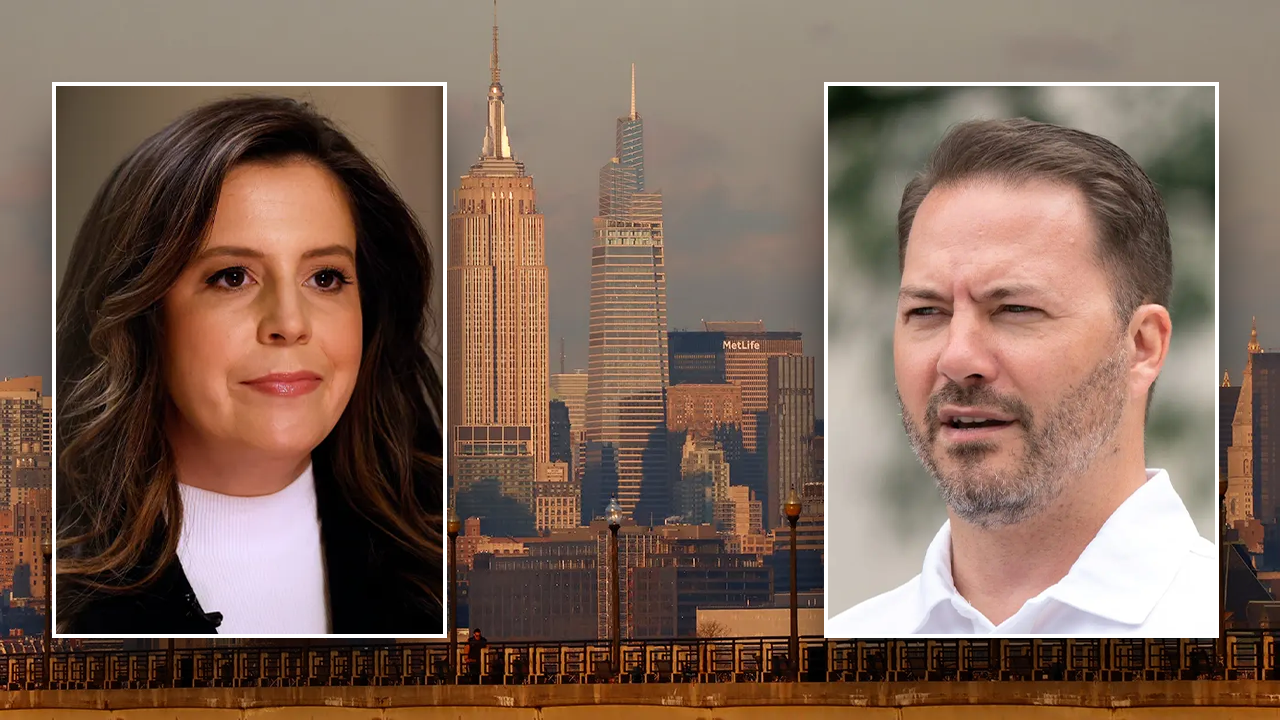
Sources separately told the New York Post and City & State New York that Hochul asked the Democrat-majority legislature not to take any action on the legislation – which would give the governor more power to decide when special elections can be held and potentially delay the filling of U.S. Rep. Elise Stefanik’s deep-red upstate seat once the Republican is confirmed as U.N. Ambassador.
The Post reported some of the reasoning stemmed from negotiations between Hochul and the Trump administration as to the longevity of the state-operated MTA’s “Congestion Pricing” tolling program in New York City – which the president has opposed.
City & State reported state Assembly Speaker Carl Heastie, D-Bronx, declared the bill at least temporarily a non-starter at an afternoon meeting.
Assembly Minority Leader Will Barclay, R-Oswego, also confirmed the bill is “no longer moving forward.”
“It was a terrible piece of legislation in policy & principle. Thanks to strong pushback from Republican legislators & North Country residents, the bill has been halted,” Barclay wrote on X.
State Senate Minority Leader Rob Ortt, R-Niagara Falls, added in a statement to Fox News Digital that while the bill “appears to be defeated for now, we will remain vigilant against any effort to bring it back.”
The reform bill had been set to come up for a vote Monday.
Critics called it a naked attempt to keep Stefanik’s North Country congressional district without a representative until November, while Democratic sponsors say it will save local and taxpayer resources.
The bill, which would allow Hochul to postpone elections or combine them with upcoming general elections, was marketed by Democrats as a cost-saving measure that helps ensure more voters will cast ballots in specials.
However, Ortt said that for all Democrats’ claims about President Donald Trump being a threat to democracy, the truth is belied in their own legislation.
“It’s all about the outcome, not process, democracy, voter participation – they could give a s—. They could give a s—,” Ortt said.
TOUGH DECISIONS FOR SANCTUARY CITIES AFTER BONDI’S FUND-WITHHOLDING ORDER
“I can’t shame them; they have none… 800,000 folks [in Stefanik’s soon-to-be-former district] will not have a representative in Congress ‘til November. That’s a disgrace for a party that says it cares about democracy,” he said, predicting Hochul will use the law to its maximum extent when enacted.
Ortt said the bill has two different provisions – one for federal elections and one for state legislative elections and ruminated how they could benefit Democrats.
He pointed out that state Sen. Simcha Felder, D-Brooklyn, is likely to seek an open seat on New York City Council in the politically-moderate, majority-Jewish Borough Park area.
Felder caucused with Senate Republicans from 2013-18, which gave the GOP a slim, technical majority in Albany for part of former Gov. Andrew Cuomo’s term.
Ortt said Democrats stand to potentially lose Felder’s Senate seat, which explains the reported two-tiered changes in the bill.
Meanwhile, Barclay said 44% of New York state voted for Trump and the legislation shows his opposition is still smarting about it.
GOP RIPS HOCHUL’S INFLATION REFUNDS
Senate GOP Leader Rob Ortt (Reuters)
“No, they don’t accept that result,” said Barclay.
“So they’re going to do everything they can, including depriving 800,000 people of a say in the budget [or] the SALT (tax deduction for high-taxed states) bill.”
Barclay noted that if Stefanik’s seat remains vacant when the Farm Bill is voted on later this year, a significant portion of New York’s agricultural lands will lack representation.
But Democrats remained united, with Senate President Andrea Stewart-Cousins saying in a statement that New Yorkers currently face “unprecedented challenges, including the strain on our democracy and our high cost of living.”
“[T]his legislation is a common-sense approach that saves taxpayer dollars while maximizing voter turnout,” said Stewart-Cousins, D-Yonkers.
Currently, Hochul has 90 days to call a special election once Stefanik, or Felder, resigns.
The bill’s text suggested the current special elections’ framework in Albany is an operational and financial drag on counties and taxpayers – additionally citing “voter confusion and fatigue.”
Therefore, giving the governor the power to potentially consolidate elections is pertinent.
As NY1 reported, the bill also does not mandate Hochul – or any governor – to combine special and general or primary elections, but now gives her the power to do so.
Some in Stefanik’s district, however, believe Ortt’s claims may have substance.
“By holding up a special election, they’re keeping the North Country from having congressional representation at a critical moment,” state Sen. Dan Stec, R-Queensbury, told Plattsburgh’s NBC affiliate.
Stec is one of several Republicans vying for the seat, along with Sticker Mule CEO Anthony Constantino, Assemblyman Chris Tague of Schoharie, and author Liz Joy, who previously ran against Democratic Rep. Paul Tonko in the neighboring Capital Region district.
Tague told Fox News Digital that Hochul’s political career began via a special election using the same laws Democrats are seeking to change.
“She’s tossing them aside to cut backroom deals … leaving the people of Upstate and the North Country without a voice,” Tague said.
A spokesman for Stewart-Cousins told NY1 that state Democrats will not “be lectured to by a party that openly celebrated the release of violent felons that attempted to overthrow a presidential election and have opposed every single voting reform that increases voter participation.”
Read the full article from Here


In a stunning, franchise-shaking move, the Celtics reached an agreement Wednesday to trade Jaylen Brown to the Philadelphia 76ers, according to a report from ESPN’s Shams Charania.
In return, Boston reportedly will receive nine-time All-Star wing Paul George, two first-round picks and two second-round picks.
Brown had been the subject of rampant trade rumors in recent weeks, with Charania reporting earlier Wednesday that the Celtics were “strongly shopping” their longest-tenured player following a failed attempt to trade him and two draft picks for Giannis Antetokounmpo.
But the 76ers, who ended the Celtics’ 2022-26 season by upsetting them in the first round of the NBA playoffs, had not been mentioned as a potential suitor for Brown. He’ll now join the likes of Joel Embiid, Tyrese Maxey and VJ Edgecombe on a talented Philadelphia roster, while the oft-injured George heads to Boston.
Shipping out Brown splits up one of the NBA’s most talented and successful duos. The tandem of Jayson Tatum and Brown led Boston to five Eastern Conference finals, two NBA Finals and one championship since they joined forces in 2017.
Brown, the 2024 NBA Finals MVP, played most of this season without his longtime co-star, and he thrived, averaging 28.7 points, 6.9 rebounds and 5.1 assists — a stat line matched in Celtics history only by Larry Bird and John Havlicek — while Tatum recovered from Achilles surgery. Brown made second-team All-NBA and finished sixth in MVP voting, and the underdog Celtics far exceeded preseason expectations, posting the second-best record in the East (56-26) and the league’s fourth-best net rating.
But questions about Brown’s future began swirling after Boston blew a 3-1 series lead against seventh-seeded Philly, losing three straight — including Game 7 at home, which Tatum missed due to knee stiffness — to suffer their earliest postseason exit since 2021.
Brown, who was a minus-57 over the final three losses, made headlines after the series when he insisted that this was his “favorite season” despite Boston’s poor finish. Basketball Hall of Famer Tracy McGrady, a mentor of Brown’s, did the same when he said on his podcast that Brown had “frustration (that) lies deeply within the (Celtics) organization.”
Celtics president of basketball operations Brad Stevens said in his end-of-season news conference that Brown had expressed no such feelings to him. But Stevens admitted Boston needed to improve its roster to compete with the NBA’s elite teams (New York, San Antonio, Oklahoma City, etc.). A month later, after the Milwaukee Bucks rejected Boston’s bid for Antetokounmpo, Stevens said he wouldn’t “predict the future” when asked whether Brown would remain with the Celtics.
“Jaylen Brown is a big part of us,” Stevens said last Tuesday. “I’m never going to predict the future, but every indication, everything that I think about over the past few years has been building around those guys, right? So obviously, you never know.
“But at the same time, the one thing I want to make very clear is how valued he’s always been. He’s been amazing. He’s been an amazing teammate, a great person to be around. And whether that run ends 10 years from now when he retires, or before, there’s a lot to celebrate. We have a great relationship, an open relationship where we talk about everything. But I don’t want to predict the future.”
George has enjoyed a long and decorated career across stints with the Indiana Pacers, Oklahoma City Thunder, Los Angeles Clippers and 76ers. Over his 16 seasons, he’s averaged 20.5 points, 6.2 rebounds, 3.7 assists and 1.7 steals per game while shooting 44.0% from the field and 38.4% from 3-point range.
The 36-year-old is well past his prime, however, and has struggled to stay on the court, suiting up for more than 60 games just once in the last seven seasons. He played in 37 games this season, missing time for both injuries and a 25-game suspension for violating the NBA’s anti-drug policy.
George did give the Sixers strong minutes during their playoff series against Boston, making 55.0% of his 3-pointers across the seven games. Still, he’s a substantial downgrade from both the Celtics’ original target, two-time NBA MVP Antetokounmpo, and Brown, who is six years younger.
The Celtics will inherit the final two years of George’s contract. He’s set to make $54.1 million this coming season, then has a $56.6 million player option for 2026-27. It was not immediately clear whether Boston plans to move forward with George or flip him in a subsequent trade.
This trade marks the third time in the last four offseasons that the Celtics made major changes to their roster. Ahead of the 2023-24 season, they shipped out Marcus Smart, Robert Williams III and Malcolm Brogdon in trades for Kristaps Porzingis and Jrue Holiday — deals that helped push their Tatum/Brown-led core over the championship hump after years of near misses. Last summer, the Celtics traded Porzingis and Holiday and lost Al Horford and Luke Kornet in free agency to escape the prohibitive second apron of the NBA’s luxury tax. (A subsequent series of in-season trades pushed Boston out of the tax entirely.)
Parting ways with Brown is the boldest swing yet for Stevens.
The 29-year-old (30 in October) was Boston’s longest-tenured player, having joined the C’s as the No. 3 overall pick in the 2016 NBA Draft. He ranks 10th on the franchise’s all-time scoring list — one spot behind Tatum and two behind Bill Russell — and is coming off the best season of his career. Among active players, only Stephen Curry, Draymond Green, Devin Booker, Nikola Jokic and Antetokounmpo have appeared in more games without changing teams.
Brown, whose No. 7 likely will hang in the TD Garden rafters one day, also built a strong connection with the Boston community through his 7uice Foundation, Boston XChange initiative and other philanthropic efforts.
“I love Boston,” he said in a May 6 Twitch stream. “If it were up to me, I would play in Boston for the next 10 years.”
Brown was set to become eligible for a two-year, $140 million contract extension with the Celtics next month. His current deal, which runs through the 2028-29 season, was the richest in NBA history when he signed it in 2023 (five years, $304 million). He is set to make $57.1 million this coming season.


Forgotten frontier: How Pittsburgh shaped America’s July 4th
We take you inside Fort Pitt Museum’s “Pittsburgh’s Revolution” exhibit to show how a frontier fort became a key in America’s path to independence.
Pittsburgh’s Fourth of July traditions are rooted in centuries of American history, and Fort Pitt Museum sits at the heart of that story.
Located in Point State Park at the confluence of the city’s three rivers, the museum traces western Pennsylvania’s pivotal role in the French and Indian War, the American Revolution and the early expansion of the United States.
An exhibit you don’t want to miss
Inside, the “Pittsburgh’s Revolution” exhibit spotlights how this frontier outpost helped shape the Revolutionary War and the push for independence. Rare artifacts, detailed maps and personal stories walk visitors through a time when control of Fort Pitt meant control of the West, giving colonists a crucial foothold in the struggle against British rule. The exhibit also emphasizes the diverse communities at the Point, including soldiers, Indigenous nations, traders and settlers, whose lives intersected in ways that still echo in Pittsburgh’s identity today.
For modern visitors, the museum offers an immersive experience that connects familiar July 4 images with the realities of life on the 18th‑century frontier. Families can explore galleries that explain how supplies moved through Pittsburgh to support the Continental Army, how diplomacy unfolded with Native nations, and how everyday people navigated a world in conflict. It turns Independence Day from a single date on the calendar into an ongoing story that started along these rivers and radiated outward.
As America marks the 250th anniversary of the Declaration of Independence, Fort Pitt’s “Fourth at the Fort” programming brings that history into the present with flag ceremonies, living history encampments and hands‑on activities in Point State Park.
For Pittsburghers looking to go beyond fireworks, a visit to Fort Pitt Museum offers a reminder that Independence Day here is not only about celebration, but about standing on the ground where American history was made.
This article by Gabby Sartori was created with the assistance of Artificial Intelligence (AI). Journalists were involved in every step of the information gathering, review, editing and publishing process. Learn more.

Immigrant advocates in Connecticut are calling on state leaders to prepare for the possible loss of legal protections for thousands of people after the U.S. Supreme Court ruled that the Trump administration can move forward with ending Temporary Protected Status, or TPS, for Haitians and Syrians.
TPS is a federal program that allows people from countries facing war, natural disasters or other extraordinary conditions to live and work legally in the United States. The Trump administration has argued that conditions in some countries have improved enough that the protections are no longer necessary.
For organizations that work with immigrants, however, the ruling has triggered fear and uncertainty.
“The Haitian community, in particular, is reeling,” said Maggie Mitchell-Salem, executive director of Integrated Refugee and Immigrant Services, commonly known as IRIS.
Mitchell-Salem said the number of Syrians affected by the decision is much smaller than the number of Haitians nationwide, but she argued that the impact goes beyond statistics. Her organization has led resettlement efforts for Syrian refugees in Connecticut since the federal government offered TPS status amid the Syrian civil war in 2012.
“Numbers don’t matter,” she said. “A single person being impacted by inhumane racist immigration policies is a person who’s impacted, and we should care.”
A community preparing for uncertainty
Mitchell-Salem said immigrant advocacy groups and local officials are already discussing how to help families who could face difficult decisions if the Trump administration decides to end TPS protections.
Among the biggest concerns are families that could be separated if parents lose their legal status or face deportation.
“We’re working with municipalities, with any community leaders that we can, who are coming up with plans on what to do to help individuals here,” she said.
She urged families whose immigration status may be at risk to create preparedness plans and designate trusted relatives or friends who could care for children if necessary.
“The state of Connecticut has one on their website,” she said. “We urge everyone who has a family situation that is no longer stable to fill that out.”
Looking to Massachusetts as a model
Mitchell-Salem said Connecticut should consider following the example set by Massachusetts leaders, who responded to the Supreme Court ruling by holding a press conference, reassuring TPS holders of their rights, announcing legal clinics and creating an emergency response fund.
“What I think is beautiful about what Massachusetts did is that it signaled you are valued, you are part of our community, and we care about you,” she said. “For that, I would love to see Connecticut do something similar.”
At the same time, she cautioned that there are limits to what states can do if federal protections ultimately end.
“I think the state of Connecticut is right to really think about what remedies are truly possible,” Mitchell-Salem said.
Warning against scams
Mitchell-Salem said one of her organization’s biggest concerns is that desperate immigrants could become targets for fraud.
“What we’re most concerned about is that because people will be so desperate that there are those that will take advantage of them,” she said.
IRIS has been posting information in English, Haitian Creole and Arabic warning immigrants that there are “no magic solutions” and encouraging them to seek advice only from trusted legal organizations and immigration attorneys.
A call to action
Mitchell-Salem said the Supreme Court’s decision should prompt action not only from government officials but also from the public.
“Flood congressional phone banks, call Congress every single day, tell them what you think,” she said. “Get your friends in states that are less blue than Connecticut to do the same.”
She said public pressure has altered the course of other administration policies and could again influence federal immigration decisions.
“This isn’t an issue that’s just a blip that’s going to go away,” Mitchell-Salem said.
-

 Los Angeles, Ca36 minutes ago
Knife-wielding man rushes at LAPD officers in tense body cam video
-

 Detroit, MI56 minutes ago
5 Potential Landing Spots For Former Detroit Lions CB Terrion Arnold
-

 San Francisco, CA1 hour ago
May 17 officially declared
-

 Dallas, TX1 hour ago
Dallas City Hall named to World Monuments Fund’s ‘Irreplaceable America’ list – Lake Highlands
-

 Miami, FL1 hour ago
Ex-con lists $138M in luxury penthouses, including Miami trophy condo
-

 Boston, MA1 hour ago
Celtics reportedly trading Jaylen Brown to 76ers for Paul George, picks
-

 Denver, CO1 hour ago
LeBron James to the Nuggets? Latest reports and betting odds
-

 Seattle, WA2 hours ago
Residents and activists clash over plan to curb SEPA appeals at Seattle hearing

