Maine
Commentary: Nuclear Energy Is the Only Way to Achieve Maine’s Climate Goals – The Maine Wire


In response to a rise in climate anxiety, particularly among young voters, politicians have made numerous “climate pledges” to transition entire networks to carbon-free energy sources. These goals are noble. Whether they are realistic remains to be seen, but Maine’s legislature has a chance to make these intentions a reality — without breaking the bank for consumers.
Since Maine Gov. Janet Mills pledged to make the state carbon-neutral by 2045, consumers have seen a massive uptick in energy costs, with Mainers paying 23% more than the national average electric bill. State Rep. Reagan Paul has introduced LD 1549 in the legislature to examine whether small modular nuclear reactors (SMRs) have a role to play in the state’s energy mix. Rep. Paul commented that, “There is growing interest in SMRs around the world, including from our neighbors in New Brunswick, who are investing in the technology today. [SMRs] are good for Maine ratepayers, taxpayers, grid reliability, and will protect the natural beauty of our state.” If Maine environmentalists are serious about tackling climate change and meeting the Governor’s goals, they should support it.
Maine used to host a nuclear power plant that generated 119 billion kilowatt hours (kWh) of electricity — enough for the entire state’s energy needs. The Maine Yankee Atomic Power plant in Wiscasset provided good jobs and massive tax revenue for the town, with the plant contributing 91% of the town’s tax base in 1996. Plant employees who lived locally did not have to pay for their utilities, a great perk for many Wiscasset residents. After several referendums against the plant and maintenance that became too expensive to fix, Maine Yankee was closed in 1996. Today, almost 20 percent of Wiscasset residents live below the poverty line.
A single small modular reactor (SMR) could bring Wiscasset’s prosperity back and drive down energy costs across the state. SMRs advantages allow them to be installed at locations where sprawling nuclear plants would not be feasible, while still producing carbon-free power. A single SMR is capable of producing 300 megawatts (MW) of power and can be easily transported to the most suitable area.
Currently, Maine relies heavily on importing energy sources from outside the state with fossil fuels making up the highest percent of demand met by purchases from entities outside the state in 2023. In rural Maine, SMRs could be integrated into the existing power grid and provide consistent power through existing transmission lines. The controversial New England Clean Energy Connect (NECEC) transmission line triggered a referendum from Mainers concerned about the environmental impact from building the transmission lines. Due to SMRs being easily integrated into existing energy infrastructure, there would be no need to level forests to build transmission lines.
Critics of nuclear energy will point to the danger of nuclear waste. While the nuclear waste from Maine Yankee is still stored on site, the 542 tons of waste has never leaked into the surrounding environment or contaminated the area. Mainers have also rejected several renewable energy projects.
Mainers have already rejected offshore wind power due to the impact it will have on the lobster industry, with residents in the state’s rural interior concerned about the windmill’s impact on the natural beauty of Maine’s forests. Windmills also require transmission lines, and are bound to attract the same opposition that the NECEC did. Even solar power has its drawbacks. Efficient energy storage technology for solar energy is not feasible yet and Maine does not receive adequate amounts of sunlight year round. Wind and solar may play a role in meeting Maine’s climate goals, but in support of nuclear power.
Mainers have an opportunity to produce their own energy at home instead of relying on imports of fossil fuels and electricity from out of state. Rep. Paul’s bill is a common sense step towards addressing the state’s climate goals while reducing electricity rates for Mainers. Climate advocates should lend their full support.


A meal that would normally cost more than $30 is available for less than $12 at Governor’s Restaurants on Wednesday.
Governor’s is celebrating its 67th anniversary by offering its lobster roll for $11.67.
The annual promotion, known as Lobster Roll Day, begins when restaurants open at 8 a.m. and continues until supplies run out.
Governor’s operates six locations across Maine in Old Town, Bangor, Ellsworth, Waterville, Lewiston and Presque Isle.
Customers should be aware that several locations are offering cash-only drive-thru service for the event.

Join Girl Scouts of Maine for a sweet summer stop you won’t want to miss!
We’re popping up at local ice cream shops around Maine for our Ice Cream Socials—fun, casual events where families can enjoy a free treat and learn more about Girl Scouts.
Here’s what to expect:
🍦 One FREE kid-sized cone per family when you stop by and connect with us
🌱 Hands-on activity for kids (like a planting activity or fidget spinner craft)
💬 A chance to chat with our team and learn how Girl Scouts builds confidence, friendships, and unforgettable experiences
Whether you’re curious about joining, looking for activities for your child, or just want to enjoy a sweet treat, we’d love to meet you!
✨ Open to all families—no registration required. Just stop by, say hello, and enjoy some ice cream with us.
The Saco Scoop
05:30 PM – 07:30 PM on Tue, 14 Jul 2026
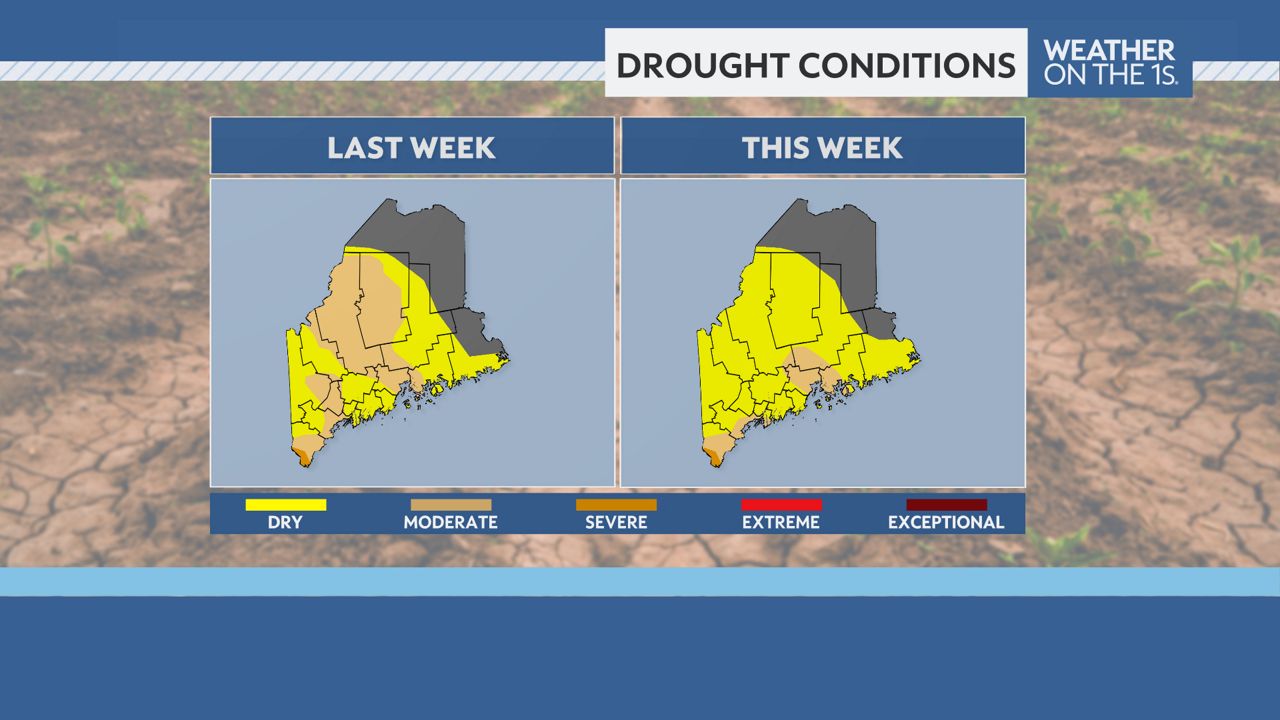
The recent rain in Maine is easing the drought that parts of the state have been experiencing since the fall.
Scott Dean, a Spectrum meteorologist, said much of Maine has been at least “dry” for several months. Parts of the state, including Portland, Bangor and Bar Harbor, are under a “moderate” drought.
Much of the country is also experiencing a drought, Dean added. The Southeast is seeing extreme levels of drought, and the West coast has been under a drought for years. There are many factors that go into this, including climate change, weather patterns like El Niño and La Niña and other factors.
And, when an area does experience drought, it can become a feedback loop. With less moisture in the ground and atmosphere, the drought can “feed upon itself,” Dean said.
“It takes a while to get into a drought and it also takes a while to get out of one,” Dean said.
But, the rainy days in Maine have been alleviating the drought, Dean said. And, the trend is likely to continue — the forecast is predicting above average levels of precipitation for the next three to four weeks.
“Hopefully, we are continuing to head in the right direction as the drought has eased in these areas,” Dean said.
In fact, if these rains do continue, Maine could come out of the drought sometime this summer.
-

 New Hampshire4 minutes ago
Charlevoix County farm arson suspect arrested in New Hampshire after January blaze
-

 New Jersey11 minutes ago
Minnesota woman struck by worker while protesting outside of New Jersey ICE facility
-

 New Mexico14 minutes ago
Canyon Venado Fire near Clines Corners grows to 852 acres, I-40 reopened
-

 North Carolina26 minutes ago
Great horned owl kills 1 of NC Wildlife’s famous barn owlets: officials
-

 North Dakota29 minutes ago
NCAA Set to Change Unpopular Football Rule Just in Time for North Dakota State’s FBS Jump
-

 Ohio34 minutes ago
Ohio lawsuit alleges new NCAA rule unfairly denies high school Class of ’22 athletes a 5th season
-

 Oklahoma41 minutes ago
Fire Crews respond to commercial fire in SW Oklahoma City Wednesday afternoon
-

 Oregon43 minutes ago
Liu makes two! 2nd red panda joins Oregon Zoo family

