Plus special access to select articles and other premium content with your account – free of charge.
By entering your email and pushing continue, you are agreeing to Fox News’ Terms of Use and Privacy Policy, which includes our Notice of Financial Incentive.
Please enter a valid email address.
It was five days after Christmas in 1989 that Collier Landry heard what he said sounded like “a body hitting a wall.”
It was late at night, and the 11-year-old was in bed, not knowing that his mother, Noreen Boyle, was being murdered in their Ohio home.
Advertisement
“I will never forget those sounds – they haunt me,” the now-46-year-old told Fox News Digital. “But there was nothing I could have done to prevent what may have been occurring.”
SERIAL KILLER’S DAUGHTER EXPOSES CHILLING SECRET, TURNS HIM IN TO POLICE
Collier Landry was 11 when he heard “scary sounds” that continue to haunt him.(Courtesy of Collier Landry)
“I was a little boy,” he shared. “I was asthmatic. My father was big and scary, and I was still trying to figure it out. But then when I heard my father’s footsteps down the hall, and I could see his shoes out of my peripheral vision in the doorway, I knew something had happened.”
Landry said he suddenly heard a voice “screaming inside of me.” It warned him not to look up. He pretended to be asleep.
Advertisement
“I am convinced to this day that if I had chosen to look up, I would not be sitting here right now,” said Landry.
Collier Landry is speaking out about his mother’s murder in the true-crime series, “A Plan to Kill.”(Oxygen)
The case that would become a local media circus is being explored on Oxygen’s true-crime series, “A Plan to Kill.” It examines the true tales of disturbed killers who spend weeks, months or even years plotting the demise of their victims.
Landry, who has launched a podcast, said it was important for him to detail how violent crimes impact the children of perpetrators.
“I think stories like these are really important to hear, to know that somebody can work for justice, to know that law enforcement will eventually listen to you, that you can get justice,” Landry explained.
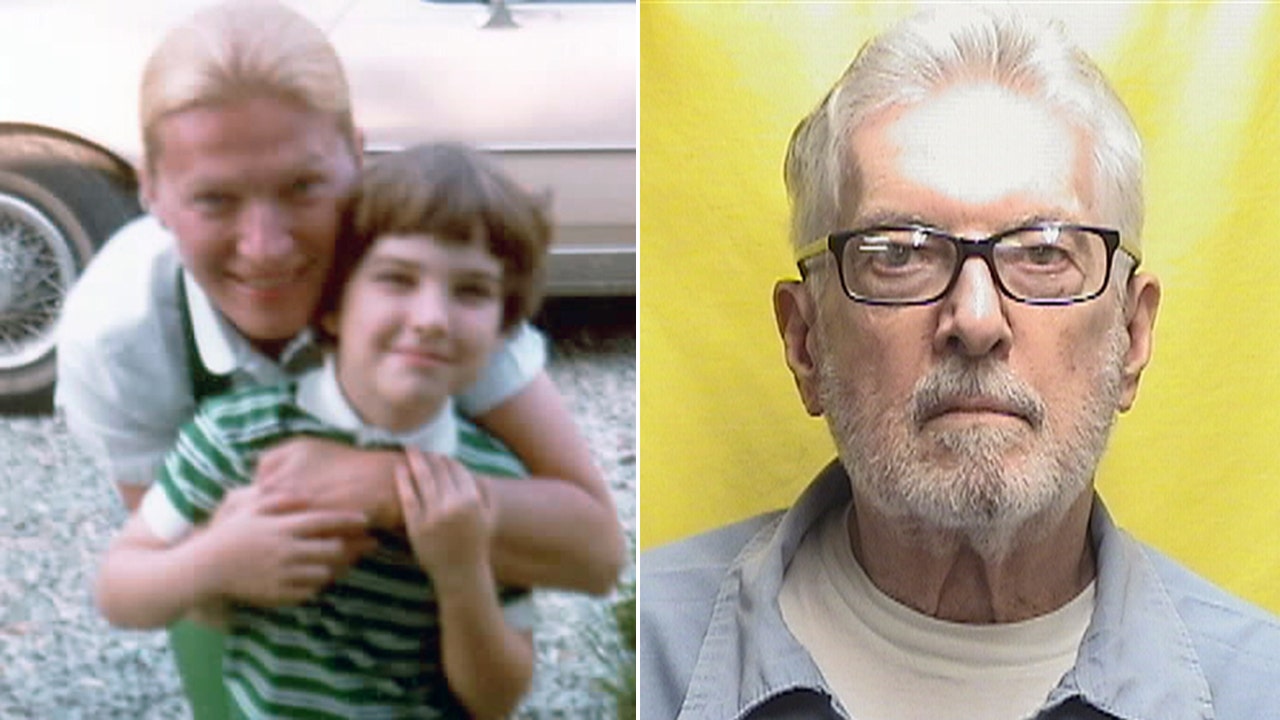
Noreen Boyle with her son Collier celebrating his first birthday.(Courtesy of Collier Landry)
Landry described Boyle as a loving and doting mother.
“So many of my childhood friends have fond memories of her,” he beamed. “She was so kind, so supportive of people. I remember every holiday season; I would have to donate half of my toys to Toys for Tots, because she wanted me to learn the value of giving. She also wanted me to realize how fortunate I was as a child to have a mommy and daddy, to have a roof over my head, to have toys in my toy chest.”
“I wasn’t allowed to just pick out the random toys that I didn’t like,” he chuckled. “I had to sacrifice some of the ones I did like, because my mother wanted me to sacrifice for the good of others and to have compassion. That has stayed with me my entire life since.”
Advertisement
Dr. John Boyle was a prominent osteopath.(Courtesy of Collier Landry)
Landry’s father, Dr. John Boyle, was a prominent osteopath. But life at home was far from blissful.
The Boyles had lived in Mansfield since 1983, having moved from Virginia, where John had worked at a Navy clinic. During the marriage, John reportedly carried on many affairs.
Boyle filed for divorce in November 1989 after 22 years of marriage, charging extreme mental cruelty and gross neglect. During the divorce proceedings, John purchased a new home in Pennsylvania, court documents revealed. He began to relocate his medical practice to Erie from Mansfield.
SIGN UP TO GET THE TRUE CRIME NEWSLETTER
Advertisement
Noreen Boyle filed for divorce in November 1989 after 22 years of marriage.(Courtesy of Collier Landry)
Landry described how he and his mother were “fearful” of the patriarch, who “was a very violent guy.”
“Towards the end, my mother was downtrodden because of my father,” Landry explained. “He was becoming more and more aggressive towards me, saying horrible things. Like, ‘I’ve started a new family, I’m going to make sure you are both living on the street.’”
“I think it all started to weigh in on my mother,” Landry reflected. “At the same time, my mother was still full of optimism that she was going to make it through. And she did her best not to let things affect me… She did her best to be as strong as she could for me, and I for her.”
Collier Landry described Noreen Boyle as a doting mother who was optimistic about her future.(Collier Landry)
Advertisement
“She was optimistic that in the end, we would be OK,” he shared.
In the morning, after hearing the “scary sounds,” Landry ran over to his mother’s bedroom. She was gone.
He then confronted his father, who insisted that “mommy took a little vacation” and there was no need to call the police.
“I knew right then that he had done something to her,” said Landry. “He told me this whole story about how she had gotten up in the middle of the night. I asked him about the thuds. He said that was my mother’s purse that she had thrown at him, and it hit a wall.”
GET REAL-TIME UPDATES DIRECTLY ON THE TRUE CRIME HUB
Advertisement
Dr. John Boyle didn’t want his son to speak to police about Noreen Boyle’s disappearance.(Courtesy of Collier Landry)
“He was gaslighting me,” said Landry. “I needed to find out what happened.”
Landry snuck away and called Shelly Bowden, his mother’s best friend. When officers came to the home, Landry insisted that his mother would never leave him. He told police he had heard his parents argue, followed by a scream and a loud thump.
“They didn’t believe me,” he said. “It wasn’t until [Captain] Dave Messmore came on the scene. He took me seriously. That’s how we launched this whole investigation.”
Retired police Captain Dave Messmore of the Mansfield Police Department also spoke out in the episode.(Oxygen)
Advertisement
“I knew I was risking my life,” he shared. “I knew that my father was dangerous, that he was violent, but I didn’t care. I was going to find out what happened to my mother. All I cared about was finding my mother.”
Authorities obtained search warrants partially based on Landry’s word.
On Jan. 25, 1990, less than a month after Boyle went missing, police discovered her body in John’s new Erie home, the Mansfield News Journal reported.
Authorities recovered Noreen Boyle’s body on Jan. 25, 1990, under the basement floor of Dr. John Boyle’s new home in Erie, Pennsylvania.(Courtesy of Collier Landry)
Advertisement
She was wrapped in a tarp with a plastic bag covering her head and buried two feet below the basement in “soft, white clay,” the outlet reported. A green carpet covered the floor.
At age 12, Landry became a key witness in his father’s trial. He took the witness stand, stared down his father and helped secure a conviction.
“I knew that if I did not testify against my father, and he somehow walked free, I would regret that for the rest of my life,” Landry explained. “If I had to go back and live with him because, of course, he would maintain custody as my father, he could have tortured me for the rest of my life.”
Collier Landry said he spent parts of three days testifying.(Courtesy of Collier Landry)
“He haunted me in a lot of ways, but it really would’ve been bad had he been acquitted,” Landry continued. “I needed to do what was right for my mother.”
Advertisement
A mistress, Sherri Lee Campbell, gave birth to a daughter in January 1990, less than two weeks after Boyle disappeared.
John maintained his innocence. He took the stand on his behalf, testifying for nine hours over two days. Former Richland County Prosecutor James Mayer Jr. called him “probably the biggest liar I’ve ever seen.”
OHIO DETECTIVE BRINGS DOWN ‘LADYKILLER’ SHAWN GRATE WITH 33-HOUR INTERROGATION: ‘A HUNGER TO KILL’
Collier Landry was adopted by George and Susan Zeigler. Landry credited the Zeiglers with providing him a loving, stable home.(Courtesy of Collier Landry)
John was convicted of killing Boyle. He was sentenced to 20 years to life in prison for aggravated murder and 18 months for abuse of a corpse.
Advertisement
Landry found himself alone. According to the episode, his mother’s family refused to take him in, because he resembled John. His father’s family also refused to welcome him, because, according to Landry, they wanted him to recant his testimony.
“When your family abandons you at the lowest point of your young life, that affects you,” he said. “Even though I was adopted by a loving family, and I was very grateful for that when I was 13, you still feel like you’re walking the majority of your life alone. It’s very hard to reconcile.”
John Boyle was sentenced to 20 years to life in prison for aggravated murder and 18 months for abuse of a corpse.(Ohio Department of Rehabilitation & Correction)
“But I do it every day,” he said quietly. “I put one foot in front of the other, smile and say, ‘Today’s another day.’”
Landry later moved to California to pursue a career as a cinematographer and director. He began using his middle name as his new surname.
Advertisement
Today, Landry is determined to turn his pain into purpose. He’s now a speaker and provides coaching to those who find themselves in similar circumstances.
JEALOUS TEEN’S ‘PLAN TO KILL’ ADOPTIVE PARENTS WITH BIRTH MOM’S BLESSING EXPOSED BY DETECTIVE WITH CLOSE TIES
Collier Landry, who now resides in California, has launched a podcast that aims to uplift those in similar circumstances.(Oxygen)
“My story is centered around a true crime story, but this is also a story of healing and resilience,” said Landry. “You can go through unimaginably tragic circumstances, come out on the other side and be OK.
“… That’s what I would tell my younger self – ‘You’re going to be OK. You’re going to make it.’”
Advertisement
“A Plan to Kill” airs Sundays at 7 p.m. The Associated Press contributed to this report.
Five baseball and softball teams from the Pittsburgh area brought home hardware from Penn State University earlier this week after winning PIAA state championship titles.
Indiana goes back-to-back, beats Holy Ghost Prep 6-5 to win 4A baseball title
With a 6-5 win vs. Holy Ghost Prep on Thursday, Indiana became just the fifth baseball team from the WPIAL to win back-to-back state championships.
Indiana (22-4) held a 6-3 lead through 5 innings, holding on in bottom of the 7th to win the game and earn gold at Penn State University’s Medlar Field at Lubrano Park.
Brady Oakes got the win on the mound for Indiana, striking out four batters while Charlie Manzi came into the game in a relief role, striking out five and getting the save.
Advertisement
“It was harder this year,” Indiana coach Dan Petroff said to the Pittsburgh Post-Gazette. “We got everybody’s best effort every game and that made it more special. This feels like we ran a marathon and now we’re done. We can breathe a little, I guess.”
Shaler Area with 5A softball title with 10-0 mercy rule win vs. Abington Heights
Shaler Area made it back to the top of the mountain for high school softball in Pennsylvania, beating Abington Heights on Friday with a mercy rule victory at Penn State’s Nittany Lion Softball Park.
Bria Bosiljevac struck out eight batters on the mound for Shaler (24-1), shutting out Abington Heights while only allowing one hit.
Haley Machajewski ended the game in the 5th inning, hitting a walk-off grand slam to claim gold for Shaler.
“It really was everything. It’s full circle since we started,” Machajewski said. “Our freshman year winning silver, to come back and win gold and walk it off, especially as my last hit — this program has given me so much, and that was a great way to give back to it.”
Advertisement
“I’m so excited for them,” Shaler coach Tom Sorce said to the Post-Gazette. “All year, they wanted to get back here and do the job since we lost in 2023. I’m so happy for them.”
Union beats Holy Cross 7-3 to win second straight 1A softball title
Union Area has gone back-to-back and won its second straight PIAA 1A softball championship.
With a 7-3 win against Holy Cross, Union (22-2) are now repeat champions.
The Scotties, who were playing in the 1A title game for a third straight season, scored early and often, jumping out to a 4-0 lead that they never gave back.
Korynne Shannon had eight strikeouts on the mound for Union, allowing 7 hits in the complete game win.
Advertisement
Laurel beats Chartiers-Houston 7-1 to win all-WPIAL 2A state title game
It was an all-WPIAL state championship game in Class 2A and Laurel came out on top, beating Chartiers-Houston 7-1 to claim the school’s first softball championship.
Laurel (20-6) gave up a run in the opening inning but rallied from there and never looked back, scoring all 7 of their runs between the third and sixth innings.
“When we lost [in the WPIAL semifinals], we could either feel sorry for ourselves or we could go battle,” Laurel coach Bill Garroway said. “This team, the seniors especially, are very resilient. We still had life. Whoever was in front of us, we were going to battle.”
Riley Balcom got the win on the mound for Laurel, striking out five batters and allowing just four hits.
Hempfield wins 5th PIAA softball championship with 5-4 win over Owen J. Roberts
Hempfield has now won the most PIAA softball championships among all teams in the WPIAL.
Advertisement
With a 5-4 win vs. Owen J. Roberts, Hempfield (25-1) are in a class of their own when it comes to state championships among Pittsburgh-area softball teams.
Hempfield rallied from a 3-0 deficit, scoring five runs between the 4th and 5th innings, hanging on for victory after allowing Owen J. Roberts to draw back within one run in the top of the 7th.
“It’s super exciting to bring another PIAA title back to Hempfield,” head coach Tina Skelly-Madison said to the Post-Gazette. “It’s an awesome accomplishment.
Julia Carhola struck out seven batters in the win for Hempfield.
WALLINGFORD, Conn. (WFSB) – Hundreds of athletes are competing in the 12th annual Gauntlet 5K on Wednesday morning.
The race features adaptive obstacle courses on the campus of Gaylord Hospital. Many of the athletes participating received treatment or went through rehab at Gaylord Hospital.
Much of the proceeds raised goes back to the hospital’s adaptive sports program and sports association. The program offers 18 adaptive sports at little to no cost to participants. It is the state’s largest adaptive sports program dedicated to improving the lives of anyone with physical disabilities.
Jess Youngblood, a Gauntlet adaptive athlete, said she is committed to giving it her all on the course.
Advertisement
“I was very active before all of this,” Youngblood said. “So being in the wheelchair is definitely a different experience. But I don’t let it slow me down.”
The first race kicks off at 8 a.m. and races will continue through 2 p.m.