Wisconsin
Election integrity: How Wisconsin ensures safe and secure voting


A study by the Pew Research Center found that 36.2 million Latinos will be eligible to vote in 2024, up 4 million from the 2020 election. This makes Latino voters one of the most critical voting blocs, leading both Democrats and Republicans to ramp up their efforts to tap into such potential support. In Nevada, Latinos are projected to be crucial in both the presidential race and the contest for the state’s other Senate seat, pitting incumbent Jacky Rosen (D) and against Republican Sam Brown. Ads from both parties populate platforms like YouTube — one of the three most used apps by Hispanics — trying to win over the Latino voter bloc.
Sign up for The Fulcrum newsletter
What these ads, as well as the political machine, seem to miss is that Latinos are not a monolithic group. This can lead politicians to miss out on the many different factors that shape Latino identities. Voter tendencies can vary significantly between different Latino groups — and even within Latino families.
A multigenerational perspective
Rico Cortez is a Mexican American living in northern Nevada. He was raised by a single mother, Rebecca Guerrero, and his Latino roots, along with growing up with a strong matriarch, have shaped his political views. “Women’s rights are super important to me because women raised me. Women brought me into this world,” Cortez stated.
Latinos tend to put a larger emphasis on family than that of non-Hispanics. According to the Pew Research Center,84 percent of Latinos believe that family members are more important than friends. Cortez moved back to northern Nevada five years ago to care for his aging mother because his connection to his family is so important.
Rebecca Guerrero was born in Verdi, Nev., in 1929, making her 95 years old. Despite her age, she is still civically engaged and has consistently voted throughout her lifetime. For her, it was important to pass on this civic duty to her children. Her political identity has shaped Cortez, and today, both Guerrero and Cortez represent a unique part of the Latino vote in Nevada.
As a young mother, Guerrero struggled with the cost of living in Nevada. “Well, it was no picnic. It was rough because the man that I was married to didn’t care too much. And we had to go on welfare to get my kids what they needed,” she remembers. Rising rent prices, inflation and increasing the minimum wage have become increasingly important to Guerrero and her family.
This falls in line with the priorities of other Latino in Nevada. In the state with the largest Latino middle class, the cost of living is one of the most significant issues for many Latino voters. Eighty-four percent of Latinos in Nevada agree that it is difficult for middle-class families to prosper in the United States. Republicans — like GOP Gov. Joe Lombardo — have capitalized on this by touting their ability to do things like loosen requirements for business licenses in the state and tighten immigration laws to save jobs.
Immigration is another critical issue for Latinos in Nevada, and Guerrero has her own immigration story. At 10 years old, she had to leave her dying grandfather in Durango, Mexico, to travel to live with her aunts in California. Leaving him behind was hard for her., “I had to kneel and have my grandfather do the sign of the cross and bless me. Then I crossed, he stayed on that side, and I came to this side,” she says.
While some Republicans have used immigration as a selling point to Latino voters, the Trump campaign has pushed anti-immigration rhetoric and massive amounts of disinformation, leaving some voters, like Guerrero, upset; when asked about Trump, she stated, “If you don’t have a good president, well, everything goes to pot. If we get Trump, well, Trump is an asswipe.”
According to aUnivision poll, Latino voters in Nevada favor Kamala Harris by 18 points. While both Guerrero and Cortez will be voting for Harris in November, 41 percent of Latino voters are undecided. Issues like abortion and border security are making some lean toward the former president.
Abortion is one of the most significant issues for Cortez in this election cycle. He sees reproductive rights as an essential part of supporting women, “I’ve just always been an advocate for women. I don’t want to see my little nieces having to fight for things that my mother already fought for.”
For Guerrero, abortion has been a bit of a gray area. She comes from a strong Catholic background. Catholic doctrine opposes abortion. And withCatholicism being the largestfaith amongst Latinos, it can sway values and belief systems. While Guerrero is still very religious, time and conversations with her son eventually led her to support a woman’s right to choose. Cortez and Guerrero are among the 44 percent of Nevadan Latinos who say they will vote “yes” on a ballot measure that would establish the right to abortion in the Nevadan Constitution.
The issue of abortion reflects how Latino viewpoints can differ significantly depending on factors such as age, religion and party affiliation. While the Latino vote will be crucial in Nevada and across the nation in November, it is not monolithic, and many different cultures and life experiences shape the identities and values of Latinos in the Silver State.
Regardless of the differences, Cortez is proud to be Latino and is excited to see how important the Latino vote has become in Nevada. He celebrates the sense of community he feels being Mexican American: “I love that sense of community. I think we have a strong sense of community, and we care for each other and look after each other.”
In the weeks leading to Election Day, The Fulcrum will continue to publish stories from across the country featuring the people who make up the powerful Latino electorate to better understand the hopes and concerns of an often misunderstood, diverse community.
What do you think about this article? We’d like to hear from you. Please send your questions, comments, and ideas to newsroom@fulcrum.us.



Watch a time lapse video of the fog rolling in over Milwaukee
Check out a time lapse video of the fog rolling in over Milwaukee on Tuesday into Wednesday this week.
Looking past Saturday’s radiant sunshine is a reminder that, no matter how much we love Wisconsin’s early spring warm spells, Wisconsin weather will never love us back.
When the sun goes down, so too will the false spring, according to the National Weather Service.
The temperature overnight is forecasted to drop to the mid- to upper-30s, with winds up to 30 miles per hour in southeast Wisconsin.
By morning, the high temperature will reach the low-40s, with a 20% chance of light rain and up to 20 mile-per-hour winds.
From there, it will only get colder. Monday will see a brief return to cooler temperatures, with a mid-40 degree high. The prospect of spring may well return March 24, with Tuesday temperatures said to reach the lower 50s.

UNIVERSITY PARK, PA – Caroline Harvey didn’t need the Patty Kazmaier Award to certify her greatness as a college hockey player.
But the confirmation had to be nice.
The senior defender became the seventh Wisconsin Badger to claim the honor for the best player in the college game Saturday, March 21. Harvey is also the third defender to win the award.
Harvey received the award during a live broadcast on the NHL Network. Penn State’s Tessa Janecki and Minnesota’s Abbey Murphy were also in the top three finalists.
While Harvey is just the third defender to win, one of her strengths is how much of a threat she is offensively. During the Badgers’ overtime win against Penn State on Friday, she recorded her 200th point, just the 10th Badger to reach that milestone.
This has been her best season. Despite missing eight games while competing for gold-medal winning Team USA at the Olympics, she still has matched her point total of last season.
This season Harvey ranks second in the nation with 1.97 points per game and leads all defenders with 0.56 goals per game.
With the announcement, Wisconsin moves ahead of Harvard for the most Patty Kazmaier Award winners with seven.
Here are UW’s winners of the award: Forward Sara Bauer, 2006; goaltender Jessie Vetter, 2009; forward Meghan Duggan, 2011; forward Brianna Decker, 2012; goaltender Ann-Renee Desbiens, 2018; forward Casey O’Brien, 2025.
Check jsonline.com later for more on this story.

Manuel Franco claims his $768 million Powerball jackpot
Manuel Franco, 24, of West Allis was revealed Tuesday as the winner of the $768.4 million Powerball jackpot.
Mark Hoffman, Milwaukee Journal Sentinel
The Wisconsin Lottery offers multiple draw games for those aiming to win big.
Here’s a look at March 20, 2026, results for each game:
Winning Mega Millions numbers from March 20 drawing
11-20-51-55-63, Mega Ball: 04
Check Mega Millions payouts and previous drawings here.
Winning Pick 3 numbers from March 20 drawing
Midday: 6-9-6
Evening: 7-3-9
Check Pick 3 payouts and previous drawings here.
Winning Pick 4 numbers from March 20 drawing
Midday: 8-1-2-2
Evening: 6-1-1-2
Check Pick 4 payouts and previous drawings here.
Winning All or Nothing numbers from March 20 drawing
Midday: 02-03-07-09-12-15-16-17-18-19-20
Evening: 01-05-06-08-13-14-16-17-19-20-21
Check All or Nothing payouts and previous drawings here.
Winning Badger 5 numbers from March 20 drawing
02-09-11-22-31
Check Badger 5 payouts and previous drawings here.
Winning SuperCash numbers from March 20 drawing
02-13-18-21-23-36, Doubler: N
Check SuperCash payouts and previous drawings here.
Feeling lucky? Explore the latest lottery news & results
Are you a winner? Here’s how to claim your lottery prize
- Prizes up to $599: Can be claimed at any Wisconsin Lottery retailer.
- Prizes from $600 to $199,999: Can be claimed in person at a Lottery Office. By mail, send the signed ticket and a completed claim form available on the Wisconsin Lottery claim page to: Prizes, PO Box 777 Madison, WI 53774.
- Prizes of $200,000 or more: Must be claimed in person at the Madison Lottery office. Call the Lottery office prior to your visit: 608-261-4916.
Can Wisconsin lottery winners remain anonymous?
No, according to the Wisconsin Lottery. Due to the state’s open records laws, the lottery must, upon request, release the name and city of the winner. Other information about the winner is released only with the winner’s consent.
When are the Wisconsin Lottery drawings held?
- Powerball: 9:59 p.m. CT on Monday, Wednesday, and Saturday.
- Mega Millions: 10:00 p.m. CT on Tuesday and Friday.
- Super Cash: 9:00 p.m. CT daily.
- Pick 3 (Day): 1:30 p.m. CT daily.
- Pick 3 (Evening): 9:00 p.m. CT daily.
- Pick 4 (Day): 1:30 p.m. CT daily.
- Pick 4 (Evening): 9:00 p.m. CT daily.
- All or Nothing (Day): 1:30 p.m. CT daily.
- All or Nothing (Evening): 9 p.m. CT daily.
- Megabucks: 9:00 p.m. CT on Wednesday and Saturday.
- Badger 5: 9:00 p.m. CT daily.
That lucky feeling: Peek at the past week’s winning numbers.
Feeling lucky? WI man wins $768 million Powerball jackpot **
WI Lottery history: Top 10 Powerball and Mega Million jackpots
This results page was generated automatically using information from TinBu and a template written and reviewed by a Wisconsin editor. You can send feedback using this form.
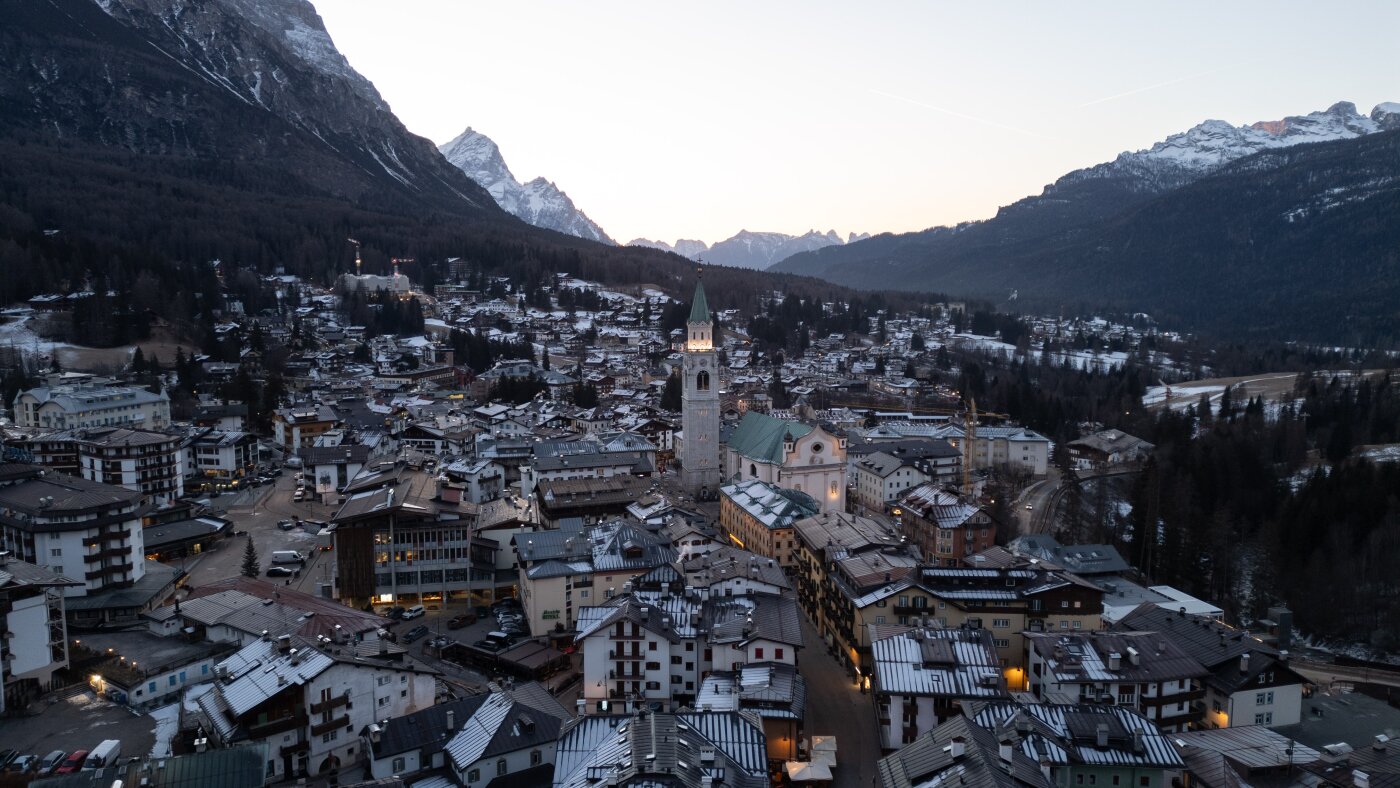
Cortina d’Ampezzo mixes Olympic legacy with Alpine glamour

Crimson Desert dev apologizes for use of AI art

Analysts say Gaza ‘civilian’ deaths include Hamas, other terror members working as medics, media workers

Schumer knocks Trump on Iran, plan to send ICE to airports: ‘Asking for trouble’

The real reasons you’re still exhausted after 8 hours of sleep, according to an expert

Florida High School Football Rankings: Top 25 teams – Oct. 21

How old is Bo Nix? What to know about Oregon quarterback ahead of 2024 NFL Draft

Cleary's 21 help Le Moyne down Central Connecticut State 69-64 in OT

99th annual Pony Swim held in Virginia

Indiana Members Credit Union announced as new anchor tenant at Bottleworks District
Schumer knocks Trump on Iran, plan to send ICE to airports: ‘Asking for trouble’

‘Risk of escalation is extremely high as Iran shows it can retaliate’

Immigration agents deploying to airports under border czar as TSA staffing falls short | CNN Politics

Video: Former F.B.I. Director Robert Mueller Dies at 81

Trump gives Iran 48-hour ultimatum to reopen Strait of Hormuz or face strikes on power plants
-

 Detroit, MI4 days ago
Drummer Brian Pastoria, longtime Detroit music advocate, dies at 68
-

 Oklahoma1 week ago
Family rallies around Oklahoma father after head-on crash
-

 Nebraska1 week ago
Wildfire forces immediate evacuation order for Farnam residents
-

 Georgia6 days ago
How ICE plans for a detention warehouse pushed a Georgia town to fight back | CNN Politics
-

 Alaska1 week ago
Police looking for man considered ‘armed and dangerous’
-
 Science1 week ago
Federal EPA moves to roll back recent limits on ethylene oxide, a carcinogen
-
 Science1 week ago
H5N1 bird flu spreads to sea otters and sea lions along San Mateo coast, wildlife experts say
-

 Movie Reviews3 days ago
‘Youth’ Twitter review: Ken Karunaas impresses audiences; Suraj Venjaramoodu adds charm; music wins praise | – The Times of India