Politics
An Illustrated Guide to Trump’s Conflict of Interest Risks


During his first administration, President-elect Donald J. Trump’s global business empire created an unprecedented number of conflicts of interest for a sitting president. Ethics experts worried that opportunists could try to curry favor by booking stays at Mr. Trump’s network of hotels, golf clubs and other properties.
Their predictions bore out: Foreign governments and lobbyists spent lavishly at his Washington hotel, which has since been sold, as well as at his Mar-a-Lago resort and other properties. The federal government itself also became an awkward customer by renting millions of dollars’ worth of rooms at his hotels and clubs.
Those concerns now seem almost quaint in light of some of Mr. Trump’s more recent business ventures. They include a publicly traded company, a cryptocurrency venture, new overseas real estate deals involving state-affiliated entities and numerous branding and licensing deals.
The new additions to Mr. Trump’s portfolio could provide more direct avenues for those wishing to influence a sitting president or even to try to extort him, according to some outside ethics lawyers.
Some of the new international real estate deals are among the most potentially worrisome.
Several of Mr. Trump’s recent real estate projects have connections to foreign governments in the Middle East, raising concerns that Mr. Trump’s financial interests could influence foreign policy.
Many of the contracts that the Trump family has negotiated overseas since Mr. Trump left office are so-called branding deals. The Trump family sells its name to international developers that build residential and resort complexes and sell luxury units at a premium, they hope, based on Mr. Trump’s perceived star power.
One of the developments, a luxury hotel and golf course complex in the Middle Eastern nation of Oman, is being built on land owned by the country’s government. That project and three others are proceeding in partnership with a subsidiary of a Saudi-based real estate company, Dar Al Arkan, which has close ties with the Saudi government. Saudi Arabia has a long list of pressing matters before the United States, including requests to buy F-35 fighter jets and gain access to nuclear power technology.
Oman also plays an important role in the Middle East, often serving as a middleman between the United States and Iran.
It is extremely unusual, historians say, for any U.S. president to be involved in family business deals with a foreign government nexus at the same time as he is managing foreign policy matters that affect that same nation.
A new cryptocurrency business introduces an entirely different set of ethics concerns.
Last fall, the Trump family helped launch World Liberty Financial, a platform for investors to borrow and lend using cryptocurrencies. The Trump family members are not owners or officers in the company, but they have an agreement to be paid for helping promote it.
After getting off to a rocky start, the company got a boost in the form of a $30 million token purchase by Justin Sun, a cryptocurrency executive who has been targeted by the Securities and Exchange Commission on fraud claims unrelated to World Liberty Financial. Mr. Sun has moved to dismiss the case.
As of November, World Liberty claimed to have at least 20,000 token holders who have bought a stake in what the company calls a “platform inspired by Donald J. Trump.” These purchases were made even though the tokens — at least for now — cannot be resold, meaning they have no immediate value to the buyers.
But the purchases, made by individuals whose names are not public, should generate tens of millions of dollars in payments to the Trump family, according to company filings.
Mr. Trump has already seen the effect he can have on the cryptocurrency market. When he announced his pick for S.E.C. chairman, the crypto advocate and lawyer Paul Atkins, Bitcoin value surged above $100,000 for the first time in its history. Mr. Trump immediately moved to claim credit for the milestone. “CONGRATULATIONS BITCOINERS!!! $100,000!!! YOU’RE WELCOME!!! Together, we will Make America Great Again!,” he wrote on his social media platform, Truth Social.
Mr. Trump himself, according to his 2024 financial disclosure, owned as much as $5 million worth of Ethereum, a token second only to Bitcoin in popularity. That cryptocurrency has also surged in value since the election.
The new leadership at the S.E.C. is likely to decide on rules that could significantly increase the value of Ethereum, Bitcoin and tokens at World Liberty Financial. They could also pave the way for the company to market its coins to a wider swath of the public,, which would potentially generate hundreds of millions of dollars in additional payouts to Mr. Trump and his family.
A publicly traded company presents another avenue for persuasion.
Last spring, Trump Media & Technology Group, which is the parent company of Truth Social and the president-elect’s single greatest source of wealth, went public. Buying company shares is another new way special interests could try to sway Mr. Trump, its largest shareholder.
For instance, corporations and others could buy shares in the company or advertise on Truth Social. And while foreigners are not allowed by law to make campaign contributions to Mr. Trump, there is no limit on their ability to buy large chunks of stock in his company, perhaps in an effort to intentionally push up the stock’s value and further enrich the Trump family. Mr. Trump did recently transfer his ownership stake in Trump Media to a trust controlled by his oldest son, Donald Trump Jr.
As president, Mr. Trump will also be in a unique position to drive traffic — and ultimately revenue — to Truth Social, whose parent company has been struggling to make money.
He has an agreement with Truth Social to post certain types of content on Truth Social first, before posting to other platforms, like Elon Musk’s X.
Most news releases about cabinet picks and other appointments during the Trump-Vance transition have provided links to a corresponding Truth Social post.
Mr. Trump’s name is on an array of new items, some quite expensive.
Then there are the numerous new merchandise licensing deals, which may not give purchasers a direct line to attempt to influence geopolitics but certainly line Mr. Trump’s own pockets. Since leaving the White House, Mr. Trump has lent his name and image to dozens of products.
- Bibles and other books. A version of the Bible with Mr. Trump’s signature is available for $1,000.
- fragrances. Several of these licensed perfumes and colognes bear golden likenesses of Mr. Trump.
- Trump digital trading cards. Mr. Trump reported making more than $7 million for these “nonfungible tokens,” or NFTs, which depict Trump as a superhero, an astronaut and other characters
- sneakers. “Trump 47 Crypto President Low Tops” and “Inauguration High-Tops” are among the dozens of styles for sale
- watches. One model of watch bearing Mr. Trump’s name costs $100,000.
- guitars. Prices start at $1,000 and go as high as $11,500 for an autographed guitar
The list of such products seems to be growing. It includes three recent books, the first of which relied largely on photos taken by White House photographers, which Mr. Trump repackaged and is now selling for as much as $500 a copy. Mr. Trump more recently has moved to selling Trump Digital Trading Cards, which brought in more than $7 million, according to his latest financial disclosure. He also has helped sell Bibles, earning a cut of the profits. It remains unclear if these merchandise sales benefiting Mr. Trump will continue while he is president.
Almost all of the real estate holdings and deals from Mr. Trump’s first term remain active.
Mr. Trump has an extensive network of assets that he held during his previous term and is carrying into his second, excluding several properties that have been sold since 2017.
In the United States, there are golf clubs and resorts …
- Mar-a-Lago. A membership at Mar-a-Lago currently costs $1 million, triple the price from 2017
- Trump International West Palm Beach
- Trump National Bedminster
- Trump National Charlotte
- Trump National Colts Neck
- Trump National Doral. During his last term, Mr. Trump proposed hosting the Group of 7 summit at Doral.
- Trump National Hudson Valley
- Trump National Jupiter
- Trump National Los Angeles
- Trump National Washington, D.C.
- Trump National Westchester
- Trump National Philadelphia
… and hotels and residential and commercial properties. Mr. Trump owns some in full or part; others use his name in exchange for a fee.
- 40 Wall Street
- Trump International Hotel & Tower Chicago
- 6 East 57th Street
- Trump Park Residences
- Trump Tower. A three-story penthouse in Trump Tower was Mr. Trump’s primary residence for decades.
- Trump Palace
- Albemarle Estate
- Estates at Trump National
- 555 California Street
- Trump International Hotel & Tower Las Vegas. Trump International Hotel & Tower, New York City
- Trump Grande
- 1290 Avenue of the Americas
- Trump Towers Sunny Isles
- Trump Park Avenue
- Trump Plaza, New Rochelle, N.Y.
- Park Tower Stamford
- 610 Park Ave.
- Trump Parc
- Trump Parc East.
Overseas, Mr. Trump owns or has branding deals with more than a dozen properties that were also in play during his first administration.
- Trump Tower Philippines
- Trump Tower Kolkata
- Several properties in South Korea
- Trump Turnberry
- Château des Palmiers
- Trump International Golf Links & Hotel
- Trump International Scotland
- Trump Tower Punte Del Este
- Trump International Golf Club & Resort, Lido, Indonesia
- Trump International Golf Club & Resort, Bali, Indonesia
- Trump World Golf Club
- Trump International Golf Club Dubai
- Trump Tower Mumbai
- Trump Towers Delhi NCR
- Trump Towers Pune
- Trump Towers
And he continues to hold a stake in about half a dozen other assets.
- Online store. The official retail website of the Trump Organization sells hundreds of Trump-branded products, from hats to wine glasses.
- Retail store. The store is located in Trump Tower.
- Aviation: private aircraft
- Royalties. Mr. Trump still pulls in royalties from “The Apprentice” and books like “The Art of the Deal”
- Trump International Realty
- a real estate company.
Before the start of his first term, Mr. Trump made some attempts to distance himself from his businesses.
He said he would place his business holdings in a trust, but the trust was controlled by his two oldest sons instead of an independent entity, which is more the norm. He pledged that there would be “no new deals” by his company involving international real estate projects while he was in the White House.
This month, the Trump family issued an updated ethics pledge that revived many of the earlier promises with one key distinction: The Trump family intends to continue to do new international real estate deals, as long as the counterparties are not foreign governments themselves.
Eric Trump, the family member most responsible for overseeing the Trump Organization and its new deals, said the family is committed to avoiding any transactions that exploit connections to the White House. The company has appointed a well-known outside ethics lawyer, a former federal prosecutor and corporate lawyer named William A. Burck, to review any new contracts worth more than $10 million. “The Trump Organization is dedicated to not just meeting but vastly exceeding its legal and ethical obligations during my father’s presidency,” Eric Trump said in a statement.
Legal questions loom.
Certain ethics lawyers have argued that some of Mr. Trump’s conflicts of interest are not only a problem, but that they also represent a violation of the so-called emoluments clause in the Constitution, which prohibits a president from certain payments from any foreign government. The president and vice president are not exempt from this provision, as they are from conflict of interest laws that require other senior federal officials to divest from companies that might benefit from their official actions.
Several lawsuits filed against Mr. Trump during his first term argued that he had violated the emoluments clause by accepting payments at the Trump hotel he then owned in Washington, among other business operations.
His first term ended before the federal court system could definitively rule on questions related to emoluments, although the courts did ultimately allow the cases to proceed, suggesting that it remained possible that the outcome could have been against Mr. Trump.
But the clock ran out and the Supreme Court ruled that the cases were moot as soon as he left office. The legal fight would have to start all over again, but there is likely to be an allegation that the Trump Organization’s continued business deals through some of its subsidiaries with foreign governments is unconstitutional or illegal, these ethics lawyers said.
In the past 50 years, incoming U.S. presidents have voluntarily taken steps to disentangle themselves from any activities that could be perceived as a conflict of interest or moneymaking venture during their time in office.
Jimmy Carter turned over his peanut farm to a trust, which he learned after he left the White House was deeply in debt. Ronald Reagan announced within two weeks of his inauguration that he had sold off all of his investments, other than his ranch and another home, converting these holdings to cash that was then managed by an independent trustee. Lyndon B. Johnson and his wife put her Texas radio and television holdings in a trust.
But these issues have created questions before — a point Mr. Trump’s family and lawyer raised this month when they laid out Mr. Trump’s own ethics plan. When George Washington was president, the Trump lawyers noted, he continued to own a business that exported flour and cornmeal to Europe and the Caribbean. In the 1970s, Vice President Nelson Rockefeller maintained a stake in Standard Oil, which his grandfather founded.
In Mr. Trump’s case, questions about real or potential conflicts extend beyond the president-elect.
His oldest son, Donald Trump Jr., announced recently that he is joining the venture capital firm 1789 Capital, which focuses on investing in conservative companies and could see its business boosted as a result of its ties to the first family. Mr. Trump’s son Barron is playing a role in World Liberty Financial, as are Donald Trump Jr. and Eric Trump, according to disclosure documents.
And Jared Kushner, the president-elect’s son-in-law, runs a private equity firm called Affinity Partners that has raised $4.5 billion, mostly from sovereign wealth funds of the oil-rich nations of Saudi Arabia, Qatar, the United Arab Emirates, based on relationships he built while in the White House during Mr. Trump’s first term. Mr. Kushner does not plan to return to the White House. But his ties to Mr. Trump will create new ethics concerns as he continues to make investments over the next four years, including luxury hotel deals in Albania and Serbia, where the governments there are his partners.
Most of these potential conflicts did not exist the first time Mr. Trump was in office. It all means these kinds of questions are only going to be more intense this White House term.



Politics
Commentary: Two Lorenzos from Mexico. One fulfilled his American dream. ICE killed the other
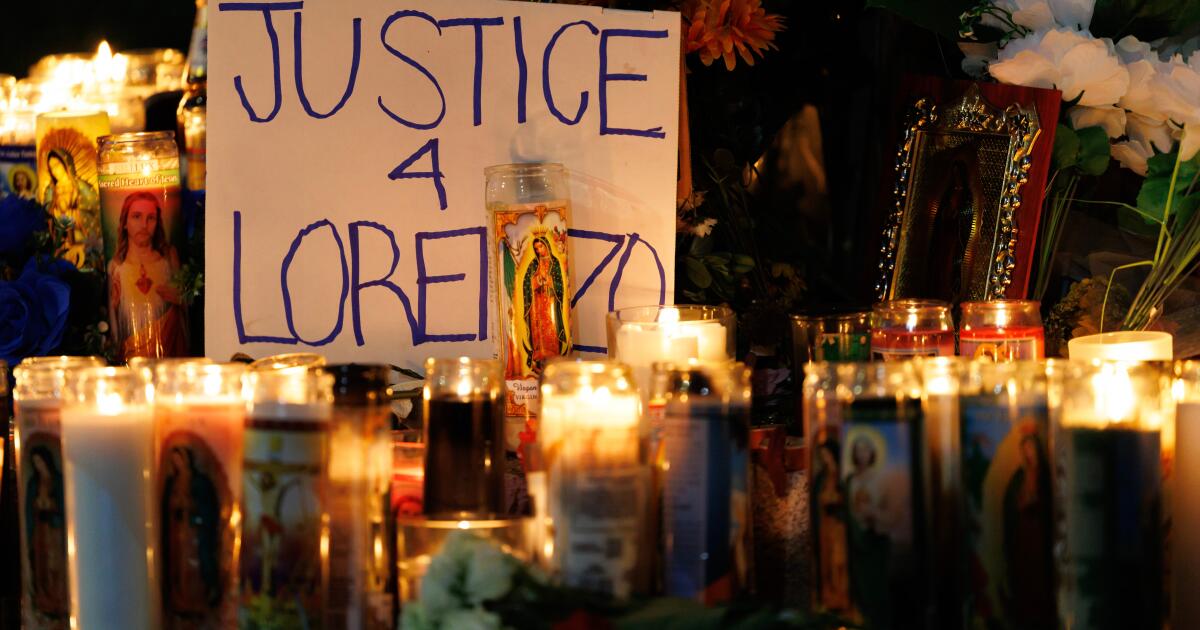
They were Mexican immigrants, both named Lorenzo.
They came to this country without papers as teenagers. Lack of legal status didn’t stop them from building beautiful lives — a wife, a home, a loving dog. A blue-collar job that paid the bills, weekend carne asadas with friends and family, children who followed their father’s example of hard work.
The Lorenzos enjoyed the fruits of their labor in their adopted land, even as they battled to become American citizens while politicians demonized immigrants as invaders and worse.
Lorenzo Arellano arrived in the United States in 1968 and didn’t get his citizenship until nearly 30 years later. Back then, the path to naturalization was far easier.
Lorenzo Salgado Araujo arrived in the early 1990s, when those opportunities were becoming severely limited.
Lorenzo Arellano is my father, a happily retired truck driver living in Anaheim.
Lorenzo Salgado Araujo, 52, who ran his own construction crew, was on his way to a job with his brother and two other men when an Immigration and Customs Enforcement agent shot him dead on July 7 in Houston.
When I see a photo of Salgado Araujo beaming in front of a cake with the number 52 on it at the well-kept home he built with his own hands, I’m reminded that we’ll be celebrating my father’s 75th birthday next month. When I see video of Salgado Araujo’s feet twitching on the ground with two ICE agents next to him as he bleeds out and moans for help, I weep.
Only geography, age and Donald Trump separated the Lorenzos. Even their children — he had three boys, while my father had two boys and two girls — are similar. The Salgado Araujos, like the Arellanos, are college-educated. The eldest son, Ronaldo, is a teacher like my sisters. He wears glasses like me and is now telling the story of his father to the nation, as I have for decades.
I write about my Papi as the puckish personification of immigrant America.
Ronaldo is eulogizing his dad way too soon.
“He wanted nothing else in life but to provide for his wife and see his sons become great people,” Ronaldo said proudly at a news conference the day after his father’s death — words I’ve always said about my Papi. “He did not deserve to be reduced to a headline of ‘Mexican man shot and killed by ICE’” — words I hope to never utter but can sadly see as a possibility given la migra’s unapologetic shoot-first approach and indiscriminate targeting of anyone brown.
Salgado Araujo’s killing came as part of the Trump administration’s newest deportation surge — the New York Times reported that the feds have arrested nearly 2,000 people a day since the end of June. The rate is higher than ICE’s campaign of terror last summer, yet it hasn’t drawn the same attention, fulfilling the promise of newish Homeland Security Secretary Markwayne Mullin that la migra would operate far more quietly and efficiently than under his reckless predecessor, Kristi Noem.
Those quiet times are over.
Ronaldo Salgado, son of Lorenzo Salgado Araujo, dries his tears while talking at a news conference on July 8 in Houston. His father was shot and killed by ICE agents the day before.
(David J. Phillip / Associated Press)
Vigils are popping up across the country in Salgado Araujo’s name. Stories about his life and death have replaced those about Mexico’s World Cup run on my social media timelines. They are heartbreaking, infuriating and a baleful reminder for Mexican Americans that these last five weeks of soccer, as joyful as they were, didn’t change our precarious status in this country under President Trump.
“He deserved to live a quiet life as a husband, a father and a job creator for dozens of men who also wanted the American dream,” Ronaldo said at the news conference through tears as his younger brother, Lorenzo Jr., comforted him. That their father never will — that the Department of Homeland Security is now smearing his name by claiming he “weaponized” his van by trying to run over an agent, even though video evidence proves no such thing — is the latest indictment against the Trump administration’s cruelty toward the undocumented.
Salgado Araujo wasn’t even the target of ICE’s operation. His family said he had applied for a work permit and was on his way toward finally obtaining legal status.
We should heed Ronaldo’s words about his father. As people protest and seek justice, we should also hail the life of Lorenzo Salgado Araujo the way we one day will hail the life of Lorenzo Arellano — as Mexicans who made it, challenges be damned. And we should continue to fight for immigrants who remain in legal limbo, afraid for their lives more than ever.
I called my father to ask how he felt about a tocayo — someone with the same first name — losing his life to la migra.
“I put myself in his place and lament that ese [that] Lorenzo couldn’t get the citizenship that I could,” Papi said in Spanish.
He remembered how immigration agents “did it with respect” when they caught him living in this country illegally in the 1970s and 1980s.
“They asked you for your papers, and if you didn’t have them, they put handcuffs on you, you got deported and that was that. None of these beatings or shootings that are happening now under Trump,” he said. The worst it ever got was when he said he was going to Los Angeles, and an agent snapped that he was going to L.A. but now had to return to Mexico.
Papi asked me what justification ICE has offered for killing Salgado Araujo.
“I hope they put those people who killed him in prison for many years,” he said with disgust. “Will they?”
I replied that probably wasn’t going to happen. ICE has shot and killed 11 people during Trump’s second term, both citizens and noncitizens, and scores more have died in immigration detention. No agents have faced charges for any of these deaths. The agents involved in Salgado Araujo’s killing didn’t even have dashboard cameras or body cameras, a convenient oversight that a Department of Homeland Security spokesperson blamed on “multiple government shutdowns.”
“Pues, Dios sabe que todo se paga en la vida,” my dad responded. Well, God knows you reap what you sow.

Ronaldo Salgado and Lorenzo Jr., sons of Lorenzo Salgado Araujo, hold a photograph of their father during a news conference July 8 in Houston.
(David J. Phillip / Associated Press)
Nothing can bring Lorenzo Salgado Araujo back to his loved ones. But I hope they find solace in his namesake, St. Lawrence. Tradition has it that Roman authorities roasted the Spanish deacon to death after Emperor Valerian demanded that he turn over the treasures of the Church. Instead, Lawrence presented the emperor with the city’s poor and maligned, insisting that he confront the oppression he had forced on them.
May we remember Lorenzo Salgado Araujo as a modern-day martyr, killed because our government refused to give him and so many others a chance at living in this country without fear.
May his name resonate through the ages as embodying the promise and tragedy of the American dream.
Politics
Hegseth announces joint task force with DOJ to prosecute leaks to journalists ‘with the full force of the law’

NEWYou can now listen to Fox News articles!
Pentagon chief Pete Hegseth on Monday announced the creation of a joint task force with the Department of Justice to identify and prosecute officials who leak “sensitive information” to the media.
Hegseth said the Pentagon’s Office of General Counsel (OGC) may request and receive all information, support and records across the department regarding news media leak investigations.
“To combat the dangers that leaks pose, effectively immediately, I have delegated tasking authority to the war department’s office of general counsel, empowering OGC to request and receive all information, records and support across the department concerning media leak investigations,” he said in a video shared on X.
“Leaked information risks lives, these new tools and processes will greatly assist us in protecting our joint force,” Hegseth continued. “The security of our nation cannot be a bargaining chip for those who seek momentary headlines, access to confidential and secret information is a sacred trust, and those who betray that trust will be met with the full force of the law.”
TRUMP ADMINISTRATION SUBPOENAS NY TIMES JOURNALISTS IN GRAND JURY LEAK PROBE TIED TO AIR FORCE ONE REPORT
Pentagon chief Pete Hegseth on Monday announced a joint task force with the Department of Justice to identify and prosecute leakers. (Reuters/Kevin Lamarque)
The secretary also thanked Acting U.S. Attorney General Todd Blanche for his support, adding that he was “proud that our departments are working together closer than we have ever before.”
Hegseth’s announcement comes just days after the DOJ issued subpoenas to four reporters at The New York Times, attempting to force them to testify before a federal grand jury after the newspaper reported on the security concerns involving the plane gifted to President Donald Trump by Qatar that he flew on to Turkey for a recent NATO summit.
The subpoenas were widely criticized by The New York Times, journalists at various news outlets and press freedom groups, arguing that the Trump administration is attempting to intimidate reporters conducting legitimate news-gathering about the government.
NEW YORKER SUING ICE AFTER OFFICERS WENT TO HIS HOME TO WARN HIM OVER CRITICISM OF AGENCY
The announcement comes just days after the DOJ issued subpoenas to four reporters at The New York Times. (Kevin Wolf/AP)
“The appearance of federal law enforcement agents on the doorstep of news reporters should shock the conscience of any American who believes in the Constitution and the press freedom it protects,” an attorney for the newspaper, David McCraw, said in a statement.
“Our journalists report the facts and advance the American public’s right to know how their government is operating and their taxpayer dollars are being used,” McCraw added. “This brazen act should be seen as nothing more than an attempt to prevent the public from knowing what is happening in their country by intimidating journalists from doing their jobs.”
Since taking over as head of the Pentagon last year, Hegseth has sought to crack down on leaks to the media.
Last year, the department opened investigations into those accused of leaking classified information to the press and threatened to conduct polygraphs to identify leakers.
The secretary thanked Acting U.S. Attorney General Todd Blanche for his support. (Kent NISHIMURA / AFP via Getty Images)
CLICK HERE TO DOWNLOAD THE FOX NEWS APP
Hegseth has also attempted to impose restrictions on reporters covering the Pentagon. He had forced them to sign a pledge stating that they would not solicit any unauthorized material, even if the information was unclassified. Most Pentagon reporters turned in their press badges rather than accept the department’s restrictions on news-gathering.
That policy is facing lawsuits, and a judge last month granted a preliminary injunction, ruling that the department’s requirement that journalists be accompanied by an official chaperone at all times violated the First Amendment in response to a case brought by The New York Times.
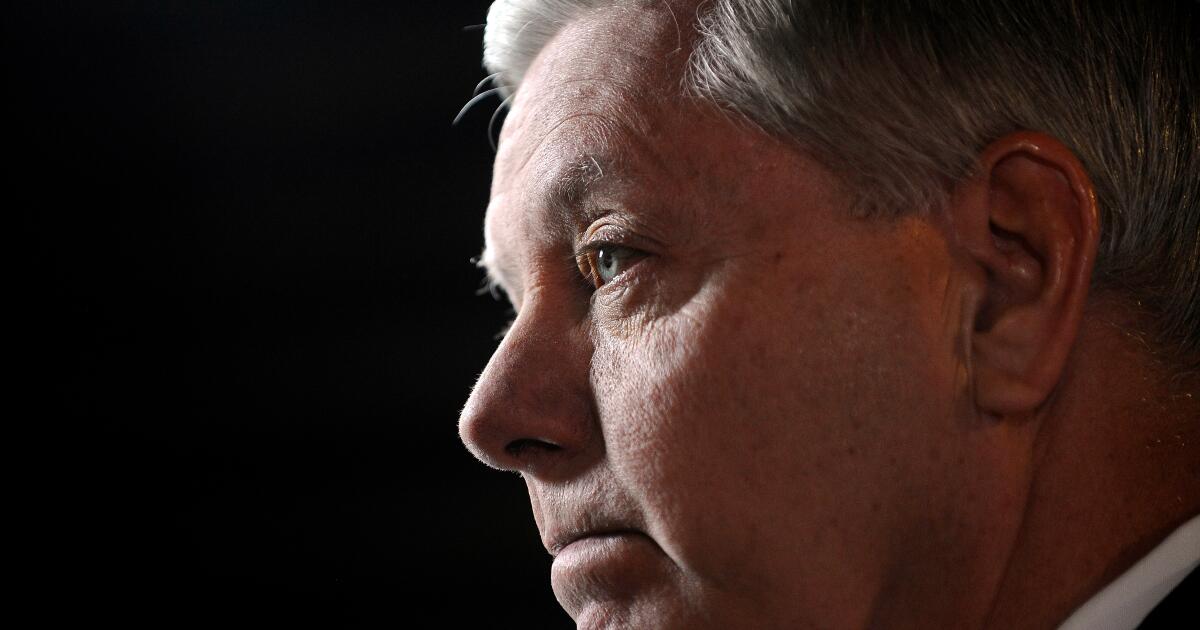
Sen. Lindsey Graham, the prominent Republican from South Carolina who served in the Senate for more than two decades, died after suffering an aortic dissection, his office said Sunday.
Graham died unexpectedly Saturday night, his office announced, shortly after he had returned to Washington after a trip to Ukraine.
In a statement, his spokesperson said a preliminary report from the medical examiner for the District of Columbia found that the 71-year-old senator died of aortic dissection due to arteriosclerotic cardiovascular disease. With aortic dissection, a tear occurs in the wall of the aorta.
According to the Mayo Clinic, aortic dissection is not very common, and its symptoms may be mistakenly attributed to other health conditions. It usually affects men in their 60s and 70s. If the blood from the dissection travels outside the artery, the condition is often fatal.
A former military lawyer who reached the rank of colonel in the Air Force, Graham ran for the Republican nomination for president in 2016. Initially a cutting, vocal critic of then-candidate Donald Trump during the election, Graham became one of the president’s staunchest allies after Trump’s election.
“Senator Lindsey Graham, one of the greatest people and Senators I have ever known, is dead!” Trump posted on his social media platform, Truth, on Sunday. “He was always working, and was a true American Patriot.”
Graham was known as a C student in high school, and was the first member of his family to attend college. His mother died while he attended the University of South Carolina, and his father died of a heart attack during Graham’s first semester of law school.
He served as a judge advocate in the Air Force, eventually becoming the chief prosecutor for the Air Force in Europe.
He was first elected to serve as senator for South Carolina in November 2002.
In a social media post on X, Vice President JD Vance described Graham as one of the most powerful lawmakers, and recalled an incident where he and Graham got into a shouting match over a funding bill for the war in Ukraine.
Later the same day, he wrote in the post, Graham was advocating for rail legislation that Vance supported.
“That was Lindsey Graham,” he wrote. “He fought like hell for the things he believed in, and he was just as willing to go to bat for you when it counted.”
Graham had been scheduled to appear on NBC’s “Meet the Press” on Sunday to discuss his trip to Ukraine. Instead, President Trump appeared in his stead, where he said the senator had been “like a member of the family.”
Trump called into several Sunday news programs to discuss Graham’s death, and said he had spoken to Graham on Saturday evening.
Trump told CNN’s Jake Tapper that the South Carolina senator had said he was “tired.”
-

 Health4 minutes ago
Notable figures who died from the same heart condition linked to Lindsey Graham’s death
-

 Sports10 minutes ago
Folarin Balogun admits that red-card reversal affected USA World Cup teammates: ‘A lot of outside noise’
-

 Technology16 minutes ago
Humanoid robots perform live surgery in world first
-
 Business22 minutes ago
A ‘next generation studio’ for YouTube creators
-
 Entertainment28 minutes ago
Finn Wolfhard is taking ‘control of the narrative’
-
 Lifestyle34 minutes ago
What are your most cherished memories of the 2026 World Cup in L.A.?
-
Politics40 minutes ago
Commentary: Two Lorenzos from Mexico. One fulfilled his American dream. ICE killed the other
-
 Sports52 minutes ago
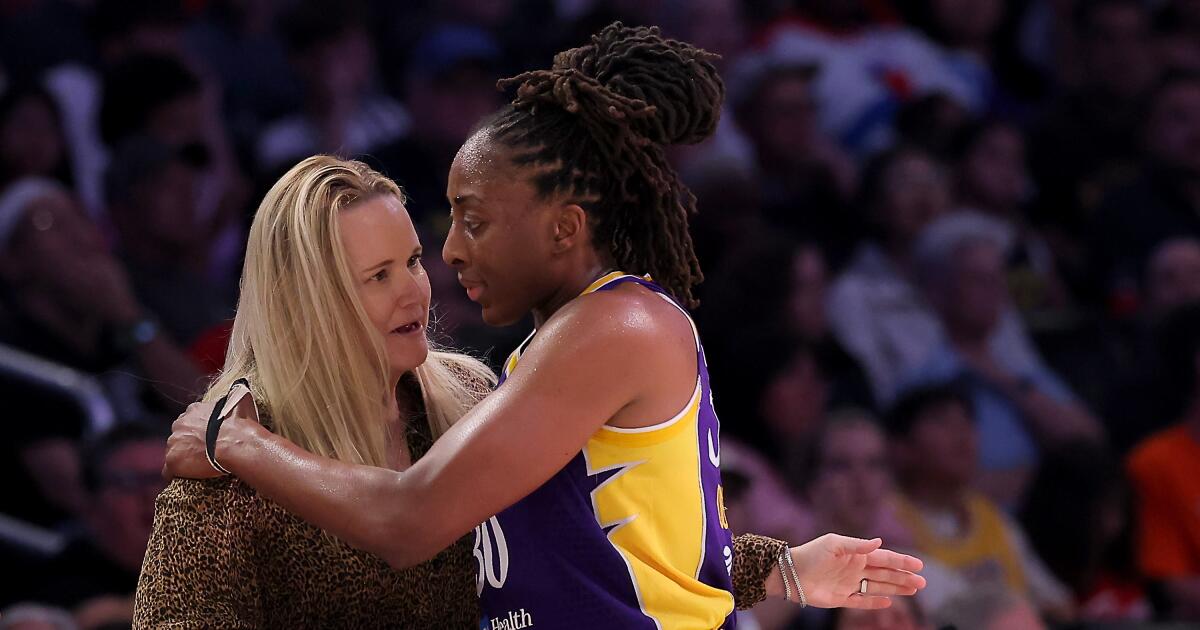
What will the Sparks do next? The franchise is at a crossroads after firing its GM

