Midwest
Top Intel Republican Tom Cotton seeking re-election to Senate in 2026

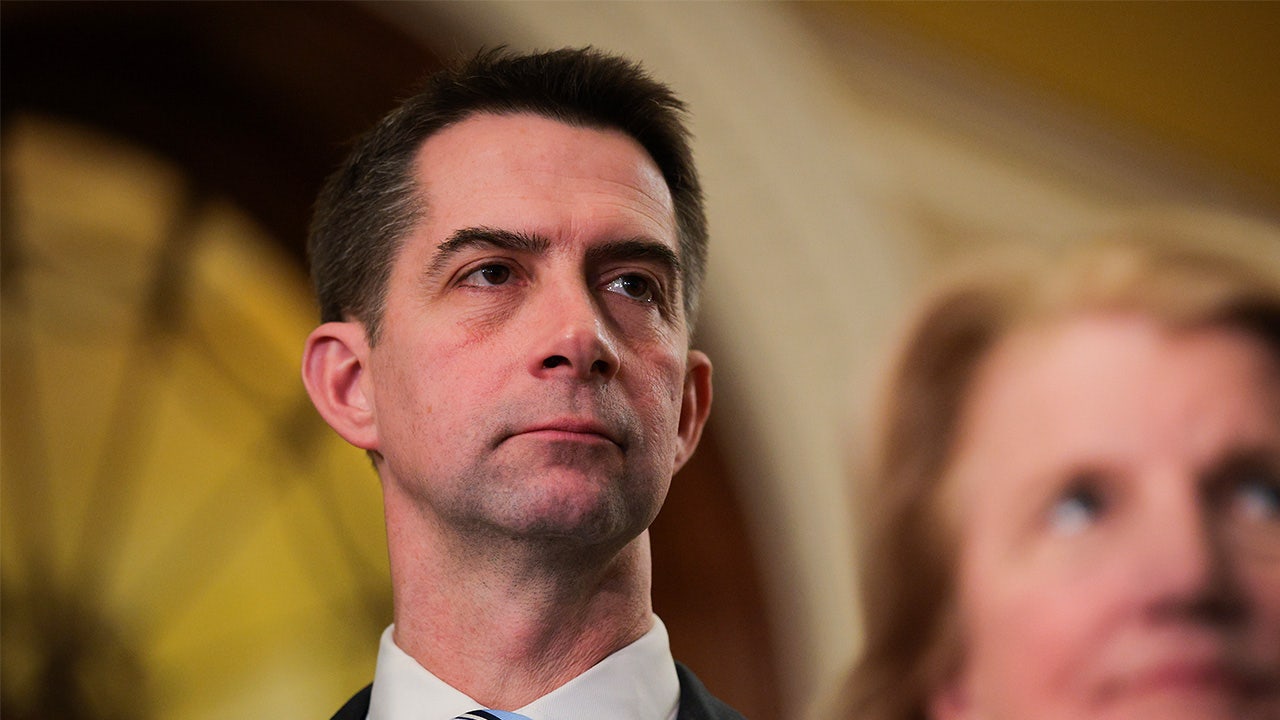
FIRST ON FOX: Sen. Tom Cotton, chair of the Republican Conference and Select Committee on Intelligence, revealed his plans to run for re-election in Arkansas in 2026, telling Fox News Digital in an exclusive interview how he plans to help build on the GOP majority for the next Congress and sharpen his focus on national security, namely the threat posed by communist China.
“It’s been a great honor and privilege to serve the people of Arkansas in the United States Senate,” he said, pointing to several GOP accomplishments.
The Arkansas Republican is going into his re-election bid with a whopping $8 million in cash on hand between his campaign and leadership accounts, his campaign said. This is more than triple the amount he had for his 2020 campaign, in which he handily defeated his opponent.
TULSI GABBARD GIVES EXCLUSIVE GLIMPSE OF TRUMP’S FIRST CABINET MEETING
Senate Republican Conference Chairman Tom Cotton announced on Thursday that he will seek re-election in 2026. (Getty Images)
Cotton has amassed 135,000 donations, coming from tens of thousands of people from each of the state’s 75 counties, per his campaign.
Cotton also boasts endorsements from all statewide officials in Arkansas, including Gov. Sarah Huckabee Sanders, Lt. Gov. Leslie Rutledge, Attorney General Tim Griffin, Secretary of State Cole Jester, Treasurer John Thurston, Auditor of State Dennis Milligan and Land Commissioner Tommy Land, all Republicans.
This support is in addition to the backing of congressional Republicans Sen. John Boozman, and Reps. Rick Crawford, Steve Womack, French Hill and Bruce Westerman – all of Arkansas’ D.C. delegation.
“Senator Cotton is fortunate to have overwhelming support from Arkansans who recognize that he has fought and delivered for conservative values,” said Brian Colas, Cotton’s campaign advisor, in a statement.
DEM SENATOR’S ‘DARK MONEY CORRUPTION’ HYPOCRISY REVEALED IN ETHICS COMPLAINT, EXPERT SAYS
Senate Majority Leader John Thune and Senate Majority Whip John Barrasso endorsed Cotton. (Ting Shen/AFP via Getty Images)
The senator also has the endorsements of several GOP senators he serves alongside, including Senate Majority Leader John Thune of South Dakota, Senate Majority Whip John Barrasso of Wyoming, and Sens. Tim Sheehy of Montana, Jim Banks of Indiana, Bernie Moreno of Ohio, and Tommy Tuberville and Katie Britt of Alabama.
“A fellow combat veteran, Tom Cotton’s entire career has been about serving the American people – whether it was on the battlefields of Iraq and Afghanistan or at home in Congress. As chairman of the Senate Republican Conference, he is a tireless warrior for the America First agenda, fighting to secure the border, rebuild our military, bring down costs, and restore common sense in D.C. The people of Arkansas are blessed to have Tom as their voice in the Senate, and I’m proud to give him my endorsement,” Sheehy said in a statement.
In his own statement, Tuberville noted that Cotton was born in Camden, Arkansas, a state “that holds a special place in my heart.”
“Tom’s a conservative fighter who puts America first. He’s tough on crime, strong on national security, and understands the Constitution. I’m honored to serve with Senator Cotton and look forward to his leadership in the Republican Party for years to come,” he added.
EXCLUSIVE: INSIDE REPUBLICANS’ LONG GAME TO CONFIRM TRUMP FBI DIRECTOR KASH PATEL
Tuberville said Arkansas has a special place in his heart. (Anna Moneymaker/Getty Images)
While a significant portion of Cotton’s time in the Senate has been spent pushing back on Democratic policies, the senator added, “I’m very excited now. We have a chance for at least the next four years with President Trump and a Republican Congress to get our state and get our nation back on track.”
Cotton was first elected to the Senate in 2014 and was re-elected in 2020. He is now seeking his third term in the upper chamber.
Now, with Republicans holding a trifecta of power in Washington, D.C., he’ll have several years to advance key policies that he likely would not be able to if Democrats led Congress.
“I’ve been in the majority. I’ve been in the minority. It’s much better to be in the majority,” he said.
GOP SENATOR SUFFERS SEIZURE, BRAIN BLEED AFTER FALLING ON ICE
Cotton’s new book is called, “Seven Things You Can’t Say About China.” (AP Photo/Kiichiro Sato)
He doesn’t expect Democrats to come to power anytime soon, either. “I’m very confident that we’re not just going to keep our majority in the Senate, but we’re going to grow our majority next year,” he said in reference to the 2026 Senate election map.
Cotton’s latest venture is his newly released book, “Seven Things You Can’t Say About China,” which just became a No. 1 New York Times bestseller. “Most Americans have a rightly low opinion of Communist China, but however bad you think the Chinese Communist Party is, or dangerous it is to America, it’s actually much worse,” he said.
“I think the success we’ve had in the first week since the book was published just reflects how many Americans, how many Arkansans are concerned about communist China,” the senator said, adding that it will be a “centerpiece of my campaign.”
Read the full article from Here


Theodore Roosevelt consistently ranks among the nation’s top five most popular presidents. On this upcoming July 4 holiday, 107 years after his death, T.R. is finally getting his own presidential library – but it’s not where you might think. That library is rising out of the prairie grass in the North Dakota Badlands – a 96,000-square-foot tribute to our 26th president.
It’s as grand as his likeness on Mt. Rushmore, except a lot more subtle, and that’s by design, says architect Craig Dykers. “Nature is transformative here,” he said. “It transformed Theodore Roosevelt, and it will transform new visitors to this library.”
Its gently sloping roof mimics the surrounding buttes, covered in native grasses and walking paths – yes, walking paths on the roof. The hope is they’ll get visitors up and out for a commanding view of Theodore Roosevelt National Park right next door.
“We wanted something that just felt primitive,” said Dykers. “And so, this form emerging from the Earth, it felt like it just arrived from the Earth.”‘ Dykers said.
Inside, a string of skylights will provide almost all the natural illumination the library would ever need, held up by walls made solely of compressed earth.
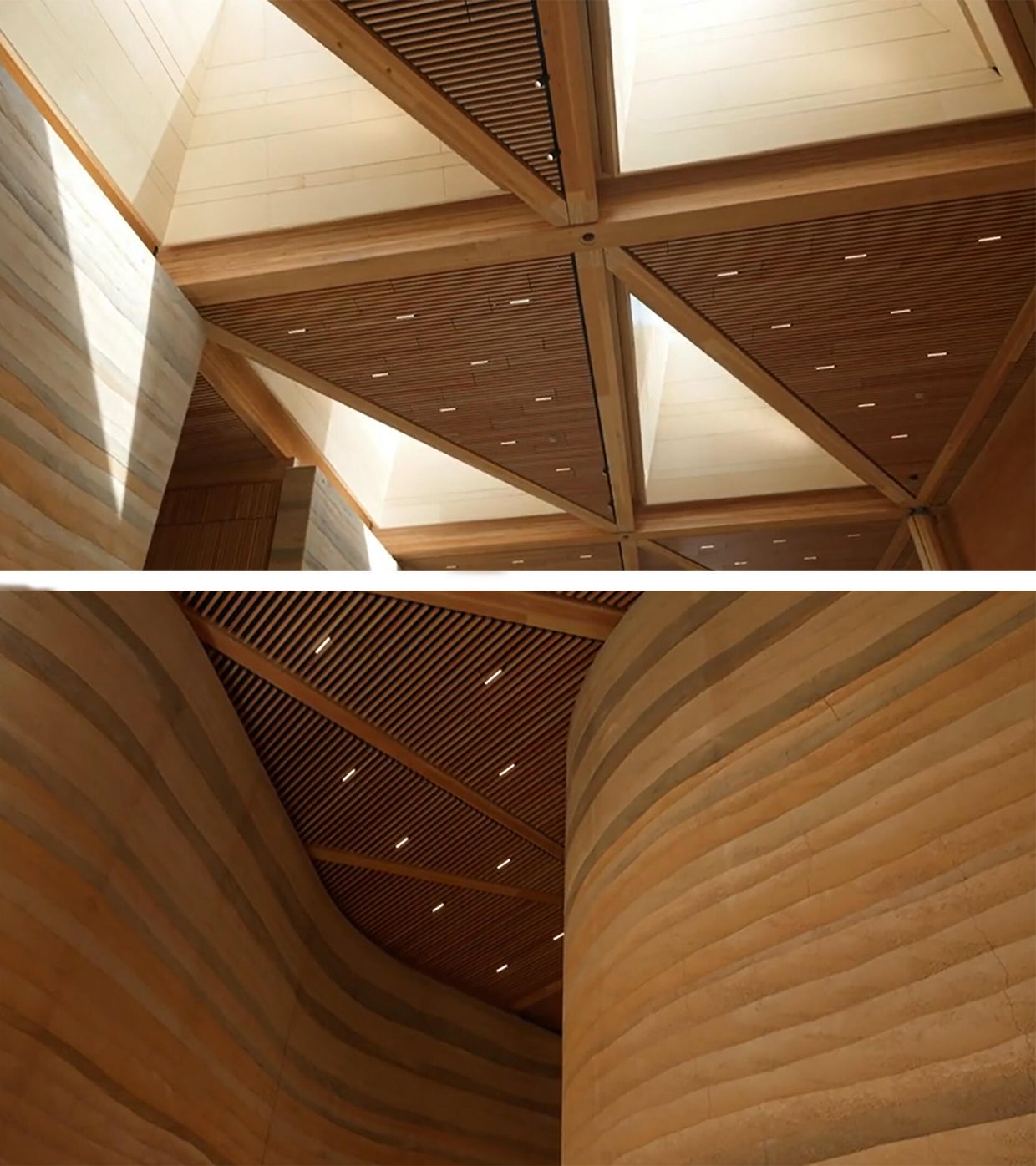
Everywhere we looked during our privileged sneak-peek back in March, it was hard to tell where nature ended and the library began. Its $450 million price tag is the biggest thing the small town of Medora, North Dakota, has ever experienced.
If you’re wondering why T.R.’s library is way out here instead of his native New York, it’s because were it not for his experiences way out here, Roosevelt said, he never would have been president.

Edward O’Keefe, CEO of the library, and author of the recent book “The Loves of Theodore Roosevelt: The Women Who Created a President” (Simon & Schuster), said, “Theodore Roosevelt grew up as a sickly, asthmatic child who lived his life through books and imagination. So here he is, 24 years old, on the plains and Badlands of North Dakota, and he’s living the life he only read about in books.”
But the reason he took up residence in the Badlands is hardly a happy one, said O’Keefe: “He was a broken man, in a broken land, and nature was his healer.”
In a tragic twist, Teddy Roosevelt’s mother, Mittie, and his young wife, Alice, both died in the same house, on the same day: Valentine’s Day 1884. “The light has gone out of my life,” Roosevelt wrote in his diary – the date marked by a bold X.
“At the funeral of his wife and mother – it was a double funeral – he was so desolate and so depressed, that they were concerned for his own safety,” said O’Keefe.
After settling his affairs (which included asking his sister to raise his newborn daughter, Alice), he headed West, alone. He’d been to the Dakota Territory just a year prior to hunt a pair of bison – the two that still hang in Roosevelt’s Long Island home to this day.

He dug in, and began living a kind of life many Dakota cowboys thought he wasn’t prepared to live. They were wrong.
O’Keefe said, “I think he had a ‘life wish.’ He realized that no matter how rich you are, no matter how privileged you are, that you don’t know what’s going to happen next. If you want to get something done in this world, if you want to love somebody, if you want to accomplish something, you gotta go.”
And it’s that kind of rugged, raw, and real intellectual journey that the library wants visitors not just to look at and to grasp, but experience. “Library and museum are the two worst descriptions of what the TR Library actually is,” said O’Keefe. “It’s a call to adventure.”
It’s the kind of place that couldn’t have been built even five years ago, because artificial intelligence is such a large part of it. For example, you don’t have to imagine what it’s like to be in T.R.’s boots; you can actually see it.
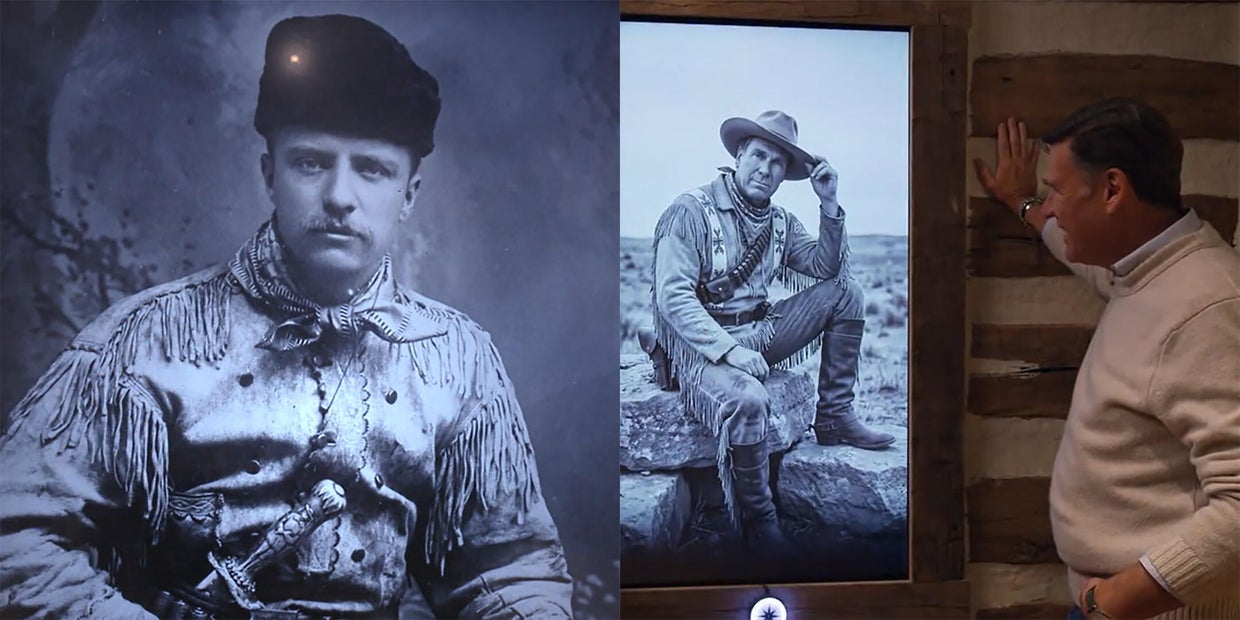
O’Keefe said, “We have created the world’s first presidential archive in AI. Participants can come here to the TR Library, and have an in-person conversation with an avatar of T.R. You do not come unprepared for a conversation with Theodore Roosevelt; he will have none of it.”
It will be the only presidential library that will have hitching posts for your horse. You can take a nature walk on a mile-long path through the prairie. You can sit by a campfire and hear tall tales of life on the range, and step into his cabin at the Elkhorn Ranch.
But for all the fun, there’s a serious bent, too. He was a man of his times, and his times weren’t always flattering.
“I wasn’t interested in doing a legacy project for Theodore Roosevelt,” said T.R.’s great-great-grandson, Theodore Roosevelt V. “There’s plenty of things named after him, plenty of statues. But the idea of just sort of basking in the glow of somebody and saying ‘This is a great man, let’s all look at him,’ isn’t particularly compelling. Normally, presidential libraries – it’s the principal [reason], the president trying to cement the first chapter of his legacy. In this case, we’ve got a hundred years-plus to be able to look back at his legacy, to really understand what that legacy is, what the lasting impacts were. We get to face those issues head-on.”
Including Roosevelt’s racist views of indigenous peoples, whom he often referred to as savages.
“We had a land blessing out here with the five tribes,” said Roosevelt, “to bless the land and really bring them into the project, so that we were working with them and making sure that their voices were heard, and that we were representing things appropriately.”
The library has taken possession of a statue of Roosevelt that was removed in 2022 from outside the American Museum of Natural History in New York. Critics argued that the message of a White man elevated above both a Native American and an African symbolized racial superiority.
“We are here to preserve the life and legacy of Theodore Roosevelt,” said O’Keefe. “I think it’s important that we eventually do something that contextualizes it appropriately, but not at the opening.”
If the Theodore Roosevelt Presidential Library has any message, it’s that courage and strength often come from personal tragedy, mis-steps, mistakes, and misunderstandings. As he famously said, it’s being in the arena that counts. And that, more than anything, may be the hindsight the library has to offer.
“He does not like the critic,” said O’Keefe. “He does not like the person on the sidelines pointing out how the strong man stumbles, or where the doer of deeds could have done them better. He likes the person who tries and fails. That’s a powerful lesson for today. I want kids in particular to come in and understand that if you want to change something in this world, you have got to be the source of that change.”
For more info:
Story produced by Aria Shavelson. Editor: George Pozderec.
For more info:

Photo:
Casey Laughter / Eclipse Sportswire
This year’s Preakness Stakes was advertised as the weak sister of the 2026 Triple Crown series. While Golden Tempo, Renegade, Commandment, and Chief Wallabee all took a hard pass on the middle jewel, they still ran the race at Laurel Park. The brunt of jokes before and after Napoleon Solo’s victory, the Preakness may yet enjoy the last laugh.
While Napoleon Solo and Iron Honor, the top two finishers from Maryland’s classic, will wait for the $1 million Haskell (G1) next month at Monmouth Park, Saturday’s $500,000 Ohio Derby (G3) attracted a solid field of 3-year-old males to Thistledown. Included in the group was a quartet coming straight out of the Preakness, led by Chip Honcho and Ocelli.
Bull by the Horns and Robusta were longshots off their results at Laurel and they ran like it in Ohio. Chip Honcho and Ocelli, on the other hand, were well supported on Saturday after running third and fourth in the Preakness.
After the pair put away the favored Desert Gate at the top of the stretch, they battled it out down the lane. In the end, it was Chip Honcho getting the better of his rival late to pull clear to a one-length score in the Ohio Derby. The Lexington Stakes (G3) winner Trendsetter was able to rally and get by the favorite for third, but this really was a two-horse race down the Thistledown stretch.
Trained by Steve Asmussen and ridden again by Jose Ortiz, Chip Honcho earned his second stakes win of his career, and his first of his sophomore season with the performance.
Before his solid third-place effort in the Preakness behind Napoleon Solo and Iron Honor, the son of Connect had run several good efforts in New Orleans, including a win in the Gun Runner and a strong second-place performance behind Paladin and ahead of the Kentucky Derby and Belmont Stakes hero Golden Tempo in the Risen Star (G2).
Despite his solid racing at Fair Grounds the decision was made to skip the Kentucky Derby with Chip Honcho and point for the Preakness instead. That decision already seems to be paying dividends.
On Saturday, he was steadied just a bit heading into the first turn but had already been asked to keep off the early lead set by Robusta. His ability to stalk from just off the pace in his last two races has seemingly made him a better and more dangerous horse.
When Ocelli rolled by him on the turn, he had to come up with a strong stretch drive to win and he did just that. Other than the Louisiana Derby, where he was hung out to dry a little bit early and faded to fifth, Chip Honcho has run nothing but good races in his career and looks to continue to be a player in the division as we move into the second half of the season.
As for Ocelli, I must admit that he was the one I was pulling for in the Ohio Derby. Also a son of the Curlin stallion Connect, he is a horse that I find it impossible not to root for.
After Saturday’s strong run for second, Ocelli has now run nine times in his career and remains winless. Sent off as the third choice in the Ohio Derby behind Desert Gate and Chip Honcho, the maiden once again ran a big race in defeat.
After displaying some rallying talent in his first three career starts, it has been a steady diet of stakes races and tough competition for the Whit Beckman-trained runner.
Even in the Sam F. Davis, won by Renegade, and the Virginia Derby, won by Incredibolt, Ocelli made his move from behind, but in both races, he was too immature to handle any adversity, and he backed out down the lane.
Undeterred, his connections were willing to keep trying. A solid rally to be third in the Wood Memorial (G2) was enough to get him into the Run for the Roses and his connections took full advantage. He actually briefly led in the stretch run of the Kentucky Derby, before finishing third as the longest shot on the board.
No horse was able to make up much ground in the Preakness, but Ocelli was the best of the late-runners, checking in 4th of 14. In the first two legs of the Triple Crown, the maiden finished ahead of all but 5 of the 30 horses he faced.
In the Ohio Derby, he had a wide trip and came with his patented rally under rider Tyler Gaffalione but could not hold off Chip Honcho in an exciting battle.
Despite still being winless in nine career starts, Ocelli has amassed $829,800. Not bad for a maiden, and not bad for a horse that was originally purchased for $12,000 as a yearling.
I cannot recall a maiden ever reaching the $1 million mark in earnings. I believe Ocelli has a chance to be the first. With a demanding schedule and a consistent far turn rally, it has been fun to watch the ride.
Chip Honcho and Ocelli, coming out of good efforts at Laurel Park, absolutely dominated Saturday’s Ohio Derby. Maybe we should start taking a more positive view of the 2026 Preakness Stakes.

PIERRE, S.D. — A governor-appointed board unanimously approved higher prices and a higher income limit Monday for an affordable housing program.
The South Dakota
Governor’s House
program sells two- and three-bedroom homes built by inmates at Mike Durfee State Prison in Springfield that are shipped across the state to eligible buyers.
The program also offers daycare models, which can be owned by daycare providers or nonprofit organizations. For buyers in rural areas with less than 5,000 people, the authority provides
DakotaPlex
units intended to be used as duplexes, triplexes or quadriplexes.
Buyers are responsible for buying a building permit, finding a lot, laying the foundation and flooring, and hooking up utilities and appliances.
This year’s change is the “smallest price increase we’ve had in many, many years,” according to Mike Harsma, who heads the Governor’s House program for South Dakota Housing.
On July 1, the start of the new fiscal year, the homes will be priced as follows:
- Two bedroom: $89,000, up from $86,000, or a 3.49% increase.
- Three bedroom: $99,000, up from $96,000, or a 3.13% increase.
- Dakotaplex two bedroom: $99,000, up from $97,000, or a 2.06% increase.
- Dakotaplex three bedroom: $109,000, up from $106,000, or a 2.83% increase.
- Daycare: $99,000, up from $96,000, or a 3.13% increase.
Last year
, units increased at least 6%. The rise in prices this year is due mostly to increased fuel costs, according to Chas Olson, executive director of the South Dakota Housing Development Authority. The cost of delivery for a home is included in the total price of a Governor’s House.
Photo courtesy of South Dakota Housing Development Authority
“Whether we’re moving a Governor’s House from Springfield to Sioux Falls or we’re moving it across the state to Buffalo, South Dakota, we get the same amount for that moving fee,” Olson said. “The cost of fuel, where it is now and kind of the uncertainty around that, we had to build in a little bit of a cushion just to be sure that we weren’t taking too big a loss on the fuel.”
Buyers of Governor’s Houses must meet income requirements. The board approved a higher income limit, now at 100% of the state’s median income, regardless of household size.
Families that make up to $103,400 now qualify for the program. In previous years, buyers in one- to two-person households could qualify if they made $72,380 or less and households of three or more people could qualify if they made $82,720 or less.
“It’s hard to get people qualified at those income levels,” Olson said. It had been about 14 years since that limit was adjusted, he said, “and with the cost of everything now, I mean, it was just time.”
Mortgage assistance program
Board members also approved a program that’s modeled after a
piece of legislation
that failed earlier this year in the Legislature. It’s a mortgage assistance program for qualifying buyers of manufactured homes.
The authority also provides
down payment assistance
for traditional homes. Down payments for manufactured homes are often higher than a typical mortgage down payment, according to Amy Eldridge, of the authority.
A
manufactured home
is a mobile home that’s built on a permanent framework. The homes must have all required utilities, including plumbing and climate control.
Eligible buyers can apply for a low-interest loan of up to 50% of their mortgage down payment from the assistance program, with total assistance not exceeding $10,000. The income limit for the program is $124,080.
Olson hopes to see the program available to interested buyers within the next month.
“We just need more homes at lower price points,” he said, “and we need ways to get that done.”
-

 Nevada4 minutes ago
The nation’s data center debate has reached Southern Nevada
-

 New Hampshire11 minutes ago
'New Hampshire Outright' creates open, safe spaces for LGBTQ+ families
-

 New Jersey14 minutes ago
Gun shots fired in Greenwich Township NJ, police investigating
-

 New Mexico19 minutes ago
Fiesta Subaru helps hundreds of New Mexico dogs find homes with big donation
-

 North Carolina26 minutes ago
Bill To Put Marijuana On The Ballot In North Carolina Unlikely To Advance, GOP Senate Leader Says – Marijuana Moment
-

 North Dakota29 minutes ago
Theodore Roosevelt Presidential Library opening in North Dakota Badlands
-

 Ohio34 minutes ago
Zipse: Preakness participants shine brightly in the Ohio Derby
-

 Oklahoma41 minutes ago
Oklahoma All-State baseball: Joe Patterson guided Mustang through brutal 6A field to title

