Connect with us

Midwest

Reporter's Notebook: A portrait of Middletown, Ohio, home to JD Vance

Published

on

Reporter's Notebook: A portrait of Middletown, Ohio, home to JD Vance
“Like most small children, I learned my home address so that if I got lost, I could tell a grown-up where to take me.”

Those are the opening lines to “Hillbilly Elegy,” the memoir by Republican Vice Presidential nominee and Sen. JD Vance. It documents his rocky childhood growing up in Jackson, Kentucky, and Middletown, Ohio.

Like Vance, I, too, learned my address for the same reasons. In fact, the geography is pretty similar. I was born in Middletown, just like Vance. But I was raised just west of there. I can’t claim Middletown residency like Vance, Pulitzer Prize-winning columnist Clarence Page of the Chicago Tribune, basketball Hall of Famer Jerry Lucas, football Hall of Famer Cris Carter or baseball All-Star Kyle Schwarber. 

I didn’t graduate from Middletown High School like Vance. However, I spent a lot of time in Middletown growing up. I know Middletown about as well as any place on Earth.

JD VANCE’S HOMETOWN OF MIDDLETOWN, OHIO, WAS BUILT BY STEEL INDUSTRY: WHAT TO KNOW ABOUT IT

Advertisement

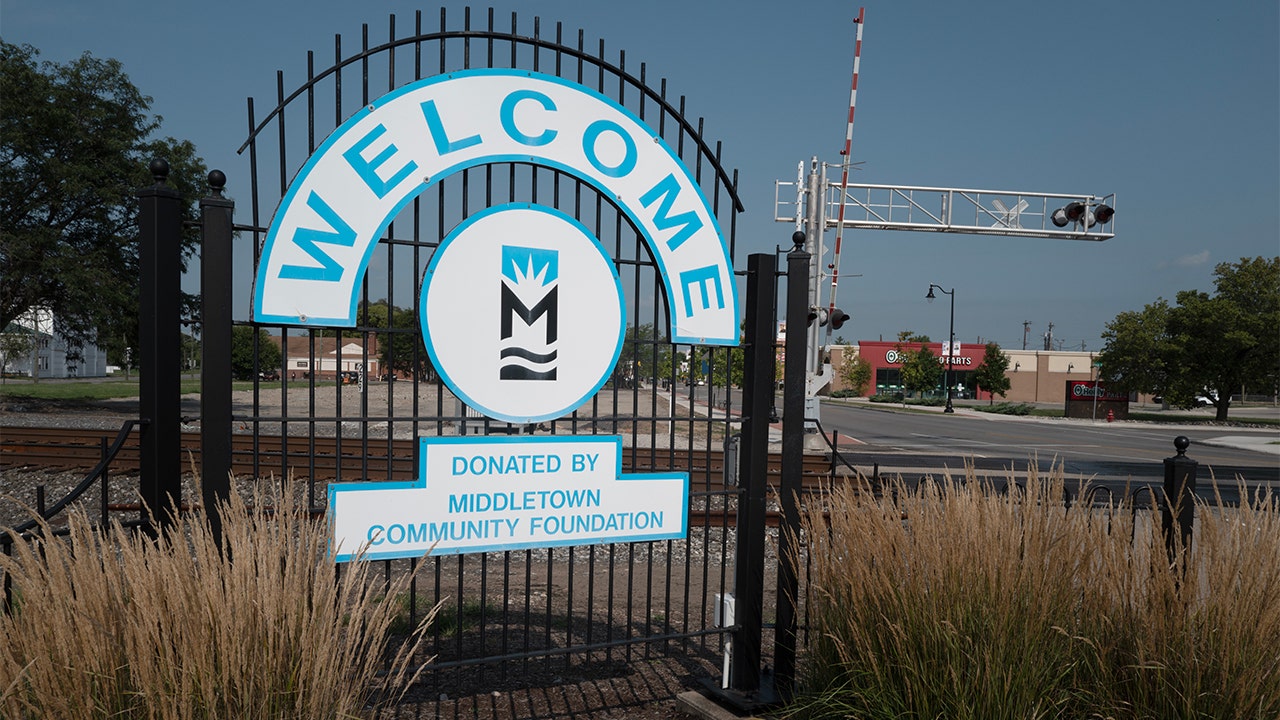
A welcome sign invites visitors to downtown Middletown, Ohio. (Scott Olson/Getty Images)

Both of my parents graduated from Middletown High School. My dad worked for four decades at ARMCO Steel, a major plant in Middletown. In “Hillbilly Elegy,” Vance writes about how the fate of Middletown was linked to ARMCO, now known as Cleveland-Cliffs. I spent countless hours visiting my maternal grandmother who lived in Middletown. Like Vance’s family, grandparents on both sides of my family migrated from eastern Kentucky to Middletown to work at ARMCO. 

Middletown was predominant in our lives.

We went to the doctor and dentist in Middletown. We shopped in Middletown. We attended church in Middletown. In 1976, I watched President Gerald Ford roll down Verity Parkway in an open-air convertible in Middletown.

As I grew older, I bought cassette tapes of Def Leppard and Iron Maiden in Middletown. We dined regularly at Frisch’s and a hamburger stand called The Jug in Middletown. I took a few classes at the Miami University (Ohio) branch in Middletown. I played basketball and soccer in Middletown. And I ran laps at the indoor track and swam at the YMCA there, too.

Advertisement

I still swing through Middletown to this day. I regularly buy a small cake or a box of smiley face cookies from the Central Pastry. I have never encountered another establishment which can rival the butter cream icing of the Central Pastry.

Vance worked as a cashier at Dillman’s, a local grocery store. Roger Dillman, who owned the store, sponsored me as a delegate to attend Buckeye Boys State. It’s a nationwide government politics program operated by the American Legion. 

Starting in junior high, I studied vocal performance under the legendary Helen Ramsdell in Middletown. She taught music from her stately home on Central Avenue. In addition to yours truly, Ramsdell famously taught the McGuire Sisters back in the 1930s. Look ‘em up, kids. 

Some of my most formative experiences unfolded in Middletown during my high school years.

The local arts organization ran a program called Summer Youth Theatre in Middletown. Students as young as 12 and as old as 18 could audition for a show, usually a musical. The performances often fell around the end of July or first of August at Middletown High School. In fact, if you examine some of the video from Vance’s rally last week at the school, you can spy the raised portion of the building which still serves as the auditorium.

Advertisement

At the time, Middletown High School had one of the best high school theater facilities in the state, a sprawling, wooden stage. It featured built-in footlights and an apron that jutted into a chasm that doubled as the orchestra pit. The backstage was spacious. It was deep enough to carry several layers of curtains, travelers and scrims. There was a set shop and a commodious makeup room, as well as two dressing rooms for the performers. 

My high school to the southwest of Middletown had none of those things. We had a “raised garage” in the “cafetorium.” So, performing at Middletown each summer was a thrill. I acted in “Oklahoma!,” “South Pacific,” “Gypsy,” “Li’l Abner,” “Bye-Bye Birdie” and “George M!” It was great fun. Plus, you got to meet and hang out with kids from other schools.

VARIETY’S FILM CRITIC WRITES ‘HILLBILLY ELEGY’ FILM ‘MAY HAVE CREATED A MONSTER’ LEGITIMIZING JD VANCE

Buildings in downtown Middletown, Ohio (Scott Olson/Getty Images)

After rehearsal each night, many of us would drive down Briel Boulevard in Middletown to find something to eat. It’s doubtful that any thoroughfare in America could boast of such a dense concentration of fast-food joints and other eateries: Burger King, Long John Silvers, Friendly’s, Famous Recipe Fried Chicken, Rax Roast Beef, McDonald’s, Wendy’s, White Castle, Pizza Hut, Captain D’s. There was an Arby’s around the corner along with a local pizza place called Cassano’s. If we were out really late, a few of us might head to Milton’s Donuts. Milton’s stayed open all night. 

Advertisement

As kids do, we’d talk about our aspirations, our hopes and our dreams. But for most of us, we were going to leave Middletown to make it big in theater, or music or movies. These dreams were all fueled by an ice cold Coca-Cola and a bacon double cheeseburger from Burger King. 

Even though I spent a lot of time in Middletown, I always considered my visits as “going into town.” After all, we were from the country. 

In fact, Middletown was a place I looked up to at the time. It wasn’t Cincinnati or Dayton or New York or Chicago. But it seemed more sophisticated than the country landscape where I lived. Middletown had a vibrant arts scene. There was an art gallery and regular classical music performances. There was a “grown-up” theater troupe and several movie theaters. 

The houses seemed nicer in Middletown. Many of the students seemed a little better off. Their parents might have worked at ARMCO. But maybe they were employed on the corporate side of things. They weren’t blue-collar workers like my dad.

It always seemed like there was more to do in Middletown than out where we lived. 

Advertisement

But something was afoot in Middletown that I didn’t realize at the time.

Middletown was a “company town” because of ARMCO, but ARMCO began bleeding cash in the 1980s. The recession of the time hurt American steel manufacturers. The influx of foreign cars into the U.S. market exacerbated things, just like the “dumping” of cheaper steel into the American market from abroad. 

ARMCO slashed jobs. Kawasaki purchased ARMCO, forming a new firm named AK Steel. It temporarily shifted the headquarters from the vaunted “Central Offices” in Middletown to Pennsylvania. There was a brief lockout at ARMCO in 1987. There was nearly a strike in 1990.

I always parachuted into Middletown when I would come home from Washington. Sometimes, just to catch up with friends or go grab a meal. But things were evolving.

Eventually, people moved out of Middletown. They may not have moved to Washington, D.C., like me, but they left for bigger cities like Cincinnati or Columbus. AK Steel remained in business. Middletown didn’t become Youngstown or East Chicago. But the place wasn’t quite what it was decades ago. The global economy evolved, thanks to outsourcing and congressional adoption of the North American Free Trade Agreement (NAFTA).

Advertisement

This is what makes Middletown an American story. 

I really noticed changes in Middletown after the financial crisis of 2008. The streets were ruddy and worn. A mall on the eastern side of the city near I-75 struggled. Shops were boarded up. The population dipped slightly. There were always pockets of poverty in Middletown. But – like much of the U.S. – the hardship was now more pronounced. The city looked destitute. Meth use skyrocketed. Homelessness, which one rarely saw before, was now obvious in downtown Middletown. There was even prostitution.

In the late summer of 2008, the presidential campaign of the late Sen. John McCain, R-Ariz., flew former Republican Alaska Gov. Sarah Palin into Middletown’s Hook Field under cover of darkness. Palin was a surprise pick to be McCain’s running mate. McCain planned to roll out Palin at a rally in nearby Dayton the next day. Bringing Palin into unsuspecting Middletown helped the campaign keep its pick under wraps.

The campaign put up Palin and her family at what had been the posh Manchester Motor Inn in downtown Middletown. JFK even stayed at the Manchester when he campaigned in Ohio for President in 1960. But the Manchester was a shadow of itself. It had threadbare carpet and ancient fixtures in the bathrooms. Palin’s daughter, Bristol, ripped the Manchester’s ramshackle state in her 2011 book. 

TRUMP RUNNING MATE JD VANCE: INSIDE HIS HOLLYWOOD CONNECTION

Advertisement

Houses on McKinley Street in Middletown, Ohio. (Scott Olson/Getty Images)

“The raggedy old hotel had dated furniture, small rooms, ugly pink walls, and an abundant supply of cockroaches,” wrote the younger Palin. “I’d never even seen a cockroach before. Reporters might not think Wasilla is the prettiest town in the world, but at least we don’t have roaches.”

And Bristol Palin didn’t even get the name of the town right. She dished about “Middleton,” not Middletown.

But like many places in America, Middletown rallied from the 2008 economic calamity. While major banks that occupied three of four corners in downtown Middletown closed, Cincinnati State opened a branch campus in the old Cincinnati, Gas & Electric building. That fueled a mini-wave of a few coffee shops and restaurants downtown. There’s even an Italian steakhouse now. They paved the streets. 

“Middletown Dreams” is a mid-80s track by the Canadian rock band Rush. Late Rush drummer and lyricist Neil Peart said he chose that title “because there is a Middletown in almost every state in the U.S. It comes from people identifying with a strong sense of neighborhood.”

Advertisement

One lyric goes like this:

“Dreams transport the ones / Who need to get out of town…”

One can certainly appreciate that sentiment considering the portrait of Middletown painted by Vance in “Hillbilly Elegy.”

But Rush’s song ends with this:

“And life’s not unpleasant / In their little neighborhood / They dream in Middletown.”

Advertisement

Middletown may be a place of nightmares to some, but it’s also a place of dreams. Think of all the people from eastern Kentucky who migrated to Middletown to work at ARMCO.

They had dreams — dreams of a better life and better wages. Middletown certainly fueled my dreams. I suspect they did the same for JD Vance, too. 

And dreaming in Middletown — all of the Middletowns — is a very American story.

Advertisement

Read the full article from Here

Continue Reading
Click to comment

Leave a Reply

Your email address will not be published. Required fields are marked *

This site uses Akismet to reduce spam. Learn how your comment data is processed.

Detroit, MI

A New Day for Detroit’s Dakota Inn – Hour Detroit Magazine

Published

on

A New Day for Detroit’s Dakota Inn – Hour Detroit Magazine


Photo Courtesy of the Dakota Inn

For generations of Detroiters, the Dakota Inn Rathskeller has been more than a bar—it’s been a ritual. A place where communal tables, steins raised high, and the familiar sound of German folk songs have created a sense of belonging that transcends time. Now, as the city continues its cultural resurgence, the Dakota Inn is entering a bold new chapter—one that honors its storied past while opening the doors to an entirely new kind of experience.

This summer, the transformation is unmistakable.

At the heart of the revival is a sprawling outdoor Biergarten—an ambitious expansion that reimagines the Dakota Inn as both a neighborhood anchor and a destination venue. Designed to evoke the charm of traditional European beer gardens while embracing Detroit’s gritty, creative energy, the space invites guests to linger. Long wooden tables stretch beneath open skies, string lights glow into the evening, and the hum of conversation blends with live music and clinking glasses. It’s communal, celebratory, and distinctly Detroit.

But the evolution doesn’t stop with beer.

The Dakota Inn is broadening its cultural reach with a thoughtfully curated lineup of events that extend far beyond its traditional roots. Jazz & Film Nights promise to turn warm evenings into immersive experiences, pairing live performances with classic and contemporary cinema. The concept feels both nostalgic and fresh—an echo of Detroit’s rich musical heritage layered with a modern, cinematic sensibility.

Photo Courtesy of the Dakota Inn

Wine tastings, too, are joining the calendar, signaling a more expansive approach to hospitality. These events aim to attract a wider audience while maintaining the venue’s approachable, convivial spirit. Whether you’re a seasoned enthusiast or simply curious, the goal is the same: bring people together around shared experiences.

And then there’s soccer.

With World Cup excitement on the horizon, the Dakota Inn is positioning itself as one of the city’s premier gathering spots for international watch parties. The Biergarten will come alive with fans from all backgrounds, united by the universal language of the game. Large screens, cold drinks, and a festival-like atmosphere will transform match days into something closer to a civic celebration than a simple viewing.

Advertisement

What makes this moment particularly compelling is the balance being struck. The Dakota Inn isn’t abandoning its identity—it’s expanding it. The familiar sing-alongs, the old-world décor, the sense of history etched into the walls—all of that remains. But now, it exists alongside new programming that reflects the diversity and dynamism of Detroit itself.

Photo Courtesy of the Dakota Inn

This is not a reinvention for reinvention’s sake. It’s a thoughtful evolution, rooted in the belief that historic spaces can—and should—adapt to the communities they serve.

On any given summer night, you might find a table of old friends singing a German drinking song, a couple discovering the space for the first time over a glass of wine, or a crowd gathered around a screen, erupting in cheers as a goal is scored thousands of miles away. Different scenes, different energies—but all part of the same story.

A new day has arrived at the Dakota Inn Rathskeller, and if this summer is any indication, its next chapter may be its most vibrant yet.

The Dakota Inn

17324 John R St, Detroit, MI 48203

(313) 867-9722

Advertisement


Source link

Continue Reading

Milwaukee, WI

1st Costco in Milwaukee County; plans to break ground in Franklin this week

Published

on

1st Costco in Milwaukee County; plans to break ground in Franklin this week


Costco is set to break ground on its first Milwaukee County location this week. The store will be located at 27th and Drexel in Franklin. 

“This has been a long and exciting planning process, and I know many people in Franklin are happy to hear this news,” said Franklin Mayor John Nelson. “I want to thank the Costco team for choosing our community to build its first store in Milwaukee County.”

Advertisement

The 164,000-square-foot facility will be built on more than 20 acres of land at South 27th Street and West Drexel Avenue — a site Northwestern Mutual used as its Franklin campus.

FREE DOWNLOAD: Get breaking news alerts in the FOX LOCAL Mobile app for iOS or Android

Advertisement

The facility will feature a 12-pump gas station at the south end of the development and 868 parking spaces. 

The store is set to open in November 2026. 

Costco stores

Advertisement

What we know:

Costco currently has several stores surrounding Milwaukee County, but none within its borders. The Franklin store will be the company’s first in the county.

The Source: The information in this post was provided by the City of Franklin. 

Advertisement

BusinessFranklinNews


Source link

Continue Reading

Minneapolis, MN

Minneapolis immigrants still feeling the sting of Trump’s largest crackdown yet

Published

on

Minneapolis immigrants still feeling the sting of Trump’s largest crackdown yet


R, a day laborer from Ecuador who cleans houses for a living, waits for work outside a Home Depot in the Twin Cities, Minn. Although she has returned to work following Operation Metro Surge, R has seen both a decline in work opportunities as well as a decrease in hourly wages being offered.

Tim Evans for NPR


hide caption

Advertisement

toggle caption

Tim Evans for NPR

MINNEAPOLIS — Three months ago, masked ICE agents in unmarked vehicles descended on the Twin Cities as part of Operation Metro Surge, the Trump administration’s largest and most aggressive crackdown yet of immigrants.

The agents arrested thousands of undocumented immigrants, in what the Border Patrol commander then in charge there, Gregory Bovino, called a “turn and burn” strategy. Agents also threatened journalists and activists documenting the arrests, and shot and killed two U.S. citizens — Renee Good and Alex Pretti.

Advertisement

Back then, community members, fed up with the presence of ICE agents in their city, took to street corners across the city with whistles around their necks, ready to alert their neighbors of the presence of federal immigration agents. Neighborhoods created a network of volunteers who drove migrants to work, doctors’ appointments and brought people food who were too afraid to leave their homes.

Today Minneapolis looks different. The crackdown has receded, and arrests of immigrants have dropped 12%. Commander Bovino was forced to retire, and the neighborhood watches that tracked ICE SUVs are no longer as active. But the surge left a mark that enforcement statistics can’t capture, including a hollowed-out local economy that immigrants and their neighbors say they are struggling to rebuild.

A sign reading “A person was stolen from us by ICE here” hangs from a utility pole at Powderhorn Park in the wake of Operation Metro Surge in Minneapolis, Minn. on April 10, 2026.

A sign reading “A person was stolen from us by ICE here” hangs from a utility pole at Powderhorn Park in the wake of Operation Metro Surge in Minneapolis, Minn. on April 10, 2026.

Tim Evans for NPR


hide caption

Advertisement

toggle caption

Tim Evans for NPR

Mourners visit the memorial site for Alex Pretti, who was shot and killed by federal agents in January during Operation Metro Surge, in Minneapolis, Minn. on April 24, 2026.

Mourners visit the memorial site for Alex Pretti, who was shot and killed by federal agents in January during Operation Metro Surge, in Minneapolis, Minn. on April 24, 2026.

Tim Evans for NPR


hide caption

Advertisement

toggle caption

Tim Evans for NPR

“We were left traumatized,” said Y, a woman who asked NPR to identify her by her middle initial because she worries speaking out will affect her ongoing immigration case.

Advertisement

NPR talked to nine immigrants about how Operation Metro Surge upended their lives and how they’re adapting today.

Together, their stories map what the crackdown left behind: shuttered restaurants, households rationing groceries, mounting debt, mental health woes, and and, for some, a serious reckoning with whether to leave the United States to return to their home countries.

The seamstress

On the evening of January 13th, Y was headed home from one of her two jobs as a seamstress.

Life was going well and the prospects were bright: she had recently bought a house, and talked to her daughter about the prospect of sending her to college.

In the blink of an eye everything changed. Y said she was surrounded by unmarked vehicles while driving home from work. This was in the height of Operation Metro Surge, when streets were empty and masked ICE agents would drive around the city in unmarked cars and make random stops in the streets.

Advertisement

The immigration officers, she said, arrested her despite her showing them her work permit and documentation showing she had applied for a U visa, one given to victims of specific crimes.

The Ecuadoran spent a month being shuffled around multiple detention centers in the U.S. She said before being detained, she barely had debt.

But after being released from detention with an ankle monitor while her immigration case plays out, Y said things got bad.

Y, an Ecuadorean seamstress who was detained during Operation Metro Surge and sent to a detention facility in Texas despite having a work permit, sits for a portrait beside her daughter in Minneapolis, MN on April 23, 2026. Y’s month-long detention led to her losing one of her two jobs as well as amassing around $13,000 in debts related to legal fees, lost income, and travel costs, as she had to pay her own return expenses from Texas after being released.

Y, an Ecuadorean seamstress who was detained during Operation Metro Surge and sent to a detention facility in Texas despite having a work permit, sits for a portrait beside her daughter in Minneapolis, MN on April 23, 2026. Y’s month-long detention led to her losing one of her two jobs as well as amassing around $13,000 in debts related to legal fees, lost income, and travel costs, as she had to pay her own return expenses from Texas after being released.

Tim Evans for NPR


hide caption

Advertisement

toggle caption

Tim Evans for NPR

Y, an Ecuadorean seamstress who was detained during Operation Metro Surge and sent to a detention facility in Texas despite having a work permit, shows the ankle monitor she is required to wear at her home in Minneapolis, Minn. on April 23, 2026. Y’s month-long detention led to her losing one of her two jobs as well as amassing around $13,000 in debts related to legal fees, lost income, and travel costs, as she had to pay her own return expenses from Texas after being released.

Y, an Ecuadorean seamstress who was detained during Operation Metro Surge and sent to a detention facility in Texas despite having a work permit, shows the ankle monitor she is required to wear at her home in Minneapolis, Minn. on April 23, 2026. Y’s month-long detention led to her losing one of her two jobs as well as amassing around $13,000 in debts related to legal fees, lost income, and travel costs, as she had to pay her own return expenses from Texas after being released.

Tim Evans for NPR

Advertisement


hide caption

toggle caption

Tim Evans for NPR

Advertisement

With no weekly paycheck, and with mounting legal fees, her debt skyrocketed.

“It was hard to come out of detention and find so much debt,” Y said.

Y’s 18-year-old daughter asked friends and family to borrow $7,500 to post bond for her mom. The daughter also asked for help to pay for the mortgage of the house, and to pay for utilities. Y now owes more than $13,000 to friends and family members who pooled their money.

Y recently started working again, and is looking for a second job, or even a third one.

Before detention, Y was hoping to save enough money to help send her 18-year-old daughter to college. The daughter wants to be a veterinarian.

Advertisement

But now she worries college may be out of reach.

“My dream was to see my daughter in college — I used to tell her, ‘don’t worry, I have two jobs and I will figure a way for you to graduate from the university,’” Y said. “Now we have to find scholarships. It’s been hard.”

The day laborers

During Operation Metro Surge, the areas where day laborers used to gather to get jobs — including the Home Depot or the empty lot on Lake Street — were completely emptied.

People enter and exit a Home Depot in the Twin Cities, MN on April 22, 2026. Day laborers often seek work opportunities outside of home improvement retail outlets, with such locations becoming a common target of immigration enforcement operations.

People enter and exit a Home Depot in the Twin Cities, MN on April 22, 2026. Day laborers often seek work opportunities outside of home improvement retail outlets, with such locations becoming a common target of immigration enforcement operations.

Tim Evans for NPR


hide caption

Advertisement

toggle caption

Tim Evans for NPR

V, a day laborer from Ecuador who went into hiding and lost employment for weeks during Operation Metro Surge, waits for work along East Lake Street in Minneapolis, Minn. on April 22, 2026. Tim Evans for NPR

V, a day laborer from Ecuador who went into hiding and lost employment for weeks during Operation Metro Surge, waits for work along East Lake Street in Minneapolis, Minn. on April 22, 2026.

Tim Evans for NPR

Advertisement


hide caption

toggle caption

Tim Evans for NPR

Advertisement

But months after the operation ended, migrant workers have started to return for work.

V, an Ecuadorian man who asked NPR to identify him by the initial of his first name because he’s undocumented, said “everything changed” for day laborers.

He’s now behind on his rent, he said. Work has been slow and his hourly wage is down.

49-year-old R, another worker, used to get hired every day for work by camping out at the Home Depot lot. She told NPR she’d get paid anywhere from $20 to $25 per hour for cleaning offices and homes.

R, a day laborer from Ecuador who cleans houses for a living, waits for work outside a Home Depot in the Twin Cities, Minn. on April 22, 2026. Although she has returned to work following Operation Metro Surge, R has seen both a decline in work opportunities as well as a decrease in hourly wages being offered.

R, a day laborer from Ecuador who cleans houses for a living, waits for work outside a Home Depot in the Twin Cities, Minn. on April 22, 2026. Although she has returned to work following Operation Metro Surge, R has seen both a decline in work opportunities as well as a decrease in hourly wages being offered.

Tim Evans for NPR

Advertisement


hide caption

toggle caption

Tim Evans for NPR

Advertisement

A week ago she went back to work. These days when she gets hired, she’s getting offered $15 to $17 per hour.

“It’s like starting again from zero,” R said. She asked NPR to use her first initial because she’s undocumented.

“ICE destroyed our lives psychologically and physically,” she said.

The restaurant owners in the brink of closing 

The Hernandez family have owned the Mexican restaurant El Tejabal in Richfield, Minn., for nearly two decades. It is a staple in the community.

Owners Miguel Hernandez, Sr., and Rosa Zambrano said the surge in immigration agents created chaos in their restaurant: employees stopped coming, customers stopped eating in. They lost about 60% in sales.

Advertisement

“We won’t recover because those sales are not going to come back, and we still have to pay rent, and the cost of food has increased,” Zambrano said in Spanish.

Miguel Hernandez preps food at El Tejaban Mexican Grill, the family-run restaurant that he has owned with his wife Rosa Zambrano for nearly two decades, in Richfield, Minn. on April 22, 2026. The couple fears that they will need to close their restaurant when their current lease ends, as the business suffered dramatic revenue losses during Operation Metro Surge and has struggled to recover in the months since.

Miguel Hernandez preps food at El Tejaban Mexican Grill, the family-run restaurant that he has owned with his wife Rosa Zambrano for nearly two decades, in Richfield, Minn. on April 22, 2026. The couple fears that they will need to close their restaurant when their current lease ends, as the business suffered dramatic revenue losses during Operation Metro Surge and has struggled to recover in the months since.

Tim Evans for NPR


hide caption

toggle caption

Advertisement

Tim Evans for NPR

Miguel Hernandez reads an order slip at El Tejaban Mexican Grill on April 22, 2026; an employee preps food at El Tejaban.

Miguel Hernandez reads an order slip at El Tejaban Mexican Grill, the family-run restaurant that he has owned with his wife Rosa Zambrano for nearly two decades, in Richfield, Minn. on April 22, 2026;

Tim Evans for NPR


hide caption

Advertisement

toggle caption

Tim Evans for NPR

Rosa Zambrano discusses administrative details with her daughter Diana and an employee in the office at El Tejaban Mexican Grill, the family-run restaurant that she has owned with her husband Miguel Hernandez for nearly two decades, in Richfield, Minn. on April 22, 2026.

Rosa Zambrano discusses administrative details with her daughter Diana and an employee in the office at El Tejaban Mexican Grill, the family-run restaurant that she has owned with her husband Miguel Hernandez for nearly two decades, in Richfield, Minn. on April 22, 2026.

Tim Evans for NPR


hide caption

Advertisement

toggle caption

Tim Evans for NPR

The couple said they’ve decided to close in about two years, when their lease is up. They said they’ve crunched the numbers and realized there’s no chance for them to fully recover.

Advertisement

Both Zambrano and Hernandez Sr. are 60 years old and they were hoping to save some money for their retirement. That’s not possible anymore.

“We are not saving money to continue the business,” Zambrano said. “We are saving to pay rent.”

Daughter Dianna Hernandez, 27, works at the restaurant and during the surge she said she had to lock its doors because of the presence of ICE agents in the parking lot.

Rosa Zambrano, Dianna Hernandez, and Miguel Hernandez at El Tejaban Mexican Grill, in Richfield, Minn. Dianna's parents have owned the restaurant for nearly two decades.

Rosa Zambrano, Dianna Hernandez, and Miguel Hernandez at El Tejaban Mexican Grill, in Richfield, Minn. Dianna’s parents have owned the restaurant for nearly two decades.

Tim Evans for NPR


hide caption

Advertisement

toggle caption

Tim Evans for NPR

She doesn’t want to see the restaurant close — but she acknowledges Operation Metro Surge changed their lives, even though she and the rest of the family are U.S. citizens.

Advertisement

“This is where I grew up, this is all I know and to just think and hear them say we are going to close in two to three years, and the way it’s ending, I hate it for them,” she said.

The family who lost it all

Many people who talked to NPR have relied on their children, their community and their savings to continue to live. But others are facing economic ruin.

“The economic, emotional, traumatic impact of everything that we went through here in Minneapolis is going to be felt for years,” Myrka Zambrano, with the advocacy group Minnesota Immigrant Rights Action Committee, said.

A bill making its way through the Minnesota Legislature would create a $100 million relief program for small businesses impacted by the crackdown. But Zambrano said that’s not enough, especially when so many immigrants are struggling with other issues like food security and housing.

Pablo Alcaraz and María Peñalosa, a couple that has been living in the U.S. for more than 20 years, are struggling, too.

Advertisement
Husband and wife Pablo Alcaraz and Maria Peñalosa pose for a portrait outside their home in Inver Grove Heights, Minn. on April 22, 2026. The couple, who had to close their business Garibaldi Mexican Restaurant in West St. Paul after suffering dramatic revenue losses during Operation Metro Surge, have lost their only source of income.

Husband and wife Pablo Alcaraz and Maria Peñalosa pose for a portrait outside their home in Inver Grove Heights, Minn. on April 22, 2026. The couple, who had to close their business Garibaldi Mexican Restaurant in West St. Paul after suffering dramatic revenue losses during Operation Metro Surge, have lost their only source of income.

Tim Evans for NPR


hide caption

toggle caption

Tim Evans for NPR

Advertisement

The commercial space that was previously home to Garibaldi Mexican Restaurant sits empty in West St. Paul, Minn. on April 28, 2026. The restaurant, which was owned by Pablo Alcaraz and his wife Maria Peñalosa, had to close after suffering dramatic revenue losses during Operation Metro Surge.

The commercial space that was previously home to Garibaldi Mexican Restaurant sits empty in West St. Paul, Minn. on April 28, 2026. The restaurant, which was owned by Pablo Alcaraz and his wife Maria Peñalosa, had to close after suffering dramatic revenue losses during Operation Metro Surge.

Tim Evans for NPR


hide caption

toggle caption

Advertisement

Tim Evans for NPR

The couple have work permits and a U visa — a type of visa given to victims of specific crimes.

Their whole life they had worked towards one dream — to open a restaurant.

But now the nonstop hum of the industrial fridge inside their cluttered trailer is a reminder of what could have been.

Advertisement

“It’s so unfair that in a few months the government has ended the work of 20 years,” Peñalosa said. “They ended our dreams.”

Their restaurant, Garibaldi Mexican Restaurant, went out of business as a direct result of Operation Metro Surge.

Before Operation Metro Surge, the couple said they would make about $15,000 in monthly profit, on average.

During Operation Metro Surge, sales evaporated. There were many days, he says, when they made almost nothing in profit.

Now they are living on the frozen meat and other food from the restaurant, but Alcaraz said they are likely to run out in a month.

Advertisement

“Once we run out of it, that’s when the problems will start,” he said.

Pablo Alcaraz becomes emotional as he and his wife Maria Peñalosa discuss the closure of their restaurant at their home in Inver Grove Heights, MN on April 22, 2026. The couple, who had to close Garibaldi Mexican Restaurant in West St. Paul after suffering dramatic revenue losses during Operation Metro Surge, have lost their only source of income.

Pablo Alcaraz becomes emotional as he and his wife Maria Peñalosa discuss the closure of their restaurant at their home in Inver Grove Heights, MN on April 22, 2026. The couple, who had to close Garibaldi Mexican Restaurant in West St. Paul after suffering dramatic revenue losses during Operation Metro Surge, have lost their only source of income.

Tim Evans for NPR


hide caption

toggle caption

Advertisement

Tim Evans for NPR

Peñalosa, the wife, said she worries about her husband’s mental health. He doesn’t want to leave his bed, and is depressed, she said.

Alcaraz recognizes he’s desperate. He said that because he had to close the restaurant and has some debt, he doesn’t know whether he’ll be able to open a new restaurant or another business.

“How am I going to move forward? I’m practically dead,” he said, with tears in his eyes. “I need a credit line to open a restaurant, to pay rent, to reopen. I don’t have it. They killed me.”

Advertisement

This story was supported by the journalism non-profit the Economic Hardship Reporting Project.


Source link

Continue Reading
Advertisement

Trending

