A new Gallup-Walton Family Foundation survey released Wednesday shows that nearly half of rural Generation Z Americans feel they can’t find fulfilling work in their communities and are considering moving.
Rural Gen-Zers are also nearly 20 percentage points more likely to feel that way than their urban brethren.
Urban young people also have a higher confidence in their ability to land crucial internships out of school, and parents of rural youths are similarly concerned about quality-of-life issues for their grown children and in their ability to accomplish their goals.
Forty-nine percent of Gen Zers believe they can find a worthy job at home. Thirty-eight percent say they’re confident in their internship searches.
LGBT AMERICANS REACH RECORD NUMBER, MORE LIKELY TO BE DEMOCRAT: POLL
Advertisement
The pressures of the contemporary occupational landscape are also leading 77% of Gen Z adults to seek to move away from their hometowns, if they are able.
But that feeling is met with countervailing sentiment against leaving home.
More than half of urban Gen Zers say they are comfortable relocating out of state or even outside the U.S., while about half in rural areas prefer to entertain moving to another place within their state, at most.
About two-fifths would consider moving out of state and only a few percent would think to leave the U.S. for a job.
“The desire to stay closer to home contrasts with those in urban areas who are more likely to say they would like to leave their state (54%), or even the country (15%),” the poll found.
Advertisement
“Career and education opportunities strongly influence young people’s decisions to relocate, but rural Gen Zers often face limited access compared to their urban peers,” said Stephanie Marken, senior partner for U.S. research at Gallup.
“Expanding access to job training, career opportunities and higher education in rural areas could help more young people stay connected to their communities while pursuing their goals.”
TRUMP’S SURPRISING NEW POLL NUMBERS
Only one-fifth of adult Gen Z Americans who have moved away from their home areas mentioned the ability to live financially comfortably.
Many, however, still love their hometowns despite a changing job landscape in recent years and decades.
Advertisement
The panel was conducted in November, the week of the presidential election.
Pollsters sampled 3,963 people ranging in age from 12 to 27 in all 50 states plus Washington, D.C.
They were randomly selected using an address-based methodology, but the polling firm also said it uses random-digit telephone dialing to cover both landlines and cellphones.
The margin of error was +/- 2.3 percentage points overall. A total of 382 respondents were in rural areas with a 7.3 percentage point margin, and 2,969 were from urban areas with a 2.7 percentage point margin of error.
Advertisement
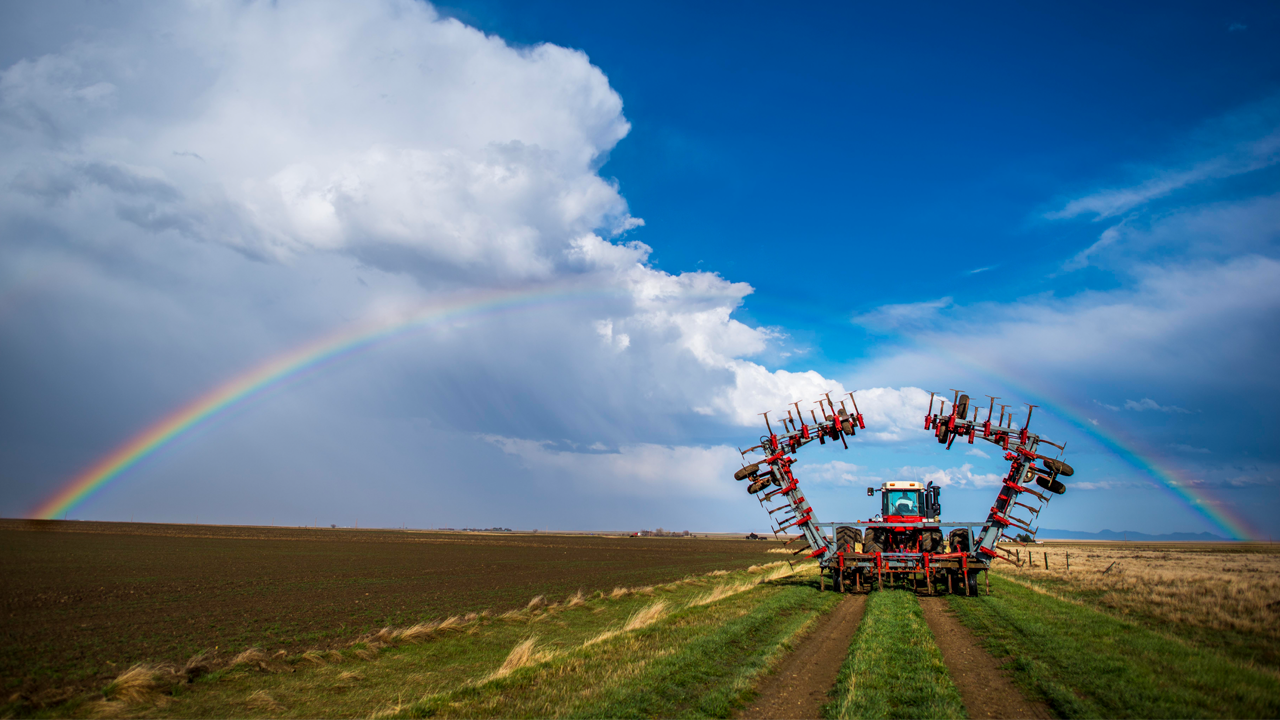
Between rainstorms, fifth-generation wheat farmer Sen. Jon Tester ends his day of cultivating on his 1,800-acre farm land in Big Sandy, Mont.(Melina Mara/Washington Post via Getty)
Despite facing fewer job and education opportunities, rural Gen Zers remain deeply connected to their communities, with their desire to move only slightly numerically higher than their urban peers (82% vs. 78%).
The co-leader of the poll, the Walton Family Foundation, was launched by late Walmart founder Samuel Walton and his wife, Helen.
The foundation seeks to improve the U.S. education system, communities and waterways, particularly in northwest Arkansas, where the family and mega-store chain are both based.
Advertisement
Charles Creitz is a reporter for Fox News Digital.
He joined Fox News in 2013 as a writer and production assistant.
Charles covers media, politics and culture for Fox News Digital.
Charles is a Pennsylvania native and graduated from Temple University with a B.A. in Broadcast Journalism. Story tips can be sent to charles.creitz@fox.com.
The Nebraska Department of Revenue, Property Assessment Division (DOR), reminds property owners that the Nebraska Homestead Exemption Application, Form 458, and all required forms and documentation must be filed with their county assessor on or before June 30, 2026.
The homestead exemption provides relief from property taxes by exempting all or a portion of the taxable value of the residence.
The State of Nebraska reimburses counties and other governmental subdivisions for the property taxes lost due to homestead exemptions.
Advertisement
In Nebraska, a homestead exemption is available to the following categories of property owners:
Persons age 65 or older before January 1, 2026;
Qualified disabled individuals; or
Qualified disabled veterans and their surviving spouses.
Some categories are subject to household income and residence valuation limitations. The income limitations are on a sliding scale based on filing status and homestead exemption category.
Homestead exemption forms and information are available at revenue.nebraska.gov/PAD/homestead-exemption. For more information on the homestead exemption program, please contact your county assessor or DOR at 888-475-5101.
Theodore Roosevelt consistently ranks among the nation’s top five most popular presidents. On this upcoming July 4 holiday, 107 years after his death, T.R. is finally getting his own presidential library – but it’s not where you might think. That library is rising out of the prairie grass in the North Dakota Badlands – a 96,000-square-foot tribute to our 26th president.
It’s as grand as his likeness on Mt. Rushmore, except a lot more subtle, and that’s by design, says architect Craig Dykers. “Nature is transformative here,” he said. “It transformed Theodore Roosevelt, and it will transform new visitors to this library.”
The Theodore Roosevelt Presidential Library under construction in the Badlands of North Dakota.
Advertisement
CBS News
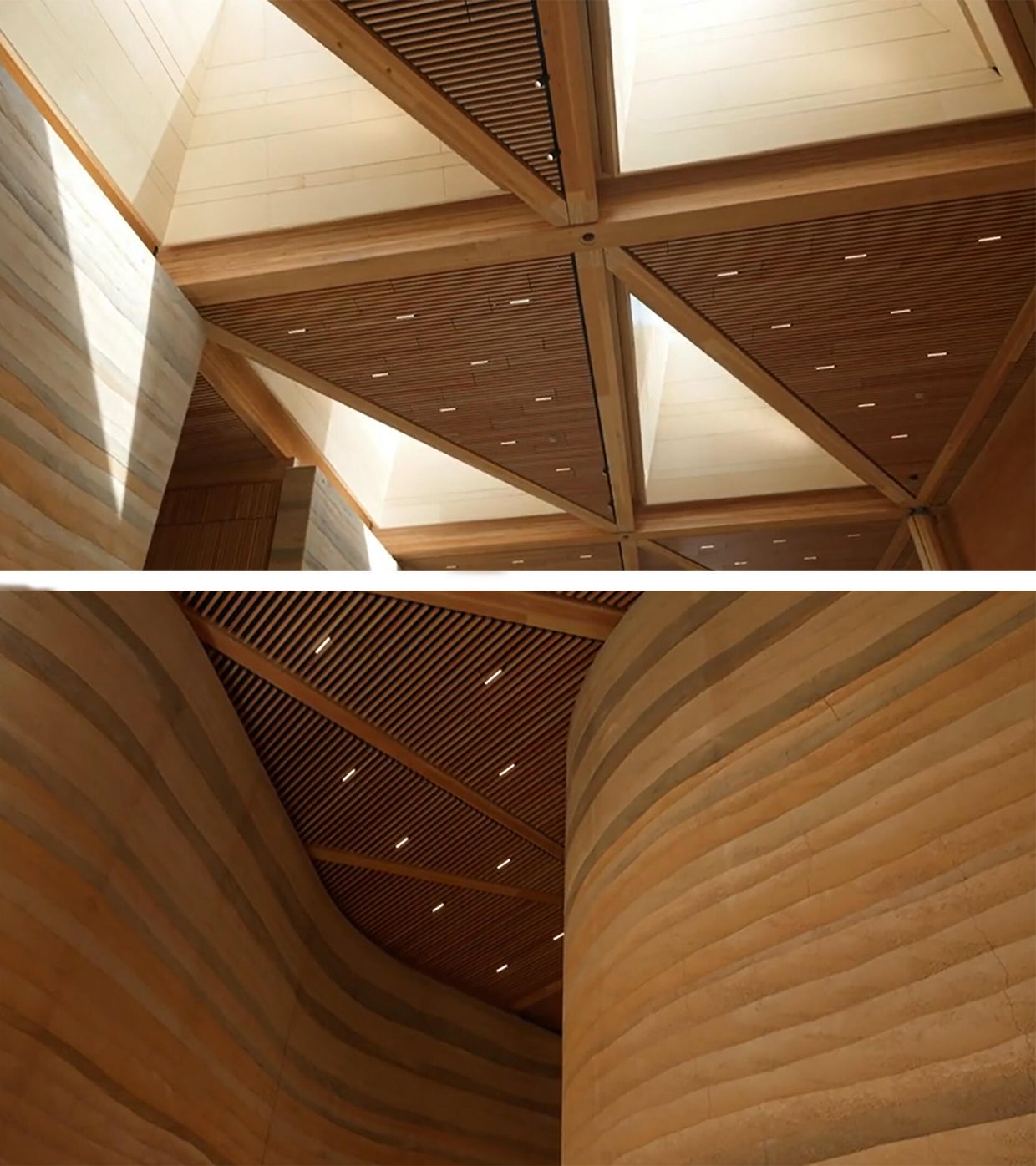
Its gently sloping roof mimics the surrounding buttes, covered in native grasses and walking paths – yes, walking paths on the roof. The hope is they’ll get visitors up and out for a commanding view of Theodore Roosevelt National Park right next door.
“We wanted something that just felt primitive,” said Dykers. “And so, this form emerging from the Earth, it felt like it just arrived from the Earth.”‘ Dykers said.
Inside, a string of skylights will provide almost all the natural illumination the library would ever need, held up by walls made solely of compressed earth.
The interior design of the skylights and earthen walls of the Theodore Roosevelt Presidential Library.
Advertisement
CBS News
Everywhere we looked during our privileged sneak-peek back in March, it was hard to tell where nature ended and the library began. Its $450 million price tag is the biggest thing the small town of Medora, North Dakota, has ever experienced.
If you’re wondering why T.R.’s library is way out here instead of his native New York, it’s because were it not for his experiences way out here, Roosevelt said, he never would have been president.
Simon & Schuster
Advertisement
Edward O’Keefe, CEO of the library, and author of the recent book “The Loves of Theodore Roosevelt: The Women Who Created a President” (Simon & Schuster), said, “Theodore Roosevelt grew up as a sickly, asthmatic child who lived his life through books and imagination. So here he is, 24 years old, on the plains and Badlands of North Dakota, and he’s living the life he only read about in books.”
But the reason he took up residence in the Badlands is hardly a happy one, said O’Keefe: “He was a broken man, in a broken land, and nature was his healer.”
In a tragic twist, Teddy Roosevelt’s mother, Mittie, and his young wife, Alice, both died in the same house, on the same day: Valentine’s Day 1884. “The light has gone out of my life,” Roosevelt wrote in his diary – the date marked by a bold X.
“At the funeral of his wife and mother – it was a double funeral – he was so desolate and so depressed, that they were concerned for his own safety,” said O’Keefe.
Advertisement
After settling his affairs (which included asking his sister to raise his newborn daughter, Alice), he headed West, alone. He’d been to the Dakota Territory just a year prior to hunt a pair of bison – the two that still hang in Roosevelt’s Long Island home to this day.
Theodore Roosevelt during a visit to the Badlands of Dakota in the 1880s, after the death of his first wife.
Photo by T.W. Ingersoll/MPI/Getty Images
He dug in, and began living a kind of life many Dakota cowboys thought he wasn’t prepared to live. They were wrong.
Advertisement
O’Keefe said, “I think he had a ‘life wish.’ He realized that no matter how rich you are, no matter how privileged you are, that you don’t know what’s going to happen next. If you want to get something done in this world, if you want to love somebody, if you want to accomplish something, you gotta go.”
And it’s that kind of rugged, raw, and real intellectual journey that the library wants visitors not just to look at and to grasp, but experience. “Library and museum are the two worst descriptions of what the TR Library actually is,” said O’Keefe. “It’s a call to adventure.”
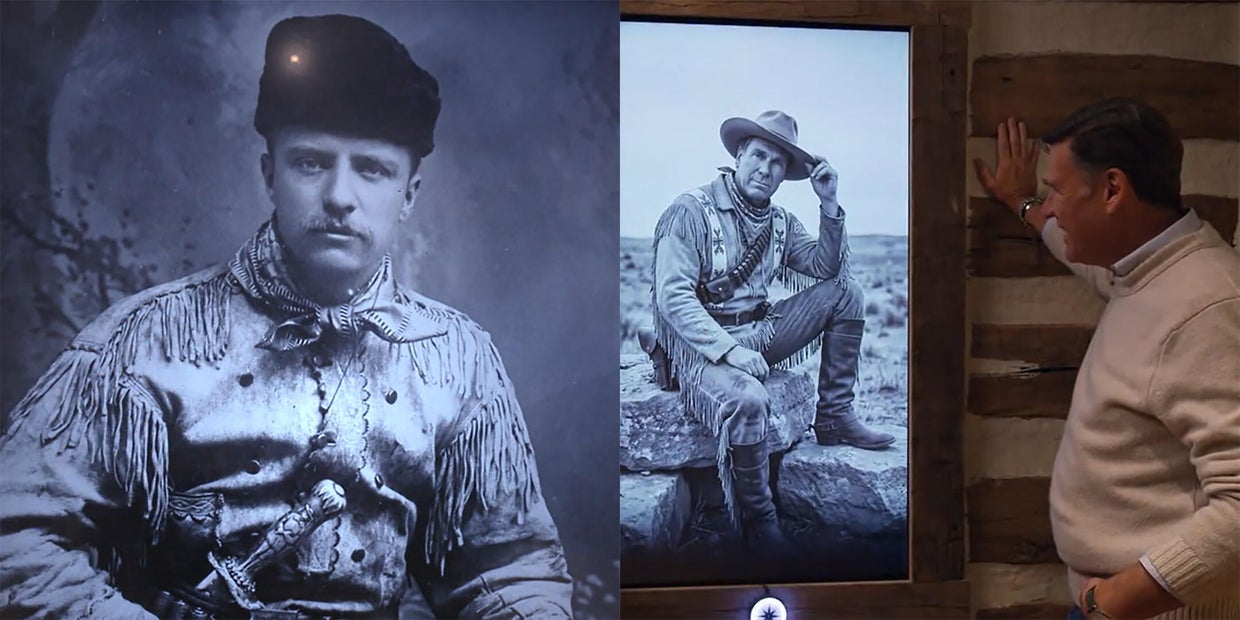
It’s the kind of place that couldn’t have been built even five years ago, because artificial intelligence is such a large part of it. For example, you don’t have to imagine what it’s like to be in T.R.’s boots; you can actually see it.
An exhibit at the Theodore Roosevelt Presidential Library used AI to illustrate how visitors might look in TR’s cowboy garb.
CBS News
Advertisement
O’Keefe said, “We have created the world’s first presidential archive in AI. Participants can come here to the TR Library, and have an in-person conversation with an avatar of T.R. You do not come unprepared for a conversation with Theodore Roosevelt; he will have none of it.”
It will be the only presidential library that will have hitching posts for your horse. You can take a nature walk on a mile-long path through the prairie. You can sit by a campfire and hear tall tales of life on the range, and step into his cabin at the Elkhorn Ranch.
But for all the fun, there’s a serious bent, too. He was a man of his times, and his times weren’t always flattering.
“I wasn’t interested in doing a legacy project for Theodore Roosevelt,” said T.R.’s great-great-grandson, Theodore Roosevelt V. “There’s plenty of things named after him, plenty of statues. But the idea of just sort of basking in the glow of somebody and saying ‘This is a great man, let’s all look at him,’ isn’t particularly compelling. Normally, presidential libraries – it’s the principal [reason], the president trying to cement the first chapter of his legacy. In this case, we’ve got a hundred years-plus to be able to look back at his legacy, to really understand what that legacy is, what the lasting impacts were. We get to face those issues head-on.”
Including Roosevelt’s racist views of indigenous peoples, whom he often referred to as savages.
Advertisement
“We had a land blessing out here with the five tribes,” said Roosevelt, “to bless the land and really bring them into the project, so that we were working with them and making sure that their voices were heard, and that we were representing things appropriately.”
The library has taken possession of a statue of Roosevelt that was removed in 2022 from outside the American Museum of Natural History in New York. Critics argued that the message of a White man elevated above both a Native American and an African symbolized racial superiority.
“We are here to preserve the life and legacy of Theodore Roosevelt,” said O’Keefe. “I think it’s important that we eventually do something that contextualizes it appropriately, but not at the opening.”
If the Theodore Roosevelt Presidential Library has any message, it’s that courage and strength often come from personal tragedy, mis-steps, mistakes, and misunderstandings. As he famously said, it’s being in the arena that counts. And that, more than anything, may be the hindsight the library has to offer.
“He does not like the critic,” said O’Keefe. “He does not like the person on the sidelines pointing out how the strong man stumbles, or where the doer of deeds could have done them better. He likes the person who tries and fails. That’s a powerful lesson for today. I want kids in particular to come in and understand that if you want to change something in this world, you have got to be the source of that change.”
Advertisement
For more info:
Story produced by Aria Shavelson. Editor: George Pozderec.
This year’s Preakness Stakes was advertised as the weak sister of the 2026 Triple Crown series. While Golden Tempo, Renegade, Commandment, and Chief Wallabee all took a hard pass on the middle jewel, they still ran the race at Laurel Park. The brunt of jokes before and after Napoleon Solo’s victory, the Preakness may yet enjoy the last laugh.
While Napoleon Solo and Iron Honor, the top two finishers from Maryland’s classic, will wait for the $1 million Haskell (G1) next month at Monmouth Park, Saturday’s $500,000 Ohio Derby (G3) attracted a solid field of 3-year-old males to Thistledown. Included in the group was a quartet coming straight out of the Preakness, led by Chip Honcho and Ocelli.
Advertisement
Bull by the Horns and Robusta were longshots off their results at Laurel and they ran like it in Ohio. Chip Honcho and Ocelli, on the other hand, were well supported on Saturday after running third and fourth in the Preakness.
After the pair put away the favored Desert Gate at the top of the stretch, they battled it out down the lane. In the end, it was Chip Honcho getting the better of his rival late to pull clear to a one-length score in the Ohio Derby. The Lexington Stakes (G3) winner Trendsetter was able to rally and get by the favorite for third, but this really was a two-horse race down the Thistledown stretch.
Trained by Steve Asmussen and ridden again by Jose Ortiz, Chip Honcho earned his second stakes win of his career, and his first of his sophomore season with the performance.
Before his solid third-place effort in the Preakness behind Napoleon Solo and Iron Honor, the son of Connect had run several good efforts in New Orleans, including a win in the Gun Runner and a strong second-place performance behind Paladin and ahead of the Kentucky Derby and Belmont Stakes hero Golden Tempo in the Risen Star (G2).
Advertisement
Despite his solid racing at Fair Grounds the decision was made to skip the Kentucky Derby with Chip Honcho and point for the Preakness instead. That decision already seems to be paying dividends.
On Saturday, he was steadied just a bit heading into the first turn but had already been asked to keep off the early lead set by Robusta. His ability to stalk from just off the pace in his last two races has seemingly made him a better and more dangerous horse.
When Ocelli rolled by him on the turn, he had to come up with a strong stretch drive to win and he did just that. Other than the Louisiana Derby, where he was hung out to dry a little bit early and faded to fifth, Chip Honcho has run nothing but good races in his career and looks to continue to be a player in the division as we move into the second half of the season.
As for Ocelli, I must admit that he was the one I was pulling for in the Ohio Derby. Also a son of the Curlin stallion Connect, he is a horse that I find it impossible not to root for.
After Saturday’s strong run for second, Ocelli has now run nine times in his career and remains winless. Sent off as the third choice in the Ohio Derby behind Desert Gate and Chip Honcho, the maiden once again ran a big race in defeat.
Advertisement
After displaying some rallying talent in his first three career starts, it has been a steady diet of stakes races and tough competition for the Whit Beckman-trained runner.
Even in the Sam F. Davis, won by Renegade, and the Virginia Derby, won by Incredibolt, Ocelli made his move from behind, but in both races, he was too immature to handle any adversity, and he backed out down the lane.
Undeterred, his connections were willing to keep trying. A solid rally to be third in the Wood Memorial (G2) was enough to get him into the Run for the Roses and his connections took full advantage. He actually briefly led in the stretch run of the Kentucky Derby, before finishing third as the longest shot on the board.
No horse was able to make up much ground in the Preakness, but Ocelli was the best of the late-runners, checking in 4th of 14. In the first two legs of the Triple Crown, the maiden finished ahead of all but 5 of the 30 horses he faced.
In the Ohio Derby, he had a wide trip and came with his patented rally under rider Tyler Gaffalione but could not hold off Chip Honcho in an exciting battle.
Advertisement
Despite still being winless in nine career starts, Ocelli has amassed $829,800. Not bad for a maiden, and not bad for a horse that was originally purchased for $12,000 as a yearling.
I cannot recall a maiden ever reaching the $1 million mark in earnings. I believe Ocelli has a chance to be the first. With a demanding schedule and a consistent far turn rally, it has been fun to watch the ride.
Chip Honcho and Ocelli, coming out of good efforts at Laurel Park, absolutely dominated Saturday’s Ohio Derby. Maybe we should start taking a more positive view of the 2026 Preakness Stakes.