Midwest
Missouri woman Sandra Hemme who spent 43 years in prison freed after murder conviction overturned

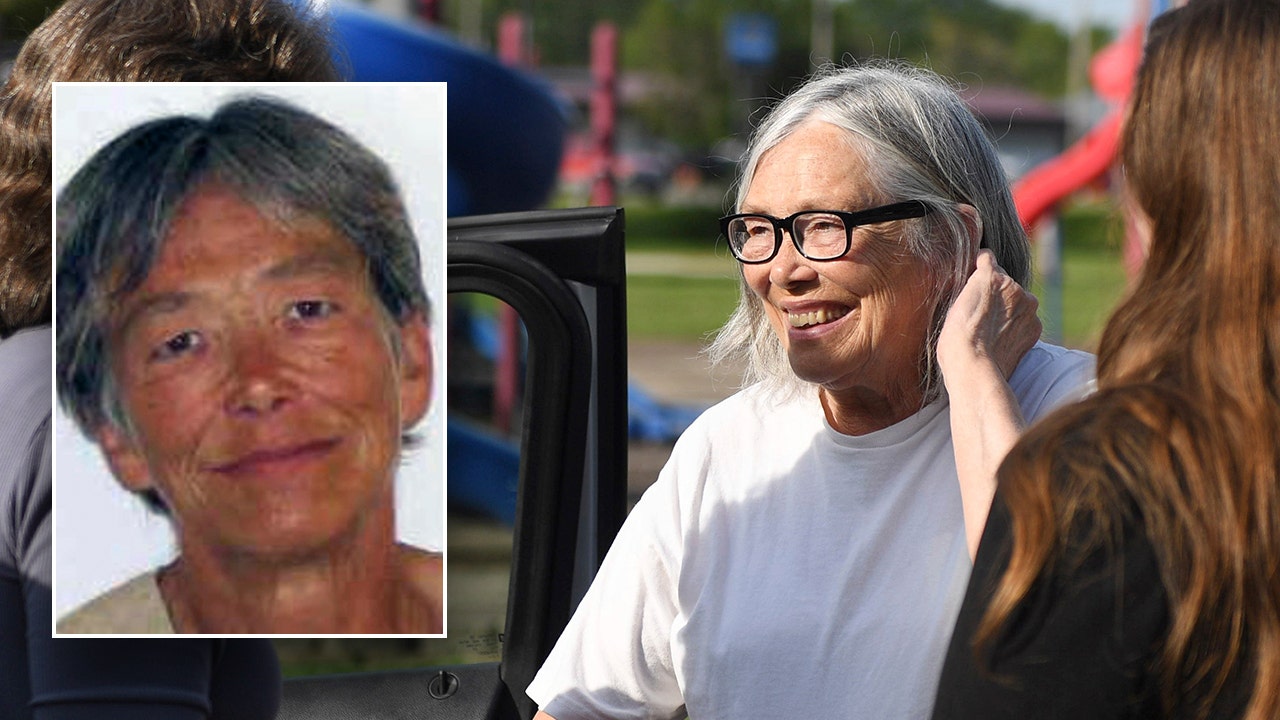
A Missouri woman who spent 43 years in prison after incriminating herself in a 1980 murder while she was a psychiatric patient has been freed from prison despite attempts in the last month by Missouri’s attorney general to keep her behind bars.
Sandra Hemme, 64, was the longest held wrongly incarcerated woman known in the U.S., according to her legal team at the Innocence Project, after she was found guilty of killing 31-year-old library worker Patricia Jeschke more than 40 years ago.
But a judge overturned the conviction last month, agreeing that her lawyers had established evidence of her innocence and that a former police officer was the likely killer.
JUDGE OVERTURNS MURDER CONVICTION OF MISSOURI WOMAN WHO SPENT MORE THAN 40 YEARS IN PRISON
Missouri woman Sandra Hemme, who spent 43 years in prison after incriminating herself in a 1980 murder while she was a psychiatric patient, has been freed from prison. (Main image, HG Biggs/The Kansas City Star via AP, inset via Missouri Department of Corrections/AP )
Hemme left a prison in Chillicothe on Friday and was embraced by family and supporters at a nearby park. She hugged her sister, daughter and granddaughter.
“You were just a baby when your mom sent me a picture of you,” a smiling Hemme said to her granddaughter. “You looked just like your mamma when you were little and you still look like her.”
Her granddaughter laughed and said, “I get that a lot.”
Hemme declined to speak to reporters immediately after her release, which came despite Attorney General Andrew Bailey, a Republican, fighting her release in the courts. Bailey had argued that Hemme represents a safety risk to herself and others.
Hemme received a 10-year sentence in 1996 for attacking a prison worker with a razor blade, and a two-year sentence in 1984 for “offering to commit violence”, with Bailey arguing that Hemme should start serving those sentences now.
During a court hearing Friday, Judge Ryan Horsman threatened to hold the attorney general’s office in contempt and said that if Hemme wasn’t released within hours, Bailey himself would have to appear in court Tuesday morning.
The judge also scolded Bailey’s office for calling the warden and telling prison officials not to release Hemme after he ordered her to be freed on her own recognizance.
Hemme’s attorney, Sean O’Brien, criticized the delay of her release.
The Chillicothe Correctional Center in Chillicothe, Mo., is seen on Thursday, July 18, 2024. Missouri woman Sandra Hemme was released from the facility Friday. (Heather Hollingsworth)
“It was too easy to convict an innocent person and way harder than it should have been to get her out, even to the point of court orders being ignored,” O’Brien said. “It shouldn’t be this hard to free an innocent person.”
When Hemme was initially questioned about Jeschke’s death, her lawyers say she was shackled in wrist restraints and so heavily sedated to the point that she “could not hold her head up straight” or “articulate anything beyond monosyllabic responses.”
The lawyers said in a petition seeking Hemme’s exoneration previously that authorities ignored her “wildly contradictory” statements and suppressed evidence implicating then-police officer Michael Holman, who attempted to use Jeschke’s card. Holman died in 2015.
CONDEMNED MISSOURI INMATE IS ‘ACCEPTING HIS FATE,’ HIS SPIRITUAL ADVISER SAYS
The judge wrote that “no evidence whatsoever outside of Ms. Hemme’s unreliable statements connects her to the crime.”
“In contrast, this Court finds that the evidence directly ties Holman to this crime and murder scene,” the judge wrote.
On Nov. 13, 1980, Jeschke missed work and her concerned mother climbed through a window in her apartment and discovered her nude body on the floor in a pool of blood. Jeschke’s hands were tied behind her back with a telephone cord, a pair of pantyhose was wrapped around her throat and a knife was under her head.
Hemme was not being investigated in connection with the killing until she showed up nearly two weeks later carrying a knife at the home of a nurse who once treated her and refused to leave.
Police located Hemme in a closet and transported her back to St. Joseph’s Hospital. She had been hospitalized several times starting when she began hearing voices at the age of 12.
Hemme had been discharged from that same hospital the day before Jeschke’s body was found, and arrived at her parents’ house later that night after hitchhiking more than 100 miles across the state. The timing seemed suspicious to law enforcement, and Hemme was subsequently questioned.
Hemme was being treated with antipsychotic drugs that had triggered involuntary muscle spasms when she was first questioned. She complained that her eyes were rolling back in her head, according to her lawyers’ petition.
Detectives said Hemme appeared “mentally confused” and not fully able to understand their questions.
“Each time the police extracted a statement from Ms. Hemme it changed dramatically from the last, often incorporating explanations of facts the police had just recently uncovered,” her attorneys wrote in the petition.
Hemme eventually purported that she witnessed a man named Joseph Wabski kill Jeschke.
Wabski, whom Hemme met when they both stayed in the state hospital’s detoxification unit, was initially charged with capital murder before prosecutors quickly learned he was at an alcohol treatment center in Topeka, Kansas, at the time and dropped the charges against him.
After learning Wabski was not the killer, Hemme cried and claimed she was the killer.
Police were also starting to look at Holman as a suspect. About a month after the killing, Holman was arrested for falsely reporting his pickup truck was stolen and collecting an insurance payout. The same truck was seen near the crime scene and Holman’s alibi, in which he claimed to have spent the night with a woman at a nearby motel, could not be confirmed.
Holman, who was ultimately fired and has since died, had also attempted to use Jeschke’s credit card at a camera store in Kansas City, Missouri, on the same day her body was discovered. Holman claimed he found the credit card in a purse that had been left in a ditch.
Sandra Remme meets her granddaughter after her release
During a search of Holman’s home, police found a pair of gold horseshoe-shaped earrings in a closet, which Jeschke’s father said he recognized as a pair he bought for her. Police also found jewelry stolen from another woman during a burglary earlier that year.
The four-day investigation into Holman then ended abruptly, and Hemme’s attorneys said they were never provided many of the details uncovered.
Hemme wrote to her parents on Christmas Day in 1980, saying she might as well change her plea to guilty.
“Even though I’m innocent, they want to put someone away, so they can say the case is solved,” Hemme wrote.
“Just let it end,” she added. “I’m tired.”
The following spring, Hemme agreed to plead guilty to capital murder in exchange for the death penalty being taken out of consideration.
But the judge initially rejected her guilty plea because she failed to share enough details about the incident.
Her attorney told her that her chance to avoid being sentenced to death relied on having the judge to accept her guilty plea. Following a recess and some coaching, she gave the judge more details.
The plea was later thrown out on appeal, but she was convicted again in 1985 after a one-day trial in which jurors were not provided details of what her current attorneys say were “grotesquely coercive” interrogations.
The system “failed her at every opportunity,” Larry Harman said in her lawyers’ petition. Harman, now a judge, previously helped Hemme have her initial guilty plea thrown out.
The Associated Press contributed to this report.
Read the full article from Here

Detroit, MI
Where to watch Houston Astros vs Detroit Tigers: TV channel, start time, streaming for June 26


What to know about MLB’s ABS robot umpire strike zone system
MLB launches ABS challenge system as players test robot umpire calls in a groundbreaking season.
The 2026 MLB season has surpassed the quarter mark, and after each team’s first 40 games, there’s plenty of reasons to tune in all summer long.
Chicago White Sox slugger Munetaka Murakami has already proven doubters wrong by launching 17 home runs, Pittsburgh’s Paul Skenes consistently looks like the best version of himself on the mound and Milwaukee ace Jacob Misiorowski is throwing harder than any starter in the majors.
The MLB action continues on Friday as the Houston Astros visit the Detroit Tigers.
Here’s everything you need to know to tune in for the first pitch.
See USA TODAY’s sortable MLB schedule to filter by team or division.
What time is Houston Astros vs Detroit Tigers?
First pitch between the Detroit Tigers and Houston Astros is scheduled for 6:40 p.m. (ET) on Friday, June 26.
How to watch Houston Astros vs Detroit Tigers on Friday
All times Eastern and accurate as of Friday, June 26, 2026, at 6:34 a.m.
Watch MLB all season long with Fubo
MLB regional blackout restrictions apply
MLB scores, results
MLB scores for June 26 games are available on usatoday.com . Here’s how to access today’s results:
See scores, results for all of today’s games.

Milwaukee’s current wastewater treatment contract holder, Veolia Water Milwaukee, is under fire, with some calling for an audit.
A look at MMSD’s South Shore and Jones Island wastewater plants
A look at MMSD’s South Shore and Jones Island plants as leaders weigh a contested $700M, 10-year operations contract in Milwaukee.
It goes without saying that Milwaukee Metropolitan Sewerage District (MMSD) is an essential community asset.
Recently, MMSD has been in the news and not in a good way. The MMSD Commission voted to approve an audit of the district’s private wastewater operator. This is less than six weeks after the community organization Common Ground launched a public campaign calling for an audit of Veolia Water Milwaukee, alleging mismanagement of the Jones Island and South Shore wastewater treatment facilities.
I was briefly on a six-member MMSD advisory committee for the 1998 United Water Services contract. Now 28 years, and 2008, 2018, contracts later, the question is what firm to hire for the 2028 contract. I read Milwaukee Journal Sentinel and Urban Milwaukee articles, whistle-blower letters and other materials and jotted down concerns listed below (there are others):
- Veolia cut corners on treatment time and process chemicals
- Veolia allowed MMSD assets — buildings and process equipment — to deteriorate
- Veolia provided inadequate staffing
- Employees, particularly those who questioned management, were treated poorly
- Reversing these conditions will be very expensive, if it is even possible to do so
Aren’t these issues sufficient to disqualify Veolia from future consideration?
MMSD has an innovative civil engineering history.
The national American Society of Civil Engineers (ASCE) designated the Milwaukee Metropolitan Sewage Treatment Plant a National Historic Civil Engineering Landmark when they honored Milwaukee in 1974 for developing the waste-activated sludge treatment process and pioneering a beneficial reuse of biosolids (Milorganite). MMSD has also been recognized for the Deep Tunnel and many innovative infrastructure and flood management projects over the years.
Wisconsin has a strong civil engineering community, which includes the American Society of Civil Engineers-Wisconsin Section (ASCE-WI); five civil engineering university programs with three —Marquette, MSOE and UW-Milwaukee — in Milwaukee); as well as many technical school and apprenticeship programs. Civil engineering projects require many types of expertise and skills.
Is anyone asking questions such as what should be the future of wastewater treatment in Milwaukee? Or what do citizens know about wastewater treatment? Or what do citizens need to know about treatment options to make informed decisions about parameters such as feasibility, public health, environmental protection, costs and financing?
Before the next contract is decided and awarded, shouldn’t human waste generators (citizens), civil engineers and the wastewater industry be asking some of these important questions?
Carol Diggelman, PhD, Emerita Professor, Milwaukee School of Engineering, where she taught for over 30 years, has since retiring, resumed volunteer activities with the League of Women Voters and organized many programs at the intersection of infrastructure and natural resources.
Minneapolis, MN
Reform, money and trust: Council members’ key criteria for Minneapolis’ next police chief

Minneapolis leaders agree the next police chief is a critical choice, but it remains unclear whether the mayor and City Council can align on a candidate.
Mayor Jacob Frey declined an interview on the topic after announcing the hiring process and timeline earlier in the week. But 5 EYEWITNESS NEWS spoke with City Council Member and Public Health, Safety & Equity Committee Chair Jason Chavez and Council Member LaTrisha Vetaw, the prior Public Health, Safety & Equity Committee Chair.
All agree the police chief is one of the most important roles in Minneapolis.
Asked what it would take to get enough members on board with a candidate so that they can be confirmed, Council Member Vetaw said, “I think we’re figuring some of those things out, but what I hear from all council members is someone who’s strong on reform and wants to actually get reforms done right.”
Vetaw added that the next permanent chief should also have a strong record on slowing overspending.
“We need somebody who’s really going to reel that in and handle our money with care. I think those are two things that I hear from all of my colleagues,” she said.
Brian O’Hara resigns as Minneapolis police chief after report shows he interfered with investigation into his conduct
Asked the same question, Council Member Chavez agreed on key candidate criteria, but he expressed less confidence in the hiring process.
“Well, I mean, I’ve cleared out — I’ve laid out some of the things that I would like to see in a candidate,” Chavez said. “And then I want us to feel included in this process, so they can hear our feedback, and I want there to be robust community engagement. I don’t think that it’s oppositional to this plan. I guess my only thing is I want to make sure that all 13 members are included in this process.”
“I really care about community engagement, I really care about the criteria, and I want to make sure that the police chief that comes into Minneapolis is strongly committed to police accountability,” he continued.
“People want transparency and accountability. They want someone who can speak to the community, and it’s truthful,” Vetaw said.
“Like, we’re all looking for the same kind of leader.”
The question comes as Community Safety Commissioner Todd Barnette, as the head of the department overseeing MPD and nominated by Mayor Frey in April, remains without enough City Council votes to be reappointed. Vetaw supports Barnette, while Chavez does not.
Vetaw said the lack of agreement over Commissioner Barnette is not an omen for the process of hiring a new MPD chief.
“I don’t believe that what’s happening with the commissioner is a direct reflection on the process for searching for a new chief. I think this council certainly separates those two,” she said.
“Do I want to move fast? Absolutely not. I want to move at a pace where we get the best person for the job … and I think we all want that. This is one of the most important roles in the city of Minneapolis.”
Chavez said he hopes the process leads to a chief he can support.
Asked if he believes he’ll be able to put his vote behind the candidate ultimately nominated by the mayor at the end of the process, Chavez said, “I would hope so.”
“And I want to be able to vote for a chief,” he continued. “I just think that we have to make sure that there’s a robust process that includes all council members, and that ensures that the voices of our community are not being left out.”
Former Chief Brian O’Hara was unanimously confirmed in 2022, though the council had a few different members at the time.
In a statement, a spokesperson for Mayor Frey said, “Mayor Frey has been very clear that the search for a new police chief will be a collaborative process that includes community, City staff, and Council Members.”
5 EYEWITNESS NEWS will continue tracking the selection process, including its cost to taxpayers.
-
 Entertainment5 minutes ago
‘The Bear’ at closing time: Ayo Edebiri and Jeremy Allen White reflect on five seasons
-
 Lifestyle12 minutes ago
L.A. Affairs: After decades of near-misses, I finally told him: ‘I’m not leaving here without you’
-
 Politics15 minutes ago
Trump budget request omits funds for L.A. fire relief, prompting criticism from senators
-
 Science20 minutes ago
EPA touts crackdown on smuggled pesticides in L.A. visit
-
 Sports27 minutes ago
Commentary: Did Padres curse themselves by messing with that anti-Dodgers FTD burger?
-

 World35 minutes ago
Copernicus lead warns extreme heat measures needed or deaths to ensue
-

 News1 hour ago
“It’s blood money”: Family of exonerated man in Texas yogurt shop murders speaks out after settlement
-

 Los Angeles, Ca2 hours ago
Woman ambushed, violently attacked by robber in downtown Long Beach

