Plus special access to select articles and other premium content with your account – free of charge.
By entering your email and pushing continue, you are agreeing to Fox News’ Terms of Use and Privacy Policy, which includes our Notice of Financial Incentive.
Please enter a valid email address.
NEWYou can now listen to Fox News articles!
Back when I served in the California State Assembly from 2004 to 2010, California ranked seventh or eighth in the nation for electricity costs. At the time, the Democratic majority in Sacramento was pushing bill after bill mandating greater reliance on renewable energy, assuring everyone that these policies would make us look like “geniuses” when the price of fossil fuels inevitably soared.
Advertisement
I warned that these laws, regulations and subsidies would instead drive up electricity costs for Californians, making the grid less reliable and California’s economy less competitive.
Now, two decades later, the results are in. In 2024, the U.S. Energy Information Administration (EIA) reported that California had the second-highest electricity prices in the nation for the second year running, behind only Hawaii. The Golden State’s misguided energy policies have steadily increased the price of electricity as green energy mandates, grid instability and regulatory burdens have taken their toll. Meanwhile, states with more balanced energy policies — natural gas, coal and nuclear power — have fared far better.
TRUCKING EXEC ‘HOPEFUL’ AS TRUMP EPA TARGETS BLUE-STATE EMISSIONS REGS: ‘LIGHT AT THE END OF THE TUNNEL’
What’s worse, California’s natural advantage in AI will be lost to Texas and other low-cost energy states. California’s industrial electricity prices averaged 21.98 cents per kilowatt-hour in 2023 vs. 6.26 in Texas, a whopping 251% price premium that no electricity-hungry AI installation or server farm operator is going to pay.
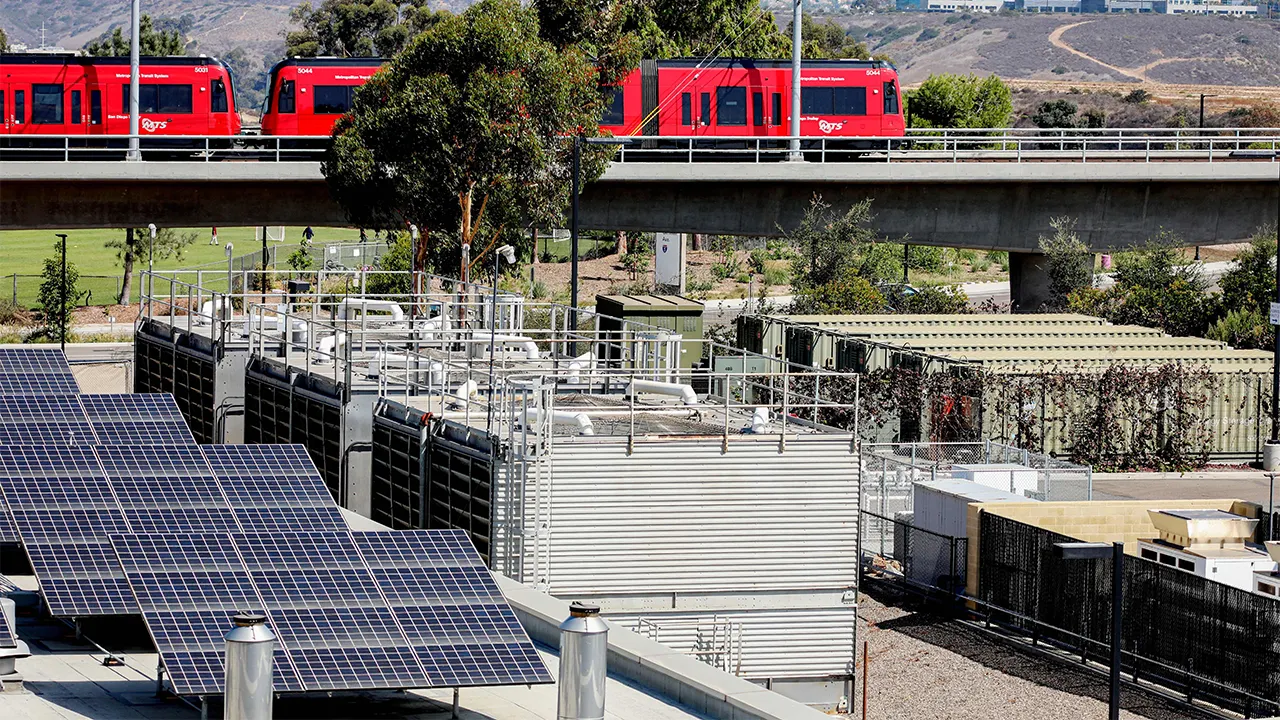
California’s aggressive pursuit of green energy goals spiked the cost of electricity.(Sandy Huffaker/AFP via Getty Images)
Advertisement
What Went Wrong?
The core issue is simple: California’s policymakers prioritized renewable energy mandates over affordability and reliability. Over the years, they have forced utilities to integrate ever-growing amounts of wind and solar power while discouraging natural gas, nuclear and large-scale hydroelectric projects. These decisions ignored the reality that intermittent renewables require extensive grid upgrades, costly backup power sources and expensive storage solutions — all of which drive up costs for consumers and industry.
California’s high electricity prices are not an accident; they are a direct consequence of these policies. The state’s cap-and-trade system, restrictive permitting laws and mandates like the Renewable Portfolio Standard (which requires utilities to generate 60% of their electricity from renewables by 2030) have all contributed to rising rates.
At the same time, bureaucratic obstacles have made it nearly impossible to build new natural gas plants or modernize existing infrastructure. From 2014 to 2024, California approved or built only five natural gas plants, four of which replaced older facilities for a total output of up to 4 gigawatts. By comparison, in the prior 10 years, California commissioned dozens of plants totaling more than 20 gigawatts of nameplate capacity.
Meanwhile, in New England…
California is not alone in suffering from self-inflicted energy woes. New England, home to the third- and fourth-highest electricity costs in the country (Connecticut and Massachusetts), faces a similar problem. These states have aggressively shut down coal, resisted natural gas expansion and failed to invest in nuclear power — leaving them vulnerable to energy shortages and price spikes.
One of the most baffling examples of New England’s energy mismanagement is its reliance on imported liquefied natural gas (LNG). Despite sitting just a few hundred miles from the abundant natural gas reserves of Pennsylvania’s Marcellus Shale, New England has struggled to access this cheap, domestic energy source. Why? Because environmental activists and politicians in New York have blocked the construction of new pipelines that would transport affordable natural gas to the region. Instead, New England has been forced to import LNG from overseas, including from the Caribbean and, at times, even Russia.
Advertisement
CLICK HERE FOR MORE FOX NEWS OPINION
Yes, you read that correctly — while the U.S. became the world’s top producer of natural gas, states in the Northeast have had to rely on foreign sources because of self-imposed pipeline constraints. This dependence on imported LNG has contributed to some of the highest electricity prices in the country and left the region exposed to global energy market fluctuations.
The Lessons Are Clear
California and New England serve as cautionary tales. When politicians prioritize ideological energy policies over common sense, the result is higher costs, reduced reliability and greater dependence on foreign energy sources.
California is not alone in suffering from self-inflicted energy woes. New England, home to the third- and fourth-highest electricity costs in the country (Connecticut and Massachusetts), faces a similar problem.
The states with the lowest electricity prices — places like Louisiana, Oklahoma and Texas — have embraced domestic energy production, built modern infrastructure and resisted heavy-handed government mandates. Meanwhile, California and the Northeast have imposed regulatory burdens that make energy more expensive and less reliable.
Advertisement
The evidence is clear: Green energy policies imposed on energy markets have made life harder for working families and businesses in states that have embraced the Green New Deal. If policymakers in California and the Northeast truly cared about affordability and reliability, they would rethink their hostility to natural gas, allow new pipeline construction, and reconsider their blind push for intermittent renewables and the costly backups they require.
Instead, they continue doubling down on the same failed policies. And as electricity bills rise and blackouts loom, the people paying the price aren’t the politicians in Sacramento or Boston — they’re the hardworking families who just want to keep their lights on without breaking the bank.
A look at where the Arizona Cardinals rank in new NFL power rankings based on level of interest.
We are in the dead of the offseason in the NFL, when we are simply waiting for training camps to start. It is a good time for more lists and rankings.
AZCentral Sports’ Bob McManaman put together NFL power rankings for all 32 teams, but based on interest level.
Advertisement
Where do the Arizona Cardinals fall?
As you can probably imagine, it is near the bottom. They find themselves in the tier of “watch at your own risk,” which includes the five lowest-ranked teams. The Cardinals come in at No. 30.
Who’s going to emerge as the starting quarterback and will it even matter? At some point, rookie Carson Beck is going to get his shot and by then, the season might already be heading toward a disaster. Stay tuned to learn how rookie Jeremiyah Love and the running backs will split time, how the defense hopes to rediscover itself and how first-year coach Mike LaFleur plans to get things off the ground.
For fans, there is fantasy intrigue for their pass catchers in Trey McBride, Marvin Harrison Jr. and Michael Wilson, and we want to know how big a season Love can be, but Jacoby Brissett is the least interesting starting quarterback in the league. He is neither young, nor accomplished nor has a track record of winning.
They have no flash defensively.
To say they are more interesting than the New York Jets and Cleveland Browns, the two lowest-ranked teams, is a stretch, although none of these three teams are remotely interesting.
Advertisement
The NFC West, outside of the Cardinals, has interesting teams. There are the defending champion Seattle Seahawks, the loaded LA Rams and then a San Francisco 49ers team that keeps up, even without as loaded a roster.
Training camp is coming soon!
Get more Cardinals and NFL coverage from Cards Wire’s Jess Root and others by listening to the latest on the Rise Up, See Red podcast. Subscribe on Spotify, YouTube or Apple podcasts.
California authorities unearthed at least 117 dogs in “various states of decomposition” on Friday, many of which appeared to have been killed by gunshot, as part of an ongoing investigation into an animal rescue organization.
The bodies were discovered during a search of Miranda’s Rescue in Fortuna, California, according to the Humboldt County Sheriff’s Office. Officials had been granted a warrant that included excavation of the property for evidence that dogs had been buried in “mass graves.”
The 117 canine remains were those found mostly intact at two sites, the sheriff’s office said. Nearly two dozen skulls, “hundreds” of bones, and 600 dog collars were also recovered on the property.
Humboldt County Sheriff William Honsal thanked the law enforcement teams and forensic veterinarians who assisted in the recovery. In a statement, he noted that the investigation is “just getting started.”
“The determination all of these professionals showed while working through this horrific scene is something we will not forget,” Honsal said.
NBC News was not able to reach Shannon Miranda, the founder of Miranda’s Rescue, by phone on Sunday. She did not immediately respond to an email requesting comment.
Advertisement
The sheriff’s office said in a news release last week that it had been contacted in April regarding allegations of fraud, animal abuse and animal cruelty at the rescue, and that the case had been assigned to the Major Crimes Division.
An initial search warrant was executed on May 1, at which time officials seized evidence related to the investigation. Investigators also determined that a “significant number” of animals surrendered to the rescue had not been accounted for.
Investigators executing a second search warrant at Miranda’s Rescue, where 117 canine remains were found, in Fortuna, Calif. last week.Stephen Lam / San Francisco Chronicle via Getty Images
A second search warrant, executed Thursday, led to the recovery of the canine remains.
Forensic veterinarians were able to examine 71 of the bodies on-site Thursday but did not have time to reach the remaining 46. A preliminary examination — including X-rays of the remains — found that “many of those animals showed evidence of bullet fragments.”
Investigators are working to identify dogs that were microchipped.
Other remains were found “in advanced stages of decomposition” and were deemed too severely deteriorated to be removed from their burial site, the sheriff’s office said.
Advertisement
This investigation is expected to be lengthy, the sheriff’s office cautioned in a statement to the public.
“The Humboldt County Sheriff’s Office understands the public’s desire for accountability and justice,” it said. “However, it is our responsibility to conduct a complete, impartial, and legally sound investigation while ensuring that the constitutional and legal rights of everyone involved are protected throughout the process.”
No charges were announced.
Miranda was not available for comment, but posted a statement on June 18 addressing “recent media coverage and online commentary,” on the rescue’s website. The statement described two incidents that had “drawn particular attention” both involving animals that were killed at the facility.
The first involved a dog that killed another animal and attacked a third; the second involved a dog that lunged at a stroller carrying a baby, according to the statement.
Advertisement
“These were not decisions made lightly and were based on my responsibility to protect both the public and the animals in our care,” Miranda wrote.
The statement also described Miranda’s Rescue is a no-kill shelter, meaning animals are not euthanized simply to free up space, but acknowledged euthanasia is sometimes necessary.
“Whenever euthanasia has been necessary, I have notified local authorities in advance, even when told that reporting is not required,” Miranda wrote. “I believe it is important to maintain a clear record of these difficult decisions.”