
Connect with us

West

The predictable outcome of California’s green energy policies has arrived and it's a disaster

Published

on

The predictable outcome of California’s green energy policies has arrived and it's a disaster

Join Fox News for access to this content

Plus special access to select articles and other premium content with your account – free of charge.

By entering your email and pushing continue, you are agreeing to Fox News’ Terms of Use and Privacy Policy, which includes our Notice of Financial Incentive.

Please enter a valid email address.

Having trouble? Click here.

NEWYou can now listen to Fox News articles!

Back when I served in the California State Assembly from 2004 to 2010, California ranked seventh or eighth in the nation for electricity costs. At the time, the Democratic majority in Sacramento was pushing bill after bill mandating greater reliance on renewable energy, assuring everyone that these policies would make us look like “geniuses” when the price of fossil fuels inevitably soared.  

Advertisement

I warned that these laws, regulations and subsidies would instead drive up electricity costs for Californians, making the grid less reliable and California’s economy less competitive. 

Now, two decades later, the results are in. In 2024, the U.S. Energy Information Administration (EIA) reported that California had the second-highest electricity prices in the nation for the second year running, behind only Hawaii. The Golden State’s misguided energy policies have steadily increased the price of electricity as green energy mandates, grid instability and regulatory burdens have taken their toll. Meanwhile, states with more balanced energy policies — natural gas, coal and nuclear power — have fared far better. 

TRUCKING EXEC ‘HOPEFUL’ AS TRUMP EPA TARGETS BLUE-STATE EMISSIONS REGS: ‘LIGHT AT THE END OF THE TUNNEL’

What’s worse, California’s natural advantage in AI will be lost to Texas and other low-cost energy states. California’s industrial electricity prices averaged 21.98 cents per kilowatt-hour in 2023 vs. 6.26 in Texas, a whopping 251% price premium that no electricity-hungry AI installation or server farm operator is going to pay. 

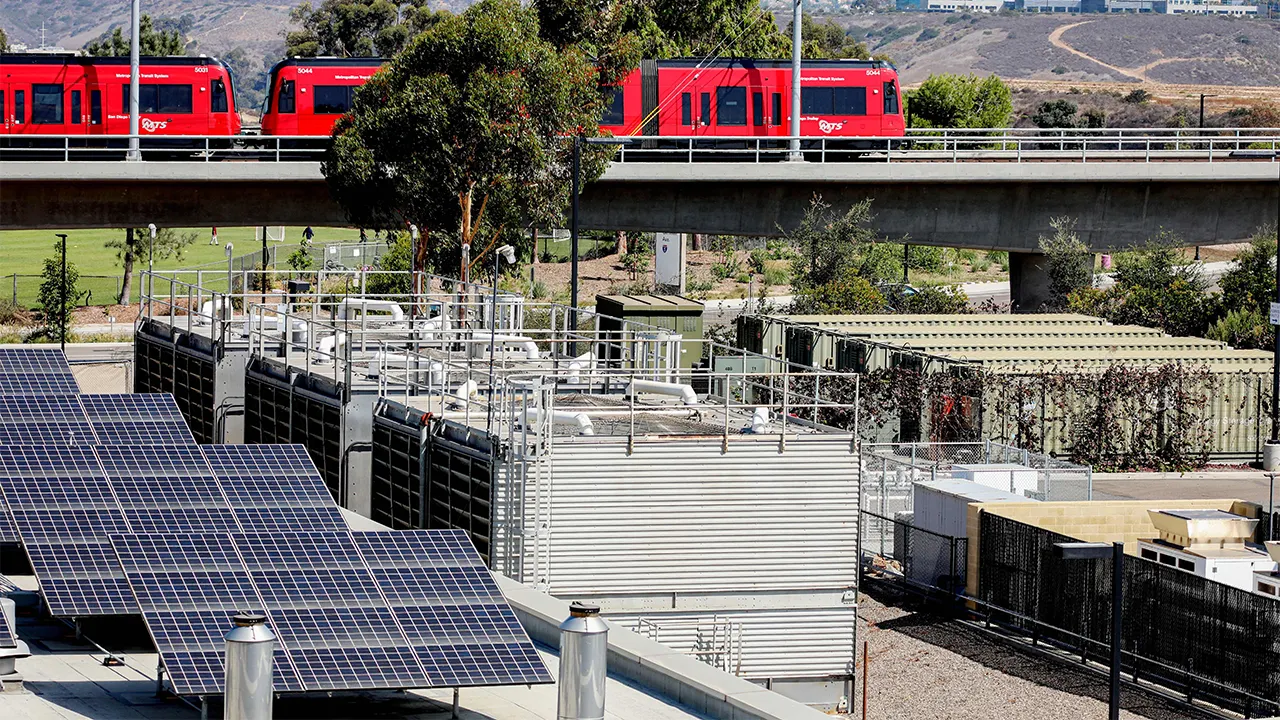
California’s aggressive pursuit of green energy goals spiked the cost of electricity. (Sandy Huffaker/AFP via Getty Images)

Advertisement

What Went Wrong? 

The core issue is simple: California’s policymakers prioritized renewable energy mandates over affordability and reliability. Over the years, they have forced utilities to integrate ever-growing amounts of wind and solar power while discouraging natural gas, nuclear and large-scale hydroelectric projects. These decisions ignored the reality that intermittent renewables require extensive grid upgrades, costly backup power sources and expensive storage solutions — all of which drive up costs for consumers and industry.  

California’s high electricity prices are not an accident; they are a direct consequence of these policies. The state’s cap-and-trade system, restrictive permitting laws and mandates like the Renewable Portfolio Standard (which requires utilities to generate 60% of their electricity from renewables by 2030) have all contributed to rising rates.  

At the same time, bureaucratic obstacles have made it nearly impossible to build new natural gas plants or modernize existing infrastructure. From 2014 to 2024, California approved or built only five natural gas plants, four of which replaced older facilities for a total output of up to 4 gigawatts. By comparison, in the prior 10 years, California commissioned dozens of plants totaling more than 20 gigawatts of nameplate capacity.  

Meanwhile, in New England… 

California is not alone in suffering from self-inflicted energy woes. New England, home to the third- and fourth-highest electricity costs in the country (Connecticut and Massachusetts), faces a similar problem. These states have aggressively shut down coal, resisted natural gas expansion and failed to invest in nuclear power — leaving them vulnerable to energy shortages and price spikes. 

One of the most baffling examples of New England’s energy mismanagement is its reliance on imported liquefied natural gas (LNG). Despite sitting just a few hundred miles from the abundant natural gas reserves of Pennsylvania’s Marcellus Shale, New England has struggled to access this cheap, domestic energy source. Why? Because environmental activists and politicians in New York have blocked the construction of new pipelines that would transport affordable natural gas to the region. Instead, New England has been forced to import LNG from overseas, including from the Caribbean and, at times, even Russia. 

Advertisement

CLICK HERE FOR MORE FOX NEWS OPINION

Yes, you read that correctly — while the U.S. became the world’s top producer of natural gas, states in the Northeast have had to rely on foreign sources because of self-imposed pipeline constraints. This dependence on imported LNG has contributed to some of the highest electricity prices in the country and left the region exposed to global energy market fluctuations. 

The Lessons Are Clear 

California and New England serve as cautionary tales. When politicians prioritize ideological energy policies over common sense, the result is higher costs, reduced reliability and greater dependence on foreign energy sources. 

California is not alone in suffering from self-inflicted energy woes. New England, home to the third- and fourth-highest electricity costs in the country (Connecticut and Massachusetts), faces a similar problem.

The states with the lowest electricity prices — places like Louisiana, Oklahoma and Texas — have embraced domestic energy production, built modern infrastructure and resisted heavy-handed government mandates. Meanwhile, California and the Northeast have imposed regulatory burdens that make energy more expensive and less reliable. 

Advertisement

The evidence is clear: Green energy policies imposed on energy markets have made life harder for working families and businesses in states that have embraced the Green New Deal. If policymakers in California and the Northeast truly cared about affordability and reliability, they would rethink their hostility to natural gas, allow new pipeline construction, and reconsider their blind push for intermittent renewables and the costly backups they require. 

Instead, they continue doubling down on the same failed policies. And as electricity bills rise and blackouts loom, the people paying the price aren’t the politicians in Sacramento or Boston — they’re the hardworking families who just want to keep their lights on without breaking the bank. 

CLICK HERE TO READ MORE FROM CHUCK DEVORE

Read the full article from Here

Advertisement
Continue Reading
Click to comment

Leave a Reply

Your email address will not be published. Required fields are marked *

This site uses Akismet to reduce spam. Learn how your comment data is processed.

Hawaii

Journey adds second show to final performance in Hawaii | Honolulu Star-Advertiser

Published

on

Journey adds second show to final performance in Hawaii | Honolulu Star-Advertiser


COURTESY MIKE SAVOIA

Journey lead guitarist Neal Schon, an original member of the band that launched in 1973 in San Francisco.

Advertisement
Advertisement

The popular rock band Journey will perform a second show at Neal S. Blaisdell Arena after tickets for its Sept. 8 concert were quickly snatched up when the Hawaii-only presale began Friday.

The newly added Sept. 6 show will give Hawaii fans one more opportunity to experience Journey’s Final Frontier Tour. Concert promoter Rick Bartalini said the Sept. 8 show “will remain Journey’s last-ever performance” in the islands.

“Journey’s relationship with Hawaiʻi is unlike anything we have seen with a mainland-based artist or group,” Bartalini said in a news release. “These songs have been part of people’s lives here for generations, and the response to this final Hawaiʻi return has been incredible. The added September 6 show gives local fans another chance to be part of this historic final chapter before Journey’s last-ever Hawaiʻi performance on September 8.”

Tickets for both concerts are available at Ticketmaster.com through an exclusive presale for Hawaii residents. The Hawaii presale, which is online only, with no code required, gives local residents the chance to purchase tickets through 9 a.m. Friday before mainland access and general ticket sales begins an hour later.

Bartalini “strongly urged” fans to purchase tickets only through Ticketmaster, the official ticketing provider, and “to avoid inflated or speculative listings on resale sites.”

Advertisement

A dollar from every ticket sold will support the Hawaiian Council’s local flood recovery efforts for families and communities impacted by the recent Kona-low storms.

Journey has sold more than 100 million albums worldwide. The band’s music spans more than five decades and includes chart-topping hits and rock anthems, including “Don’t Stop Believin’,” “Any Way You Want It,” “Faithfully,” “Wheel in the Sky,” “Lovin’, Touchin’, Squeezin’,” “Open Arms” and “Lights.”

Advertisement

The band’s last Hawaii shows were Oct. 5 and 6, 2022, at Blaisdell Arena.

“Fans in Hawai‘i hold a special place in Journey’s heart,” Bartalini said, noting that after the band’s first public show at the Winterland Ballroom in San Francisco on New Year’s Eve 1973, the group flew to Hawaii the very next day, Jan. 1, 1974, to perform at the Sixth Annual Sunshine Festival, commonly referred to as the Diamond Head Crater Festival, for an audience of over 100,000.

From there, Journey became a recurring part of Hawaii’s concert history, performing live 34 times across the islands, including 30 confirmed appearances on Oahu and 26 shows at the Neal S. Blaisdell Arena, as well as performances at UH, the Maui Arts & Cultural Center, and the Queen’s Marketplace Amphitheatre in Waikoloa on the Big Island.

“Journey’s relationship with Hawai‘i is unlike anything we have seen with a mainland-based artist or group,” Bartalini said. “For more than 50 years, they have returned to these islands again and again, from Diamond Head Crater to this final stop at the Neal S. Blaisdell Arena, creating memories that span generations of local fans.

“Journey’s music has been woven into so many of our lives for generations. These are the songs people grew up with, fell in love to, drove around the island listening to, sang with their families, and carried through some of the most meaningful moments of their lives. That is what makes this Final Frontier Tour so powerful,” he added.

Advertisement


Source link

Continue Reading

Idaho

Torrential thunderstorms, hail flood suburban streets with ice floats on first full summer weekend in Idaho

Published

on

Torrential thunderstorms, hail flood suburban streets with ice floats on first full summer weekend in Idaho


Parts of Idaho looked like the Arctic on the first full weekend of summer when torrential thunderstorms and hail flooded the streets with ice floats, according to dramatic social-media footage. 

In a wild scene Saturday outside the state’s capital of Boise, a resident was caught on Instagram footage paddling a bright green kayak through the ice-covered floodwaters rushing down a suburban road — while a rural county near Nevada was hammered with a staggering 553 lightning strikes. 

“It was small hail, but there was an awful lot of it,” said Josh Smith, the Boise-based National Weather Service’s lead meteorologist, to the Idaho Statesman. 

Torrential rain and hail created hoards of ice floats in the street. City of Nampa

Cars parked along local streets were nearly swallowed by surging water from the relentless rains – with some vehicles submerged up to their windows – while trash bins floated through the makeshift river, the surreal footage shows. 

Advertisement

The widespread storm damage across the Gem State’s Treasure Valley region – a heavily-populated area that encompasses parts of Ada and Canyon counties – was also fueled by winds topping 50 mph, the Statesman said.

A resident in a bright green kayak paddles through ice-covered floodwaters on a suburban road outside of Boise, Idaho, according to video posted to Instagram on Saturday.  Instagram/@mikecollierwx

As for the hail, “Even some of our employees that were in northwest Meridian said they had several inches of small hail on the ground,” Smith said.

“That probably led to some of the flooding issues with some of those neighborhoods because all that melted off quickly, and the drains weren’t able to handle it – in addition to the inch-plus rain that we received,” Smith explained. 

Lightning was also relentless throughout the storm, with rural Owyhee County – located about 150 miles south of Boise, near the Nevada border – recording a mind-boggling 553 lightning strikes. 

Trash bins were seen floating through makeshift rivers. Instagram/@hollykaydrinkard

Ada County had 100 strikes in one day – the second-most ever recorded on a single day in June since 2000, according to Smith and the National Weather Service. 

Advertisement

Officials in Canyon County declared a countywide disaster emergency as crews scrambled to respond to the damage, while employees with the Ada County Highway District worked overnight clearing flooded roads and addressing other hazards, the Statesman reported. 

The Boise Police Department shared photos of the river-like road conditions on Facebook, urging drivers to use “extreme caution.” 

The Boise Police Department urged drivers to use “extreme caution” amidst the flooded road conditions. City of Caldwell

In neighboring Payette County, mudslides triggered by severe flooding caused many highway and street closures Friday, according to the sheriff’s office. 

It was not immediately clear whether anyone was injured. 

The dangerous weather was expected to continue through the weekend, forecasters warned. 

Advertisement

The NWS issued a winter storm warning Saturday for parts of eastern Idaho, where elevations above 6,500 feet were expected to be battered with as much as 8 inches of snow. 

“Plan on cold and wet backcountry conditions with a heightened hypothermia risk for those not properly dressed. Wet snow may down trees and block access to forest roadways,” the advisory warned, according to the East Idaho News. 


Source link

Advertisement
Continue Reading

Montana

Montana nurse and Guard member earns national Air Force recognition

Published

on

Montana nurse and Guard member earns national Air Force recognition


GREAT FALLS — For Staff Sgt. Brianna St. Lawrence-Brody, service does not only happen in uniform.

Outside the gates of the base, she works at Benefis as a nurse, Great Falls Public Schools as a school nurse, and comes home as a wife and mom of four. For the Montana Air National Guard, she serves as a command post controller with the 120th Airlift Wing in Great Falls.

(WATCH: Montana nurse and Guard member earns national Air Force recognition)

Advertisement

Montana nurse and Guard member earns national Air Force recognition

This year, St. Lawrence-Brody was named the U.S. Air National Guard’s Outstanding Airman of the Year in the Non-Commissioned Officer category.

She said the recognition came as a surprise, especially because her path into the Guard started later than others.

“I joined very late in life,” St. Lawrence-Brody said. “I joined the Guard right before I turned 40. So for me, every opportunity that’s presented, I want to take the bull by the horns and just run with it and do the best of my ability.”

Advertisement

During the COVID-19 pandemic, she joined the Guard after finishing nursing school. She said she went straight from nursing school into helping open a COVID unit, while also working at Benefis.

She said that experience was the start of one journey, but not the whole of what she wanted to accomplish.

St. Lawrence-Brody joined the Guard for the opportunities, the challenge and to help build a future for her four children.

“It’s a little bit of a competition for myself,” she said. “Like, if I can do it, why not try my best to achieve it?”

120th Airlift Wing Public Affairs

Advertisement

As a command post controller, she assists in helping move information during emergencies and major events.

“Outside, obviously, I’m a nurse. Inside the Guard, I have nothing to do with the medical field, which is kind of amazing,” St. Lawrence-Brody said. “It keeps me on my toes.”

She explained balancing the Guard, two civilian jobs and four children takes support from her family, her employers and her unit. She said Benefis and GFPS have been supportive of her military service.

Her nomination included her deployment experience, training work overseas and involvement across the wing. St. Lawrence-Brody said she deployed to Ramstein Air Base in Germany, where she worked with an operations center supporting entities connected to Africa.

But, she says this recognition is not the finish line.

Advertisement

“This award, it’s not necessarily a landing pad for me,” St. Lawrence-Brody said. “I want to use it as a springboard.”

brianna award duality.jpg

120th Airlift Wing Public Affairs

St. Lawrence-Brody hopes her story encourages others to keep taking on new opportunities, even when they feel uncertain.

“Get comfortable with being uncomfortable and be okay with doing things afraid,” she said. “I think when you get to be okay with doing things afraid, that’s where you’re going to find the growth.”

She has already won at the Air National Guard level, but she recently traveled to Washington, D.C., as part of the broader Air Force Outstanding Airman of the Year process, which includes nominees from the Guard, Reserve and major commands across the Air Force.

Advertisement


Source link

Continue Reading
Advertisement

Trending
