The Milwaukee Brewers are headed to Cincinnati to take on the Reds in what is the first of five out of six series to be played against NL Central foes heading into the All-Star break. While any series could technically “make or break” a season, this stretch of 21 games (18 of them against the division) over the next 21 days just feels more important.
Midwest
You're hired! Here's who passed Congress' Trump cabinet test and how stormy their hearings were

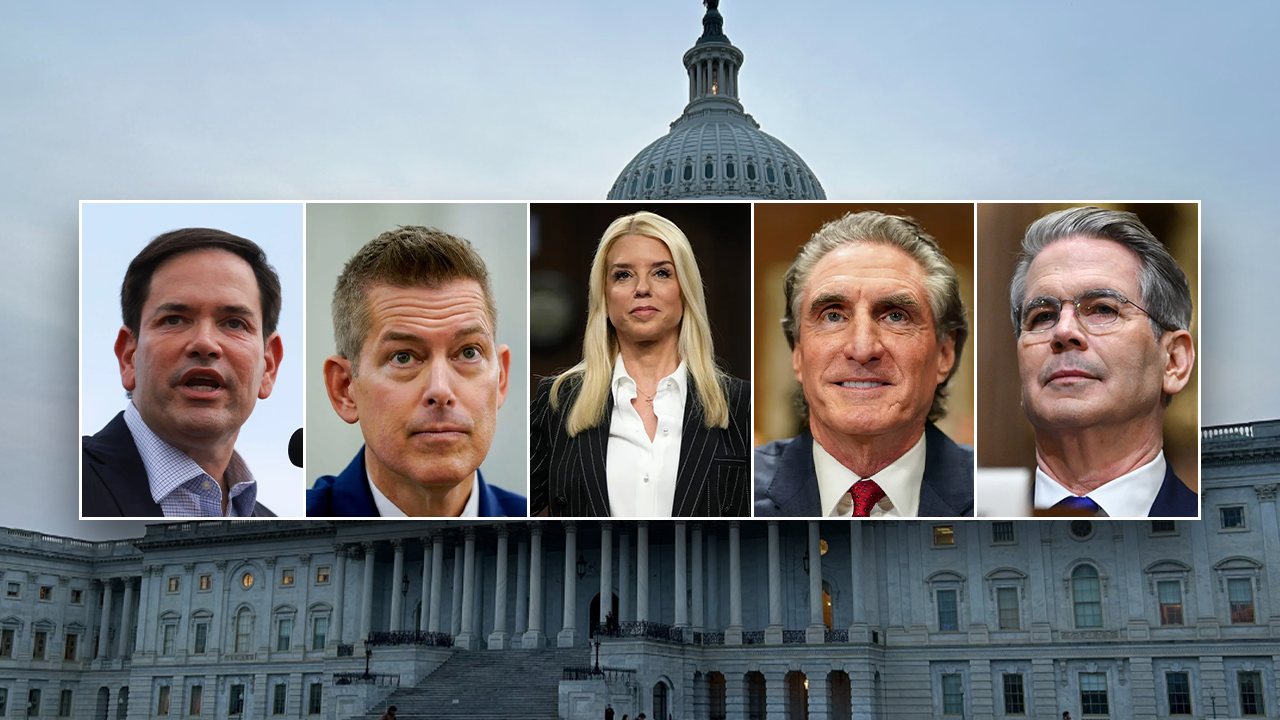
As of Wednesday, 11 of President Donald Trump’s cabinet nominees have been successfully confirmed to their posts.
While some, like Secretary of State Marco Rubio, sailed through, others, like Attorney General Pam Bondi, saw their confirmation process marred with pointed confrontations and deep dives into their personal lives, as was the case for Defense Secretary Pete Hegseth.
Sens. Marco Rubio, R-Fla., left, and Dick Durbin, D-Ill., (durbin.senate.gov)
MARCO RUBIO: STATE
Rubio, a longtime Florida senator from Miami, and the son of Cuban immigrants, enjoyed a relatively calm confirmation hearing when it came to interactions with lawmakers.
However, several Code Pink protesters, angry over what their shirts denoted as the “killing of children in Gaza,” had to be removed from the room due to outbursts.
The final protester shouted at Rubio in Spanish, to which the now-secretary remarked that his protesters are at-times bilingual.
KASH PATEL ENRAGES ADAM SCHIFF IN CLINTONIAN BATTLE OVER WORD ‘WE’; JAN 6 SONG
Rubio was confirmed unanimously 99-0. At the time, Sen. Jon Husted, R-Ohio, was still lieutenant governor and had not been seated in Vice President JD Vance’s place.
Defense Secretary Pete Hegseth. (AP Photo/Ben Curtis)
PETE HEGSETH: DEFENSE
A veteran and former Fox News host, Hegseth laid a more contentious path through the confirmation process.
Hegseth earned two Bronze Stars and several other medals while serving in the Army National Guard. He joined Fox News Channel in 2014 and resigned upon his Pentagon nomination.
The nomination became in embroiled in controversy after several stories surfaced taking aim at Hegseth’s character. Hegseth’s former sister-in-law filed an affidavit alleging that he had an alcohol abuse problem and had made his ex-wife fear for her safety.
While Sen. Tommy Tuberville, R-Ala., offered praise for Hegseth’s confirmation – later telling reporters he clearly answered every question put to him – other lawmakers did not view the nominee the same way.
When protesters disrupted the hearing, Sen. Tom Cotton, R-Ark., said they appeared to be from the “Chinese Communist [Party] front-group” Code Pink and were upset about Hegseth’s support for Israel.
“I support Israel’s existential war in Gaza. I assume, like me and President Trump, you support that war as well,” Cotton said.
Sen. Richard Blumenthal, D-Conn., also grilled Hegseth about his qualifications to lead America’s troops.
ZELDIN GRILLED IN CONFIRMATION HEARING
“I do not believe that you can tell this committee or the people of America that you are qualified to lead them. I would support you as a spokesperson for the Pentagon,” he said.
Critics, including Fox News contributor Joe Concha, claimed irony in the lawmaker’s grilling – as Trump previously dubbed Blumenthal “Da Nang Dick” after claims surfaced that Blumenthal had misrepresented his own military service during the Vietnam War.
In the end, a 50-50 split, brought on by GOP Sens. Susan Collins of Maine and Lisa Murkowski of Alaska joining all Democrats in opposition, led to Vance having to cast his first tie-breaking vote of the congressional session to confirm Hegseth.
Interior Secretary Doug Burgum. (Getty)
DOUG BURGUM: INTERIOR
Interior Secretary Doug Burgum received substantive Democratic support in his final confirmation vote of 80-17 last week. Three Democrats did not vote.
His confirmation hearing’s tenor was also mixed, with fellow North Dakotan, Sen. John Hoeven, calling him the right man for the job.
Some Democrats, including Sens. Catherine Cortez-Masto and Mazie Hirono, however, offered pointed questions about environmental issues and other concerns during the hearing.
When Cortez-Masto asked about the Trump administration repealing electric vehicle credits, Burgum said he “support[s] economics and markets” and highlighted the comparatively high costs of electric vehicles.
Burgum grew up in eastern North Dakota, near a grain elevator his grandfather operated. He reportedly met future Microsoft CEO Steve Ballmer in college and later “bet the farm” to invest a quarter million dollars in 1983 in a tech startup called Great Plains Software.
He eventually became president of the company, which was purchased by Microsoft around the turn of the century.
He served as North Dakota’s governor in recent years, briefly mounting a 2024 presidential bid before dropping out to endorse Trump.
Treasury Secretary Scott Bessent. (Getty)
SCOTT BESSENT: TREASURY
South Carolina billionaire Scott Bessent was confirmed as Trump’s second-term Treasury secretary on Jan. 28.
With the confirmation, Bessent became the highest ranking openly gay cabinet official in U.S. history.
Bessent was born in Conway, South Carolina, just inland from the famous “Calabash” seafood area in North Carolina and the resort city of Myrtle Beach, South Carolina.
He previously worked for several global investment management companies for decades, notably including a stint as chief investment officer for Soros Fund Management, led by left-wing Hungarian-American billionaire George Soros.
His politics, however, appear to greatly differ from those of Soros himself – as Bessent once called Trump’s 2017 Tax Cuts and Jobs Act “‘single most important economic issue of the day.”
During his confirmation process, Sen. Elizabeth Warren, D-Mass., was a noted foil.
Warren reportedly sent Bessent more than 100 written questions on subjects spanning from housing to financial oversight ahead of his testimony, according to PBS.
He was confirmed by a relatively bipartisan 68-29, with one Republican and two Democrats not voting.
SEAN DUFFY: TRANSPORTATION
Former Rep. Sean Duffy, R-Wis., was confirmed in a comparatively more peaceful process than other nominees. Duffy enjoyed a relatively cordial hearing before Sen. Ted Cruz, R-Texas, and the Senate Commerce Committee.
However, 22 Democrats still voted against his confirmation, with Sen. Jon Ossoff, D-Ga., not voting.
Within a day of his confirmation, Duffy was faced with a catastrophic midair collision over the Potomac River in Washington, D.C., involving a military helicopter and an American Airlines-sanctioned passenger flight from Kansas to Reagan National Airport.
All of those aboard both aircraft died as the fuselage crashed into the shallow but frigid Potomac, just yards shy of the Arlington, Virginia, airport’s runway.
Soon after, Duffy had to simultaneously handle the fallout from a medical plane crashing near the junction of US-1 and PA-73 in northeast Philadelphia.
The doomed plane spewed jet fuel as it crashed, setting a row of homes on Cottman Avenue ablaze. Six Mexican nationals on board and one Pennsylvanian on the ground was killed, according to news reports.
Energy Secretary Chris Wright. (Al Drago)
CHRIS WRIGHT: ENERGY
Energy Secretary Chris Wright was confirmed Sunday in a 59-38 vote, with one Democrat and two Republicans not voting.
The energy company CEO from Colorado told lawmakers he would unleash U.S. energy potential as secretary.
He has been a critic of climate change regulations and was endorsed by American Energy Alliance chief Tom Pyle, as well as Sen. John Barrasso, R-Wyo. – the former chairman of the natural resources committee.
Department of Veterans Affairs Secretary Doug Collings.
DOUG COLLINS: VETERANS AFFAIRS
Former Rep. Doug Collins, R-Ga., was recently confirmed as Trump’s pick to lead the Department of Veterans Affairs.
Collins saw wide bipartisan support in his 77-23 vote. In the Veterans Affairs Committee that heard his nomination, only Hirono voted against him.
Collins is a veteran of the U.S. Air Force Reserve and will now lead the agency meant to care for veterans after their service.
“I do not come into this with rose-colored glasses. This is a large undertaking that I feel called to be at,” Collins said. “When a veteran has to call a congressman or senator’s office to get the care they have already earned, it’s a mark of failure.”
Collins notably garnered a pro-life streak in Congress, vociferously opposing the Affordable Care Act and remarking upon the death of Justice Ruth Bader Ginsburg, “RIP to the more than 30 million innocent babies that have been murdered during the decades that Ruth Bader Ginsburg defended pro-abortion laws.”
Homeland Security Secretary Kristi Noem. (AP)
KRISTI NOEM: HOMELAND SECURITY
Now-former South Dakota Gov. Kristi Noem successfully made it through her confirmation hearing to become the nation’s homeland security chief.
As governor, Noem provided South Dakotan resources to Texas and Gov. Greg Abbott to help assuage the Biden border crisis.
As secretary, she has been on hand for immigration enforcement operations undertaken by Border Czar Thomas Homan, including one in the Bronx, New York.
Noem saw a relatively peaceful confirmation process, though only a handful of Democrats ultimately supported her.
“We must be vigilant and proactive and innovative to protect the homeland,” she said at her hearing.
“The challenges in front of us are extremely significant, and we must secure our borders against illegal trafficking and immigration. We must safeguard our critical infrastructure to make sure that we’re protected against cyberattacks, respond to natural disasters and also terrorism.”
Noem was raised on a ranch near Hayti, South Dakota, before venturing into politics.
In 2012, Noem won South Dakota’s at-large U.S. House seat – a GOP flip from its previous officeholder, Rep. Stephanie Herseth-Sandlin, D-S.D.
From there, she moved on to the governor’s office in 2018.
Environmental Protection Agency Secretary Lee Zeldin. (AP)
LEE ZELDIN: EPA
Former New York Rep. Lee Zeldin sat for his confirmation hearing to lead the Environmental Protection Agency two weeks ago and was grilled by Democrats on his views of climate change.
Senate EPW Committee ranking member Sheldon Whitehouse of Rhode Island questioned Zeldin on the effects of carbon dioxide and pollutants on the atmosphere.
“Is carbon dioxide a pollutant?” the Rhode Island Democrat asked, leading to a short back-and-forth.
Later, after Sen. Bernie Sanders, I-Vt., questioned Zeldin about climate change and other concerns, a cellphone that appeared to be Zeldin’s rang loudly.
“That was the fossil fuel industry,” Sanders quipped.
Later, Green New Deal co-sponsor Sen. Edward Markey of Massachusetts questioned Zeldin on comments from a 2016 congressional debate where he said it is the U.S.’ job to “reduce reliance on fossil fuels.”
“I support all of the above energy,” Zeldin replied before Markey cut in.
In the final vote, three Democrats joined Republicans to confirm him – Pennsylvania Sen. Fetterman and both Arizona senators – while three other Democrats did not vote.
CIA Director John Ratcliffe. (Getty Images)
JOHN RATCLIFFE: CIA
CIA Director John Ratcliffe was confirmed by a 74-25 margin on Jan. 23, with Fetterman not voting.
Ratcliffe previously served as Trump’s director of national intelligence from May 2020 until January 2021, during Trump’s first term in office.
While in Congress representing North Texas, Ratcliffe sat on the House Intelligence Committee and notably garnered support in his confirmation from Virginia Sen. Mark Warner, the top Democrat on the Senate’s partner panel.
An Illinois native, Ratcliffe later became an attorney in Texas, was elected mayor of Heath and later named by former President George W. Bush to lead counterterrorism efforts in the state’s Texarkana-based eastern district.
President Donald Trump’s attorney general pick, Pam Bondi, right, went back and forth with Hawaii Sen. Mazie Hirono in her confirmation hearing. (Getty Images)
PAM BONDI: JUSTICE
Former Florida Attorney General Pam Bondi was confirmed to the federal version of her erstwhile role by a vote of 54-46 – with Fetterman being the lone Democrat in support.
Bondi’s hearing was one of those that was marred by tense moments, including an exchange with Rhode Island’s Whitehouse.
Whitehouse grilled Bondi whether her Justice Department would seek to target individuals on a political basis and “look for a crime.”
“It’s a prosecutor’s job to start with a crime and look for a name. Correct?” he asked.
“Senator, I think that is the whole problem with the weaponization that we have seen the last four years and what’s been happening to Donald Trump,” Bondi replied.
“They targeted Donald Trump. They went after him, actually starting back in 2016. They targeted his campaign. They have launched countless investigations against him. That will not be the case. If I am attorney general, I will not politicize that office.”
As her exchanges with Whitehouse continued, she pointed to Kevin Clinesmith – an ex-FBI lawyer sentenced to probation after he illegally altered a FISA document during a federal probe through which Trump’s 2016 campaign had been accused of colluding with Russia.
There have been several other confirmation hearings for other potential cabinet members.
Notably, FBI nominee Kash Patel’s clash with Sen. Adam Schiff, D-Calif., made waves last week.
Patel enraged Schiff over his reported support for January 6 inmates and his reported work in concert with the production of a song sung by the inmates that featured an a capella Pledge of Allegiance from Trump.
The tit-for-tat devolved into a Clintonian spat when Patel riffed to Schiff that his response to the lawmaker hinged on his definition of the word “we” – as Clinton had told prosecutors in 1998 that a response to part of his Monica Lewinsky testimony centered on the independent counsel’s definition of “is.”
Fox News’ Adam Shaw, Caitlin McFall, Diana Stancy and Alec Schemmel contributed to this report.
Read the full article from Here

Continue Reading


Anna Segedi and Mellissa Channell-Watkins on PWHL game at LCA
Anna Segedi, left, and Mellissa Channell-Watkins will play for Vancouver in Saturday’s PWHL game at LCA.
PWHL Detroit added another local player to the roster for the inaugural season in 2026-2027.
Plymouth’s Mellissa Channell-Watkins (Vancouver Goldeneyes) was one of three defensemen signed to the team on Sunday along with Stephanie Markowski (Ottawa Charge) and Mia Biotti (Boston Fleet).
Channell-Watkins joins Macomb’s Taylor Girard, Brighton’s Shiann Darkangelo and Port Huron’s Casey Borgiel as Michigan-area players in the lineup.
Channell-Watkins played with the expansion Goldeneyes last year after two previous seasons with the Minnesota Frost where she won back-to-back Walter Cup titles.
In 30 games in 2025-26, the 31-year-old recorded two assists and tied for fifth among defenders with 44 hits.
In 83 career regular-season games, she has 11 points (1G, 10A), while her nine career playoff points (1G, 8A) in 18 games is tied for third all-time among defenders.
Prior to turning pro, the Little Caesars graduate played at the University of Wisconsin, scoring the game-winning goal in the 2017 NCAA Frozen Four semifinal.
Markowski entered the PWHL as the 20th overall selection by Ottawa in the fourth round of the 2024 Draft.
The 24-year-old finished third on the team with a plus-6 rating in 2025-26 and has recorded 10 points (2G, 8A) in 58 career regular-season games.
Collegiately, the Edmonton native played four seasons at Clarkson University (2019-23), serving as an alternate captain in 2022-23.
She transferred to Ohio State where she won a national championship with the Buckeyes in 2024.
Biotti spent her rookie season with Boston Fleet, making her PWHL debut at Little Caesars Arena on Jan. 3 and went on to record two assists in 13 regular-season games and saw action in two playoff contests.
The 23-year-old from Cambridge, Massachusetts, played four seasons at Harvard University, serving as captain in her senior year, and earned Second-Team All-Ivy League honors.
PWHL Detroit roster
Forwards
▶ Daryl Watts, Detroit’s first signing, Canadian Olympian, Toronto Sceptres
▶ Hannah Bilka, U.S. Olympian, Seattle Torrent
▶ Britta Curl-Salemme, U.S. Olympian, Minnesota Frost
▶ Jesse Compher, Sister of Red Wings forward J.T. Compher, Toronto Sceptres
▶ Taylor Girard, Macomb native, New York Sirens
▶ Shiann Darkangelo, Brighton, Montreal Victoire
▶ Hilary Knight, U.S. Olympian, Seattle Torrent
Defensemen
▶ Cayla Barnes, U.S. Olympian, Seattle Torrent
▶ Sydney Bard, Vancouver Goldeneyes
▶ Nina Jobst-Smith, German Olympian, Vancouver Goldeneyes
Detroit’s draft picks
▶ No. 15 (Second round): Andrea Brandli, G, Switzerland
▶ No. 22 (second round): Casey Borgiel, D, Colgate
▶ No. 34 (third round): MaryKate O’Brien, F, Minnesota-Duluth
▶ No. 39 (fourth round): Kyle Josifovic, F, Connecticut.
▶ No. 51 (fifth round): Sena Catterall, F, Clarkson
▶ No. 63 (sixth round): Georgia Schiff, F, Cornell
Detroit added six new players in the PWHL Draft, including Swiss goalie star Andrea Brändli.
Detroit added six players in the PWHL Draft, including Swiss goalie star Andrea Brändli.

Milwaukee is fresh off a disappointing series loss in Atlanta, as the Brewers lost the first two games by one run each before the offense exploded for nine runs in a win on Sunday. On the other side, the Reds are coming off a 4-2 week in which they took two of three from both New York teams — they outscored the Mets 26-12 at home to begin the week before outscoring the Yankees 14-8 in the Bronx over the weekend. Cincinnati sits in last place in the division, 9.5 games behind the first place Crew.
The Brewers are currently without pitchers Brandon Woodruff (expected to return for the series opener — more on him below), Logan Henderson (early July return), Jared Koenig (late June/early July), Coleman Crow (July), DL Hall (late July), Rob Zastryzny (late June/early July), Brian Fitzpatrick (TBD), Carlos Rodriguez (TBD), Angel Zerpa (out for season), and Quinn Priester (out for season). Outfielder Brandon Lockridge is the lone position player on the IL, and he’s reportedly close to a rehab assignment after a setback in the last few weeks.
The Reds are without position players Elly De La Cruz (expected to return either Monday or Tuesday) and Ke’Bryan Hayes (TBD), as well as pitchers Pierce Johnson (expected to return on Monday), Brandon Williamson (second half), Emilio Pagán (late June/July), Hunter Greene (July), and Graham Ashcraft (second half).
Jake Bauers leads the Brewer offense with 13 homers this year, with Brice Turang (11 homers) and Jackson Chourio (10 homers) right behind him. Chourio, Andrew Vaughn, and William Contreras lead the regulars in batting average, as Chourio is hitting .301, Vaughn is hitting .352, and Contreras is hitting .299 after a 4-for-5 day on Sunday. Gary Sánchez, Garrett Mitchell, Christian Yelich, Sal Frelick, Cooper Pratt, and David Hamilton also play key roles offensively, with Joey Ortiz and Blake Perkins rounding things out. As a team, the Brewers are hitting .256/.340/.394 (.734 OPS ranks ninth), with 68 homers (tied for 27th), 397 runs (third), and 75 steals (fourth).
Rookie Sal Stewart leads the Cincy offense with 14 homers this season, with JJ Bleday (13 homers), De La Cruz (12 homers), and Spencer Steer (12 homers) not far behind him. Speaking of De La Cruz, his return will be big for a Reds’ offense that has scuffled over the last month or so, as he’s hitting .280/.346/.509 and is always a threat to steal bags. Nathaniel Lowe, Matt McLain, Eugenio Suárez, Tyler Stephenson, and Dane Myers are the other regulars for the Reds, with Noelvi Marte, Blake Dunn, Will Benson, Edwin Arroyo, and Jose Trevino serving as depth. As a team, the Reds are hitting .229/.311/.395 (.706 OPS ranks 21st), with 96 homers (11th), 325 runs (22nd), and 59 steals (11th).
The Brewer bullpen is led by Aaron Ashby, who just took his first loss after 10 wins on Saturday evening. Grant Anderson, Abner Uribe, and Trevor Megill have also been effective, with Chad Patrick serving in a long-relief role. Joel Kuhnel, Drew Rom, and Craig Yoho serve as Milwaukee’s “B” bullpen as it stands. As a staff, the Brewers have a 3.45 team ERA (third), including a 3.37 starter ERA (fourth) and a 3.55 bullpen ERA (seventh). They’ve struck out 736 batters (first) over 670 2/3 innings.
Brock Burke and Sam Moll lead the Reds bullpen, as Burke has a 3.00 ERA and 31 strikeouts over 36 innings and Moll has a 3.19 ERA and 34 strikeouts over 31 innings. Tony Santillan has struggled to a 5.10 ERA, but Tejay Antone (2.75 ERA) and Caleb Ferguson (1.50 ERA) have both been effective. Zach Maxwell (9.90 ERA), Chris Paddack (6.04 ERA), and Chase Petty (4.41 ERA) have also struggled, and with Johnson expected to return, one of them seems like the most likely odd man out. As a staff, the Reds have a 4.58 team ERA (24th), including a 4.43 starter ERA (24th) and a 4.81 bullpen ERA (16th). They’ve struck out 597 batters (26th) over 678 innings.
Monday, June 22 @ 6:10 p.m.: RHP Brandon Woodruff (2-1, 3.60 ERA, 3.97 FIP) vs. RHP Brady Singer (3-6, 5.32 ERA, 6.15 FIP)
Woodruff is slated to make his return in the series opener, as he’s missed nearly two months after a shoulder injury that became blatantly clear in his last start due to diminished velocity. For the season, he’s made six starts, totaling 30 innings with a 3.60 ERA, 3.97 FIP, and 25 strikeouts. In a pair of rehab appearances with the ACL Brewers and High-A Wisconsin Timber Rattlers, Big Woo totaled nine innings, allowing six runs on 10 hits and three walks while striking out 11. In 15 career appearances (13 starts) against the Reds, Woodruff is 7-4 with a 3.48 ERA and 106 strikeouts over 75 innings.
Singer, 29, has had a rough second season in Cincinnati after being acquired in the Jonathan India trade last offseason. After putting up a 14-12 record with a 4.03 ERA in 2025, he’s 3-6 with a 5.32 ERA and 6.15 FIP over 66 innings this season. He’s looked a bit better in his last two outings, though, allowing three runs on nine hits and four walks with 10 strikeouts over 11 innings in a win over the Mets and a no-decision against the Padres. Singer has made four career starts against Milwaukee — including three last season — with a 2-2 record, a 4.82 ERA, and 20 strikeouts across 18 2/3 innings.
Tuesday, June 23 @ 6:10 p.m.: RHP Brandon Sproat (1-4, 5.94 ERA, 5.52 FIP) vs. LHP Nick Lodolo (2-2, 6.12 ERA, 5.80 FIP)
Sproat has a 5.94 ERA and 5.52 FIP with 63 strikeouts across 63 2/3 innings this season, and he’s been about as inconsistent as those numbers indicate — he’s shown flashes of top-of-the-rotation stuff, but he’s also struggled with homers and walks. His last start was a microcosm of his season, as he went three perfect innings before allowing a pair of walks and a pair of hits — including a grand slam — in the fourth inning against the Guardians. He struck out six but exited after just 63 pitches in that fourth, as he dealt with cramps (something that seems to be a larger issue among Milwaukee’s young pitching staff). Sproat’s only appearance against the Reds came last year in his MLB debut while with the Mets. He took the loss in that one, allowing three runs on three hits and four walks with seven strikeouts over six frames.
Lodolo, who had the numbers of a top-of-the-rotation guy last season with a 3.33 ERA, 3.81 FIP, and 156 strikeouts, has struggled mightily in eight starts thus far this year, with a 6.12 ERA, 5.80 FIP, and 32 strikeouts over 42 2/3 innings. The 28-year-old lefty got roughed up big time against the Mets in his last appearance, allowing seven runs on 11 hits and two walks while striking out just two over 4 2/3 innings. Lodolo has made six career appearances (five starts) against Milwaukee, with a 1-1 record, 2.84 ERA, and 29 strikeouts over 31 2/3 innings.
Wednesday, June 24 @ 6:10 p.m.: LHP Shane Drohan (3-2, 3.40 ERA, 3.17 FIP) vs. RHP Rhett Lowder (3-4, 4.82 ERA, 4.46 FIP)
Drohan has turned into a reliable five-inning guy for the Brewers over the last month, as he has a 3.40 ERA, 3.17 FIP, and 47 strikeouts over 47 2/3 innings this season. He took a no-decision in his last outing against the Guardians, going five frames with one run allowed on three hits and three walks, striking out three on 91 pitches. This marks Drohan’s first career start against Cincinnati.
Lowder, 24, is a former No. 7 overall pick who debuted at just 22 in 2024, pitching to a 1.17 ERA with 22 strikeouts over 30 2/3 innings that year. After missing all of 2025 due to injuries, he hasn’t looked quite the same in 2026 through 11 starts. He has a 4.82 ERA, 4.46 FIP, and 42 strikeouts over 52 1/3 innings. He took the loss in his last appearance against the Yankees, allowing four runs on six hits and three walks with five strikeouts over 5 1/3 innings. Lowder made his lone career start against Milwaukee back in August 2024. He took the loss, allowing one run on two hits and four walks with six strikeouts across four innings.
Monday, June 22: Brewers TV; listen via radio on the Brewers Radio Network (620 WTMJ in Milwaukee)
Tuesday, June 23: Brewers TV; listen via radio on the Brewers Radio Network (620 WTMJ in Milwaukee)
Wednesday, June 24: Brewers TV; listen via radio on the Brewers Radio Network (620 WTMJ in Milwaukee)
The Brewers hit a tough rut in Atlanta over the weekend, but this Reds team has been struggling after jumping out to a hot start. I’ll take the Crew to win two of three to wrap up the road trip.
Minneapolis, MN
Special Olympics USA Games kicks off in Minneapolis with Demi Lovato, Jon Batiste and thousands of fans

By submitting, you consent that you are at least 18 years of age and to receive information about MPR’s or APMG entities’ programs and offerings. The personally identifying information you provide will not be sold, shared, or used for purposes other than to communicate with you about MPR, APMG entities, and its sponsors. You may opt-out at any time clicking the unsubscribe link at the bottom of any email communication. View our Privacy Policy.
-

 World6 seconds ago
US military conducts strike on another vessel carrying alleged narco-traffickers, killing 2
-

 Politics5 minutes ago
College sports sees pivotal moment as Senate looks to move legislation on NIL, transfers across goal line
-

 Health12 minutes ago
Dad jokes may be good for your brain in one surprising way, experts say
-

 Sports15 minutes ago
Where In The World Cup Is Jameis Winston?
-
 Business27 minutes ago
Newsom and L.A. declare state of emergency as Boyle Heights fire continues spewing smoke across region
-
 Entertainment30 minutes ago
Puppets, performers and politics filled the streets at LACMA’s first-ever Art Parade
-

 Lifestyle33 minutes ago
Exclusive | Penthouse to outhouse: ‘Poor’ Ilhan Omar now claims erstwhile-millionaire hubby made as little as $200 last year
-
 Politics42 minutes ago
Commentary: Federal probe of Newsom creates lots of smoke. Is there any fire?

