Northeast
Massachusetts migrants taking shelter beds from taxpayers, allowed in with no vetting: former director

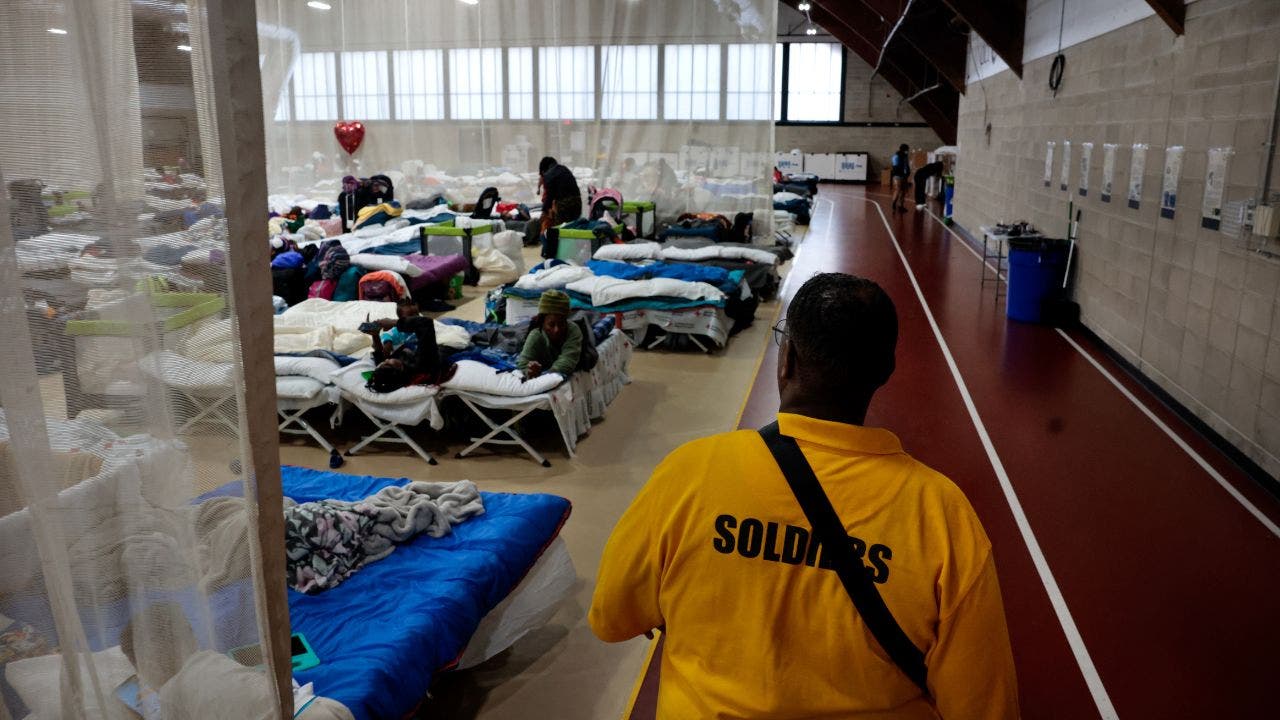
A former migrant shelter director in Massachusetts described the chaos he saw under the state’s right-to-shelter laws, saying that the influx of illegal immigrants has clogged the state’s infrastructure and that there is virtually no vetting for the surge of border crossers.
Massachusetts spent nearly $1.1 billion of taxpayers’ money this fiscal year to house and feed migrants streaming into the state, often in hotels that have been converted to shelters. However, taxpayers have at times found themselves boxed out of shelters as immigrants have crowded the system and taken priority, said Jon Fetherston, who acted as a migrant shelter director at the Marlborough Holiday Inn between November 2023 and July of last year.
Under its right-to-shelter law, established in 1983, the state must provide housing for displaced families and pregnant women. In 2023, the state’s shelters reached their capacity of 7,500 enrolled families – yet migrants continue to use Massachusetts’ programs.
Fetherston previously detailed the repeated violent incidents and mistreatment of children he saw during his tenure – and decried a lack of consequences for their perpetrators.
CHILD RAPE AND VIOLENT INCIDENTS REPORTED AT MASSACHUSETTS MIGRANT SHELTERS, FORMER FACILITY DIRECTOR SAYS
Illegal immigrants line the floors of a terminal at Boston Logan Airport as Massachusetts’ shelters are overrun. (WBZ)
In light of a man from the Dominican Republic, who was accused of possessing an AR-15 and $1 million worth of fentanyl in a state-subsidized room last month in Revere, Fetherston explained the vetting process – or lack thereof – in an interview with Fox News Digital.
Leonardo Andujar Sanchez, 28, was arrested on Dec. 27 after his girlfriend called Revere police to report that he had drugs and a long, black gun hidden under a pink suitcase in their hotel room. The woman told police that she had been living at the Quality Inn for three months and that she and Sanchez had obtained the room through a refugee program.
“I worked in that shelter for a very limited time,” Fetherston told Fox News Digital. “You can’t hide an AR-15 in that room. You cannot hide drugs in that room. The rooms are not big… the case manager there should have been standing up… there should have been red flags… to say ‘Hey, listen, this guy’s not attending those meetings. This guy is blowing off housekeeping.’”
DEM MASSACHUSETTS GOVERNOR NOW WANTS TO LIMIT ILLEGALS IN CRIME-RIDDEN MIGRANT SHELTERS
Meshach Little of Northill Wilkston Security Firm walks the perimeter of the main living area at the state’s emergency overflow shelter for migrants at the Melnea A. Cass Recreational Complex. (Craig F. Walker/The Boston Globe via Getty Images)
Fetherston said that the incident was just another example of a lack of security and vetting at the state’s strained migrant facilities.
The Executive Office of Housing and Livable Communities, which oversees the state’s shelter program, told Fox News Digital that it has security guards at every facility and conducts warrant checks every 30 days. However, Fetherston did not see that activity during his tenure.
“I will tell you that all the shelters that I’ve either worked in and volunteered [at] do have a form of security. But… it’s really basically somebody sitting at the desk – no better than you would have in a corporate office park… it’s certainly not the level of security that you need in these shelters… I never saw anybody come in and do a warrant check.”
Staff at the shelters were primarily chosen because of the languages they spoke rather than any kind of experience, he said.
ILLEGAL IMMIGRANT WITH $1M WORTH OF DRUGS, GUNS GIVEN FREE HOUSING COURTESY OF BLUE STATE TAXPAYERS: OFFICIALS
Boston Mayor Michelle Wu and Massachusetts Gov. Maura Healey, right, visit the Melnea A. Cass Recreational Complex, which was being used to house more than 300 immigrants. (John Tlumacki/The Boston Globe via Getty Images)
“You hire people just because they can speak the language that you need, being either Haitian or, you know, Portuguese or Spanish. So you’re not necessarily hiring a qualified caseworker or mental health advocate or somebody who’s been experienced in navigating these things, because those people don’t exist,” he said.
“A lot of times… the case managers became sympathetic to their fellow countrymen when they taught them how to navigate the system and not always in the most ethical ways. And that’s where the chaos came down.”
Meanwhile, he said, there was “a tremendous amount of domestic violence… a tremendous amount of violence towards children [and] a tremendous amount of violence towards other countrymen.”
Fetherston said residents’ alleged friends and relatives would constantly cycle through the facility where he worked. Despite policies about residents coming through security, staffing was stretched so thin that actually keeping track of who was coming in and out was near impossible.
ICE ARRESTS 3 ILLEGAL IMMIGRANTS IN MASS.: 2 CHARGED WITH CHILD RAPE, 1 CONVICTED OF SAME CRIME IN BRAZIL
Pictured are items allegedly found in Leonardo Andujar Sanchez’s possession when he was arrested at a Revere, Massachusetts, migrant shelter on Dec. 27. (ERO Boston)
“[The Revere arrest] touch[es] the hot point [for me] from day three, maybe, of me being in the shelter,” Fetherston said. “‘Who’s that?… I didn’t check them in. I didn’t see them when they came in. Who were they?… How did this guy get past?’ ‘Well, that’s so-and-so’s uncle.’”
Oftentimes, he said, families would “disappear” – housekeeping would report that a family had not been in their room for three or four days. He would get calls about residents showing up at the facility, and they would never arrive, or a person whose ID did not match at all would show up.
Since a ruling handed down by the Supreme Court in November of last year, after Fetherston left the shelter, shelters are not allowed to ask families for identification or documents when they are applying for its short-term shelter program.
This distinction, he said, makes Democratic Gov. Maura Healey’s recent call to further vet emergency shelter residents to ensure that they are in the U.S. legally, with rare exceptions, impossible.
“I believe these changes are appropriate and needed to ensure the long-term sustainability of the state shelter system in a way that aligns with the original intent of the law,” Healey said in a statement. “In addition, these proposed changes will allow us to continue to ensure the safety of our system, support cities and towns in addressing the needs of unhoused families in their communities and put us on the path toward a more fiscally sustainable shelter system.”
“She can say she will increase vetting, but how do you vet someone who has no ID? She also wants migrants to self-identify if they have committed crimes in the past – that’s not going to happen,” Fetherston said.
DEM GOVERNOR THREATENS TO USE ‘EVERY TOOL’ TO FIGHT BACK AGAINST TRUMP-ERA DEPORTATIONS
Massachusetts Gov. Maura Healey held a press conference announcing significant action related to the state’s emergency shelter system. (Photo by Jonathan Wiggs/The Boston Globe via Getty Images)
“She is saying this now, in an attempt to get [this] out of the news, and then have someone to blame when the reform doesn’t happen,” Fetherston said.
Healey’s office could not be reached for comment at press time.
Fetherston said he has had to turn away American citizens who had fallen on hard times amid the chaos at the state’s migrant shelters.
“I would have veterans walk up to the shelter, [saying] ‘I am a Vietnam veteran, I just need a room for tonight.’ And I would say, ‘I’m sorry. This is for migrants. All the public is not allowed. This is for migrants only,’” he recalled.
“I wasn’t always able to find, you know, a homeless veteran a place on a cold night. But we’ve got migrants,” he continued. “And once again, I don’t blame them living in a shelter where everything’s free for three free meals, free dry cleaning, free Ubers, has a roof over your head, free health care. And I’m sending a decorated veteran out into the cold. At least half a dozen times I had to do that.”
He also said that, although there are technically limitations to how long one can stay in the state’s shelters, they are not always enforced, and spots for citizens in need are not made available.
“You can’t blame the people who stepped up and tried to do their job. You have to blame the system and the person running the system for not putting checks and balances,” Fetherston said. “The governor had no plan and she just wanted to get these shelters open… Nobody specializes in this – Massachusetts is the only state in the entire nation that has the right to shelter. So it’s fair to say, well, they didn’t have qualified people. Well, nobody’s qualified for this because nobody’s ever had to experience this.”
Read the full article from Here


A fire ripped through a recycling center in Doylestown, Pennsylvania, Thursday evening, emergency officials said.
The fire erupted around 6 p.m. at a Doylestown Waste Recycling building on 1510 Swamp Road. The facility mainly recycles construction debris, according to the company’s website.
Chopper 3 was over the scene as firefighters battled flames at the heavily damaged building. Large plumes of smoke could be seen from miles away.
The cause of the fire remains under investigation.
No injuries have been reported.
Rhode Island
State agencies advise avoiding contact with three Rhode Island waterbodies over algae blooms – What’s Up Newp

The Rhode Island Department of Health and Department of Environmental Management are advising people to avoid contact with three waterbodies, including Upper Melville Pond in Portsmouth, because of harmful algae blooms.
The advisory also applies to Wenscott Reservoir in North Providence and Wilson Reservoir in Burrillville. Water samples were collected by DEM and tested by the Health Department’s State Health Laboratories, and initial samples at all three locations exceeded the advisory threshold.
All recreation, including swimming, fishing, boating and kayaking, is considered high risk and should be avoided at the affected waterbodies, the agencies said. The blooms are caused by blue-green algae, also known as cyanobacteria, which are naturally present in bodies of water but can produce toxins harmful to humans and animals.
Officials urged caution in all areas of the three waterbodies, as blooms can move locations within ponds and lakes. People should not drink untreated water or eat fish from the affected waters, and pet owners should not allow pets to drink or swim in them. The advisory remains in effect until further notice, with follow-up samples to be collected to confirm the water is safe before it is lifted.
Skin contact with water containing the blooms can cause rashes, sore throat and irritation of the eyes and nose, while swallowing the water can cause stomachache, diarrhea, vomiting and nausea. More serious but less common effects may affect the liver and nervous system or cause irregular heartbeat, dizziness or seizures. Young children, pets and people who are immunocompromised or have certain underlying health conditions may be at greater risk.
Anyone who comes into contact with a bloom should rinse their skin with clean water right away and shower and wash their clothes afterward. Pets exposed to the water should be washed immediately and kept from licking algae from their fur, and a veterinarian should be called if a pet shows signs of illness such as tiredness, loss of appetite, vomiting or diarrhea within a day. People who feel sick after contact should call a healthcare provider.
Officials said affected waters may show bright to dark green scum along the shoreline, with thick algae floating on the surface resembling green paint, pea soup or green cottage cheese. People and pets should avoid any water that looks like this.
Suspected blooms can be reported to DEM’s Office of Water Resources at DEM.OWRCyano@dem.ri.gov or by calling 401-222-4700. More information and a Cyanobacteria Tracker Dashboard listing current advisories are available at dem.ri.gov/bluegreen.

Joshua Severance (Courtesy: Rutland City Police Department)
COTTONWOOD, Ariz. – A man wanted for a violent kidnapping and sexual assault in the Verde Valley was hit with an 11-count grand jury indictment on Thursday, though he has already been sitting in a New England jail cell for nearly a month.
What we know:
Joshua Severance, 39, is facing multiple counts of sexual assault and kidnapping with a dangerous weapon after an attack reported in Cottonwood back in May.
Arizona prosecutors are now launching formal extradition proceedings to bring him back across the country to face trial.
The backstory:
The investigation began on May 20 after a woman reported being attacked near State Route 89A and 12th Street. Police say Severance used a weapon to kidnap and sexually assault the victim, and even blocked her from using a phone to call for help.
While local detectives were working the case in Arizona, Severance reportedly fled to Vermont, where his run from the law quickly ended. On June 4, police in the city of Rutland spotted Severance on patrol and arrested him on a local warrant for luring a child and distributing child pornography, both felony counts.
Dig deeper:
Severance has been held in Vermont on a $25,000 bond since that arrest while Arizona authorities prepared the July 2 indictment on these charges:
- 3 counts of felony sexual assault
- 2 counts of felony kidnapping with a dangerous weapon
- 2 counts of felony attempted sexual assault
- 1 count of felony sexual extortion with a dangerous weapon
- 1 count of felony aggravated assault with a dangerous weapon
- 1 count of felony sexual abuse
- 1 count of felony weapons misconduct
- 1 count of felony criminal damage
- 1 count of misdemeanor preventing the use of a telephone
What they’re saying:
“We are grateful for all the information and leads provided by the public throughout this investigation,” Cottonwood Police said in a statement. “While there is still work to be done, we want to formally recognize and thank all the officers, detectives, and civilian staff who have worked tirelessly on this case. Their dedication, professionalism, and commitment to justice have been exemplary throughout this complex investigation.”
What you can do:
Detectives are still asking anyone with more information about the suspect to call the department at 928-634-4246.
What’s next:
Severance is scheduled to face a Vermont judge on July 20 pending the extradition proceedings.
The Source: Information in this story was gathered from the Cottonwood Police Department and the Rutland City Police Department.
-

 North Dakota7 minutes ago
L.L. Bean to Open Store in North Dakota
-

 Ohio14 minutes ago
3 family members accused of murdering Ethan Vernon in Ohio
-
 Oklahoma17 minutes ago
New Oklahoma law requires emergency action plans for summer camps
-

 Oregon22 minutes ago
Here’s when you can see the Oregon Air National Guard flyovers on July 4
-

 Pennsylvania29 minutes ago
Fire tears through recycling center in Doylestown, Pennsylvania, officials say
-

 Rhode Island32 minutes ago
State agencies advise avoiding contact with three Rhode Island waterbodies over algae blooms – What’s Up Newp
-

 South-Carolina32 minutes ago
Dawn Staley shows off new South Carolina colorway on A’ja Wilson Nike shoes
-

 South Dakota44 minutes ago
Pres. Trump travels to South Dakota

