Louisiana
A Louisiana police officer was killed during a SWAT operation, officials say


BATON ROUGE, La. — A Louisiana police officer was killed this week during a SWAT operation, the Lafayette Police Department said Friday.
In a statement on its Facebook page, the department identified the officer killed as Senior Cpl. Segus Jolivette, a member of the Special Weapons and Tactics Team. The husband and father of five joined the department in November 2013 and had served as a school resource officer in the past.
The officer was killed during a SWAT operation Thursday in the small city of Jeanerette in southern Louisiana. Details about the situation leading up to Jolivette’s death were not immediately available.
Trooper Peggy Bourque, a spokesperson for the Louisiana State Police, told The Associated Press on Friday morning that a suspect “has been captured and is no longer a threat to the public.” Officials have not provided the name or details of the suspect.
Multiple police agencies and officials took to social media Thursday night to mourn the death of the officer.
“Today we lost one of our best in the line of duty,” Lafayette Parish Mayor-President Monique Blanco Boulet said in a written statement. “I offer my prayers, my sympathies and my support to his wife, his children, his parents, and his entire family. They are experiencing the most difficult and unimaginable kind of loss.”
Before joining the Lafayette department, Jolivette worked for the Opelousas Police Department. Lafayette police said Jolivette dedicated much of his free time supporting the Explorer Program, “helping Lafayette’s youth to gain a better understanding of law enforcement operations and the importance of relationship building in our community.”
“His legacy of bravery and dedication will be remembered and honored by all who knew him,” Lafayette police said in a statement.
——
Associated Press writers Kevin McGill in New Orleans and Jeff Martin in Atlanta contributed to this report.



The Louisiana Lottery offers several draw games for those aiming to win big.
Here’s a look at June 20, 2026, results for each game:
Winning Powerball numbers from June 20 drawing
16-20-44-48-50, Powerball: 15, Power Play: 2
Check Powerball payouts and previous drawings here.
Winning Pick 3 numbers from June 20 drawing
1-8-2
Check Pick 3 payouts and previous drawings here.
Winning Pick 4 numbers from June 20 drawing
1-4-7-5
Check Pick 4 payouts and previous drawings here.
Winning Pick 5 numbers from June 20 drawing
6-6-2-7-9
Check Pick 5 payouts and previous drawings here.
Winning Easy 5 numbers from June 20 drawing
01-06-18-25-33
Check Easy 5 payouts and previous drawings here.
Winning Lotto numbers from June 20 drawing
09-13-16-17-33-41
Check Lotto payouts and previous drawings here.
Feeling lucky? Explore the latest lottery news & results
Are you a winner? Here’s how to claim your lottery prize
All Louisiana Lottery retailers will redeem prizes up to $600. For prizes over $600, winners can submit winning tickets through the mail or in person at Louisiana Lottery offices. Prizes of over $5,000 must be claimed at Lottery office.
By mail, follow these instructions:
- Sign and complete the information on the back of your winning ticket, ensuring all barcodes are clearly visible (remove all scratch-off material from scratch-off tickets).
- Photocopy the front and back of the ticket (except for Powerball and Mega Millions tickets, as photocopies are not accepted for these games).
- Complete the Louisiana Lottery Prize Claim Form, including your telephone number and mailing address for prize check processing.
- Photocopy your valid driver’s license or current picture identification.
Mail all of the above in a single envelope to:
Louisiana Lottery Headquarters
555 Laurel Street
Baton Rouge, LA 70801
To submit in person, visit Louisiana Lottery headquarters:
555 Laurel Street, Baton Rouge, LA 70801, (225) 297-2000.
Hours: 8 a.m. to 4:30 p.m., Monday through Friday. This office can cash prizes of any amount.
Check previous winning numbers and payouts at Louisiana Lottery.
When are the Louisiana Lottery drawings held?
- Powerball: 9:59 p.m. CT Monday, Wednesday and Saturday.
- Mega Millions: 10 p.m. CT Tuesday and Friday.
- Pick 3, Pick 4 and Pick 5: Daily at 9:59 p.m. CT.
- Easy 5: 9:59 p.m. CT Wednesday and Saturday.
- Lotto: 9:59 p.m. CT Wednesday and Saturday.
This results page was generated automatically using information from TinBu and a template written and reviewed by a Louisiana editor. You can send feedback using this form.

Advocates for death row inmates in Louisiana are praising a decision this month by the U.S. Supreme Court that barred Alabama from carrying out its latest scheduled execution by nitrogen gas, while Louisiana Attorney General Liz Murrill panned the outcome as the work of a “rogue judge.”
The unsigned 6-3 decision in the case of Alabama double murderer Jeffery Lee denied Alabama’s emergency request to lift a lower court ban on killing him with nitrogen gas. For now it places executions by nitrogen gas on hold in Alabama, the first state to use the method on death row prisoners. Alabama has put seven prisoners to death using the method since 2024.
The court declined to spell out its rationale for pausing the Alabama execution, leaving uncertain the impact on Louisiana, the only other state to complete an execution by nitrogen gas. Louisiana falls under a different federal circuit.
Alabama Attorney General Steve Marshall responded to the high court’s decision by asking the Alabama Supreme Court to let the state execute Lee by lethal injection instead. Marshall’s office did not respond to questions about whether or how Alabama intends to defend its use of nitrogen hypoxia at this point.
But Murrill downplayed the impact on executions in Louisiana. The Republican attorney general, who has pressed to restart Louisiana’s execution chamber in earnest, did not respond when asked how the decisions could impact the state’s future use of nitrogen gas.
“The United States Supreme Court has allowed it, and there are procedural explanations for the vote in the Alabama case,” Murrill said in a statement.
“Alabama, like Louisiana and other states, wants to carry out criminal sentences and deliver long-delayed justice that was promised to victims and their families in these heinous crimes,” she added. “So the pivot in this case to another method simply signals that Alabama does not intend to allow anti-death penalty activists to delay the execution.”
Advocates for inmates on death row hope the legal developments serve as more than a speed bump for the handful of states that have authorized nitrogen gas executions.
Lee’s case involved some of the same experts from a challenge last year to Louisiana’s first execution in 15 years, when the state used nitrogen gas in March 2025 to kill Jessie Hoffman for the 1996 rape and murder of Mary “Molly” Elliott.
In Hoffman’s case, a 5-4 majority of the U.S. Supreme Court denied an application to stay his execution. Arkansas, Mississippi and Oklahoma also have authorized executions by nitrogen gas but have not used it.
Capital attorney Cecelia Trenticosta Kappel of the New Orleans-based Promise of Justice Initiative said the lower courts’ reasoning in Lee’s case applies just as well here.
“Louisiana’s protocol for nitrogen gassing is a copycat of Alabama’s, so the factual findings of the district court and the Eleventh Circuit should apply to Louisiana with full force,” Kappel said in a statement.
“And unlike the federal Constitution, Louisiana’s Constitution goes further, explicitly banning torture and providing stronger safeguards against cruel, unusual, or excessive punishment.”
Murrill has pressed local courts to clear more death row inmates for execution. No others have taken place since Hoffman, though the Legislature has set tight new deadlines to quicken the post-conviction review process for condemned prisoners. Louisiana now has about 56 prisoners on death row.
Does nitrogen gas cause ‘needless suffering?’
In Alabama, Lee was convicted of a shotgun double killing during a 1998 robbery of a pawn shop. A jury settled on life in prison, but a judge overrode the decision with a death sentence, in a practice later outlawed.
U.S. District Judge Emily Marks, who was nominated to the federal bench by President Donald Trump, at first rejected Lee’s challenge to the nitrogen gas death under the Eighth Amendment’s ban on “cruel and unusual” punishment.
After a trial, Marks ruled that Alabama’s nitrogen gas protocol didn’t cause “needless suffering,” though she found it caused one to three minutes of “severe air hunger and corresponding emotional distress, anxiety, physiological stress, and physical discomfort.”
The 11th Circuit Court of Appeals concluded differently, saying “the overall suffering described by the district court, which lasts for one to three minutes, presents a substantial risk of serious harm over and above death itself.”
The appeals court sent the case back to Marks, who then decided that Lee’s chosen alternative — a firing squad — while not approved by Alabama, was “feasible, readily implemented, and significantly reduces the substantial risk of serious harm posed by the Protocol.”
Marks issued a permanent injunction that the appeals court upheld, reasoning that if it didn’t, the state could moot the case by killing Lee. Alabama then asked the Supreme Court to step in. Granting Lee’s challenge would be “unprecedented in American history,” the state claimed, expanding “the concept of cruelty well beyond the bounds of the Eighth Amendment.”
Justices Clarence Thomas, Samuel Alito and Neil Gorsuch dissented from the denial of the state’s petition.
Nitrogen gas vs. firing squad vs. other methods
The U.S. Supreme Court has a long history of staying out of challenges over methods of state executions. Lee’s was the first involving nitrogen gas where the justices were asked to suspend a permanent injunction issued by a lower court long enough for Alabama to kill him.
Before then, the high court had allowed eight executions by nitrogen hypoxia to go forward.
One legal scholar argued that Louisiana “just may think it’s not worth it” to pursue more nitrogen gas executions after Alabama’s response to the recent court ruling.
“The litigation in Alabama has set a road map for attorneys to follow if it goes all the way up to the Supreme Court. It’s a pretty good yellow brick road in terms of the cost, the controversy, the chaos that’s involved in dealing with such a very challenging and difficult method of execution,” said Fordham University law professor Deborah Denno.
In a recent paper, Denno argued that the U.S. has entered a new era of “crueler, sloppier, and more reckless” executions, with some states tapping older techniques like the firing squad and others approving nitrogen gas, a new one.
The last execution using nitrogen gas came last October in Alabama, when condemned inmate Anthony Boyd appeared to take longer to die than any others using the method. The Associated Press reported Boyd shaking and heaving for more than 15 minutes before the curtain closed on the execution chamber.
Louisiana lawmakers approved nitrogen gas along with the electric chair as options in 2024 legislation after the state struggled for years with access to lethal injection drugs. The choice of methods under the law is left to the state corrections secretary.
Supreme Court ‘shadow docket’ leaves reasoning murky
Some legal observers cautioned that the court may have denied Alabama’s plea for reasons not entirely related to Lee’s fate.
Stephen Vladeck, a Georgetown University professor who has studied the court’s growing use of its “shadow docket” to settle legal issues through emergency decisions, argued in an amicus brief that the court shouldn’t let that docket be used to clear a path for Lee’s execution.
John Blume, a Cornell University law professor, said the court’s actions on the shadow docket are notoriously hard to decipher.
“So, it could mean that the refusal to lift the (injunction) stay means a majority thinks the District Court and the Court of Appeals got it right. It could also mean that they might hear the case on the merits and vacating the stay would moot the case,” Blume said.
“Or it could just mean that they did not see what has (been) until this Court came along the difficult standard for a stay being satisfied.”
Blume said the court has granted the vast majority of emergency relief requests from orders staying executions.
“But most of those were preliminary injunctions,” he added. “This was a permanent one.”
Lee’s legal team with the Arnold & Porter firm in Washington, D.C. praised the decision while noting that it didn’t clip Alabama’s right to kill him, only how.
“We are asking only that the execution be carried out by a constitutional method,” the firm said, adding that the high court ruling “ensures the opportunity for a full review of the trial and appellate record before any execution proceeds.”

Miss Louisiana preliminaries closed Friday with Miss Louisiana Port City sweeping health and fitness and evening wear, and a newcomer earning another night of preliminary wins.
Shelby Bordelon, Miss Louisiana Port City, won health and fitness and evening wear preliminaries. Miss Natchitoches City of Lights Eva Delatte won the talent preliminary.
Miss Heart of Pilot Lauryn Vernon won both the newcomer health and fitness and the newcomer evening wear awards, earning $500 in scholarships. Kelly Lohman, Miss Avoyelles Arts & Music Festival, received the $500 newcomer preliminary talent scholarship.
Other scholarships that were presented Friday night included:
- Women in Business ($1,000 Scholarship): Miss Louisiana Tech University De’Ahmya Whaley
- Women in Education ($1,000 Scholarship): Miss Southeastern Louisiana University Miranda Sensat
- Women in Health Sciences ($1,000 Scholarship): Miss Ruston Emma Calhoun
- Women in Marketing ($1,000): Miss Louisiana Tech University De’Ahmya Whaley
- Women in Mass Communication ($1,000 Scholarship): Miss Louisiana Port City Shelby Bordelon
- STEAM ($500): Miss Ruston Emma Calhoun, Miss Cane River Olivia Grace Dyrek, Miss Monroe Jalia Shepherd
- Champions of Faith ($1,000): Miss Louisiana Christian University Destanee Stewart
- Glenda Moss Memorial Passion for Dance Scholarship ($1,000): Miss Krewe of the Twin Cities Anna Claire Lemoine
- Origin Bank Leadership & Culture ($1,000): Miss Avoyelles Arts & Music Festival Kelly Lohman
- American Heart Association − Raised over $1,000: Miss CENLA Lauragrace Rader, Miss Louisiana Port City Shelby Bordelon, Miss Louisiana Tech University De’Ahmya Whaley
- AHA Winner − Raised over $5,000: Miss Union Parish Hannah Brotherton
- Sharon Turrentine Health Living ($1,000): Miss University of Louisiana Monroe Katherine McCullars
- Community Service 1st Runner Up: Miss Avoyelles Arts & Music Festival Kelly Lohman
Who are the Miss Louisiana contestants?
The Jazz Group consists of:
- Miss Slidell Maddie McMahan
- Miss Spirit of Fasching Caroline Pierce
- Miss Minden Sadie Brown
- Miss Belle of the Bayou Jansen McDonald
- Miss Spirit of the Red Elyce Thomas
- Miss Ouachita Parish Jasmine Henson
- Miss Bossier City Adreaunna Scott
- Miss Heart of Pilot Lauryn Vernon
- Miss Red River City Courtney Patterson
- Miss Lincoln Parish Sarah Cook
- Miss Twin Cities Addison Jackson
- Miss Southeastern Louisiana University Miranda Sensat
- Miss Union Parish Hannah Brotherton
- Miss University of Louisiana at Monroe Katherine McCullars
- Miss Louisiana Port City Shelby Bordelon
The Blues Group consists of:
- Miss Avoyelles Arts & Music Festival Kelly Lohman
- Miss Northwestern Lady of the Bracelet Nilah Pollard
- Miss Pride of Monroe Shelby Weaver
- Miss Krewe of the Twin Cities Anna Claire Lemoine
- Miss Louisiana Christian University Destanee Stewart
- Miss Louisiana Bayou Makenzie Tillery
- Miss Ruston Emma Calhoun
- Miss Natchitoches Parish Hannah Reeder
- Miss Louisiana Stockshow Jacie Brent
- Miss Cane River Olivia Grace Dyrek
- Miss Natchitoches City of Lights Eva Delatte
- Miss Monroe Jalia Shepherd
- Miss CENLA Lauragrace Rader
- Miss Louisiana Tech University De’Ahmya Wiley
Follow Ian Robinson on Twitter @_irobinsonand on Facebook at https://bit.ly/3vln0w1.
-
 Entertainment3 minutes ago
A fake mountain and real magic transform Paris’ oldest bridge
-
Lifestyle5 minutes ago
Day 1,578 of WW3: The UN Security Council will meet on Monday to address Russia's latest strikes on cultural and religious sites, including the attack on Kyiv-Pechersk Lavra. ANGH, of course. This is your Saturday Ukraine discussion
-
 Politics11 minutes ago
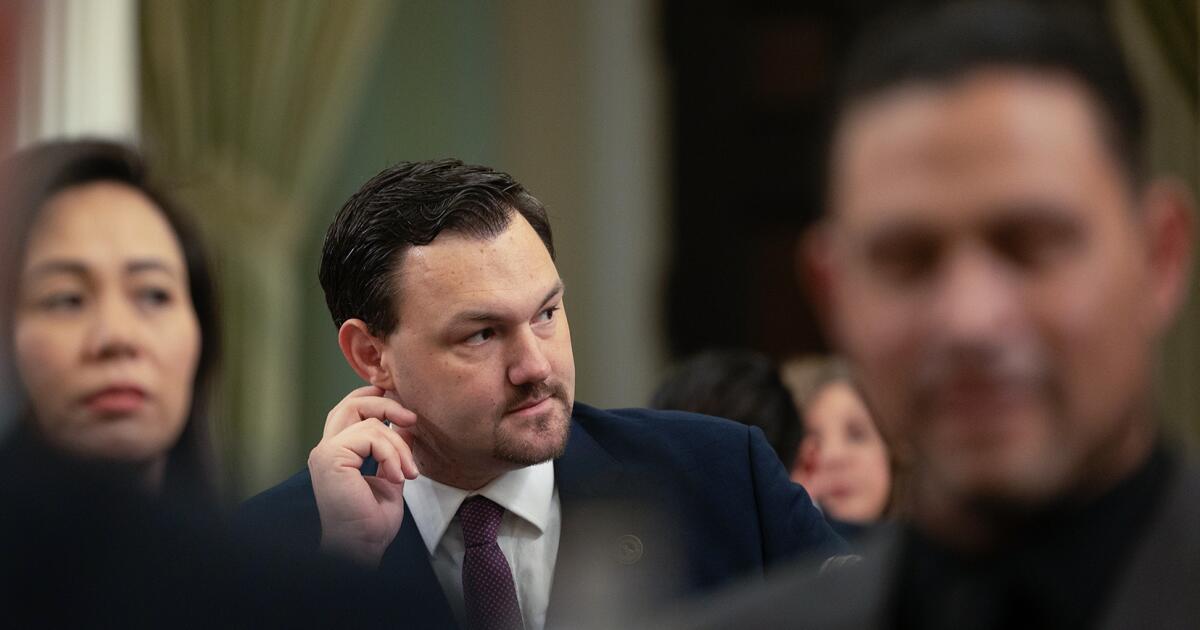
Can a new commission remedy California’s public defender crisis?
-
Sports21 minutes ago
2026 World Cup guide: Full TV schedule, game previews, results and standings
-

 World33 minutes ago
Poland and Ukraine’s ‘honours war’ intensifies
-

 News56 minutes ago
Newsom declares State of Emergency for Boyle Heights warehouse fire
-

 Los Angeles, Ca2 hours ago
Kids, teens can enjoy free lunch at over 90 parks across Los Angeles
-

 Detroit, MI3 hours ago
Metro Detroit church hosts community event to support youth: “We’re here for you”


