


- President Donald Trump is expected to sign executive orders reducing the size of Utah’s Grand Staircase-Escalante and Bears Ears national monuments on Monday.
- The monuments have shifted in size between administrations, with Trump reducing them in 2017 and President Joe Biden restoring their original boundaries in 2021.
- Environmental groups and Utah officials are divided over the potential reduction, with critics threatening legal challenges and supporters seeking more local control.
Utah
Men’s Lacrosse: Buckeyes take down No. 15 Utah 11-8 in first game of the season


Ohio State then-sophomore attacker Ed Shean (10) passes his defender in the No. 11 Ohio State (2-0)-Cleveland State (0-1) game in February 2023. Ohio State won 19-12. Credit: Lantern File Photo.
In their season opener, the Buckeyes found themselves in murky waters.
Down 6-2 in the second quarter against a top-15 team, the Ohio State men’s lacrosse season-opening record of seven straight wins was on the line. However, an unexpected newcomer came to the rescue, helping revive a sinking offense and sparking an incredible comeback.
Ohio State took down the No. 13 Utah Utes Saturday after a heroic five-goal performance from junior transfer Gannon Matthews at the Ohio State Lacrosse Stadium.
The efforts from Matthews helped lift the Buckeyes past the Utes — in their first all-time program matchup against Utah — helping extend their season-opening record held since 2009 to 13-2.
“[Our] mindset was to get the first one of the season and be prepared for everything,” head coach Nick Myers said.
Ohio State quickly found themselves down 6-2 after a high-powered offensive attack started by Utes’ senior attacker Tyler Bradbury. He scored the first points of the game off of an assist from fellow Utes senior attacker Jordan Hyde at the 11:59 mark of the first quarter.
The trend continued with senior midfielder Carson Moyer punching in an individual goal at the 7:29 mark on Ohio State junior goalkeeper Henry Blake, making the score 2-0.
The lone goal for the Buckeyes in the first quarter came at the 3:32 mark, with Ohio State junior attacker Ben Mayer knocking in a goal of his own. Not even 10 seconds later, Utes sophomore attacker Ryan Stines punched in an unassisted goal, giving Utah a 2-point lead with 3:24 remaining.
Moyer then connected on another unassisted goal before the end of the first quarter, making the score 4-1 Utah.
The tide began to turn in the Buckeyes’ favor at the 11:55 mark of the second quarter, as Ohio State drew penalties, forcing Utah to play five players against six Buckeyes multiple times.
After another Utes score, Buckeye junior attacker Ed Shean, who led the team in scoring last season with 27 goals, drove in an unassisted score for Ohio State.
The Shean score sparked a Buckeye scoring run that lasted well into the third quarter and established a momentum shift in favor of Ohio State.
“We’re always battling in practice and it translates onto the field how you play,” Matthews said. “We wanted to show that and come out with a win.”
Matthews served to be a significant factor in the momentum shift, putting up two scores in the second quarter as the Buckeyes began to cut into the Utes’ lead.
The score was 6-5 Utes at halftime, but the energy shift carried into the second half with another score from Matthews off an assist from graduate midfielder Thomas Greenblatt, giving the Buckeyes their first lead of the day at the 8:31 mark.
Ohio State struggled to put shots on goal in the first half of the game, but that changed at the beginning of the third, as the Buckeyes outshot Utah 4-2 amid the number of turnovers both teams were committing.
Utah lost control of the ball seven times in the third quarter to the Buckeyes’ five, the most cumulatively out of any quarter in the game.
Utah took control for the remainder of the third quarter after a goal from junior midfielder Cody Hart.
The beginning of the final quarter featured another Utah goal, this one coming from freshman defenseman Mikey Crane. The score, which put the Utes up 8-7, would become their last of the game.
An unassisted score from Buckeyes sophomore midfielder Dillon Magee kickstarted another run, with Mayer and Matthews all punching in goals in the fourth quarter. Ohio State’s defense in the fourth proved to be strong, forcing Utah to commit multiple turnovers in the contest’s final quarter.
“Getting that first one at home in front of our nice crowd on a beautiful day from a good opponent,” Myers said, “I think there’s a lot you can take away from that.”
The Buckeyes will take on Cleveland State at the Ohio State Lacrosse Stadium Saturday. The game will be televised at noon on Big Ten Plus.


SALT LAKE CITY — A Riverton woman is proving that one moment of compassion can change a life.
On May 21, LaCinda Thackeray was flying home to Utah from Southern California after attending a family funeral when someone outside the window caught her attention.
As she waited to board her plane at John Wayne Airport, she noticed an airport worker struggling to walk across the tarmac.
“I just saw somebody who needed a little bit of support and love and kindness,” Thackeray said. “What really was hard for me was just the conditions he was in, and I didn’t even know his story at that point.”
Before her flight departed, Thackeray recorded a short video of the man and shared it on TikTok, asking if anyone knew who he was.
“Immediately when I sat on the airplane, my thought was, if anybody knew who he was, could we get him retired?” Thackeray said. “I didn’t know it was going to take off. I had no idea.”
Within a few hours, the video had been viewed more than a million times. Thousands of people shared it, and strangers from around the world began asking how they could help.
The internet soon identified the man as 64-year-old James Blair, a Navy veteran who works as a fuel injector and fuel mechanic at the airport.
By all accounts, Blair has lived a life of service. He served in the Navy from 1980 to 1990.
“We were 20 minutes from launching against Iran when the hostages were in Iran. We had all of our planes loaded with bombs and missiles on our ship and were just waiting for President Reagan to give the go-ahead,” Blair said.
After the Navy, Blair said he worked at LAX airport for 13 years and, after a three-year stint as a truck driver, returned to working on planes at John Wayne Airport.
“I’ve been at John Wayne Airport since April of 2006,” Blair said.
Though Blair turned 64 in March, retirement is not on his horizon.
“My plan was to work until I can’t work, until I physically can’t work,” he said. “I have inquiries out about getting knee operations; I’m working on that right now.”
Despite ongoing knee problems, Blair said his priority is his elderly mother, whom he lives with.
Thackeray said much of Blair’s income goes toward her hospice care.
“She has her good days, and she has her bad days,” Blair said.
Encouraged by people online, Thackeray started a GoFundMe campaign. She said donations quickly poured in.
“At one point, I remember telling my husband, ‘What did I do?’” Thackeray said. “When we needed to get him the money, that is when we were a little panicky, but then it changed really fast.”
The overwhelming support, Thackeray said, presented an exciting opportunity but also some challenges in ensuring that Blair would receive the money.
Until recently, Blair didn’t have a smartphone or social media accounts.
His boss volunteered to drive 1.5 hours to his home to help him set up a GoFundMe account so that he could receive the funds as a beneficiary.
“When his boss went out there, it eased so much anxiety,” Thackeray said.
Recently, Thackeray returned to California to personally deliver a $174,000 check to Blair.
For Blair, the support from complete strangers has restored his faith in humanity.
“Not in a million years,” Blair said when asked if he ever imagined something like this would happen.
“I’m just a person trying to do a job, trying to survive, and the way people give their own money. I have a hard time working to pay bills, so other people probably have the same problems. When they’re giving money they really can’t spare, that amazes me. I’m just blown away.”
Thackeray said the generosity extended far beyond the United States.
“I was speechless because I felt like the world showed up, and I think in these times we need people like that.” She said.
“I’ve been speaking to people all over the world, and they’re just, ‘Tell James hi!’ Give him a hug for us!” she said.
Blair also reflected on how deeply the experience has affected him personally.
“I believed in God, but I didn’t really believe in God. But now, with the angel sitting next to you, it’s amazing,” Blair told Thackeray. “I can’t believe how God works in mysterious ways.”
Although Blair is still going to work, he recently used some of the funds to buy himself a bed. He continues to care for his mother.
“I mean, I don’t know what Salt Lake City living is now, but California is really expensive,” Blair said.
What began as a brief glance through an airplane window has grown into an unlikely friendship — and a powerful reminder that a single act of kindness can inspire thousands of people to make a difference.
“I’m so happy for him and that he gets to experience this,” Thackeray said.
“I told him, I’m just a little part of your story, I’m happy that I could do that, but I hope you can always remember the ones that showed up and donated.”
To date, nearly 6,000 people have donated to the fundraiser. It has raised $180,521.00 for Blair.
Thackeray’s TikTok video of Blair has been viewed more than 9 million times, garnering nearly 800,000 likes and 8,000 comments.
For more information about the fundraiser, visit: https://gofund.me/51f1c9e16
*KSL.com does not assure that the money deposited to the account will be applied for the benefit of the persons named as beneficiaries. If you are considering a deposit to the account, you should consult your own advisers and otherwise proceed at your own risk.
The Key Takeaways for this article were generated with the assistance of large language models and reviewed by our editorial team. The article, itself, is solely human-written.

Not only the Utah that we are today, but the Utah that we can choose to become.
(Rick Egan | The Salt Lake Tribune) Gabriel Meneses makes one of the limited edition flags for the United States 250th anniversary at Colonial Flag in Sandy on Monday, June 1, 2026.

President Donald Trump plans to sign an executive order on Monday afternoon shrinking the size of two national monuments in Utah, which currently cover a combined 5,094 square miles, the Deseret News confirmed on background with a Utah source.
The two national monuments — Grand Staircase-Escalante and Bears Ears — have oscillated in size through the previous several presidential administrations.
Grand Staircase-Escalante National Monument was created by President Bill Clinton in September 1996. Bears Ears National Monument was created by President Barack Obama in December 2016. Both designations received a mixed reception among Utahns.
In 2017, Trump reduced Bears Ears by about 85% and Grand Staircase by about 46%.
Then when former President Joe Biden took office in 2021, he restored them to their original sizes.
Trump is expected to sign the executive orders in the Oval Office on Monday at 4:30 EST.
In a statement to the Deseret News on Friday, the White House said, “Any policy announcement will come directly from the President. This reporting about potential executive orders is pure speculation.”
National monument designations place restrictions on what recreational and economic activity residents and visitors can do on the land. The designation also prohibits anyone from pursuing new mining claims, oil and gas leasing, coal exploration or new commercial infrastructure projects.
However, the Bureau of Land Management previously found that Bears Ears and Grand Staircase have little to offer in terms of oil and gas potential, the Deseret News previously reported.
For nearly three decades since Clinton designated the first monument, Utah’s federal delegation has asked for reductions in land size for more local control, recreation and grazing.
Recently, Utah Rep. Celeste Maloy challenged the monument’s resource management plan to return to a plan the first Trump administration outlined in 2020 with help from local Utahns.
However, her bill died after missing a key deadline to make it to the Senate for a vote.
People react to the potential land reduction

Based on an initial report by ABC4, environmental groups are already vocalizing their disapproval over a potential reduction of monument land.
Southern Utah Wilderness Alliance Executive Director Scott Braden described the potential executive order as “unlawful, unwise and unacceptable,” in a press release sent to the Deseret News.
“This action will only bring uncertainty and chaos to places that should instead be protected for their rich biodiversity, unique geology, and remarkable cultural values,” he wrote. Braden said SUWA was preparing to fight the executive order through lawsuits or by lobbying in Congress.
On X, former Utah state Sen. Nate Blouin referenced the land reduction in conjunction with the Babylon Fire, which as of Friday is 25% contained and has covered more than 100,000 acres in southeastern Utah.
“As the largest wildfire in the U.S. burns pristine landscapes in southeastern Utah, Trump is threatening to shrink both Grand Staircase & Bears Ears National Monuments,” Blouin wrote. “This unprecedented move is happening without input from the region’s ancestral inhabitants.

-
 Lifestyle12 seconds ago
‘The Odyssey’ is the mother of bad-trip tales. Why are we obsessed with travel disasters?
-
 Politics7 minutes ago
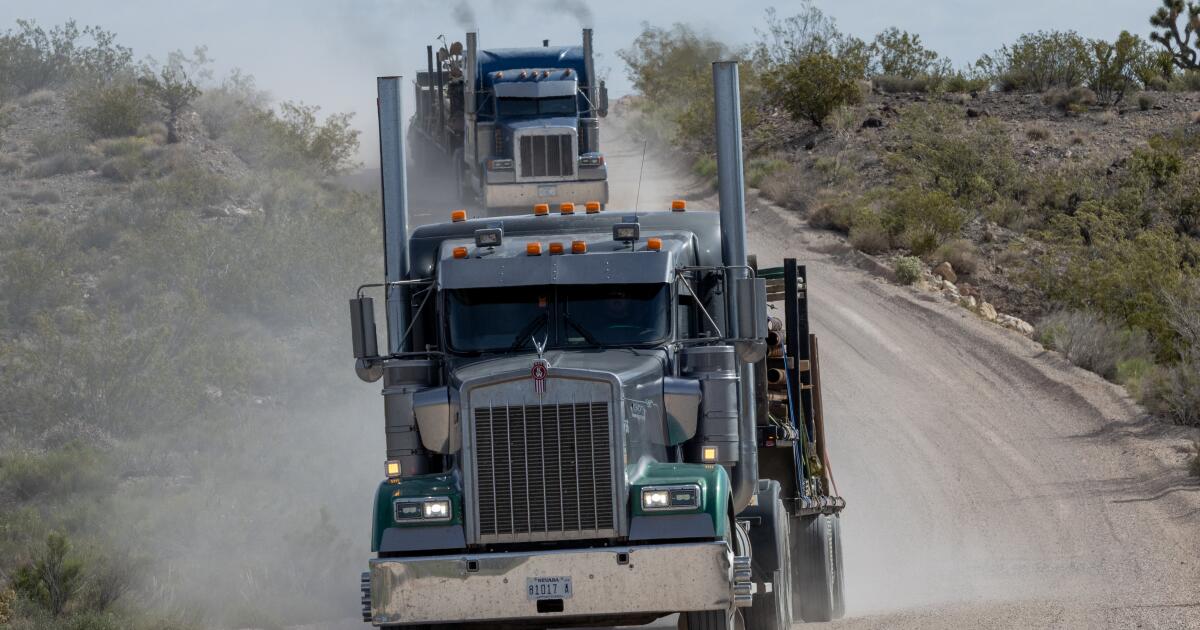
Trump slashes wildlife protections, putting endangered California animals at risk
-
 Sports15 minutes ago
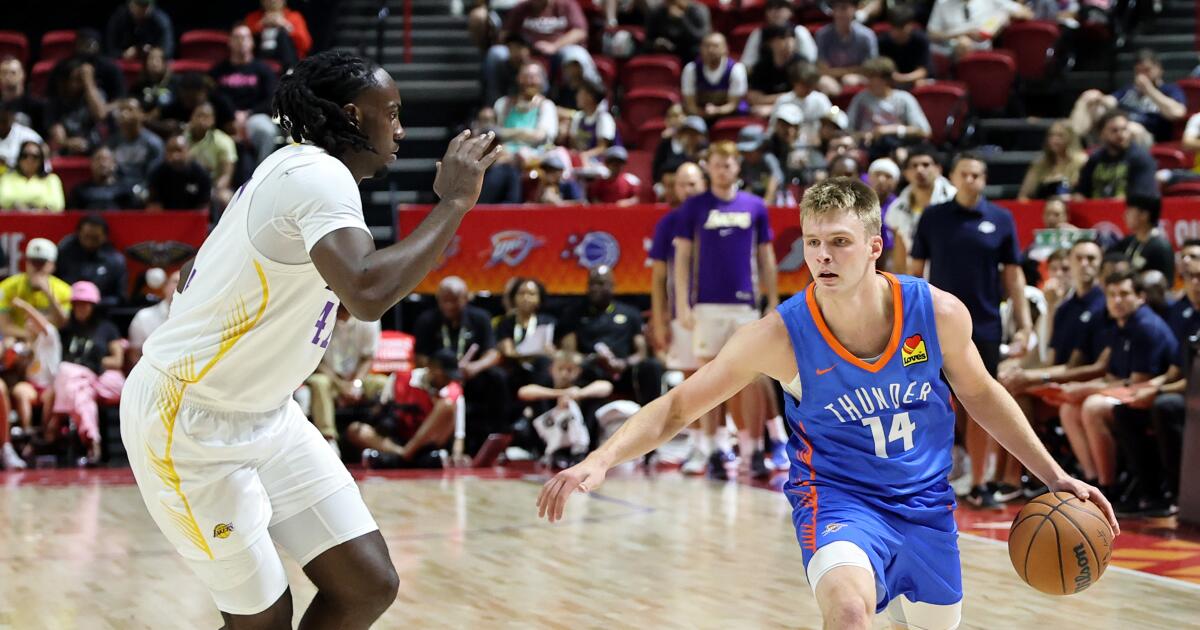
Lakers’ Arthur Kaluma erupts for 34 points in breakout Summer League performance
-

 World25 minutes ago
Sheikh Hamad bin Khalifa Al Thani, architect of modern Qatar
-
 News55 minutes ago
Messi and Argentina survive another close call to reach the World Cup semifinals
-

 Los Angeles, Ca2 hours ago
19-year-old arrested, accused of distributing marijuana to minors across Riverside County
-

 Detroit, MI3 hours ago
Phillies end the Tigers’ winning streak at 6 with a 4-2 victory
-

 San Francisco, CA3 hours ago
Giants select Barry Bonds’ nephew Peyton in third round

