West
Supreme Court prepares hearing on Trump removal from Colorado ballot

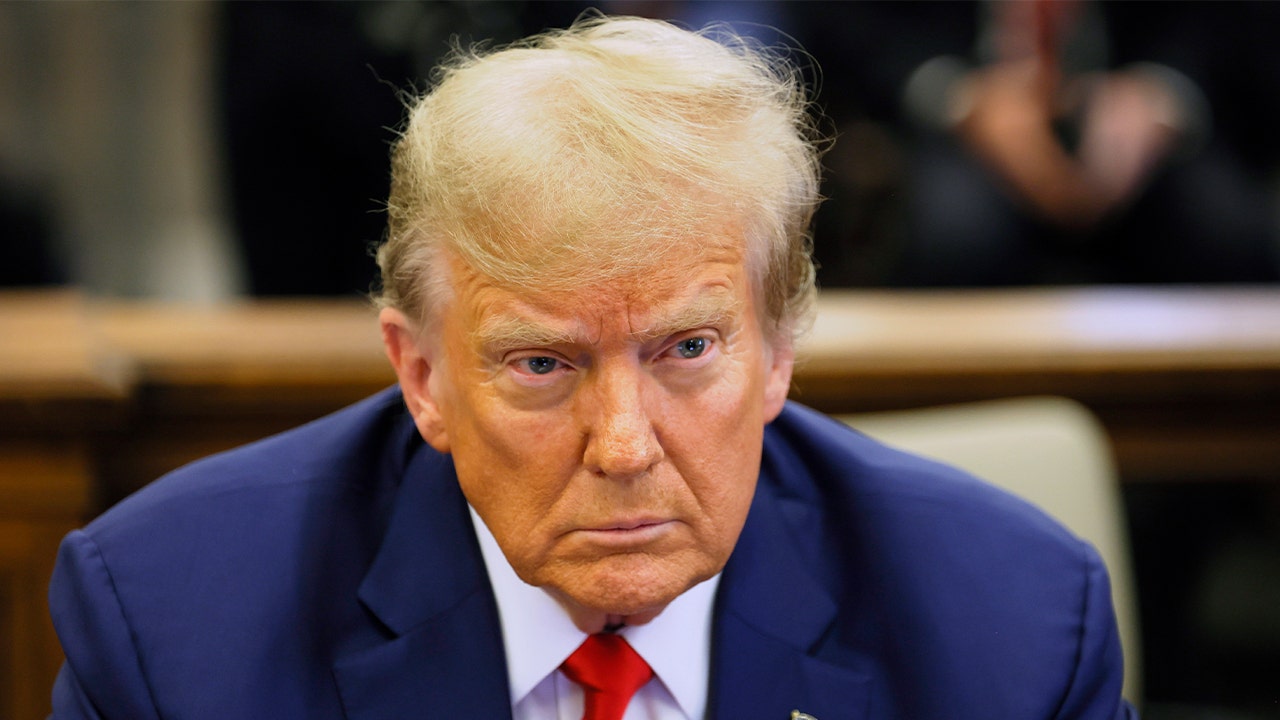
The U.S. Supreme Court will soon debate whether former President Donald Trump should be removed from Colorado’s primary ballot, the first of what could be several legal challenges by Trump to confront the nine justices.
At issue is whether Trump committed “insurrection” by inciting a crowd to storm the U.S. Capitol Jan. 6, 2021, and whether that would make him constitutionally ineligible to be re-elected president. That, in turn, could block him from appearing on a state primary ballot as a candidate for that office.
Oral arguments are scheduled for Thursday at 10 a.m. ET, and an expedited ruling could come within days or weeks.
The issues have never been tested at the nation’s highest court and are framed as both a constitutional and political fight with enormous stakes for public confidence in the judicial system and the already divisive electoral process.
TRUMP ASKS SUPREME COURT TO KEEP NAME ON COLORADO BALLOT
The U.S. Supreme Court will be listening to oral arguments on whether Trump committed “insurrection” Jan. 6, 2021, and whether that disqualifies him constitutionally from being re-elected president. (Michael M. Santiago)
The wording
The 14th Amendment, Section 3 of the Constitution states, “No person shall… hold any office… under the United States … who, having previously taken an oath, as a member of Congress, or as an officer of the United States… to support the Constitution of the United States, shall have engaged in insurrection or rebellion against the same, or given aid or comfort to the enemies thereof.”
Colorado’s highest court in December ruled that clause covers Trump’s conduct on Jan. 6, 2021, and therefore does apply to a president despite not being explicitly indicated in the text.
“President Trump is disqualified from holding the office of president,” the state court wrote in an unsigned opinion. “Because he is disqualified, it would be a wrongful act under the election code for the secretary to list him as a candidate on the presidential primary ballot.”
SUPREME COURT TO DECIDE IF TRUMP BANNED FROM COLORADO BALLOT IN HISTORIC CASE
The issue could turn on whether the high court interprets “officer of the United States” to apply to a president’s conduct in office.
The arguments
Trump’s legal team in its merits brief said, “The [Supreme] Court should put a swift and decisive end to these ballot-disqualification efforts, which threaten to disenfranchise tens of millions of Americans and which promise to unleash chaos and bedlam if other state courts and state officials follow Colorado’s lead and exclude the likely Republican presidential nominee from their ballots.”
The Constitution treats the presidency separately from other federal officers, Trump’s team argued.
The U.S. Supreme Court is prepping to debate whether Trump should be removed from Colorado’s primary ballot ahead of the 2024 presidential election. (Olivier Douliery/AFP via Getty Images)
“The president swears a different oath set forth in Article II, in which he promises to ‘preserve, protect, and defend the Constitution of the United States’ — and in which the word ‘support’ is nowhere to be found,” like it appears in Section 3, Trump’s team wrote.
But lawyers for the Colorado voters challenging Trump’s eligibility said in response, “The thrust of Trump’s position is less legal than it is political. He not-so-subtly threatens ‘bedlam’ if he is not on the ballot. But we already saw the ‘bedlam’ Trump unleashed when he was on the ballot and lost. Section 3 is designed precisely to avoid giving oath-breaking insurrectionists like Trump the power to unleash such mayhem again.
“Nobody, not even a former President, is above the law,” the brief added, comparing Trump to a “mob boss.”
Also at issue:
TRUMP BACKED BY 27 STATES IN SUPREME COURT FIGHT, WHO WARN OF 2024 ‘CHAOS’ IF HE’S REMOVED FROM BALLOT
– Whether state courts or elected state officials can unilaterally enforce constitutional provisions and declare candidates ineligible for federal office — so-called “self-executing” authority — or is that exclusively the jurisdiction of the U.S. Congress. Also, whether Trump can be disqualified without a thorough fact-finding or criminal trial.
– Whether this issue is a purely “political” one that voters should ultimately decide.
– Whether the U.S. Senate’s acquittal at his impeachment trial over Jan. 6 makes him therefore eligible to seek re-election.
– And whether Section 3 prohibits individuals only from “holding” office, not from “seeking or winning” election to office.
The impact
More than a dozen states have pending legal challenges over Trump’s ballot eligibility.
At least 16 state courts and secretaries of state have already concluded his name can appear on the ballot. Colorado and Maine are the only two so far to keep his name off.
Many states have backed the former president, and at least 16 state courts and secretaries of state have allowed his name to appear on the ballot. (Scott Olson/Getty Images)
Other states are saying stay tuned. The Oregon Supreme Court earlier this year dismissed a related lawsuit but told a coalition of voters that, based on what the U.S. Supreme Court decides, they can refile again.
In conducting what are expected to be lengthy and contentious oral arguments, the justices will likely be forced to revisit the events of Jan. 6 and the pivotal speech Trump gave to supporters just before Congress was to certify the Electoral College ballots.
Trump has repeatedly claimed he was not trying to incite violence and that his speech was protected by First Amendment guarantees, especially pertinent as the top federal office holder.
The storming of the U.S. Capitol left 140 law enforcement officers injured, and lawmakers and Vice President Pence fled a mob that breached the building.
The Colorado decision has been on pause pending the U.S. Supreme Court’s final ruling.
MAINE’S TOP COURT WON’T RULE ON TRUMP BALLOT ELIGIBILITY UNTIL SUPREME COURT DECISION IN COLORADO
The state’s 2024 presidential primary ballot with Trump’s name on the Republican ballot has already been certified by the Colorado secretary of state.
But if Trump is ultimately declared ineligible for public office before the state’s March 5 primary, any votes cast in his favor would be nullified.
The Supreme Court has traditionally been reluctant to get involved in overtly political disputes, especially involving elections.
The partisan blowback over the 2000 ruling in Bush v. Gore still resonates, creating the impression among the public that many of the justices harbor partisan political intentions.
“Sometimes the Supreme Court has no choice but to be involved in the election cases because that is an area where, unlike most, the Supreme Court doesn’t even have discretion over whether it takes the case,” said Brianne Gorod, chief counsel at the Constitutional Accountability Center.
“There are some voting rights and election cases that the Supreme Court is required to resolve on the merits.”
Arguments for the Colorado ballot case will be heard Thursday, Feb. 8, at 10 a.m. ET. (AP Photo/Jacquelyn Martin, File)
And beyond …
It is important to note the legal debate over “insurrection” comes to the Supreme Court on a ballot eligibility question.
Special counsel Jack Smith is separately prosecuting Trump for alleged election interference leading up to the Jan. 6 riot, but the former president is not charged specifically with “insurrection” or “rebellion.” The four charges he faces relate to conspiracy and obstruction. Some legal scholars have pointed out Section 3 does not require a criminal conviction to take effect.
The Supreme Court could soon be asked to decide an important component of Smith’s federal case — whether Trump has “absolute immunity” for alleged crimes committed in office.
A federal appeals court is considering the question, and the issue could soon reach the high court on an expedited basis.
Trump’s criminal trial was scheduled for March 4, 2024, but it is likely any Supreme Court consideration of the issues would force a delay, perhaps past the November election.
The former president also faces a state criminal prosecution for alleged election interference in Georgia; a federal criminal prosecution in Florida for alleged mishandling of classified documents that is also led by the special counsel; and a New York state criminal case over allegedly falsifying business records for hush money payments to a porn star.
Pro-Trump protesters rally at the U.S. Capitol in Washington Jan. 6, 2021. Trump faces four charges under special counsel Jack Smith’s prosecution for election interference leading up to the Jan. 6 riot. (AP Photo/Jose Luis Magana, File)
And there are various civil claims against Trump, from lawsuits: by U.S. Capitol police officers over Jan. 6; alleged fraud involving various Trump-related businesses; and an $83 million defamation judgment stemming from an alleged sexual assault.
It is unclear if any of these cases will eventually reach the U.S. Supreme Court on appeal on the merits. Some may not be considered for years.
In the short term, any further petition with the name “Trump” on the cover could severely strain public confidence in a judicial institution designed to hover above partisan politics.
“I don’t think that the court really follows the political calendar,” said Thomas Dupree, a former top Justice Department attorney in the George W. Bush administration. “I think they’re aware of the fact, obviously, that we’re in an election year, but I don’t think the fact that we’re in an election year is going to be driving the outcomes of any of these decisions.”
The ballot case is Trump v. Anderson (23-719).
Read the full article from Here


PORTLAND, Ore. (KATU) — President Donald Trump campaigned on carrying out what he called the largest deportation operation in American history.
After taking office, his administration quickly ramped up immigration enforcement. Border czar Tom Homan also pledged to focus on so-called sanctuary cities, including Portland. According to the U.S. Department of Homeland Security, more than 675,000 people were deported in 2025, while the agency says more than 2 million people “self-deported.”
READ ALSO | Supreme Court hands Trump immigration wins, but birthright citizenship might be different
In Oregon, state data shows state and local agencies experienced a 265% increase in immigration-related requests from federal authorities last year.
So what does that mean for Oregon’s economy?
The state’s chief economist says the effects are beginning to emerge.
Carl Riccadonna, Oregon’s state economist, said immigration enforcement actions are influencing consumer spending and activity across several key industries, though the state cannot yet quantify the overall impact.
“What we’re seeing in terms of immigration action is playing out in either consumption patterns, which we’ve seen in some communities, or in industrial or sectoral activity,” Riccadonna said. “This does then have implications for how we are reading the overall macroeconomy and putting together that revenue forecast.”
Portland police officers walk outside the U.S. Immigration and Customs Enforcement facility on Thursday, Jan. 8, 2026, in Portland, Ore. (AP Photo/Jenny Kane)
Riccadonna said the effects extend beyond agriculture, an industry that has historically relied on immigrant labor.
“We have certainly, in sector-by-sector analysis, we’re hearing evidence of impacts from immigration in consumption numbers, so retail, groceries, those sorts of things,” Riccadonna said. “There are also significant impacts in the retail sector and leisure and hospitality, restaurants and construction, important legacy industries of Oregon like timber, forestry … and manufacturing has a very large footprint as well.”
While the state is seeing those trends, Riccadonna said economists cannot yet calculate exactly how much immigration enforcement has affected Oregon’s economy.
“We haven’t done an exercise to say, well, this is what the forecast would have been otherwise. We don’t produce counterfactuals … but there’s plenty of anecdotal evidence from the cherry harvest this past summer and stresses elsewhere throughout those specific sectors,” he said.
National data offers additional context.
According to the nonpartisan Congressional Budget Office, the recent immigration surge — which the report says mostly comprises immigrants who were not lawful permanent residents, were not eligible to apply for lawful permanent residency based on their current status, and were not admitted on a temporary basis under the Immigration and Nationality Act — generated approximately $10 billion in state and local tax revenue in 2023. During that same period, governments spent nearly $19 billion on services such as schools, shelters and border security.

A damaged car is seen as law enforcement officials work the scene following reports that federal immigration officers shot and wounded people in Portland, Ore., Thursday, Jan. 8, 2026. (AP Photo/Jenny Kane)
The Congressional Budget Office also projects the immigration surge that began in 2023 will increase the U.S. labor force by approximately 5.8 million people by 2034 and boost the nation’s economic output by nearly $9 trillion over the next decade.
Riccadonna said Oregon expects to gain a clearer picture of the economic effects as more tax and revenue data becomes available.
This story is part of KATU’s “The Cost of the Crackdown” special, which examines how increased immigration enforcement is affecting Oregon, from businesses and workers to the state’s broader economy.

SALT LAKE CITY — The Environmental Protection Agency awarded Utah and Salt Lake County a total of $3.5 million in grants to assess potentially polluted properties for eventual cleanup and redevelopment.
The agency announced a $2 million grant to Utah’s Department of Environmental Quality and $1.5 million to Salt Lake County to conduct environmental assessments and inventory brownfield sites for cleanup. Brownfields are sites that may be difficult to redevelop or expand because of “the presence or potential presence of a hazardous substance, pollutant or contaminant,” according to the agency.
“These brownfields grants will help Utah communities clean up contaminated sites and unlock opportunities for redevelopment and investment,” EPA Regional Administrator Cyrus Western said in a news release announcing the grants earlier this week. “By transforming underused properties into community assets, EPA is helping create healthier neighborhoods and stronger local economies.”
The two grants awarded to Utah and Salt Lake County are among more than $248 million awarded to nearly 200 communities nationwide for brownfield assessment and cleanup. Utah’s Department of Environmental Quality plans to focus the resources on several areas in Ogden, Heber City and Fillmore, among others, according to Bill Rees, who leads Utah’s brownfield cleanup program.
“What we do is work to secure the funding and then begin to reach out to our communities across the state, say, ‘Listen, there’s opportunity to do some assessment work in your community if you’re interested,’ and then work with our rural partners, work with our urban partners to see if there are sites that will fit that bill,” he told KSL.
The state has received similar grants in the past, and Rees said the money can help local governments determine what to do with ailing properties such as old schools, hospitals or private property that have gone to waste.
“Is there asbestos in it, or is there hazardous material in it? Or could there be something that’s impacting the soil or the groundwater, and a policymaker needs to make a decision?” asked Rees. “Knowledge allows you to make good decisions.”
The $1.5 million awarded to Salt Lake County is the largest brownfields assessment grant the county has ever received, according to a county press release.
“This grant is a real win for our communities,” said Mayor Jenny Wilson. “This funding will let us do vital environmental work on a larger scale and in more neighborhoods. It reflects exactly the kind of partnership between local and federal government that gets results for residents.”
The county grant funds will be used to help create cleanup plans in three areas, including a vehicle storage yard in Salt Lake City’s Ballpark Neighborhood, a 4.26-acre vacant lot in Millcreek and a small commercial building in Magna that was damaged during an earthquake in March 2020, according to the EPA.
Contributing: Don Brinkherhoff
The Key Takeaways for this article were generated with the assistance of large language models and reviewed by our editorial team. The article, itself, is solely human-written.

WashingtonCaps.com is the official Web site of the Washington Capitals. Washington Capitals and WashingtonCaps.com, WashingtonCapitals.com are trademarks of Lincoln Hockey. NHL, the NHL Shield, the word mark and image of the Stanley Cup and NHL Conference logos are registered trademarks of the National Hockey League. All NHL logos and marks and NHL team logos and marks as well as all other proprietary materials depicted herein are the property of the NHL and the respective NHL teams and may not be reproduced without the prior written consent of NHL Enterprises, L.P. Copyright © 1999-2020 Lincoln Hockey and the National Hockey League. All Rights Reserved. NHL, the NHL Shield and the word mark NHL Winter Classic are registered trademarks and the NHL Winter Classic logo is a trademark of the National Hockey League. NHL and NHL team marks are the property of the NHL and its teams. © NHL 2026. All Rights Reserved.
-

 North Carolina1 minute ago
Kemba Walker Opens Youth-Focused Multi-Sport Facility in Concord, North Carolina
-

 North Dakota7 minutes ago
Burglars steal from Grand Forks business, cancer fundraiser
-

 Ohio14 minutes ago
20-year-old Emerson homers in Ohio homecoming
-

 Oklahoma16 minutes ago
523 animals rescued in SE Oklahoma City meth bust, animal welfare overwhelmed
-

 Oregon21 minutes ago
The Cost of the Crackdown: How Trump’s immigration enforcement affects Oregon
-

 Pennsylvania29 minutes ago
Federal government sues Pennsylvania, others over SNAP data
-

 Rhode Island31 minutes ago
Target 12: State of RI’s fire hoses
-

 South-Carolina37 minutes ago
Mississippi State baseball lands Will Craddock, South Carolina transfer infielder

