Science
New Gene Therapy Enables Children With a Rare Form of Deafness to Hear


The Food and Drug Administration on Thursday approved a gene therapy that can cure a rare, inherited form of deafness. The treatment is the first to restore normal hearing in children who were born deaf.
The maker of the therapy, Regeneron, plans to provide it free to any child who needs it. “We wanted to make a statement,” Dr. George Yancopoulos, Regeneron’s chief scientific officer said on Thursday morning.
He explained that the company wants to be sure its treatment “would be able to reach its full potential and help as many people as possible.”
Some gene therapies for other diseases, priced in the millions of dollars, have had dismal sales.
The therapy called Otarmeni, is intended for children with otoferlin deafness, a rare form of hearing loss caused by a mutation in a single gene. The mutation destroys a protein in the inner ear that is needed to transmit sound to the brain.
Although otoferlin deafness accounts for just 2 percent to 8 percent of congenital hearing loss, the new treatment “is groundbreaking,” Dr. Dylan Chan, a pediatric otolaryngologist at the University of California, San Francisco, said.
He added, “This is the first time in history that there has been a medical therapy that has enabled deaf children to hear.”
Dr. Chan has been a paid adviser to Regeneron and to Eli Lilly, which is also developing a gene therapy for otoferlin deafness. He is also a principal investigator for Lilly’s clinical trial of the treatment.
Dr. Daniel Lee, the director of pediatric otology and neurotology at the Massachusetts Eye and Ear Infirmary, said he also viewed the therapy as groundbreaking. “We have now entered the era of biological treatment for inner ear hearing loss,” he said.
Dr. Lee is on the advisory board of a small biotech company, Skylark Bio, that is developing gene therapy for a different form of inherited deafness.
Until now, the only treatment for otoferlin deafness was a cochlear implant, an electronic device placed in the inner ear. The implants can restore sound but not normal hearing. And the sounds come through as robotic or tinny.
People with cochlear implants have difficulty in noisy environments. They do not hear high frequencies. And at night they have to recharge the batteries, leaving them deaf until the morning.
In addition to Regeneron and Lilly, two other companies, in China and in France, are also developing gene therapies for otoferlin deafness.
Dr. Eliot Shearer, a pediatric surgeon who specializes in hearing loss at Boston Children’s Hospital, said the otoferlin gene therapy is only the beginning of treatments for deafness. “There are over 150 known genetic causes of hearing loss, and thousands of mutations in those genes,” Dr. Shearer said. “Now that it is known that it’s possible to correct genetic hearing loss, new possibilities open up.”
Dr. Shearer is a principal investigator of both the Regeneron and Lilly otoferlin clinical trials.
To treat deafness with gene therapy, researchers had to solve a problem: getting the genes to the cochlea, a spiral shaped cavity almost at the center of the skull. The cochlea is filled with fluid and lined with 3,500 inner hair cells, each tuned to a specific pitch.
Sound vibrations ripple through the fluid, bending the microscopic hairs. When a hair cell bends, it fires. An electric signal travels along the auditory nerve to the brain, and the person hears the sound.
Researchers chose to focus on otoferlin deafness because its cause was straightforward. The otoferlin gene is expressed only in the hair cells of the inner ear. The inner ear structures, including the hair cells, are intact. So to allow patients to hear, doctors simply needed to deliver a working copy of the otoferlin gene.
Otolaryngologists had long thought that injecting a medicine into the inner ear would inevitably damage the delicate cells and membranes of the cochlea.
But children with otoferlin deafness are already unable to hear. Even if an attempt at gene therapy damaged their inner ears, they could still receive cochlear implants.
“It was the perfect target,” Dr. Chan said.
Kerri M., whose baby, Miles, had otoferlin deafness, said gene therapy “completely changed our lives.” She spoke on condition of anonymity because she wanted to protect her son’s diagnosis from appearing on the internet.
Dr. Shearer said Miles’s hearing loss was so profound that he could not hear a jet engine if it were next to him.
Miles was given the Regeneron therapy on May 19, 2025, when he was 13 months old. At his last visit, his hearing was normal.
“We are so fortunate,” his mother said. “Our baby was born deaf, and now he can hear.”
Most children who received the gene therapy have had hearing restored, but not all have been as fortunate as Miles. So far, Dr. Chan said, about 80 percent of the patients who have been treated successfully in clinical trials were able to hear well without needing cochlear implants.
Most still needed a hearing aid, but about 30 percent of those who could hear after the treatment were like Miles — their hearing was in the normal range.
The next target for the scientists working on gene therapies to correct deafness is mutations in the GJB2 gene. It causes the most common form of congenital hearing loss in children and accounts for about 20 percent of cases.
Dr. Lee explained that the biology of GJB2 deafness is more complex than that of otoferlin, because cells in the cochlea are damaged. Otoferlin’s gene therapy, in contrast, is like fixing a broken wire — the cells are normal, they just can’t transmit a signal.
Dr. Lee said Skylark Bio hopes to start a gene therapy clinical trial this year for GJB2-related deafness in children 9 months old to 7 years old in the United States.
Dr. John Germiller, a pediatric otology surgeon at Children’s Hospital of Philadelphia and the University of Pennsylvania, predicted that the next frontier will be people with genes that cause progressive hearing loss, not necessarily babies.
Hearing loss and the loss of hair cells in the cochlea tend to occur together, he said. The goal will be to use gene therapy to save the hair cells that are remaining.
Dr. Germiller is a principal investigator for the Lilly otoferlin trial and treated the first patient in the United States two years ago.
Dr. Chan offered an even more ambitious hope for the future — the end of most forms of deafness.
“A lot of people are working on how to reprogram cells of the inner ear to rebuild themselves,” Dr. Chan said. The hope is to recreate the cochlea.
“That,” Dr. Chan added, is “the ultimate holy grail.”



Scientists hoped for years to make a machine that could emulate the movements of diving birds, such as puffins, and offer an affordable, unobtrusive way to monitor fragile marine ecosystems. A team of researchers at M.I.T. has been able to create such a waterproof winged robot, according to a study published July 9 in the journal Science.
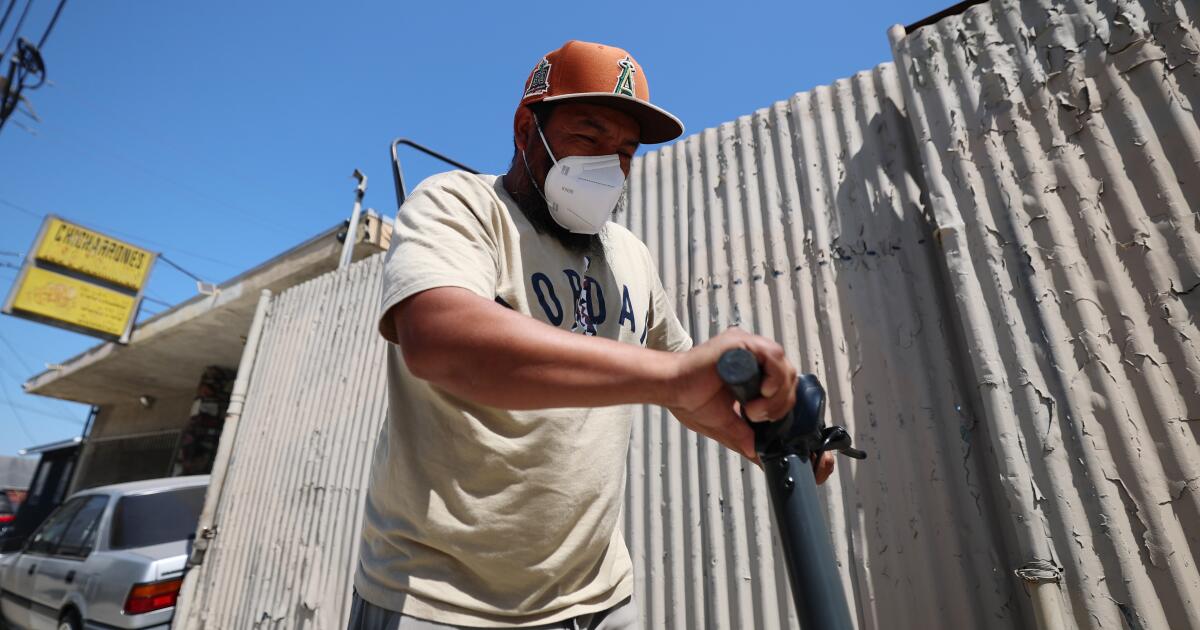
Nearly one month after a fire destroyed a massive cold-storage facility in Boyle Heights, the neighborhood has been overcome by the stomach-churning stench of rotting food.
As facility operator Lineage works to remove more than 85 million tons of weeks-old food from its 500,000-square-feet warehouse, the rancid odors have attracted throngs of rats and swarms of flies, as a foul-smelling brownish liquid pours from the seams of the building.
Now, with a heat wave descending over much of Southern California, residents worry the odor could get even worse and scores of residents have called air quality regulators to complain. At the same time, environmental groups are accusing Lineage representatives and emergency responders of downplaying the risks pose by chemicals released during the fire.
Boyle Heights, a neighborhood that has been subjected to decades of toxic pollution from rail yards and other industries, has again become the center of attention in another environmental disaster. Already, the official response to the Lineage fire has eroded trust in government agencies, residents say.
Remediation work continues at a Lineage facility in Boyle Heights, where residents and nearby businesses have complained of a rotting food odor for weeks.
(Allen J. Schaben / Los Angeles Times)
On Tuesday, Sen. Alex Padilla (D-Calif.) visited the gutted warehouse alongside L.A. Fire Chief Jaime Moore and representatives of the South Coast Air Quality Management District and a contingent of environmental organizations. Padilla, along with Sen. Adam Schiff (D-Calif.) and Rep. Jimmy Gomez (D-Los Angeles), wrote a letter to the U.S. Environmental Protection Agency, calling on the agency to return to the cleanup zone to monitor air and water quality.
“Given the materials present in the warehouse, we are concerned about the long-term health and environmental impacts from contaminated smoke and water runoff on communities surrounding the warehouse,” the letter read.
Joe Lyou, president of nonprofit Coalition for Clean Air, told Padilla that he has heard of people becoming sick in the weeks after the event.
“I think that pointed to a problem with the messaging while the event first happened,” Lyou said. “It wasn’t consistent [with] if you smell smoke, see ash to get out and protect yourself — make sure you’re not exposed to it. There were different messages coming from different people, and we need to fix that.”
“The whole community was completely overwhelmed … and concerned about the ammonia, concerned about burning plastic, concerned about all sorts of other [emissions] that are really hard, difficult, expensive to measure. But … we’ll just never know some of those things,” Lyou said.

Street vendor Lupe Gonzalez pushes her cart away from a gutted warehouse in Boyle Heights.
(Allen J. Schaben / Los Angeles Times)
Chief Moore has faced criticism for his decision to advise residents to shelter indoors rather than to evacuate during the blaze. That stood in sharp contrast with Orange County fire officials, who evacuated tens of thousands of residents near an overheating chemical tank in Garden Grove in May.
On Tuesday, Moore told Padilla that the two incidents were very different. Moore said he had discussed the dilemma with TJ McGovern, the interim fire chief for the Orange County Fire Authority.
“He says everybody got mad at him because he evacuated everybody and nothing blew up,” Moore told Padilla. “But everybody’s mad at you because of the shelter-in-place [order] and it smells.”
Moore said that “there was nothing in the air that was hazardous” and that firefighters “never had a threat of an explosion.”
However, environmental experts said 14,000 pounds of flammable anhydrous ammonia were stored in tanks and used as refrigerant at the Lineage warehouse and posed a significant risk of explosion until it was removed days into the fire.
Environmental and community groups said L.A. fire officials also repeatedly emphasized the risks from ammonia in their radio communications. On the first day of the fire, a group of firefighters was hit by a plume of ammonia gas, and fire command quickly organized medical help.
“The majority of my division got exposed to ammonia gas. We’ll need to get them assessed.”
On Tuesday, Moore said no amount of ammonia was detected.
“When [firefighters] opened those doors, there was what looked like a big vapor cloud that came out,” Moore said. “That was the cold air mixing with the hot air that caused a vapor. It wasn’t ammonia.”
But residents remain skeptical.
Padilla’s visit follows a notice of violation that the South Coast Air Quality Management District issued to Lineage. The notice of violation was issued on July 12, after the agency received more than 40 public complaints of rotten, sour, garbage-type odors in the area. Inspectors confirmed the odors with community members and traced them back to cleanup operations at the facility, according to the air quality agency.
Boyle Heights residents are calling on Gov. Gavin Newsom to declare a mandatory evacuation of their community, saying the fire and the toxic aftermath are continuing to pose health risks. Without an evacuation order, they said, insurance companies won’t help residents who want to relocate with rent or mortgage relief.
“For nearly a month, a cold-storage warehouse fire has poisoned the air over the Eastside and Los Angeles County and City officials have refused to issue a mandatory evacuation,” read a statement from the community group Protect LA Now. “That refusal forces victims to pay their own way out, and leaves those who can’t afford to leave trapped in gases and toxins that no agency will name.”

Joe Lyou, president of the Coalition for Clean Air, explains how smell is affecting his health while talking to the media near a fire-gutted Lineage facility Tuesday.
(Allen J. Schaben / Los Angeles Times)
Tensions have been building in the community since the fire broke out on June 17 and burned for days.
At a contentious town meeting last week, Los Angeles Mayor Karen Bass struggled to open the meeting over the loud boos and yelling of community members, actions that were repeated as other elected officials took the microphone. The crowd grew even louder when Lineage Chief Operating Officer Jeff Rivera took to the stage and was met with shouts of “Liar!”
Air quality has been a constant concern for the community since the incident began. Beyond the health hazards of breathing in smoke from a building fire, there was a brief, temporary scare when an ammonia line that helped keep the building refrigerated was compromised, though Lineage has said the chemical was not detected in the air. Additionally, 85 million pounds of food thawed, burned and spoiled inside, creating a terrible smell that emanated from the property.
Nora Saenz, a resident of Bell, said she believed local leaders when they said there was no threat. During the fire, she took her niece and nephew to a community event in La Mirada, which was downwind of the fire.
Now Saenz fears what they might’ve breathed in.
“The day of the fire, we were told that the air was safe to breathe,” she recalled. “To this day, I don’t know what I exposed my niece and my nephew to.”
Times staff writers Salvador Hernandez, Clara Harter and Seamus Bozeman contributed to this report.
Video released by Chinese state media shows a state-owned aerospace company launching a rocket and recovering part of it on Friday. The successful launch of a reusable rocket was a major step for China toward challenging SpaceX’s satellite internet dominance.
-

 Movie Reviews12 minutes ago
Saari Review: Memory, Betrayal and Identity Converge at River Valley Film Festival – Hollywood Times
-
Science48 minutes ago
New Winged Robot Can Fly and Swim Like a Puffin
-
 Lifestyle1 hour ago
‘The Trojan Teddy Bear’: The promise and peril of childhood in the age of AI
-

 Technology1 hour ago
Google and Epic give up fighting — third-party Android app stores are coming next week
-

 World1 hour ago
FBI snares an American heir indicted for allegedly bankrolling anti-cop, pro-Hamas communist revolution
-

 Politics2 hours ago
Biden special counsel’s ‘runaway train’ scooped up sensitive lawmaker info: ‘Abuse of power’
-

 Health2 hours ago
‘Miracle on the Hudson’ hero Captain ‘Sully’ Sullenberger reveals Alzheimer’s diagnosis
-

 Sports2 hours ago
American League stars outshine National League in 96th MLB All-Star game

